One Pearl Lit the Whole Ark While Noah Waited Out the Flood
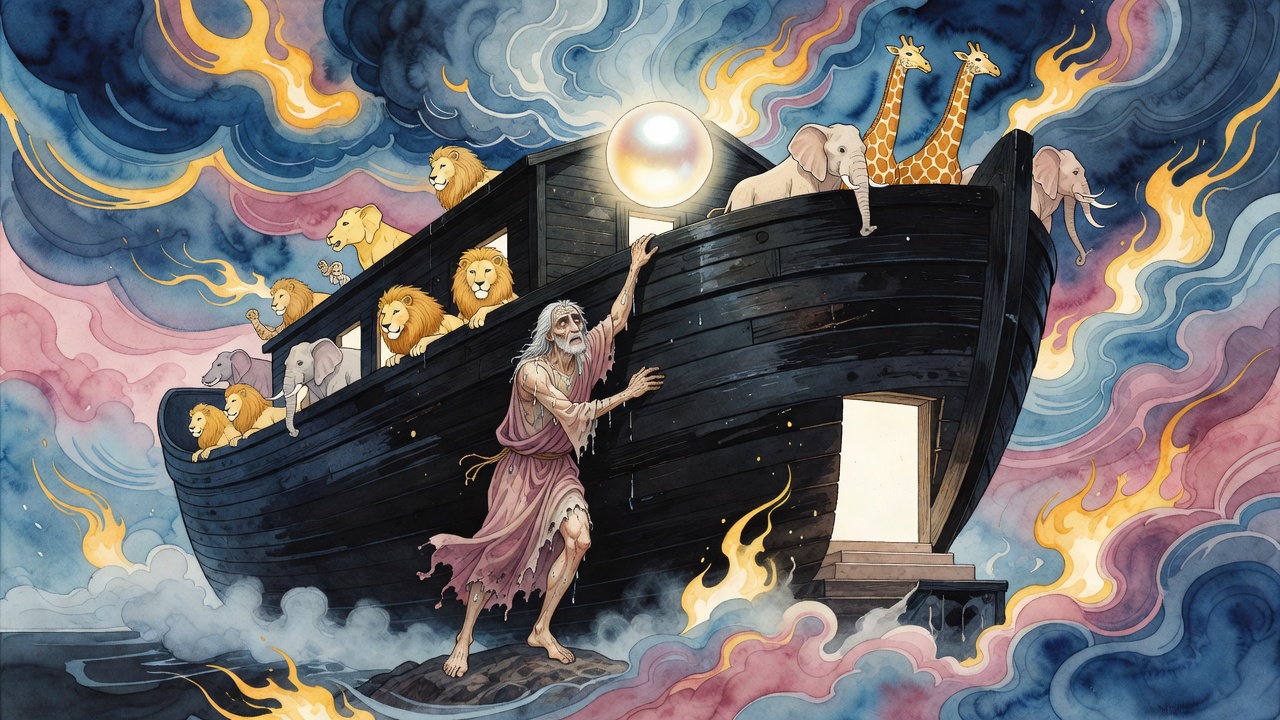
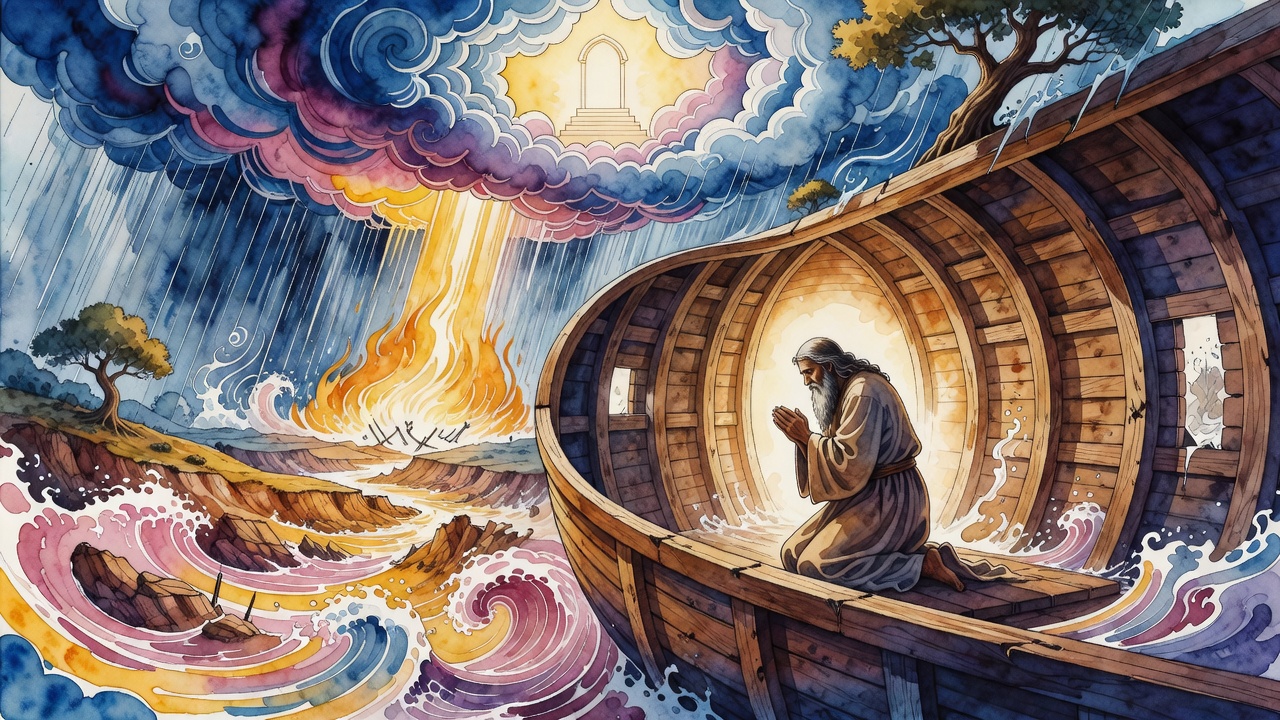
Noah sealed the last hatch and the world went black. One pearl hung from a beam and burned like a sun over the decks.
Table of Contents
Noah sealed the last hatch and the world went black. No moon. No shore. Only the wood pressed tight around every living breath he had been ordered to keep. The animals shifted and moaned. Pitch still stuck to his palms from the last seam.
 Click for full size
He had been told to make a tzohar (צהר), a light, for the ark (Genesis 6:16). What hung there was not a lamp of oil that would die when the oil died. A single pearl, suspended inside the vessel, shed light on every creature the way a lamp fills a house, the way the sun burns in his strength. One stone. The whole dark held in its glow.
The Pearl Took the Place of Day
Noah kept his face toward the pearl more than toward the wall. Its light did not flicker. It did not smoke. It fell across hooves and feathers and human faces with the same steady white, as if day had been folded small and nailed to a beam above the middle deck.
A ram lowered its head into that light and found feed. A bird beat once against a rafter and settled when the glow found its eye. Noah's wife moved through the brightness like a figure walking a narrow street at noon. The children fed and counted and slept under that single white. No one asked for a second pearl. There was none.
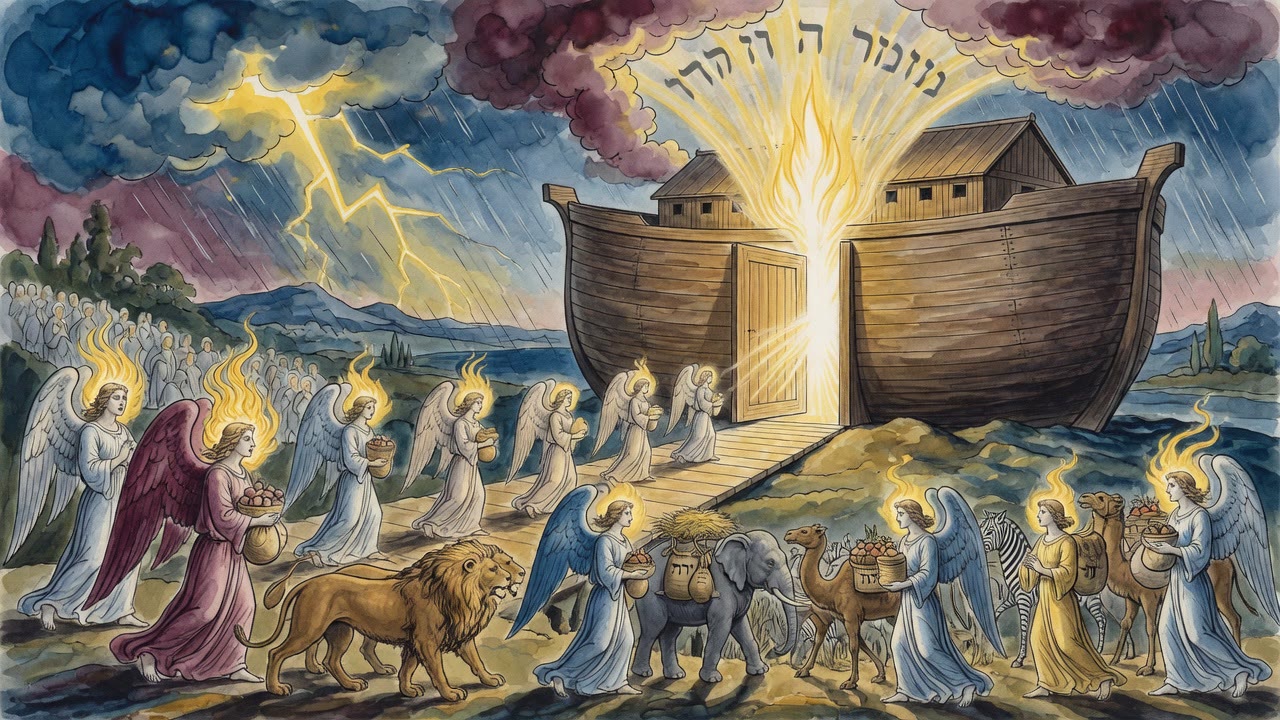
Outside, the world was already ending on a calendar. On the tenth of Marcheshvan every creature entered. Seven days later, on the seventeenth, the heavens opened. Noah counted those days under the pearl's glare. He could not see the rain start. He could feel the ark lift and the floor go soft under his heel.
Male and Female Waters Met
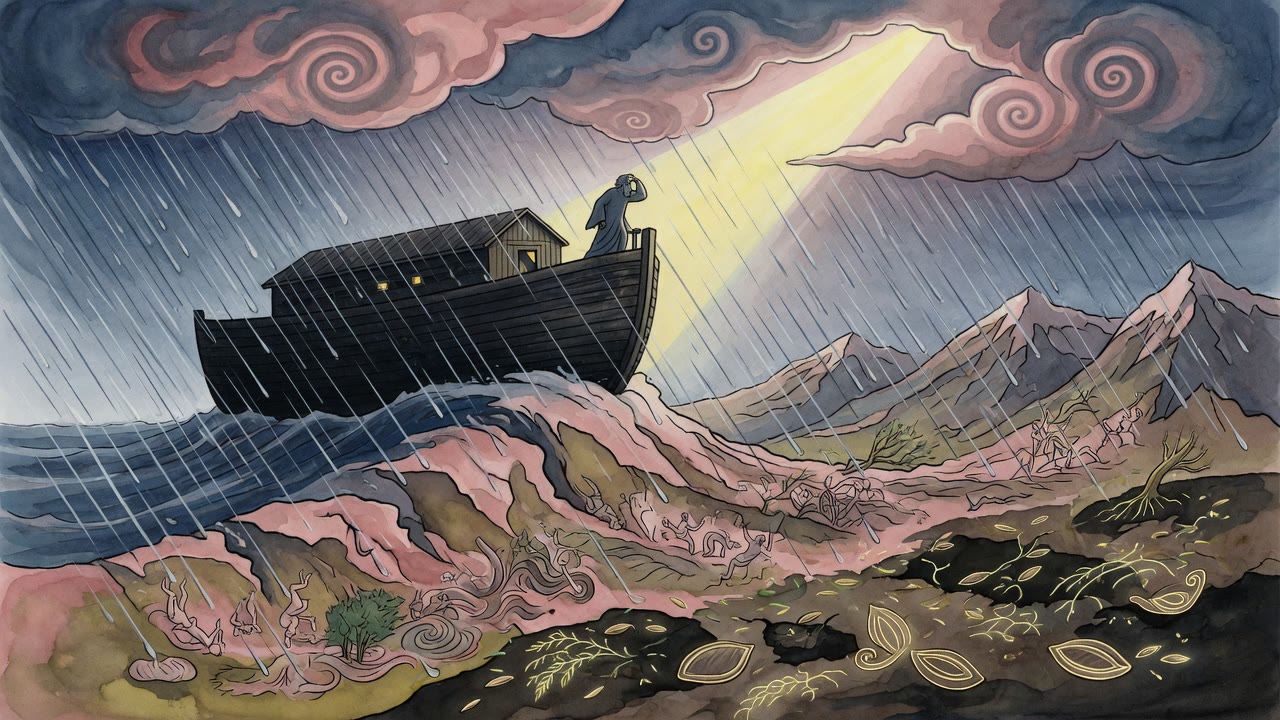
The flood did not arrive as ordinary weather. Waters came down from heaven endowed with the male principle. Waters rose from the deep endowed with the female. They found each other in the middle of the air and the middle of the soil and locked.
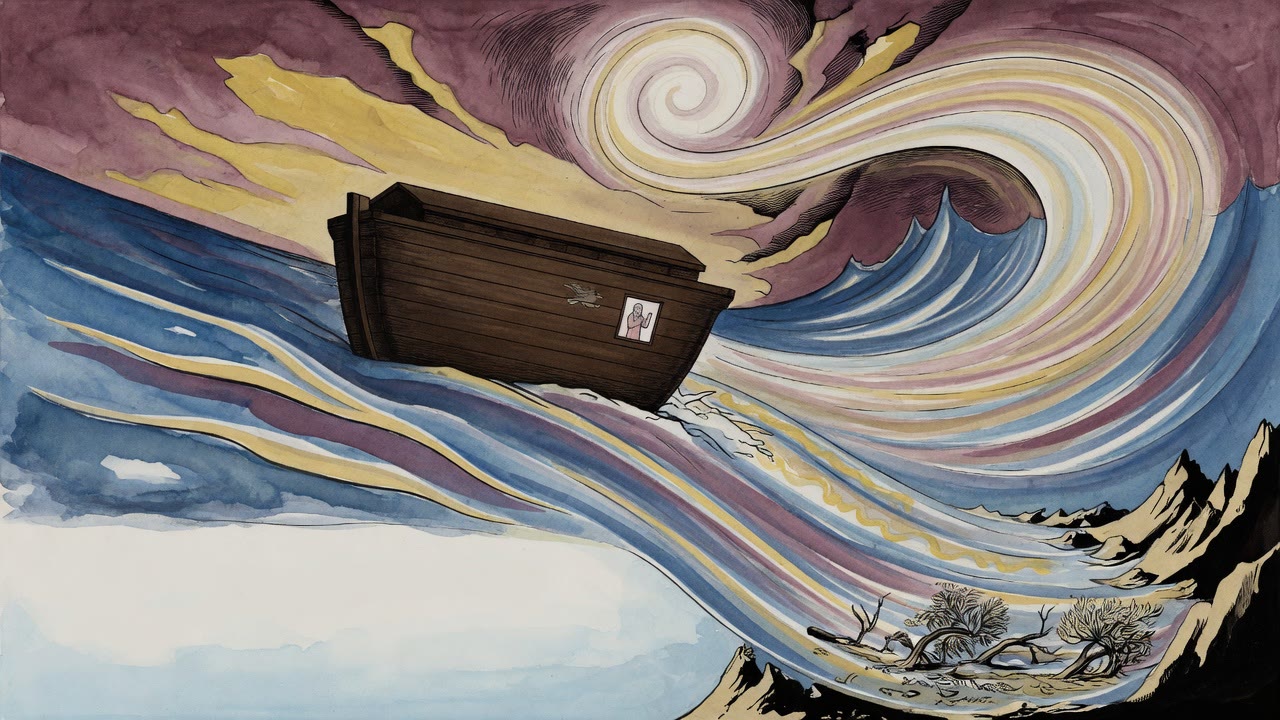
The joining made a pressure no roof could bargain with. Boards spoke. Ropes sang. The waters prevailed exceedingly upon the earth (Genesis 7:19). Mountains lost their names. Cities became sediment. Noah stood under the pearl and took the collision of above and below as a continuous blow against the hull.
He was not steering. He was keeping. The pearl made the keeping possible. Without it, the ark would have been a coffin of pure dark, and fear would have finished what the water began. With it, eyes could still meet. Hands could still find grain. A child could still sleep against a parent's side and see the edge of a blanket.
Every breath in that wood lived on borrowed light. When the pearl swung on its hang with a sudden roll of the sea, the whole interior tilted from white to shadow and back, and Noah put his palm on a beam until the glow steadied again.
The Ark Grounds
The rains ended. The deep closed its mouth. The ark grounded with a jar that ran up through Noah's bones. He opened what he could open and sun returned to a washed and emptied earth. The pearl's work was done. Day no longer needed to hang from a string.
The survivors stepped out onto mud that remembered drowning. Birds left first and came back with nothing. Then green. Then the long work of rebuilding a fire that would stay lit without a gem to feed it.
Fear did not leave with the water. People huddled in one place, still flinching at every cloud that thickened at the horizon. They had seen the world erased once. They wanted a wall of people thick enough that the next flood would have to notice them before it swallowed them.
Nimrod Rose Over the Afraid
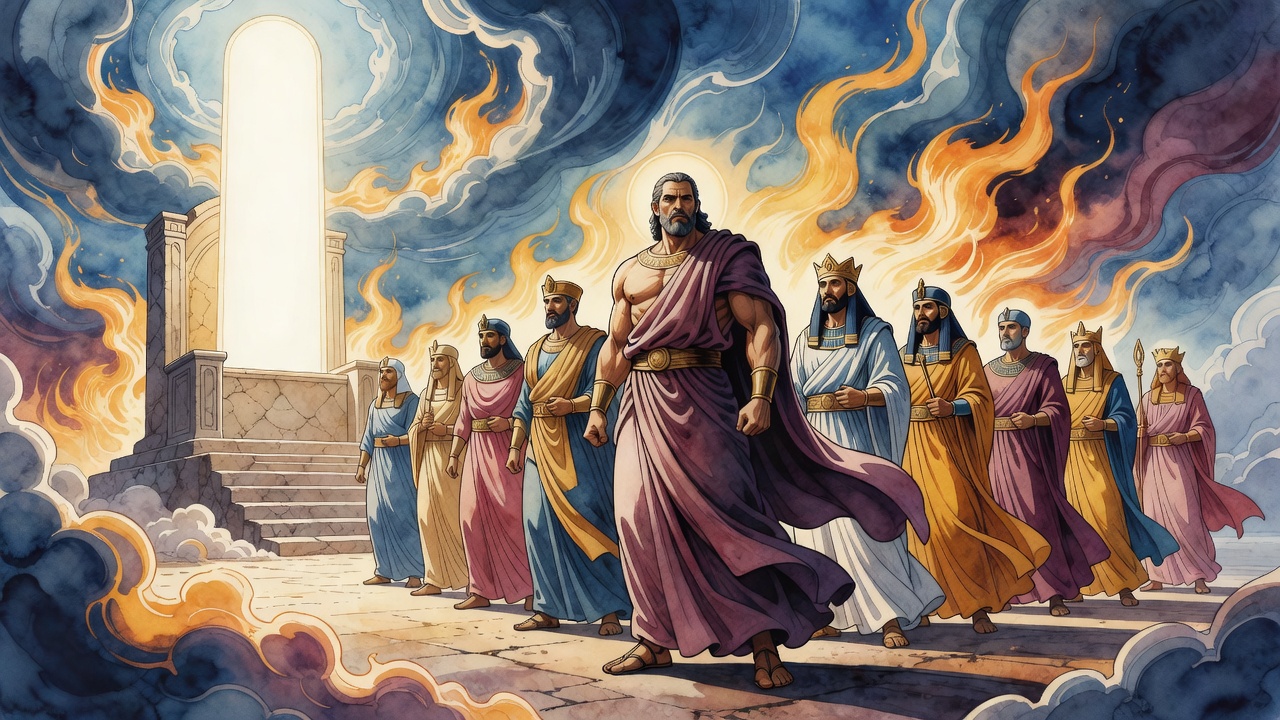
Ten kings ruled from one end of the world to the other. The first is the Holy One, blessed be He, who rules heaven and earth and who removes kings and sets them up (Daniel 2:21). The second is Nimrod.
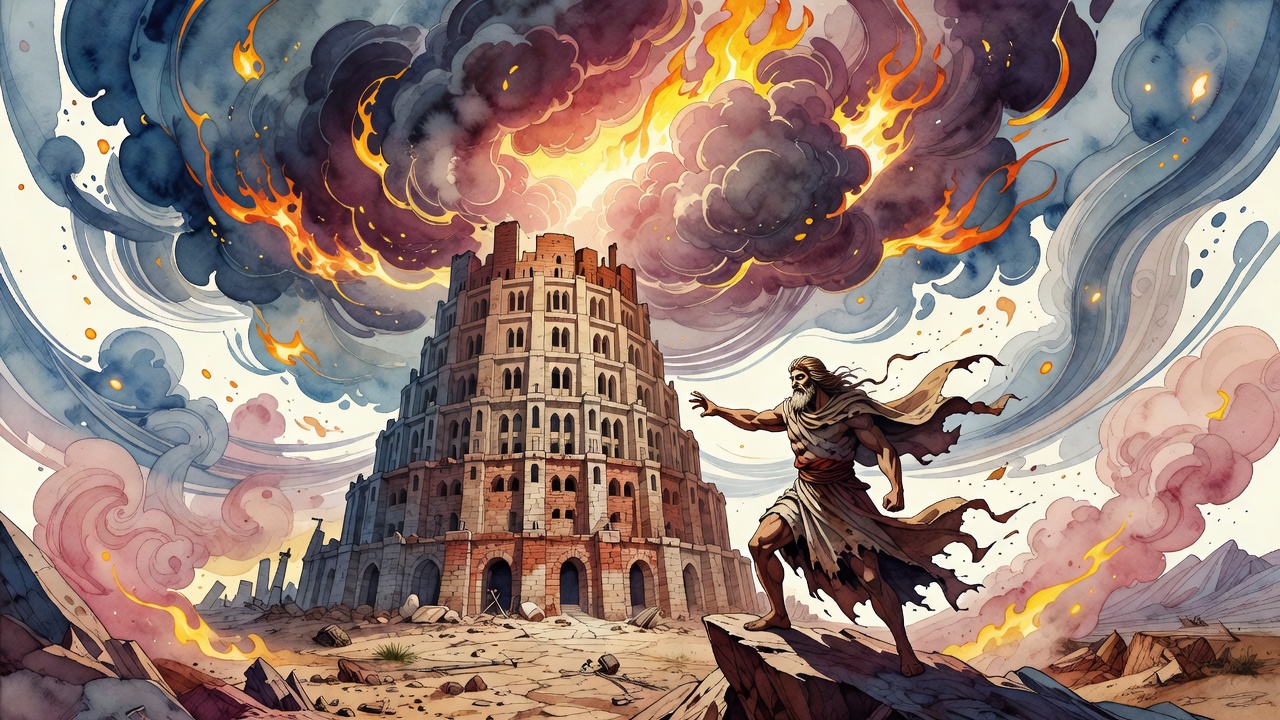
Nimrod did not inherit a calm empire. He inherited a species still listening for rain. All the creatures of that generation dwelt in one place and feared the waters of the flood, and Nimrod became king over them. The beginning of his kingdom was Babel (Genesis 10:10).
He offered what the pearl had offered inside the wood: a center against terror that had no shore. Men gathered to his name because scattered lives felt like an invitation to another deluge. Under him the world narrowed to one speech, one brickline, one tower pointing at the sky that had once opened without mercy.
Noah had lived under a pearl that asked nothing but obedience to the command that put it there. Nimrod ruled under a fear that asked for more bricks and more bodies in the same square. The flood's survivors traded the sealed light of the ark for a kingdom built on the memory of drowning.
Somewhere the pearl's glow was already a story told to children who had never smelled pitch. On the plain, Nimrod's shadow lengthened from end to end of a world that still woke at night thinking it heard water finding the seams of the earth again.
← All myths