Noah Saw That All Flesh Had Corrupted God's Own Road
Before the rain, Noah hears the world call itself flesh, self-love thick as mud, until even the breath under heaven reeks of desire.
Table of Contents
 Click for full size
The Smell Before the Rain
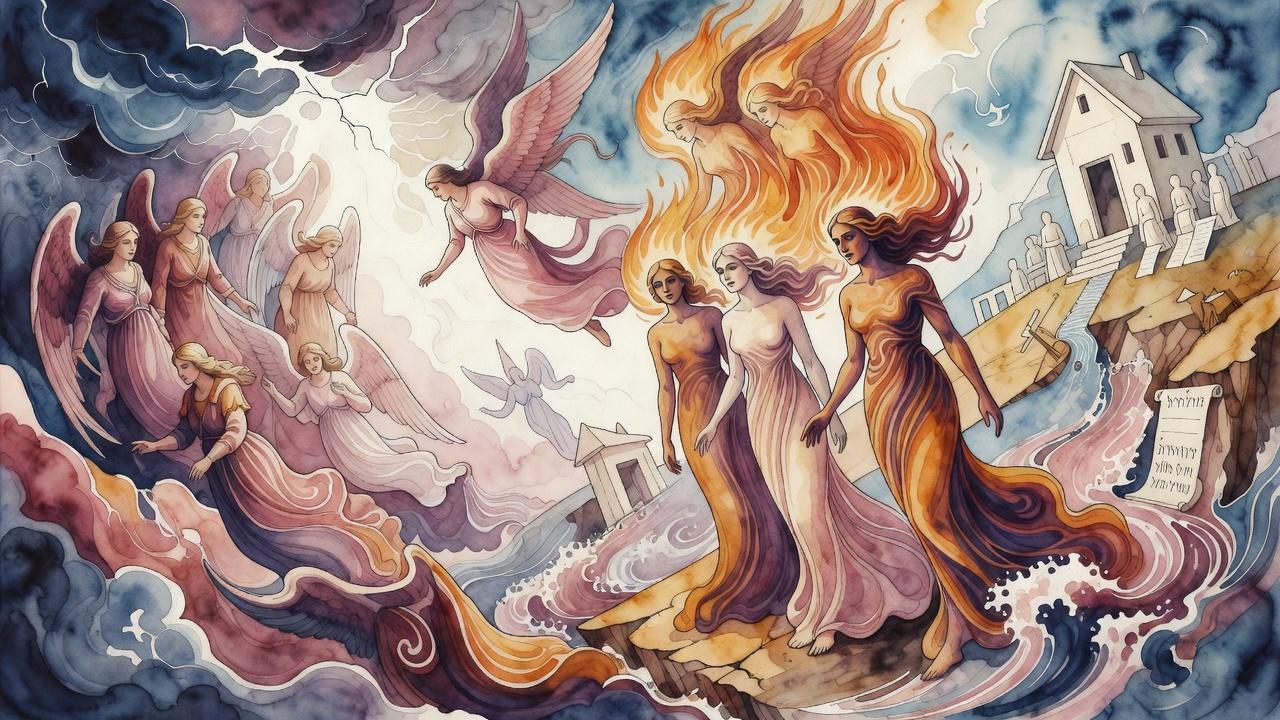
Noah walked the street and tasted iron on the air. Men called one another friend and still measured each other like meat. A merchant thumbed a scale. A woman laughed at a cripple's fall. Somewhere a child learned the language of appetite before he learned a blessing. Scripture would later say all flesh had corrupted its way upon the earth (Genesis 6:12). Noah already knew what flesh meant without a dictionary. Flesh meant a life that loved only itself.
He did not need a scroll to name the disease. Self-love sat in the chest like a second heart. From that seat desire rose: appetite, passion, the soft violence of always wanting more. People were not merely bodies. They were bodies that had made desire their god and then called the arrangement freedom.
Noah pressed his palm to a doorpost and felt the wood thrum with the noise of the city. He was still alone in the only way that mattered. Righteousness is a lonely trade when the market sells everything except restraint.
His Way, Not Its Way
The verse did not say flesh corrupted its own path only. It said flesh corrupted His way. The capital letter is a reverence and an accusation. God's road, the plain road of continence and justice, had been crowded by enemies of those laws. They did not merely stumble. They opposed the path the way a drunk opposes a straight line.
Noah heard men deify time itself, as if Chronos ran the world and the Holy One were a rumor. Shipwrecks, plagues, wars: they pointed at chaos and said fate has no face. Noah heard another sentence under the noise. The time of all mankind had come against God. Not because stars forced a schedule, but because iniquity had filled the earth until no room remained for a different kind of breath.
He wanted to argue with the street. The street had no ears left. Only mouths. A builder shouted that collapse is random. A sailor said the sea takes whom it takes. Noah kept walking toward timber, because a world that worships chance will not hear a warning dressed as chance.
Breath Beneath the Heaven
When the decree came, it did not spare poetry. All flesh in which there is the breath of life, beneath the heaven, would end in water (Genesis 6:17). The phrasing was heavy on purpose. Flesh. Breath. Beneath the heaven. The neshama (נשמה), the living breath, had been folded into the rot. Destruction would not be a tidy removal of bodies while souls stayed clean.
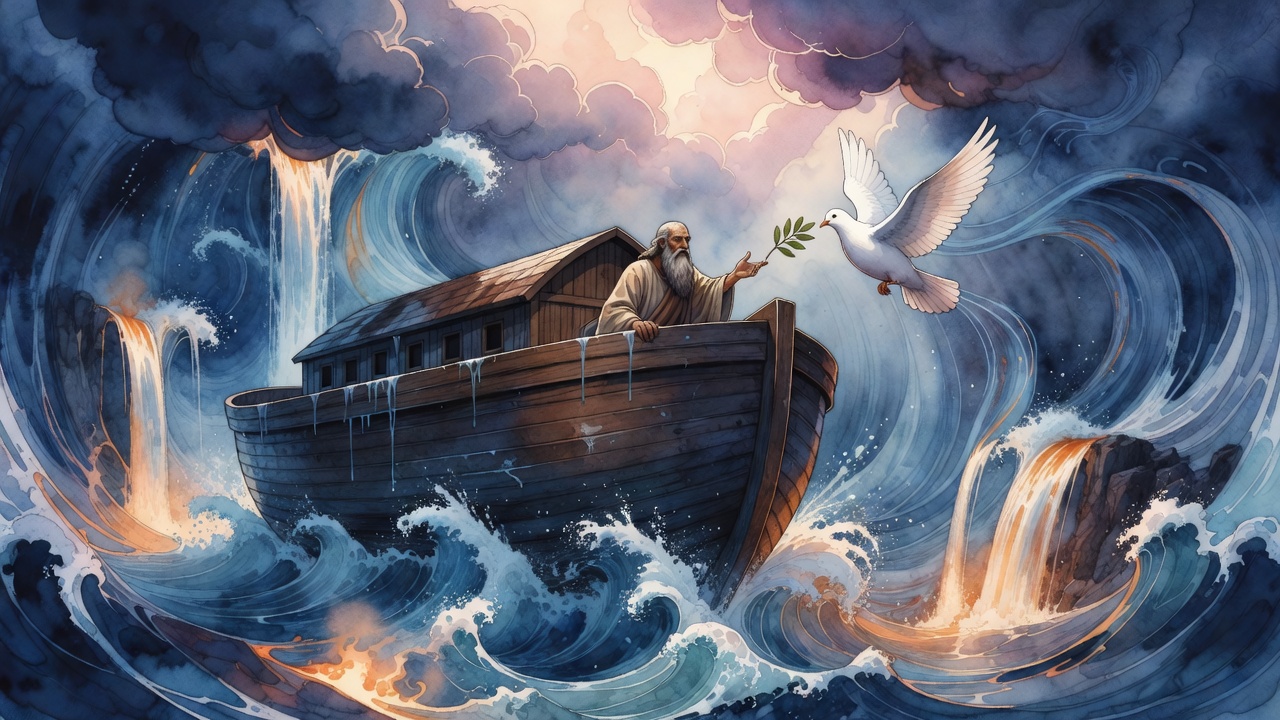
Noah measured gopher wood with hands that shook. He was not building a museum for virtue. He was building a box against a sky that would open. Neighbors mocked the ribs of the ark as they rose. He drove another peg and tasted salt that was not yet sea.
Some still asked where divine justice hid when a house collapses on the innocent. Noah had no speech for every random beam. He had a world so full of willful evil that "against Me" became the only honest map of the hour. God is the source of good. The flood answered a generation that had made wickedness its weather, not a dice throw in the dark.
The Door That Closed
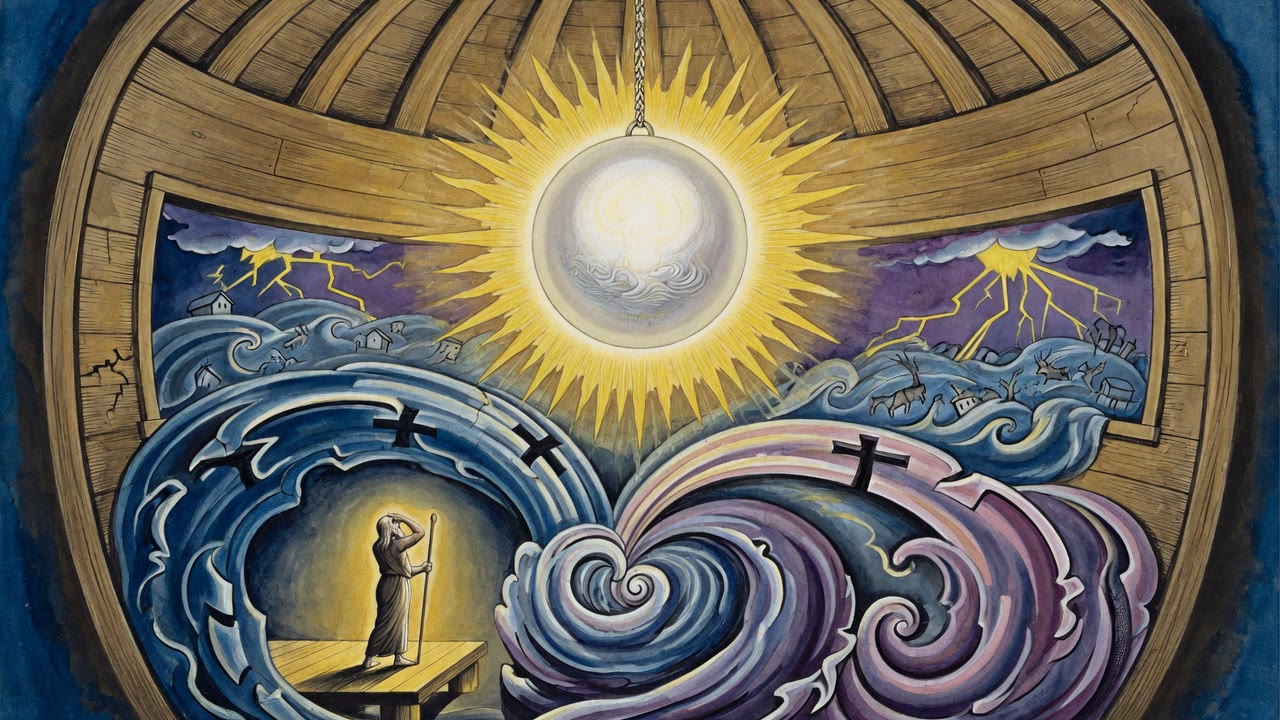
Animals came. Family came. The door shut. Rain began like a rumor and became a law. Outside, the lovers of self learned that self is a poor raft. Inside, Noah fed creatures and counted days and felt the hull complain. He was the just one, still mortal, six hundred years sitting on his bones.
He did not celebrate. A man who builds an ark against his generation does not smile when the water proves him right. He only holds the railing and listens for the last cry he cannot answer. Pitch stuck to his fingers. The smell of wet wool and fear filled the hold.
When the world became one sea, the old definition of flesh sank with the markets. What remained was a remnant and a question: would breath ever learn a road that was not appetite?
After the Surface Breaks
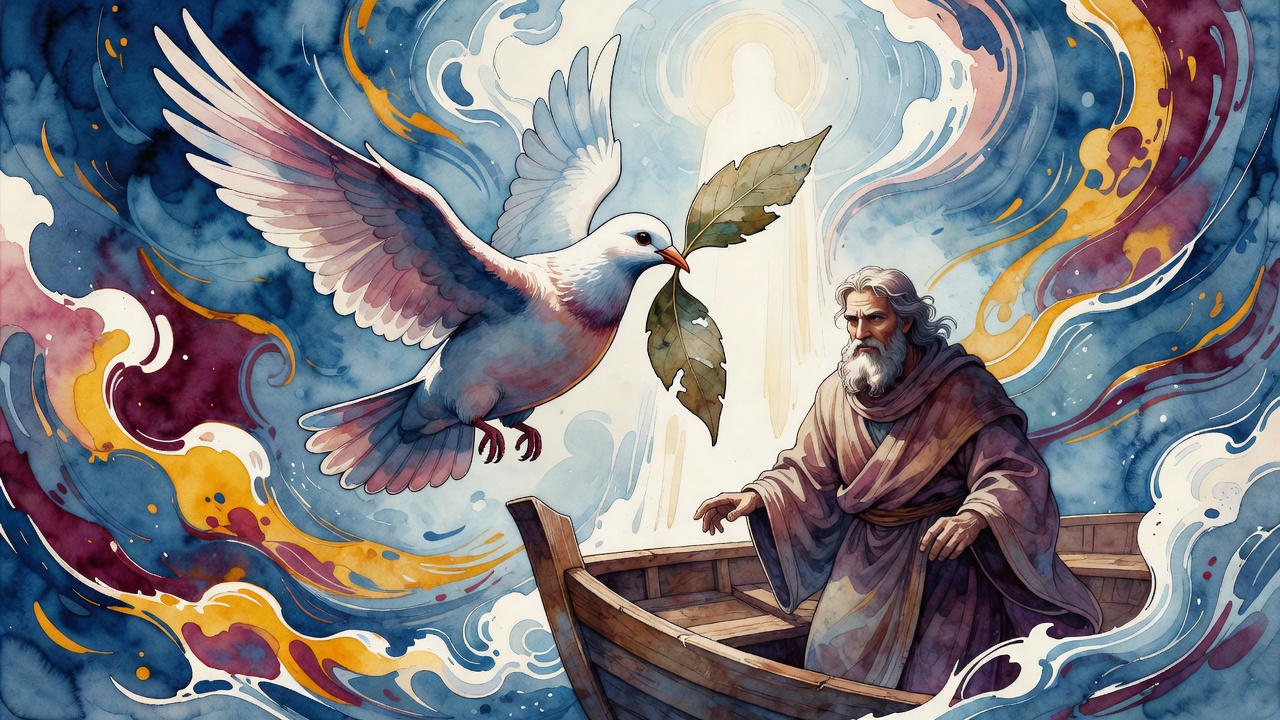
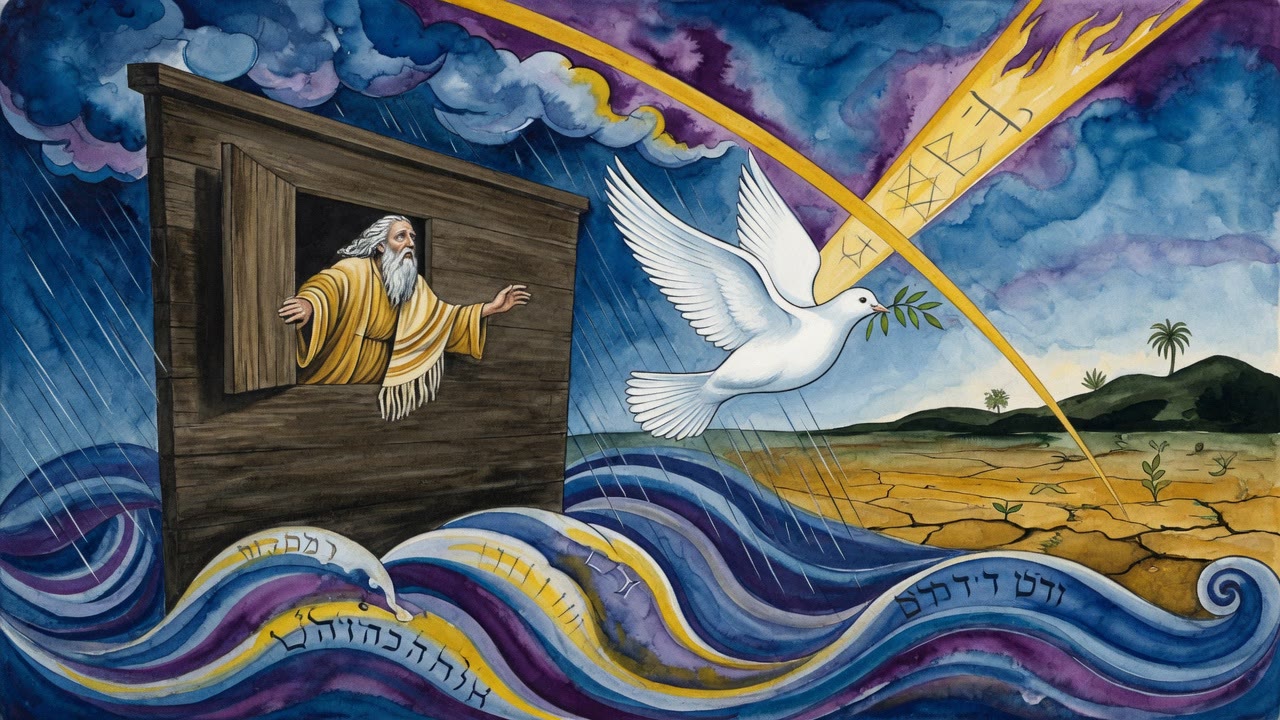
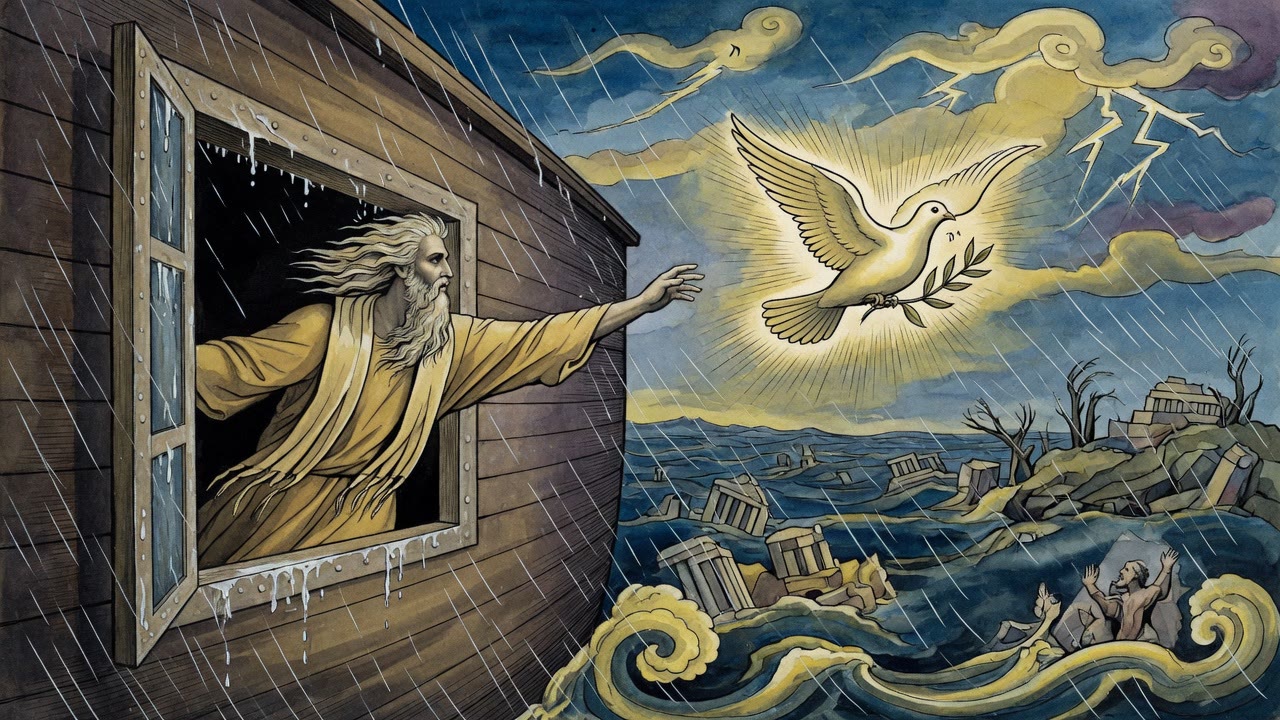
Later, when peaks showed and the air thinned of storm, Noah would open a window and send birds into a world that might still refuse virtue. For now the story holds in dark water and a closed door. The flood was never only water. It was the answer to a civilization that taught the soul to crouch inside the belly and call that crouch life.
Noah slept in shifts. In dreams he still walked the street of self-love and tried to shout a warning that arrived too late. Waking, he smelled pitch and animals and the strange peace of a judgment already underway.
Under heaven, for a season, only one household still practiced the plain road. That was enough to keep a species of hope breathing until dry ground returned. Noah kept a lamp lit in the dark and waited for the knock of a mountain against the keel.
← All myths