Noah Measured the Ark and Solomon Built the Temple to Match
The animals walked off the ark and would not take an order. God gave Noah back their fear and held their obedience back for a king not yet born.
Table of Contents
 Click for full size
The Sea Was a Legion Camped Around the World
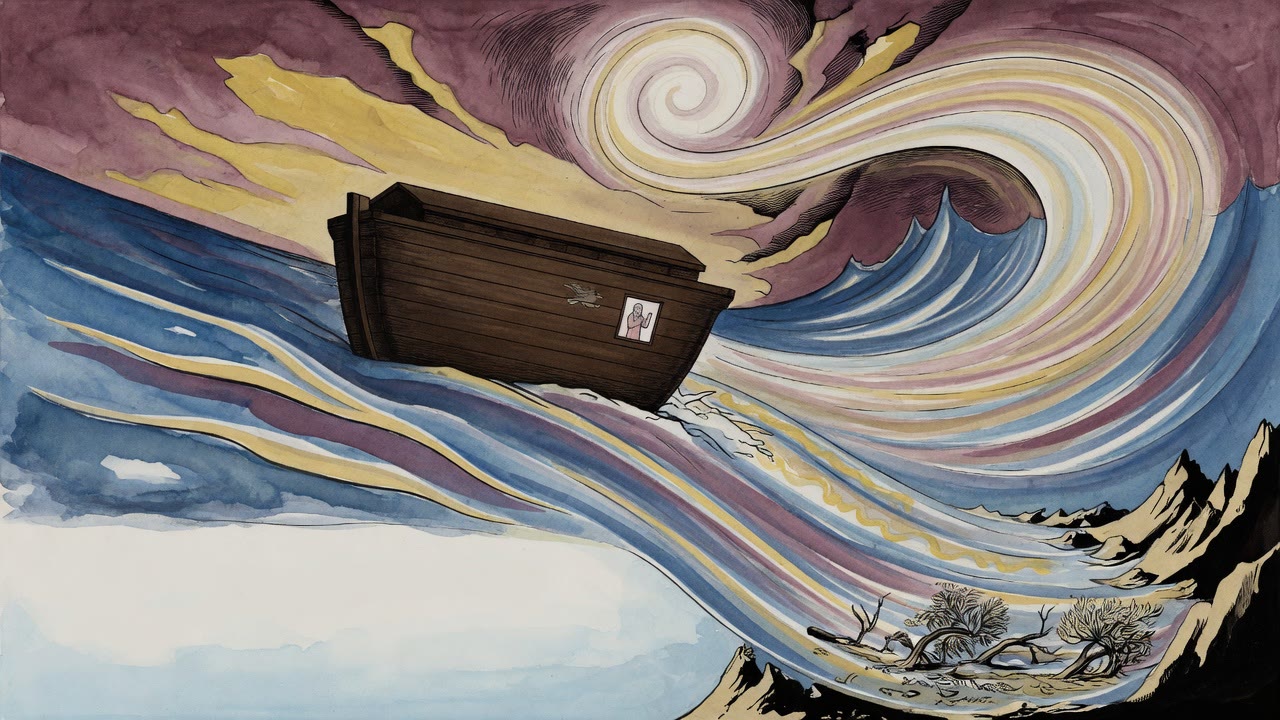
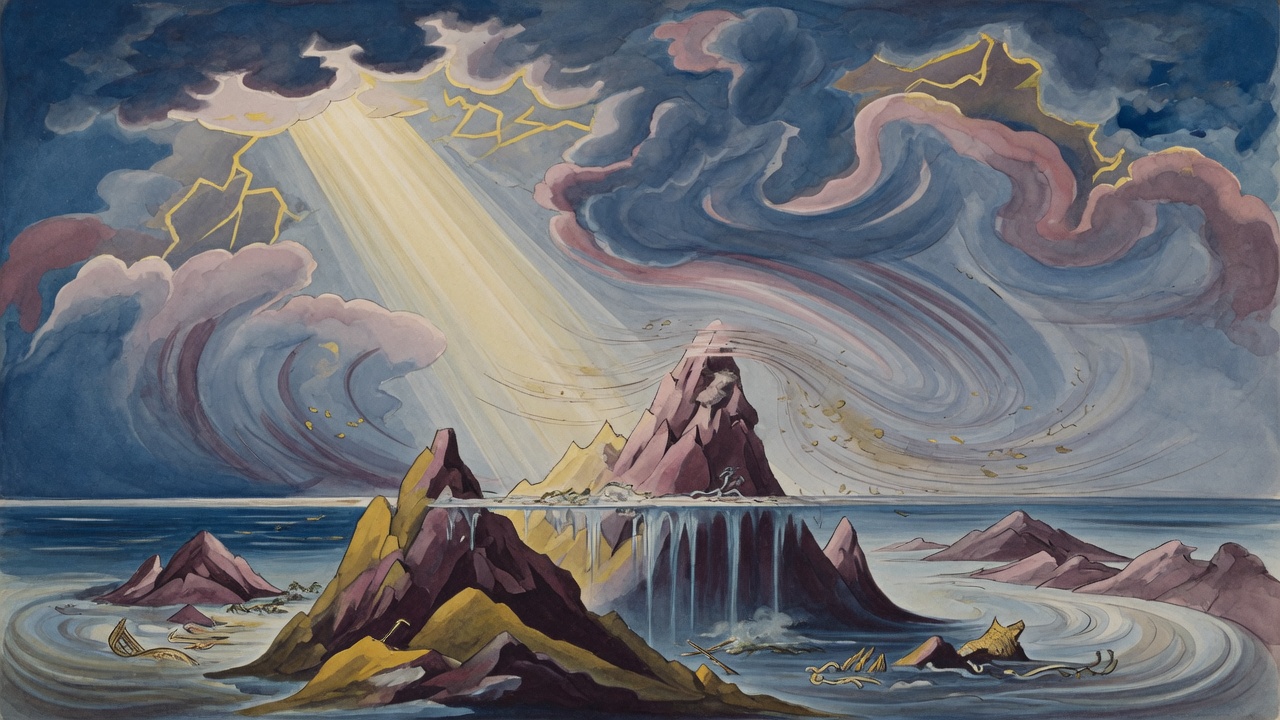
The water stays where it was told to stay. On the third day God said let the waters be gathered into one place, and they went, and every coastline since is the line they stopped at.
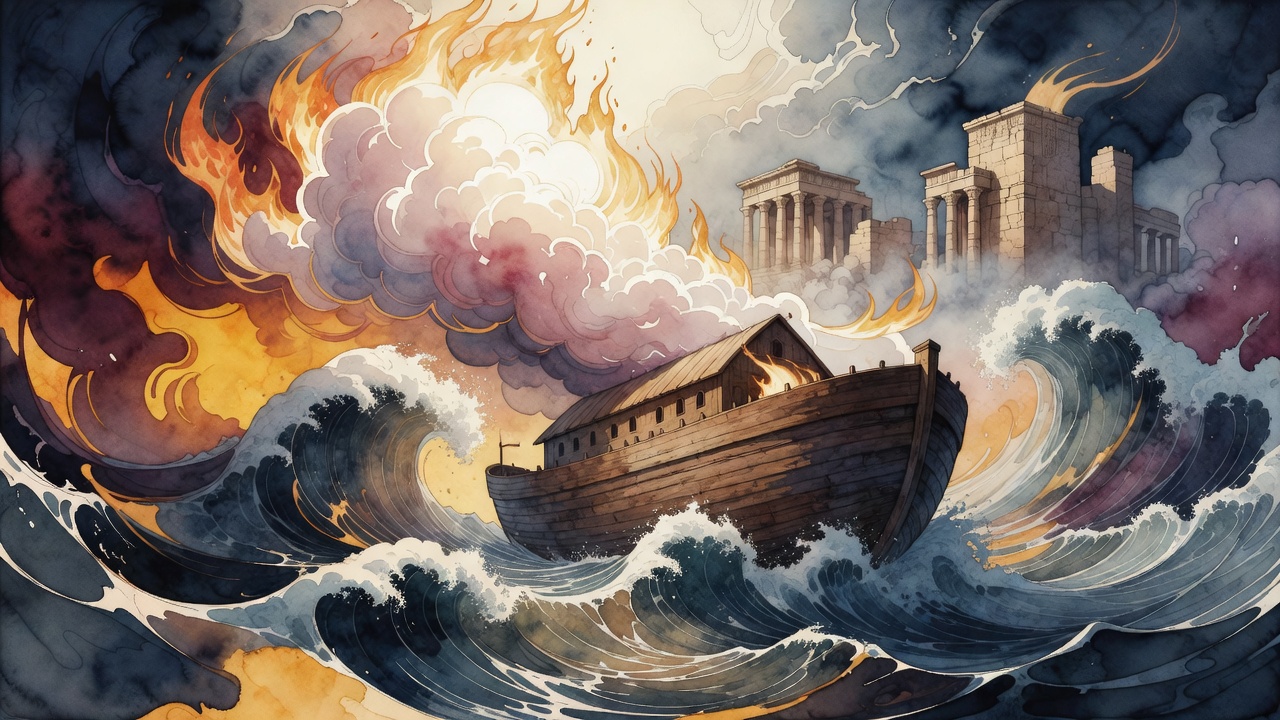
Rabbi Elazar counted the times the prophet Amos says that God calls for the waters of the sea and pours them out over the face of the earth. Twice. Not one summons but two. One went out over the generation of Enosh. The other went out over the generation of the Flood. In between, the sea sat where it had been posted, the way a legion sits outside a province that has already rebelled once. The king does not disband it. He leaves it camped in sight of the walls so that the people inside look out every morning and remember.
That is why God heaped the waters up in the first place, according to the psalm. So the whole earth would be afraid of Him.
God Handed Over a World Nobody Had Worked For
Ecclesiastes has a bitter line about a man who does his work with wisdom and knowledge and skill, and then has to leave the whole of it to somebody who never lifted a finger for it. Rabbi Yudan and Rabbi Yehuda bar Simon put that man's face on God.
He founded the earth with wisdom. He breached the deeps with knowledge. And the third word in the verse is smoothness, which the Rabbis took to mean that none of it cost Him any effort at all. He spoke and the heavens were already standing. No hauling, no sweat, no second attempt.
Then He gave the finished thing to the generation of the Flood, who had not toiled for one hour of it. What the verse says next is that this too is emptiness and a great evil. What Genesis says next is that the wickedness of man was great in the earth.
Noah Cut His Timber to a Ship's Proportions
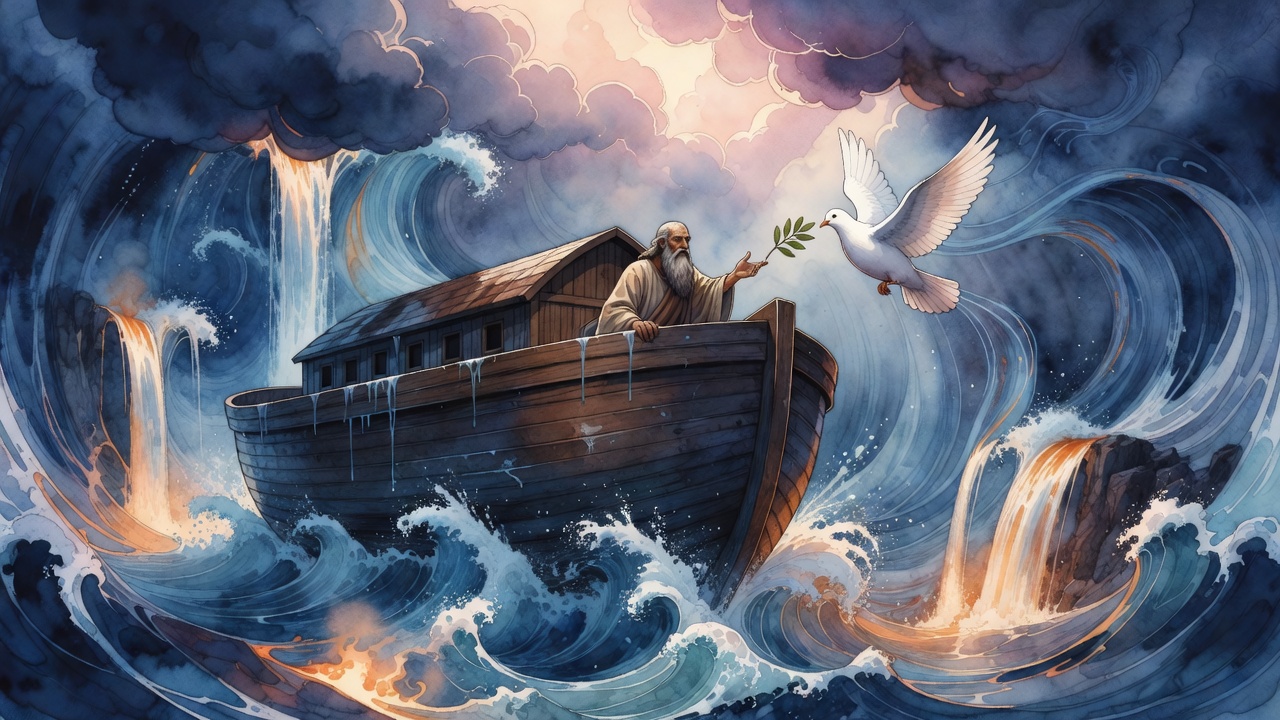
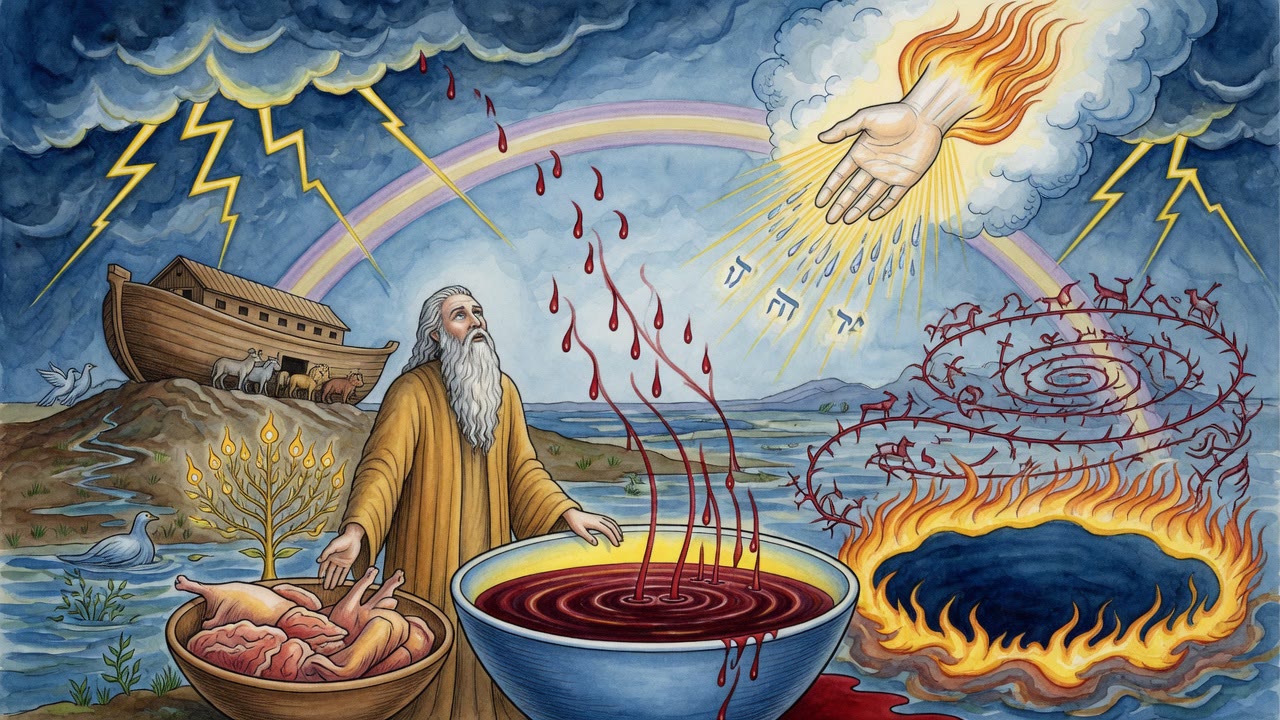
Three hundred cubits long, fifty wide, thirty high. Bar Hatya looked at those numbers and saw a shipwright's rule of thumb sitting inside a divine instruction: if you want a hull that will ride steady at its moorings, make the beam one sixth of the length and the depth one tenth. Noah was handed working specifications and told to go cut trees.
Rabbi Yudan noticed something smaller. God did not say this is how you shall make it. He said and this is how, and the extra syllable pointed forward to somebody else who would one day measure with the same stick. Chronicles says that Solomon laid out the Temple according to the first measure. Whose first measure? The Rabbis said the royal cubit carried Noah's name in it, because a cubit is called after the teiva, the box that floated.
So the rod that measured the flood timbers came back out centuries later, and Solomon's masons built to it, course for course, to match. Nothing else from that world survived. The measurement did.
Bread and Wine on the Road Back From the Kings
Abraham came off the battlefield with the four kings broken behind him, and a man walked out of the hills to meet him carrying bread and wine. His name meant king of righteousness, and the town he ruled was the town that would be called Jerusalem, a place that turns the people living in it righteous. Rabbi Yitzhak the Babylonian said Malkitzedek had been born already circumcised, with no covenant left to make.
Rabbi Shmuel bar Nahman said the meal was a lesson. The loaves were the showbread, laid out weekly in a sanctuary that did not exist yet. The wine was the libation poured beside the altar. A priest older than the covenant was handing Abraham the priesthood of his grandchildren, item by item, on a hillside, and Abraham gave him a tenth of everything he had taken.
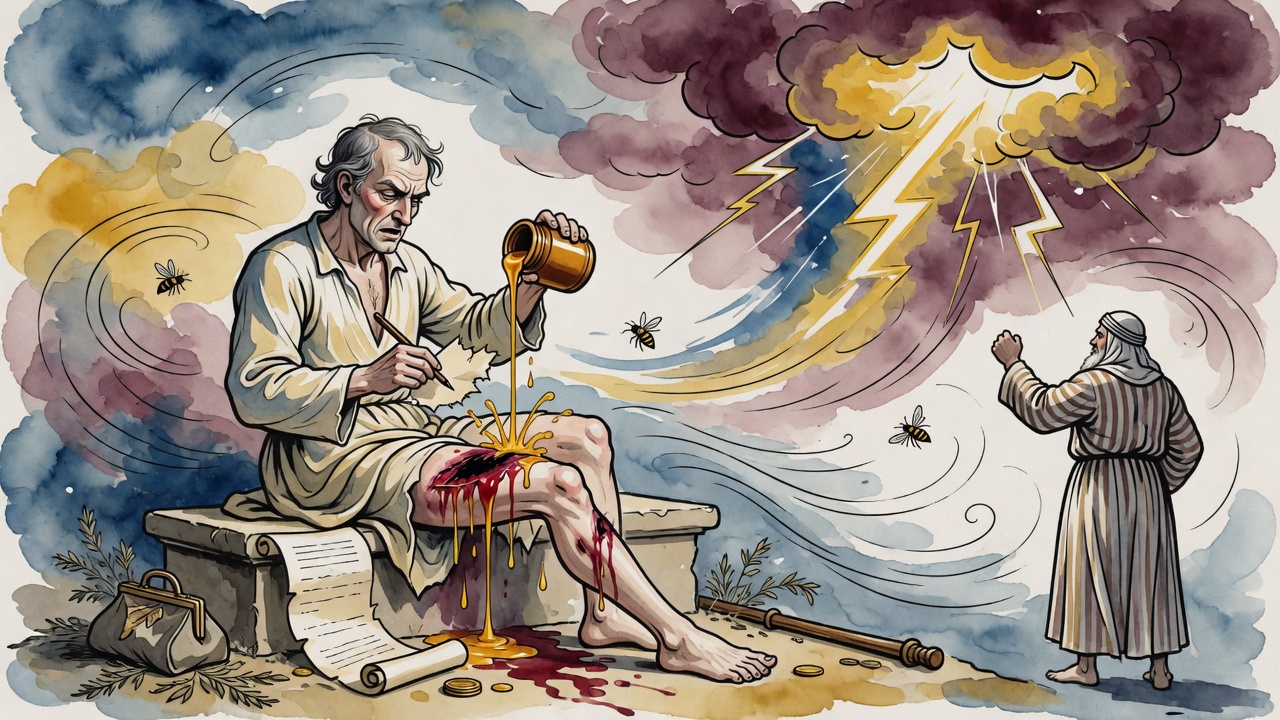
Rabbi Abba bar Kahana said every cup of wine in the Torah brings a blow down on somebody, and that this cup was the one exception. Rabbi Levi refused him the exception. Read on, he said. The next thing God tells Abraham is that his children will be strangers in a land that is not theirs, and they will be enslaved, and they will be afflicted four hundred years.
The Animals Came Off the Ark and Kept Their Necks Stiff
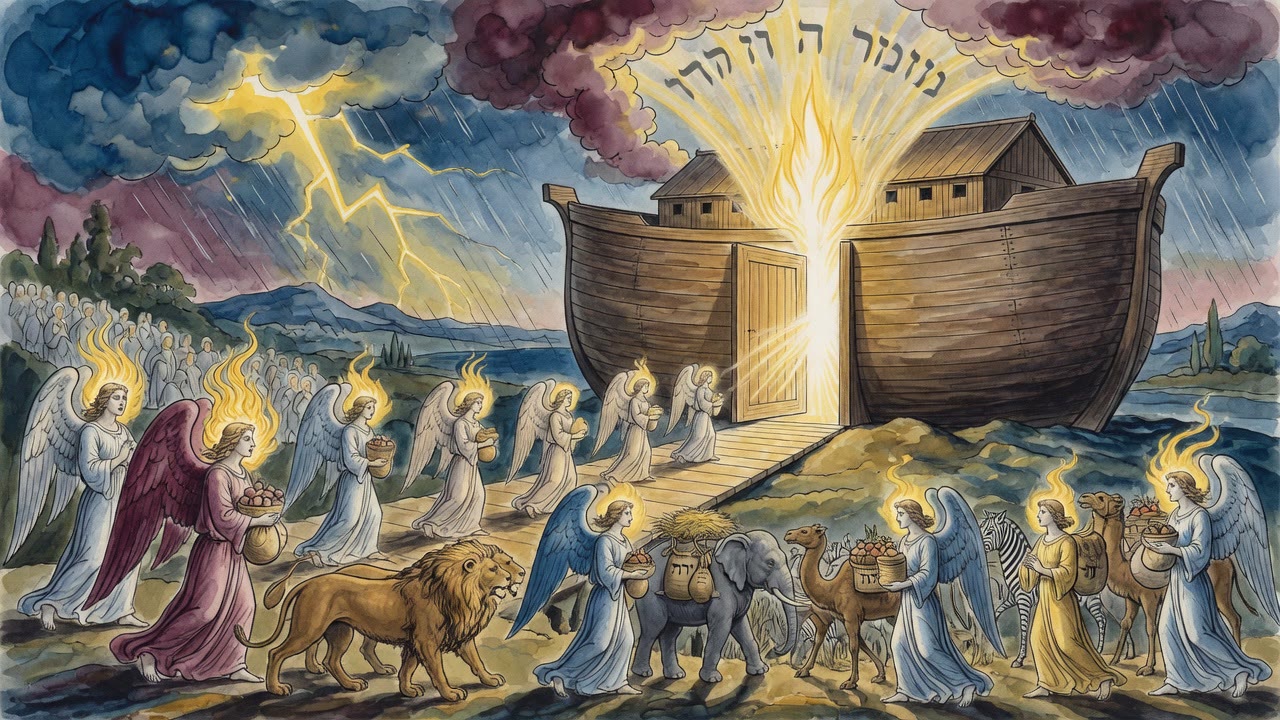
God blessed Noah and his sons on the mud and told them to be fruitful and fill the earth, and He said the fear of you and the dread of you will be on every beast and every bird and everything that crawls. The Rabbis read that sentence twice and found a hole in it. Adam had been given dominion. Noah was given fear and dread. Fear is not dominion.
When the decree went out against the Flood generation, the animals had stopped obeying, and after the water went down they still would not. A man could frighten a wolf. He could not order it. That stayed broken until a king in Jerusalem held the whole country from Tifsah to Gaza, and the word for what Solomon had over it is the word that had been missing since the ark.
Rabbi Shimon ben Elazar put the strangest edge on it. Nobody needs to stand guard over a baby one day old. A weasel comes near the cradle and turns around. A snake looks at the child and goes the other way. A lion will not cross the room. But when Og king of Bashan died, the giant whose body was a landscape, they had to post men over the corpse so that the mice would not get to his eyes.
The dread is on the living. It comes off the moment the breath does.
← All myths