Old Age Riddle and Dawn in the Valley of Arbel
The scroll had to sit against his face now. In the valley of Arbel the first seam of light still climbed the ridge, slow and thin.
Table of Contents
Rabbi Shimon ben Halafta left the road to the academy and did not come back. For years his feet had known every turn of the path to Rabbi Yehudah HaNasi, the man simply called Rabbi, who was binding the Mishnah around the year 200 CE. One season the visits ended. Colleagues asked why.
 Click for full size
He answered with a riddle that sounded like prophecy and arithmetic at once.
"The distant has become near," he said. "And the near has become distant. And two have turned into three."
A Third Leg on the Road
They pressed him until the geometry opened. The distant had become near because his eyes failed, so the scroll that once lived across a room now had to be held against his face. The near had become distant because hearing thinned, and voices at his shoulder sounded as if they came from a courtyard. Two had turned into three because his legs, once enough, now needed a cane, a third support he had never carried.
The cane tapped stone. Dust rose. Younger students still ran the path he used to take without thought. Shame sat in a strong man's throat when strength rearranged itself. He did not name the shame. He named the coordinates. Old age, in his mouth, was not a poem. It was a set of reversals a careful man could still describe without begging for pity.
In the house of study they stored the riddle the way one stores a tool. The failing body had become a teaching on how not to waste speech when the world shrinks.
First Light in the Valley of Arbel
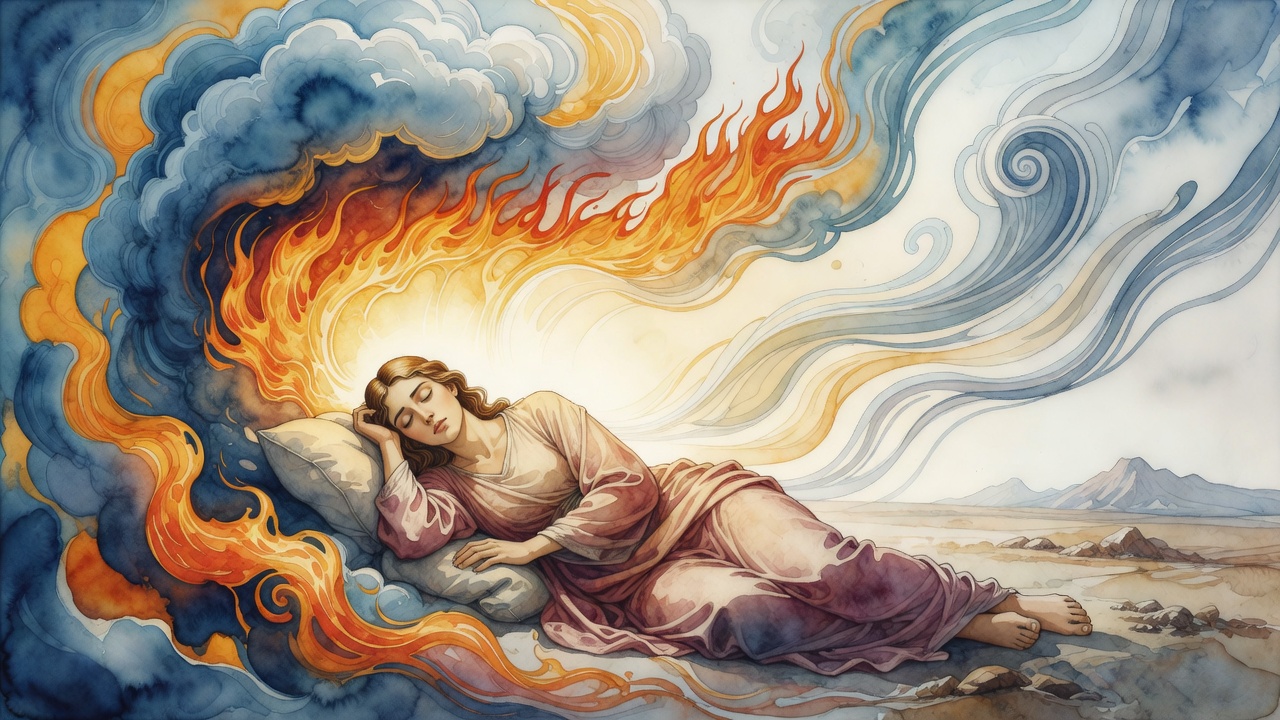
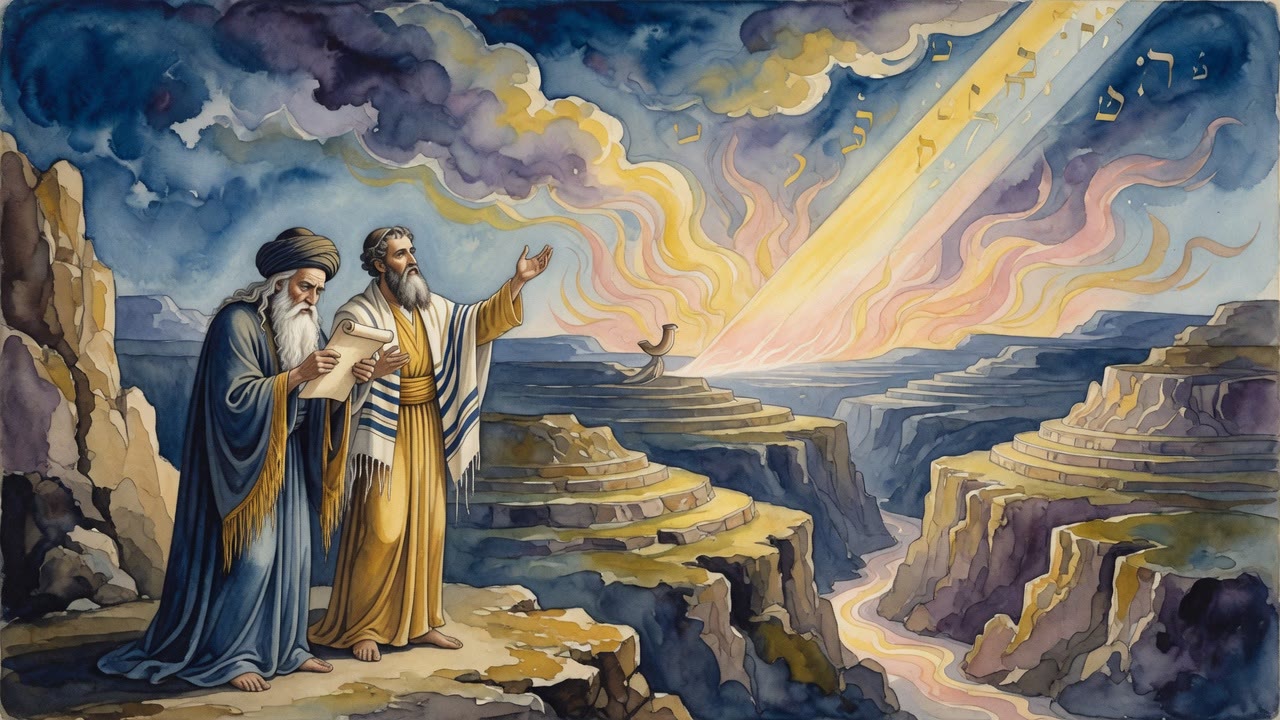
He remembered another morning, when his legs still answered. Rabbi Hiyya Raba had walked with him through the valley of Arbel. The dark held a long time. Then a thin blade of light cut the eastern ridge. It did not flood the valley. It grew the way a careful fire grows, first a seam, then a widening, then the stones taking color one by one.
Rabbi Hiyya turned to him. "So is the greatness of Israel. First a little, and as it proceeds, it continuously increases."
They stood with the light on their faces. "Although I sit in darkness, the Lord is a light for me" (Micah 7:8). The darkness was real. The light was already moving inside it. Mordekhai sat at a gate and overheard a plot. Later he walked out in blue and white and gold. Between the sitting and the crown there had been only a thin bright edge, the kind a man can miss if he wants night to stay night.
The Doe That Holds the Heights
Rabbi Pinchas set another image against the same hour. Psalm 22 opens under the heading of the doe of the dawn. He heard strength there, not softness. "God, the Lord, is my strength, and he makes my feet like those of a doe" (Habakkuk 3:19). Not like bucks, he insisted. The female's legs hold firmer on the rock. Israel on the ridge after the sea is that creature, feet finding purchase where a heavier body would skid. At the Red Sea the heights were not only triumph. They were the place from which a freed people looked back and saw what the water had done to those who hunted them (Exodus 14:30).
Rabbi Shimon, who could measure the nearness of a page to his failing eyes, understood a redemption that begins small. A first strip of light. A first sure step. A body that must invent a third leg and still stand for Torah.
He Would Not Perform Youth
The cane and the dawn belong to one life. The man who named his diminishments without theater is the same man who could watch morning climb Arbel and hear a nation's future in a gradual brightening. Nothing in the valley promised speed. Everything promised direction. First a little. Then more. Then the whole slope awake.
He would not perform youth. He would not perform despair. He held the page against his face and kept the Torah in the only range his eyes still owned. Redemption that arrives like a trumpet might flatter a younger body. Redemption that arrives like Arbel's first seam fits the man who already knows how to live by thin increments of light.
When students later repeated his riddle, they were not only mourning age. They were learning how to keep walking when the map of the body changes, and how to trust a light that refuses to arrive all at once.
The cane tapped. The page stayed close. Dawn, somewhere, was still only a seam.
← All myths