Israel Threw Only Hope Before the Throne
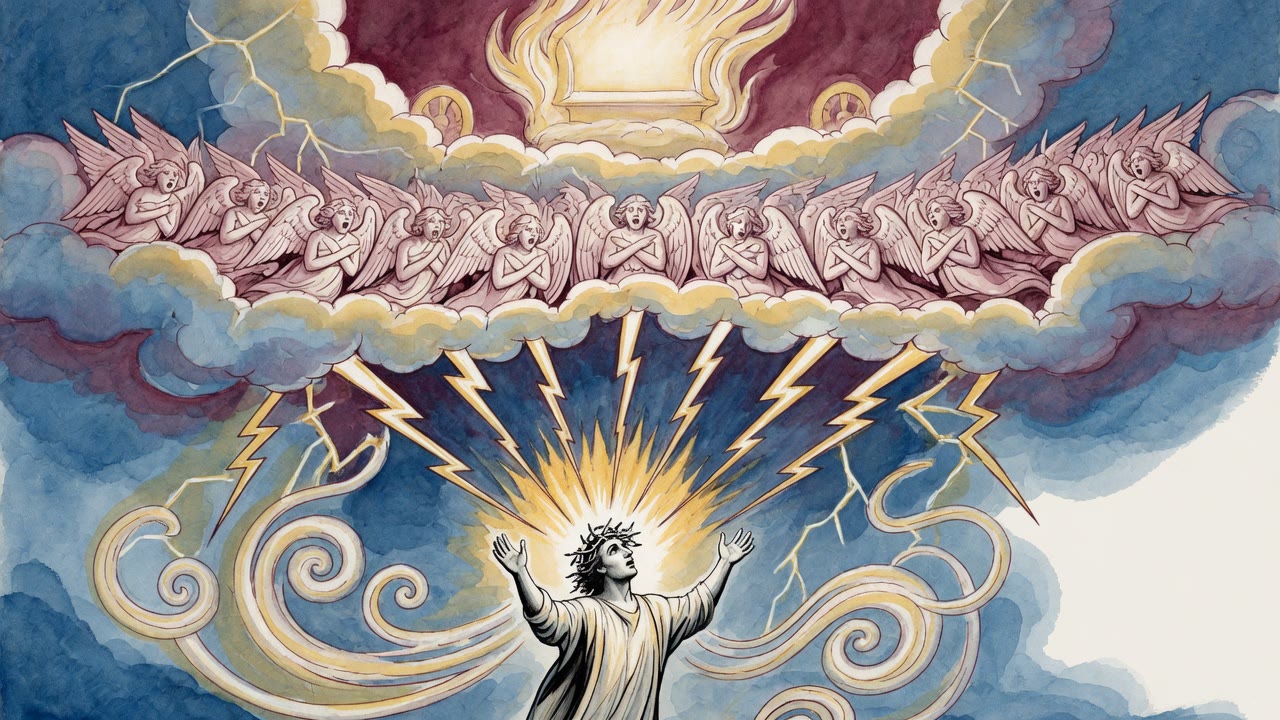
Empty-handed before the throne, Israel names God's righteousness alone as the case for rescue, while David waits on hope that has no other coin left.
Table of Contents
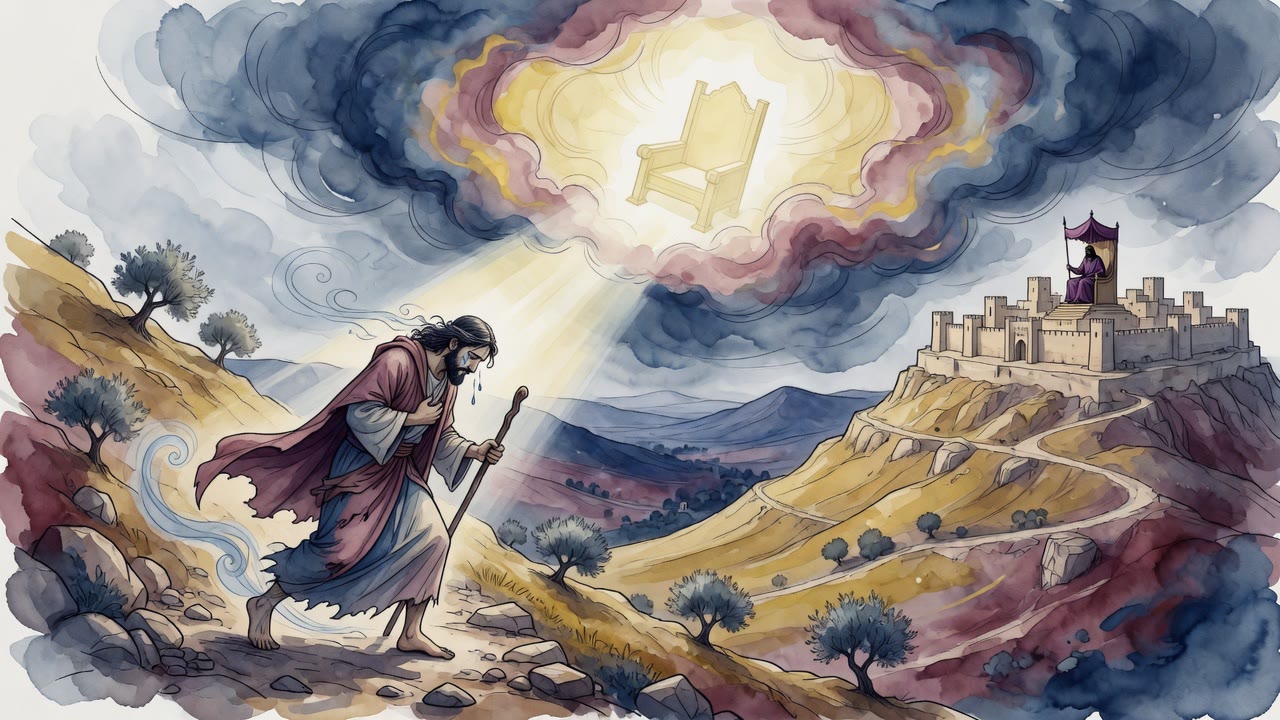
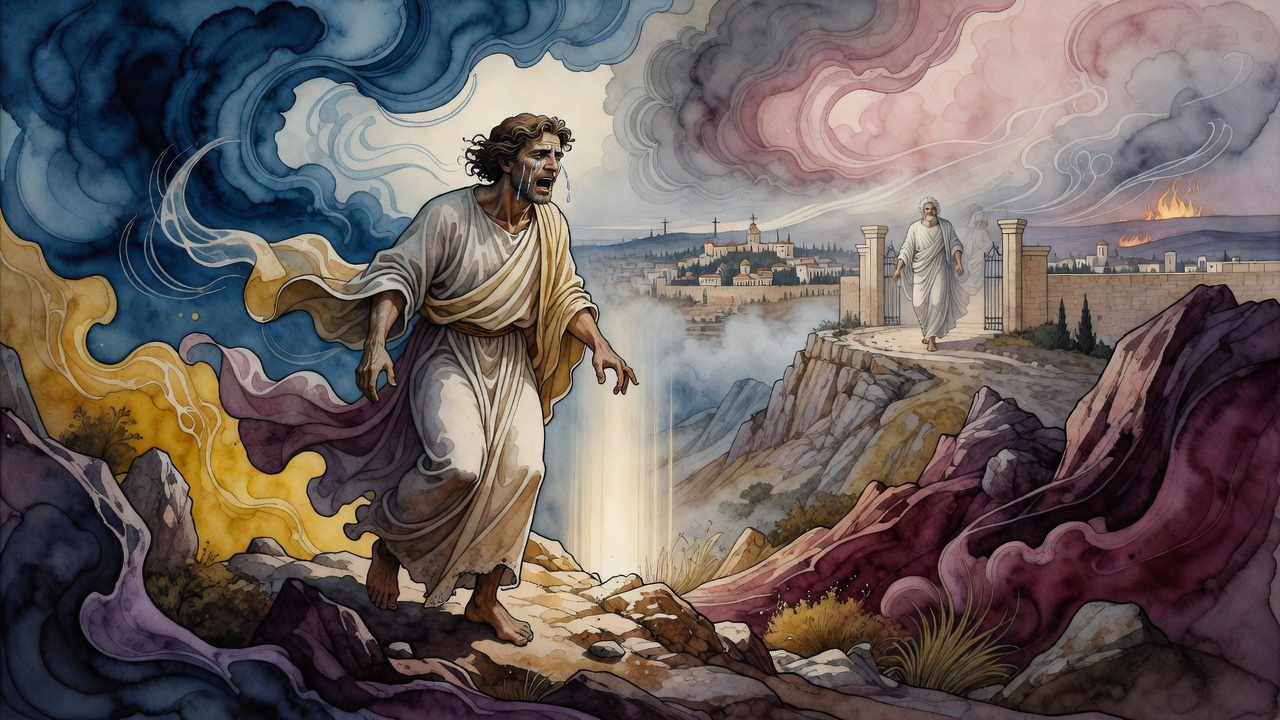
David stood in a stone court where the wind cut under the lintel and no petition had weight enough to sit. Night had thinned the city. A lamp smoked on a ledge. He did not open with a list of victories. He opened with a question that left his mouth raw: who shall dwell in Your tent, O Lord? Who may climb the hill and stay (Psalms 15:1)?
 Click for full size
The tent did not answer with a guest list. The air held the smell of oil and cold dust. David waited as if the threshold itself were listening. He had killed lions and men, sung until the harp strings frayed, fled Saul until his legs burned. None of that stood clean enough to force the door.
Empty Hands at the Threshold
The assembly of Israel pressed in behind that same plea, not as a parade of merits but as a crowd with nothing left to bargain. "In Your righteousness, save me and deliver me," they cried, and the words scraped because they refused to dress themselves up. Not for our deeds. Not for a ledger we can wave. For Yours, today and tomorrow.
God did not ask them to invent righteousness they did not have. They held the line hard: when You save me, it is not because of my righteousness or my works, but solely from Your righteousness. They threw their case past their own names. Isaiah's line walked with them: He saw that there was no man, no intercessor standing ready, and His own arm brought salvation, and His righteousness supported Him (Isaiah 59:16).
A man in the back of the court clenched a fist and then opened it. Empty palm. The fist had nothing left to prove. Dust stuck to the sweat lines. He did not hide the hand. He raised it as evidence of poverty, not of virtue.
Hope Was the Only Coin
Isaiah had already named the day: Lo, this is our God; we have waited for Him, and He will save us (Isaiah 25:9). Waiting was not a soft chair. Waiting was a stance that refused to collapse when the harvest was past and the summer was ended and no rescue had yet walked through the gate (Jeremiah 8:20).
The truth cut thin enough to cut a finger: the only thing Israel has in its hand is hope, so that they may be redeemed in reward for their waiting. No gold. No sealed decree from a foreign court. Hope, held like a worn coin that still spends in heaven's market when every other currency has failed.
David had hoped and been answered. Therefore he kept hoping. The loop did not make him pretty. It made him stubborn. He spoke the psalm again when his heart tried to leave the room. "Be strong, and let your heart take courage, all you who hope in the Lord" (Psalm 31:25). Courage here was not a shout. It was the decision not to drop the coin.
Lamentations still sat on the shelf of memory: the Lord is good to those who wait for Him (Lamentations 3:25). Goodness did not always arrive on the day the petitioner preferred. The waiting itself became the work, the only work left when armies and arguments both failed.
The Ear That Bends
"Incline Your ear to me and save me," the plea continued, and the image tightened from cosmic arm to the lean of a listening head. Salvation for the needy looks like attention before it looks like thunder. He has inclined His ear to me, and I will call on Him as long as I live (Psalm 116:2).
Hezekiah had bent that same language toward a siege: Incline, O Lord, Your ear and hear (2 Kings 19:16). The ear turned. The city did not fall that night the way the messengers promised. David borrowed the posture. He did not demand a spectacle first. He begged that heaven lean closer than the insult and the arrow.
Outside the tent, the kingdom of wickedness still ran its markets. Rock and distress braided in the older readings: a hard power that would not crack, a body that knew its limits, an idol that promised shelter and delivered partitions instead. David did not pretend those forces had left the road. He asked for passage through them, not for a map that denied they existed.
A watchman on the wall shifted his spear and spat dust. No angel walked the rampart for him to point at. The only motion that mattered was invisible: an ear deciding whether to turn.
The Door Did Not Open on Merit
Who shall dwell? The question stayed. The answer did not arrive as a resume check. It arrived as a people learning to stand before the tent without counterfeit papers. They named God's righteousness as the case. They named hope as the coin. They named the inclined ear as the first shape of rescue.
David left the stone court with the lamp still smoking. He did not carry a signed permit to the Holy Place. He carried a psalm that refused to quit and a nation behind him that had stopped pretending its hands were full. The threshold remained a threshold. The tent remained God's. What changed was the way empty hands learned to speak without lying.
In the dark beyond the gate a dog barked once and went quiet. David walked home under a sky that had not yet split open. Hope sat in his palm, light and sharp, the only metal left that heaven still took in trade. He closed his fingers on it until the metal bit, then opened them again so the night could see he still held nothing else.
← All myths