Once the Destroyer Was Loosed, Israel Shut the Door
Pharaoh went through the markets at midnight asking strangers where Moses lived, and Israelite children kept sending him down the wrong streets.
Table of Contents
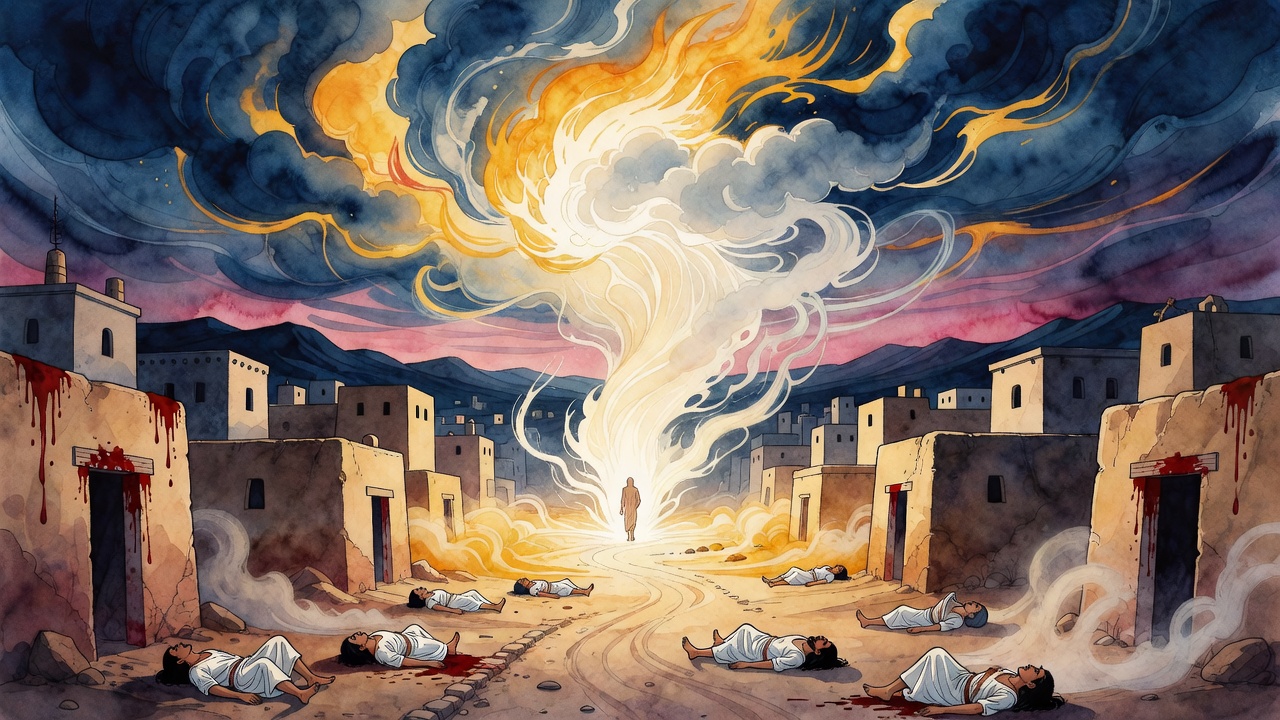
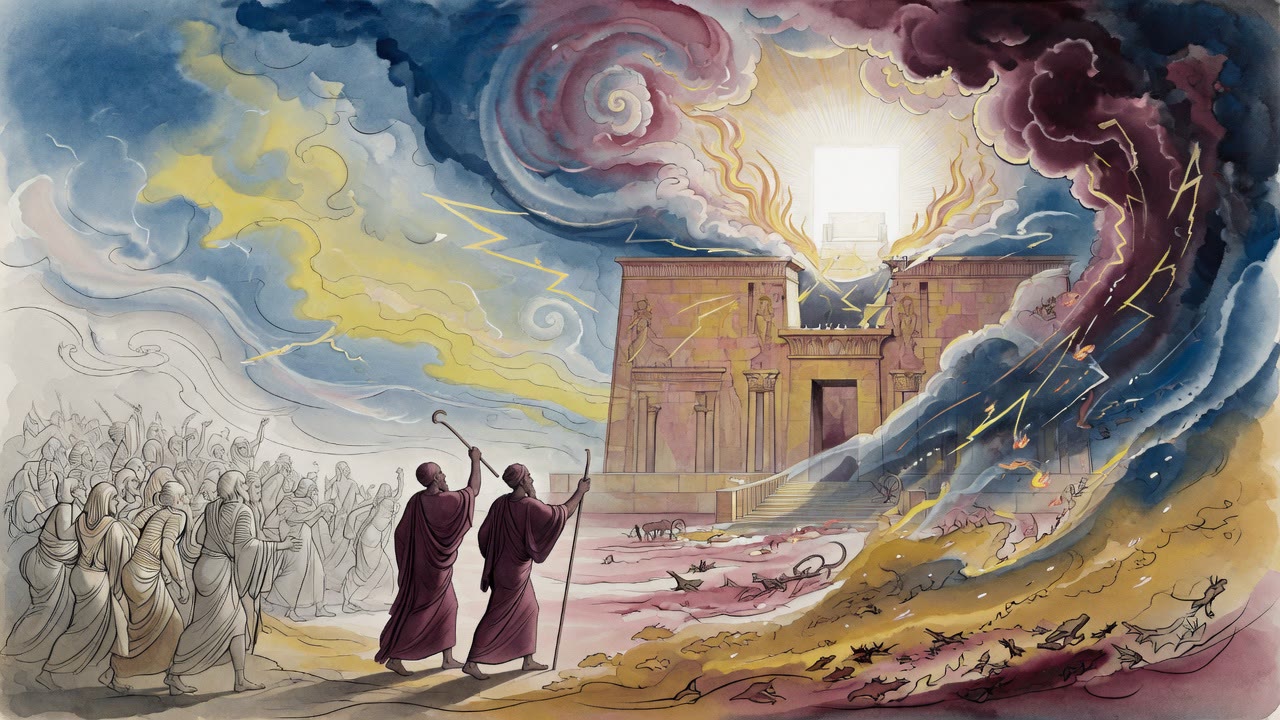
At midnight the firstborn of Egypt died, and every door in Goshen stayed shut.
 Click for full size
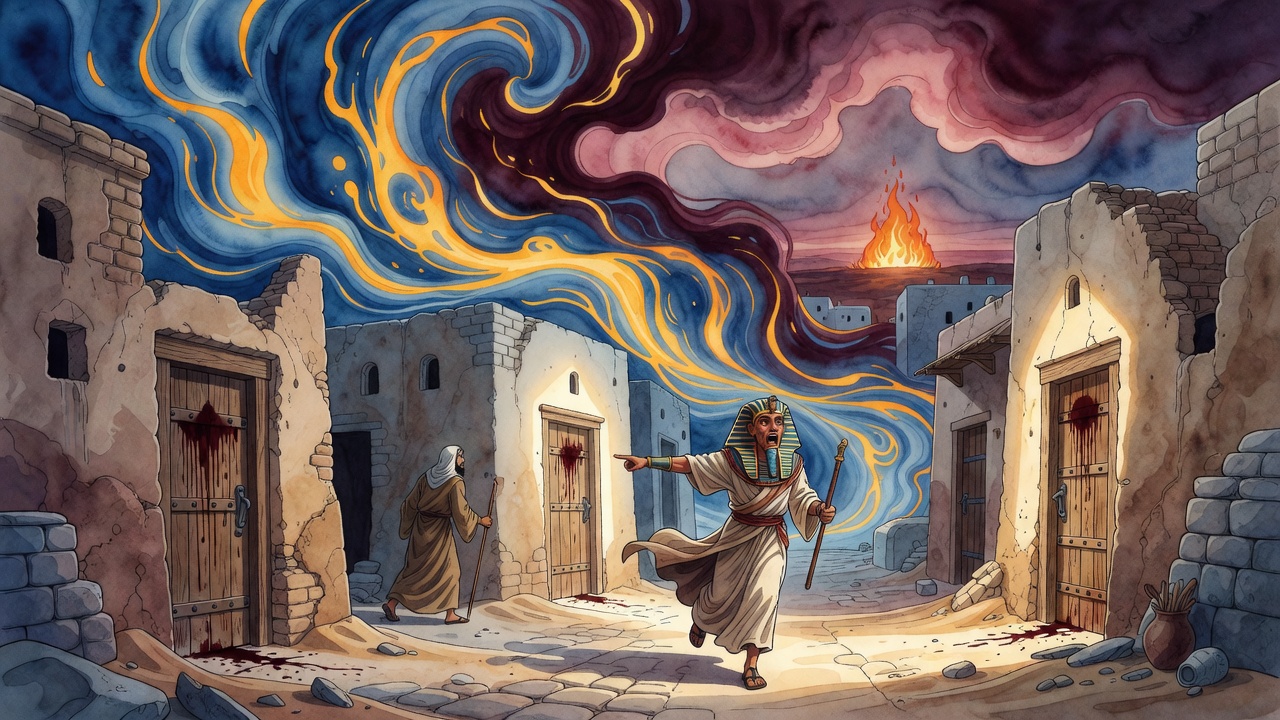
Inside, the lamb was already eaten, roasted whole and finished in a hurry, sandals on, staffs in hand. Blood was smeared across the lintel and down both doorposts. The instruction had been exact and it had nothing to do with courage: nobody goes out of the door of his house until morning. So they stood in their own rooms and listened to Egypt come apart on the other side of the wall.
Pharaoh Went Looking for an Address
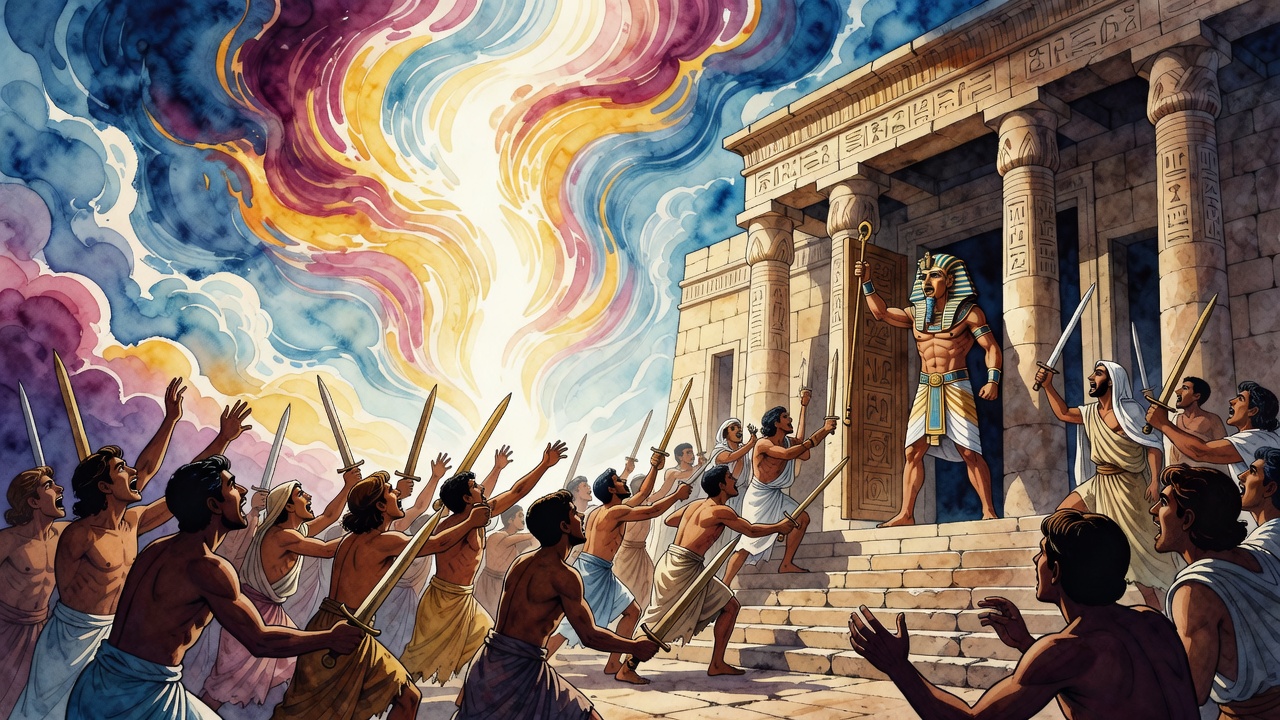
Pharaoh was out in it. He went from market to market in the dark, grabbing men by the sleeve. "Where is Moses? Where does he live?"
Israelite children found him wandering and played with him. "Pharaoh, where are you going?"
"I am looking for Moses."
"He lives over there." And they pointed him down a street that led nowhere, and laughed, and when he came back they pointed him somewhere else, until the king of Egypt had been walked in circles through his own capital while his firstborn son lay dead in the palace behind him.
He found the house at last. "Get up," he said. "Get out from among my people."
"Are we thieves?" Moses said. "God told us not to leave the door of the house until morning."
"I am begging you. Get up and go."
"Why are you pressing so hard?"
"Because I am a firstborn," Pharaoh said. "I am afraid I am next."
Moses told him not to be afraid, that he was marked out for something bigger than this. And it was not only Pharaoh at the door that night. All Egypt pushed at them, whole households shoving Israel toward the border, and God had already answered that shoving before it started: not one of you dies here, He had said. You die in the sea.
The Door Held Until Morning
So Israel waited out the hours behind blood and wood while the street belonged to something else.
Rav Yosef, teaching in Babylonia many centuries later, would not let that instruction stay in Egypt. Once permission has been given to the Destroyer, he said, it no longer tells the righteous from the wicked, and worse than that, it starts with the righteous. He quoted the prophet who heard God say, I will cut off from you the upright and the guilty alike. Every time he came to that verse in the reading he broke down and cried in front of his students, that even the righteous count for nothing in such an hour.
Abaye tried to soften it for him. The righteous who die early are being gathered in ahead of the evil, he said, taken off the road before the ruin arrives, spared the sight of it.
Out of the argument came a rule with no comfort in it at all. Plague in the city, draw in your feet. Go into the inner rooms and shut the door behind you, by day as much as by night. And if the dread inside the house grows heavy, and the company of other people in the street starts to look like relief, remember that the sword outside bereaves, and it does not stop to ask who is standing there for company.
Go In While the Light Is Good
The same instruction turned into a habit for ordinary days. Enter while the light is still good. Go out again while the light is still good. Move with the sun, not against it.
Abraham got up early and saddled his donkey for the mountain where he would bind his son. Jacob got up early. Moses got up early and climbed. Samuel got up early to meet Saul. Not one of them set out in the dark, and none of them was doing anything ordinary. Night belongs to the young lions, who roar for their prey and take their food from God; when the sun rises they slink back into their dens, and then a man goes out to his work until evening.
The Element They Had Trusted
Egypt did not finish dying at midnight, and the reason went back generations.
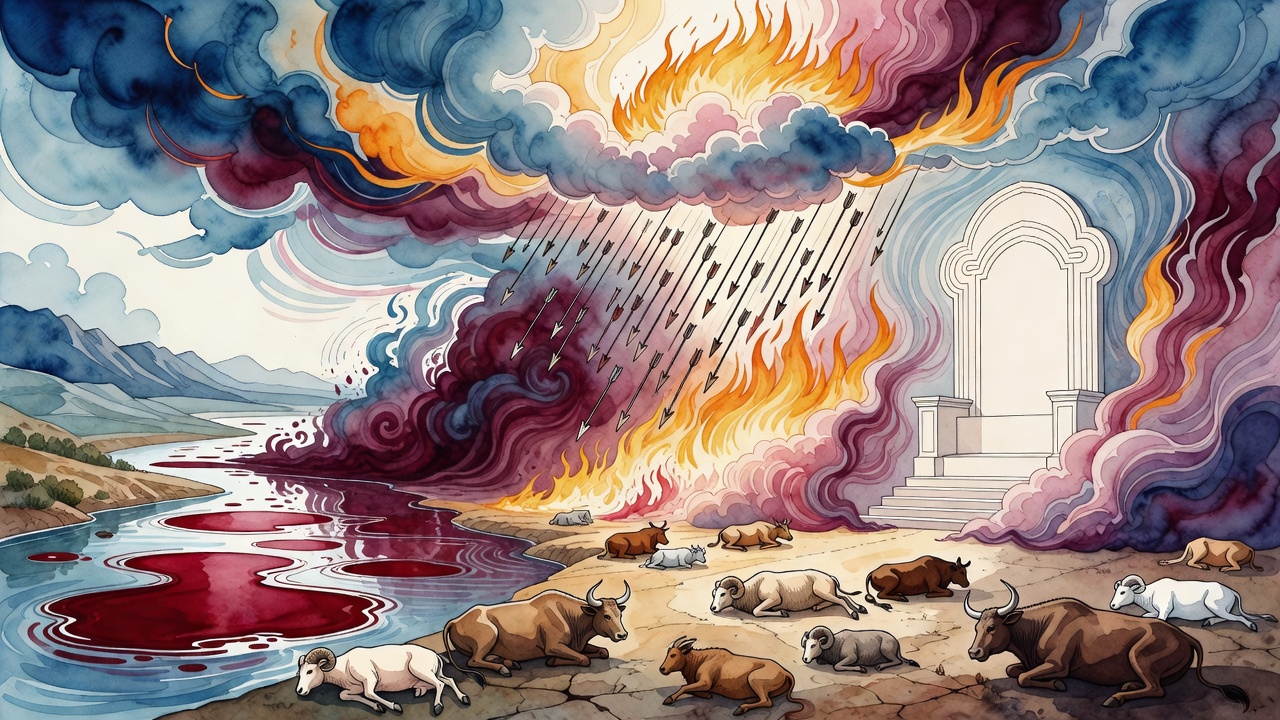
The Egyptians had planned it carefully at the start. Fire was out of the question, because the God of these people had rained fire on Sodom and could do it again. But He had sworn never to bring another flood on the world. Water, then. Water was the one weapon with an oath tied around it. So they drowned the infants in the river and worked the fathers in the mud and made water the whole instrument of the thing.
God kept the oath exactly. No flood came on the world. Those men got up, harnessed six hundred chariots, and drove down into the sea on their own wheels, and the water they had chosen closed over them without a single drop falling from the sky.
The Wind That Kept the Hour
For forty years afterward, out in the wilderness, a north wind came through the camp every night at exactly midnight. Not once did it miss. A man lying awake in a goat-hair tent would feel the air change against his face and know what hour it was without looking at anything.
He had been a child behind a marked door. He had heard his mother tell him to stand still and not touch the latch. Somewhere out past the tent ropes the same hour was going by again, and this time nothing came with it.
← All myths