5 min read

God Besieged Egypt With a King's War Manual

The plagues followed a king's siege manual, water cut first, then noise, arrows, and fire. Even firstborn beasts fell so no idol could boast.

Curated by Arthur · Told by Maggid ·
Table of Contents
  1. Water First, Then the Rest of the War
  2. Why the Beasts Died Too
  3. We Are All Dying
  4. A Siege With an Exit for Israel

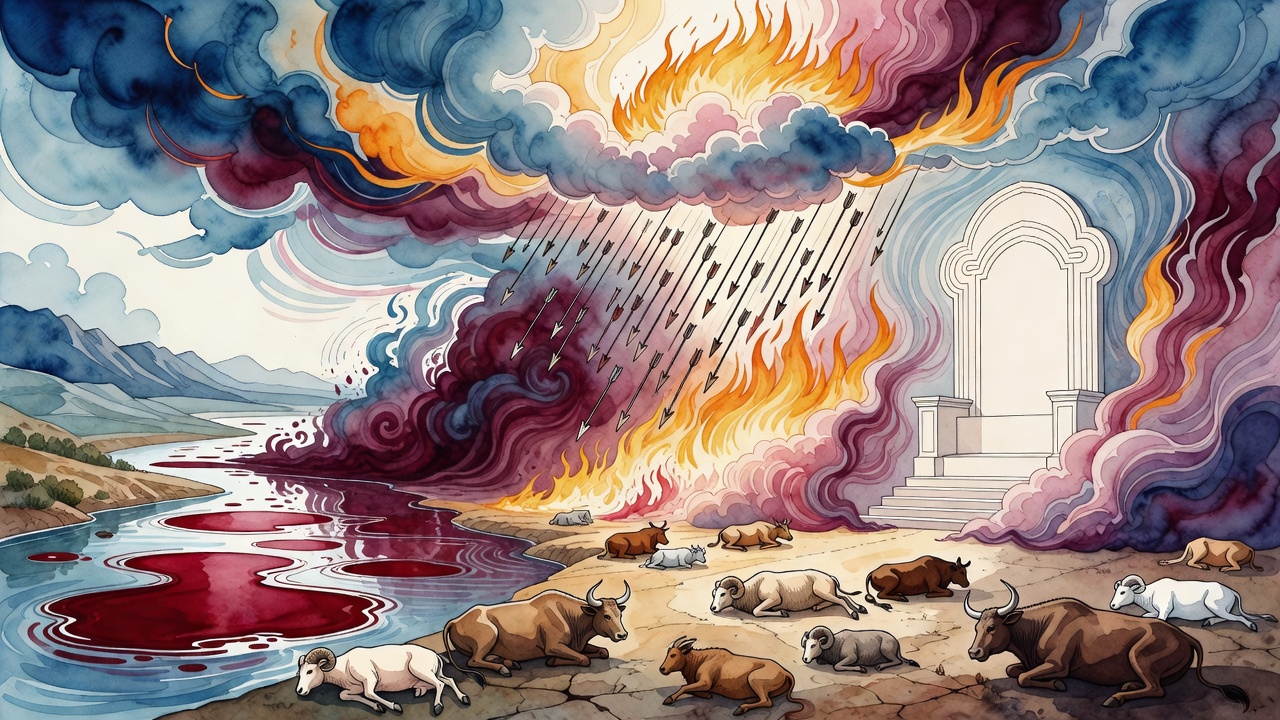
When a province rebels, a human king does not begin with the throne room. He cuts the water. He rattles the sky with noise. He looses arrows. He sends hard men. He hurls burning stuff. He flings stones. He turns crowds into weapons. He cages leaders. Only then, if the city still spits, he breaks the heads that ordered the revolt.

God Besieged Egypt With a King's War Manual Click for full size

The sages say the Holy One used that same manual against Egypt. The plagues were not random thunder. They were a siege written in blood and river.

Water First, Then the Rest of the War

First the waters turned, supply lines ruined, so a nation that worshiped the Nile learned thirst and disgust together. If Egypt had bent then, the story might have closed early. Pharaoh did not bend. Thunder and fire answered. Arrows of hail. Creatures that felt like barbarian troops. Darkness like a prison without walls. Each refusal unlocked the next weapon in the kit (Exodus 7-10).

A mortal king hopes for surrender at every stage. God left room for repentance at every stage. Egypt spent the room on delay. The manual kept moving toward the palace. Advisors who still had throats used them to invent reasons. Magicians who still had tricks used them until the tricks failed and their skin broke out with everyone else's.

The genius of the sequence, in the sages' telling, is recognition. Egypt knew siege logic. Now siege logic wore the name of Israel's God and walked through nomes that had never feared a shepherd's deity.

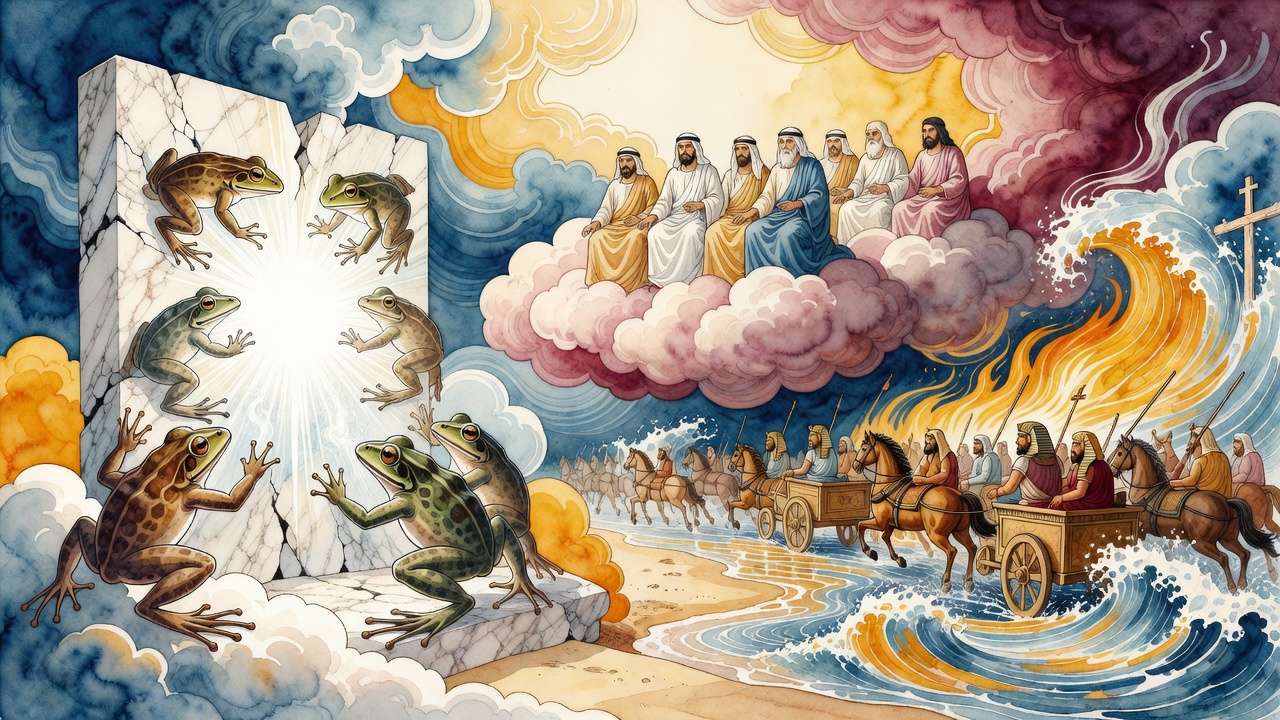
Pharaoh's heart had room for one more delay after each blow, the way a walled city always believes the next shipment will arrive. The shipments stopped. Frogs, lice, beasts, boils, hail, locusts, and dark each took a page from the manual until only the palace itself remained as a target that still pretended not to understand.

Why the Beasts Died Too

When the last blow came, every firstborn in Egypt died, and every firstborn of beast with them (Exodus 11:5). The Mekhilta asks the child's question. What sin did the beasts commit?

The answer is political theology. If the animals had been spared, Egyptians would have said, "Our god, whom we worship in the form of this beast, brought the catastrophe and stood unharmed. Awesome is our god." The plague shut that mouth. No stable idol could claim victory by surviving. The judgment reached the living statues in the stalls.

Cattle that had been theology fell like cattle. The midrash refuses to let a surviving bull become a sermon against the God of the Hebrews. Even the barnyard had to lose its firstborn so the palace could not point at a quiet pen and call it divinity.

We Are All Dying

Egypt had misheard Moses. They thought only one firstborn per household would fall, the eldest of four or five sons. They did not reckon with secret histories in their own beds. Wives had borne firstborns to more than one man. What was wrought in private, the Holy One exposed in a single night. Houses that expected one corpse found many. The cry rose, "We are all dying," because the arithmetic of shame had been larger than the arithmetic of legitimate birth.

Punishment that uncovers secrets is still called the lesser measure next to the good that will one day publish hidden kindness. The midrash draws the line and leaves it burning. If exposure works for guilt, how much more will heaven one day uncover quiet good.

Pharaoh's night was not only body count. It was ledgers opened. Men who thought their households tidy discovered they had been living in someone else's plot twist. The scream was census and confession at once.

A Siege With an Exit for Israel

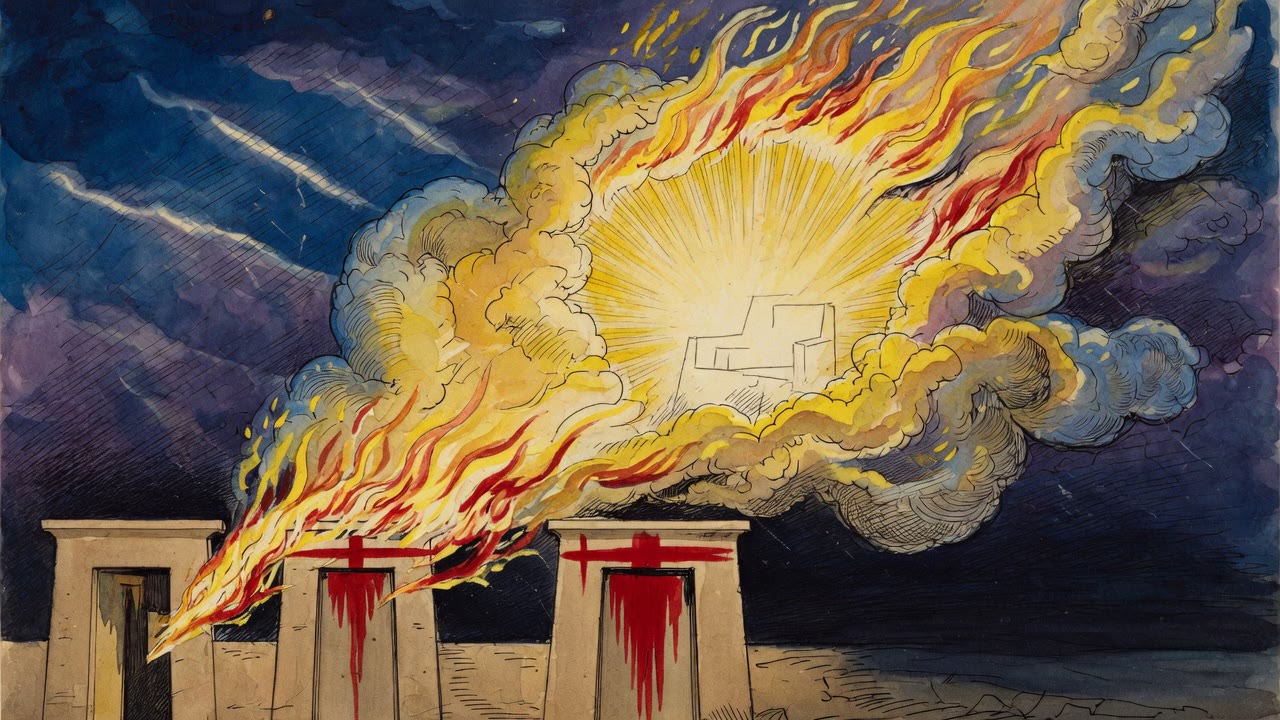
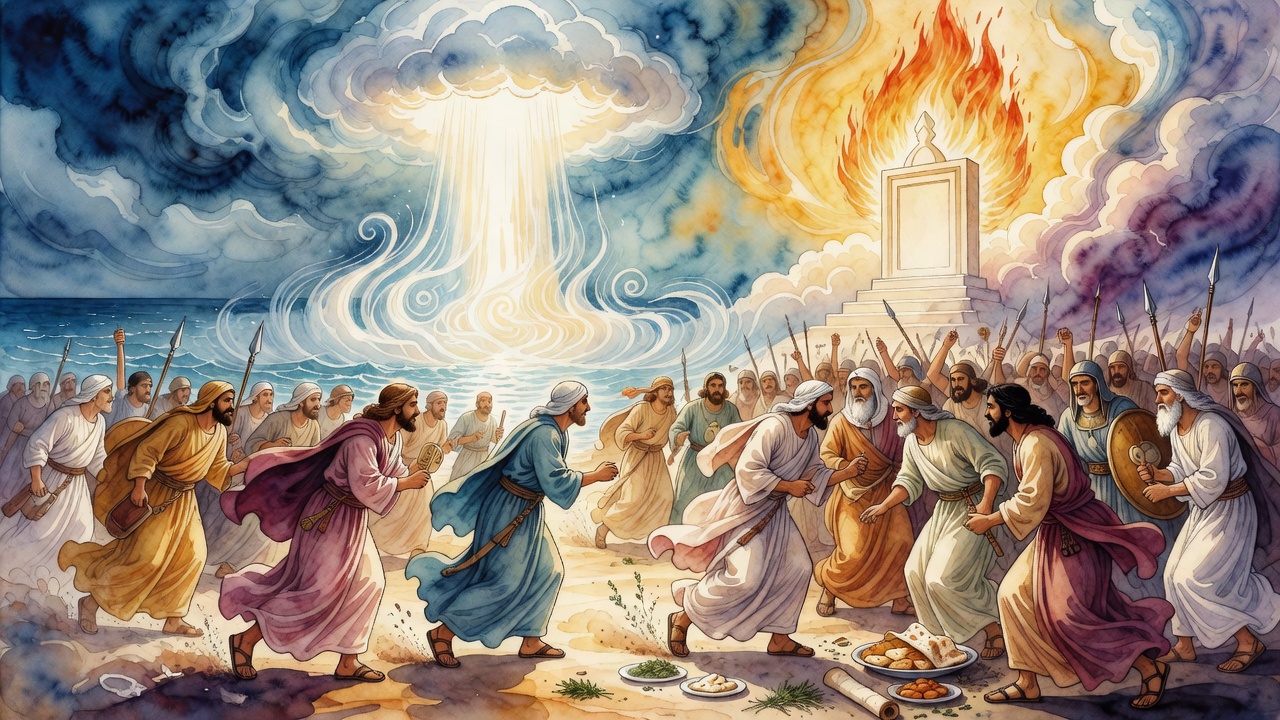
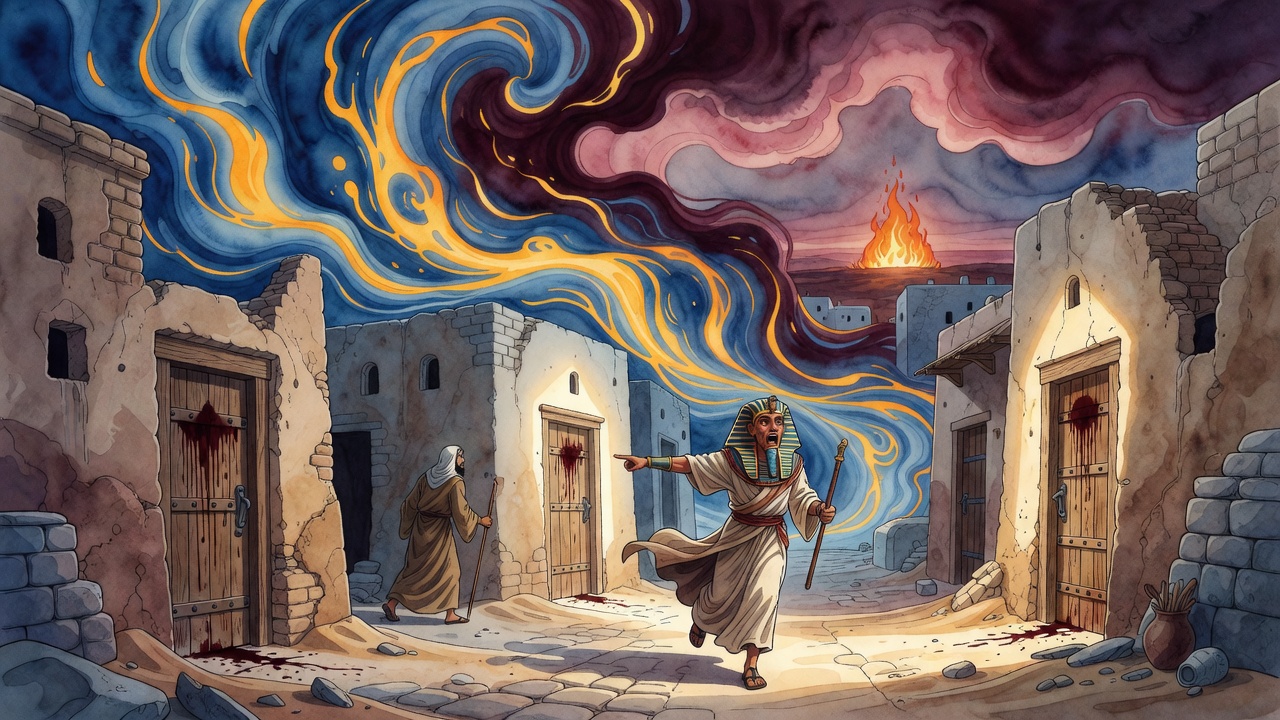
While Egypt learned the king's manual from the wrong side of the wall, Israel marked doors and ate in haste. The same night that emptied Egyptian cradles filled Hebrew mouths with lamb and bitter herb. A siege against one people became a road for another.

Pharaoh finally drove them out, not as a gracious host but as a city that could not bear another hour of the assault. The war manual had reached its last page. The leaders were broken. The idols in the stables were silent. The river had already told its first truth months before.

God does not need human tactics. The sages say He chose them so a stubborn empire would recognize the shape of defeat before the sea closed the file. Recognition is a mercy even when it arrives late. Egypt understood kings. For one long siege it was forced to understand the King.

By the time the firstborn fell, Egypt had run out of pages in the manual and out of excuses in the court. Midwives, magicians, and taskmasters all knew the same fact: the siege had reached the cradles. Israel, still slaves until the hour of leaving, sat behind marked doors and waited for the order to walk.


← All myths

From the tradition

Sources

3 sources

The texts behind this telling. Some cards carry a translation of the source; others are our own retelling of it, and each card says which. Every card links out to the original.

Midrash Tanchuma, Bo 4Midrash Tanchuma

Retold in our words. Read the original at the link below.Townsend 1989 translation of Midrash Tanhuma, S. Buber Recension · CC-BY

Our sages of blessed memory said: The Holy One, blessed be He, followed the military tactics employed by kings when inflicting the plagues upon them. When the people of a province rebel, a human king dispatches his legions to surround them. First he dams up their water supply. If the people repent, well and good; but if not, he orders thunderous noises to be directed against them. If they are contrite, good; but if not, he commands that arrows be shot at them. If they relent (their actions), well and good; but if not, he sends barbarians against them. If they retract, good; but if not, he orders other reprisals to be taken against them. If they are contrite, well and good; but if not, he orders naphtha to be hurled upon them. If they are repentant, good; but if not, he catapults stones upon them. If they repent, good; but if not, he turns a large population against them. If they retract, good; but if not, he imprisons them. If they relent, good; but if not, he destroys their leaders. The Holy One, blessed be He, attacked Egypt with the tactics employed by a king. The first thing He did was to cut off their water supply, as it is said: And he turned their rivers into blood. They were not contrite, and He therefore brought tumultuous noises upon them. These were the frogs. R. Yosé the son of Hanina said: Their croaking was harder to bear than the havoc they wrought. Still they did not repent, and so he shot arrows at them. These were the gnats, as it is said: And there were gnats upon man, and upon beast (Exod. 8:13). They penetrated the bodies of the Egyptians like spears. However, they did not become contrite, and so He sent barbarians against them. These were the swarms, as it is said: And there came grievous swarms of beasts (ibid., v. 20). Still they did not relent, and so He took other reprisals against them. He brought the murrain: And all the cattle of Egypt died (ibid. 9:6). Nevertheless, they did not repent, and so He poured naphtha over them. These were the boils, as it is said: And a boil breaking forth with blains upon man and upon beast (ibid., v. 9). Still they were not contrite, and so He catapulted projectiles upon them. This was the hail. But even then they did not repent, and so he stirred up a large population against them, that is, the locusts. Even so, they did not mend their ways, and so He imprisoned them. This was the darkness, as it is said: And there was a thick darkness (ibid. 10:22). When they refused to repent, He killed their important men, as it is said: The Lord smote all the firstborn (ibid. 12:19).

Every burden that the Egyptians imposed upon the Israelites, the Holy One, blessed be He, brought upon them. Because they forced the Israelites to draw water for them, He turned their water to blood. They conspired to have them bear burdens, and so He brought the frogs against them to consume what they had carried. They schemed to make them work upon the land, and so the gnats swarmed over the land. They decided to compel them to serve as tutors to their children, and He sent herds of lions, wolves, leopards, bears, and eagles against them. When an Egyptian who had five children ordered an Israelite to take them to the marketplace, a lion would appear and seize one of them; a wolf, another; and a leopard, a bear, and an eagle would each seize one more. When he returned alone to the home of the Egyptian, he would ask him: “Where are my sons?” “I will tell you what happened,” he would answer, “A lion came and took one; a wolf, another; and a leopard and a bear each took another.”

They forced the Israelites to pasture their flocks, and so he sent the murrain against them, as it is said: Behold, the hand of the Lord is upon thy cattle (Exod. 9:3). They compelled the Israelites to keep the heated things warm, and so He afflicted them with boils. They plotted to have them stoned to death and so He sent hail upon them. They planned to make the Israelites their gardeners, and so He brought against them the locusts, which consumed their trees, and ate all the grass and fruit in the land. They conspired to imprison them, and so He brought darkness upon them. They planned to kill the Israelites, and so He smote all their firstborn. They wanted to drown them in water, and so He overthrew Pharaoh and his host in the Red Sea (Ps. 136:15).

All the plagues that the Lord brought against the Egyptians in Egypt, He will bring against Edom (Rome), as it is said: When the report cometh to Egypt, they shall be sorely pained at the report of Tyre (Isa. 23:5). R. Eleazar said: Every time Scripture employs the complete spelling of the word Tyre, it refers to Egypt, but when the word Tyre (i.e., without the vav) is spelled defectively, it refers to Edom, which also oppressed Israel. The punishments visited upon the first nation will also be inflicted upon Edom. In the case of Egypt, He smote it with blood, and with reference to Edom, it is said: I will show wonders in the heavens and in the earth, blood and fire, and pillars of smoke. The sun shall be turned into darkness, and the moon into blood (Joel 3:3). In Egypt the voices of frogs were harsh, while in Edom: Hark! an uproar from the city, hark! it cometh from the Temple (Isa. 66:6). Gnats came upon Egypt: And He smote the dust of the earth, and in Edom: And the streams thereof shall be turned into pitch, and dust thereof into brimstone (Isa. 34:9). In Egypt there were swarms, and in Edom: The pelican and the bittern shall possess it, and the owl and the raven shall dwell therein (ibid., v. 11). R. Abba the son of Kahana said: Darkness and thick darkness were used as divine agents in Egypt, but void and waste never were and never will be used. When will they be used? Against a great city in Cappadocia, as it is said: And He shall stretch over it the line of confusion, and the plummet of emptiness (ibid.).

The rabbis said: Because the nations of the world did not accept the Torah, it was given as darkness hovered over them, as it says: For behold, darkness shall cover the earth, and gross darkness the peoples (Isa. 60:2). In reference to Israel, however, it is written: Upon thee will the Lord arise, and His glory shall be seen upon thee (ibid.).

There was pestilence in Egypt, and about Edom it says: I will plead against him with pestilence and with blood (Ezek. 38:22). In Egypt, boils were inflicted, and in Edom: Their flesh shall consume away while they stand upon their feet, and their eyes shall consume away in their sockets, and their tongues shall consume away in their mouths (Zech. 14:12). In Egypt there was hail, and upon Edom: An overflowing shower and great hailstones (Ezek. 38:22). Locusts afflicted Egypt, and in the case of Edom: Son of man … Speak unto the birds of every sort, and to every beast of the field: Assemble yourselves (Ezek. 39:17). Darkness befell Egypt, and with regard to Edom: He shall stretch over it the line of confusion and the plummet of emptiness (Isa. 34:11). In Egypt He smote their firstborn, and in Edom: There are the princes of the north, all of them, and all the Sidonians (Ezek. 32:30).

R. Meir said: And the wild oxen descended with them (Isa. 34:7) implies that their idols were cast down with them. In Egypt He exacted retribution from their idols, and He also punished them in Edom. He destroyed their guardian angel, and after that He destroyed them, as it is said: And it shall come to pass in that day, that the Lord will punish the host of the high heaven on high, and the kings of the earth upon the earth (ibid. 4:21).

Mekhilta de Rabbi Ishmael

Full source
Mekhilta Tractate Pischa 13:9Mekhilta DeRabbi Yishmael

Retold in our words. Read the original at the link below.Mechilta, translated by Rabbi Shraga Silverstein · CC-BY

The Mekhilta, the tannaitic midrash on Exodus, extends its devastating logic about the plague of the firstborn to the animal kingdom. The verse states that God struck "every firstborn of the beast" (Exodus 12:29). The rabbis immediately ask the same question they asked about the captives: what sin did the beasts commit? Animals have no moral agency. They cannot rebel against God or oppress Israel. Why were their firstborn killed?

The Mekhilta's answer is identical in structure to its explanation for the captive firstborn. The beasts were killed so that the Egyptians could not make a claim about their animal gods. The Egyptians worshipped animals, bulls, rams, cats, crocodiles. These creatures were not merely livestock. They were deities.

If the firstborn of the beasts had survived the plague, the Egyptians would have said: "Our god brought this catastrophe upon us. But look, our god is awesome! The plague did not prevail against our god!" The survival of the sacred animals would have been interpreted as proof that the Egyptian deities had power to resist the God of Israel.

God destroyed the firstborn of every beast to demolish that argument before it could be made. Every object of Egyptian worship had to fall. The plague was not merely punishment for the Egyptians. It was a systematic dismantling of the entire Egyptian theological system, a judgment against every god of Egypt, as the Torah explicitly states (Exodus 12:12).

Full source
Mekhilta Tractate Pischa 13:27Mekhilta DeRabbi Yishmael

Retold in our words. Read the original at the link below.Mechilta, translated by Rabbi Shraga Silverstein · CC-BY

This midrash from the Mekhilta DeRabbi Yishmael comments on the Egyptians' panic after the plague of the firstborn, when they cried out, "we are all dying" (Exodus 12:33). Why would they say all, when Moses had warned only that "every firstborn in the land of Egypt shall die" (Exodus 11:5)? The midrash explains the gap between the threat and their terror.

The Egyptians had reasoned that the plague would be limited. A man with four or five sons expected to lose only the one true firstborn among them. What they failed to reckon with was hidden sin. Many of their wives had been unfaithful, so that sons who passed in the household as belonging to one father were in truth the firstborn of different men. When the plague struck every firstborn, it exposed children no one had counted as firstborn, and so death seemed to reach into nearly every house at once. Acts committed in secret were laid bare by the Holy One Blessed be He, and the whole nation reeled.

From this the sages draw a comforting kal vachomer. If even in the measure of punishment, which the tradition treats as the lesser of the divine attributes, a person's secret deeds are brought to light, then how much more surely will it hold in the measure of goodness, which is greater. Quiet, unseen acts of kindness will one day be openly proclaimed and rewarded.

Full source