Parshat Bereshit5 min read

One Drop Hardens into Heaven and Four Rivers

On the first day the heavens were still soft, like wet clay. On the second day they hardened. A rabbi said the sky was flattened the way gold is hammered thin.

Curated by Arthur · Told by Maggid ·
Table of Contents
  1. The Middle Drop
  2. The Verse Rabbi Yohanan Would Not Pass
  3. A River That Came Out of Delight
  4. The Night the Windows Opened
  5. Stones on Wet Ground
One Drop Hardens into Heaven and Four Rivers Click for full size

The Middle Drop

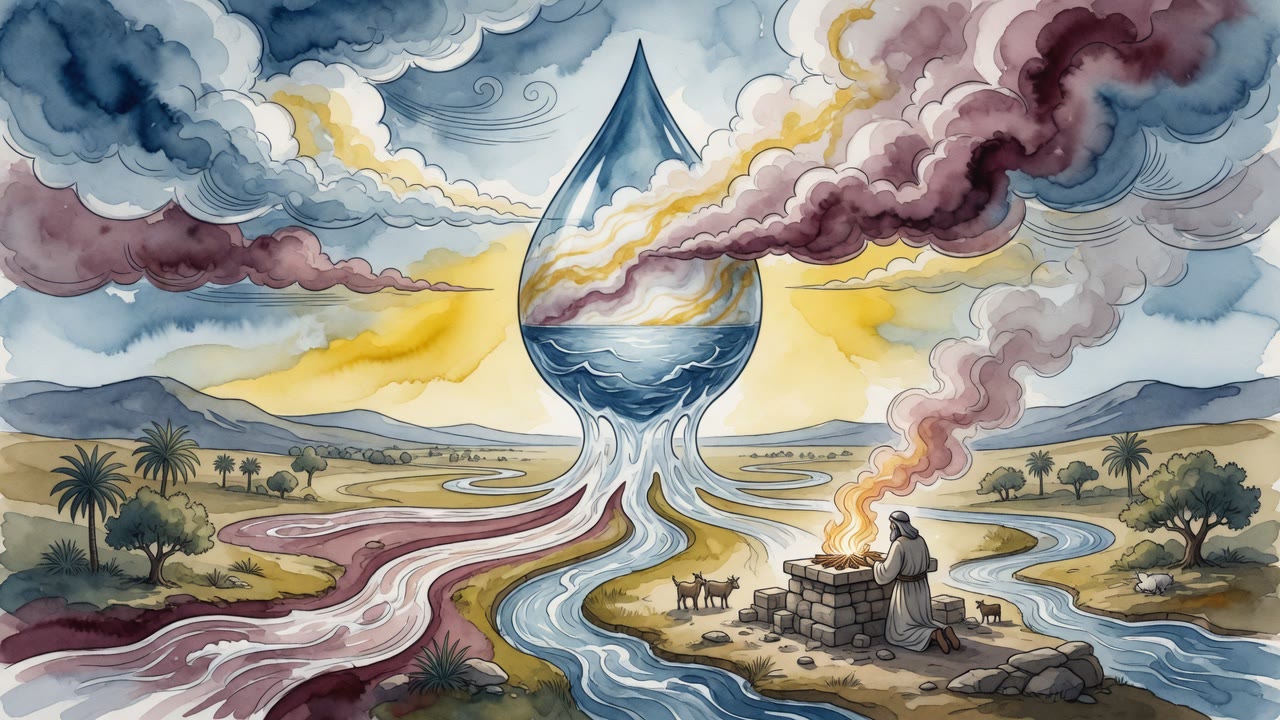
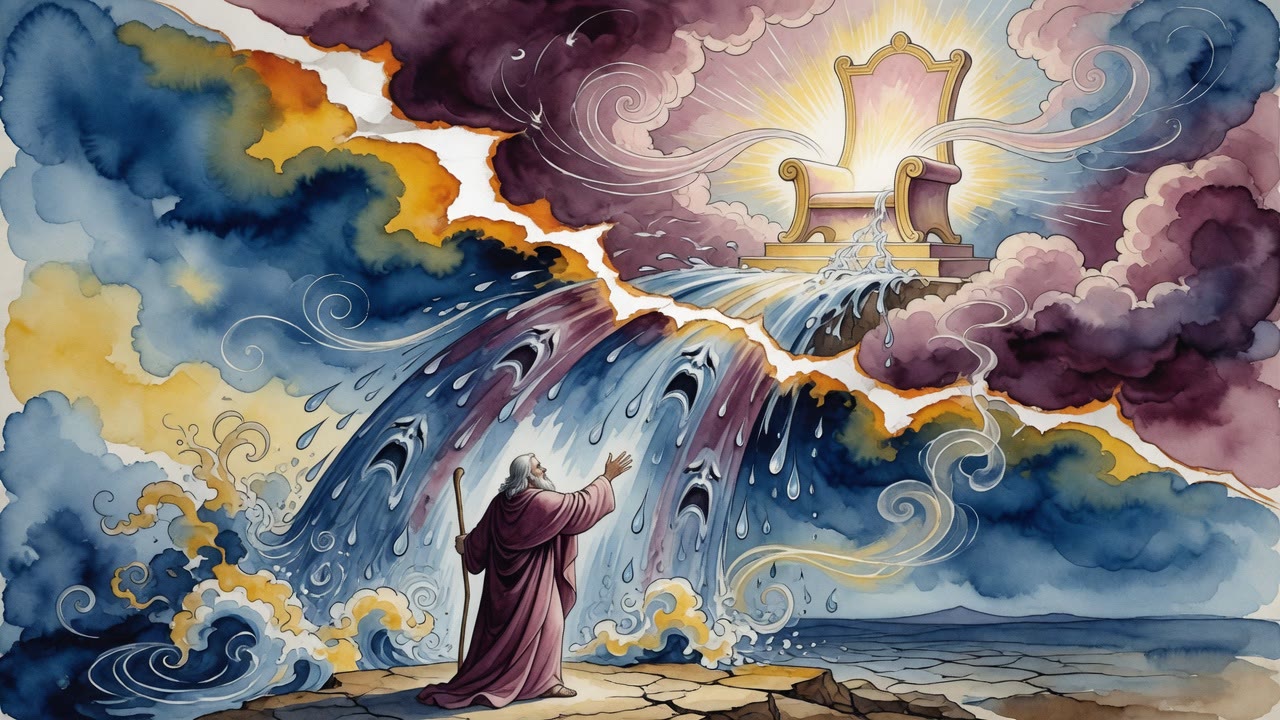
On the second day there was water above and water below and nothing between them except more water. Then the word came, "Let there be a firmament in the midst of the water" (Genesis 1:6), and the middle drop congealed. Not a continent. One drop, hardening in the center of the mass, and out of that single bead came the lower heavens and the highest heavens.

Rav said the heavens had been made the day before but made damp, the way clay is damp when it comes off the wheel. So "let there be a firmament" meant let the thing set. Rabbi Yehuda bar Simon heard a hammer in the word instead, since the root that gives rakia is the root in the flattened sheets of gold beaten out for the sanctuary, gold worked thin under a mallet until it will hold a shape and stay in it.

Rabbi Hanina put fire into it. Fire came out from on high and went over the surface of the firmament and dried it, and Rabbi Yudan ben Shimon said the same fire burnished the surface while it passed, the way a smith brings up a shine on what he has just finished.

The Verse Rabbi Yohanan Would Not Pass

Rabbi Yohanan could not get through a line in Job without stopping. "With His wind the heavens are enhanced" (Job 26:13). Every time he reached it he halted and said the same thing out loud to whoever was in the room with him: Rabbi Hanina taught me well.

Whatever set it, the result was a lid. Above it the upper water, underneath it everything else, and the arrangement held because a drop had been told to stop being liquid.

A River That Came Out of Delight

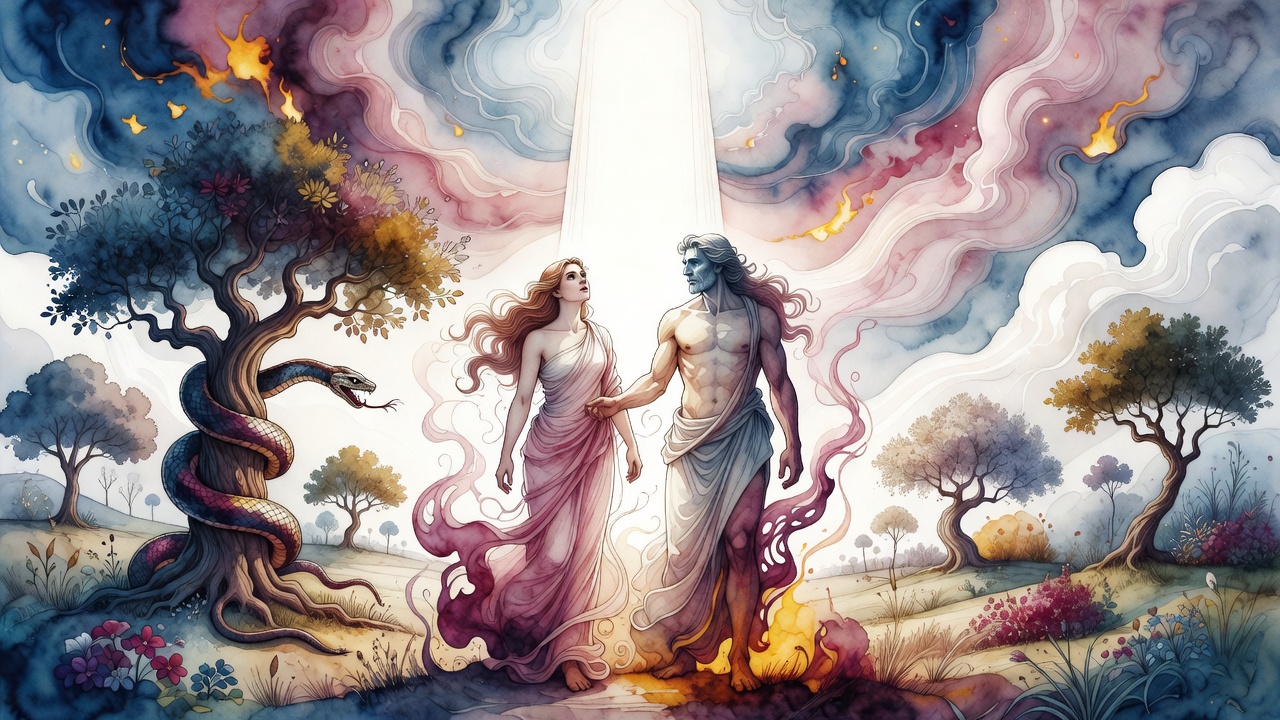
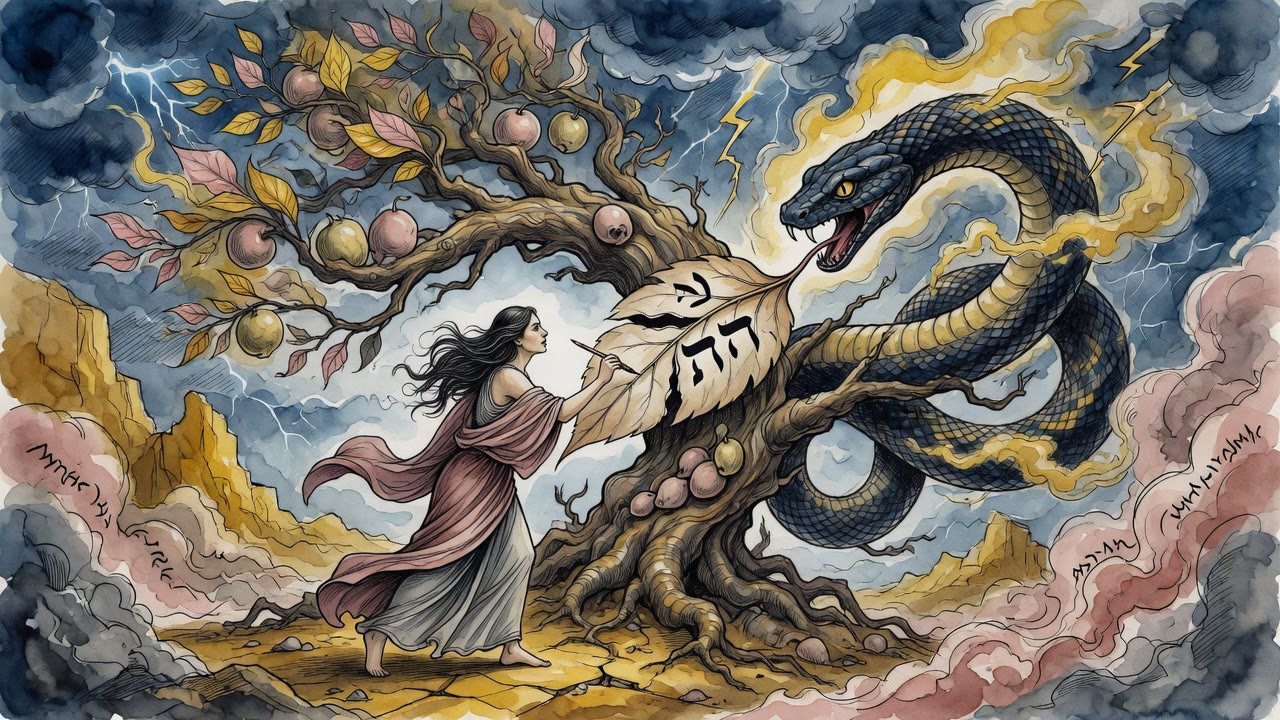
Under the new lid, water behaved itself. A river went out of Eden to water the garden, and from there it parted and became four heads (Genesis 2:10). Philo, working in Alexandria while Rome ran the docks, would not take Adin for a place on a map. He heard delight in the name. The river came out of delight, and it came out as one thing before it came out as four, a single goodness dividing into Pishon and Gihon and Tigris and Euphrates the way one virtue divides into the particular decencies practiced in the countries downstream.

Two of those four rivers still run past cities a person can name.

The Night the Windows Opened

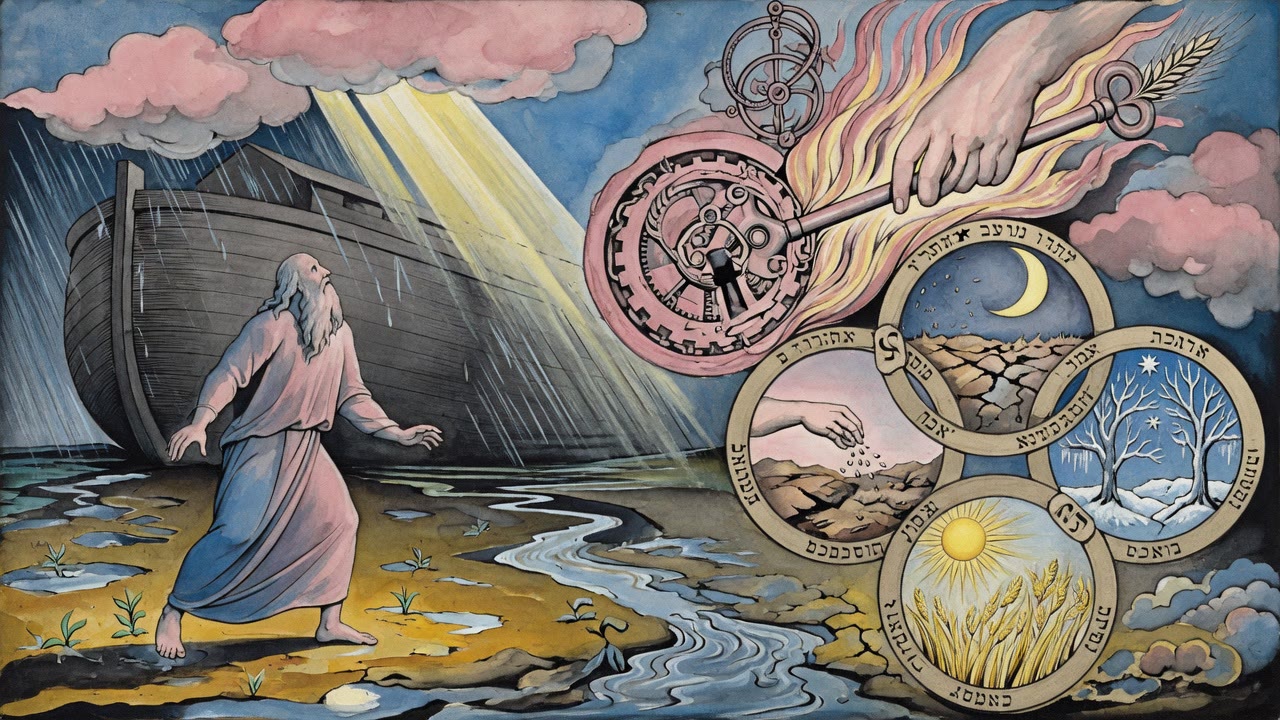
What hardens can also be opened. In the six hundredth year of Noah's life the windows of that firmament came open and the springs of the deep came up from underneath, and the two waters that had been held apart since the second day got at each other across the whole world.

They took the fields and the houses and the animals and everyone who had ever argued about any of it. When the water finally went down there was mud where the fields had been, and the mud had a smell, and nothing walked on it that had not come off the boat.

Stones on Wet Ground

Noah came out onto ground that had only just stopped being seabed. Nobody had told him what to do next. The instructions had covered the wood and the pitch, the animals, the measurements and the days, and then they stopped, because there was no command for the morning after.

He looked up first. The sky over him was shut and ordinary and holding, the same lid that had opened once and been closed again, and it gave no sign either way. He stood in it long enough for the water to come up around the sides of his feet. Behind him the animals were going down the ramp and out across the mud, and nobody was directing them anymore.

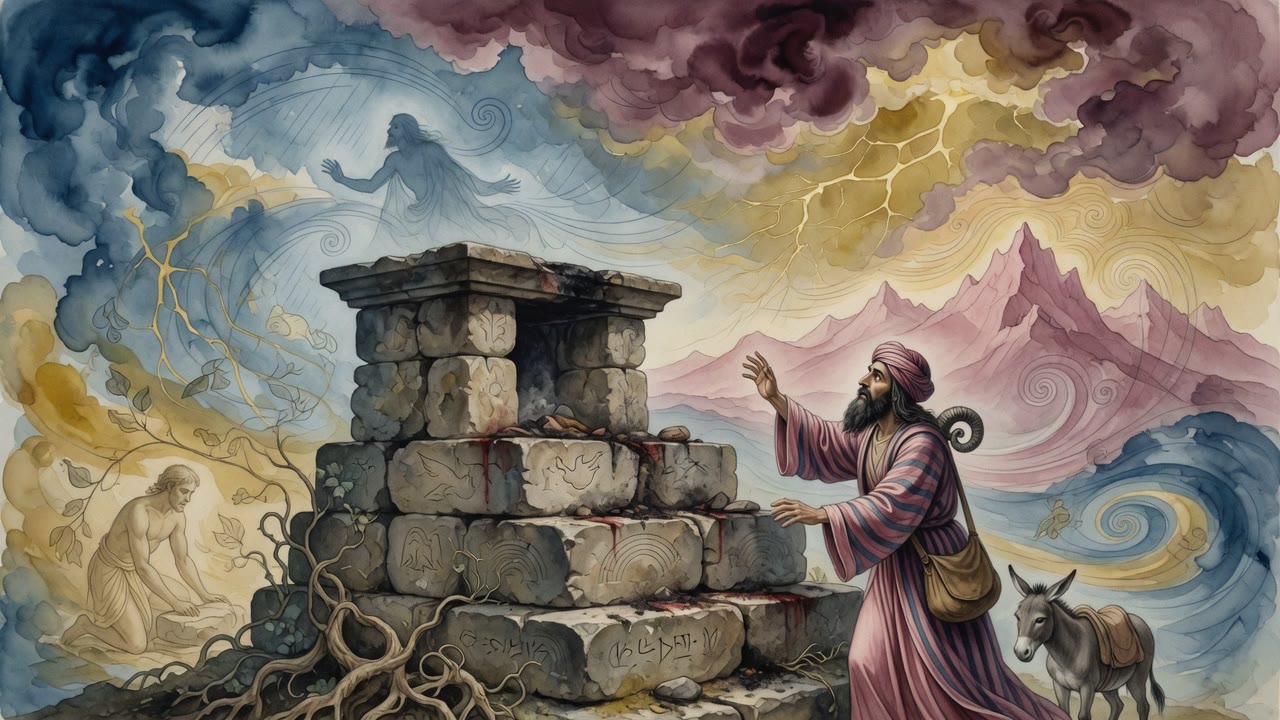
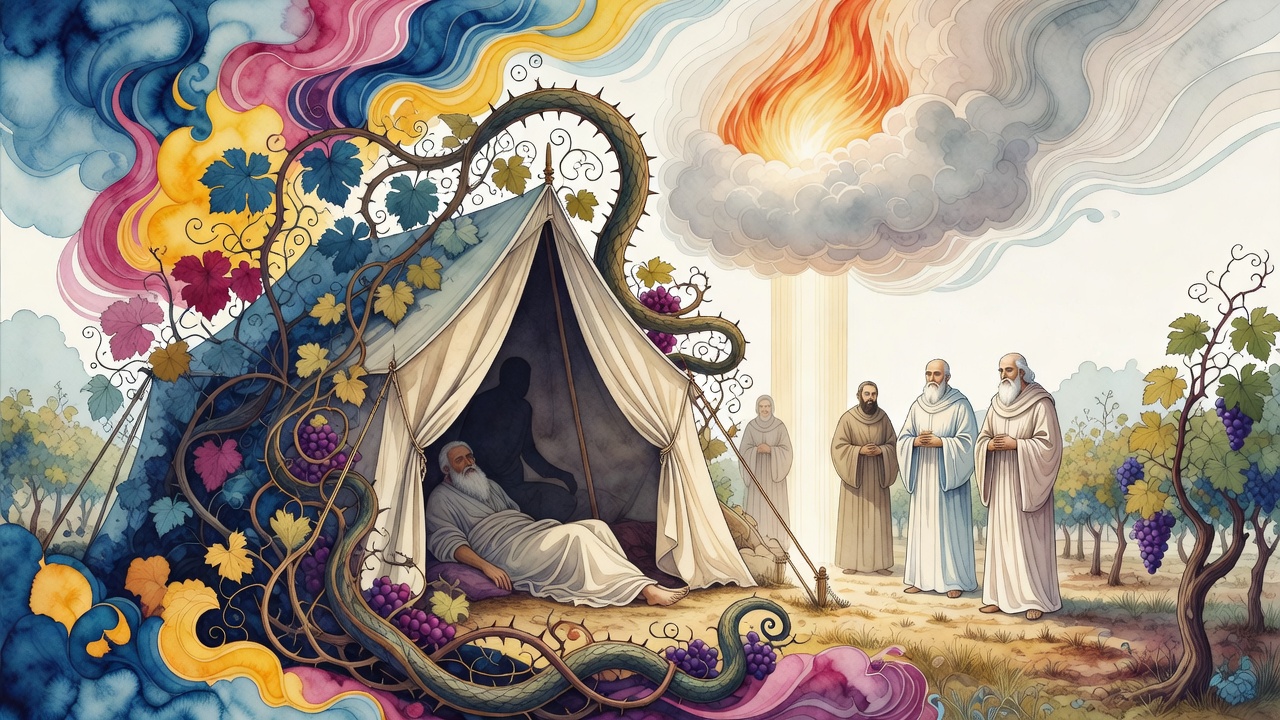
Then he started carrying stones. He stacked them and laid the offering on them and lit it, and no verse had asked him for any of it. Fear could account for that, and so could habit, and a man newly off a boat has reason enough for both. But a man who has watched the whole earth drown and come back up knows what a closed sky is worth, and he was not going to wait to be told to say so.

The fat caught. Smoke came up off the stones, thinned as it climbed, and flattened out along the underside of a vault that had once been one drop of water.


← All myths
From the tradition

Sources

3 sources

The texts behind this telling. Some cards carry a translation of the source; others are our own retelling of it, and each card says which. Every card links out to the original.

Bereshit Rabbah 4:2Bereshit Rabbah

Retold in our words. Read the original at the link below.The Sefaria Midrash Rabbah, 2022 · CC-BY

The familiar reading treats the opening verses of Genesis, "Let there be a firmament in the midst of the water," and move on. But the Rabbis saw so much more in those words! What images did they conjure? What secrets did they unlock?The Rabbis, quoting Rabbi Ḥanina, Rabbi Pinḥas, Rabbi Yaakov bar Avin, and Rabbi Shmuel bar Naḥman, tell us that when God spoke those words, "Let there be a firmament in the midst of the water," something incredible happened. The middle drop of water…congealed. And from that single, solidified drop, the lower heavens and the very highest heavens came into being.

That for a moment. A single drop, transforming into the cosmos.

Rav adds another layer to this cosmic creation story. He suggests that on the first day, when God "created the heavens" (Genesis 1:1), their substance was damp, almost like freshly mixed clay. It was on the second day that they truly congealed, hardened into the rakia (firmament). Hence, "Let there be a firmament" really meant, "Let the firmament harden!"

Rabbi Yehuda bar Rabbi Simon offers a different take, envisioning the firmament as having a kind of lining. He draws a parallel to the verse, "They flattened [vayraku] the sheets of gold" (Exodus 39:3). The word vayraku, "they flattened," shares a root with rakia, suggesting a process of hammering and shaping. So, was the firmament hammered into place?

Then Rabbi Ḥanina brings fire into the picture! He says that fire emerged from on High and passed over the surface of the firmament. Almost like…baking it? This, according to some, is what dried it all, as Rav suggested.

It's said that when Rabbi Yoḥanan would reach the verse, "With His wind, the heavens are enhanced" (Job 26:13), he would exclaim that Rabbi Ḥanina had taught him well! Rabbi Yudan ben Rabbi Shimon echoes the fiery image, saying that the fire emerged from on High and burnished the surface of the firmament, like polishing a divine masterpiece.

Rabbi Berekhya, quoting Rabbi Abba bar Kahana, offers a fascinating twist. He says that the act of Creation came to teach something about the giving of the Torah at Mount Sinai, but ultimately learned something from it! How so?

He points to the verse, "Like [the day of] a splitting fire" (Isaiah 64:1). This verse describes the giving of the Torah as being like another day, a day of fire splitting something in two. When did fire split between what was above and what was below? Was it not at the giving of the Torah? And the verse, Rabbi Berekhya implies, compares that day to another day, one of a splitting fire – namely, the day of the creation of the heavens.

So, the creation of the firmament, this fiery act of division and separation, foreshadows the giving of the Torah. The cosmos itself becomes a blueprint for divine revelation.

Isn’t that incredible? These ancient rabbis, poring over the text, finding connections between the very beginning of creation and one of the most pivotal moments in Jewish history. What other connections can we make between the vastness of the cosmos and the intimacy of our own spiritual journeys?

Full source
The Midrash of Philo 10:1The Midrash of Philo

Retold in our words. Read the original at the link below.The Works of Philo Judaeus, trans. C. D. Yonge, London, H. G. Bohn, 1854-1890 · Public Domain

Where’s the headwaters for such majesty?

(Genesis 2:10) tells us, "And a river went out of Eden to water the garden; and from thence it was parted, and became into four heads." But that just raises even more What is this initial river? Where does it originate?

Philo of Alexandria, a Jewish philosopher living in Roman Egypt, grappled with this very puzzle. He saw in the Torah a deep well of allegorical meaning. And, in his writings, he offers a fascinating interpretation of this primordial river.

Philo suggests this river flows "out of Adin." Now, Adin isn't a place name we readily recognize. But Philo interprets it, not as a geographical location, but as something far more profound: as referring to delight or pleasure. for a second. The source of Paradise, the source of all those life-giving rivers, originates in pure delight.

He saw this original river as a symbol of universal virtue, a wellspring of goodness that then branches out into different specific virtues. These virtues, in turn, nourish and sustain the world. This is the Paradise that is being watered.

So, the Pishon, Gihon, Tigris, and Euphrates? They're not just rivers on a map. They are expressions of that initial, delightful virtue, flowing out into the world in different forms. Each river, according to this reading, represents a specific aspect of moral excellence.

That the very source of life and abundance stems from something so simple, yet so powerful, as delight. Maybe, just maybe, finding our own sources of "Adin" can help us cultivate those virtues within ourselves, and let them flow out into the world, just like those legendary rivers.

Full source
The Midrash of Philo 20:1The Midrash of Philo

Retold in our words. Read the original at the link below.The Works of Philo Judaeus, trans. C. D. Yonge, London, H. G. Bohn, 1854-1890 · Public Domain

It must have been overwhelming. And the very first thing he does? He builds an altar. But here's the kicker – God didn't tell him to!

So, why did Noah build an altar without being commanded? That's the question posed in the Midrash of Philo 20, and it's a good one.

Was he just being proactive? Anxious to get back in God's good graces after, well, the whole world-ending flood thing? Or was there something deeper going on?

The text offers a fascinating glimpse into the rabbinic mind, wrestling with scripture and trying to understand the motivations of these biblical giants.

Sometimes, the most meaningful acts are the ones we aren't explicitly told to do. They spring from a place of deep understanding, a desire to connect with something larger than ourselves. Noah's altar, in that sense, might have been the most genuine expression of gratitude imaginable. A symbol of hope rising from the ashes of devastation.

What would you have done?

Full source