The Lower Waters Wept When Heaven Split Them
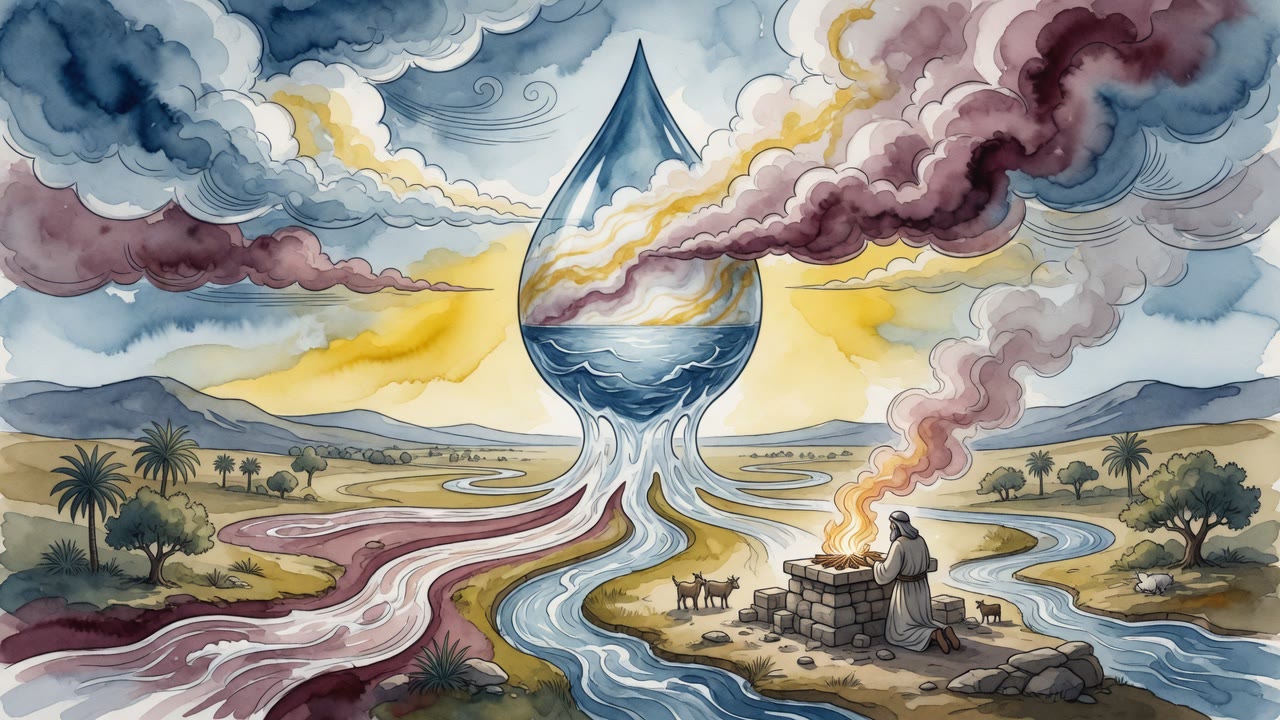
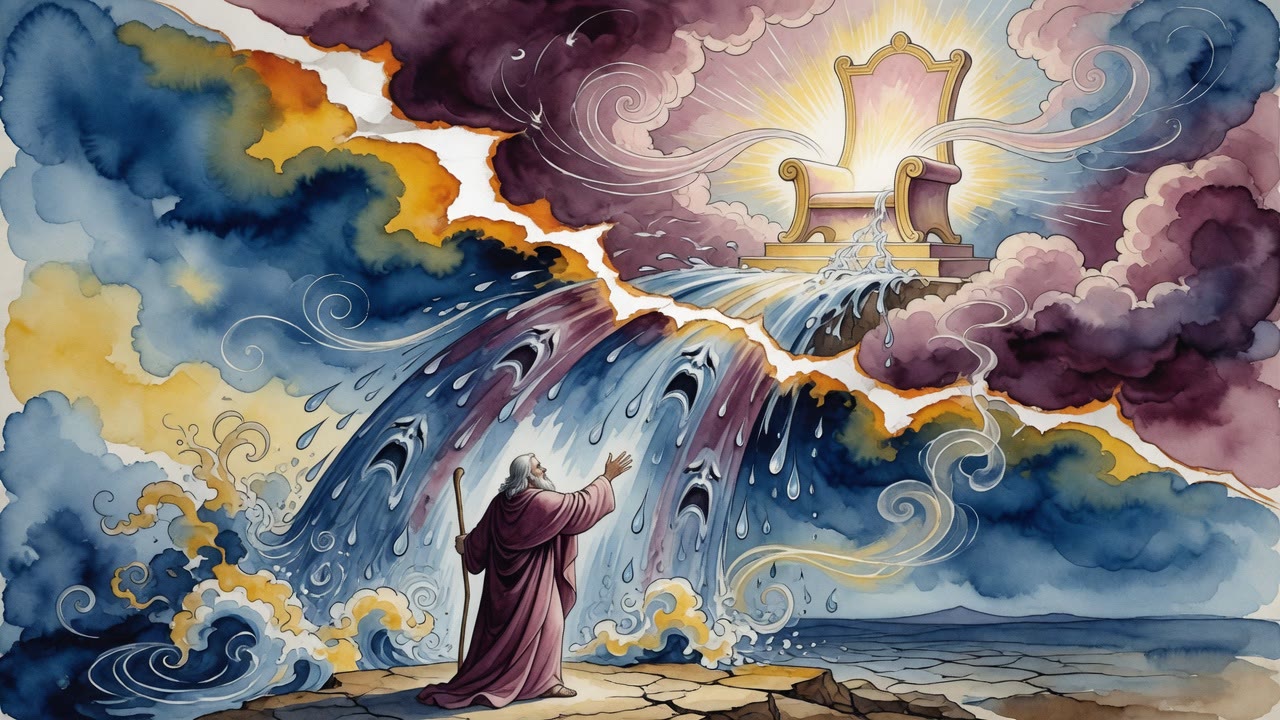
God drove the seas down from beside the Throne. They clawed for the height they were leaving. The cry they made still holds the rivers in place.
Table of Contents
The second day had not finished when the deep tore. Upper waters rose toward the firmament. Lower waters were ordered down.
 Click for full size
They did not go quietly. Salt and cold clung to the height they were leaving. God spoke, and the seas moved anyway. "The voice of the Lord is upon the waters" (Psalms 29:3). Herding, not decoration. The lower waters felt that sound and still clawed for the place nearer the Throne.
The Lower Waters Would Not Go
They wept as they fell. The cry was called bekhiya (בכייה), weeping, and the depths still hold it. "He bindeth the floods from overflowing" (Job 28:11). The rivers are dammed by that first grief. Every later flood, every salt lake, every underground spring carries the exile from the upper chamber.
The lower waters wanted the nearness the upper waters kept. Distance was the wound. They thrashed against the firmament from below until the decree locked. Channels cut. Boundaries set. The sound of their cry rose through the new architecture of sky and sea until later mouths could still hear it. Jeremiah hears a kol, a sound, when God places a multitude of water in the heavens (Jeremiah 10:12-13), and that sound is weeping, the same root-voice that later wails in Rama over children who will not return (Jeremiah 31:15).
Creation kept its shape. The lower waters kept their grief. Neither cancelled the other.
The Voice That Walked Moses Up
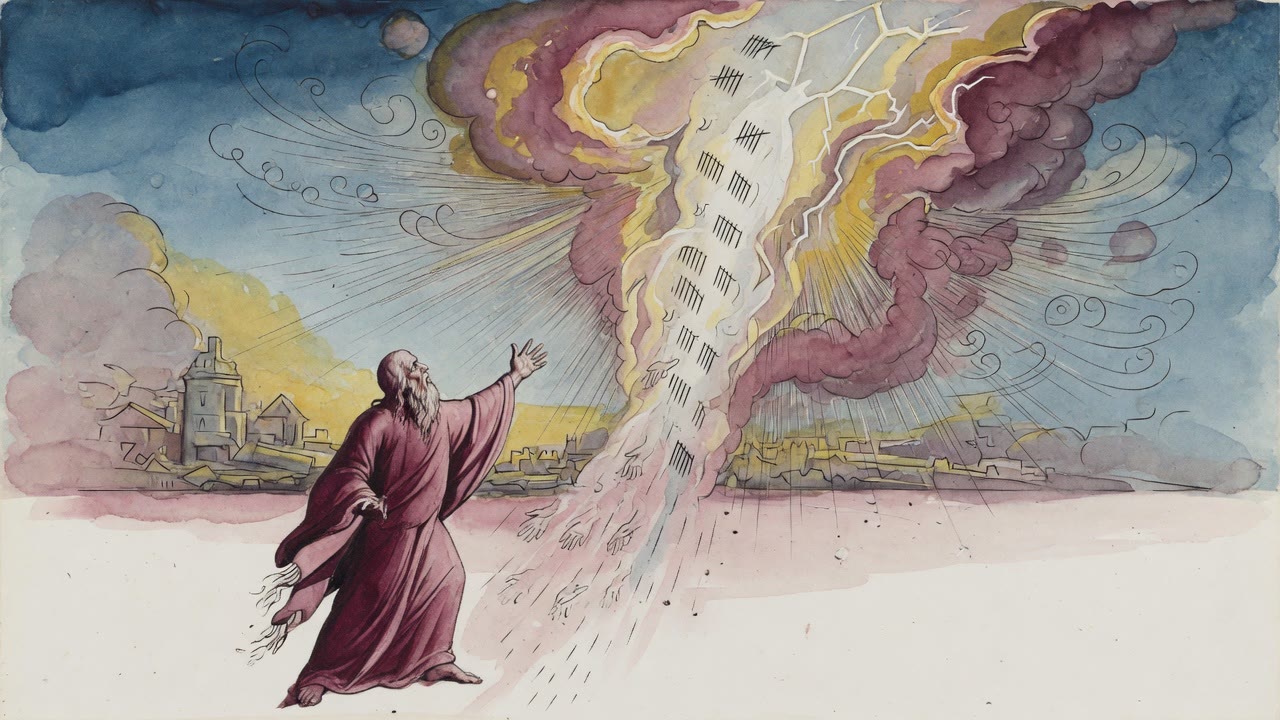
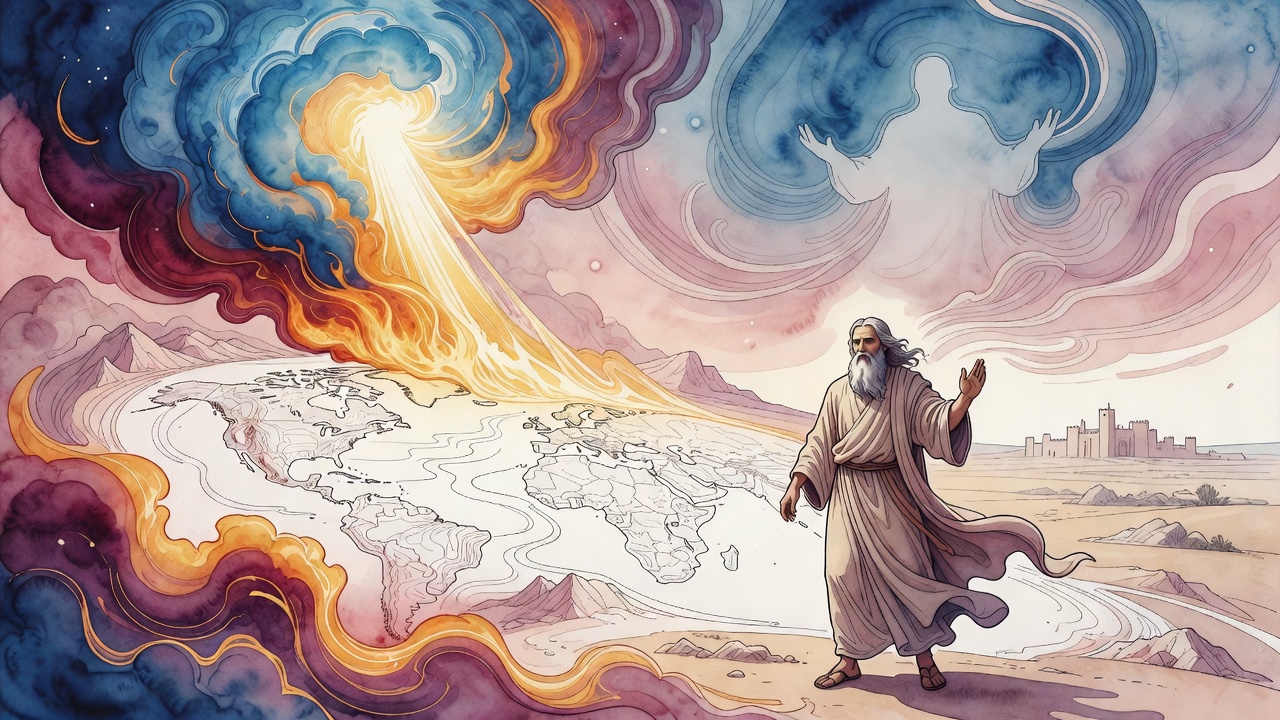
The same voice that herded the seas became a guide for Moses when God told him, "Get thee up into this mountain Abarim" (Deuteronomy 32:49). Moses climbed with that sound ahead of him, a path cut through stone, toward a land he would look at and not enter.
The waters had been sent down. Moses was being sent up. Both went where they did not choose. The difference was only the direction of the tears. Under the sealed firmament the lower waters learned the long patience of the deep. Fish would swim there. Ships would float there. Nations would drown there. None of that erased the first refusal. It only buried it under useful blue.
Abraham Stood While the Cities Still Ate
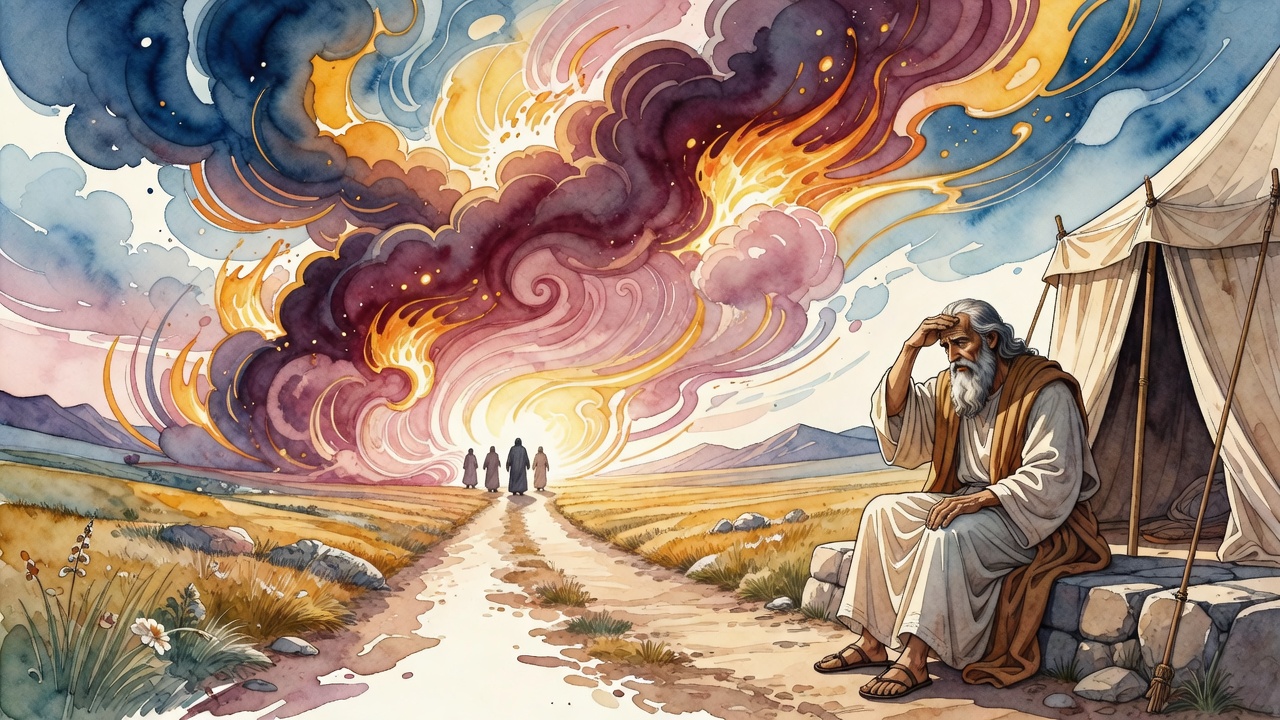
Ages later Abraham stood on the plain while three visitors turned toward Sodom. Smoke was not yet rising. The cities still ate and bargained and locked their gates against strangers. God told Abraham what was coming. Abraham did not step aside.
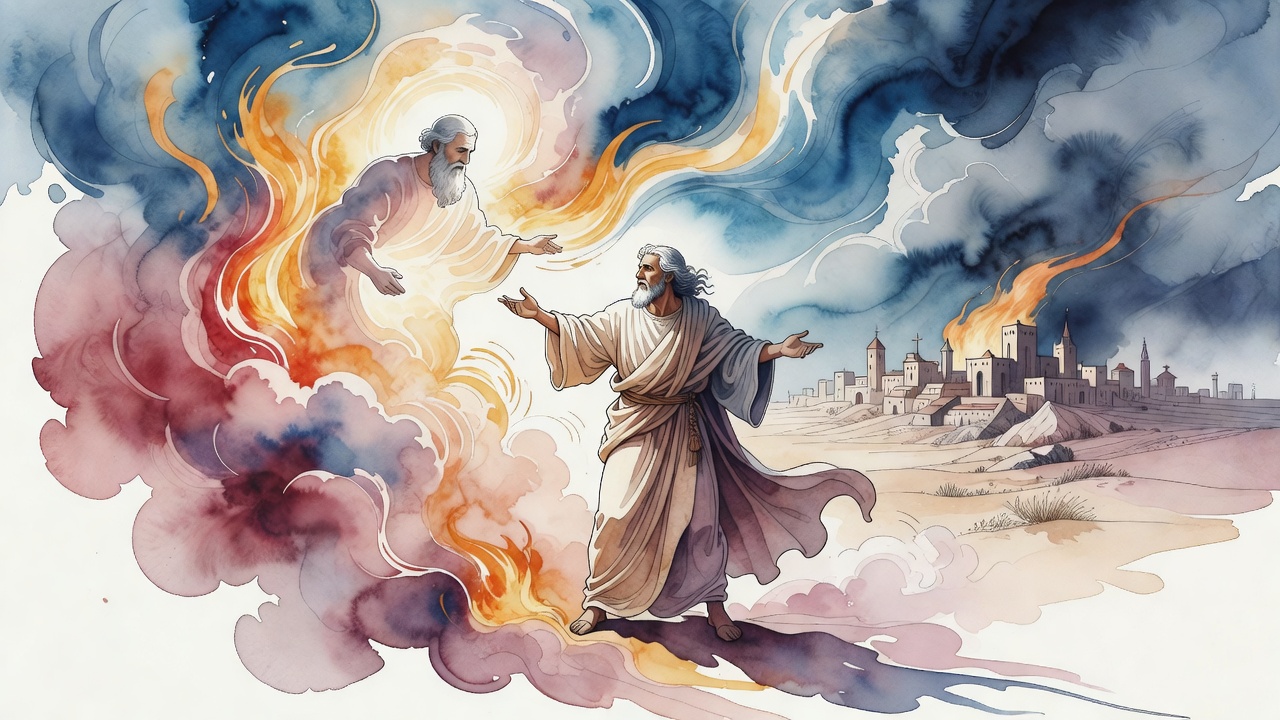
"Wilt thou also destroy the righteous with the wicked?" he asked. "Peradventure there be fifty righteous within the city" (Genesis 18:23-24). He walked the number down like a man testing ice. Forty-five. Forty. Thirty. Twenty. Ten. Each step was a body leaning toward mercy while the cities below him still believed morning would be ordinary.
God answered with a default that opened the negotiation. "If I find in Sodom fifty righteous within the city, then I will spare all the place for their sakes" (Genesis 18:26). Pardon first. Not a hunt for guilt. He would not take collateral against their sins the way a creditor seizes a cloak (Exodus 22:25). Fifty righteous lives could hold the whole place open.
Even then the cities stacked allegations. They said the Judge did not judge properly. Forgiveness sat on the table and they argued with the host.
Silence Granted to the Bargainer
Abraham pressed. Dust and heat stuck to his beard. Angels waited. God did not strike him for the hard words. Silence was promised for Abraham and for the branches that would grow from him: for Moses crying over a people under wrath, for Joshua asking why a defeated city was allowed, for David asking why the Lord stood far off in trouble. Strident speech earned a hearing, not a closed mouth from heaven.
"That which I see not, teach thou me" (Job 34:32). The Judge who dammed weeping waters still left room for a man's case on a dusty road.
Fifty were not found. Ten were not found. Fire fell. The plain blackened. Lot ran. Abraham watched smoke lift where tables had been set the night before. The bargain had been real. The numbers had failed.
What Stayed Under the Salt
Where Sodom burned, salt would later crust the ground and a sea would hold no life worth naming. Under that ruin the lower waters still pressed their old complaint against the dam. Separation had not ended. Cities that refused strangers joined the ledger of things driven down from nearness.
Abraham walked home with the offer of pardon still ringing and the smoke still rising. God had said He had forgiven before a single righteous head was counted. The cities had answered with empty streets at the tally. Above, the upper waters kept their place by the Throne. Below, the deep kept weeping into the channels cut on the second day.
The voice that herded Moses and herded the sea had also opened a door for fifty names. When the names did not come, the door shut. The tears under the world did not stop for the smoke, and the smoke did not stop for the tears.
← All myths