5 min read

One Hundred Eighty Thousand Marched on Ezra's Builders

Zerubbabel and Jeshua got the first courses laid before the Cutheans mustered. Then came the friendly invitations to meet Nehemiah in a village.

Curated by Arthur · Told by Maggid ·
Table of Contents
  1. The Foundation Went Down on Burnt Ground
  2. One Hundred Eighty Thousand Came Down From Samaria
  3. Four Invitations to a Village
  4. Two Years of Dust on the Courses
  5. The Vessels Went Grey in a Gold Palace
One Hundred Eighty Thousand Marched on Ezra's Builders Click for full size

The Foundation Went Down on Burnt Ground

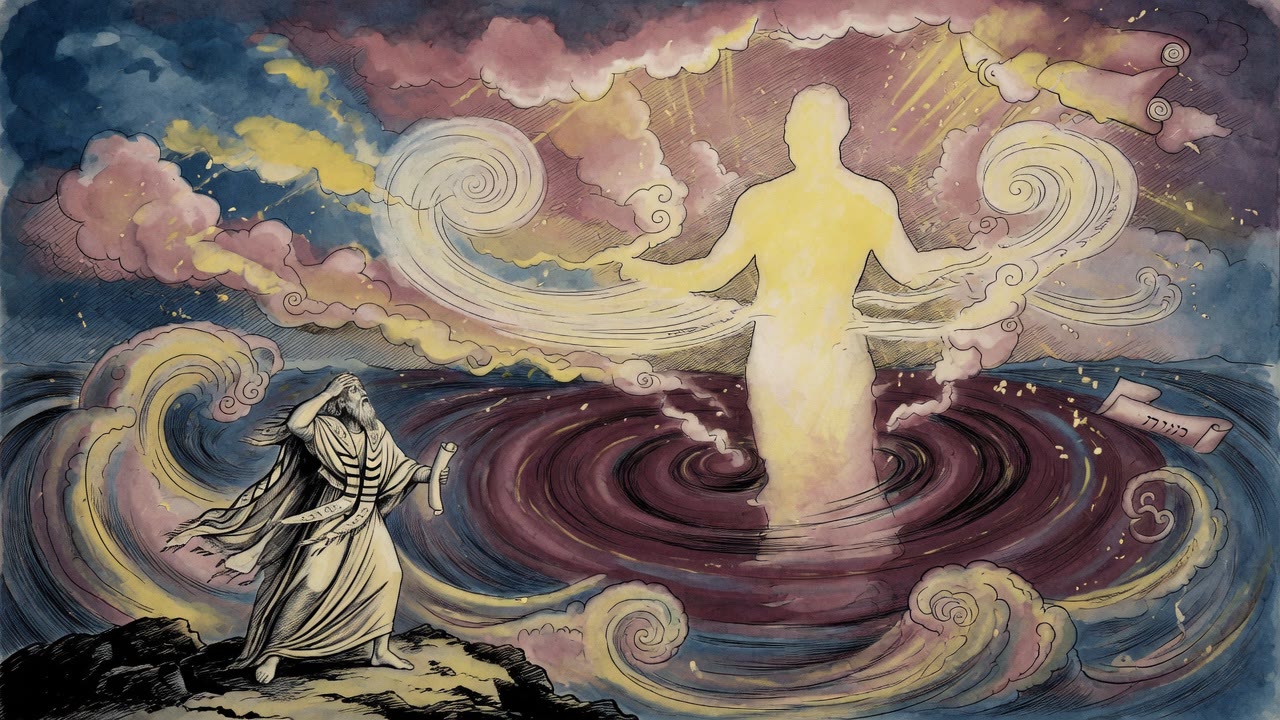
Ezra came up out of Babylon with Zerubbabel son of Shealtiel and Jeshua son of Jehozadak, and the three of them put men back on the site of the house of God.

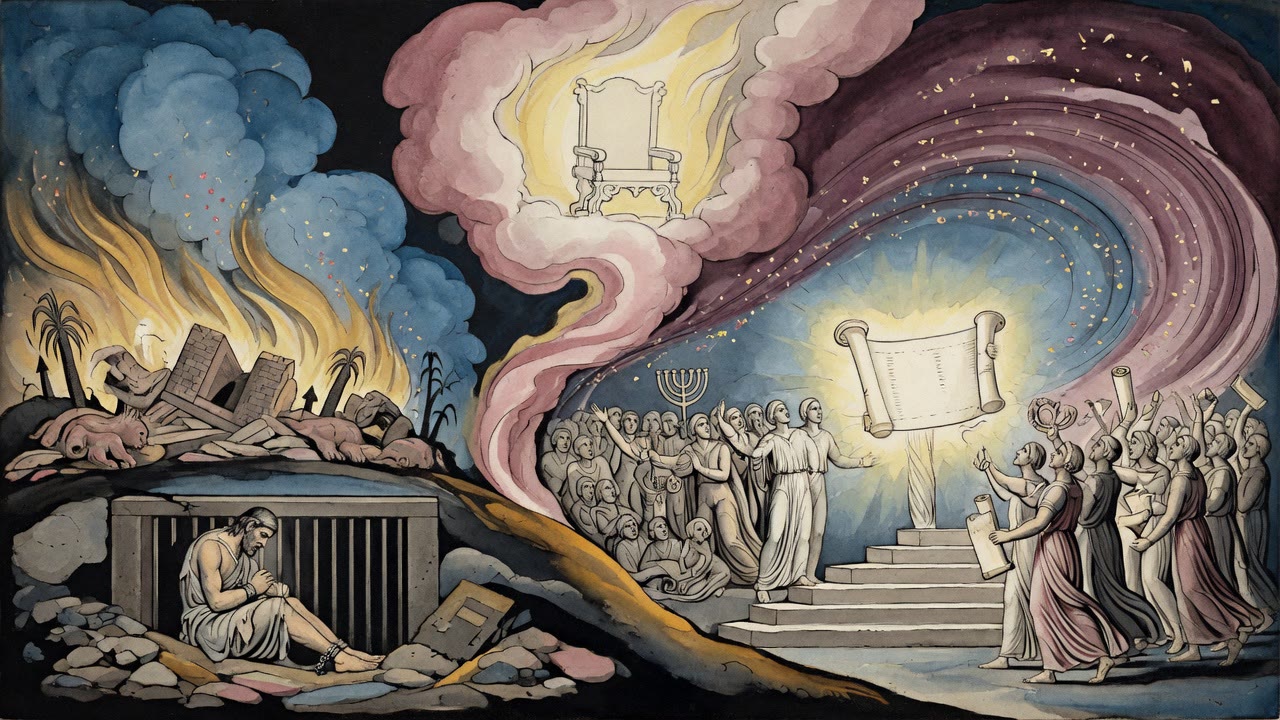
There was not much to build on. The stones on the mountain had been in a fire and the fire had been thorough, and half a century of weather had gone over the wreckage since. The masons cleared, and sorted what could still bear weight, and set a course, and then another course, and scaffolding started going up in the same air the smoke had gone up in.

It took almost no time at all for somebody to notice.

One Hundred Eighty Thousand Came Down From Samaria

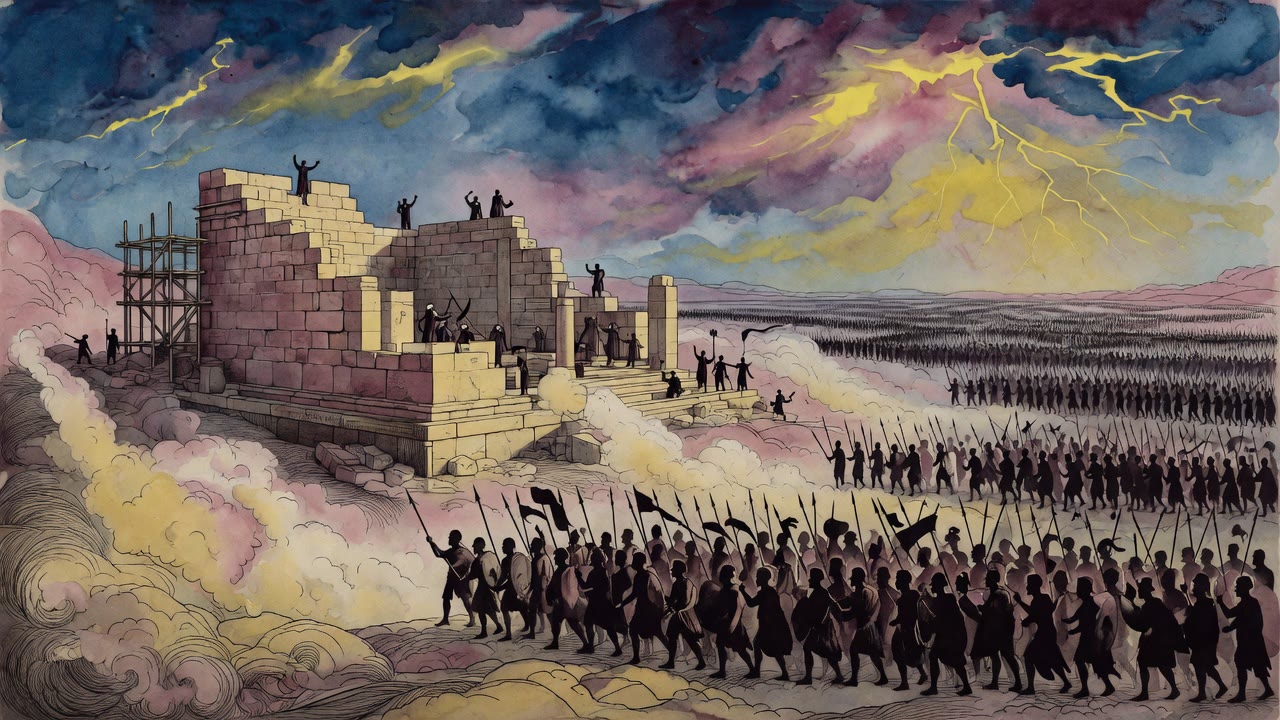
They came to fight, and they came with a hundred and eighty thousand men.

People called them Samaritans, after the city, and the name did more work than it should have, because it made them sound like the leftovers of the northern kingdom coming home. They were not. Assyria had emptied the north and marched the ten tribes off east, and these were Cutheans, moved in afterward to occupy a country somebody else had been cleared out of. They had the region and they had the city's name on them and they had no interest in a rebuilt house on that mountain.

A hundred and eighty thousand is not a number for taking a wall. It is a number for making men on a wall look down and count.

Four Invitations to a Village

The direct approach was not the only one. They also wanted Nehemiah dead, and for that they were patient and polite.

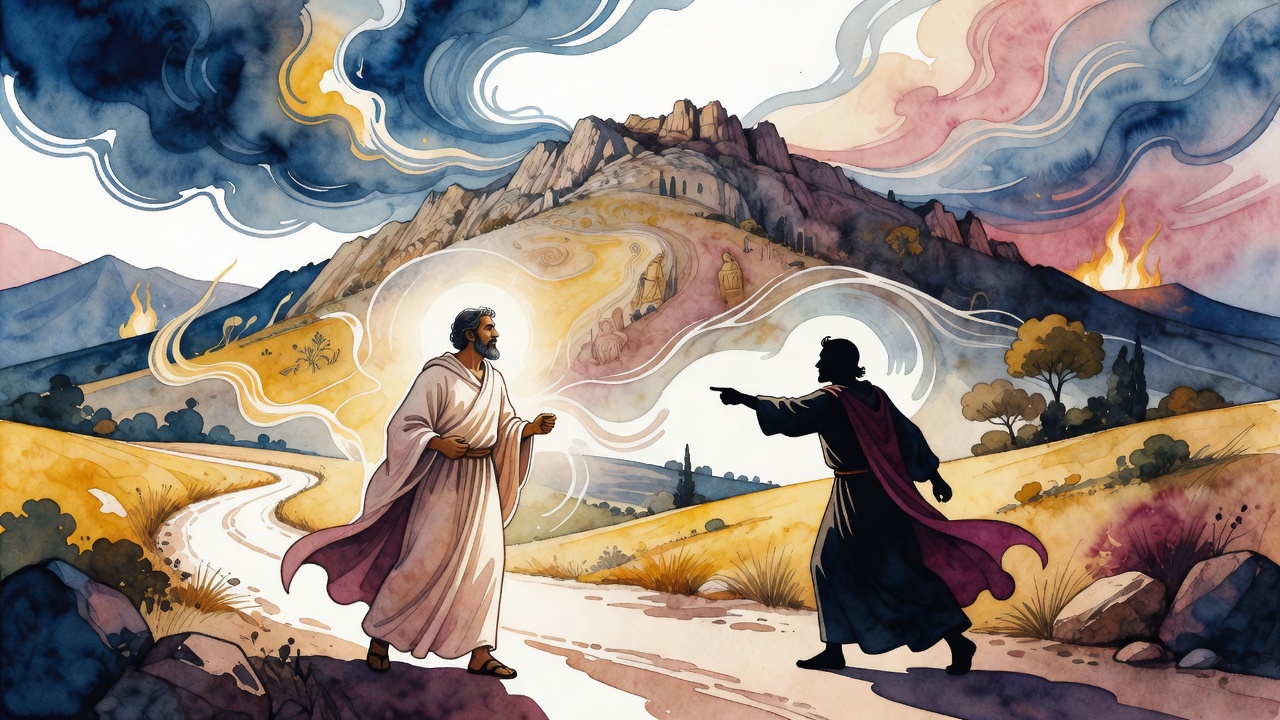
The message came in like an olive branch. Come, let us meet together in one of the villages on the plain. No walls, no witnesses, no guard rotation, one governor and a few servants out on open ground with people who had already mustered an army against him. Nehemiah read the invitation for exactly what it was and sent his answer back down the road: he was doing a great work and could not come down, and why should the work stop while he came down to them.

They sent it again. He said the same thing. They sent it four times.

The men laying stone that season worked with one hand on the trowel and one eye on the road, and the man in charge of them turned down four separate chances to be murdered at lunch.

Two Years of Dust on the Courses

What the army could not do by assault, the paperwork did.

The work on the house of God at Jerusalem stopped, and it stayed stopped until the second year of Darius king of Persia. Two years. The scaffolding stood where it was. Rain came through it twice. Dust settled into the joints of the unfinished courses and then grass got into the dust, and the builders walked past the thing every day on the way to other work and did not touch it, because a stop order out of a Persian chancery is heavier than a hundred and eighty thousand men and does not have to show up in person.

The Vessels Went Grey in a Gold Palace

Meanwhile, a long way east, another king was displaying his money.

Ahasuerus was richer than any king Media or Persia had produced. He had couches of gold and silver carried out and set up in the open streets of the capital so that everyone walking past could see what he was worth. Nothing in his palace was silver. Every vessel on every table was gold.

Into that collection went the service of the Temple in Jerusalem, carried off years earlier and stored as spoil.

When the Temple vessels came into his house, they changed. The gold went out of them. Guests at that banquet were handed cups that had stood in front of the Holy of Holies and were now the color of lead, dull and heavy and wrong among the shining plate. No two vessels on those tables matched anymore, and the ones that had gone grey had gone grey together.

In the second year of Darius the order came down and the site opened again. Somebody picked up a hammer on that mountain, and a long way east a set of grey cups sat on a gold table refusing to shine for anybody.


← All myths
From the tradition

Sources

3 sources

The texts behind this telling. Some cards carry a translation of the source; others are our own retelling of it, and each card says which. Every card links out to the original.

Pirkei DeRabbi Eliezer 38:24Pirkei DeRabbi Eliezer

Retold in our words. Read the original at the link below.Pirke de Rabbi Eliezer, trans. Rabbi Gerald Friedlander, London (1916) · CC-BY

Pirkei DeRabbi Eliezer turns to Ezra and the Holy Sanctuary.

The text picks up as Ezra, along with Zerubbabel, son of Shealtiel, and Jeshua, son of Jehozadak, get to work. Finally! The rebuilding of the Temple of the Lord is underway. As (Ezra 5:2) tells us, "Then rose up Zerubbabel, the son of Shealtiel, and Jeshua, the son of Jozadak, and began to build the house of God." A moment of hope and renewal. But of course, the story doesn't end there. Because almost immediately, opposition arose. Pirkei DeRabbi Eliezer tells us that the Samaritans came to fight them with 180,000 men! Now, The text pauses and asks: Were they really Samaritans? Weren’t they actually Cutheans? The answer given is that they were called Samaritans because of the city of Samaria. This is a crucial point. The people who lived in the area of Samaria weren't the descendants of the ancient Israelites; they were a group brought in by the Assyrian empire after the Northern Kingdom of Israel was exiled. This distinction highlights the complex ethnic and religious tensions simmering at the time.

The animosity didn't stop with just threats of war. According to Pirkei DeRabbi Eliezer, these adversaries even sought to kill Nehemiah. We see hints of this in the Book of Nehemiah itself. (Nehemiah 6:2) recounts a plot: "Come, let us meet together in one of the villages,… but they thought to do me mischief." This adds a layer of personal danger to the already difficult task of rebuilding.

The result of all this opposition? The work on the Temple ground to a halt. Pirkei DeRabbi Eliezer, echoing (Ezra 4:24), states: "Moreover, they made the work of the Lord to cease for two years. ‘Then ceased the work of the house of God, which is at Jerusalem; and it ceased unto the second year of the reign of Darius, king of Persia.’" Two years! It emphasizes the immense challenges faced by those returning to rebuild their lives and their faith in the face of both external hostility and internal divisions.

What does this all tell us? That building something new, especially after destruction and exile, is never easy. It requires resilience, faith, and the ability to overcome both external enemies and internal doubts. And perhaps most importantly, it shows us the importance of understanding the nuances of history, of looking beyond the simple labels to see the complex human stories that lie beneath.

Full source
Pirkei DeRabbi Eliezer 49:9Pirkei DeRabbi Eliezer

Retold in our words. Read the original at the link below.Pirke de Rabbi Eliezer, trans. Rabbi Gerald Friedlander, London (1916) · CC-BY

Rabbi Jonathan kicks things off by talking about Artaxerxes, the last king of Media who ruled in Babylon. He reigned for 32 years. How do we know? Well, Rabbi Jonathan points us to the Book of Nehemiah (Neh. 13:6), where Nehemiah himself says, "But in all this time I was not in Jerusalem; for in the two and thirtieth year of Artaxerxes, king of Babylon, I went unto the king." See how they connect the dots? A verse in the Bible becomes a historical marker.

Then, Rabbi Tachanah chimes in, and he wants to He asks us to consider Ahasuerus, the king from the Book of Esther. According to Rabbi Tachanah, Ahasuerus was richer than all the kings of Media and Persia combined! How rich? (Daniel 11:2) says, "And the fourth shall be far richer than they all," and Rabbi Tachanah sees that verse as applying directly to Ahasuerus.

So, what did this unimaginable wealth look like? According to Rabbi Tachanah, Ahasuerus put out couches made of gold and silver right in the streets! Can you even picture that? Just The verse in (Esther 1:6), "The couches were of gold and silver," is the proof text here.

The story doesn't stop there. Ahasuerus didn’t just have fancy furniture; he had an entire palace filled with golden vessels! Not silver, but pure gold. And here's where it gets even more interesting. Remember the vessels from the Beit Hamikdash – the Temple in Jerusalem? Ahasuerus, in his… shall we say, acquisition of treasures, brought those vessels into his palace.

Now, according to Rabbi Tachanah, something strange happened. When the Temple vessels came into Ahasuerus's possession, they changed in appearance. They became dull, almost like lead! The verse in (Esther 1:7), "The vessels being diverse one from another," is interpreted to mean that the vessels themselves transformed, losing their original splendor. Was this a sign? A divine commentary on the king's actions?

What does this all tell us? Pirkei DeRabbi Eliezer isn't just a history book. it weaves biblical verses, rabbinic interpretations, and a healthy dose of wonder. It uses the stories of kings and their wealth to explore deeper questions about power, piety, and the enduring legacy of the Temple. It's a reminder that even seemingly straightforward historical narratives can be filled with layers of meaning, waiting to be uncovered. And perhaps, just perhaps, a warning about the fleeting nature of earthly riches.

Full source
Yalkut Shimoni on Nach 321:1Yalkut Shimoni on Nach

Retold in our words. Read the original at the link below.Sefaria Community Translation · CC-BY

The prophet Yirmiyahu (Jeremiah) pulls no punches. He declares, in Yirmiyahu 32:31, that Jerusalem has aroused God's anger and wrath "since the day they built it until this day, to remove it from before My face." Harsh. Does that mean God is still fuming?

Well, the Yalkut Shimoni, a compilation of rabbinic interpretations of the Bible, tackles this very question. It pushes back against the idea of unending divine wrath. It asks, pointedly: "Perhaps until this day He is in anger?" Then, it offers a counter-argument, a ray of hope, by quoting Tehillim (Psalms) 76:3: "His Tabernacle was in Shalem, and His dwelling place in Zion." The Yalkut Shimoni sees a hidden message here: God "returned her original name." Shalem, meaning "peace," was an ancient name for Jerusalem. By referencing it, the text suggests a return to a state of peace, implying that God's anger isn't the final word.

It doesn’t stop there. Tehillim 68:17 says “…the mountain that God desired for His dwelling…” The Yalkut Shimoni interprets this to mean that Jerusalem is "still cherished and desired" by God. Despite its destruction, there's still a deep connection, a longing for what was and what could be again.

Here's where it gets even more interesting. The Yalkut Shimoni teaches that the destruction of Jerusalem actually "brought atonement for her sins." It's a powerful idea: that even in devastation, there's a path to redemption.

So, when will God's presence fully return to Jerusalem? The Yalkut Shimoni finds a clue in the story of Avraham (Abraham) in Bereshit (Genesis) 22:14. Remember when Avraham was about to sacrifice his son, Yitzchak (Isaac), and God intervened? Avraham named that place "The Lord will see, as it is said to this day: On the mountain, the Lord will be seen." The text connects this to Jerusalem, suggesting that God's presence will fully return only when the city becomes like a mountain.

What does that mean, "like a mountain"? Perhaps it refers to a state of spiritual elevation, a place of unwavering faith and connection with the divine.

Finally, the Yalkut Shimoni references Tehillim 137:7: "Remember, O Lord, for the sons of Edom, the day of Jerusalem…" This verse speaks of the destruction wrought by Edom, a nation often seen as an enemy of Israel. When will God remember? "Once her foundations have been uprooted, as it says 'Raze it, raze it, down to its foundation!'" In other words, only after the complete devastation will the process of rebuilding and redemption truly begin.

It is a sobering thought. Destruction precedes rebirth. The utter collapse of what was paves the way for something new, something hopefully better.

So, does God hold a grudge? The Yalkut Shimoni suggests that while divine anger is real, it's not the whole story. There's always the possibility of atonement, of return, of rebuilding. And maybe, just maybe, that process starts with us, with our own efforts to create a world worthy of divine presence.

Full source