5 min read

Only the Necromancer Saw What Saul Heard

Saul banned the speakers with the dead, then walked to Endor at night. She saw Samuel's mantle. He heard only a whisper rising from under the earth.

Curated by Arthur · Told by Maggid ·
Table of Contents
  1. The Road to Endor
  2. The Oath He Had No Right to Swear
  3. How the Work Is Done
  4. She Screamed and He Bowed to the Floor
  5. The Answer, and Then the Bread
Only the Necromancer Saw What Saul Heard Click for full size

The Road to Endor

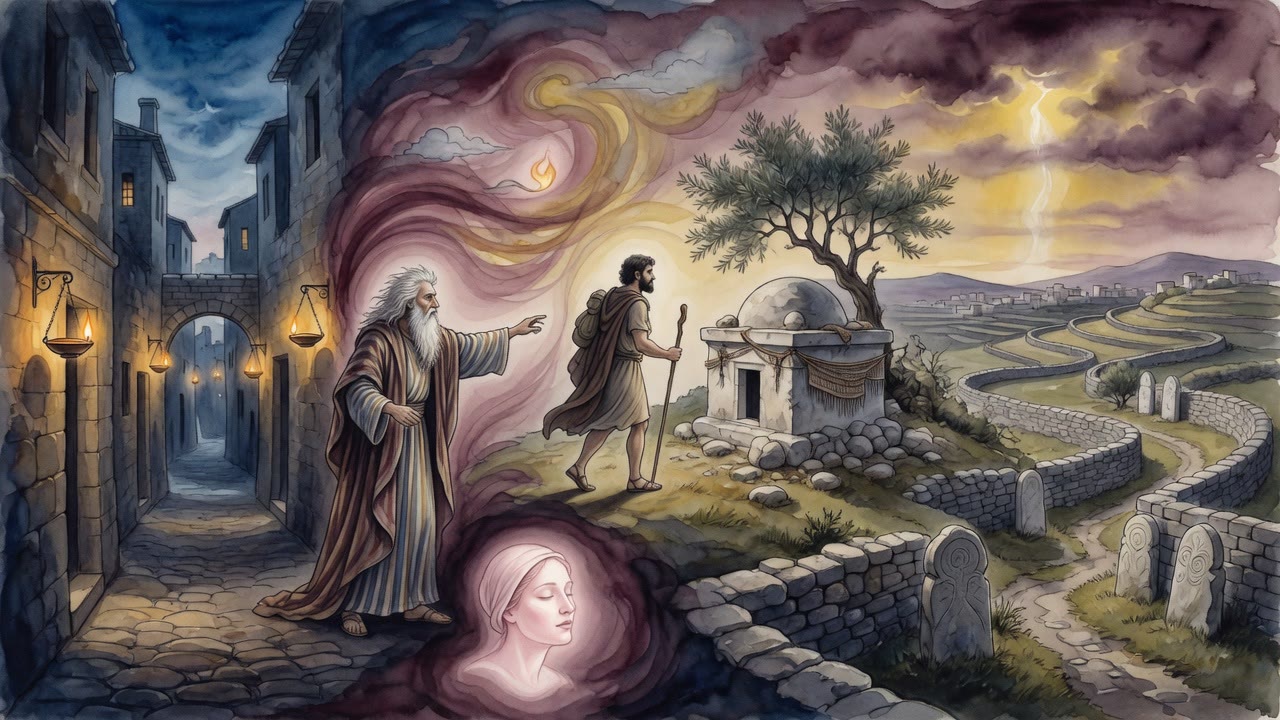
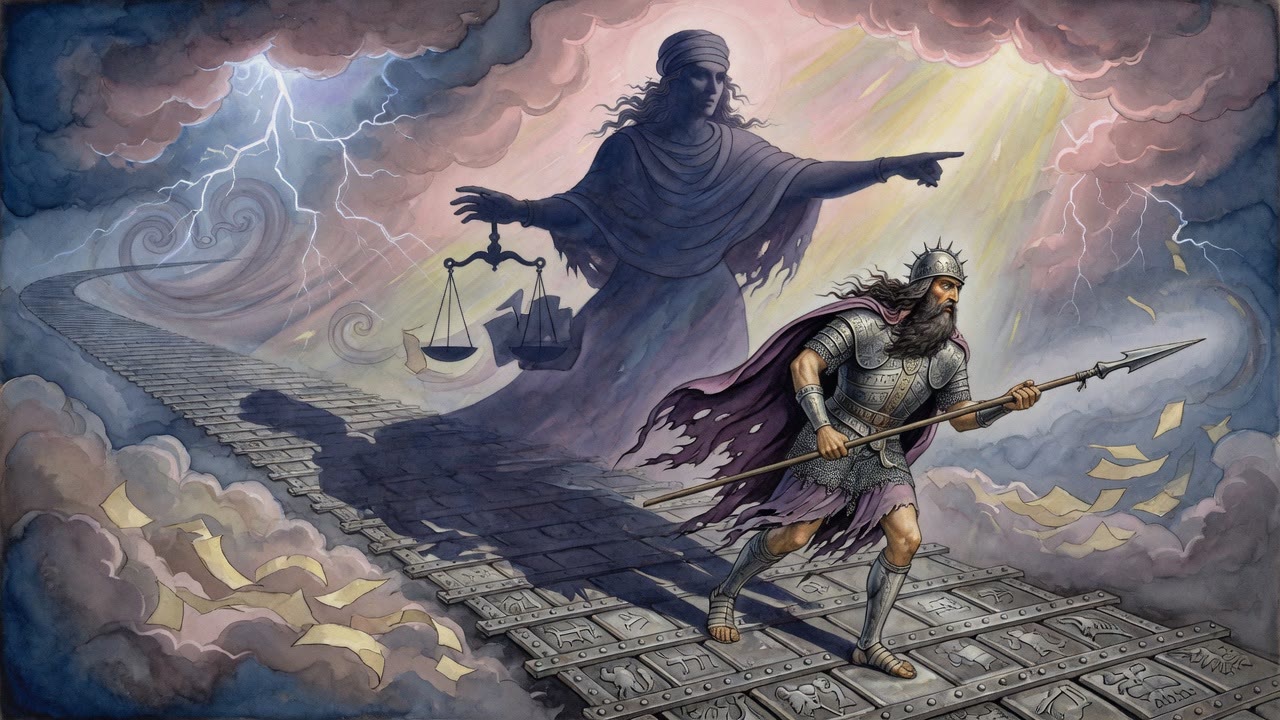
Saul went out of the camp after dark in another man's clothes, and he was still the tallest thing on the road. Two servants walked with him. Below them the Philistine fires sat in a long line on the low ground, close enough to count, and there were more of them than there had been the night before.

He had asked properly first. He had asked by dream and by lot and by the prophets, and heaven had gone quiet on him in a way it had never done when he was young and did not need it. So he asked his servants to find him a woman who spoke with the dead, and had to watch them work out how to answer that, because he was the one who had cleared the land of them. His own decree, his own soldiers, his own hand. The servants found one at Endor. It took them a while.

The Oath He Had No Right to Swear

She would not let the three of them past the door. She said what everyone in her trade said about Saul, to Saul's face, without knowing it was his face: he has cut off the ones who speak with the dead out of the land, so why are you setting a trap for my life.

He swore to her. He swore by the God who had stopped answering him that no punishment would come on her for this night's work, and the oath was worth exactly nothing and she took it anyway, because a king's word is heavy even when it is hollow, and because it was the middle of the night and he was not going to leave.

She asked whom he wanted brought up. He said Samuel.

How the Work Is Done

She had not eaten, which is how the door opens in that trade. The fast comes first and everything else comes after.

Others in the same work carry a bone from the yaddua' in the mouth and let the speech come out around it. The one they call the ob stoops while she works, folded over, so that the voice seems to climb out of the joints and hollows of the body rather than off the tongue, which is why the Greeks called them speakers from the belly. And there are the ones who need no equipment at all, who simply ask the dead a question, and they cross the same line the Torah drew and are named in the same breath with it (Leviticus 19:31; Deuteronomy 18:11).

Saul stood where the one who asks stands, which is a little back, and out of the way, and blind.

She Screamed and He Bowed to the Floor

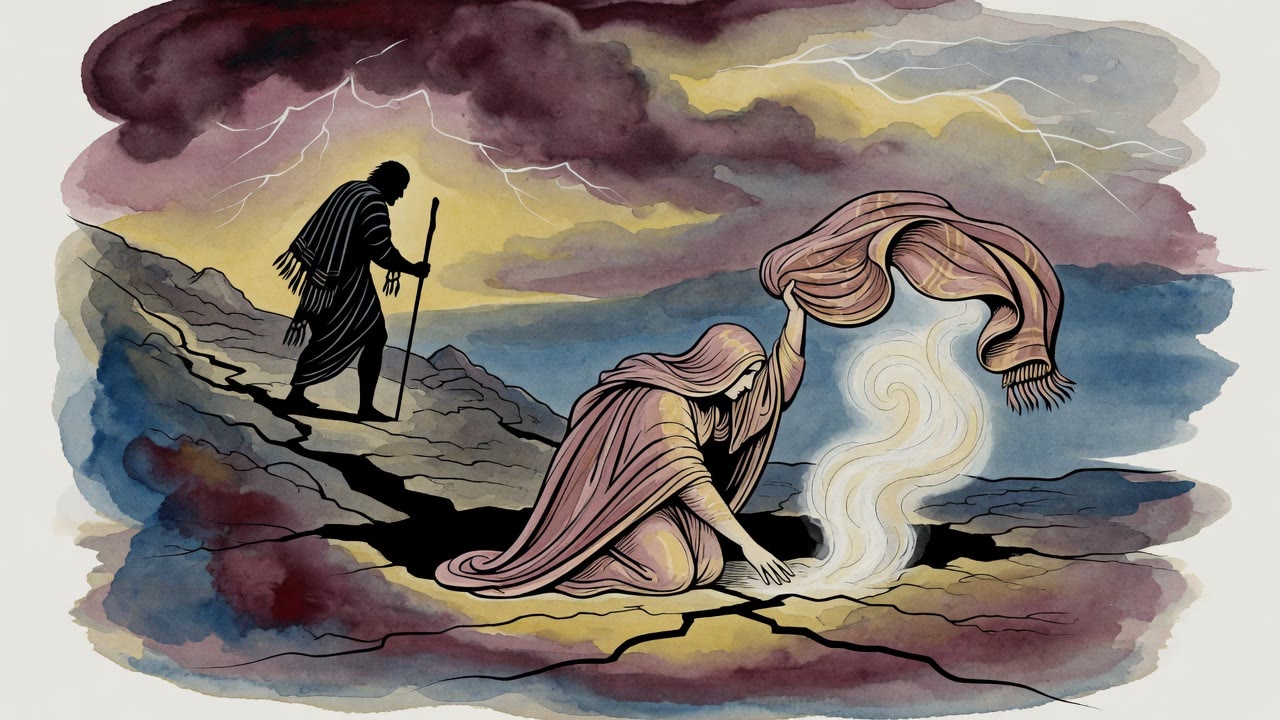
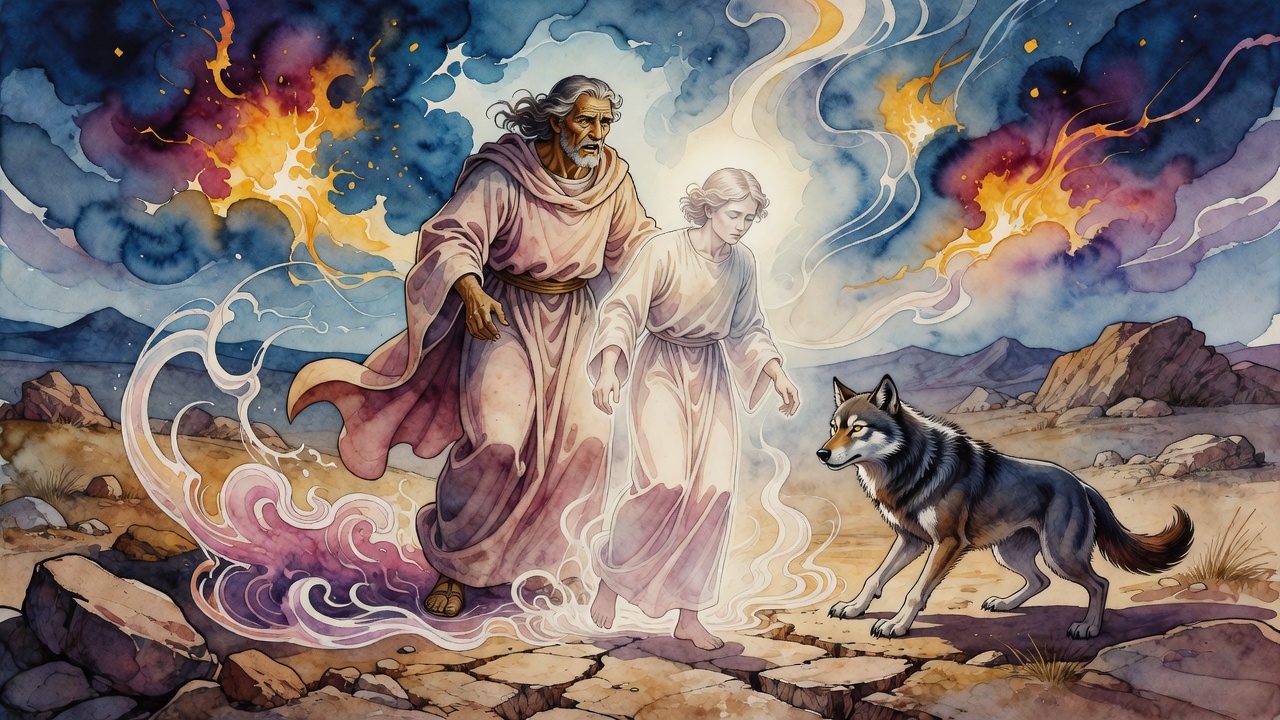
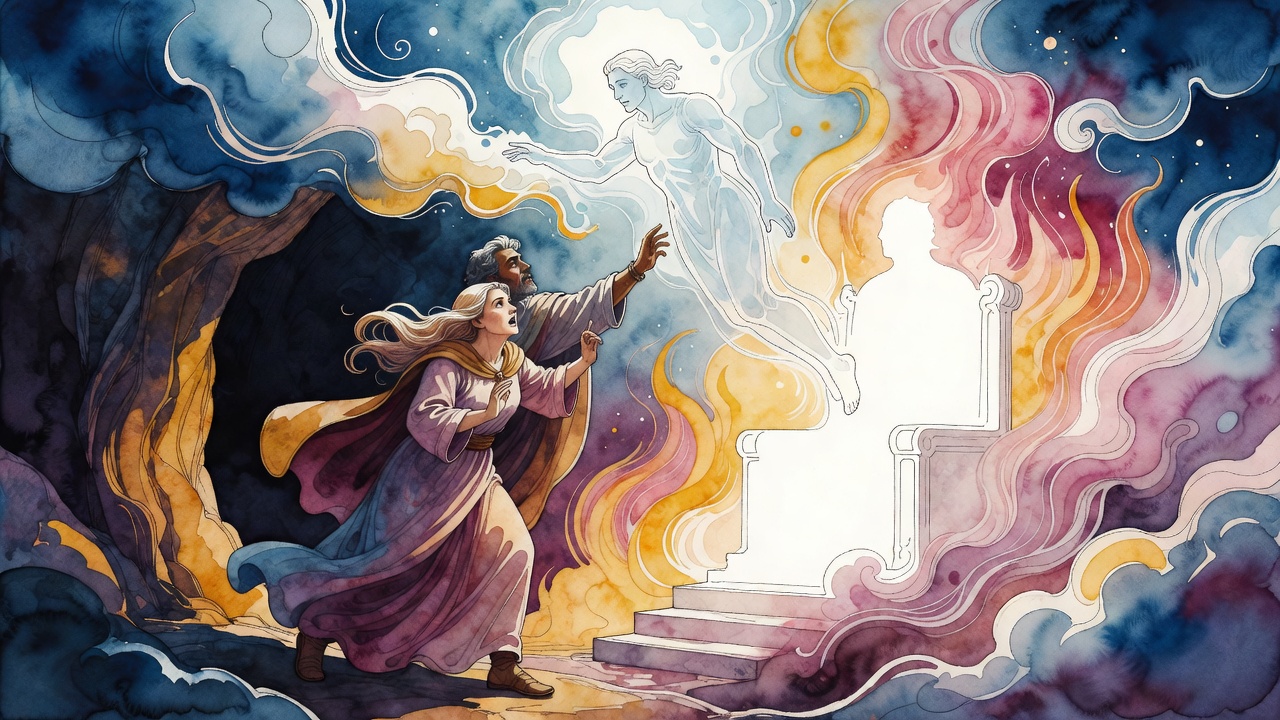
Then she screamed, because she could see him coming up: an old man wrapped in a mantle, dressed the way the dead come, in the clothes the living last saw on them.

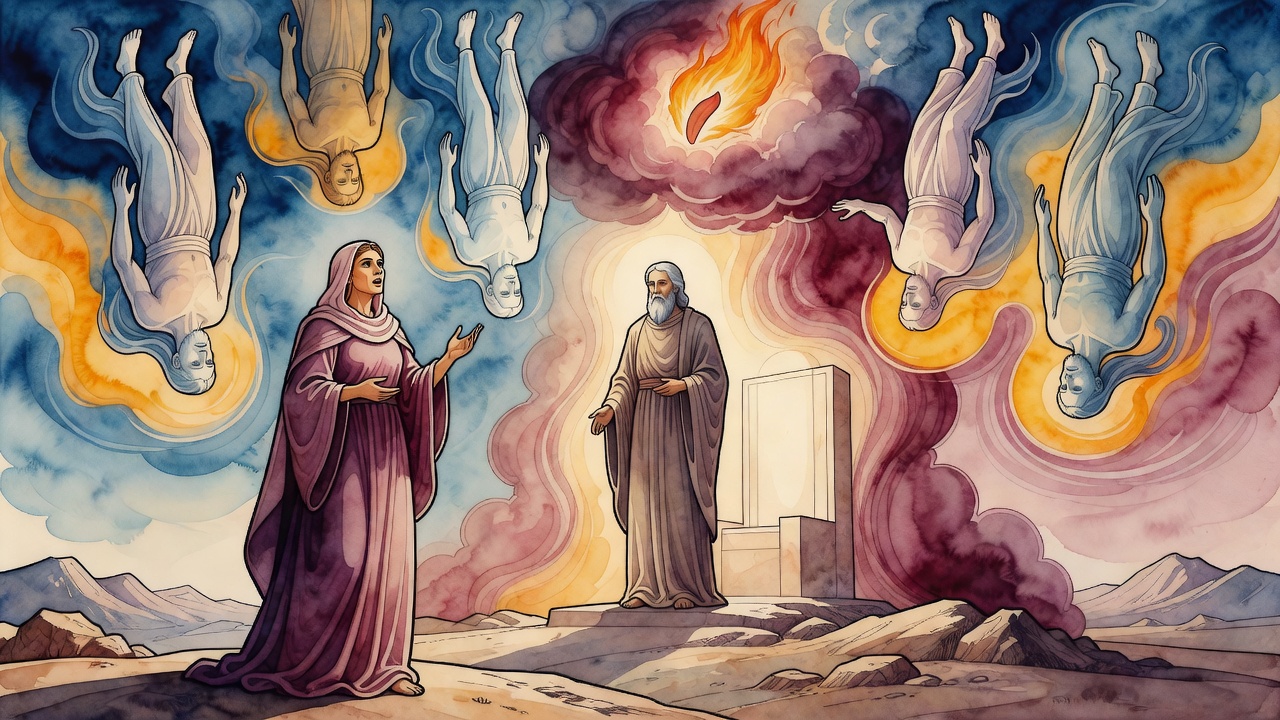
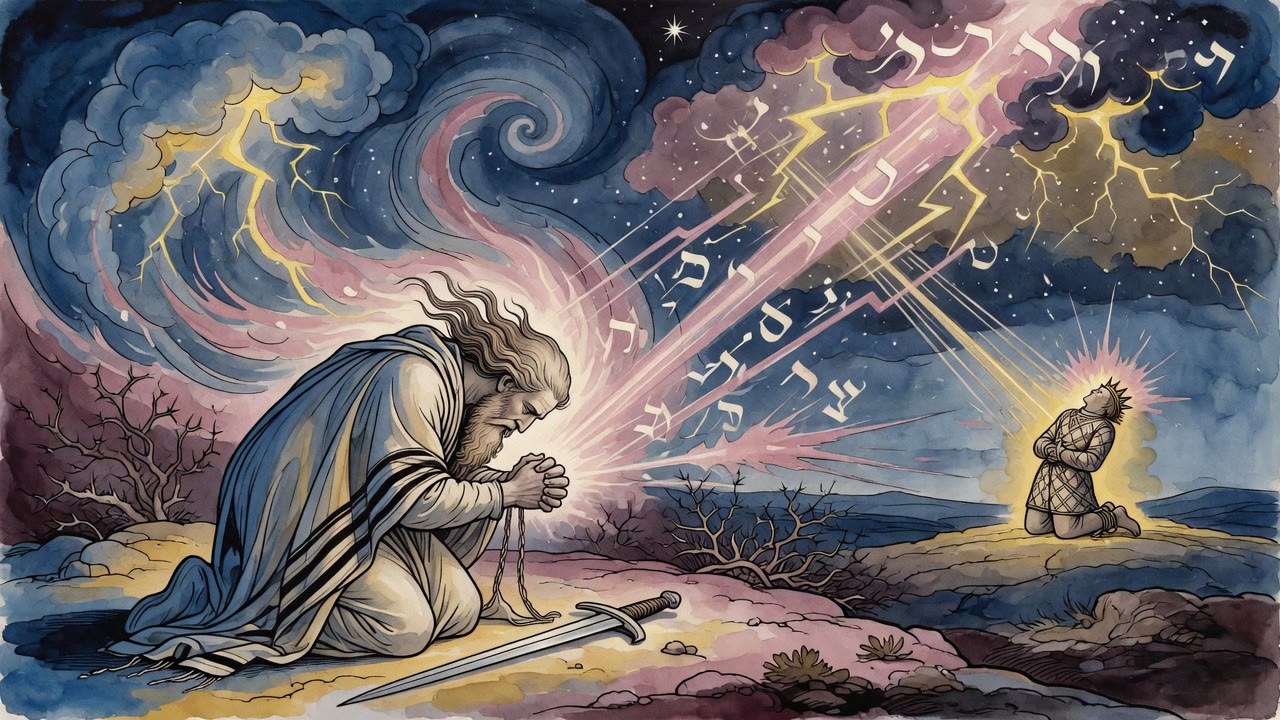
Saul saw a room. He saw a woman with her hand over her mouth and a lamp guttering because she had knocked the table. What he got instead of the mantle was a voice, and it did not come from the doorway or the corner or the woman. It came up through the floor, whispering and muttering out of the ground, the sound Isaiah names when he says they chirp and mutter from the dust (Isaiah 8:19; 29:4). Saul knew it anyway. He went down on his face into the dirt of a banned woman's floor and bowed to something he could not see, because the rule holds and has always held: when the one who calls sees the shape, the one who asks gets only the sound, and no one has ever been given both at once.

The Answer, and Then the Bread

The voice did not soften for him. He had asked because heaven had gone silent and he wanted the silence explained, but the explanation came with tomorrow's date on it: the army scattered, the kingdom torn out of his hand, and Saul and his sons on the other side of the ground by evening.

His strength went out of him all at once and he went full length on the floor, because he had eaten nothing all day and nothing all night either. The woman stood over him and argued him up. She had risked her life on his word, she said, so he could listen to her for one minute of his. She killed a calf that was in the house, and baked, and put it in front of him, and he ate sitting on her bed with his servants standing there.

Then he went back up the road toward the morning with her bread still in his mouth. Behind him the woman he had outlawed put out her lamp and went to bed in a house she had expected to lose that night.


← All myths
From the tradition

Sources

2 sources

The texts behind this telling. Some cards carry a translation of the source; others are our own retelling of it, and each card says which. Every card links out to the original.

Jewish Encyclopedia, "Lilith" (1906)Jewish Encyclopedia (1901-1906)

Retold in our words. Read the original at the link below.The Jewish Encyclopedia, 1901-1906 · Public Domain

Lilith is described as a female demon in Jewish tradition. The name appears in (Isaiah 34:14) and derives from Assyrian demon mythology, though scholars debate whether it connects to the Hebrew word "layil" (night) or represents a storm demon.

Of the three Assyrian demons Lilu, Lilit, and Ardat Lilit, the second is referred to in (Isaiah 34:14). There is scholarly debate about her origins, with some scholars thinking that "Lilith" is not connected with the Hebrew "layil" (night), but that it is the name of a demon of the storm.

TALMUDIC AND MIDRASH (rabbinic interpretive commentary)IC TRADITIONS

The article notes that "Lilith is a seductive woman with long hair" who operates primarily at night. According to rabbinic sources, she:

- Targets people sleeping alone in rooms - Bears the title "Queen of Zemargad" - Represents one of three demon classes alongside spirits and demons - Possesses wings in certain depictions

The text explains that demons arose from Adam during a spell and from Eve's union with male spirits over 130 years, making them "half human."

MEDIEVAL AND MODERN DEVELOPMENTS

In the later Middle Ages the mystics systematically amplified demonology on the basis of the traditions and the current European superstitions, and they also assigned a more definite form to Lilith. She becomes a nocturnal demon, flying about in the form of a night-owl and stealing children. Lilith likewise appears to men in their dreams; she is the bride of Samael (the angel of death).

Post-medieval Jewish mysticism substantially expanded Lilith's characterization. She evolved into a figure associated with:

- Nocturnal child-stealing activities - Marriage to Samael (a prominent demon) - Seduction of men through dreams - Infant mortality in folklore

Protective amulets became common on "childbirth tablets" hung in birthing rooms across Eastern Europe and the Middle East as safeguards against her influence. The conception of Lilith as Adam's first wife gained prominence through later lexicographic works rather than classical rabbinic sources.

Full source
Jewish Encyclopedia, "Necromancy" (1906)Jewish Encyclopedia (1901-1906)

Retold in our words. Read the original at the link below.The Jewish Encyclopedia, 1901-1906 · Public Domain

Divination using the deceased was reportedly widespread among Persians, Greeks, and Romans. The Israelites likely adopted this practice from Persian sources and engaged in it extensively, prompting repeated biblical prohibitions (Leviticus 19:31; 20:6, 27; (Deuteronomy 18:11); 1 Samuel 28; (Isaiah 8:1)9).

Three categories of necromancers existed: the "ob," the "yidde'oni," and the "doresh el ha-metim" (questioner of the dead). The first two terms frequently appeared together in texts.

The term "ob" has been interpreted as either denoting a soothsaying spirit or a ghost of the deceased. The Septuagint typically rendered it as "ventriloquist," based on the vocal techniques employed by practitioners. Jewish tradition distinguished: "Ob is the python, who speaks from his armpits; yidde'oni is he who speaks with his mouth" (Sanh. vii. 7).

In Talmudic sources, the yidde'oni employed a bone from the animal called "yaddua'" positioned in the mouth to produce speech through magical means. The ob possessor would stoop while speaking to create the illusion that spirits communicated through their joints and limbs.

While biblical texts omit specific descriptions of necromantic equipment, references to teraphim and related objects suggest tools were employed. Samuel's manifestation to the Endor witch as an old man covered with a mantle demonstrates how spirits assumed their earthly appearance.

A crucial distinction existed: the necromancer alone perceived the apparition's form, while questioners heard only the voice. This voice reportedly emerged from beneath the earth, producing characteristic whispering and muttering sounds (Isaiah 8:19; 29:4). Questioners prepared through fasting to achieve proper spiritual receptivity.

Necromancy's classification alongside idolatry and magic indicated foreign origins and religious transgression. The practice predominantly involved women (1 Samuel 28:7). Saul had previously expelled all practitioners before later consulting one himself. King Manasseh encouraged them alongside other idolatrous practices, while Isaiah provided explicit condemnations (Isaiah 8:19; 19:3; 29:4). Josiah destroyed these practitioners following discovery of the Law's book (2 Kings 23:24).

Post-biblical necromancers persisted despite legal prohibition and repeated Torah interdicts. Talmudic scholars termed magicians "those that dig up the dead" and "those who predict by means of bones of the dead." One Babylonian scholar dismissed osteomancy as "deceit and falsehood" (Ber. 59a).

Despite skepticism, the spirits' veracity remained generally accepted, referencing Samuel's successful evocation (1 Samuel 28; Shab. 152b). A consistent rule governed manifestation: when necromancers witnessed apparitions, questioners heard voices; when questioners saw forms, practitioners heard voices. Simultaneous perception remained impossible (Sanh. 65).

Rab (d. 247), Babylon's foremost teacher, reportedly performed cemetery rituals determining that ninety-nine of one hundred deaths resulted from the evil eye (B. M. 107b). Another teacher described necromancers burning incense to demons while questioning them (Karet 3b).

More benign necromantic approaches involved secretly listening to the dead's conversations (Ber. 59a). Individuals fasted and spent nights in cemeteries, expecting "spirits of uncleanness" to visit, revealing hidden knowledge or future events (Sanh. 65b; Hag. 3b).

Jewish tradition held that necromancy would receive divine punishment rather than human enforcement (Sanh. 65).

Full source