Saul Welcomes Justice and Marches to Gilboa
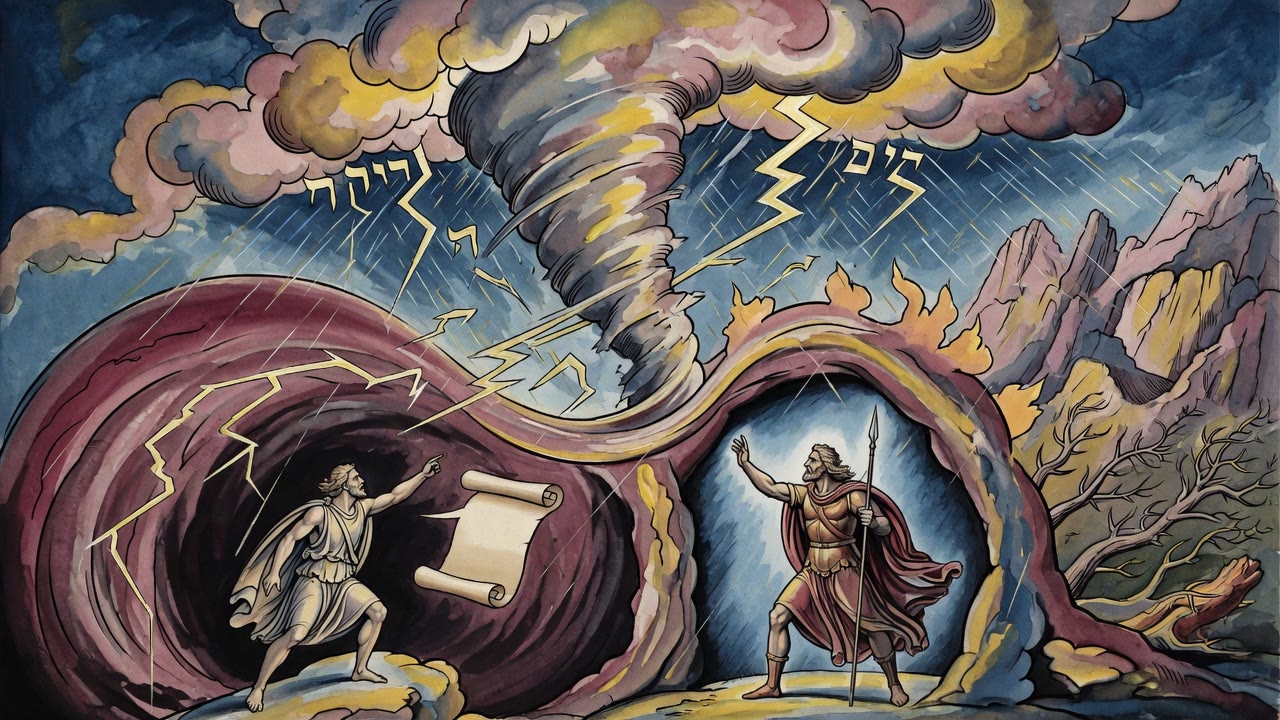
Disguised at Endor, the king swears by God while calling up the dead. Samuel offers him a place in truth if he accepts the sword.
Table of Contents
 Click for full size
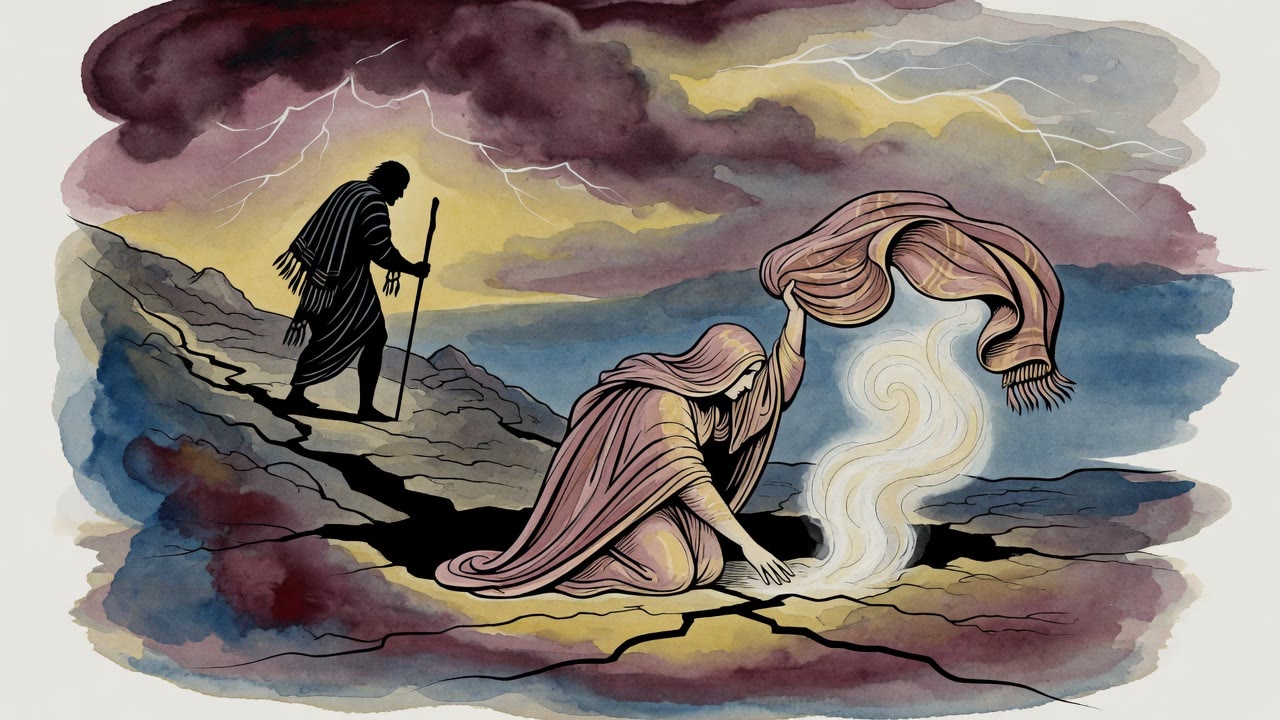
A King Creeps in Disguise
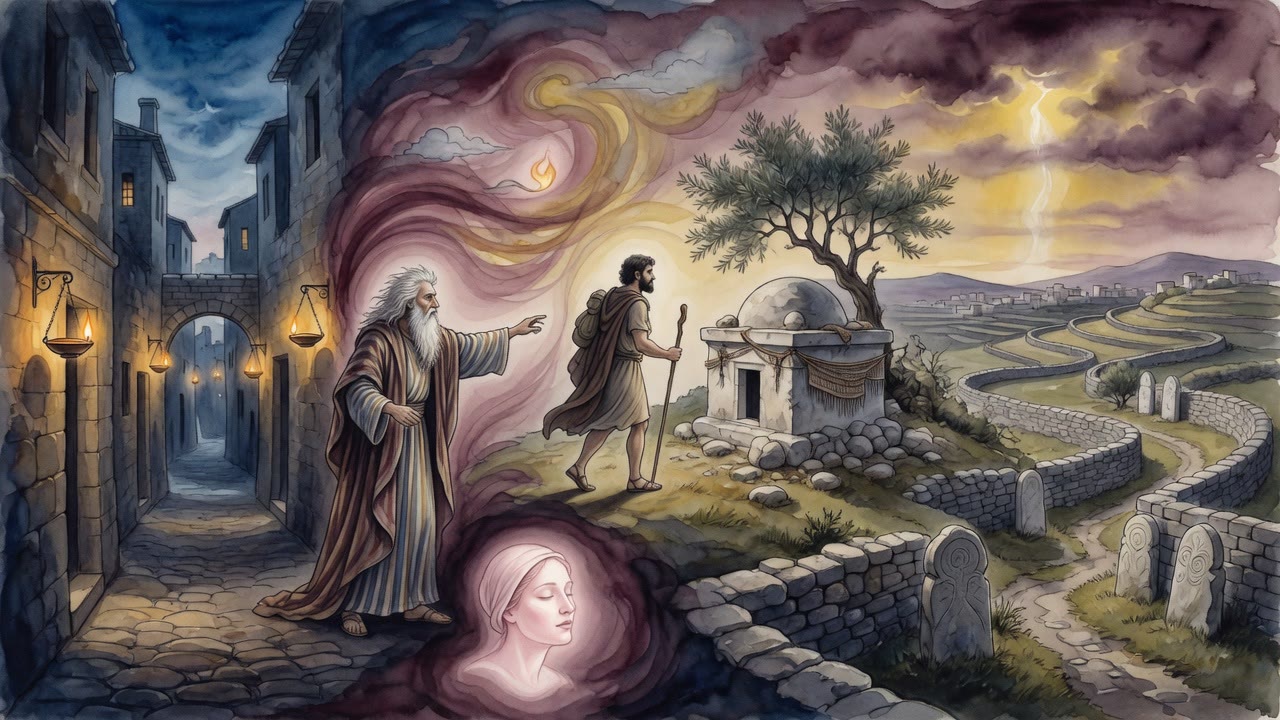
Saul wraps himself so no one will know the crown. The Philistines press Gilboa. Campfires stitch the enemy valley like a second constellation. The Urim and Tummim sit in the Sanctuary like a closed mouth, and the king's own heart knows why. Had he asked the holy stones, they would have thrown Nob in his face: Are you not the Saul who destroyed the city of the priests?
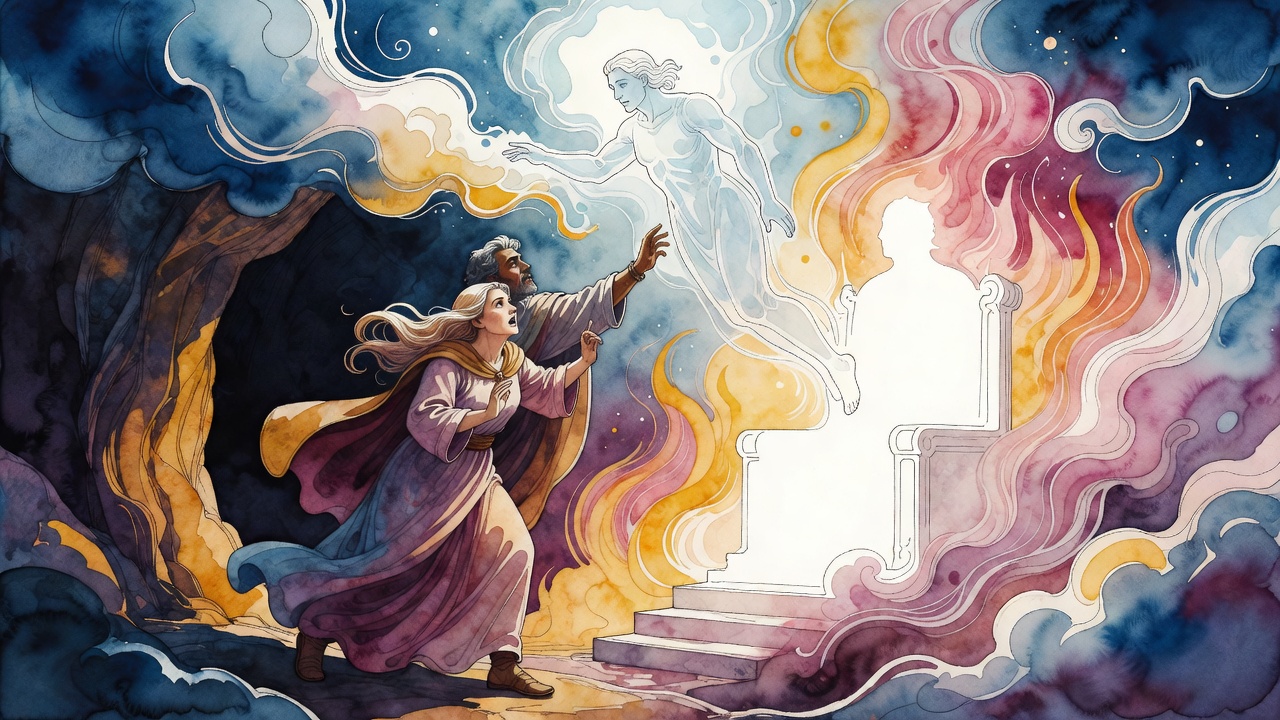
The heart knows its own bitterness. So he turns to the dead. He who banished the necromancers from the land now knocks at a forbidden door in Endor and begs, "Divine for me, I pray, by the ghost." The night air smells of oil and fear. His bodyguards wait at a distance that pretends not to see.
This is not the tall seeker who once climbed toward Ramah hunting donkeys. This is a man who has already lost the quiet of being only Kish's son. The kingdom hangs on him like wet wool. Every step toward the woman of Endor is a step away from the tools he himself outlawed.
An Oath Shared with the Sin
The woman hesitates. She smells a trap. Saul swears, "As the LORD lives, no punishment shall befall you for this thing." The oath and the crime share one mouth. It is like a woman lying beside her lover who swears in that same moment by the life of her husband. The living Name is used to shield traffic with the dead.
"Whom shall I bring up for you?" she asks. The word "whom" is already a sorting. From which company of the dead? From those who once sneered, "Who is the LORD?" like Pharaoh, or from those who sang at the sea, "Who is like You among the mighty?" The underworld is not one room. It is a ledger of mouths that either mocked Heaven or blessed it.
Saul answers with a name: Samuel. He wants the prophet who once poured oil on his head, the same prophet he later disobeyed in the matter of Amalek. Memory reaches for a father-voice even when the law forbids the channel.
Truth Speaks from the Other World
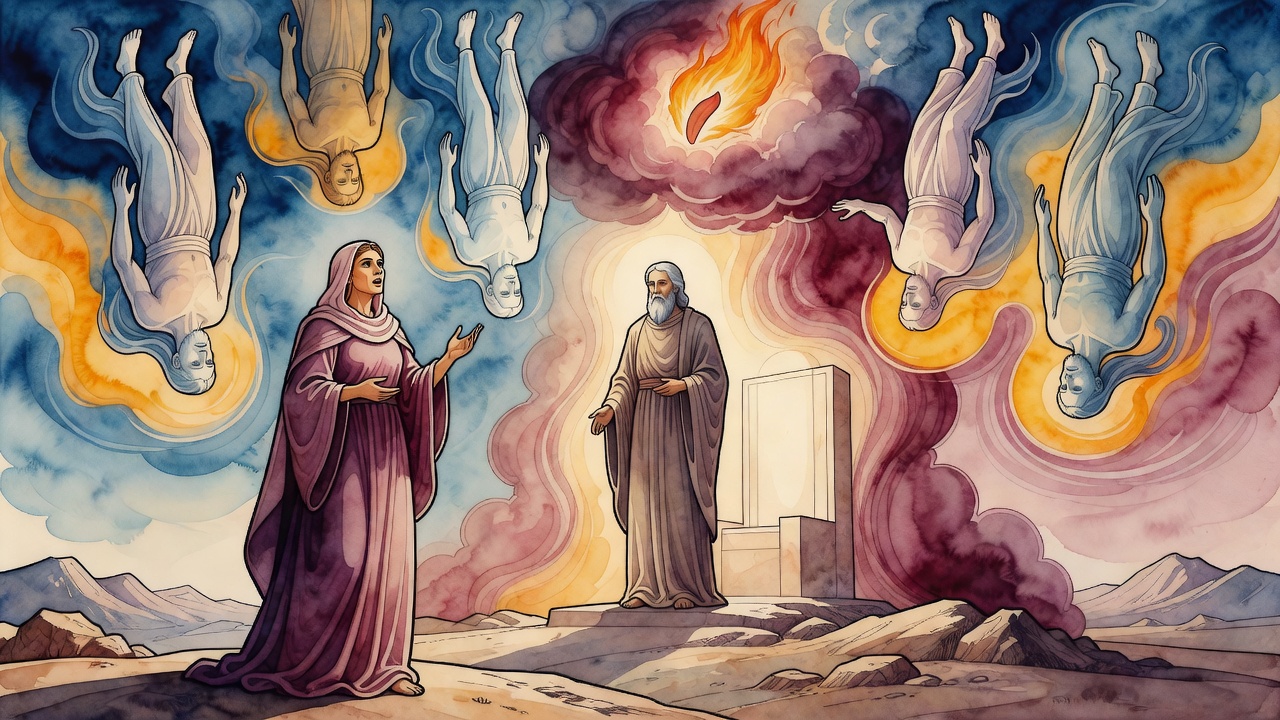
Samuel rises. In life he sat beside the king in a world of falsehood and feared him. Now he sits in the world of truth, and fear no longer softens his speech. "When I sat beside you, I dwelt in the world of falsehood, and I feared you. Now I sit in the world of truth, and you will hear nothing from me but the truth. The kingdom is torn from you and given to David."
Then the gentlest blade of all: "If you accept the attribute of justice upon yourself, tomorrow you and your sons shall be with me, within my own partition." Not every death is exile from the righteous. Some deaths can still choose a room. The offer does not restore the throne. It restores a kind of nearness on the far side of the sword.
Saul's legs fail under the weight of the words. Bread is pressed on him. He eats because the body still demands a future even when the mouth has heard there is none. Outside, the Philistine fires keep burning as if nothing holy or unholy had just spoken in a cottage.
Three Sons Walk with Him to the Sword
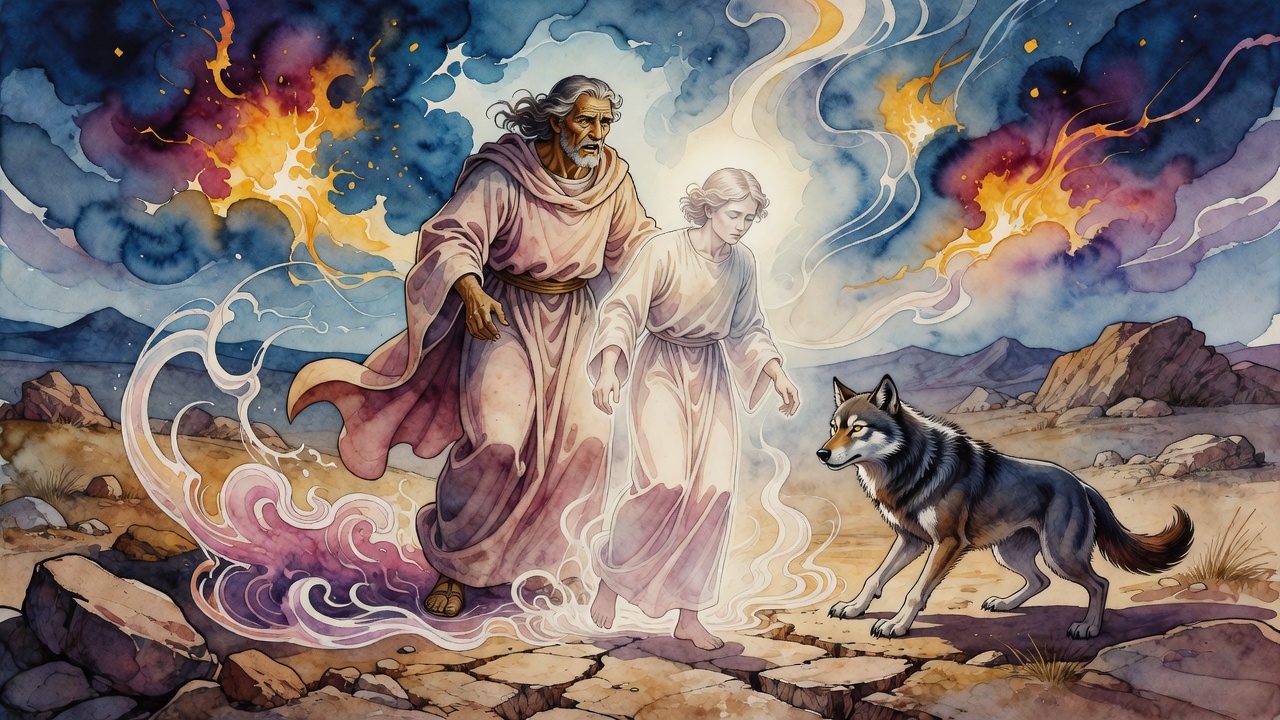
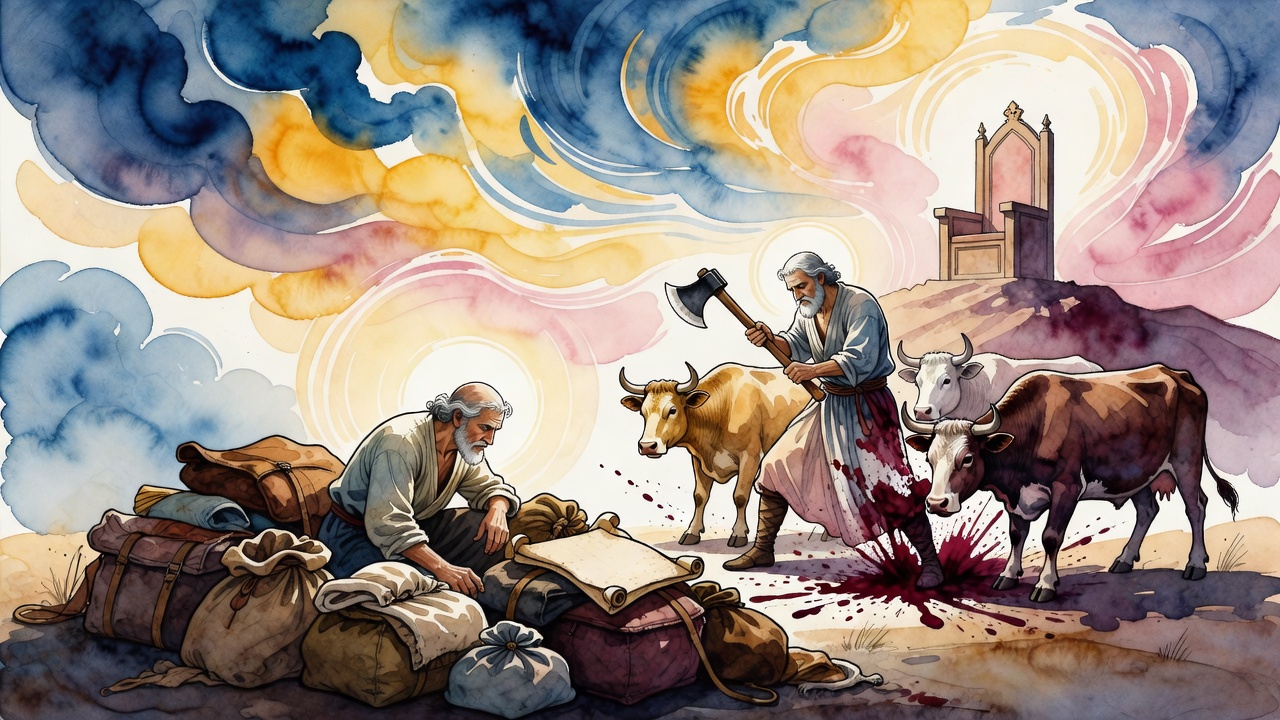
Saul does not flee. At dawn he takes Jonathan, Abinadab, and Malchishua and goes out to the war he already knows will kill them. A man does not bring his sons to a feast only for show. This man brings his sons to the blade, rejoicing that justice has found him.
The Holy One summons the ministering angels. "Come, see a creature I formed." Heaven does not praise the séance. Heaven praises the last obedience: a rejected king who stops arguing with the sentence and walks into it upright. The same mouth that swore a crooked oath at Endor now keeps a straight appointment with Gilboa.
Jonathan walks without the bitterness a crown-prince might claim. He has loved David and still dies as Saul's son. The mountain does not sort their virtues into separate graves. Iron is simpler than midrash. It only asks who stands in range.
What Gilboa Receives
The mountain takes them. Philistine iron does the work the oracle would have done. David will later sing over the bodies, calling the fallen the weapons of war themselves, as if Israel had lost not only men but the very tools by which Heaven guarded the people. In this hour Saul is not the singer. He is the man who finally stops bargaining with Heaven's ledger.
Endor keeps the disguise and the oath that lied to itself. Gilboa keeps the march. Between them stands a king who learned, too late for the throne and just in time for the partition of the dead, that truth has only one price left to name. The necromancy remains a wound. The acceptance of justice is the bandage he is still allowed to wear.
When the sun climbs, the living count corpses and the dead no longer argue. Somewhere in the world of truth, a partition waits for a man who brought his sons to the sword rather than hide them from a sentence he had finally said yes to.
← All myths