5 min read

Samuel Rose at Endor Within Twelve Months

Saul forces the woman of Endor to raise Samuel while the soul still ascends and descends, and night becomes the hour gentile kings hear God.

Curated by Arthur · Told by Maggid ·
Table of Contents
  1. The King in Disguise
  2. Night for Foreign Kings
  3. Twelve Months of Nearness
  4. Pillows and Graves
  5. What the Living Should Not Do
Samuel Rose at Endor Within Twelve Months Click for full size

The King in Disguise

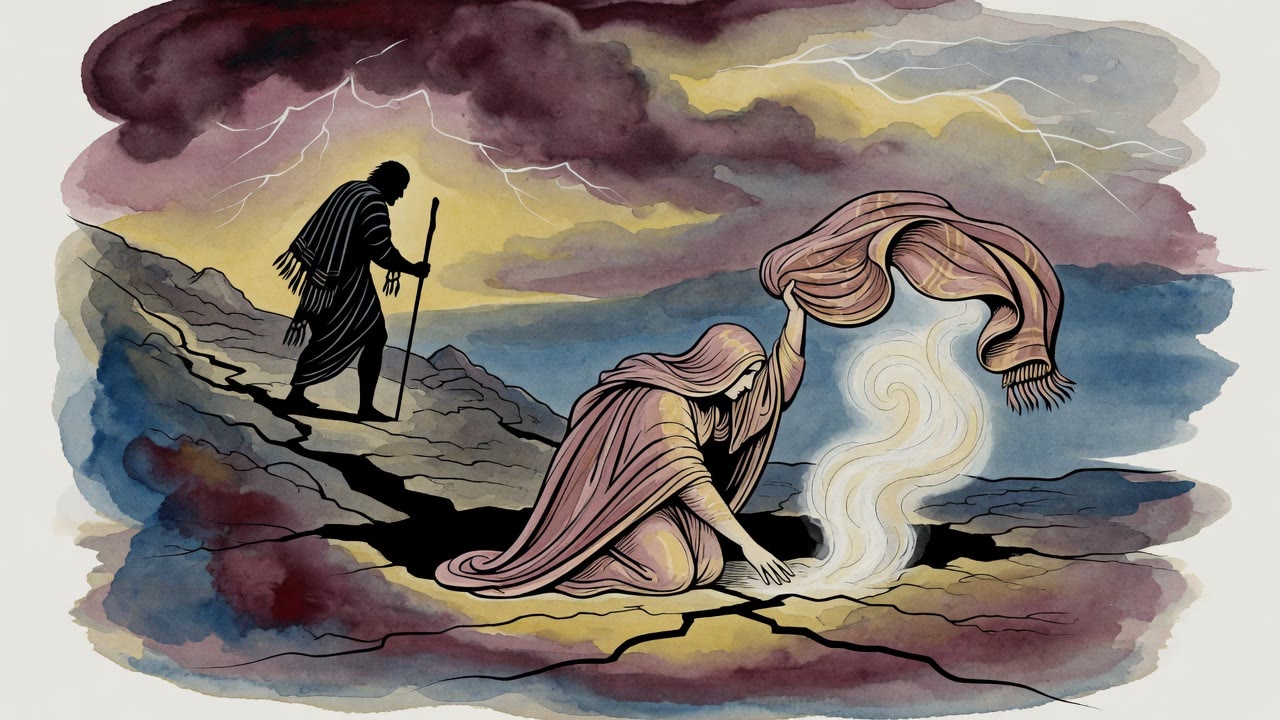
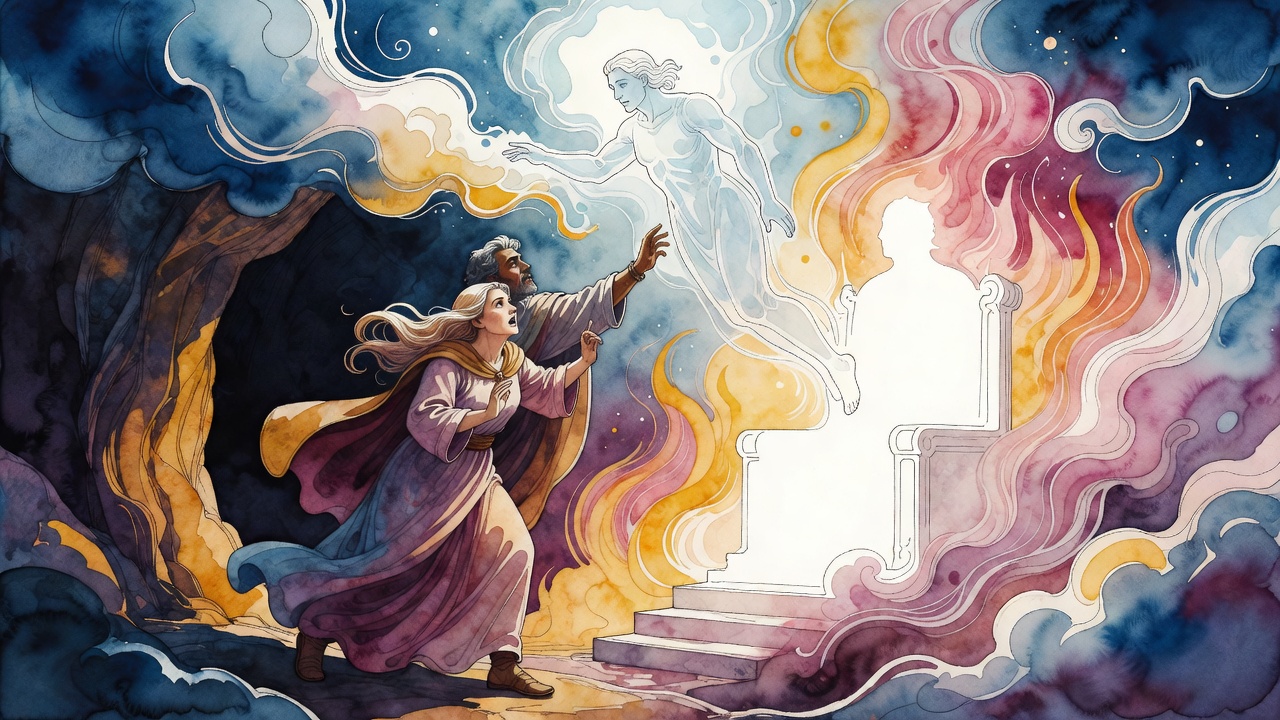
Saul arrived at Endor already empty of answers. The prophets were silent. Dreams were sealed. He put on other clothes and asked the woman for a shade. She brought up Samuel (1 Samuel 28). The prophet rose wrapped as if for a journey, and Saul fell full length on the ground. The war with the Philistines still waited at dawn. The dead man still spoke judgment. No comfort came out of the cloak.
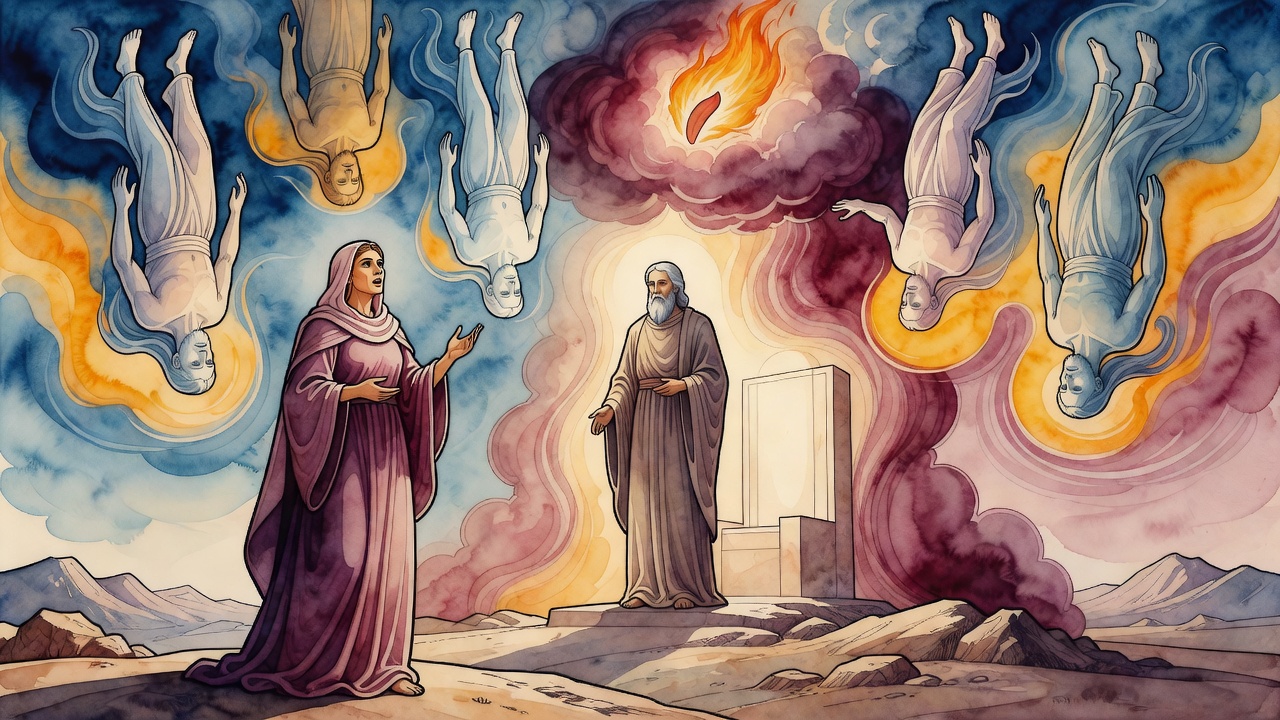
A Sadducee later threw the scene at Rabbi Abahu. You teach that the souls of the righteous are treasured under the Throne of Glory. How did a necromancer whistle Samuel up? Rabbi Abahu did not flinch. For the first twelve months after death the soul is not fully at rest. The body remains an anchor. The soul ascends and descends. In that year it can be reached. After twelve months the gate closes. Samuel had been dead less than a year. Timing was the loophole, not a license.

Night for Foreign Kings

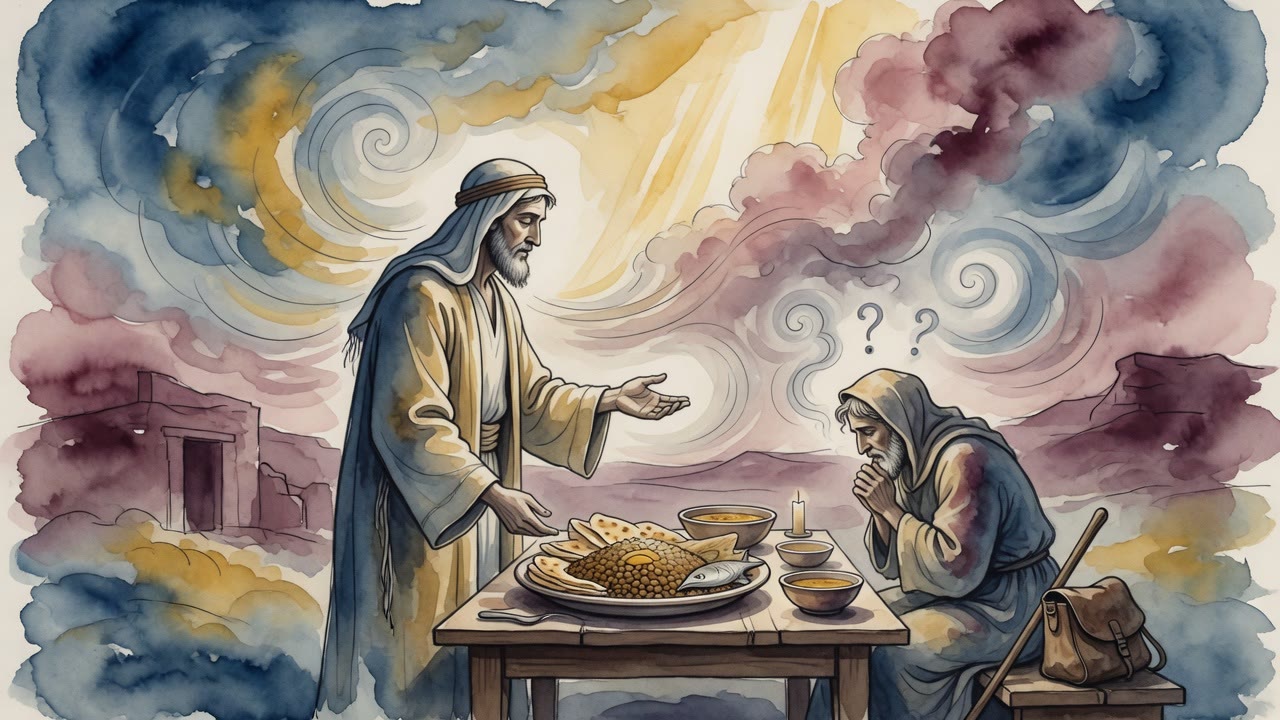
When Abraham called Sarah his sister in Gerar, Abimelech took her into his household. A word came from before the Lord to Abimelech in a dream of the night. Behold, you are a dead man because of the woman you have taken, for she is a man's wife. The king argued innocence in the dark. God answered in the dark. Morning would bring restitution and fear.

The sages mark a pattern. Gentile prophets and kings receive speech at night. The outsider is met in the hours when the world is already half under judgment. Night is the form the message takes when the hearer stands outside the covenant camp and still must be stopped from a crime. Abimelech woke sweating. Saul had stayed awake long enough to hire a medium.

Twelve Months of Nearness

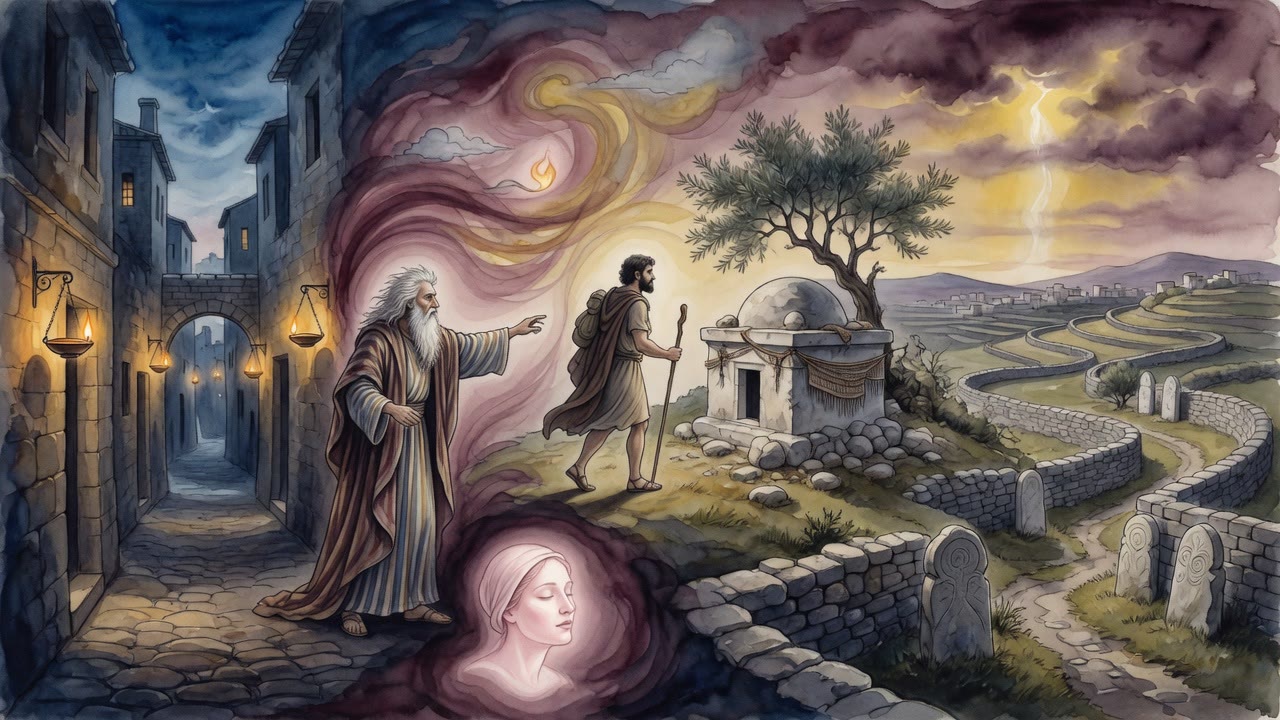
Rabbi Abahu's map is not a manual for mediums. It is a boundary. The year of ascent is close enough that Saul could force a conversation he should never have forced. After the year, no witch, no medium, no king in disguise can call the righteous back. Samuel's appearance is real and timed. He is mid-journey, still answering a summons the living should not issue.

Saul hears no comfort. He hears the kingdom tearing. The woman of Endor sees a godlike figure rising and panics when she understands who hired her. The twelve-month window does not bless the craft. It explains how the craft, for once, worked.

Pillows and Graves

Abimelech wakes and returns Sarah. Saul falls and goes toward battle already condemned. Two night revelations, two royal bodies, two different uses of fear. One king is stopped before adultery becomes fact. One king is told the end has already been weighed. The soul of Samuel, still climbing, becomes the mouth that will not flatter.

Between grave and pillow the tradition keeps one rule. God can reach anyone. The form of the reaching differs. Israel is not told to copy Endor. Israel is told why the exception was possible and why it closed. For a year the righteous are travelers. After that they are home.

What the Living Should Not Do

The story ends without a school for summoning. It ends with a king who sought the dead because he would not seek the living God cleanly, and with a foreign king who was intercepted before he ruined a household. Samuel's cloak in the woman's vision is enough image for a lifetime. He looked as if he had been interrupted on the road upward.

When later generations ask how the Throne and Endor can both be true, the answer is still Rabbi Abahu's year. Nearness, then distance. Saul forced the nearness. Abimelech received a warning without asking for the dead. The difference is the whole ethics of the night.

Saul's disguise fools no one in heaven and fools the woman only until Samuel rises. The cloak of the dead prophet is the detail that breaks her. She sees rank and understands the client. The king who banned the craft is the king who hired it when the ark of his own choices closed.

Abimelech in Gerar never hired a medium. He only slept and woke under a sentence. That difference keeps the two night stories from becoming one. One king forces the dead. One king is forced by a dream. Both learn that night is not private property.

Samuel's first words to Saul are not a blessing. Why have you disturbed me? The living king has no good answer. The dead prophet names tomorrow's ruin while the Philistine camp still waits for dawn. Between Endor's floor and the battlefield there is only a few hours of a body that already knows it is finished.

Rabbi Abahu's twelve months give the house of Israel a way to mourn without inventing gates that stay open forever. Ascend, descend, ascend, descend, then rest under the Throne. The year is a rope between worlds. Saul pulled on it in panic. The tradition describes the rope so no one will braid a ladder out of grief and call it law.


← All myths

From the tradition

Sources

3 sources

The texts behind this telling. Some cards carry a translation of the source; others are our own retelling of it, and each card says which. Every card links out to the original.

Shabbat 152bHebraic Literature (1901)

Retold in our words. Read the original at the link below.Project Gutenberg eBook #14368, Hebraic Literature · PD-US-pre-1929

A Sadducee came to Rabbi Abahu with a sharp question. "You rabbis teach," he said, "that the souls of the righteous are treasured up beneath the Throne of Glory. If that is so, how did the Witch of Endor summon the prophet Samuel from the dead? A soul safely filed under the throne cannot be whistled up by a necromancer" (1 Samuel 28).

Rabbi Abahu answered him without flinching.

For the first twelve months after death, he said, the soul is not yet fully at rest. The body, still nearly intact, remains a kind of anchor. The soul ascends and descends, ascends and descends, making its way slowly from this world to the next. During that year it can be reached. It can be summoned. It can even, in unusual cases, appear to the living.

After twelve months the body is dissolved in the earth and the soul completes its ascent. After that, no witch, no medium, no king in disguise can call it back. The gate closes.

Samuel, Rabbi Abahu reminded the Sadducee, had been dead less than twelve months when Saul came to Endor in desperation. The timing was the loophole (Shabbat 152b).

The story is not a manual for necromancers. It is a rabbinic map of the afterlife: a year of transition during which the living and the dead are still close, and then a long silence in which the soul belongs wholly to God.

Full source
Targum Pseudo-Jonathan on Genesis 20:3Targum Pseudo-Jonathan on Genesis

Retold in our words. Read the original at the link below.The Targum of Jonathan ben Uzziel, trans. J. W. Etheridge, London, 1862 · Public Domain

The action shifts south. Abraham has traveled into the region of Gerar, called Sarah his sister instead of his wife, and the local king Abimelech has taken her into his household. (Genesis 20:3), in Targum Pseudo-Jonathan:

"And a word came from before the Lord unto Abimelek, in a dream of the night, and said to him, Behold, thou diest, because of the woman whom thou hast carried away, and she a man's wife."

Two things are worth noticing. First, the Targum uses the phrase "a word from before the Lord", pitgama min qadam Hashem, to describe what reached Abimelech. Not a voice, not a vision of God Himself. A word, the Memra, mediating between the Holy One and a gentile king. The rabbis carefully distinguished the prophecy of Abraham, who spoke with God face-to-face, from the prophecy of a non-Israelite monarch like Abimelech, who received something real but filtered, something compressed into a dream.

Second: God speaks to Abimelech at all. The Targum, like the Torah, refuses the easy story in which only Israelites receive divine communication. Abimelech is a pagan king. And yet God reaches him by dream and gives him a fair warning and a clear accusation and a genuine chance to repent. No divine judgment comes without notice, even to those outside the covenant.

The rabbis of Bereshit Rabbah used this verse to ground a broad teaching: the Almighty judges the nations, yes, but never in silence and never without a dream first.

The takeaway: the God of Abraham is also the God of the kings who do not yet know Him. And He does not destroy anyone without speaking first.

Full source
Yalkut Shimoni on Torah 88:1Yalkut Shimoni on Torah

Translation of the source text.Torat Emet (Yalkut Shimoni) · CC-BY-NC

"And Abimelech king of Gerar sent and took Sarah" (Genesis 20:2). Is it possible that she went of her own will? Rather, he took her against her will and without her consent. "And God came to Abimelech in a dream of the night" (Genesis 20:3). What is the difference between the prophets of Israel and the prophets of the nations of the world? The Holy One, blessed be He, reveals Himself to the prophets of the nations only in a half-utterance, as it says, "And God chanced upon Balaam" (Numbers 23:4). The expression "chanced upon" denotes nothing but impurity, as you say, "if there be among you a man who is not clean because of a nocturnal occurrence" (Deuteronomy 23:11). But to Israel He reveals Himself in language of purity, in language of holiness, in clear language: "And He called to Moses," in the language with which the ministering angels praise Him, as it says, "And one called to another and said" (Isaiah 6:3).

"The LORD is far from the wicked" (Proverbs 15:29) refers to the prophets of the nations of the world; "but the prayer of the righteous He hears" refers to the prophets of Israel. The Holy One, blessed be He, reveals Himself to the prophets of the nations only at an hour when people normally part from one another, as it is written, "In thoughts from visions of the night, when deep sleep falls upon men, a word was stolen to me" (Job 4:12-13). What is the difference between the prophets of Israel and the prophets of the nations? It is like a king who was with his friend in a hall, and a curtain hung between them, and he would fold it back and speak with his friend. But the rabbis say: it is like a king who had a wife and a concubine; when he goes to his wife he goes openly, and when he goes to his concubine he goes in secret. So too the Holy One, blessed be He, reveals Himself to the nations only at night, as it says, "And God came to Balaam at night" (Numbers 22:20), "And God came to Laban the Aramean in a dream of the night" (Genesis 31:24); but to the prophets of Israel by day: "and he sat at the entrance of the tent in the heat of the day" (Genesis 18:1), "And it was on the day the LORD spoke" (Exodus 6:28), "And these are the generations of Aaron and Moses on the day the LORD spoke" (Numbers 3:1).

"And He said to him, You are a dead man because of the woman": from here we learn that there is no formal warning required for the descendants of Noah.

Full source