6 min read

Saul Hid Among Baggage When Lots Named Him King

Israel demanded a king like the nations. Saul hid among the baggage, then cut oxen to save Gilead. The crown still ended in blood.

Curated by Arthur · Told by Maggid ·
Table of Contents
  1. Bribes in Bethel and Beersheba
  2. The Price of a Throne
  3. Oxen Cut for Gilead
  4. The Scorecard of Kings
  5. The Crown That Could Not Stay Clean
Saul Hid Among Baggage When Lots Named Him King Click for full size

Bribes in Bethel and Beersheba

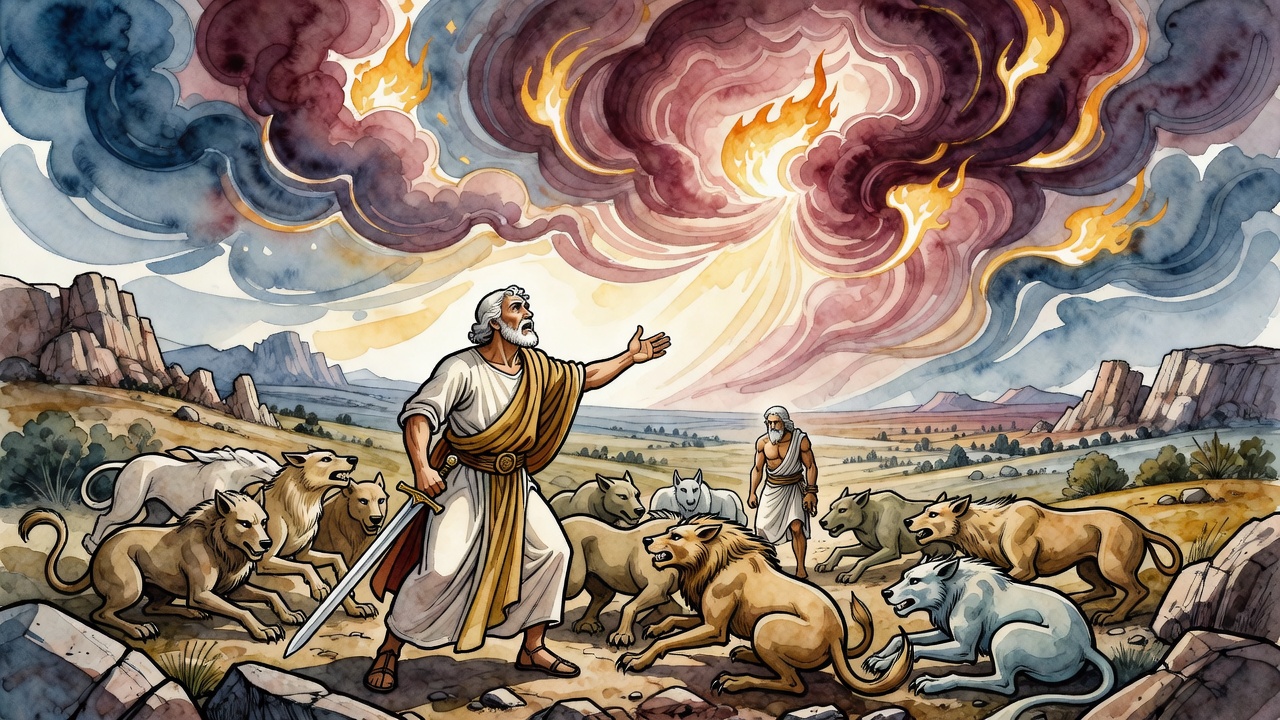
Samuel had judged Israel for decades, circling the land twice a year to settle quarrels. Age took him. He set his sons, Joel in Bethel and Abiah in Beersheba, in his place. They took bribes. They bent justice. They lived high on the backs of the people they were meant to protect.

The elders came to Ramah with a demand that emptied Samuel's sleep. "Give us a king." He believed God alone should rule through judges. He could not eat. Heaven answered with a harder truth. The people were not rejecting Samuel. They were rejecting God, and had been doing so since Egypt.

The Price of a Throne

Samuel named the cost in public. Sons would become soldiers, field hands, chariot drivers. Daughters would bake the king's bread and mix his perfumes. Vineyards would move from families to officials. The people would cry out under the king they demanded, and God would not answer that cry.

They did not care. They wanted what the other nations had. The hunger for sameness outweighed the warning. A tall young man from Benjamin, Saul son of Kish, was already out hunting lost donkeys when God told Samuel the future king would arrive the next day.

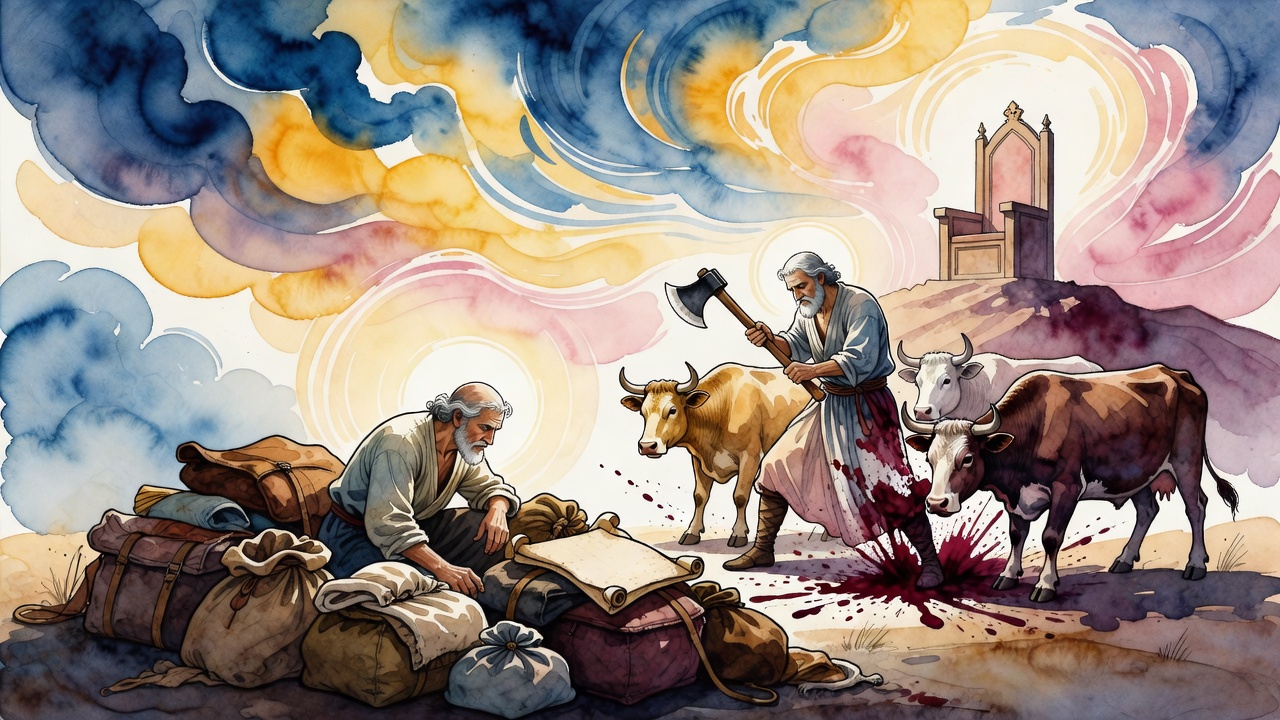
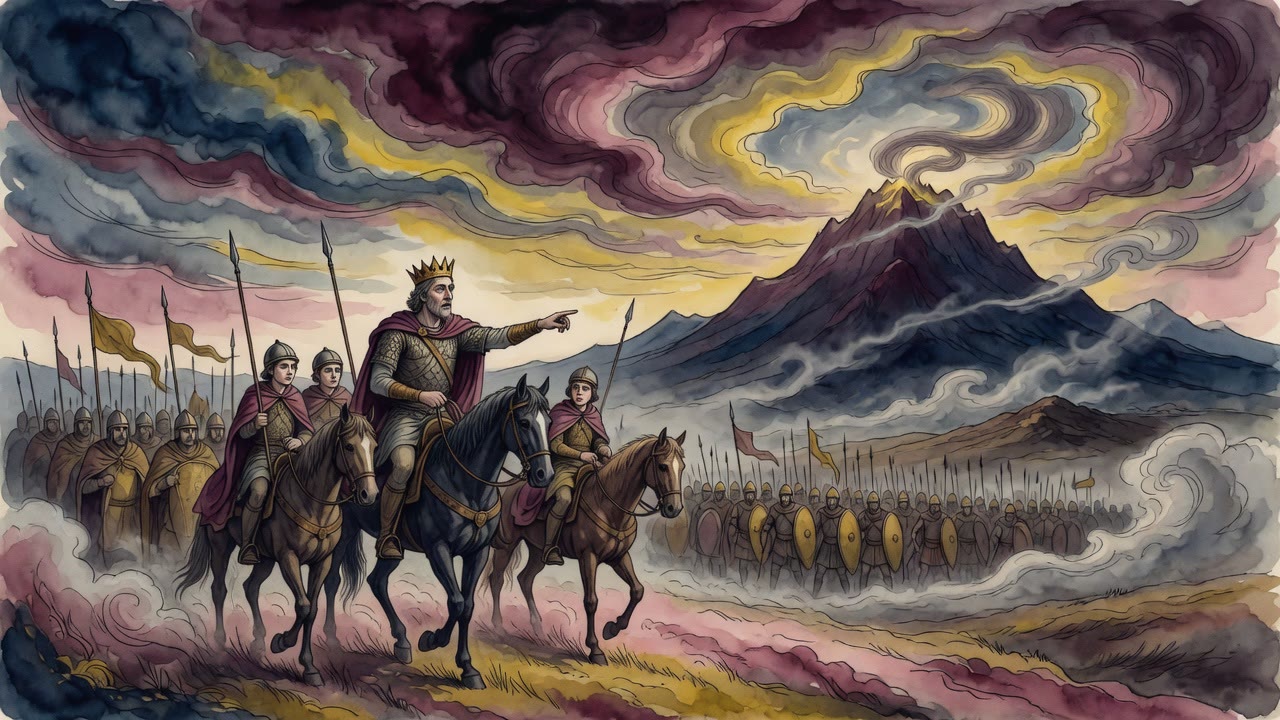
Samuel poured oil on Saul's head and whispered the charge. Rule Israel. Defeat the Philistines. At Mizpah the lots fell tribe by tribe, family by family, until they fell on Saul. He had hidden himself. They dragged him into the light, taller than the crowd, and the shout went up. God save the king. Even then, many refused gifts and despised the new face.

Oxen Cut for Gilead

The first great test came from Nahash of Ammon, who pressed Gilead with a cruelty that touched Torah itself. Legend remembers Nahash demanding the removal of a barrier that kept Ammon from Israel's congregation. Saul's answer was not a letter. He cut a yoke of oxen into pieces and sent the pieces through Israel with a threat. Whoever does not come out after Saul and Samuel will have his oxen treated the same.

The fear of the Lord fell on the people. They came as one man. Gilead was saved. The tall farmer who had hidden among baggage now held a nation's terror in his fist and turned it against Ammon. For a moment the demand for a king looked wise.

The Scorecard of Kings

Later teachers in Devarim Rabbah refuse that comfort. They read Israel's request for a human king against the wreckage that followed. Saul led them to defeat on Mount Gilboa. David brought a plague. Ahab locked the rain. Zedekiah sat the throne when the Temple burned. The midrash lines the names like wounds.

Israel finally cries the opposite of Mizpah. "We do not want a king of flesh. We want our original King." Isaiah's voice becomes theirs. "The Lord is our Judge, our Lawgiver, our King. He will save us." Heaven answers with a future tense from Zechariah. The Lord will be King over the whole earth.

The Crown That Could Not Stay Clean

Between the oxen of Gilead and the corpses of Gilboa runs the whole tragedy of the first crown. Saul could rally a people with raw meat and threat. He could not keep a heart steady under command. The same height that made the crowd gasp could not stop him from hiding when the lots fell, or from later choices that midrash and history both refuse to polish.

The people who demanded a king like the nations received exactly that, a man subject to fear, pride, and the long bill Samuel had read aloud. God never left the story. He simply let the request run until the nation learned to ask for Him again with a full mouth.

Saul's first hours are still the most human. Lost donkeys. Hidden shoulders. Oil on the hair. Oxen in pieces on the roads of Israel. The end is already folded into the beginning for anyone who listens to the midrash's scorecard, but the beginning still smells like fresh blood and hope.

The lost donkeys are not comic relief. They are the leash Heaven uses to drag a tall Benjamite into a prophet's path. Saul is looking for livestock and finds oil on his hair. The mismatch is the point. Kingship arrives dressed as a chore. Anointing hides inside an errand. When the public lots later find him among the baggage, the pattern completes. The first king of Israel is a man who keeps trying to stay offstage while the plot nails him to the boards.

Samuel's night without food is the moral center before any battle. A judge who loved God's direct rule must midwife a monarchy he hates. God renames the insult. It is not Samuel they reject. It is the King they cannot see. That sentence turns every later royal failure into a long echo of Egypt's old pattern, a people that prefers a visible arm to an invisible sovereignty.

The midrashic scorecard of Saul, David, Ahab, and Zedekiah is merciless on purpose. It will not let nostalgia for anointing oil erase Gilboa, plague, drought, and burned gates. The oxen pieces still matter. Saul could move a nation when Gilead screamed. Capacity and catastrophe can share one body. The tragedy is not that Israel crowned a nobody. The tragedy is that they crowned a somebody who could save a city and still not save the crown from his own later hands.

When the people finally cry for God alone as King, they are not inventing a new piety. They are returning the item they bought against advice. Zechariah's future tense keeps the return unfinished. The Lord will be King over the whole earth. Until that sentence lands, the memory of a tall man hiding among baggage remains a warning stitched into every demand for a face on a throne.


← All myths
From the tradition

Sources

2 sources

The texts behind this telling. Some cards carry a translation of the source; others are our own retelling of it, and each card says which. Every card links out to the original.

Antiquities VI.3-4Antiquities of the Jews (Josephus)

Retold in our words. Read the original at the link below.Antiquities of the Jews, trans. William Whiston · Public Domain

Samuel had judged Israel faithfully for decades, traveling a circuit twice a year to settle disputes. But age caught up with him, and he handed authority to his sons, Joel in Bethel and Abiah in Beersheba. They were nothing like their father. They took bribes. They perverted justice. They lived lavishly off the suffering of the people they were supposed to protect.

So the elders came to Samuel at Ramah with a demand that cut him to the bone: give us a king. Samuel, who believed deeply in the aristocratic system where God alone ruled through judges, could not eat or sleep that night. But God told him something remarkable, the people were not rejecting Samuel. They were rejecting God himself. And they had been doing it since the day they left Egypt.

Samuel warned them exactly what monarchy would cost. Your sons will become his soldiers, his field laborers, his chariot drivers. Your daughters will bake his bread and mix his perfumes. He will seize your best vineyards and hand them to his officials. You will cry out for relief from the king you demanded, and God will not answer. The people did not care. They wanted what the other nations had.

Then God directed Samuel to a young man named Saul, son of Kish, from the tribe of Benjamin, tall, handsome, and searching the countryside for his father's lost donkeys. When Saul stumbled into Ramah looking for the animals, Samuel was already waiting. God had told him the day before: tomorrow I will send you the future king. Samuel anointed Saul's head with oil and whispered that God had chosen him to rule Israel and defeat the Philistines.

At the public assembly at Mizpah, when lots were cast tribe by tribe and family by family, the lot fell on Saul. But he had hidden himself. They found him and brought him forward, taller than anyone in the crowd. And Samuel declared, "God gives you this man to be your king." The people shouted, "God save the king!" Yet even in that moment of triumph, Josephus notes, the greater part of the crowd were ill men who despised the new king and refused to bring him gifts.

Full source
Devarim Rabbah 5:11Devarim Rabbah

Retold in our words. Read the original at the link below.The Sefaria Midrash Rabbah, 2022 · CC-BY

Jewish tradition explores this feeling on a national scale, focusing on the ancient Israelites' request for a human king.

God, the ultimate King, has been leading the Israelites. But they look around at other nations and think, "Hey, they have kings! We want one too!" As we read in the book of Deuteronomy (Devarim), "I will set a king over me." But according to Devarim Rabbah, a collection of rabbinic teachings on Deuteronomy, this request wasn't exactly a home run.

Why? Because, according to this midrash (interpretive story), these kings, instead of leading Israel to glory, brought them a whole lot of pain. The midrash doesn't pull any punches. It lays out the consequences: Saul? He led them to defeat on Mount Gilboa. We see this in (1 (Samuel 4:1)7): "Israel has fled before the Philistines." David? He brought a plague, as we learn in (2 (Samuel 24:1)5): "The Lord sent pestilence in Israel." Ahab? He caused a drought, as it says in (1 Kings 17:1): "There will not be dew or rain during these years…" And Zedekiah? He was king when the Temple was destroyed. A pretty grim scorecard, wouldn't you say?

So, what was the result of all this royal-induced suffering? The Israelites, finally realizing the error of their ways, cried out: "We don’t want a king of Israel! We want our original King!" They yearned for God, as expressed in (Isaiah 33:22): "For the Lord is our Judge, the Lord is our Lawgiver, the Lord is our King; He will save us."

And what was God's response to this heartfelt plea? God essentially said, "You got it. By your lives, I will do so." The promise is found in (Zechariah 14:9): "The Lord will be King over the entire earth…"

This midrash isn't just a history lesson. It asks us: who do we rely on to lead us? What qualities do we seek in our leaders? And ultimately, where does true authority reside? Perhaps, like the ancient Israelites, we sometimes need to learn the hard way that the most effective and compassionate leadership comes from a source far greater than ourselves. Perhaps it comes from the Divine.

Full source