5 min read

Heaven Rebuked Saul for Pleading on Behalf of Amalek's Beasts

In the valley before Amalek Saul argues that beasts have not sinned. Heaven answers. He spares Agag. The sword he withheld later finds him.

Curated by Arthur · Told by Maggid ·
Table of Contents
  1. Lambs at Telaim, Then the Valley
  2. The Beasts Have Not Sinned
  3. Agag Lives and the Seed Remains
  4. Rebellion Dressed as Pity
  5. Remember with Mouth and Heart
Heaven Rebuked Saul for Pleading on Behalf of Amalek's Beasts Click for full size

Lambs at Telaim, Then the Valley

Before Saul wore a crown, Israel was counted with pebbles at Bezek. Once the oil was on his head, the people were counted with lambs at Telaim, a shepherd's tally for a shepherd of Israel. The change pleased him. He had been looking for lost donkeys when the prophet found him. Now he numbered a nation the way a man numbers a flock.

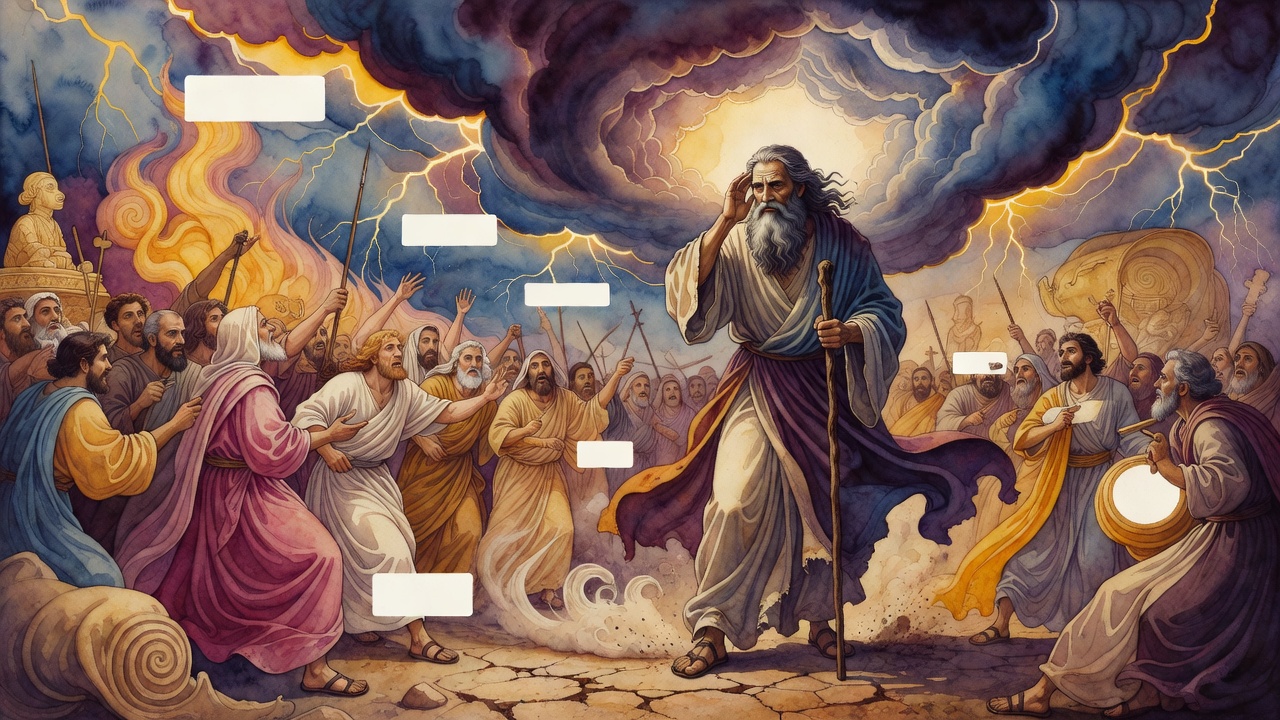
Then he marched toward Amalek's city and came down into the valley, and there the war turned into an argument. Samuel had brought the word clear enough for a child. Smite Amalek. Ox and sheep. Camel and ass. Spare nothing. The command was older than Saul's throne. It was the memory spoken with the mouth and guarded in the heart: what Amalek did on the road out of Egypt, cutting down the weak at the rear, must not be forgotten, and must not be half-done.

The Beasts Have Not Sinned

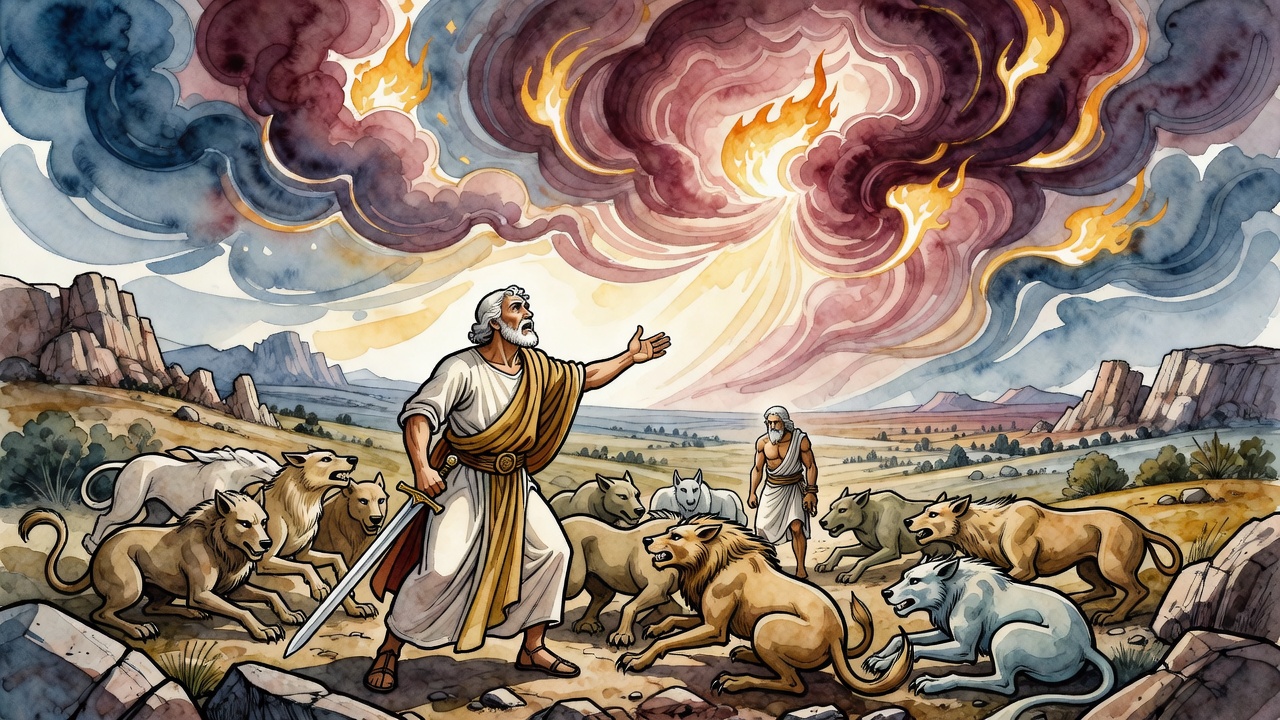
Saul did not only set an ambush among the rocks. He began to reason against the decree. From the law of the heifer whose neck is broken he took a question that sounded careful and holy. One man murders, yet an innocent calf is slain to atone. How can the guiltless die for the guilty?

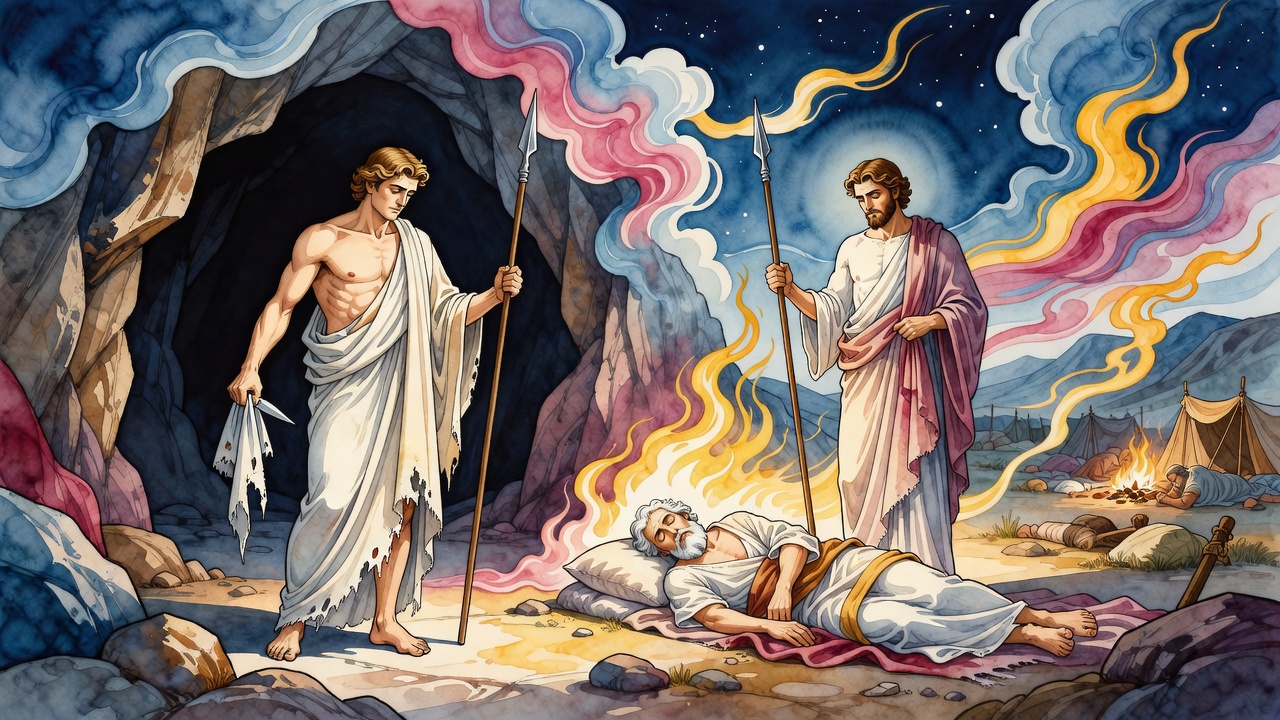
He lifted the question higher, into the face of the Holy One Himself. "If a person has sinned, how has the beast sinned?" The ox in the pen. The nursing ewe. The camel with its load. What debt do they owe for Amalek's cruelty on the trail of the tired and the straggling?

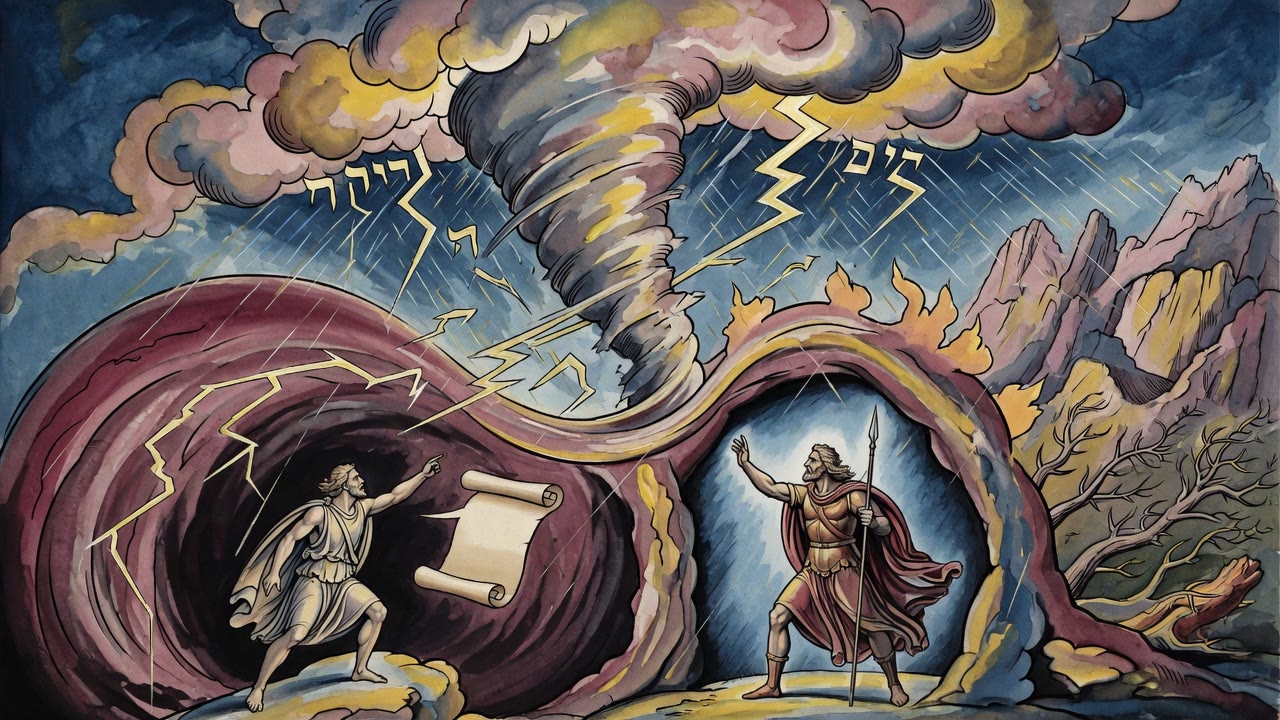
A heavenly voice tore the valley open. "Saul, do not be more righteous than your Creator."

Mercy aimed where God commanded severity is not mercy. It is a rival throne built out of soft words. The tender heart that will not obey becomes a second lawgiver, and the valley hears the crack of that usurpation.

Agag Lives and the Seed Remains

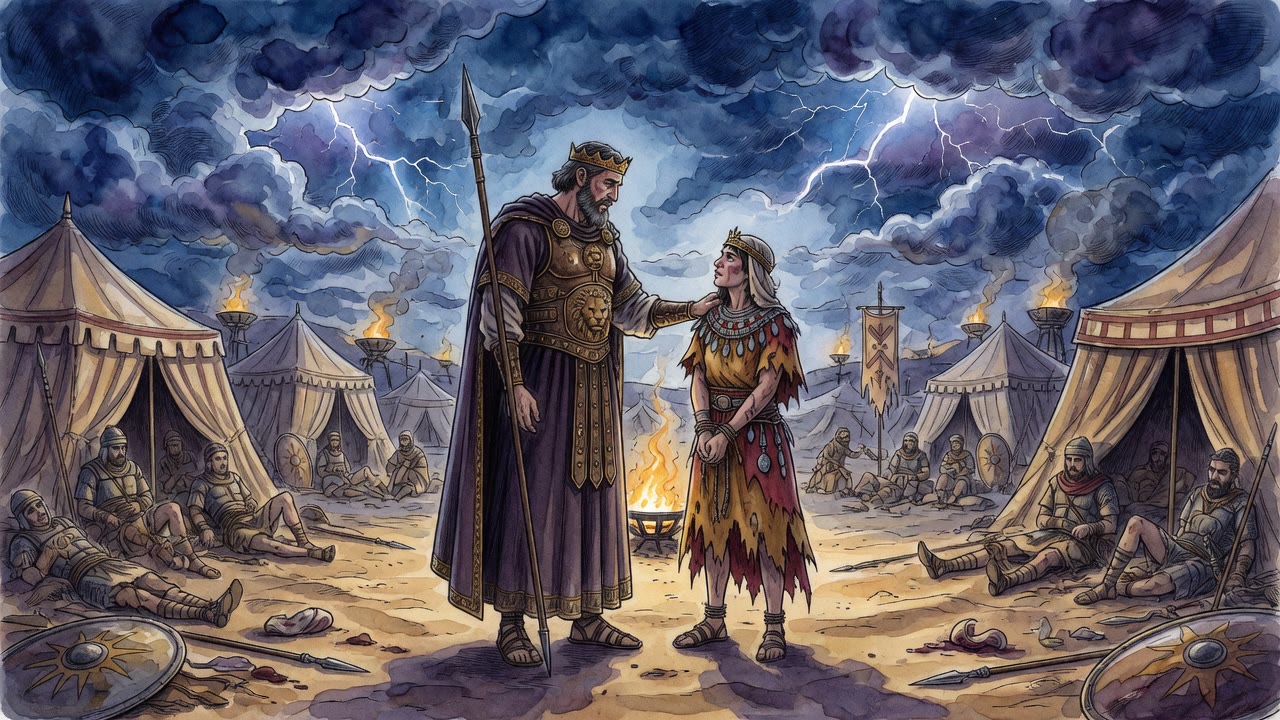
Saul and the people spare Agag. The blade that should have ended Amalek's king stops short. The king of Amalek breathes in a cage of half-obedience while the best of the flocks are saved for reasons that sound like piety and smell like appetite.

Bar Kappara would later teach that the seed left alive in this mercy was Doeg, a man so dangerous he could be weighed as equal to all Israel together. The "kindness" that saved a king grew a destroyer inside the camp. Mercy to the cruel is not a private virtue. It breeds.

Rabbi Shimon ben Levi draws the law plain. Whoever is cruel to the merciful will end by being merciful to the cruel. Whoever is merciful to the cruel will, in the end, fall by the sword. Saul withheld his edge from Amalek's king, and so the edge found Saul. "And Saul died, and his three sons." The verse stands like a receipt left on the field of Gilboa.

Rebellion Dressed as Pity

The root is named without flattery. Rebellion against the word of Heaven is likened to sorcery. Stubbornness sits beside teraphim in the same breath of indictment. The man who went seeking his own scale of justice drew anger down on his own house. He wanted to be more careful than the One who wrote the command. He wanted the animals spared and the king spared, and the people of Israel to look gentle while Amalek's line kept breathing.

Samuel will arrive with a different anger than the heavenly voice. The prophet's grief over Saul will not cancel the verdict. Agag will walk to a different death later, and the people will learn that partial obedience is only delayed rebellion. The lambs counted at Telaim cannot bleach the valley argument clean.

Remember with Mouth and Heart

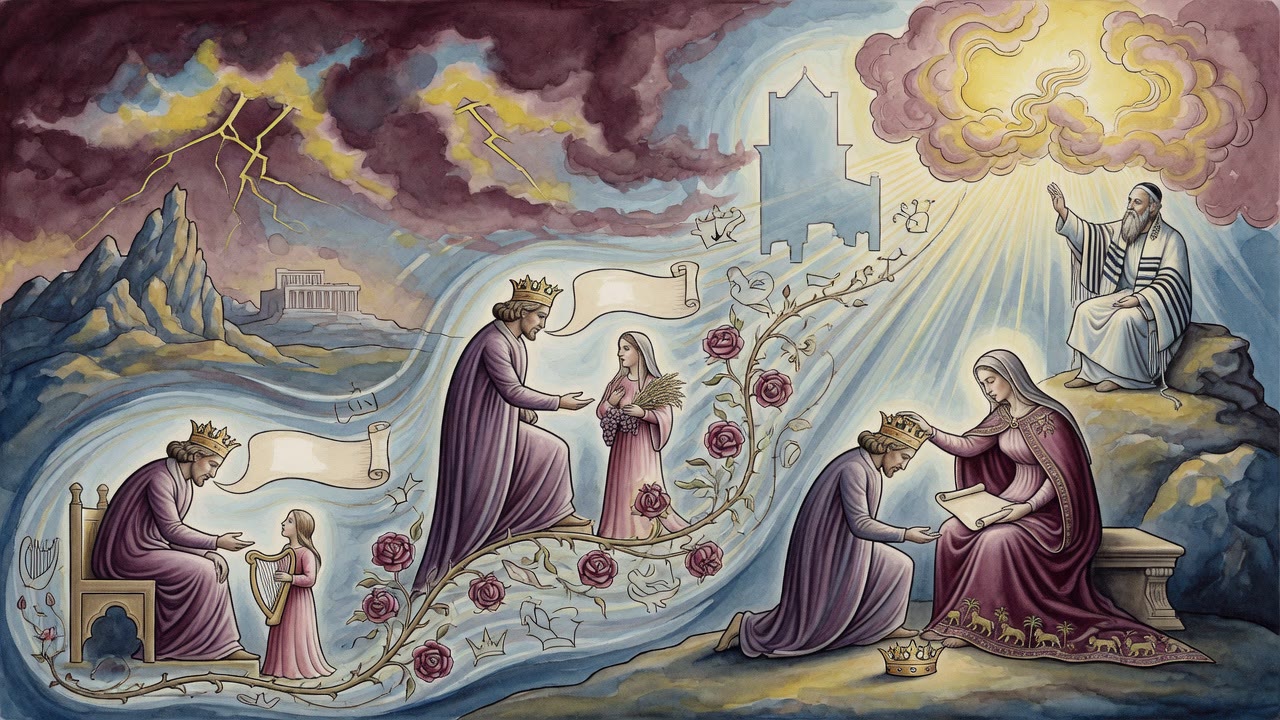
Long after the valley, the command to remember Amalek still splits into two labors. Do not forget in the heart, letting the memory sink and soften until it becomes a private feeling that excuses the next Agag. Remember with the mouth, speaking the story so children hear the road out of Egypt and the attack on the rear, so the narrative cannot dissolve into mood.

Saul's pity was a forgetting dressed as virtue. The beasts he defended did not need a king who argued with God. Israel needed a king who could obey a hard word without improving it. On Gilboa the sword he spared found its own work. The shepherd who counted lambs learned that some flocks are not his to save, and that a crown does not grant the right to outvote the Creator in the name of kindness. A king who improves God's word loses the right to claim he was only being kind. The valley still holds the echo of the heavenly rebuke, and the nation still must remember Amalek with mouth and heart so the next soft rebellion does not wear a crown.


← All myths
From the tradition

Sources

3 sources

The texts behind this telling. Some cards carry a translation of the source; others are our own retelling of it, and each card says which. Every card links out to the original.

Midrash Shmuel 18:2Midrash Shmuel

Translation of the source text.Midrash Shmuel, Krakow 1893, Public Domain, on Sefaria · CC-BY-SA

"And Saul gathered the people together, and numbered them with lambs (in Telaim), etc." (1 Samuel 15:4). Before he reigned [he numbered them] with Bezek (pebbles); once he reigned, with lambs.

"And Saul came to a city of Amalek, and contended in the valley" (1 Samuel 15:5). Rabbi Binai in the name of Rav Huna [said]: he began to contend concerning the heifer whose neck is broken. He said: this one [the murderer] kills, and that one [the heifer] has its neck broken and atones. And the Rabbis say: he began to contend against the Holy One, blessed be He. He said: Thus did Samuel say to me, "Now go and smite Amalek, etc. [from ox to sheep, from camel to ass]" (1 Samuel 15:3). He said: If a person sinned, in what way has the animal sinned? A heavenly voice went forth and said to him: Saul, do not be more righteous than your Creator.

Full source
Midrash Shmuel 18:4Midrash Shmuel

Translation of the source text.Midrash Shmuel, Krakow 1893, Public Domain, on Sefaria · CC-BY-SA

"And Saul and the people spared Agag, etc." (1 Samuel 15:9). Bar Kappara said: This is Doeg, who was weighed as equal against all of Israel. Rabbi Shimon ben Levi said: Anyone who is cruel toward the merciful, in the end he becomes merciful toward the cruel; anyone who is merciful toward the cruel, his end is to fall by the sword. What is the reason? "And Saul died, and his three sons, etc." (1 Samuel 31:6). "For rebellion is as the sin of divination, etc." (ibid. 15:23). Rabbi Shmuel bar Rav Nachman said: Anyone who goes to a diviner rebels against the word of the Holy One, blessed be He. What is the reason? "For rebellion is as the sin of divination; and stubbornness, and iniquity and teraphim" (ibid.), he brings about anger and trouble for himself.

Full source
Sifrei Devarim 296:1Sifrei Devarim

Retold in our words. Read the original at the link below.Sifrei by Rabbi Shraga Silverstein · CC-BY

Take the story of Amalek. It’s a name that echoes through Jewish history, a symbol of unprovoked hatred and aggression. We're commanded in Devarim (Deuteronomy) 25:17 to remember what Amalek did to us "on the way when you went out of Egypt." But what does it really mean to "remember"?

That’s what the Sifrei Devarim, an ancient commentary on the Book of Deuteronomy, grapples with. It asks a crucial question: when the Torah commands us to "remember," what kind of remembering is it talking about?

The Sifrei points out a potential problem. The verse says "Remember," but then in verse 19 it also says "Do not forget." Isn't remembering the opposite of forgetting? The Sages of the Sifrei understood that the command "Do not forget" refers to forgetting in the heart – letting the memory fade, burying it deep down, pretending it didn't happen.

So, if "Do not forget" is about the heart, what kind of remembering is "Remember" about?

The Sifrei answers: "Remember" refers to remembering with the mouth. In other words, it’s not just about a feeling, or a fleeting thought. It’s about actively and consciously speaking the story of Amalek. Recounting the events, teaching them to our children, keeping the narrative alive through words.

Why is this distinction so important? Because simply remembering something in your heart can be passive. It can fade, it can be misinterpreted, it can be colored by our own biases. But when we speak about it, when we actively engage with the story through language, we make it real, we hold ourselves accountable to its lessons. We ensure it doesn't just become a dusty relic of the past. How many times have you truly understood something only when you tried to explain it to someone else? That’s the power of verbalizing our memories.

This isn't just about historical accuracy, though that's important too. It's about the ongoing process of wrestling with our past, of acknowledging the pain and injustice that has been inflicted upon us, and of committing ourselves to building a better future. By speaking the name of Amalek, by recounting their actions, we are actively choosing to remember, to learn, and to ensure that such hatred never triumphs.

Engage with the story. Let the words shape your understanding and inform your actions. Because sometimes, the most powerful way to remember is to speak.

Full source