Oved-Edom Housed the Ark for Three Months
Uzzah fell beside the cart. David would not take the Ark into his city that day. A Gittite opened his door to the gold that had just killed a man.
Table of Contents
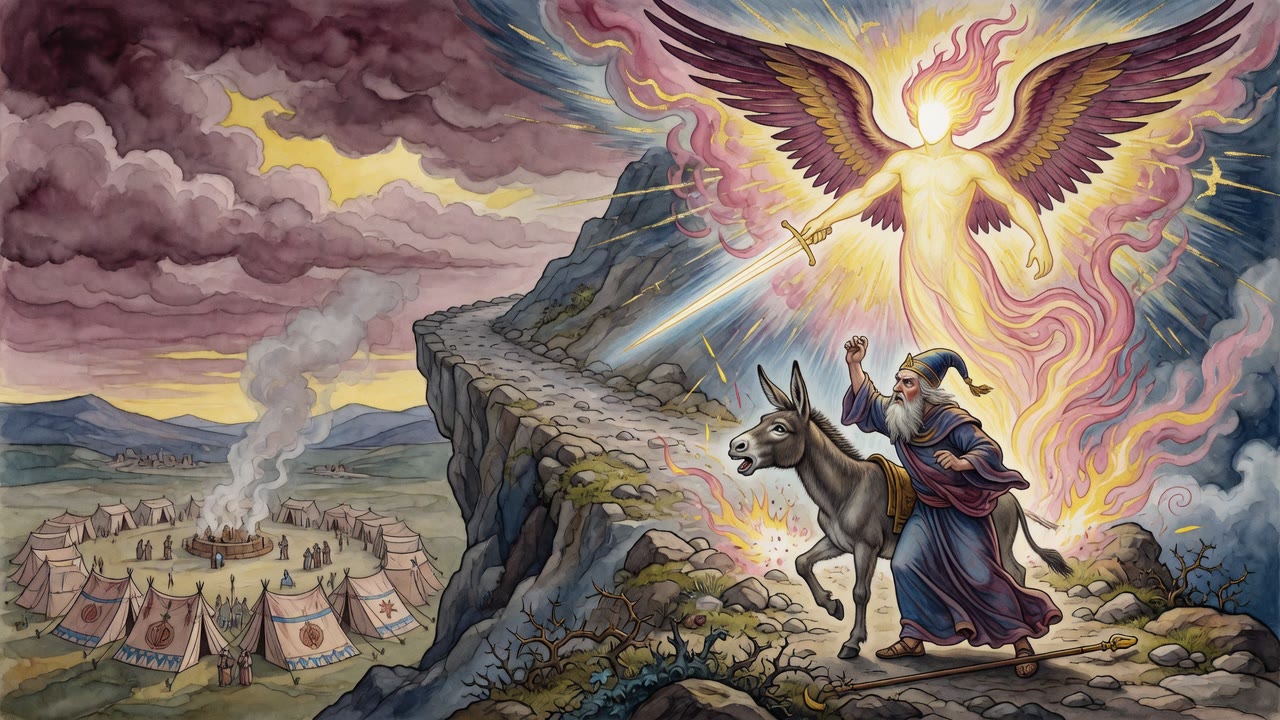
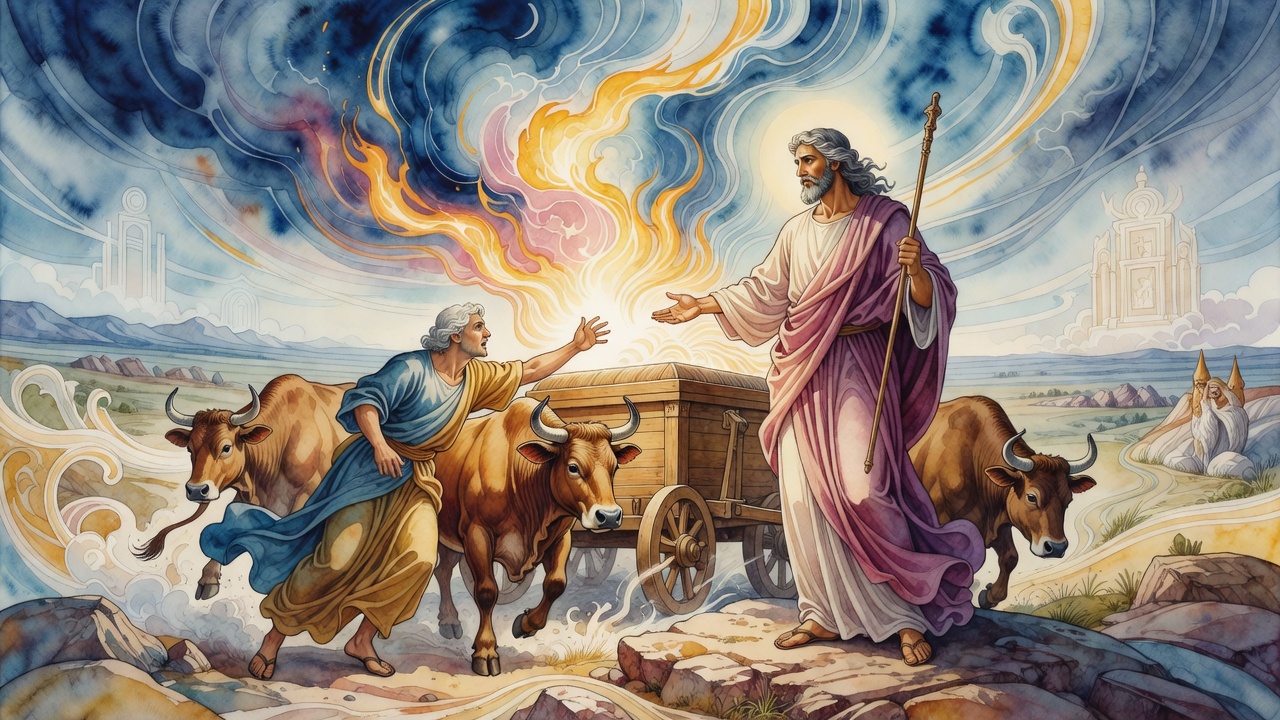
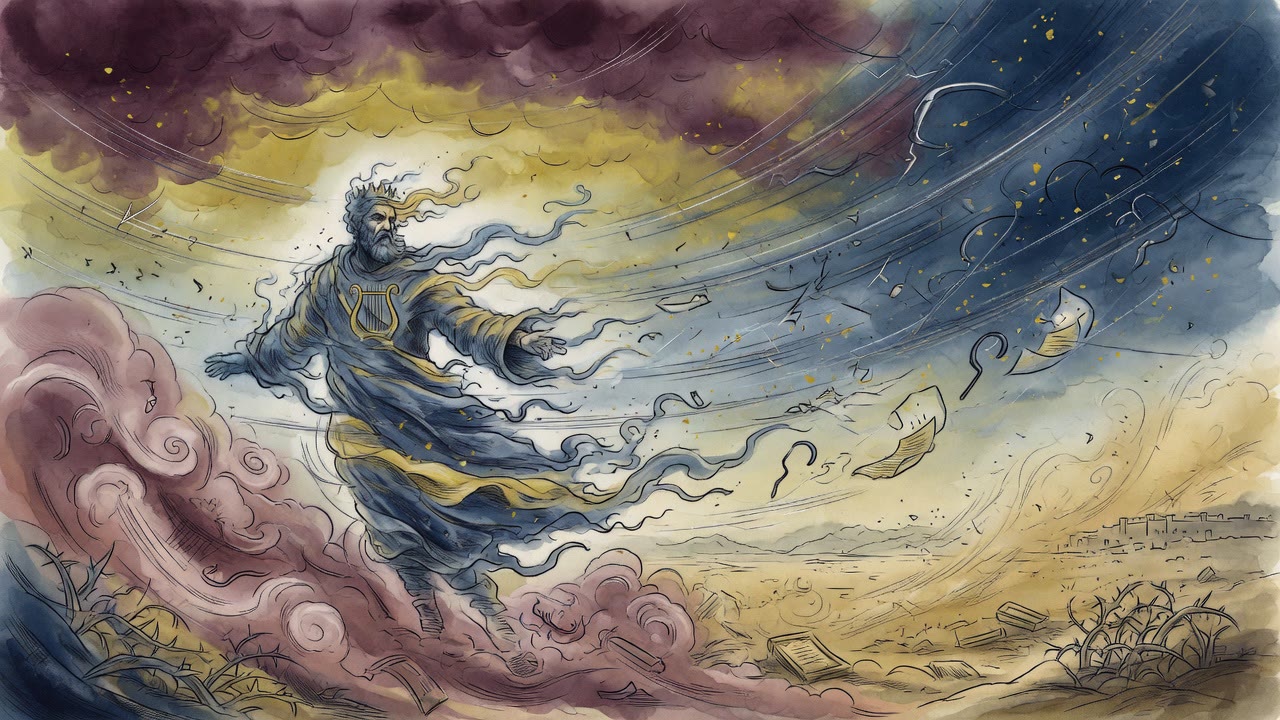
The oxen stumbled. The cart lurched. Uzzah put out his hand to steady the Ark of God, and the air around the gold went hard as a fist. He fell beside the road with the Name still ringing in the dust.
 Click for full size
Music died mid-string. Dancers froze with one foot raised. David felt fear climb his spine like cold water and ordered the procession stopped before another man tried to be helpful with holy wood. They would not drag that weight into the City of David that day. David turned toward the nearest house that would take a danger no king wanted to sleep beside. The house belonged to Oved-Edom the Gittite.
A Door That Opened on Terror
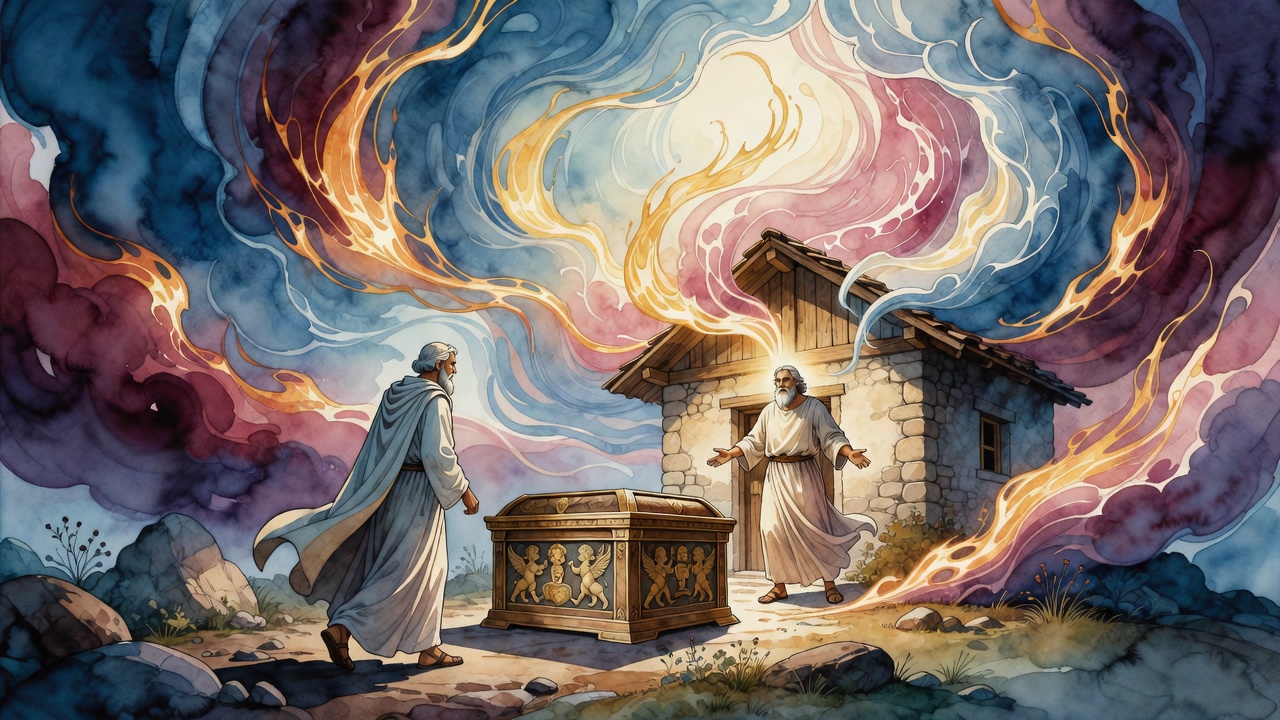
Oved-Edom stood in his doorway while the carriers set the Ark inside on temporary rests. His children pressed behind his legs. His wife held a bowl she had forgotten to set down. The poles still smelled of the road and of the sudden death outside.
"It stays," David said. Not a request dressed as courtesy. A sentence. "Until I know how to bring the God of Israel home without another corpse."
Oved-Edom could have refused. Men refuse kings when the risk is clear enough. He looked at the Ark, at the space where bread and tools usually sat, at the faces of his household, and stepped aside. The threshold took the weight. Night closed over a house that now held the fragments of the tablets and the silence of a God who would not be steadied by human hands.
Neighbors stopped visiting. Dogs would not cross the yard. Oved-Edom swept around the rests every morning with a broom that never quite reached the gold. He spoke less. He slept lighter. Fear and honor shared his bed like two guests who would not leave.
Blessing That Would Not Stay Small
Three months passed. The fields of Oved-Edom thickened. Lambs came early and strong. Dough rose higher than the troughs could hold. Oil jars that had run thin filled again when no merchant had knocked. His servants counted and recounted, and still the numbers climbed.
Word traveled the way good news travels when kings are listening. The house of Oved-Edom and all that he has are blessed because of the Ark of God (2 Samuel 6:12).
David heard it in Jerusalem and felt hunger open under his fear. He wanted that blessing inside his own walls. He wanted the Ark close enough to guard and far enough from another Uzzah. He summoned carriers, priests, music, and a different kind of care. This time every six paces they stopped and offered. This time David danced with a force that stripped him of royal dignity and dressed him in something rawer.
David Came for the Gold
Oved-Edom watched them lift the poles from his floor. The empty space they left looked larger than the room. His children touched the bare boards as if heat might still live there. Blessing had come as a guest riding on holiness. Now holiness walked out under cloth and horn, and the Gittite stood in a house suddenly ordinary, richer than he had been, quieter than he wanted to be.
The Gittite never asked to keep the Ark. He had opened a door. The king took back what fear had parked there. Oved-Edom walked the boards that night with no gold in the room and no death in the yard. Only the memory of a weight that had blessed him for housing it.
David danced the Ark toward Zion. Whenever fear of the holy returned, he remembered a foreigner's house that had held what a king had been afraid to keep, and prospered.
What Left With the Poles
Years later, in a room of students, Rabbi Elazar ben Shimon took that empty floor as proof. The presence of the righteous blesses the world the way the Ark blessed Oved-Edom. When they depart, something measurable leaves with them. If a house swells because it shelters a chest that only holds broken tablets, how much more does the world swell around living tzaddikim, the righteous, for whom some say the world itself was made.
His father Rabbi Shimon bar Yochai would not stop at the empty room. It is no full sanctification of the Name, he said, if the words and deeds of the righteous hold only while their mouths still move, then fall silent when the body cools. Legacy must outlive the pulse. Otherwise goodness is a performance that ends when the curtain drops.
Oved-Edom's three months sat under both claims. While the Ark stayed, the house prospered. When it left, the special pressure eased. David took the holiness to Zion and left the Gittite with memory, wealth, and a doorframe that still seemed to remember weight.
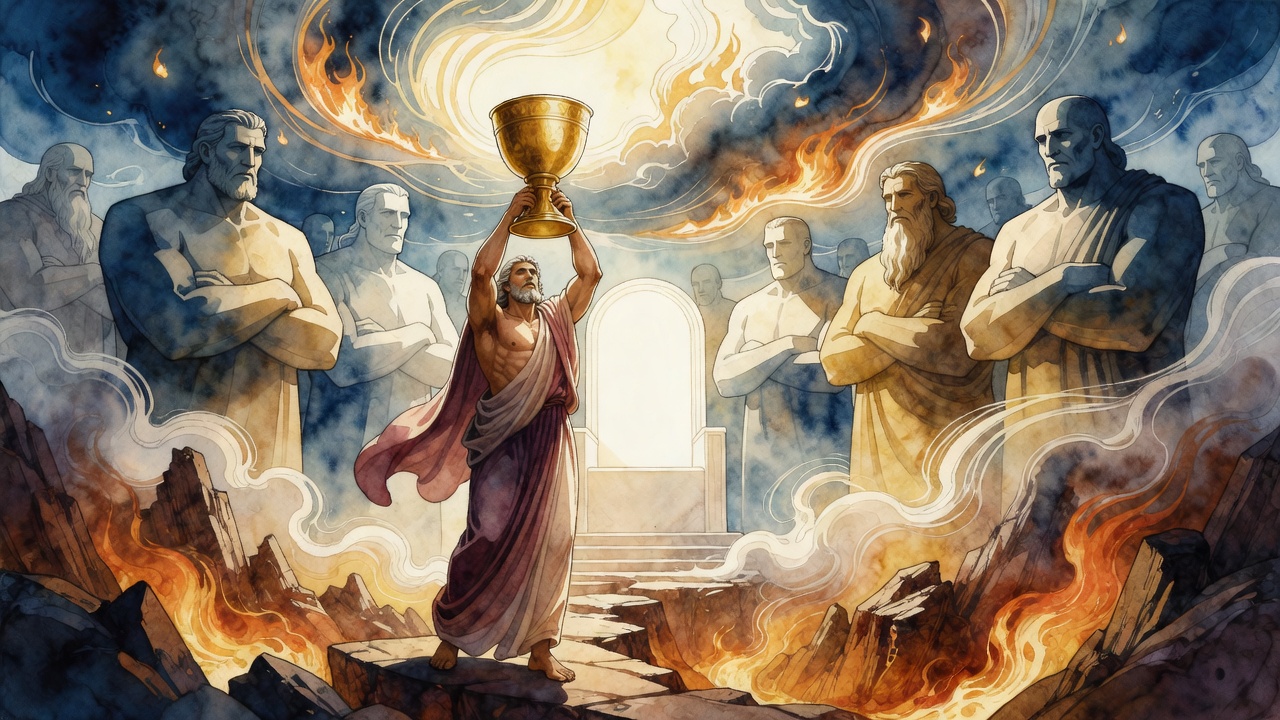
Not every house that touches heaven swells with oil. Some drink from another vessel. The Psalm puts a cup in the hand of the Lord, strong wine fully mixed, poured for the wicked of the earth until they drain the dregs (Psalm 75:9). Deuteronomy asks whether that cup is not laid up with God (Deuteronomy 32:34). Holiness near a willing household became blessing that multiplied lambs. Defiance stacked across ages became a drink that did not run out. Two pours from one hand, measured at different doors.
On quiet nights Oved-Edom still walked the boards where the rests had stood. No gold. No death. Only the knowledge that some guests change a house even after they are gone.
← All myths