Pharaoh Lost His City While Israel Sang Hallel
He did not wait for the third hour, when kings rise. He shook his slaves awake and hunted Moses through streets that would not help him.
Table of Contents
 Click for full size
The King Woke the Slaves Himself
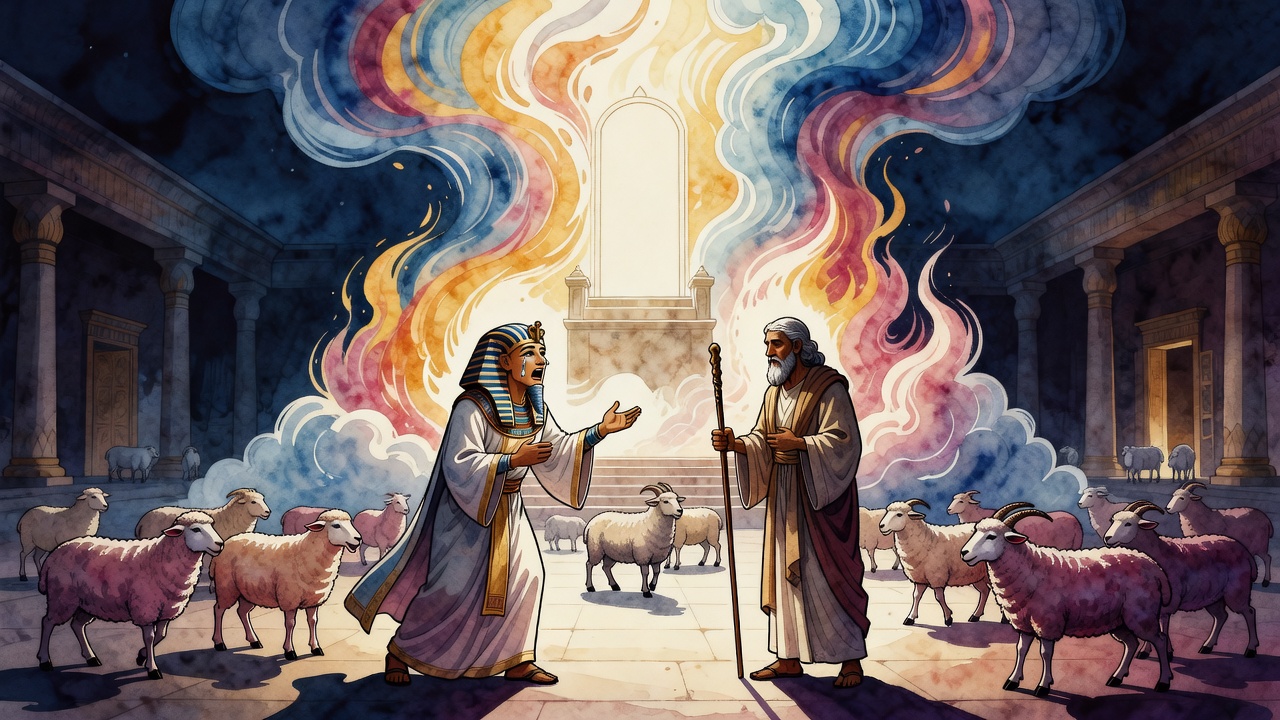
Pharaoh sat up in the dark before the third hour, the hour when kings rise. No attendant had touched him. The screaming had done that. Firstborn sons lay still in palace rooms, in servant rooms, in stables. He swung his feet to the floor and went down the corridors shaking sleepers by the shoulder.
"Get up," he said. "Find Moses."
Moses had told him he would not see Pharaoh's face again. Moses did not lie. Death had come at midnight, as promised. The prophet would not walk back into the palace. The king had to go out and hunt him.
He did not know which door was Moses' door.
Hebrew Children Sent Him Wrong
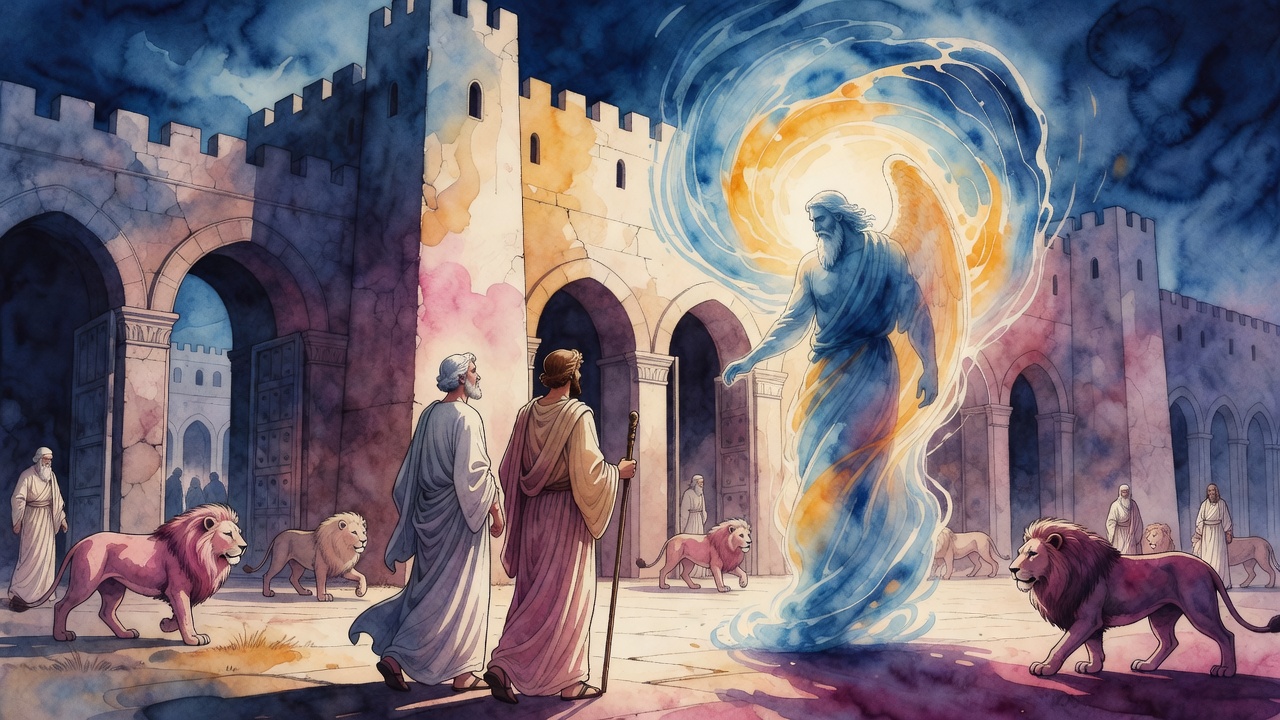
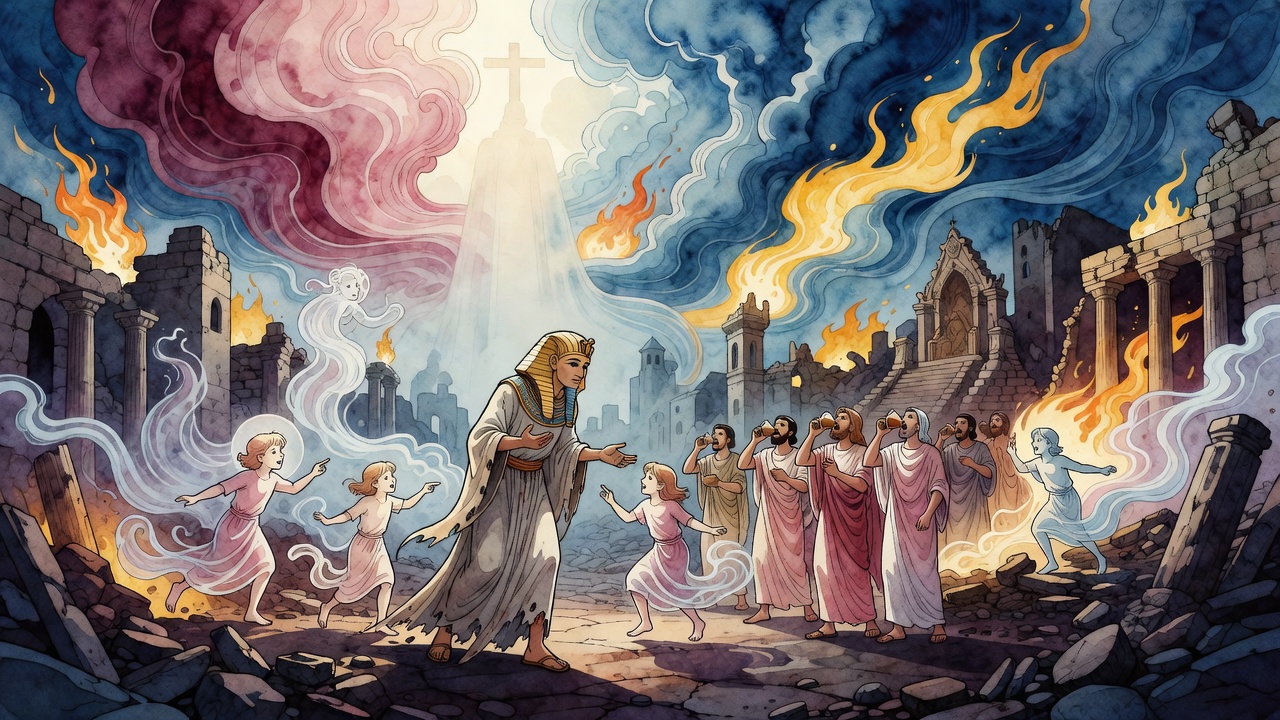
In the streets the capital would not obey him. Torches shook. Egyptian mothers cried from inside houses. Servants ran without orders. Pharaoh grabbed at the first Hebrew boys he found and demanded the house of Moses.
A child pointed down a wrong alley. Another sent him toward a wall with no door. A third watched the most powerful man in Egypt stumble past and let him keep going.
Pharaoh wandered a long time. He wept as he walked. He called out, "O my friend Moses, pray for me to God!"
The word friend sat strangely in his mouth. He had treated Moses as a nuisance to stall until the next plague forced the next concession. Now every Egyptian house had become an argument against delay.
Hallel Rose Behind a Closed Door
Inside, Israel was already at the meal. Moses and Aaron reclined with the people, cups of wine moving from hand to hand, bodies leaning to one side as free people lean. Voices rose in Hallel, the psalms of praise. They were the first to sing them.
Outside, Egypt shook under death. Inside, a slave nation sang before it had crossed a border. Sandals were ready. Belts were tied. Pharaoh still breathed. Chariots still stood in their sheds. The sea had not split. Praise had begun anyway, because God had already acted.
When Pharaoh reached the door at last, he called. Moses did not hurry to open it.
"Who art thou, and what is thy name?"
"I am Pharaoh, who stands here humiliated."
"Why dost thou come to me thyself? Is it the custom of kings to linger at the doors of common folk?"
"I pray thee, my lord, come forth and intercede for us, else there will not remain a single being in Egypt."
Moses would not step outside. God had commanded, "None of you shall go out of the door of his house until the morning" (Exodus 12:22). Pharaoh begged him to come to the window. Moses appeared there.
"Thou didst say yesterday, 'All the first-born in the land of Egypt will die.' Now as many as nine-tenths of the inhabitants have perished."
Bithiah Stood With Him in the Street
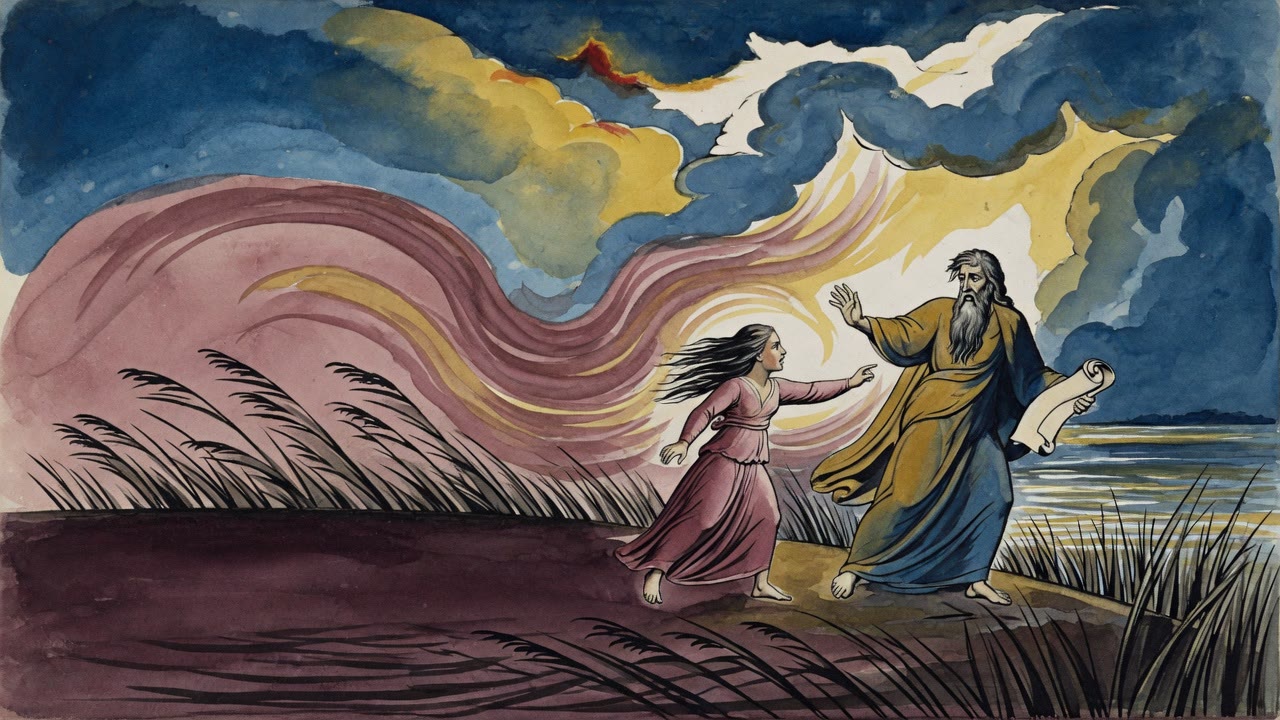
Bithiah stood with her brother under the window. She had pulled Moses from the river once. She called him ungrateful now, for bringing evil on her and on Egypt.
Moses asked whether any of the ten plagues had touched her. She admitted none had. He told her she would not die, though she was her mother's firstborn. No evil would reach her in the midst of Egypt.
"Of what advantage is my security," she said, "when I see the king, my brother, and all his household, and his servants in this evil plight?"
Moses turned from her to Pharaoh. He told the king what to shout if he wanted to be spared. Raise your voice. Say it. "Ye children of Israel, ye are your own masters. Prepare for your journey, and depart from among my people. Hitherto ye were the slaves of Pharaoh, but henceforward ye are under the authority of God. Serve the Lord your God!"
Moses made him say it three times. God caused Pharaoh's voice to carry through the land, so home-born and alien alike heard that Israel had been released. Inside the houses, Israel sang, "Hallelujah, praise, O ye servants of the Lord, praise the Name of the Lord," because they belonged to the Lord now, and no more to Pharaoh.
The king wanted them gone before morning. Moses refused to slink away like a thief. Wait until light, he said. Pharaoh begged anyway. He was a firstborn himself. He was terrified death would take him too. Moses told him not to fear that death. "Fear not, there is worse in store for thee."
The Road Folded Under Later Feet
Israel left when morning came. The streets that had belonged to Pharaoh no longer answered him.
Years on, men sent to scout the land walked from south to north and came back in forty days, though the country was too broad for that. Feet should have failed. The path shortened under them because Heaven already knew what their mouths would do when they returned.
They would slander the land. The people would panic. A decree would fall: forty years in the wilderness, one year for each day. The impossible forty-day route was not an athletic feat. It was a road bent by judgment before the judgment had been spoken.
That night in Egypt, Pharaoh could not cross his own city. Later, Israel's scouts crossed a vast land too quickly. Streets and distances had stopped belonging to kings. They belonged to God, who could trap a ruler in familiar alleys and fold a country under the feet of men carrying a report that would cost a generation.
Pharaoh kept calling in the dark. Israel kept singing.
← All myths