Pharaoh's House Raised the Staff That Struck Him
Adam ruled from end to end of the world, then fell by his own flesh. Pharaoh raised Moses, and the sapphire staff answered.
Table of Contents
 Click for full size
Terrible from One End of the World to the Other
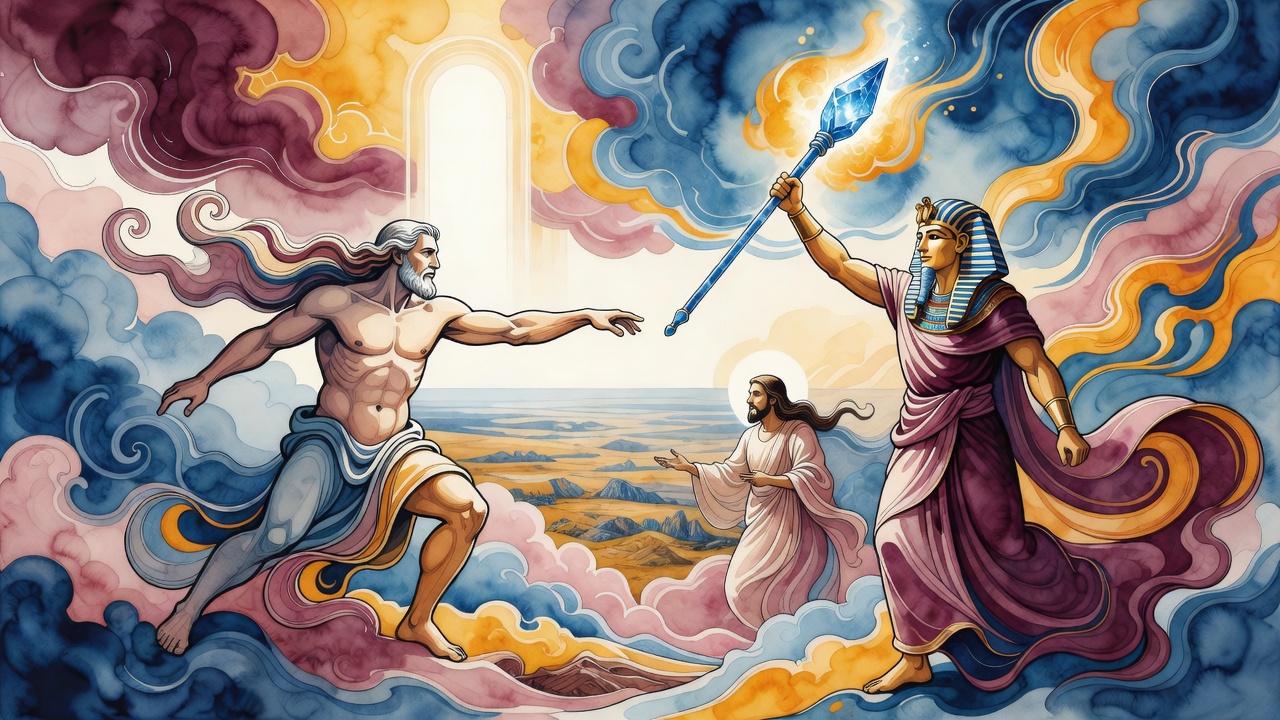
When the Holy One fashioned Adam, said Rabbi Abba bar Kahana, He made him in His own likeness and stretched him from one end of the world to the other, a body that cast a shadow over beasts and birds alike. Fear of him lay on every creature that moved. Habakkuk's line, "Terrible and dreadful is he" (Habakkuk 1:7), first lands on that first man, not on a later tyrant with chariots. Dominion was not a small scepter polished for parade. It was a frame the size of creation, set to rule what had just been spoken into place.
Then judgment went forth from him. The midrash hears Eve in that phrase, bone and flesh of his own frame, the hand that offered fruit and taught him how a death sentence tastes when it arrives from inside the garden. The terror of the mighty undoes itself from inside the house. Adam did not fall to a stranger climbing the wall. He fell to the companion drawn from his side, the judgment that walked out of his own rib.
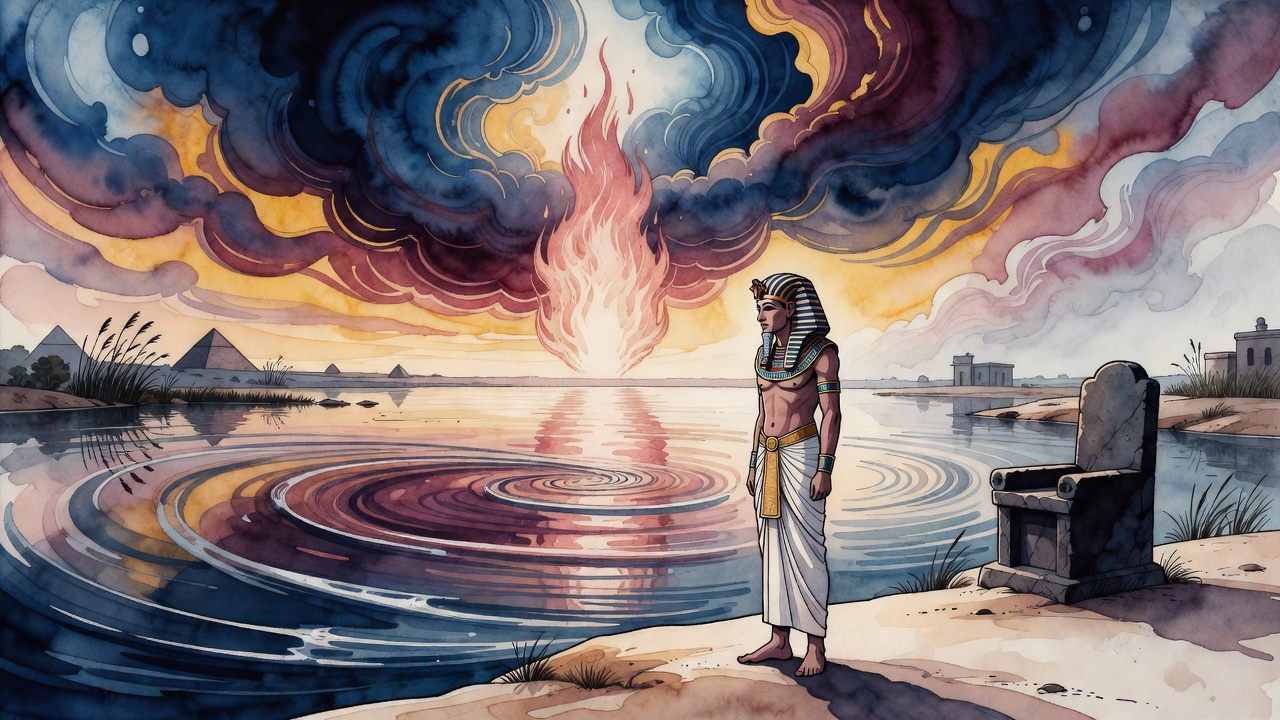
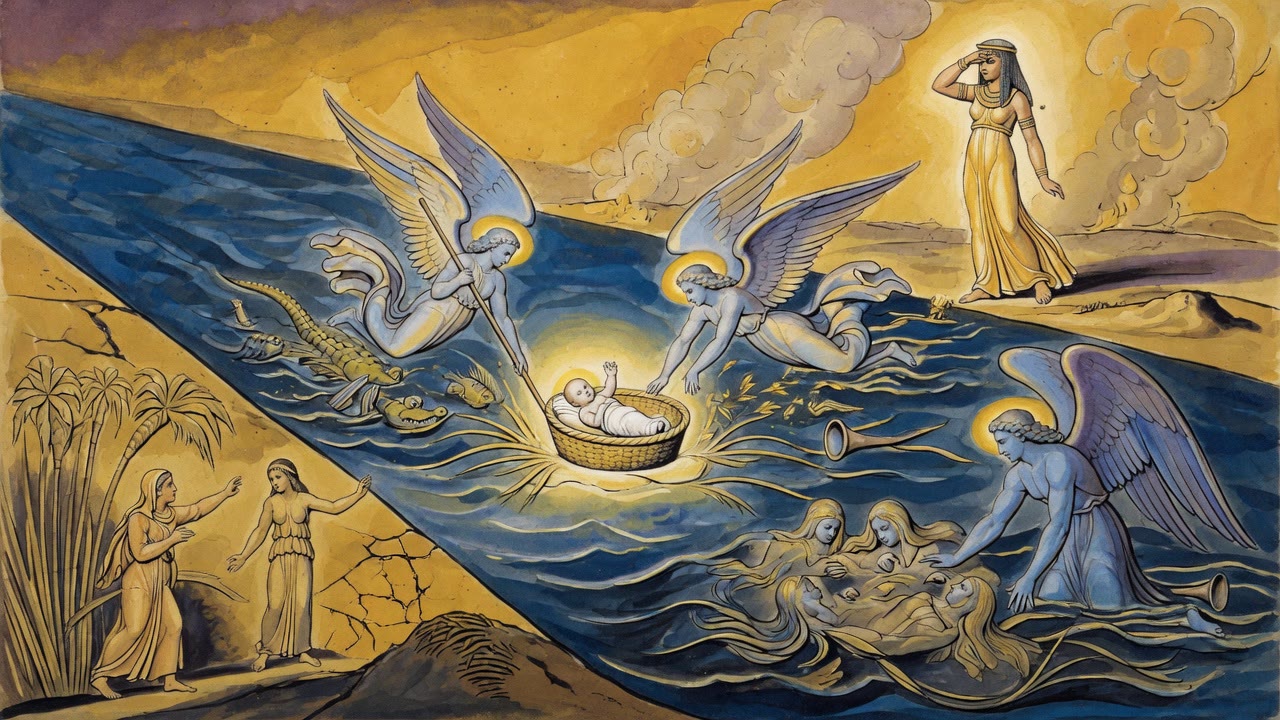
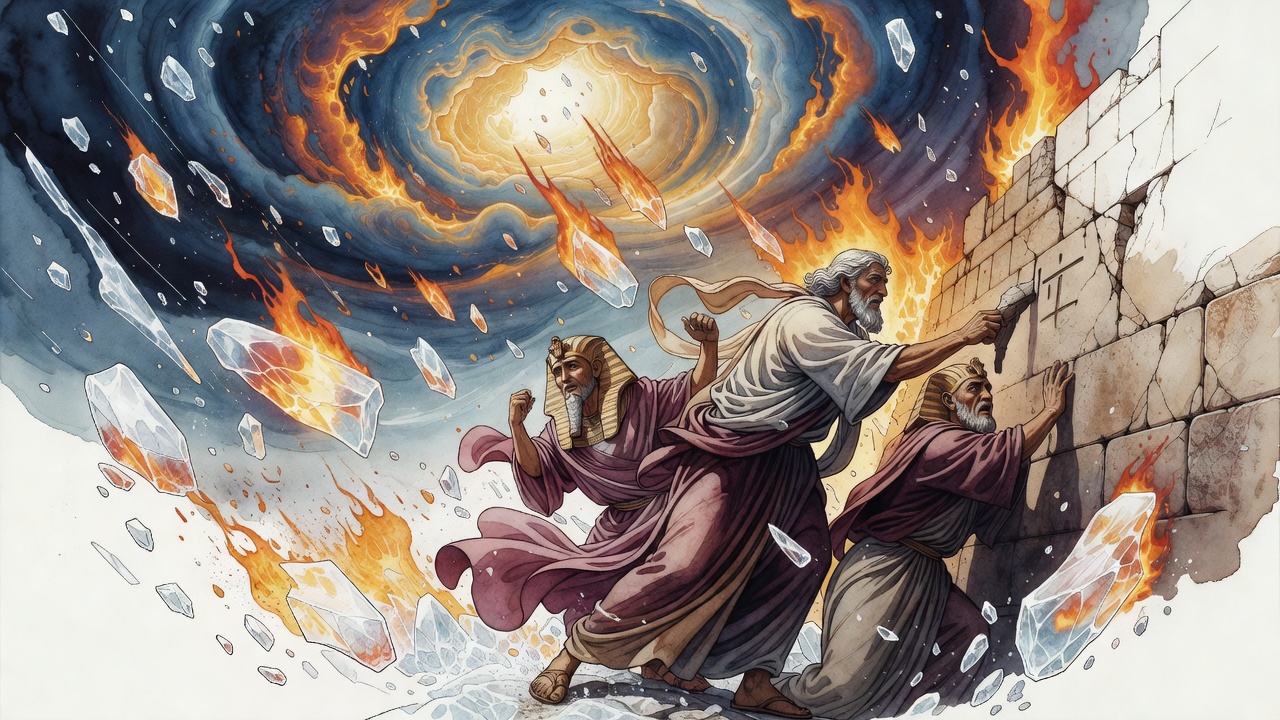
The verse keeps walking through history. It turns to Pharaoh, world ruler over nations, a man who measured power in brick and blood. From him also judgment goes forth. That judgment is Moses, reared in Pharaoh's own palace, taken for a grandson, raised on Egyptian bread and Egyptian fear, until the day he brought ten plagues down on the house that fed him and taught him how to speak.
Three Words on Sapphire
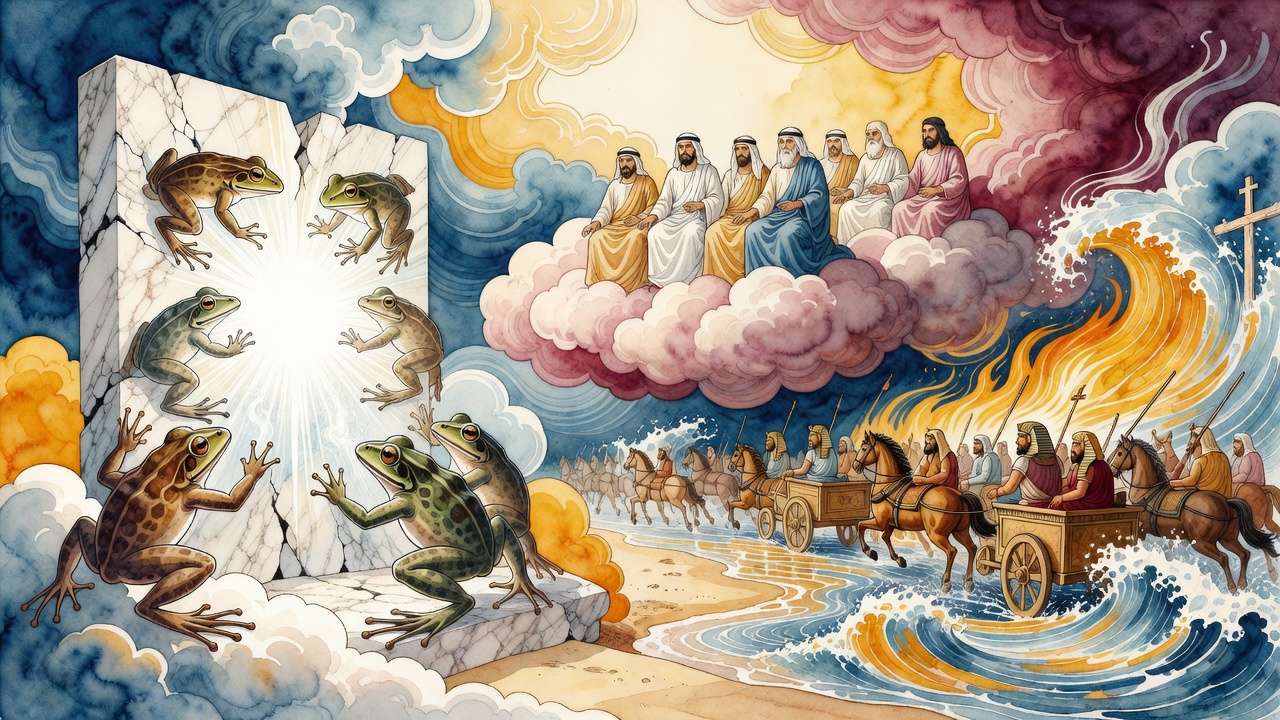
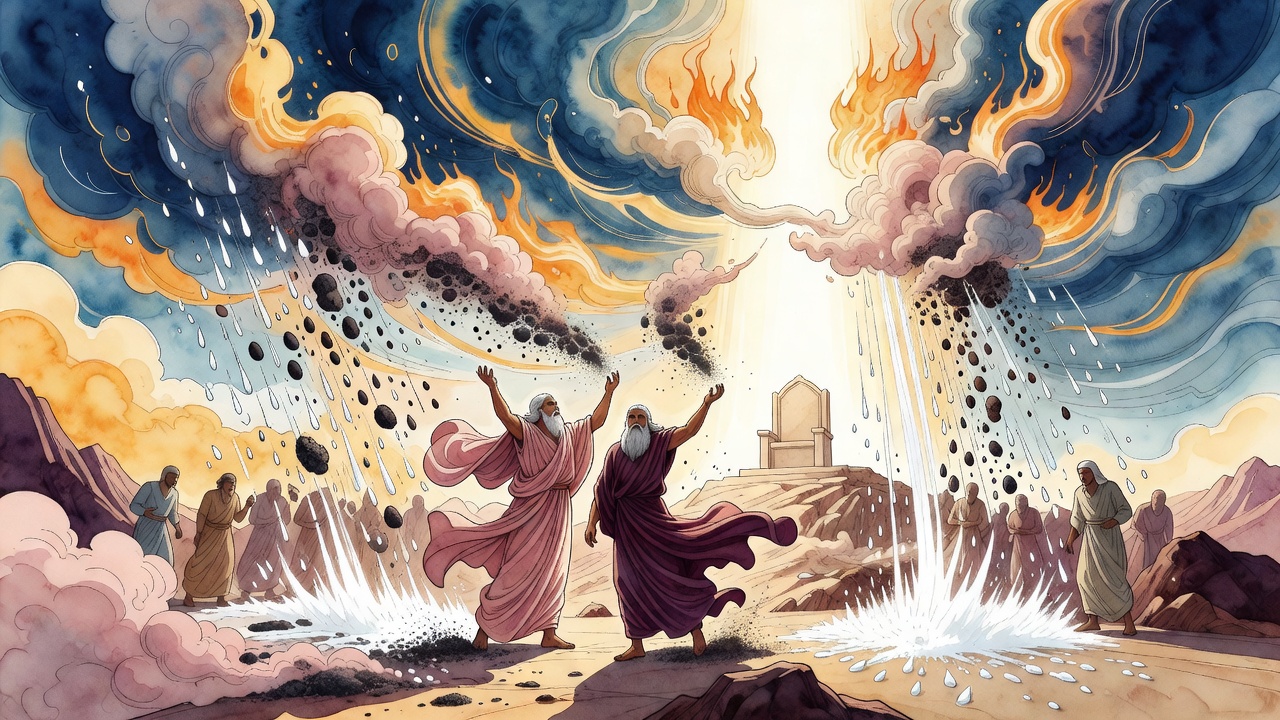
Rabbi Yehudah taught that the staff weighed forty se'ah of sapphire, a weight no ordinary palm would treat as a walking stick, and the plagues were engraved upon it in three words: DeTzaKh, ADaSh, BeAChaB. Moses would gaze at the staff, read the plague waiting there in stone light, and bring it down on river, dust, and sky. The terror of the mighty is always undone by the one raised in his own house, who knows the corridors and the pride that lives in them.
A child who learned palace manners later spoke with a staff heavier than ordinary wood and colder than court gold. The engraver of plagues was not an Egyptian sorcerer trading tricks. The staff carried the sequence of blows the house could not refuse once Heaven had numbered them. Each time Moses looked, the next disaster already sat under his palm, patient as a letter waiting to be read aloud.
The Judge Named in the Sand
Long before the sea split, Moses offered his life over judgment itself in a narrower place. He struck the Egyptian who was beating a Hebrew and hid him in the sand (Exodus 2:12). The next day two Hebrews fought, and the wicked one spat the question that still rings in every generation that hates a meddler: "Who appointed you a prince and a judge?" The midrash hears that insult as the seed of a title rather than the end of one. Moses risked himself for judges, and later judges were called in his name because the risk had already been paid.
He offered his life over the Torah in the forty days and nights on the mountain, and Malachi still says, "Remember the Torah of My servant Moses." He offered his life over Israel at the calf, ready to be blotted out if they were not forgiven, and God Himself called them "your people," binding the leader's name to the sinners he would not abandon. Three risks. Three names that stuck to him because blood and breath had already been put on the line before the titles were carved.
One Verb Against the Plural
When later mouths tried to pry the God of Israel into a council of gods, the Torah answered in the next breath without needing a separate book. "Let us make man" is followed at once by "And God created man," singular. Babel's "let us go down" is balanced by "And the Lord came down." The refutation sits beside the question so no one has to hunt far for the answer or invent a second throne. The same God who stretched Adam across the world remains One when He raises a deliverer inside a tyrant's nursery and teaches that deliverer to read plagues off sapphire.
Power that looks absolute is already pregnant with its undoing. Adam's judgment walked out of his own flesh. Pharaoh's judgment walked out of his own household, staff in hand, plagues waiting in blue stone for a glance that would unmake a kingdom's confidence one blow at a time.
← All myths