Philosophers Ask Why God Leaves Idols Standing
Roman thinkers demand that God erase idols. Jewish elders refuse, because wiping out the sun would prove the fools right.
Table of Contents
 Click for full size
A Question Built Like a Trap
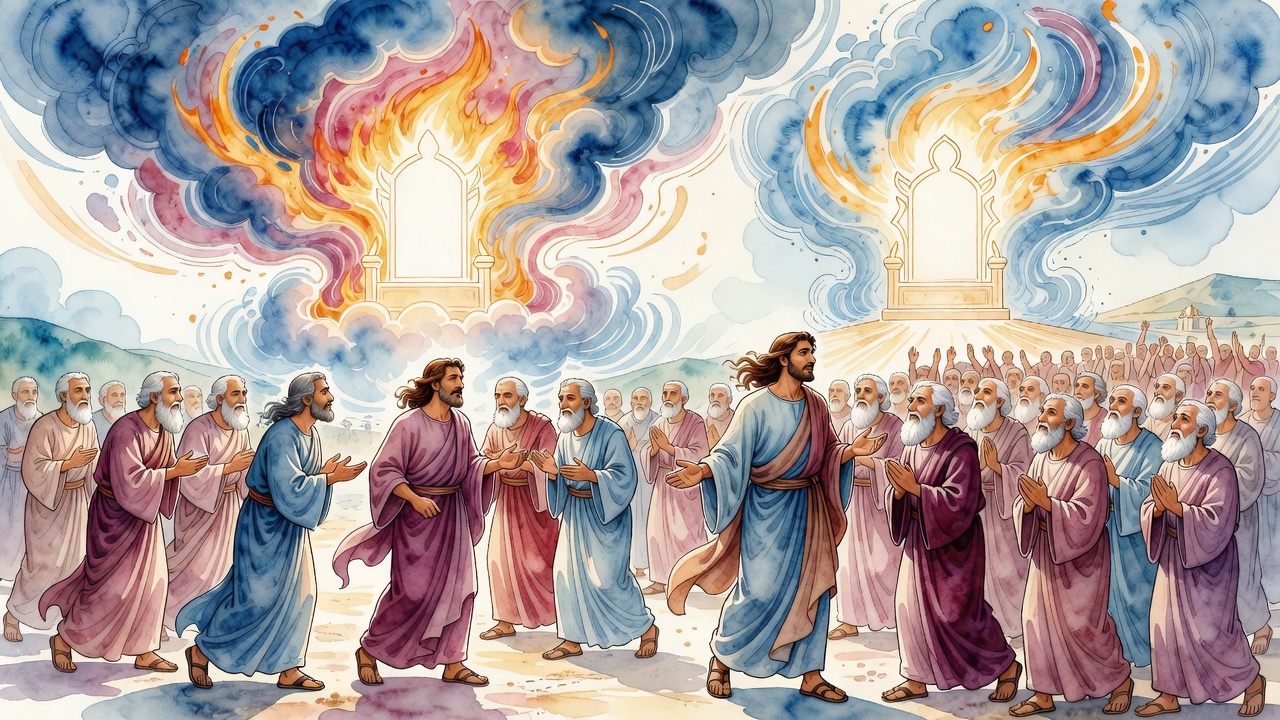
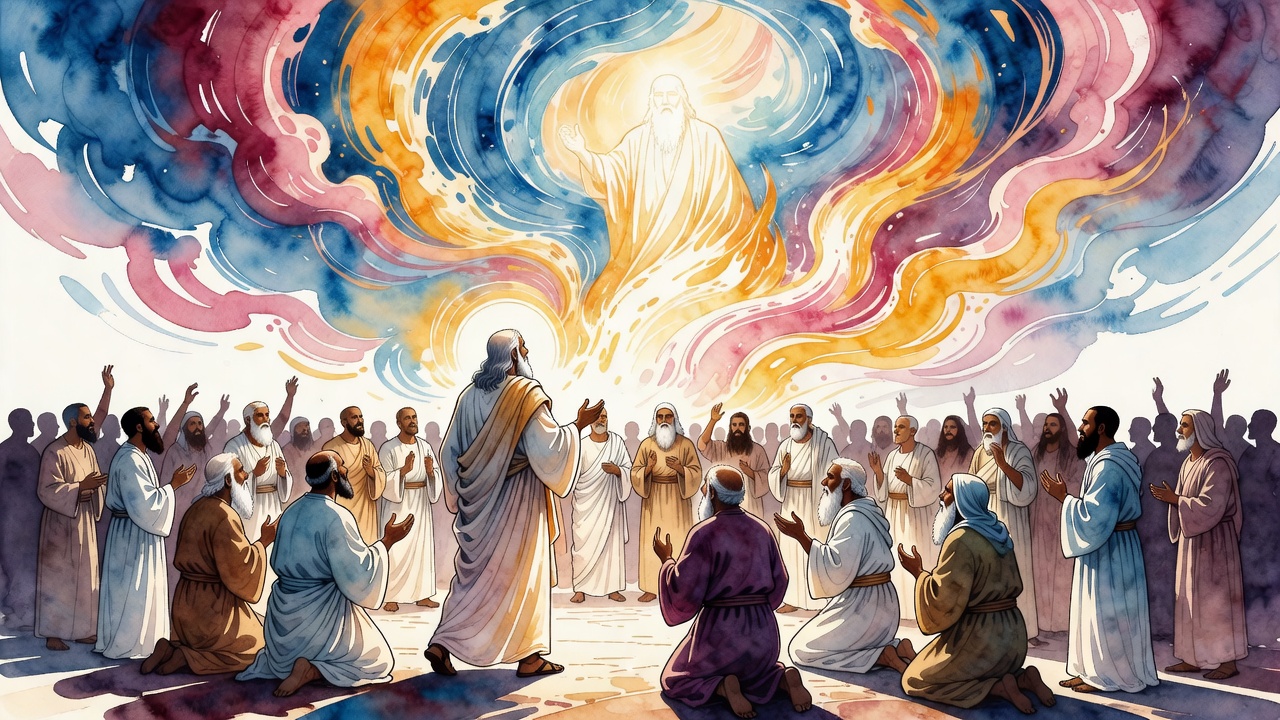
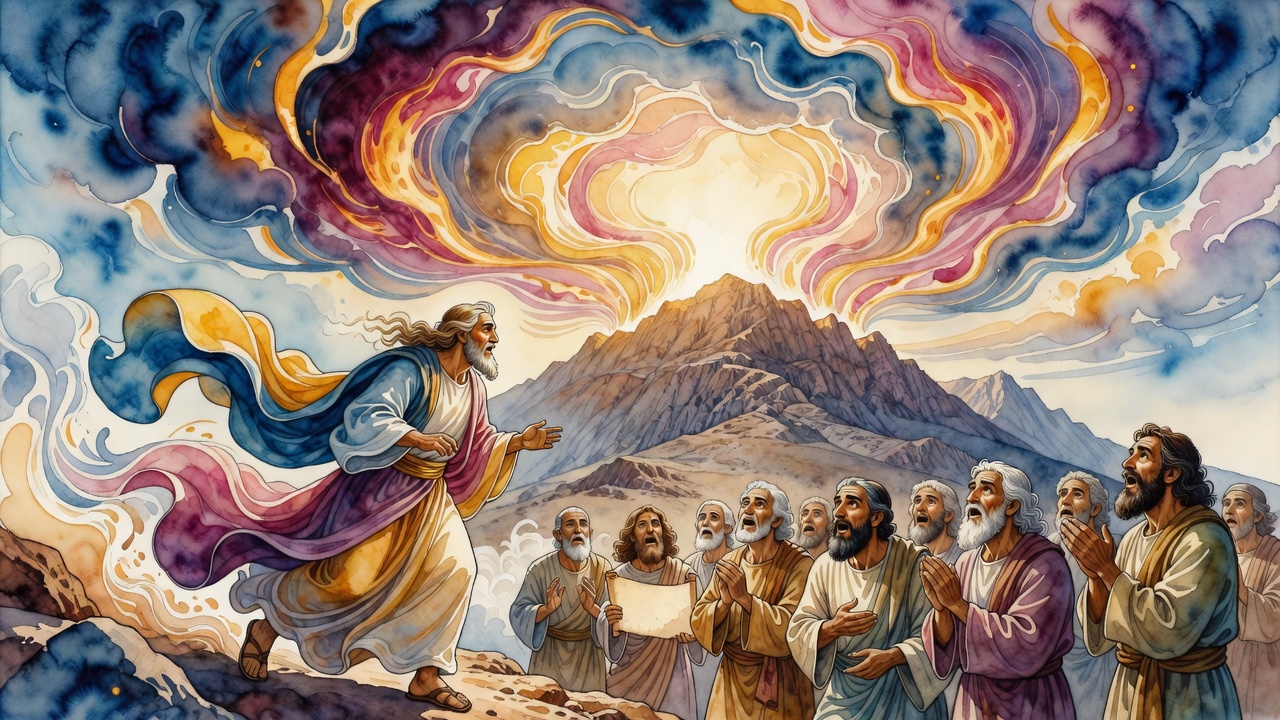
Roman philosophers came to the Jewish elders with a clean knife of a question. If the God of Israel hates idolatry, why do the idols still stand? Why not erase them and finish the argument? The room held the heat of that challenge. God seemed, in their mouths, either weak or uninterested.
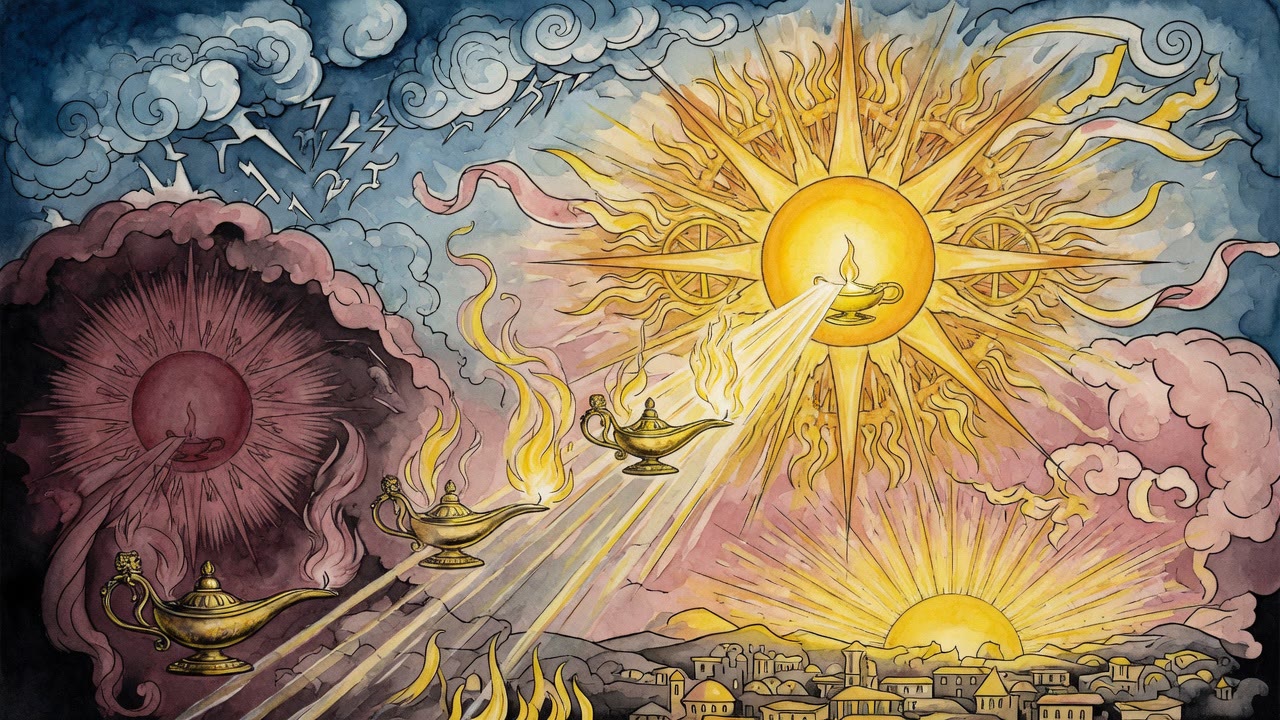
The elders did not raise their voices. They answered with the shape of the world. If people bowed only to junk the earth could spare, perhaps heaven would smash the junk. People bow to the sun, the moon, the stars, the engines of rain and season. Should the Holy One wreck creation because fools have learned to kneel to it?
Outside, light still fell on stone and leaf. That light was the philosophers' exhibit. The elders refused to treat it as a god or as a candidate for demolition. The world is not a courtroom prop heaven rearranges for every taunt.
Destroy the Worthless, Keep the Useful
The philosophers tightened the snare. Then destroy only the useless idols and leave the useful ones. The elders saw the trap. If heaven selectively burned some objects of worship and spared others, the idolaters would point at what survived and cry, see, these lived, these must be gods. Partial judgment would become their proof.
So the world keeps its order. The sun rises. Rain falls. Seasons turn, indifferent to human abuse. The people who turned gifts into gods are not free. They will stand and give account. Order is not permission. Order is the stage on which the accounting will be loud.
A carved figure on a shelf is one problem. The sun that grows grain is another. Heaven will not unmake the second to scold the first. The elders leave the philosophers with a continuing world and a judgment not yet finished speaking.
Warning Before Sentence
Elsewhere the tradition refuses a death penalty without prior warning. The Torah threatens death for one who sacrifices to other gods, but the sages ask where the warning was spoken. Sinai answers first. "You shall not bow down to them nor serve them" (Exodus 20:5). Prohibition precedes punishment. The law does not ambush.
Rabbi Shimon ben Yochai presses harder. Even mixing the Name of God into idol service earns destruction. He points to foreign settlers after Israel's exile who feared the Lord and served their own gods (2 Kings 17:33). Divided loyalty is not loyalty. A shared altar is still a broken covenant.
The warning is public, old, and plain. No one under Sinai's echo can claim surprise. The philosophers want a spectacle of erased idols. The Torah wants a people who heard no before the sword of law ever moved.
Burying the Gods in a Pit
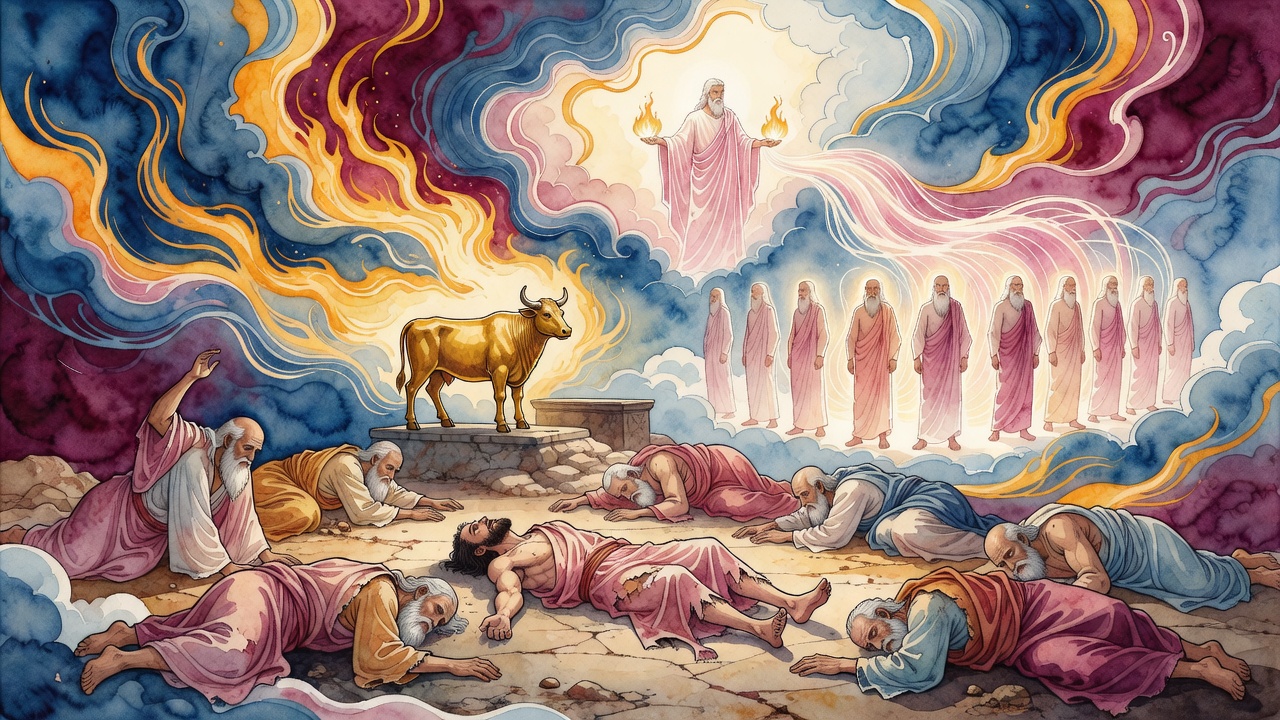
Some imagined a clever dodge. Bury the images in pits, trenches, and caves. Hide them and call the problem solved. The verse closes that door. It commands destruction of shrines "upon the high mountains" (Deuteronomy 12:2). The duty falls on what is openly worshiped, not on a scavenger hunt through every buried scrap.
Honest reckoning aims at what stands in daylight. A secret pit of old gods is not the same as a high place drawing a town. The law is not hide and seek. It is a demand that public loyalty not be split.
A man can shovel dirt over a statue and still bow in his heart to the sun. The high mountain shrine is the open theater of that bow. The Torah aims hands at the theater, not at endless private archaeology.
What Still Rises in the Morning
Stand outside after the debate ends. The sun still climbs. That climb is not a vote for the philosophers. It is the fixed gift the elders refused to let heaven smash for a rhetorical win. The same light that warms bread can be bowed to as a god, and heaven will not unmake the light to stop the bow.
Power that erases creation to silence fools would hand the fools a miracle. Power that keeps creation and judges the heart leaves no excuse. The idols stand as wood and stone and star. The people who served them will not stand forever without answer.
Night comes. Stars take their places without consulting Rome. Somewhere a high place waits for honest hands. Somewhere a conscience still tries to split the Name and a foreign god across one life. The sources answer with order and warning, not with cosmic demolition.
The light in the room does not change to mark the meaning. It only falls on faces that have already chosen. Outside, ordinary traffic continues as if heaven had not just spoken in its own grammar.
A hand rests on a doorframe. A breath is held and released. What was decided will travel into the next day without a banner. The people under pressure carry it in muscle and memory.
← All myths