Proklos Pressed Gamliel About Standing Idols
A philosopher asked why God does not smash every idol. Rabban Gamliel answered with dogs, dead kings, and stars fools misuse without unmaking the sky.
Table of Contents
Proklos son of Filoslos set his questions down like stones on a table. If your God hates idols, why does He not destroy them? Rabban Gamliel did not raise his voice. He asked a smaller question back.
 Click for full size
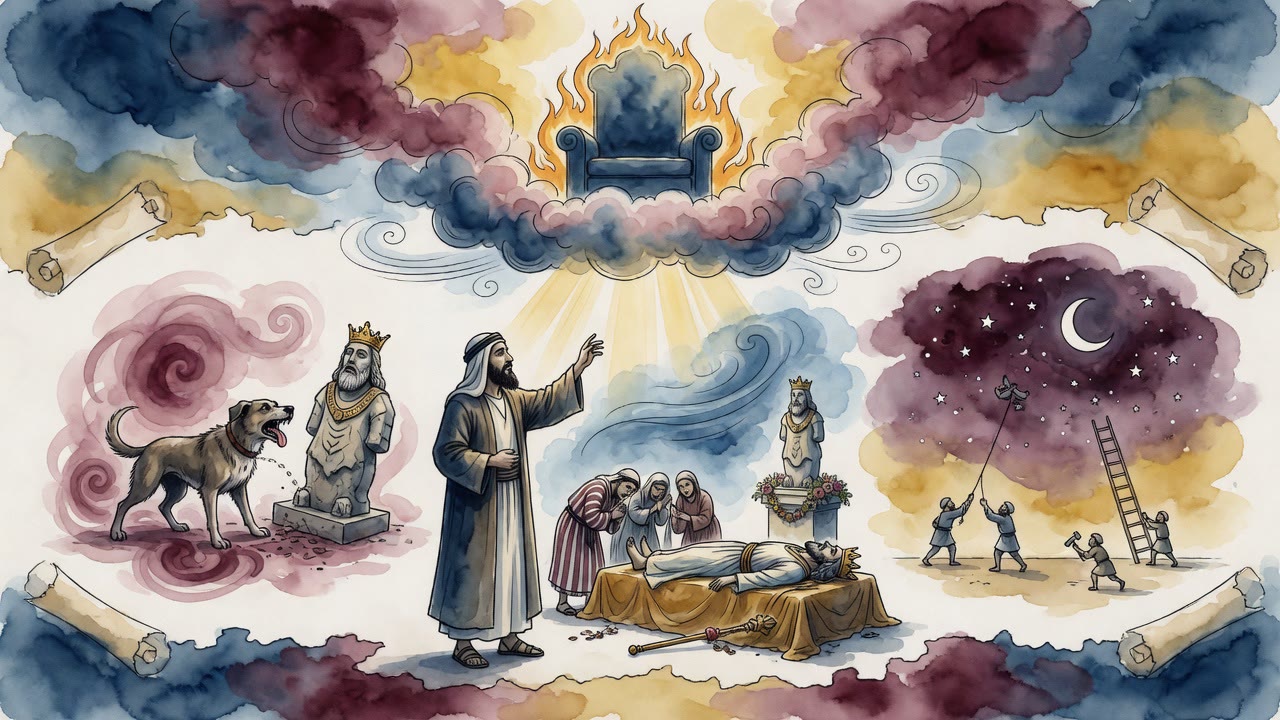
If a man names his dog after his own father, will the father be angry at the son or at the dog? The insult lives in the mouth that misnames, not in the animal that answers to a stolen name. Idols are the dogs. The worshippers own the shame. A student in the corner bit back a laugh and then stopped laughing, because the parable had teeth.
When the Temple of Stone Survives the Fire
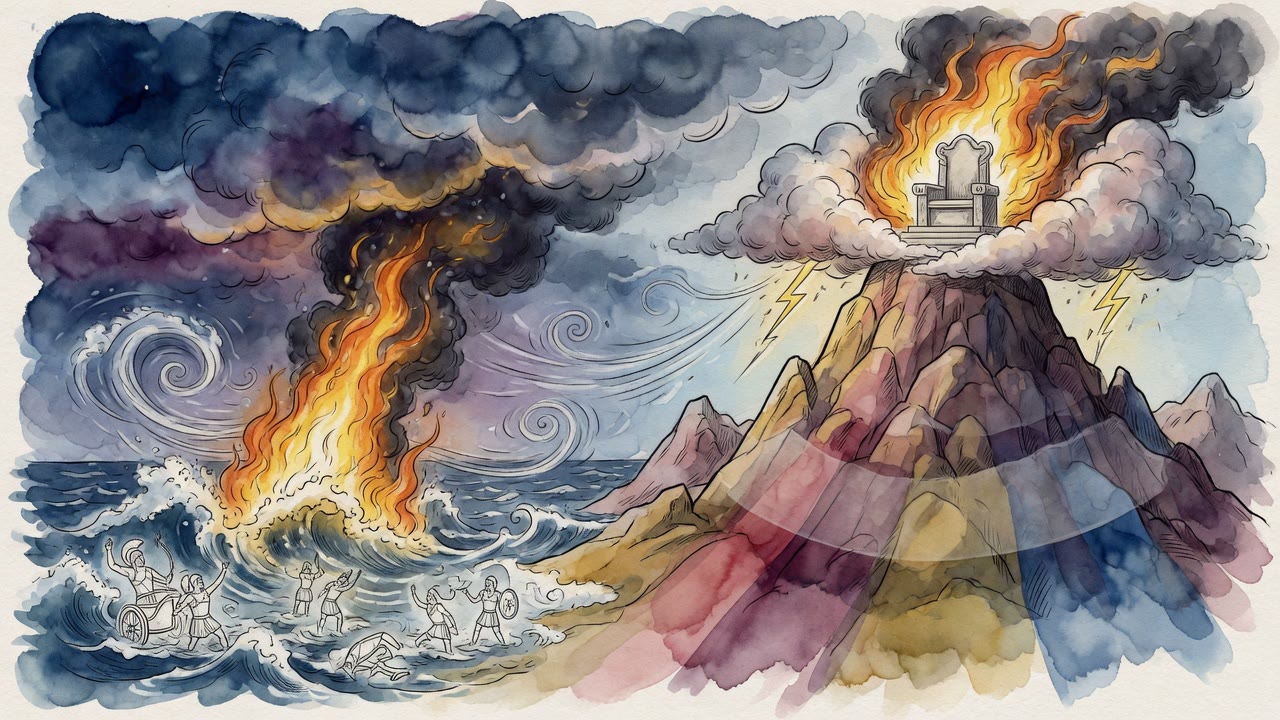
Proklos tried another angle. A town burns. The idol's house stands. Does that not prove power? Gamliel smiled the thin smile of a man who has heard the same boast in Greek and Aramaic. Does a king march to war against the dead? God does not spend His strength on lifeless wood. Flame that spares a statue has not crowned a god. It has only failed to finish a carpenter's work.
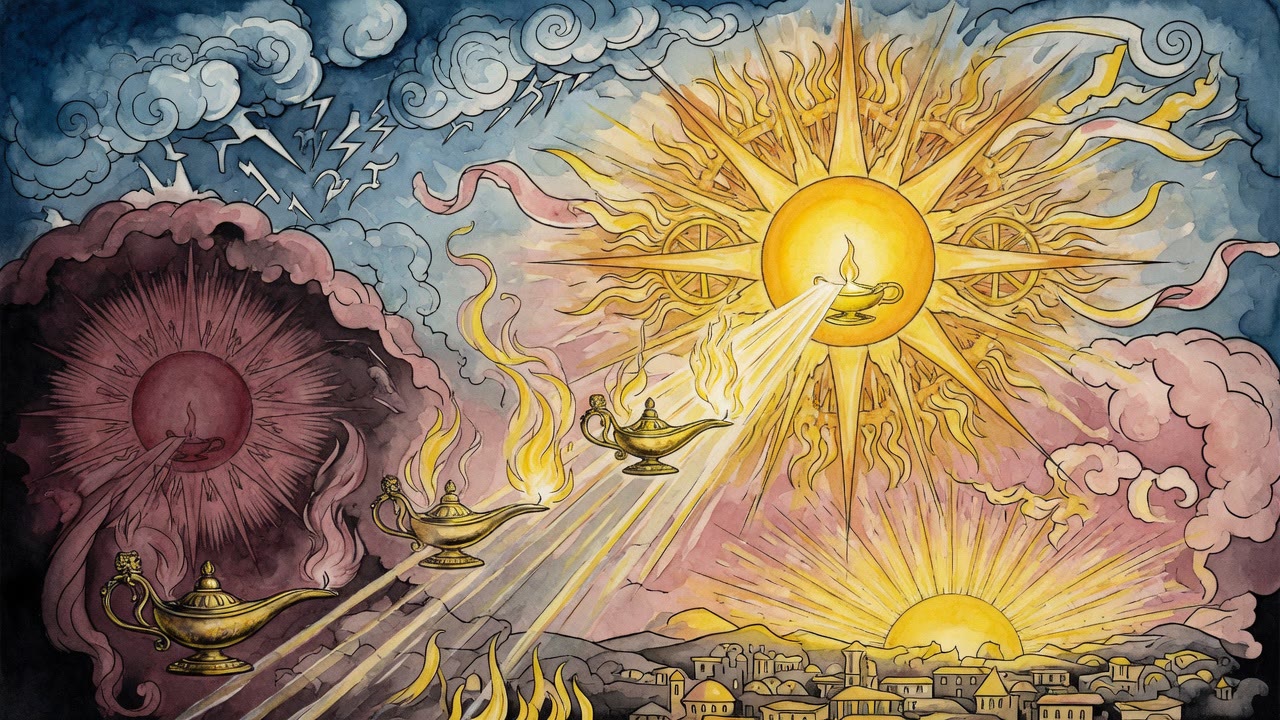
Why not destroy them anyway, Proklos pressed, if they serve no purpose? Because fools also bow to sun and moon and stars, Gamliel said, and God will not unmake the world He set in place merely because some mouths abuse it. The sky is not cancelled for the sake of bad theology. Tear down every wrong altar and a man will still kiss the sun if his heart needs a visible king.
Proklos gestured toward a street where smoke still rose from a real fire last month. The idol-house had stood. Gamliel pointed at the corpses of wood that had burned and the ones that had not. Accident is not theology, he said. Ash is not an argument.
Temptation Left Standing
Proklos asked last why such objects are left where hearts can stumble. Gamliel's answers had already drawn the circle. The problem is not the clay. The problem is the knee that bends. Remove every statue and the human urge to invent a rival will carve a new one by morning.
Around them, markets sold small figures and amulets. Official teaching banned the practice of witchcraft while admitting, with uneasy clarity, that knowledge of such arts had even been thought needful for judges who must recognize fraud. White healing without pagan means was one thing. Black craft that tangled sex and power and secret names was another. Simon ben Shetah's generation had hanged witches in a single hard day. The street still hummed with charms. The argument in the study house was older than any market stall.
A woman passed the open door with a charm at her throat and did not look in. Gamliel did not chase her. He finished the parable. Teaching is not a raid. It is a long refusal to call a dog by a father's name.
What Sinai Refused to Show
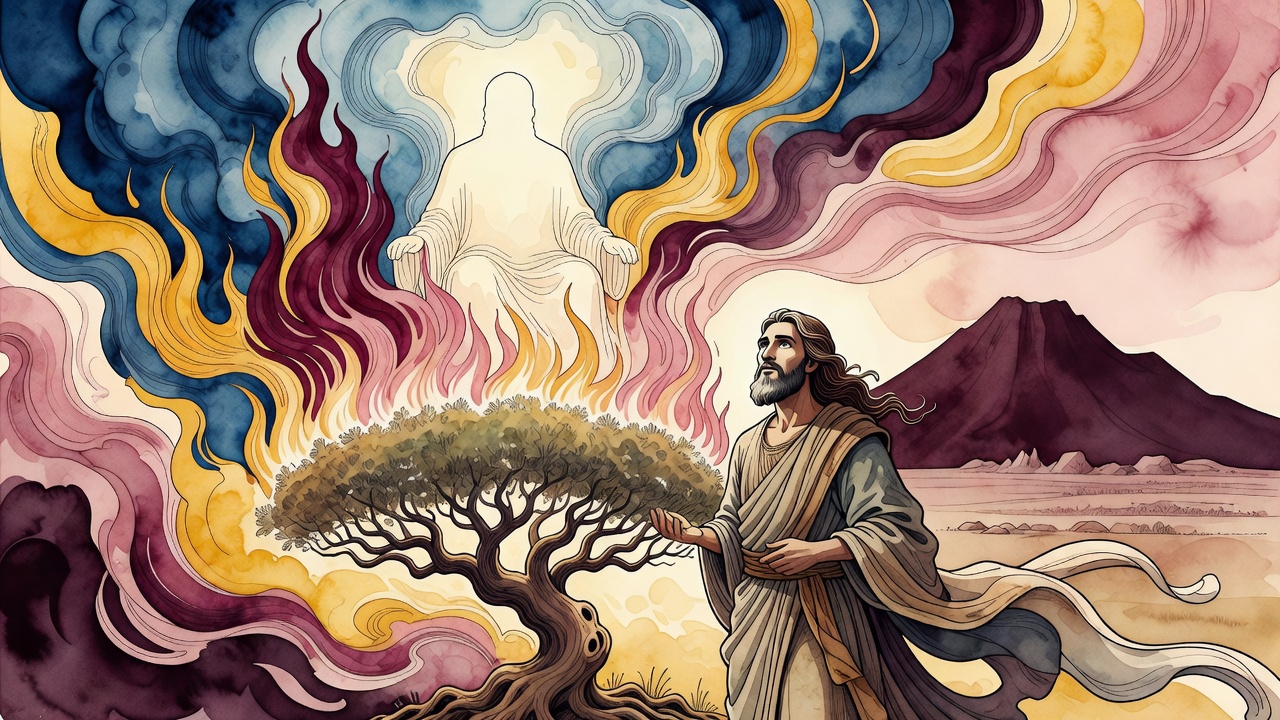
Rabbi Nathan cut the matter at the root of revelation. "You shall not make alongside Me" is not a polite preference. Do not invent an image and set it beside the true worship. At Sinai Israel heard a voice and saw fire. No likeness came out of the flame. Deuteronomy's warning follows. Take great heed, for you saw no form on the day the Lord spoke from the fire. You cannot copy what was never shown. The absence of a divine body at the mountain is the foundation of the ban, not an accident of weather.
Proklos wanted a god he could point at. Gamliel offered a God who refused to become a pointing-stock. Nathan's reading, carried in the same stream of Exodus midrash, made the refusal structural. No form was given. Therefore no form may be made alongside Me, as if the Infinite needed a roommate in wood.
A younger sage asked whether a beautiful symbol for teaching children crossed the line. Gamliel sent him to Nathan's verse. Teaching points to the voice. It does not replace the voice with a face Heaven withheld.
After the Philosopher Left
When the visitor had gone, students asked whether clever parables were enough against a world full of statues. Gamliel sent them back to the mountain. The dog story shames the worshipper. The dead-king story refuses divine panic. The star story protects creation from human folly. Nathan's reading locks the door. No form was given, so no form may be made.
A child in the doorway asked if God was angry at the statues themselves. An older student shook his head. God is angry at the hearts that need them. The child looked at his own clay toy soldier and put it carefully in his pocket, not on a shelf of prayer.
Evening closed the house of study. Outside, the idols still stood where fools had set them. Inside, the argument had done its work. Not smashing wood, but refusing to call wood a partner of God.
← All myths