5 min read

Rabbi Hagai Flogged the Man Who Ruled That Fish Must Be Slaughtered

Yaakov of Kefar Nevorai told the Jews of Tyre that fish need ritual slaughter. The answer came back from Rabbi Hagai in one line. Come here to be flogged.

Curated by Arthur · Told by Maggid ·
Table of Contents
  1. Is a Man Flogged for a Word of Torah
  2. Bend Over and I Will Prove It to You
  3. He Ruled Again Before the Marks Faded
  4. Are You Flogging Me From Outside the Torah
  5. Strike Your Blows

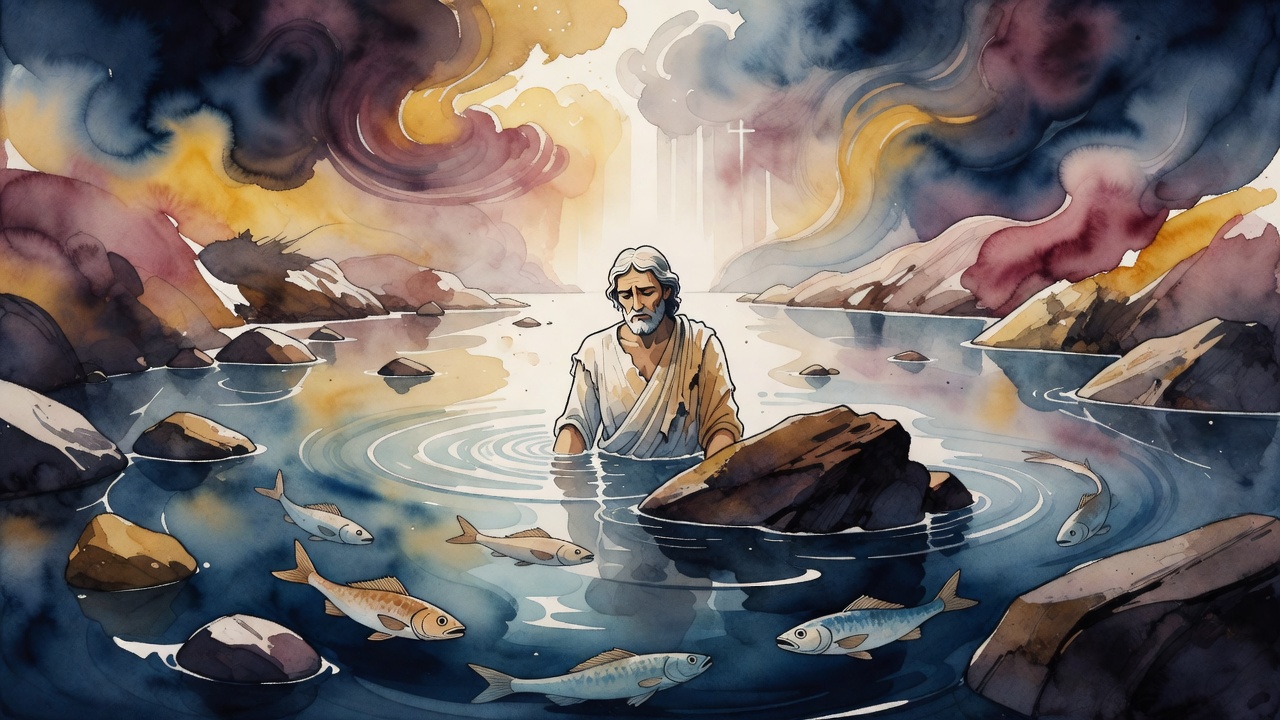
In Tyre, with the boats coming in and the catch already spilling across the tables, Yaakov of Kefar Nevorai gave a ruling. Fish require shechita, the same throat cut the law demands for a cow or a pigeon. A city that ate from the sea every day of its life was told that everything on its tables had been killed wrong.
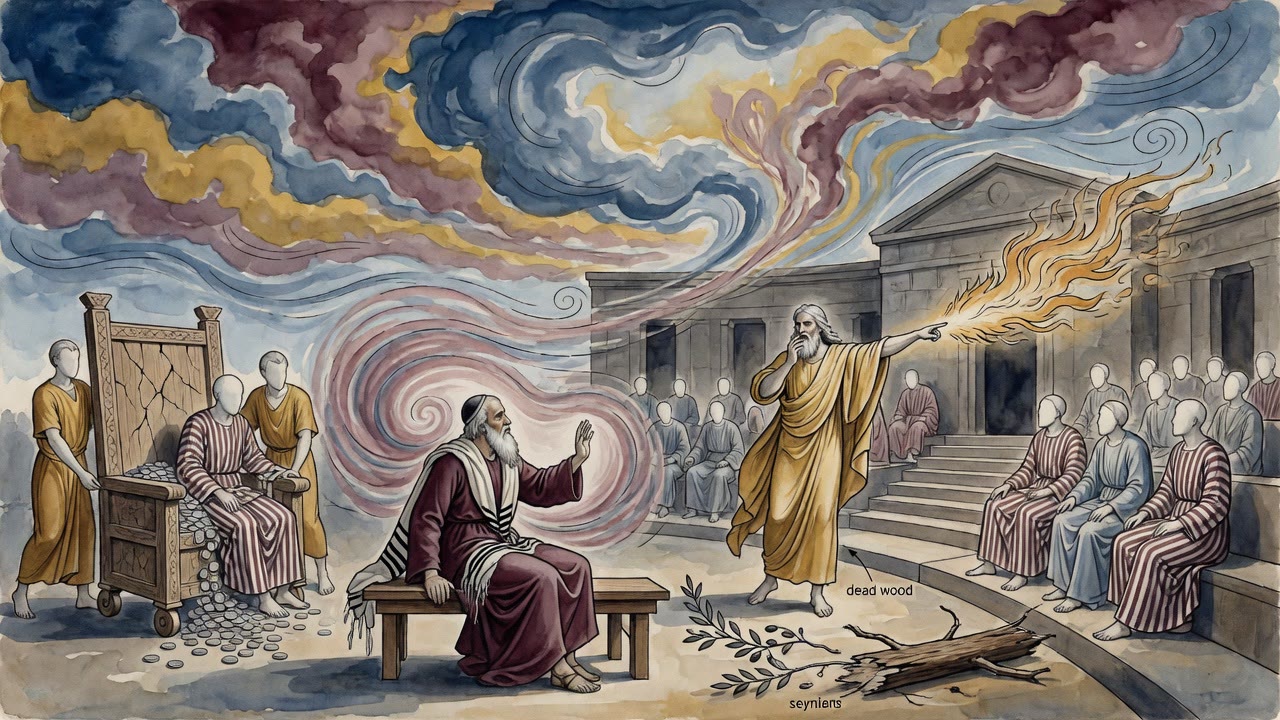
Rabbi Hagai Flogged the Man Who Ruled That Fish Must Be Slaughtered Click for full size

Word travelled south. Rabbi Hagai sent back one line.

"Come here to be flogged."

Is a Man Flogged for a Word of Torah

Yaakov came. He was not a fool and he was not sorry, and he opened with the question any teacher would ask.

"Is a man who says a word of Torah to be flogged?"

"From where in the Torah did you derive it?" Hagai said.

That was the trap, and Yaakov walked straight in, because he liked his proof. He went back to the fifth day of creation. "God said, let the waters swarm with swarms of living creatures, and let birds fly above the earth" (Genesis 1:20). One verse, one breath, fish and birds together. A bird needs the knife. So a fish needs the knife.

It is a beautiful argument. In a port city it is also an expensive one.

"You did not rule properly," Hagai said.

"From where can you prove it to me?"

Bend Over and I Will Prove It to You

"Bend over," Hagai said, "and I will prove it to you."

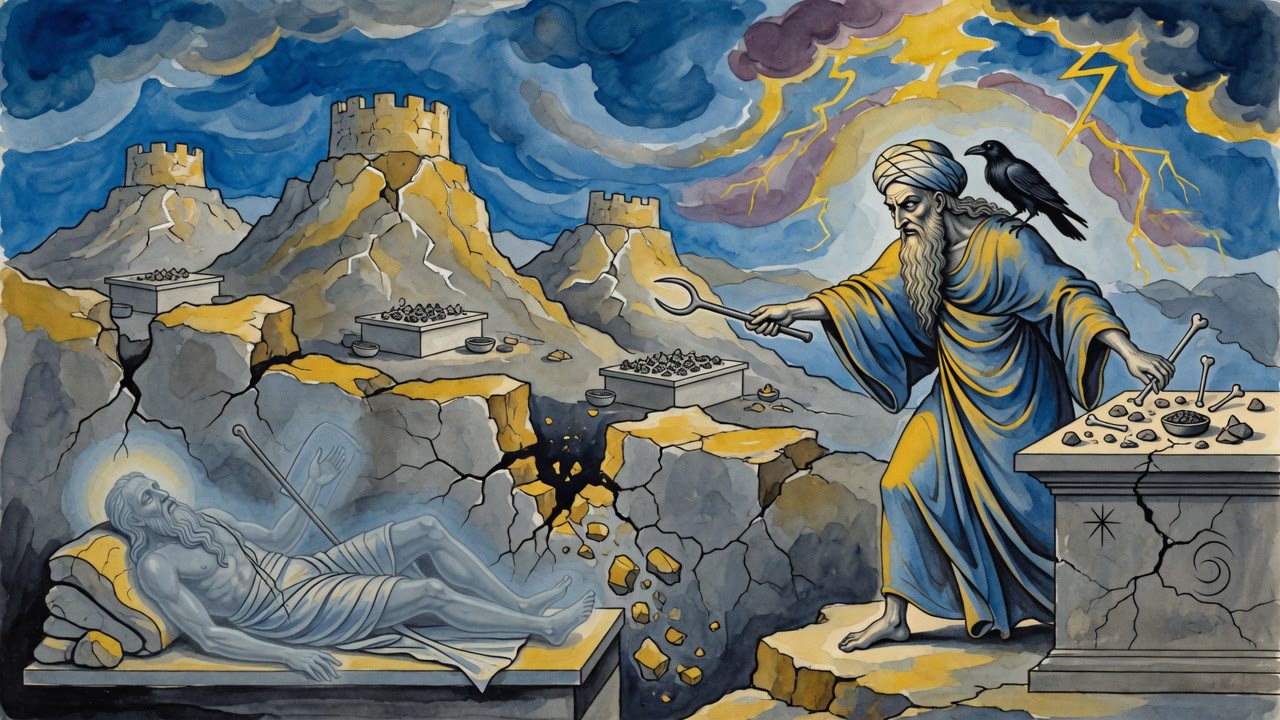
The proof and the punishment arrived together. While Yaakov was bent, Hagai gave him the verse from the wilderness, the one Moses threw at God when the people demanded meat. "Shall flocks and herds be slaughtered for them, and be enough for them? Shall all the fish of the sea be gathered for them, and be enough for them?" (Numbers 11:22).

Slaughtered for the flocks. Gathered for the fish. The Torah had two words available and did not use the same one twice.

Yaakov straightened up. What he said then is the reason anyone remembers him.

"Strike your blows. Beat your beating. It is doing me good."

He Ruled Again Before the Marks Faded

He went back to Tyre and ruled again. This time it was a baby. A Jewish father, a gentile mother, a son born eight days before a Sabbath. Circumcise him on the Sabbath, Yaakov said, the same as any Jewish boy, because the child follows the father.

He had a verse for that too. When Israel was counted in the wilderness they declared their descent by their families, by their fathers' houses (Numbers 1:18). The father's line is called a family. The mother's line is not.

The same messenger went out. "Come here to be flogged."

Yaakov came again and asked the same question again, word for word. "Is a man who says a word of Torah to be flogged?" Hagai asked where in the Torah, Yaakov gave his verse, Hagai told him he had not ruled properly, Yaakov asked for proof, and Hagai said, "Bend over."

Are You Flogging Me From Outside the Torah

The argument came at him from the doorway of conversion. Suppose that same boy grows up, Hagai said, and comes to you and says he wants to enter the covenant, on condition that his circumcision fall on a Sabbath or on the Day of Atonement. Would you break the day for him? Nobody breaks the Sabbath for that. The day is broken for the son of an Israelite woman and for nobody else.

"From where do you derive it?" Yaakov said, still bent.

Hagai gave him Ezra, standing in the rain in Jerusalem with the returned exiles, making a covenant to send away the foreign wives and the children born from them (Ezra 10:3).

Yaakov twisted his head around to answer that one. "Rabbi. Are you flogging me out of the received Scriptures?"

It was a real objection. Ezra is not the Torah, and a beating deserves better authority than a book of the Prophets.

"Is it not written in that very verse," Hagai said, "and let it be done according to the Torah?"

"According to which Torah?"

So Hagai went and got it, through Rabbi Yohanan in the name of Rabbi Shimon ben Yohai. Do not intermarry with them, says the verse, and then it says why: because he will turn away your son from following Me (Deuteronomy 7:3-4). The grandson born to your daughter is called your son and can be turned away from God. The son born to a gentile woman is not called your son at all. The verse worries only about the child the law counts.

Strike Your Blows

Yaakov of Kefar Nevorai stood up from the second flogging and said the same thing he had said after the first.

"Strike your blows. Beat your beating. It is doing me good."

He had been publicly corrected twice by a man who kept a strap in the room, and both times he asked for more of it. Whatever else he was, he was not defending himself. He wanted the ruling right more than he wanted to be right.

Down in Tyre the fish went on being gathered, in nets, by the basket, the way the wilderness verse said they were, and nobody stood over them with a knife.


← All myths

From the tradition

Sources

3 sources

The texts behind this telling. Some cards carry a translation of the source; others are our own retelling of it, and each card says which. Every card links out to the original.

Bereshit Rabbah 7:2Bereshit Rabbah

Retold in our words. Read the original at the link below.The Sefaria Midrash Rabbah, 2022 · CC-BY

Rabbi Yaakov of Kefar Nevorai ruled one way, Rabbi Hagai challenged him, and Bereshit Rabbah turned the dispute into a lesson about creation.

Our story revolves around two rabbis: Yaakov of Kefar Nevorai and Rabbi Ḥagai. Yaakov, it seems, was prone to making pronouncements that Rabbi Ḥagai found… questionable.

The first incident involves fish. Yes, you heard that right, fish. Yaakov of Kefar Nevorai, while in Tyre, declared that fish require shechita, ritual slaughter, just like land animals and birds.

Rabbi Ḥagai, upon hearing this, was… displeased. He summoned Yaakov, intending to have him flogged for this ruling. Yaakov, understandably confused, asked, "Is a man who speaks a Torah concept to be flogged?"

Rabbi Ḥagai's response? "From where in the Torah is this derived?"

Yaakov's reasoning was… creative. He cited the verse, "God said: Let the water swarm with swarms of living creatures, and let birds fly above the earth." (Genesis 1:20). His argument: just as birds require shechita, so too should fish.

But Rabbi Ḥagai wasn't buying it. "You did not issue a proper ruling," he declared.

He then famously tells Yaakov to "bend over" to receive his punishment, promising to simultaneously prove him wrong. Ouch!

Rabbi Ḥagai then quotes (Numbers 11:22): "Will flocks and cattle be slaughtered for them and it suffice for them? If all the fish of the sea will be gathered for them, will it suffice for them?" Notice, he points out, that the verse uses "gathered" for fish, not "slaughtered." The implication is clear: fish don't need shechita; they are gathered.

Yaakov, humbled, conceded, "Strike your blows, beat your beating, as it is helpful in learning a lesson."

But the story doesn't end there.

Next, Yaakov of Kefar Nevorai made another controversial ruling, this time concerning circumcision, brit milah, on Shabbat (the Sabbath). He declared it permissible to circumcise the son of a non-Jewish woman on Shabbat if the father was Jewish. According to Yaakov, since the child has a Jewish father, the child is Jewish and requires circumcision, even on Shabbat.

Again, Rabbi Ḥagai was not impressed. He summoned Yaakov for another… educational experience. The same exchange occurs: Yaakov defends his Torah-based reasoning, Rabbi Ḥagai calls it incorrect and demands proof, and… well, you can guess the rest. More bending over was involved.

Rabbi Ḥagai argued that if the child of a non-Jewish woman wanted to convert and requested circumcision on Shabbat or Yom Kippur (the Day of Atonement), would we desecrate the holy day for him? No! We only desecrate Shabbat for the son of an Israelite woman. His point: a child's Jewish status is determined by the mother, not the father.

He then references (Ezra 10:3), which speaks of sending away non-Jewish wives and their children. Yaakov objects, noting that Ezra is not Torah, but "received Scripture."

Rabbi Ḥagai cleverly retorts that (Ezra 10:3) also states, "It shall be done in accordance with the Torah." He then brings a teaching from Rabbi Yoḥanan in the name of Rabbi Shimon ben Yoḥai, citing (Deuteronomy 7:3-4): "You shall not intermarry with them… because he will divert your son from following Me." The key is the phrase "your son." According to this interpretation, "your son" refers only to the grandson born of an Israelite woman, not one born of a non-Jewish woman.

Again, Yaakov, recognizing the strength of the argument, accepts his… correction, stating, "Strike your blows, as it is helpful for absorbing [a lesson]; beat your beating, as it is helpful in learning a lesson.”

It highlights the importance of rigorous debate and the willingness to be challenged.

And perhaps most importantly, it shows us that even when we're wrong, there's an opportunity for growth and learning. Though, hopefully, our learning experiences don't involve quite so much flogging. But maybe, just maybe, a little humility can go a long way.

Full source
Shemot Rabbah 50:2Shemot Rabbah

Retold in our words. Read the original at the link below.The Sefaria Midrash Rabbah, 2022 · CC-BY

The ancient rabbis certainly thought so.

We find this idea beautifully illustrated in Shemot Rabbah, a collection of rabbinic interpretations on the Book of Exodus. It uses a verse from Proverbs (9:9), "Give to the wise person, and he will grow wiser," as a lens through which to view the actions of Noah, Moses, and Betzalel.

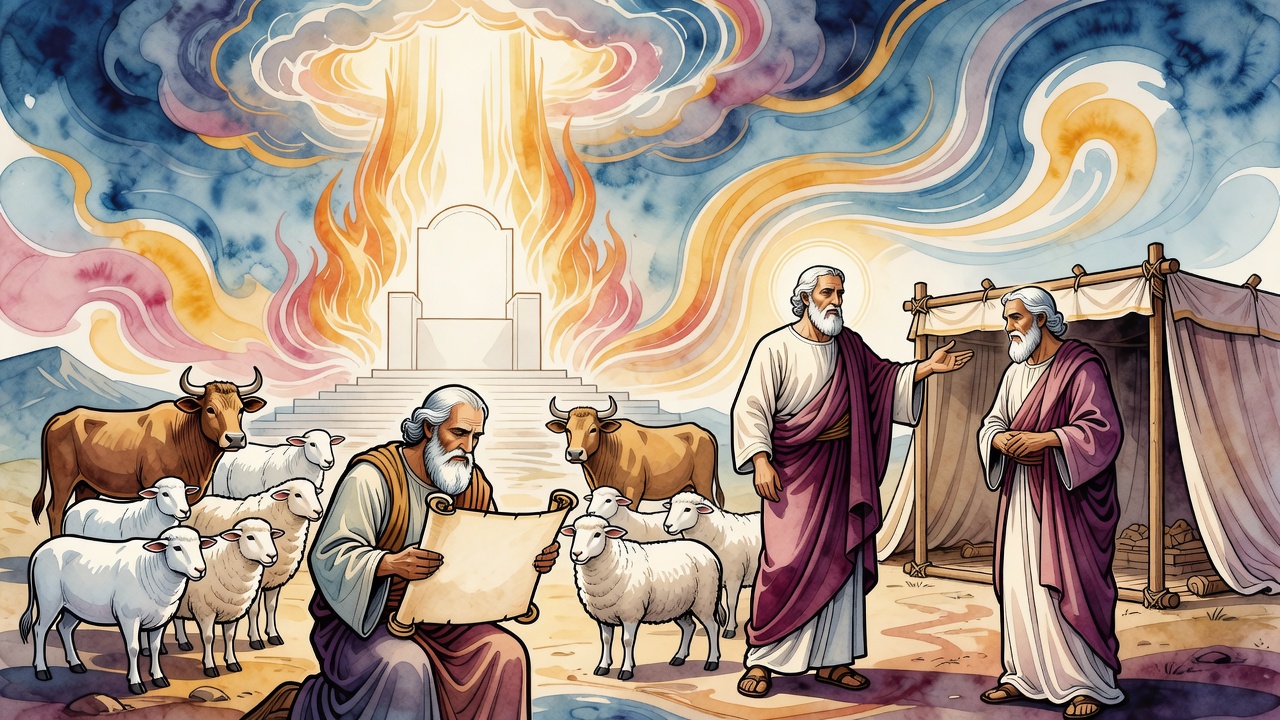
Remember the story? God tells him, "From every pure animal, take for yourself seven of each, a male and his mate; and of the animals that are not pure, two, a male and his mate" (Genesis 7:2). So, Noah does. But according to this Midrash (rabbinic interpretive commentary), when he emerges from the ark and offers sacrifices, he's not simply following orders. Instead, as the Midrash says, "he scrutinized [hitbonen]" the situation. He asks himself why God specified a larger number of pure animals. He reasons that it must be so that he can offer them as sacrifices! And so he does, as we read "He took from each species of pure animal and offered burnt-offerings on the altar" (Genesis 8:20).

The Midrash highlights that Noah didn't just blindly obey; he used his wisdom to understand God's will more deeply. He took initiative. "Give to the wise person, and he will grow wiser," indeed!

Next up: Moses. The Midrash connects him to another verse in Proverbs (21:22): "The wise goes up to the city of the mighty." This is understood to mean Moses ascending to receive Torah from God. He then brings that wisdom down to the people, enriching their lives. He doesn't just passively receive; he actively transmits and enhances the understanding of the Torah for the benefit of Israel. He makes it alive.

But perhaps the most compelling example is Betzalel. Now, Betzalel was the artisan chosen to construct the Mishkan, the Tabernacle, a portable sanctuary for God's presence. God instructs Moses to have Betzalel build the Tabernacle. Moses, in turn, relays this instruction to Betzalel.

But Betzalel, as the Midrash tells it, asks a critical question: "What is the purpose of this Tabernacle?" Moses explains that it's for God to dwell amongst them and teach them Torah. Betzalel then raises a crucial point: "Where will the Torah be placed?" Moses responds that they'll build the Ark after the Tabernacle.

Now, here's where Betzalel's wisdom truly shines. He respectfully disagrees! He says, "Our master, Moses, it is not in keeping with the honor due the Torah to do so; rather, we will craft the Ark and the Tabernacle thereafter."

Wow.

Betzalel understands that the Torah, God’s word, is of utmost importance and should be given priority. He’s not just a craftsman; he’s a thinker, a theologian, a man of deep insight. This is why, the Midrash concludes, it was said, "Betzalel crafted the Ark." He understood the deeper meaning and purpose behind the physical construction.

So, what can we learn from these three figures? It's not enough to simply follow instructions. True wisdom lies in understanding the why, in questioning, in seeking deeper meaning, and even in respectfully suggesting improvements, even to divine instructions. It's about taking an active role in our spiritual lives and striving to understand God's will with all our hearts and minds. Perhaps, that is how we, too, can grow wiser.

Full source
Pirkei DeRabbi Eliezer 9:8Pirkei DeRabbi Eliezer

Retold in our words. Read the original at the link below.Pirke de Rabbi Eliezer, trans. Rabbi Gerald Friedlander, London (1916) · CC-BY

These are the kinds of questions the ancient rabbis loved to wrestle with. And in Pirkei DeRabbi Eliezer – a fascinating text that explores the secrets of creation and early biblical history – we find a particularly intriguing observation about the origins and nature of life.

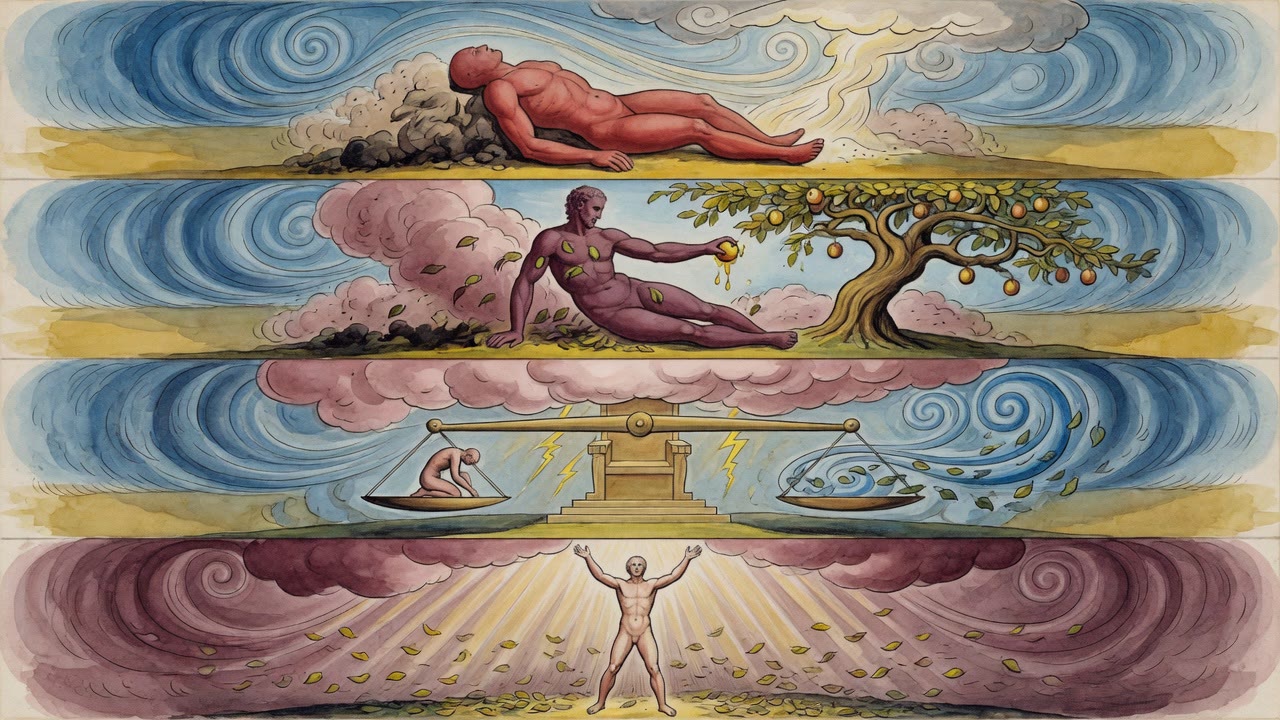
Rabbi Mana, a sage whose words echo across the centuries, makes a simple yet profound statement: creatures born of the earth thrive on the earth, and creatures born of the water thrive in the water. Seems logical. Fish in the sea, animals on land.

Then comes the twist!

"Except all kinds of winged birds," Rabbi Mana declares. He points out that even though birds were created from the water (a concept we find in (Genesis 1:20-2)2), they increase and multiply not in the water, but on the earth. "And let the fowl multiply in the earth," the verse says. It's right there in black and white.

So, what are we to make of this? Why this seeming contradiction? The rabbis weren't just interested in cataloging facts; they were after deeper meaning.

Rabbi Mana continues by differentiating the way creatures multiply. Those born from the water, he says, increase through eggs. Think of fish, amphibians, even birds as he has just noted. But those born from the earth increase through live offspring – what he calls "foetus."

Again, this seems straightforward, a basic observation of the natural world. But consider the implications. It is an early effort to classify living beings and understand what sets them apart. But the anomaly of birds is still there.

Is Rabbi Mana simply pointing out a biological distinction? Perhaps. But knowing the rabbinic mind, it’s likely there's more at play here. Perhaps the birds' unique origin and earthly destiny reflect their special role in the cosmos – messengers between heaven and earth, symbols of freedom and aspiration.

Or maybe it's a reminder that things aren't always as simple as they seem. That the categories we create to understand the world can sometimes fall short. That there's always a bit of mystery, a bit of wonder, woven into the fabric of creation.

What does this small passage from Pirkei DeRabbi Eliezer tell us about the world, about ourselves, and about the endless quest to understand the divine plan? It's a question worth pondering, the next time you see a bird soaring across the sky.

Full source