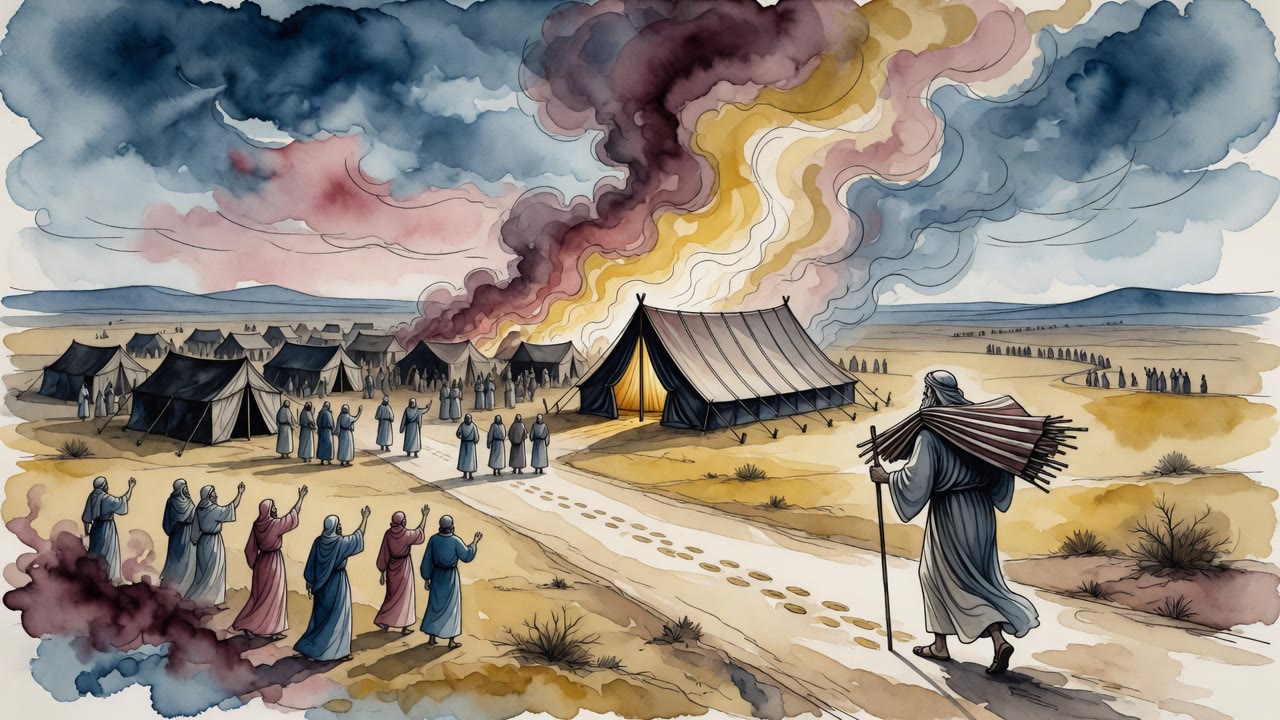
Betzalel Told Moses That a House Comes Before Its Furniture
A dropped peg made the whole work yard flinch. Betzalel had just told the prophet his build order was wrong. Then the saws bit into wood again.
Table of Contents
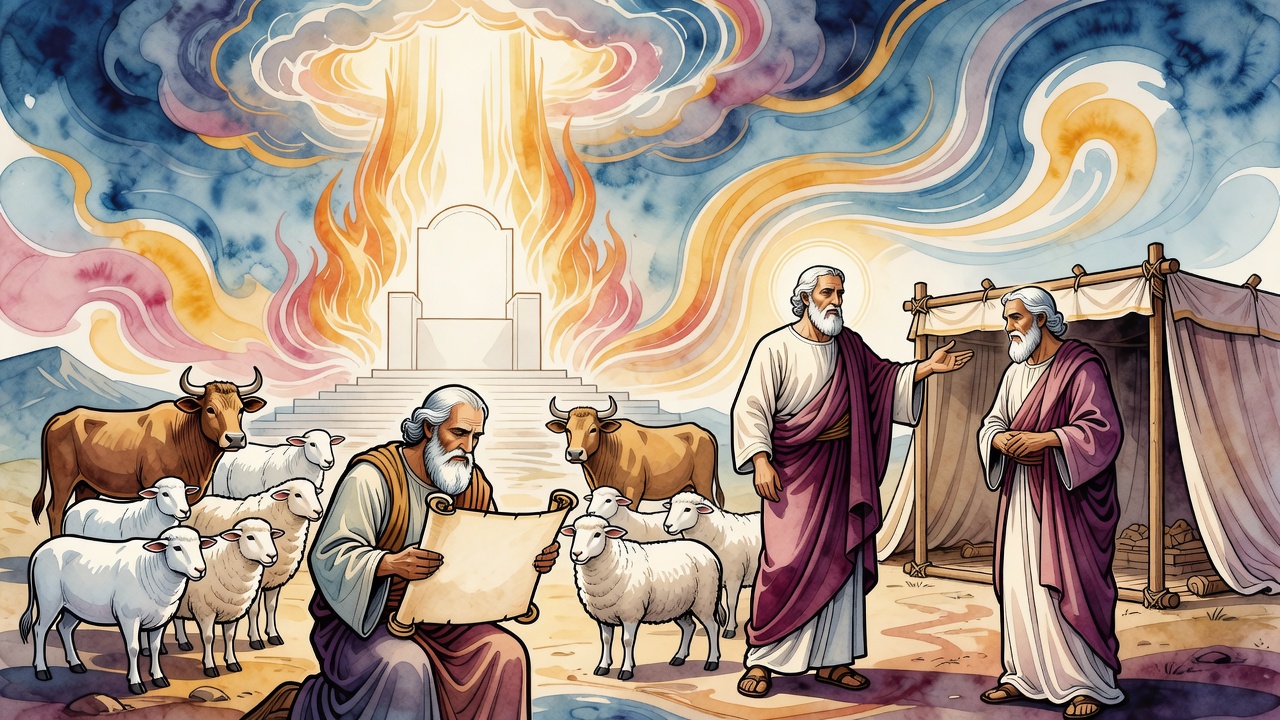
The plank under Noah's heel still smelled of pitch when he stepped into mud that had never known a human footprint. Rain was gone. Birds tested the air. Clean animals clustered in sevens and unclean in pairs, exactly as the Voice had numbered them before the first drop (Genesis 7:2). Noah did not rush the sacrifice. He stood with one hand on a white ram's neck and counted again, as if the count itself were a riddle left for a man willing to grow wiser than the instruction he had already obeyed.
 Click for full size
Seven pure pairs could spare a life for the altar and still leave a breeding pair. Two of the impure could not. Noah scrutinized until the math became mercy and the mercy became fire. He took from each pure kind and raised burnt offerings on an altar of new stone (Genesis 8:20). Smoke climbed. The world that justice had nearly ended received a gift the command had never spoken aloud.
Seven Pairs and a Mind That Would Not Sleep
Give to the wise, the proverb says, and he will grow wiser (Proverbs 9:9). Noah had been given numbers. He returned incense and blood. He did not invent a new religion on the mountain of Ararat. He completed a sentence heaven had begun with livestock and left unfinished for a mind that would not sleep through the gap.
That same hunger for the next step would walk again in a desert far from any ark. Between those hours the world learned how thin its luck was. The first light, bright enough to see from one end of creation to the other, had already been hidden when the generation of Enosh, then the Flood, then the Dispersion proved what free eyes would do with total sight. Gold stayed in the open, useful for trade and for travel. The pure light went into storage for the righteous, sown like seed in a garden the wicked could not harvest (Job 38:15; Psalm 97:11).
Noah's altar smoke rose under a sky that no longer showed every secret. Wisdom now meant reading partial light without demanding the old blaze back.
The Wise Climb Toward the City of the Mighty
Centuries later Moses climbed toward the city of the mighty, the place where Torah waited above human breath (Proverbs 21:22). He did not only receive. He carried the gift down and made it live in mouths that had known only brick counts and overseers. Heaven gives. The wise add transmission. The people inherit more than a sealed box.
At Sinai the people had begged for distance. If they kept hearing the full voice, they said, they would die (Deuteronomy 5:22). So the Holy One measured power to the limit of flesh, the way a teacher lowers a flame under a pot that would crack at full heat. Job's line stands as confession of scale, not curse: "The Almighty, we cannot find Him; He is exalted in power" (Job 37:23). God does not crush the student with the whole library on the first day.
Even the Ark that would hold the tablets was cut from acacia, a wood the desert already knew, length and width fixed in cubits a human hand could span (Exodus 25:10). Infinite Presence agreed to sit in a box a carpenter could finish before night. Capacity, not stinginess, set the measure.
Furniture Without a House
When the time came to build the Mishkan, God told Moses the full plan. Moses told Betzalel. Somewhere in the retelling the order tilted. Furniture first. Structure second. Betzalel stood in the shade of half-cut boards with bronze tools at his feet and heard a sequence that would leave gold tables baking in open sand while the walls still slept in the tree.
He was young enough to fear the prophet's face and old enough in craft to know a house comes before its beds. Dust stuck to the sweat along his wrists. A hammer waited in his palm. Around him apprentices watched to see whether the named artisan would bow to rank or to joinery.
"Moses our teacher," he said, and his voice did not hide the risk, "the way of the world is to build the house, then put the vessels inside it. Shall I make the Ark, the table, and the menorah, and then ask where they will rest if the boards and the curtains are not yet raised?"
Silence took the yard. A camel huffed. Someone dropped a peg and flinched as if the sound itself were rebellion. Betzalel did not lower the hammer. He kept his eyes on Moses and waited for fire or for leave to work in the right order.
In the Shadow of God
Moses did not burn him. He heard the correction the way Noah had heard the unspoken altar inside the seven pairs. He walked the stacked boards, touched a joint still rough from the saw, and turned back with dust on his fingers.
"You were in the shadow of God," Moses said, reading Betzalel's name as be-tzel El, and you saw what I relayed out of sequence. Build the house first. Then seat the furniture where a house can hold it.
The yard exhaled. Saws bit wood again. Acacia rose into walls before gold took its place under curtains. Apprentices hauled beams into line and stopped asking which pride had won. The artisan who could have been crushed for speaking became the proof that wisdom is not theft from heaven. It is the extra step heaven plants inside a gift and waits for a human hand to take.
Adam, the first "man of offerings," had once taken the world as dough and ruined the loaf with a single bite, and the land had paid in curse. Betzalel took wood and metal as trust and refused to ruin the order for the comfort of a prophet's first wording. Justice had founded the world under the name Elohim. Mercy would need craftsmen who still argued for the right sequence under that justice.
When the last board locked and the vessels finally entered shade, the camp smelled of fresh cut and oil. Moses walked the length of the work and found no gap between command and craft. The pure animals on Ararat had already taught the lesson. The tablets in their measured box would teach it again. Give to the wise, and the wise will add a wall before they add a lamp, an altar before they waste a clean life, a house before they polish the furniture that has nowhere to live.
← All myths