5 min read

Rabbi Meir Told the Idolater How to Redeem a Firstborn Donkey

An idolater tries to stump Rabbi Meir on redeeming a firstborn donkey. Scripture and wit hold the line at every turn.

Curated by Arthur · Told by Maggid ·
Table of Contents
  1. Pressure Without Panic
  2. The Samaritan and Jacob's Tithe
  3. When Flesh Becomes Silver
  4. The Teacher Who Would Not Be Stumped

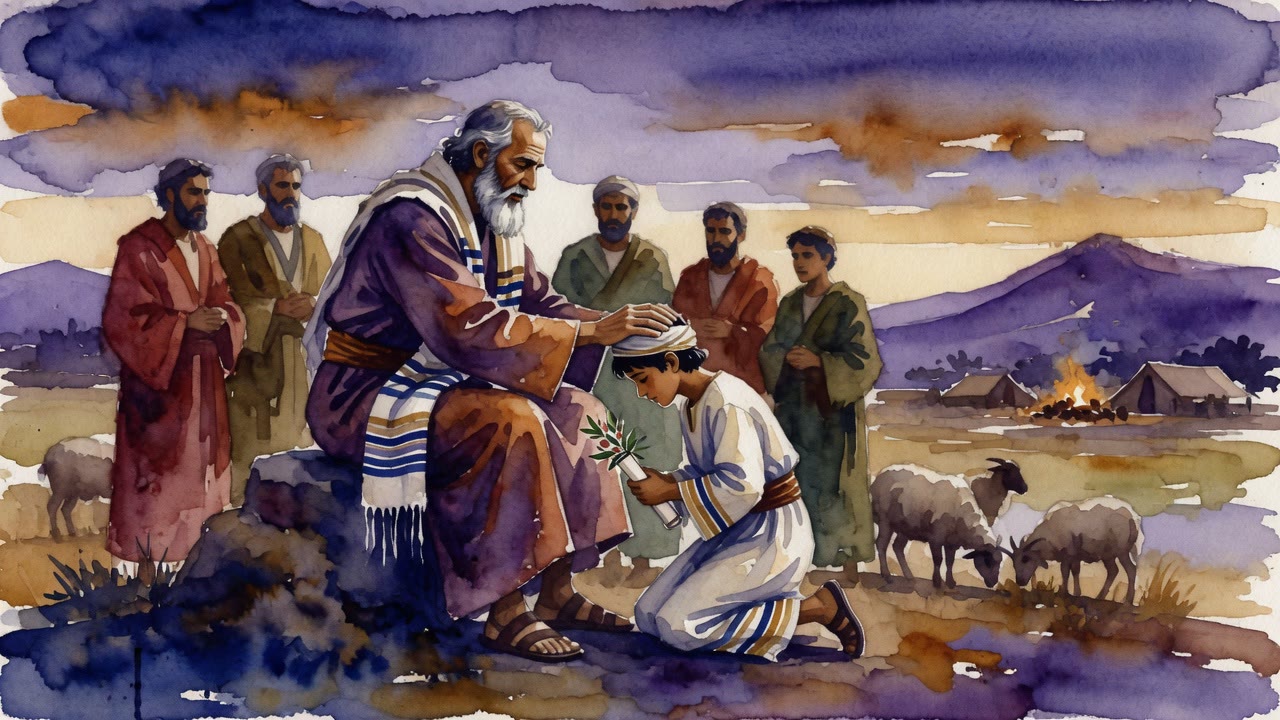
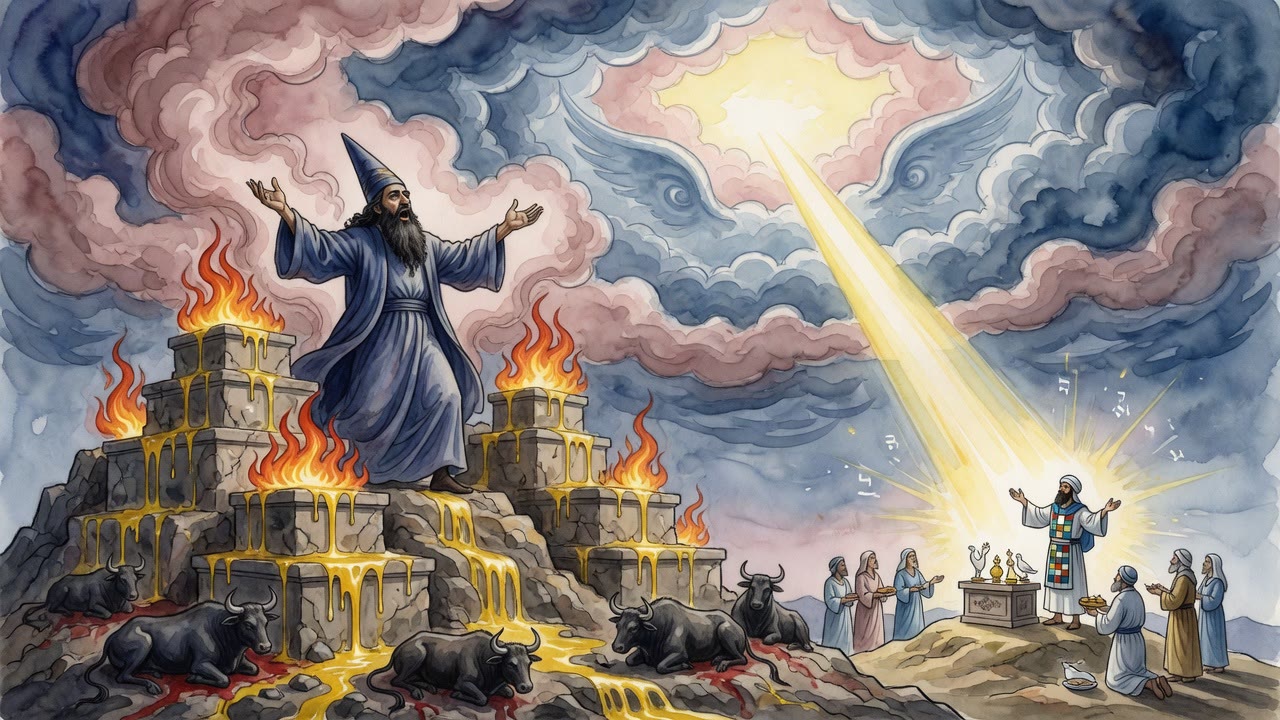
An idolater found Rabbi Meir and smiled the smile of a man who thinks he has already won. Market noise around them, students nearby, a public stage without a curtain. "The first issue of your donkey, with what is it redeemed?" The law of the firstborn donkey is odd enough to trip a teacher who bluffs, and the challenger wanted bluff.
Rabbi Meir Told the Idolater How to Redeem a Firstborn Donkey Click for full size

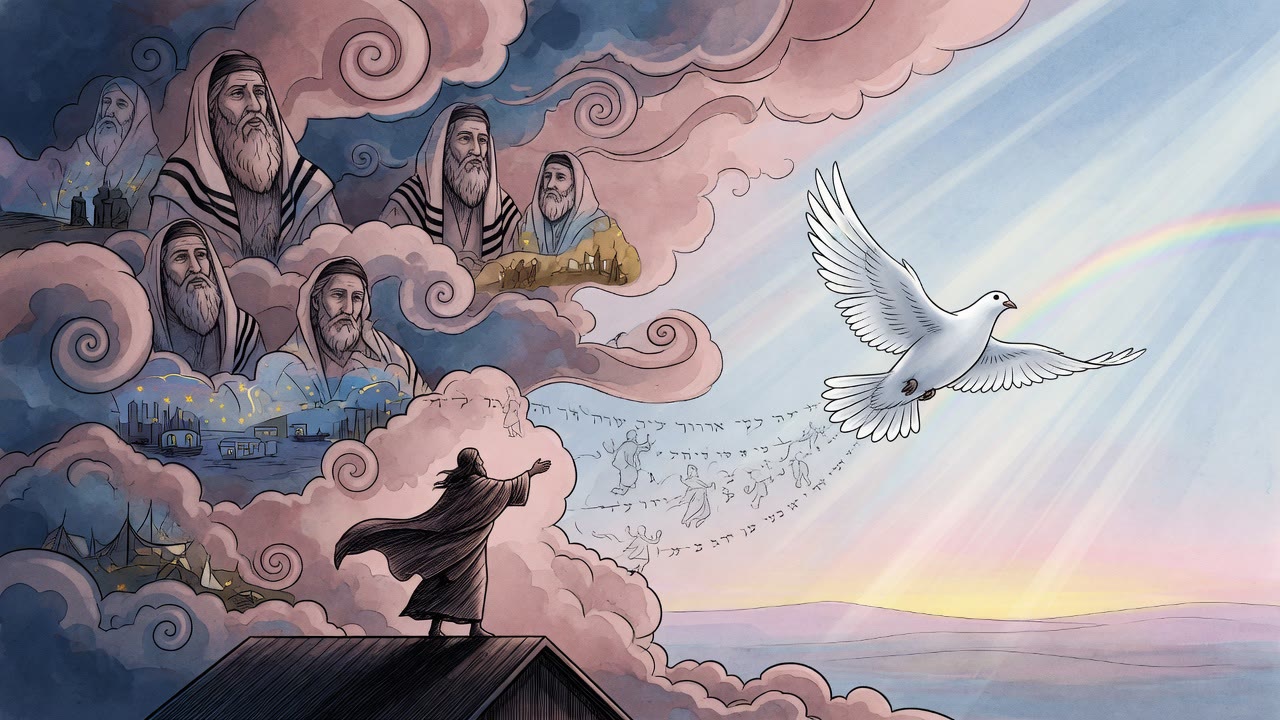
Rabbi Meir did not bluff. He answered from the verse: "The first issue of a donkey you shall redeem with a lamb" (Exodus 34:20). A seh, a lamb, stands in for the unclean firstborn. The trap closed on empty air. The donkey stays in its category. The lamb crosses the hand as price and symbol.

A few listeners would have laughed. Rabbi Meir did not need the laugh. He needed the verse to stand.

Pressure Without Panic

The idolater pressed again, turning the law like a knife, looking for a seam where Jewish practice would look arbitrary or cruel. Each time Rabbi Meir met him with Scripture, not swagger. The midrash lingers on the pace of it. This was not a brawl. It was a man who lived inside the verses answering a man who wanted the verses to look foolish in front of a crowd.

Around them, students leaned in. An attack on a "small" law is never small. If the donkey-redemption collapses, the mouth that keeps all the other firstborn laws starts to shake. If one odd corner falls, the whole wall is invited to follow. Rabbi Meir treated the odd corner as load-bearing and held it.

The Samaritan and Jacob's Tithe

Then a Samaritan took a different angle, aiming not at a donkey but at Jacob himself. "Do you not say that Jacob is truthful, as it says, 'Give truth to Jacob'?" (Micah 7:20). Rabbi Meir agreed. The Samaritan struck. Jacob vowed, "Of all that You give me I will surely give a tenth to You" (Genesis 28:22). He set aside Levi. Were there not twelve tribes? Was the patriarch shorting Heaven with clever accounting?

Rabbi Yehoshua of Sikhnin in the name of Rabbi Levi rose to Jacob's defense. Count Ephraim and Manasseh, the sons of Joseph whom Jacob lifted to tribal rank (Genesis 48:5). The household was not a simple twelve when the vow came due. The arithmetic of holiness is not always the arithmetic of a taunt shouted in the market.

Truth in Jacob survived the cross-examination. The Samaritan's cleverness spent itself on a ledger that did not match the family's real shape after Joseph's line split into two.

When Flesh Becomes Silver

The schools of the sages know how easily a verse that sounds like vengeance becomes a rule of payment. "Eye for eye" could be read as torn flesh matching torn flesh. The school of Rabbi Ishmael hears "giving" a blemish as handing over money. "Hand for hand" is a thing passed from hand to hand, which is payment.

Abaye and others show that literal blinding could kill a weak man, taking an eye and a life for an eye, two losses for one wound. The court weighs, appraises, and pays. It does not maim to prove it can read Hebrew.

Redemption of a donkey with a lamb sits in the same moral world. The Torah will not leave an unclean firstborn unaddressed, and it will not demand a theater of cruelty. A substitute moves across the hand. Value answers value.

The Teacher Who Would Not Be Stumped

Rabbi Meir walked out of the exchange with the donkey-law intact and Jacob's truth uncracked. The idolater and the Samaritan had wanted a public stumble. They received a clinic in how a sage stands: verse first, calm second, no need to mock the attacker into silence when Scripture already answers.

A firstborn donkey is a strange doorway into faith. Through it you can see a religion that redeems rather than discards, pays rather than mutilates, and defends the patriarchs with better math than the heckler brought.

Students who watched took home more than a ruling about livestock. They took a posture: when the question is a trap, still answer as if it were a real door into Torah, because sometimes the trap is the door, and walking through it upright is the whole teaching.

Do not wait for a cleaner stage. The thirst hits now. The cup is found now. The soft word lands now. The answer, if it comes, comes through a body that moves while the pressure is still on.


← All myths

From the tradition

Sources

2 sources

The texts behind this telling. Some cards carry a translation of the source; others are our own retelling of it, and each card says which. Every card links out to the original.

Bereshit Rabbah 70:7Bereshit Rabbah

Retold in our words. Read the original at the link below.The Sefaria Midrash Rabbah, 2022 · CC-BY

Seems straightforward. But a curious question arises, a question that leads us into a fascinating rabbinic debate found in Bereshit Rabbah 70.

The scene opens with an idolater trying to stump Rabbi Meir with a question about redeeming a donkey's firstborn. "The first issue of your donkey, with what is it redeemed?" he asks. Rabbi Meir, quick on his feet, quotes (Exodus 34:20): "The first issue of a donkey you shall redeem with a lamb [seh]." The conversation continues, with the idolater pressing Rabbi Meir, and Rabbi Meir deftly navigating each challenge with further scriptural prooftexts. It's evidence of Rabbi Meir's sharp wit and deep knowledge. But that's just the appetizer.

The main course comes when a Samaritan confronts Rabbi Meir. This time, the question digs into the very integrity of Jacob himself. The Samaritan asks: "Do you not say that Jacob is truthful, as the verse says 'Give truth to Jacob'?" (Micah 7:20). Rabbi Meir, of course, agrees. But then comes the zinger: "But did he not say: 'Everything that You will give me I will tithe to You'?"

Here's where it gets interesting. The Samaritan points out that Jacob only separated the tribe of Levi as a tithe. But were there only ten tribes to tithe from? If you count all twelve, shouldn't Jacob have set aside closer to 1.2 tribes? Was Jacob, dare we say, fudging the numbers?

Rabbi Yehoshua of Sikhnin, quoting Rabbi Levi, steps in to defend Jacob. He responds by pointing out that there weren't just twelve tribes. Remember Ephraim and Manasseh, the sons of Joseph? (Genesis 48:5) tells us that Jacob adopted them, declaring, "Ephraim and Manasseh will be for me like Reuben and Simeon." So, fourteen tribes. But the Samaritan is relentless. "All the more so," he argues, "if you add water, add flour!" In other words, adding more tribes should mean an even bigger tithe!

Rabbi Meir, however, has one final, brilliant counter-argument. He points out that there were four matriarchs. The firstborn is considered sacred, and sacred things don't produce more sacred things. So, we deduct one tribe for the firstborn of each matriarch. That brings us back to ten tribes, making Levi a perfect tithe!

It's a clever solution, relying on both textual interpretation and a bit of theological reasoning. The Samaritan is so impressed that he exclaims, "Happy are you, and happy is your nation, that you are found in its midst!"

So, what do we take away from this? It's more than just a clever debate. It shows us how the rabbis grappled with difficult questions, using their knowledge of Torah and tradition to find meaning and defend the integrity of our ancestors. And sometimes, the most profound insights come from the most unexpected places.

Full source
Yalkut Shimoni on Torah 338:1Yalkut Shimoni on Torah

Translation of the source text.Torat Emet (Yalkut Shimoni) · CC-BY-NC

The school of Rabbi Ishmael taught: Scripture says "if he cause a blemish" (Leviticus 24:19) -- "giving" means nothing other than money. But then "as he caused a blemish in a man" would also mean money, yet that is bodily injury! The school of Rabbi Ishmael expounds a superfluous verse: since it is written, "and if a man cause a blemish in his neighbor, as he has done... so shall it be done to him," why do I need "so shall it be given"? Learn from it: money. Why do I need "as he caused a blemish in a man"? Since it wished to write "so shall it be given," it also wrote "as he caused a blemish in a man." The school of Rabbi [Hiyya] taught: Scripture says "hand for hand" (Deuteronomy 19:21), a thing given from hand to hand -- and what is that? Money. But then "foot for foot" would also be so, yet [that is bodily]! The school of Rabbi Hiyya expounds a superfluous verse: since it is written, "and you shall do to him as he purposed" (Deuteronomy 19:19), and if it should enter your mind that it is literal, why do I need "hand for hand"? Learn from it: money. Why "foot for foot"? Since it wrote "hand for hand," it wrote "foot for foot." Abaye said: it comes from what the school of Hezekiah taught: "an eye for an eye" -- and not an eye and a life for an eye; for if it should enter your mind that it is a literal eye, sometimes you would find an eye and a life for an eye, for while blinding his eye his soul departs. And what is the difficulty? Perhaps we assess him: if he can withstand it, we do it; if not, we do not. And once we assessed that he can withstand it and we did it and his spirit departed, if he dies, let him die -- did we not learn: if they assessed him and he died under his hand, he is exempt? (Exodus 21:25) Rav Zevid in the name of Rava said: Scripture says "wound for wound," to give pain in place of damage; for if it should enter your mind that it is literal, just as this one had pain, and so on. And what is the difficulty? Perhaps there is a delicate person who has more pain; what is the practical difference? To give him the difference between them. Rav Papa in the name of Rava said: Scripture says "and he shall surely heal" (Exodus 21:19), to give healing in place of damage; for if it should enter your mind that it is literal, just as this one needs healing, and so on. What is the difficulty? Perhaps there is a person whose flesh heals quickly and one whose flesh does not heal quickly; what is the practical difference? To give him the difference between them. Rav Ashi said: it comes by analogy of "in place of" with "in place of": it is written here "an eye in place of an eye," and it is written there "because (in place of which) he humbled her" (Deuteronomy 22:29); just as there it is money, so too here it is money. It was taught: Rabbi Eliezer says: "an eye for an eye" -- literal. Literal, can it enter your mind? Does Rabbi Eliezer not hold like all those Tannaim? Rather, it means that we assess [the value] not by the injured party but by the one who caused the injury. Rabbi Yitzchak said: it says, "if a ransom be laid upon him" (Exodus 21:30), and behold the matter is an inference from minor to major: if where it imposed death it imposed only money, here where it did not impose death, all the more so it should impose only money. Rabbi Eliezer says: "an eye for an eye" -- I might understand, whether intending or not intending, he pays only money; therefore Scripture excludes the one who intends to cause a blemish, that he pays only money, as it is said, "and if a man cause a blemish in his neighbor" (Leviticus 24:19), a general statement; "an eye for an eye," a specific; in a specific-and-general there is in the general only what is in the specific; when it says "as he caused a blemish in a man" (Leviticus 24:20), it generalized again. If general like the first general? You say no; rather it is general-specific-general, and you judge only according to the specific: just as the specific spells out fixed blemishes, chief limbs, visible, and intentional, paying only money, so all such cases; Scripture says "as he cause a blemish," [teaching] until he intends to cause him a blemish.

Full source