Joshua Spared Rahab Whose Descendant Jeremiah Later Pricked Israel
A scarlet cord hung in a window while Jericho's walls still smoked. Rahab's household walked out past soldiers ordered to leave no survivor.
Table of Contents
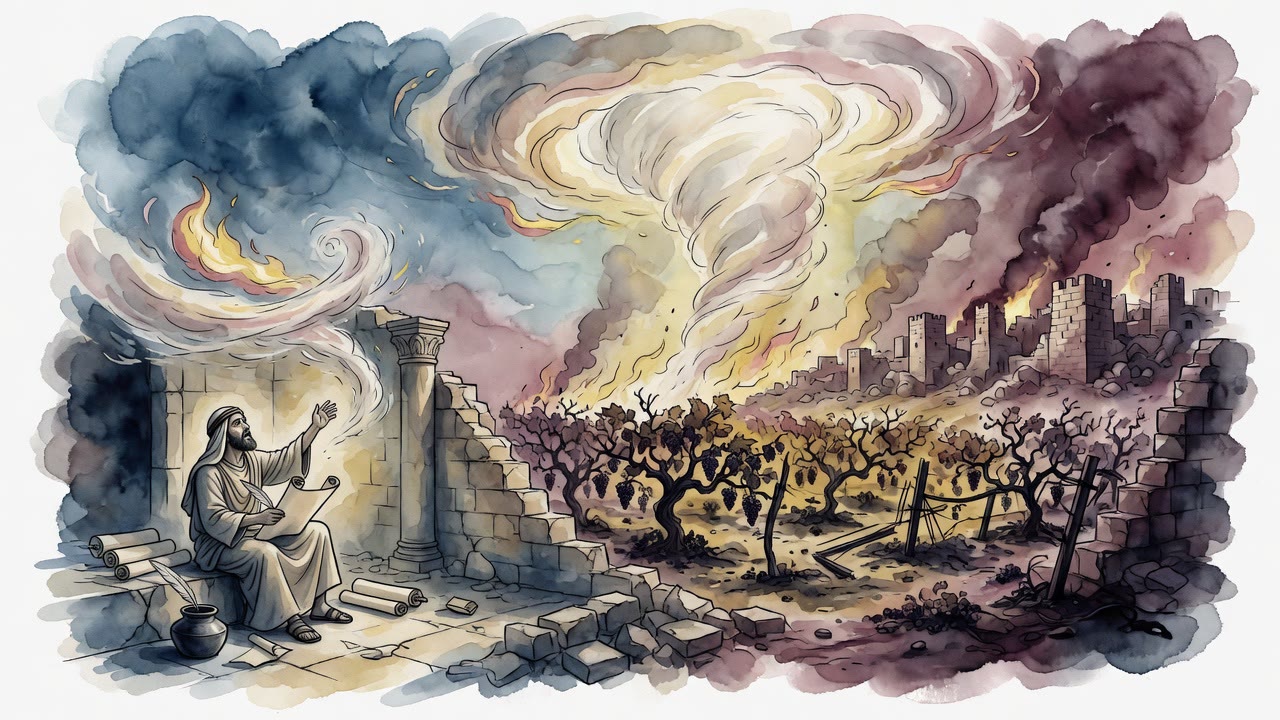
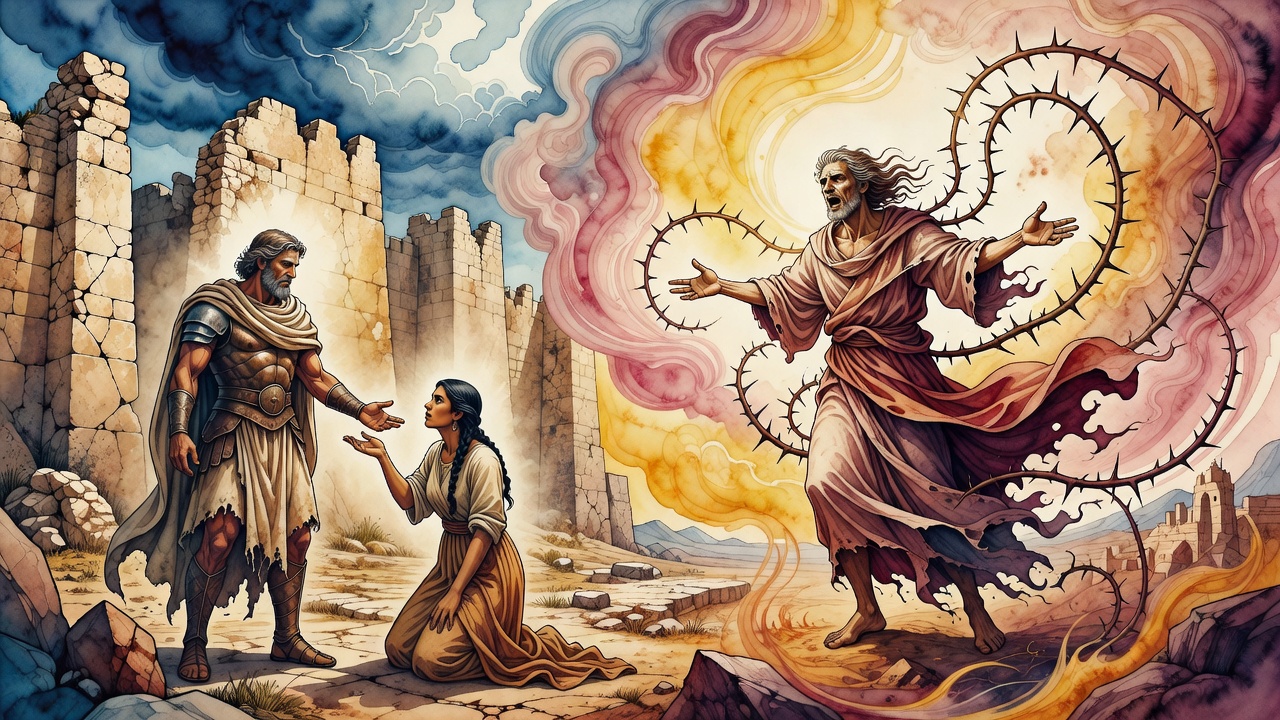
Joshua stood in the dust of Jericho while the walls still smoked and chose not to finish one house. A scarlet cord marked the window. Inside waited Rahab, the woman who had hidden the spies and extracted an oath with a hard, clear voice. Israel had been told to drive out the land's inhabitants lest they become pricks in the eyes and thorns in the sides. Joshua kept the oath anyway.
 Click for full size
Mercy saved a household. Mercy also planted a seed with thorns.
The Oath That Would Not Burn
The spies had sworn. Joshua honored the swear. Rahab and her whole household walked out of a city under the ban, alive because loyalty had been paid in full. The rabbis refuse to call her a mistake. She was righteous. The scarlet cord was not a loophole. It was a covenant on a windowsill.
Still the old wilderness warning did not sleep. Leave people behind, Moses had said, and they will become thorns. Israel left more than one enclave unconquered. Rahab's case is the one the midrash follows down the centuries, because her line did not fade into quiet neighbors.
The Prophet Who Pricked
From Rahab's descendants, tradition says, came Jeremiah. He did not arrive as a soft comforter. He arrived as a man whose words pressed into flesh. "The words of Jeremiah" open his book on purpose, the sages teach: words that stung, words that would not let Israel sleep, words like thorns in the side Moses had named long before Jericho fell.
The irony is almost cruel. The household spared by mercy became, generations later, the source of a prophet whose hard speech felt like the very punishment for incomplete conquest. A kindness in Joshua's day returned as a goad in Jeremiah's.
Benjamin, the Last, and the End
Jeremiah came from Benjamin, and the tribe mirrored his life. Jacob was not fully blessed as father of twelve until Benjamin, the last son, was born. So the prophecies over Jerusalem only came clear once Jeremiah rose to give them a throat.
The parallel turns sharp. As long as Benjamin stayed in Rachel's womb she lived, and the moment he was born she died. As long as Jeremiah remained inside Jerusalem the city was not destroyed, and once he left it, it fell. The prophet felt the cruelty. You enticed me, he told God. Only yesterday You told me to buy my cousin's field as a sign of return, and now You have overpowered me and drawn me out while the city burns behind my back.
Last of the Prophets, Last of the Words
Benjamin was the last of the tribes in the birth order of the house. Jeremiah, the rabbis said, was in a sense the last of the prophets. What of Haggai, Zechariah, and Malachi? One sage called them prophets of a brief season. Another said the charge had simply been handed on, a torch already lit.
Most prophets end in comfort. Jeremiah's book ends with Babylon sinking and not rising. Rabbi Yohanan insists that is comfort too: the last image is not the Temple's fall but the fall of those who destroyed it. A terrifying close can still aim outward. Just before the rejection-sounding end sits the plea, "Return us," and the midrash will not let that plea be forgotten.
Thorns That Were Also a Gift
Rahab's window and Jeremiah's mouth belong to one story if you stand far enough back. Mercy that spares a life can still fulfill a warning. A prophet from Benjamin can be both wound and medicine. Israel needed the thorn as much as Jericho needed the cord.
Joshua's hand stayed the sword for an oath. Centuries later a voice from that spared line would not stay quiet. The book that opens with "the words of Jeremiah" is the sound of thorns doing their work until a people that would not listen finally heard something it could not ignore.
What Mercy Plants
Rahab's household walked out past soldiers who had orders to leave no survivor. Children clung to her skirts. The scarlet cord still hung in the window behind them like a second pulse. Joshua's men had seen enough blood for one day. They kept the oath with the same hardness they had used to keep the ban on the rest of the city.
Years would turn into generations. The spared line would not remain a footnote in Jericho's rubble. When Jeremiah finally stood in the Temple courts with a yoke on his neck and a message no one wanted, some remembered, or the midrash remembered for them, that thorns can grow from a garden planted in mercy. Moses had warned about unfinished conquest. Joshua had finished one house differently. Both acts were true at once.
Benjamin's prophet did not soften his mouth to make the ancestry prettier. He bought the field. He was dragged. He watched the city he loved learn that a last prophet's departure can feel like a mother's death at a last son's birth. The thorn and the cord remain two ends of one rope. Pull either end and the other tightens.
← All myths