5 min read

Jacob Tried to Name the Hidden End of Days

On his deathbed Jacob opened his mouth to tell his sons when redemption would come. Heaven closed the words before they left his tongue.

Curated by Arthur · Told by Maggid ·
Table of Contents
  1. No Gap on the Scroll
  2. Three Readings of the Seal
  3. Death Softened Even for God
  4. Benjamin the Wolf
  5. What Left His Mouth
Jacob Tried to Name the Hidden End of Days Click for full size

No Gap on the Scroll

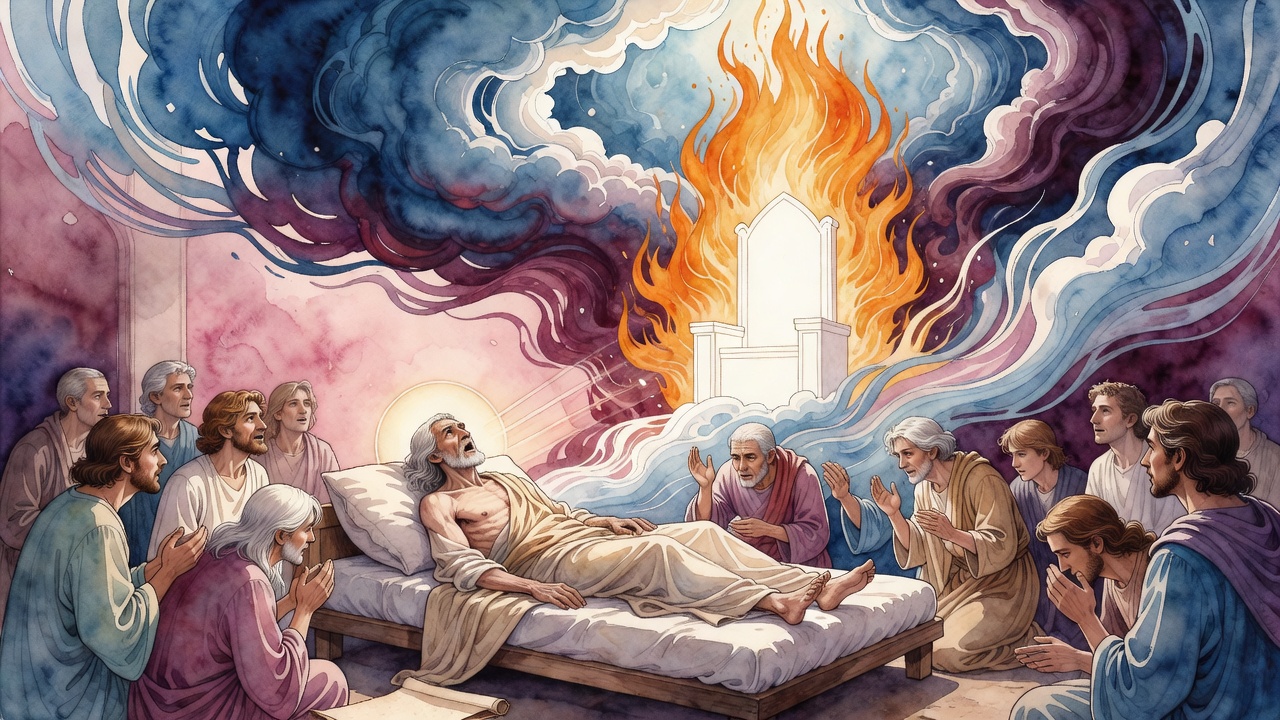
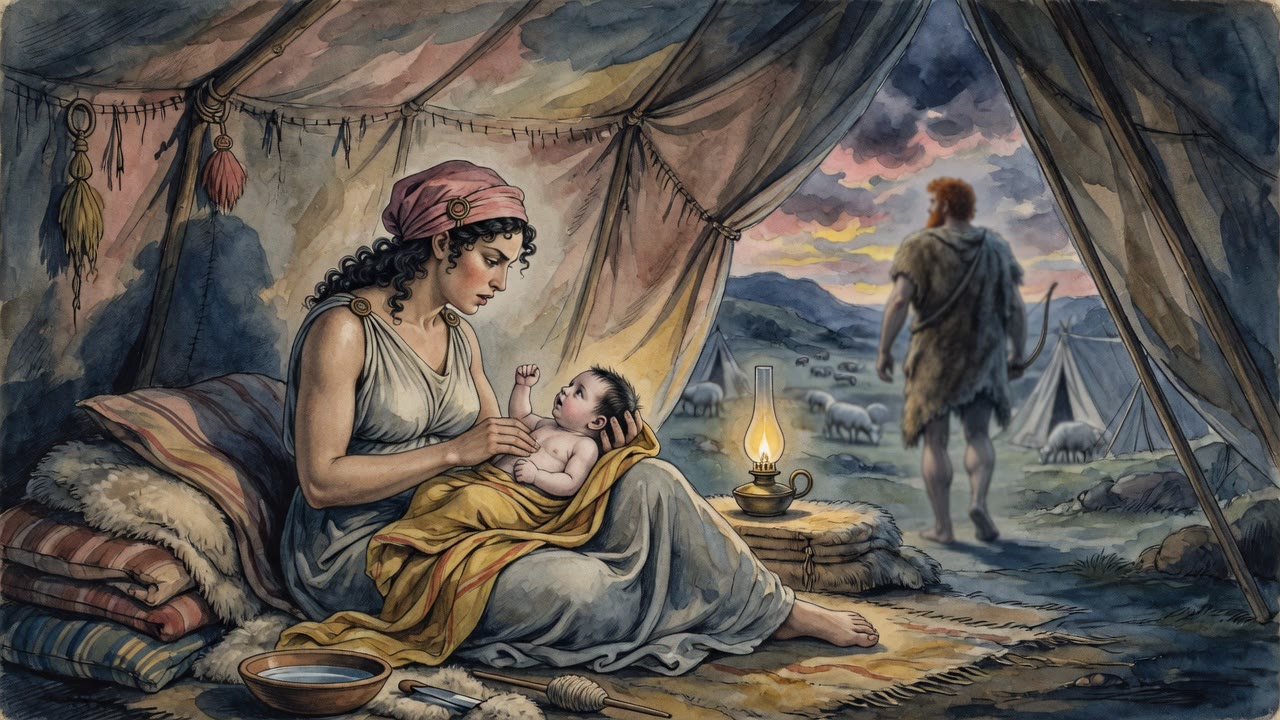
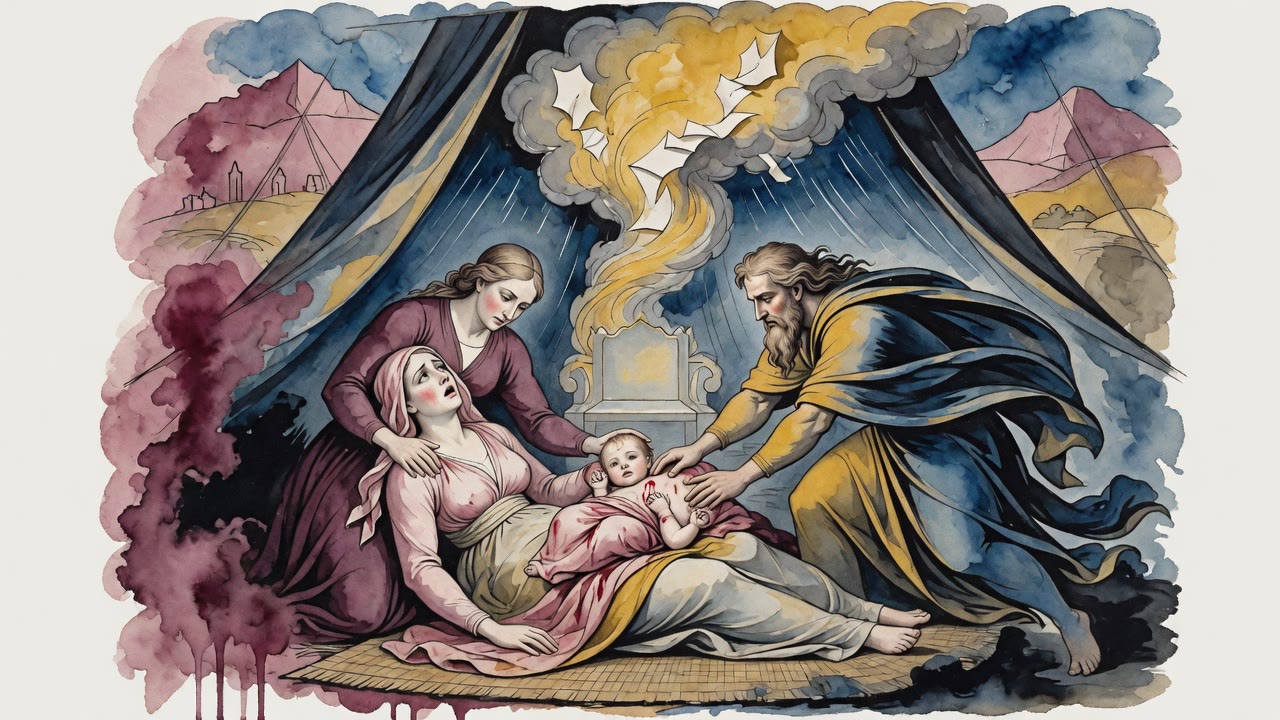
On the bed in Egypt, Jacob felt a seam close inside his chest before any scribe would later refuse a white space on the scroll. The portion called Vayechi would run without a clean break, previous words sewn into the next as if heaven itself had closed the gap. His sons stood near. The air smelled of linen and old spice. He had blessings ready, animals and images, futures shaped like lions and wolves. He also had one secret he meant to give them whole: the date of the end, the hour of final redemption.

He opened his mouth. The words did not come.

Heaven sealed them. The portion on the scroll stays closed because the mouth of the patriarch was closed first.

Joseph leaned closer, expecting the kind of precision his father had always managed under pressure. Jacob's eyes stayed clear. His tongue simply would not carry the calendar of the end.

Three Readings of the Seal

The rabbis give three reasons for the sealed opening, each darker than a habit of scribes.

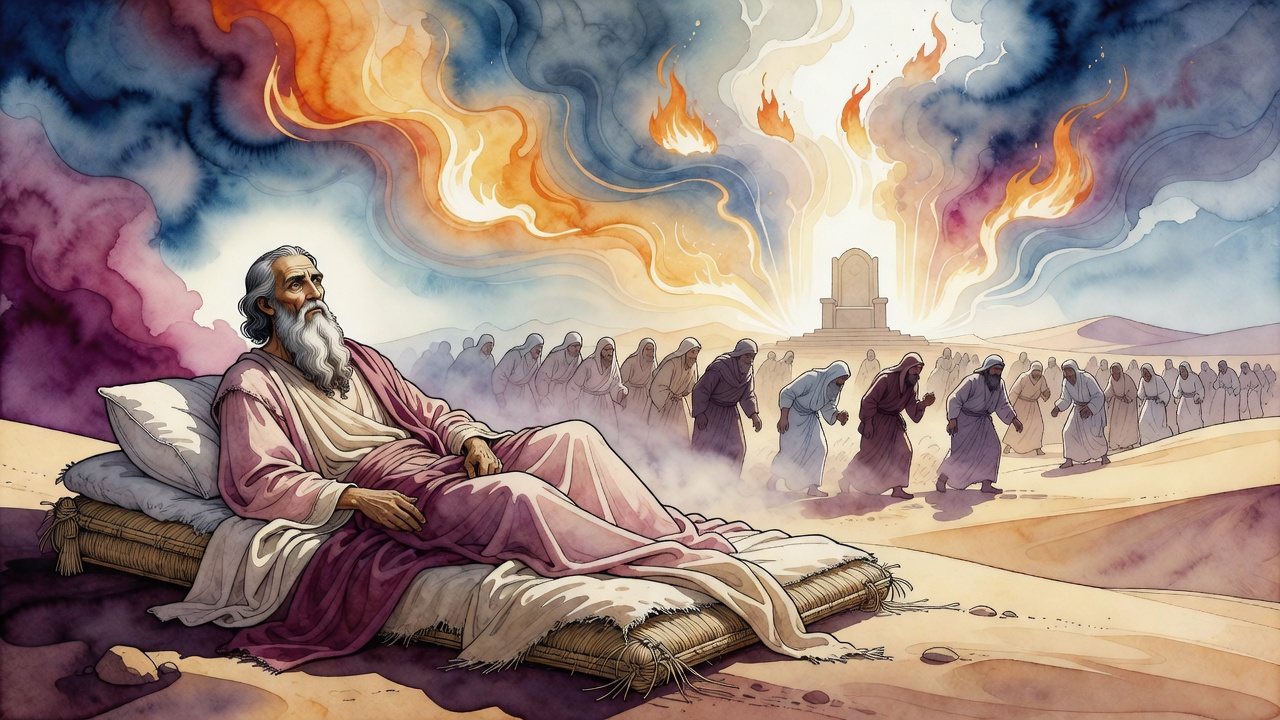
First: when Jacob died, Egyptian bondage clamped down on his children. The text mirrors a fate that locked. The house of Israel would learn the weight of brick and quota. The closed portion is that clamp made visible in letters.

Second: Jacob tried to reveal the End of days, and the secret was taken from him before speech could carry it. Redemption's clock is not a family heirloom. Sons may inherit flocks and names. They may not inherit the hour.

Third, almost merciful: all the troubles destined for the world were hidden from him so the dying father would not have to see them. The seal can be kindness as well as refusal. A man who has already buried Rachel and feared for Benjamin does not need a full gallery of future ruins on his last afternoon.

Jacob lay between those readings. He could still bless. He could not schedule the dawn.

Death Softened Even for God

"Precious in the eyes of the Lord is the death of His faithful ones." The psalm is read tenderly. It is hard, even for God, to pronounce a death sentence over the righteous. When Moses later reached his end, Scripture would not say bluntly that he would die. It spoke of days drawing near. The same gentleness surrounds Jacob.

In the room, the sons waited for final instructions. Jacob's breath shortened. God did not rush the moment. The seal on the End and the soft edge on death arrived together. Some knowledge is withheld. Some partings are slowed.

Jacob turned from the closed future to the open faces of his children. That turning was itself a kind of teaching. When the calendar is refused, look at the people who must live without it.

A servant shifted a lamp. Light moved across the bedclothes. Jacob used the light for faces, not for dates.

Benjamin the Wolf

"Benjamin is a wolf that raveneth" (Genesis 49:27). The blessing sounds like teeth. Midrash hears more. God does nothing without revealing counsel to those who fear Him, then to the righteous, then to the prophets. Acts of the righteous move by the Divine Spirit.

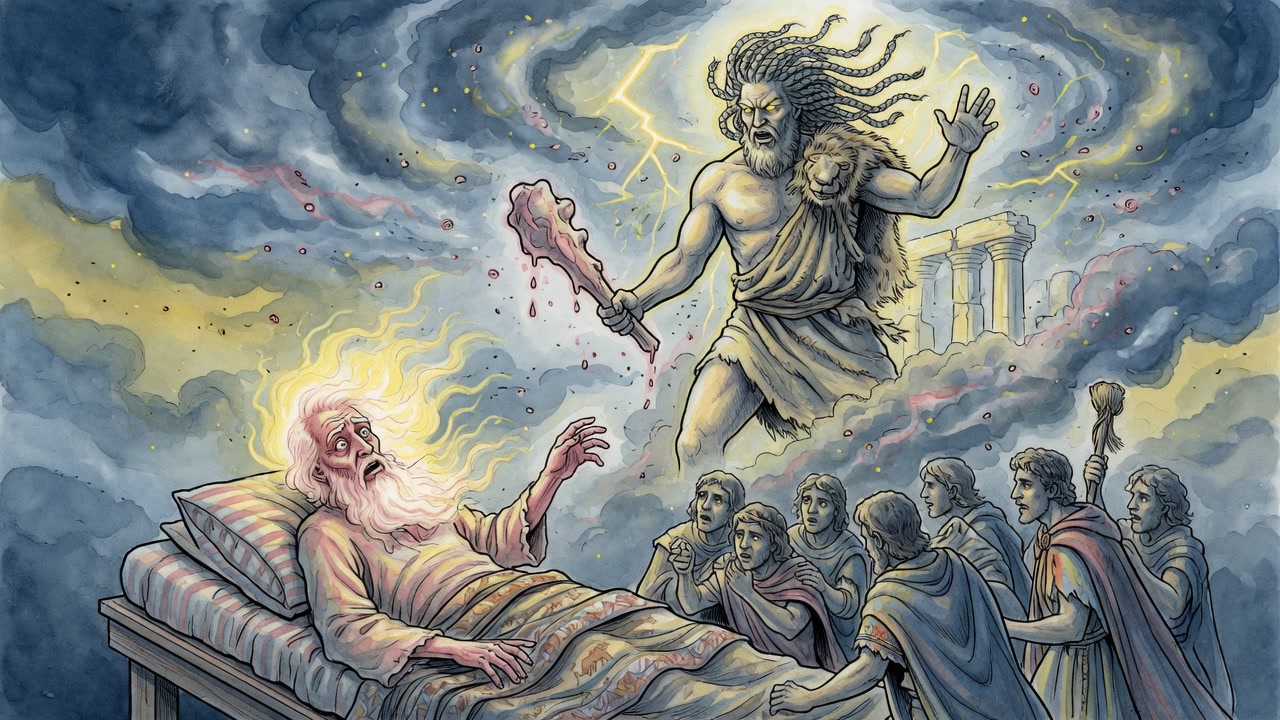
Jacob had already likened Judah to a lion's whelp and set him against kingdoms. He coupled tribes to empires the way a strategist pairs forces. Benjamin, the wolf, is set against Media. Later, Mordecai of Benjamin would exact retribution from that power. The wolf seizes prey and divides spoil at evening. The blessing is not random ferocity. It is a future already pointed.

Daniel and his companions would face the lion empire of Babylon. Levi's line would rise against Greece in the days of the Hasmoneans. Jacob and Moses together, in the midrash's long memory, arrange the board. Jacob could name the animal. He could not name the final hour when all animals of empire would lie down.

Benjamin stood small among the brothers and received a large future. The wolf does not apologize for hunger aimed at the right throat.

What Left His Mouth

He spoke tribe by tribe. Lion. Wolf. The room filled with images that would outlive him. Egypt waited outside the door with its own long night. Bondage would come. The seal had already said so without words.

When the last blessing fell quiet, Jacob gathered his feet into the bed and was gathered to his people. The sons closed his eyes. Somewhere a scribe, centuries later, would refuse a gap before Vayechi so that readers would feel the closed throat of that hour.

The End stayed sealed. The blessings stayed open. Israel would walk into slavery with animal names for courage and no calendar for redemption, only the promise that the One who seals also opens in His time.

On the scroll the letters still run without a break. On the bed the father still fails to speak the date. Between those two closures, a people learns to live by blessing when the clock is refused.

Outside, Nile air moved through the palace corridors. Inside, twelve futures breathed and did not know which empire would come first. They only knew their father's hand had been warm, and then still, and that heaven had kept one secret even from him.


← All myths
From the tradition

Sources

2 sources

The texts behind this telling. Some cards carry a translation of the source; others are our own retelling of it, and each card says which. Every card links out to the original.

Yalkut Shimoni on Torah 154:2Yalkut Shimoni on Torah

Translation of the source text.Torat Emet (Yalkut Shimoni) · CC-BY-NC

Portion of Vayechi. (Genesis 47:28) "And Jacob lived in the land of Egypt seventeen years." Why is this portion more closed (setumah) than every other portion in the Torah? Because once Jacob our father passed away, the bondage began. Another interpretation: because Jacob our father sought to reveal the End [of days], and it was sealed (nistam) from him. Another interpretation: because all the troubles of the world were sealed away from him.

(Genesis 47:29-31) (Written in remez 141.) "Precious in the eyes of the LORD is the death of His faithful ones" (Psalm 116:15). It is difficult before the Holy One, blessed be He, to decree death upon the righteous. Thus Scripture could have said to Moses, "You are to die," but it did not say so; rather it linked the death to days, "Behold, your days draw near to die" (Deuteronomy 31:14). And so too with Jacob.

Full source
Midrash Tanchuma, Vayechi 14Midrash Tanchuma

Retold in our words. Read the original at the link below.Townsend 1989 translation of Midrash Tanhuma, S. Buber Recension · CC-BY

Benjamin is a wolf that raveneth (Gen. 49:27). Scripture states elsewhere: For the Lord will do nothing, but He revealeth His counsel unto His servants the prophets (Amos 3:7). At first He revealed His counsel to those who feared him, as is said: The counsel of the Lord is with them that fear him (Ps. 25:14). Later He disclosed it to the righteous, as is said: But His counsel is with the righteous (Prov. 3:32). Finally He revealed it to the prophets, concerning whom it is said: But He revealeth His counsel unto His servants the prophets (Amos 3:7).

All acts of the righteous are performed through the inspiration of the Divine Spirit. When Jacob blessed Judah, he likened him to a lion, as is said: Judah is a lion’s whelp (Gen. 49:9). He thus coupled him with the kingdom of Babylon, about which it is said: The first was a lion (Dan. 7:4). Hence Daniel, Mishael, Hananiah, and Azariah fought against Babylon. He also coupled Joseph with the kingdom of Edom.

R. Samuel the son of Nahman stated: There is a tradition that Esau will be subjugated by the descendants of Rachel, as it is said: Surely the least of the flock shall drag them away (Jer. 49:20).

Moses coupled the tribe of Levi with the Macedonian Greek Empire. The Hasmoneans were descended from the tribe of Levi, the third tribe, and Greece was the third empire (in Daniel’s vision). The word Levi in Hebrew has three letters (i.e., consonants), and (similarly) the word for Greece (yavan) has three letters. One sacrificed oxen, and the other wrote with the horn of an ox, but had no share in (i.e. did not believe in) the God of Israel. One was numerous, and the other few in number. Moses saw them and blessed them: Bless, Lord, his substance (Deut. 33:11).

He pitted Benjamin against the kingdom of Media. And thus Mordecai, who was of the tribe of Benjamin, exacted retribution from it. It is written: And behold, another beast, a second, like to a wolf (Dan. 7:5). This alludes to the kingdom of Media, which He turned against the tribe of Benjamin, which is also compared to a wolf, as it is said: Benjamin is a wolf that raveneth (Gen. 49:27). What is the meaning of a wolf that raveneth? Just as a wolf seizes its prey, so the tribe of Benjamin seized its prey, as it is said: And see, and behold, if the daughters of Shiloh come out to dance in the dances, then come ye out of the vineyards, and catch you every man his wife (Judg. 21:21). Hence, just as a wolf seizes its prey hungrily, so too did the tribe of Benjamin.

In the Book of Judges, it is written concerning Ehud: And Ehud made him a sword which had two edges (ibid. 3:16). This indicates that he would have a share in two worlds because he had studied the law, about which it is stated: A two-edged sword in their hand (Ps. 149:6). Hence he was privileged to enjoy the fruits of this world and the hereafter.

He went in to Eglon, and said: “I have a message from God unto thee.” And he arose out of his seat (Judg. 3:20). The Holy One, blessed be He, said to him: You honored Me by arising from your throne; be assured, I will cause your daughter to rear a son who will sit on My throne. This refers to Ruth the Moabitess, from whom Solomon descended. Solomon sat on the throne of the Lord as king (I Chron. 29:23). What is written about Ehud? And Ehud put forth his left hand, and took the sword from his right side, and thrust it into his belly (Judg. 3:21). In the morning he devoureth prey (Gen. 49:27) alludes to the fact that he thrust the sword into his belly; and at even he divideth the spoil refers to the land which he took as spoil.

Benjamin is a wolf that raveneth. This refers to the fact that his land produced early crops. Hence, In the morning he devoureth prey, at even he divideth spoil refers to Beth-El, where the fruit ripens late.

Benjamin is a wolf that raveneth. This alludes to Saul. For in the morning he devoureth prey, as it is said: So Saul took the kingdom over Israel, and fought against all his enemies on every side, against Moab, etc. (I Sam. 14:47). And at even divideth the spoil. Saul died, and his three sons … that same day together (ibid. 31:6). Hence, at even divideth the spoil.

Another comment on Benjamin is a wolf that raveneth. This alludes to queen Esther. In the morning he devoureth prey: And the king and Haman came to banquet (Est. 7:1). And at even he divideth spoil: For he hung Haman (ibid., v. 10). And after that is written: On that day the king Ahasuerus gave the house of Haman, the Jews’ enemy, unto Esther the queen (ibid., 8:1).

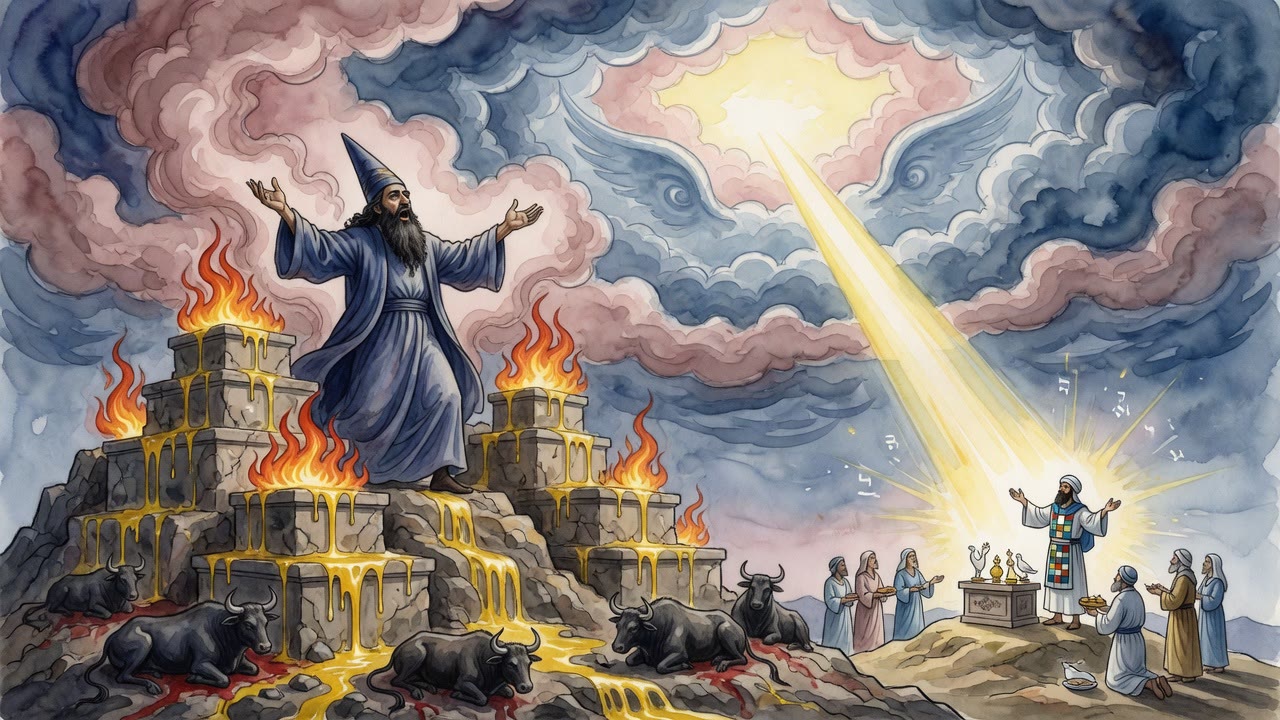
Another explanation of Benjamin is a wolf that raveneth. It alludes to sacrifice. In the morning he devoureth prey: The one lamb shalt thou offer in the morning (Exod. 29:39). At even he divideth the spoil: And the other lamb thou shalt offer at even (ibid.).

This verse also refers to the altar. Though it extended only a cubit’s length into the territory of Benjamin, the flame did not depart from his land. This was in fulfillment of the verse He covereth him all the day (Deut. 33:12).

Full source