The Raven That Told the Son When to Laugh
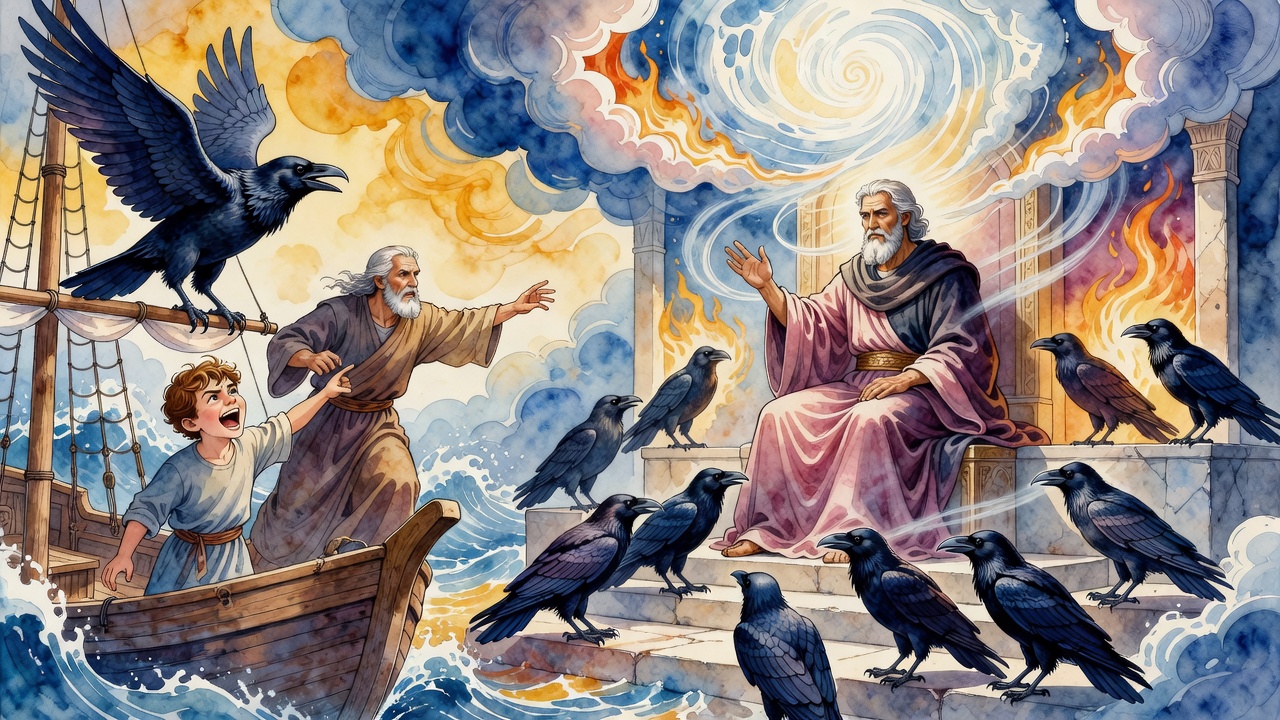
A raven landed on the gunwale and croaked. Only the son understood. His father heard mockery and called for the sea.
Table of Contents
The raven landed on the gunwale and croaked as if it had a case to argue. Water slapped the hull. A rich man sat with his only son in a small boat, heading home from the academy. The boy was eighteen when he first begged to go. Three times in three years he had returned with books and a sharper ear. Tonight the bird spoke a prophecy audible only to those who understood bird-speech.
 Click for full size
The son laughed aloud.
"Why are you laughing?" the father asked.
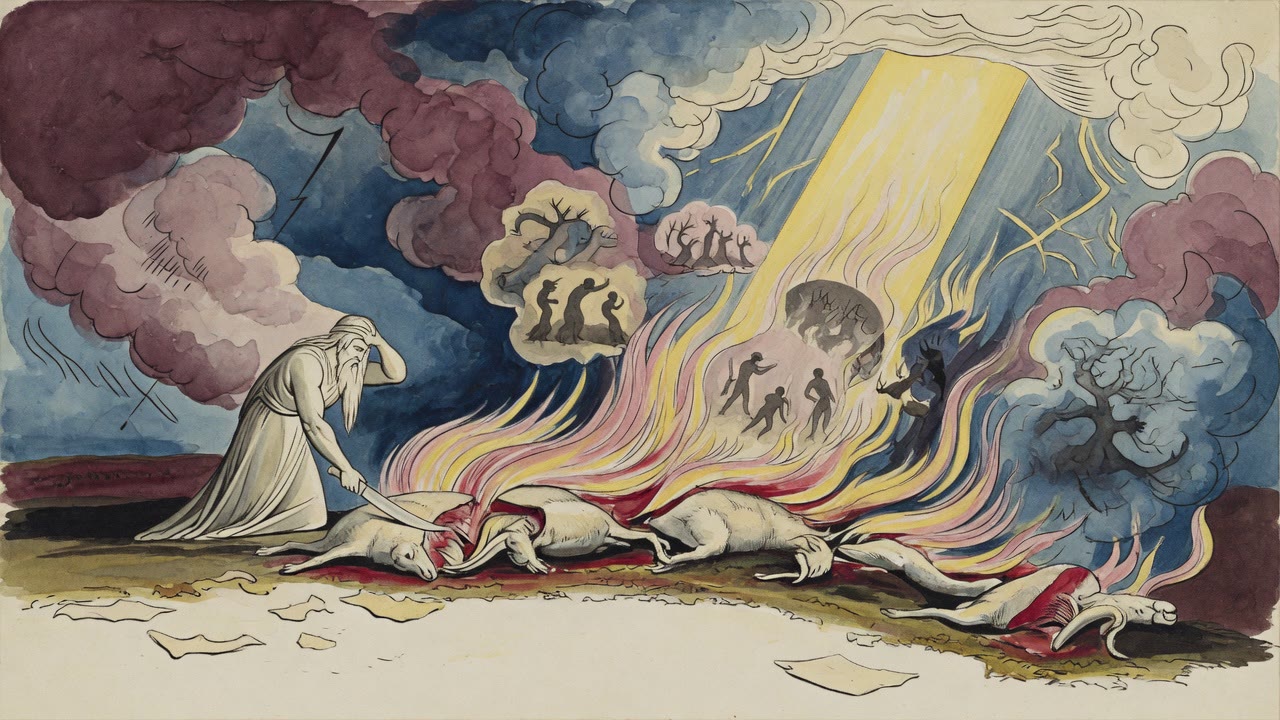
The son would not explain. The father heard contempt. His face darkened. He shouted. Hands grabbed the boy. The water closed over him.
A Fish and a Foreign Sky
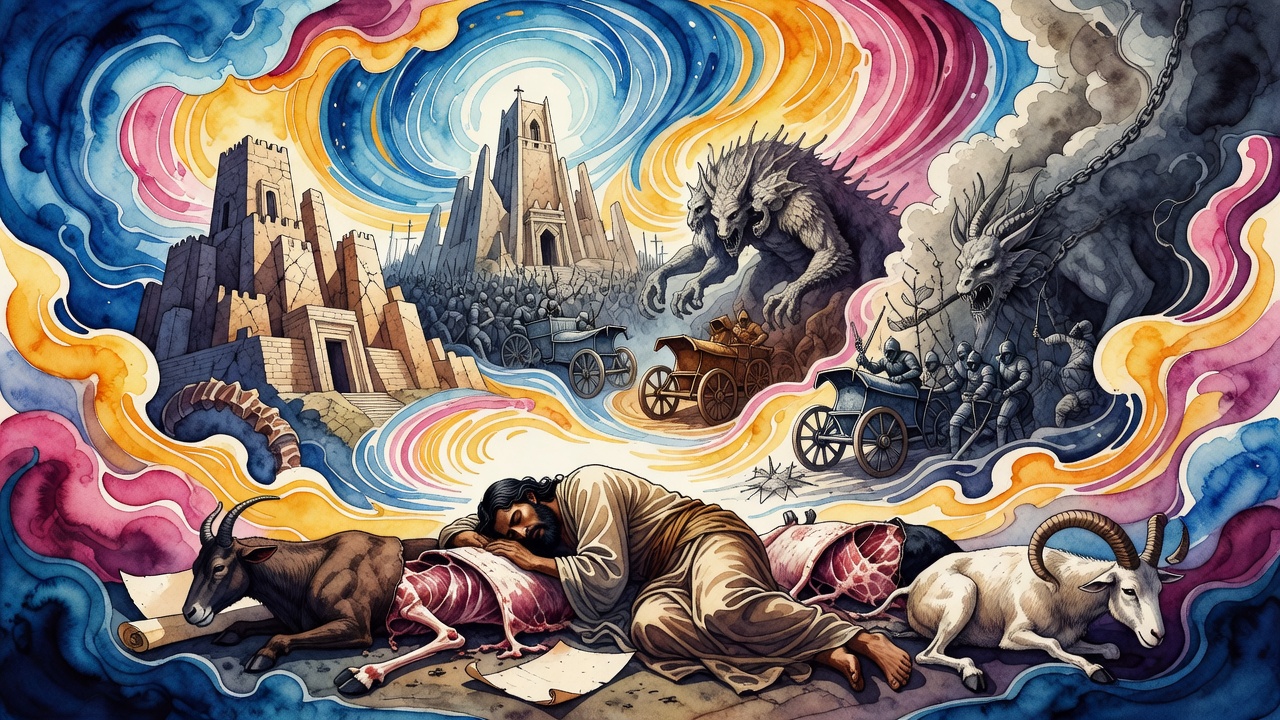
A great fish swallowed him and spit him out on a distant shore. He crawled onto sand he did not know. He became a shepherd under a foreign sky, still carrying a prophecy his father had not been ready to hear and a laugh that had cost him everything. The raven had said the father would become poor and then rich again. The son had laughed because he already heard the whole arc, and the father had heard only mockery.
He kept sheep. He slept on the ground. He did not tell the other shepherds that he had once owned books and a boat. When ravens passed over the flock he listened, and he did not laugh.
Two Ravens at Court
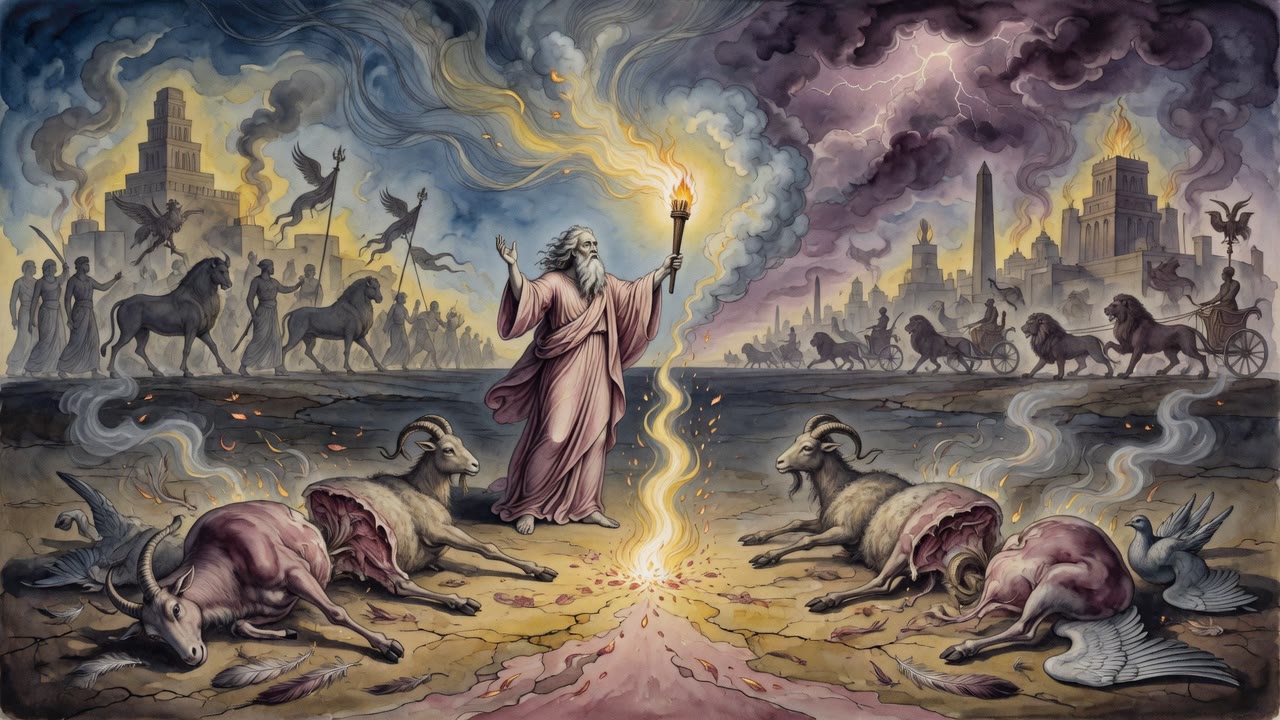
Meanwhile the father's prosperity collapsed. Far from that shore, ravens began appearing at the court of the king and would not leave. Courtiers guessed and failed. The king announced a reward, his daughter in marriage, to any man who could decode the birds. The young shepherd came forward from the fields with the dirt of exile still on his boots.
"Two ravens are in dispute," he said. "The first raven abandoned his wife during a famine. A second raven married her and supported her through hunger. Now that times are good, the first raven wants his wife back. They have come to you for judgment."
The king ruled. The wife belongs to the raven who fed her through the lean years. The first raven's claim was rejected. The other ravens in the court enforced the verdict by killing the faithless first husband. The young man married the princess. The language that once got him drowned had become the skill that made him a royal son-in-law.
The Wedding Feast of the Aged
On his wedding day he invited every elderly person in the kingdom to the feast. His own parents, now reduced to poverty, came among the aged guests. He recognized them. They did not recognize the shepherd under feast clothes and a new name. He made himself known. The original raven's prophecy fulfilled itself exactly. They were reunited, and the father understood, too late and then not too late, why his son had laughed on the boat.
Death and life are in the power of the tongue (Proverbs 18:21). A raven spoke. A father misread. A son fell overboard and rose as a prince. On the boat the father heard only mockery. In the palace the same gift became judgment.
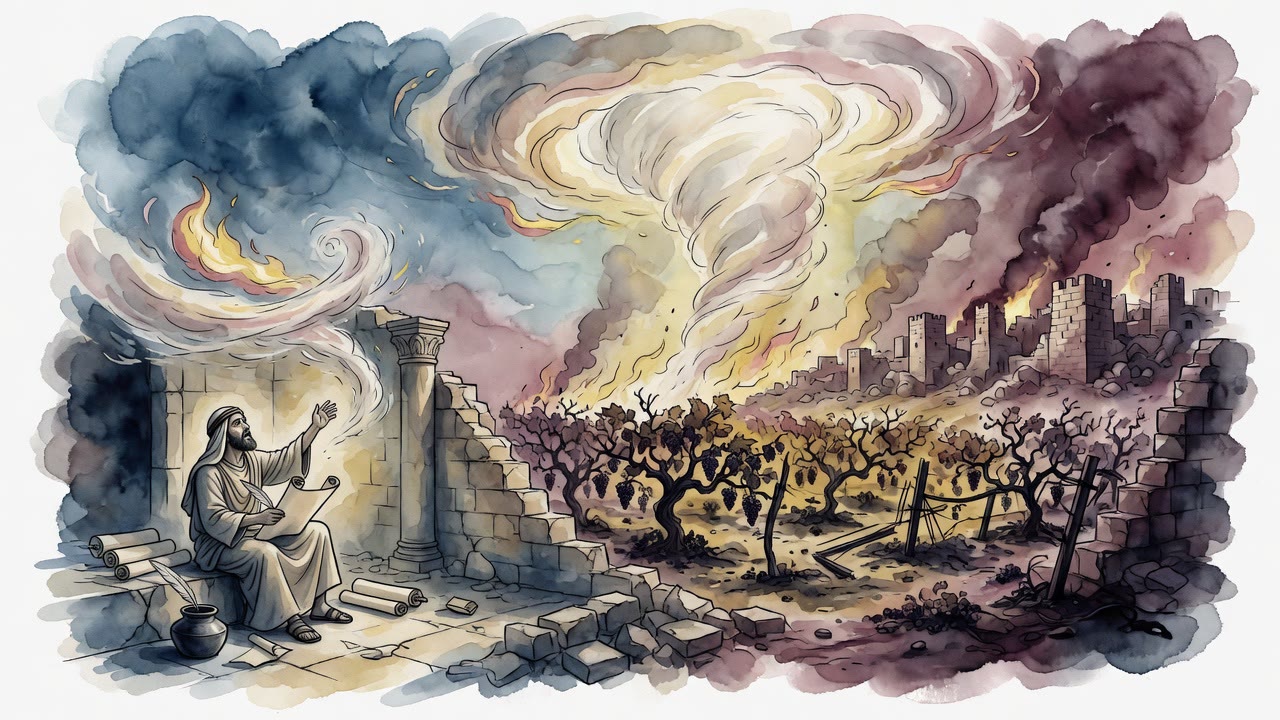
One Letter Between Israel and Fire
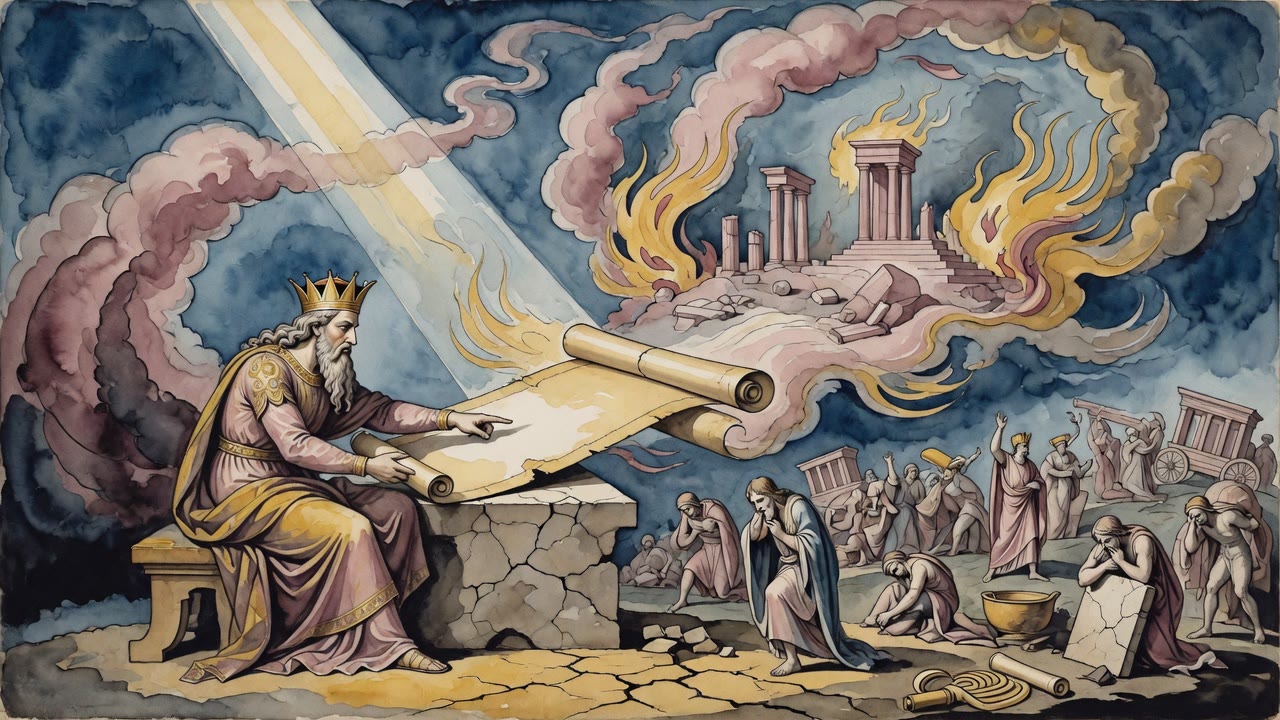
In another house of study, Rabbi Yochanan bent over a different hinge. When Israel cried, "These are your gods, O Israel, who brought you up out of the land of Egypt" (Exodus 32:4), he fixed his eye on one small letter inside the Hebrew verb. Because the word for "brought you up" carries a plural form, it credits the calf with company. The people did not say the calf alone delivered them. They left room, however clumsily, for the God of Sinai to remain among the deliverers.
That sliver of grammar, Rabbi Yochanan taught, stood between Israel and annihilation. Their sin was monstrous, but it was not total denial. Rabbi Shimon ben Yochai refused to soften the verdict for anyone who pairs Heaven's name with anything else. Still the verse insists on the plural, not to excuse, but to diagnose a hunger that reached for many lords at once.
One letter on a page. One croak on a gunwale. A listener who cannot bear mystery will often choose violence over patience, and a nation that shouts a half-truth still leaves a crack where mercy can enter. Rabbi Yochanan did not close the scroll. Rabbi Shimon did not take back his hardness. The vav stayed in the verb, and the boy who had gone overboard stayed a prince who had learned when a laugh is cargo too heavy for the boat.
← All myths