5 min read

Rich in Torah, Doeg Still Falls to Gehenna

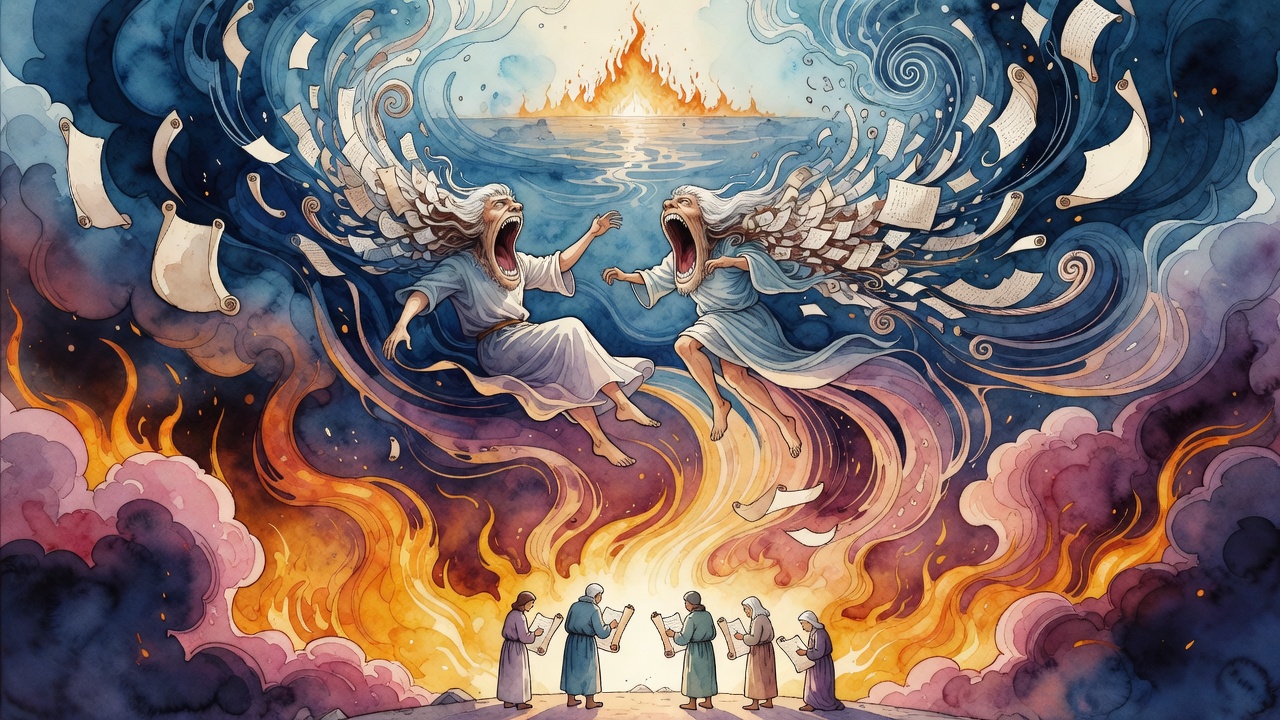
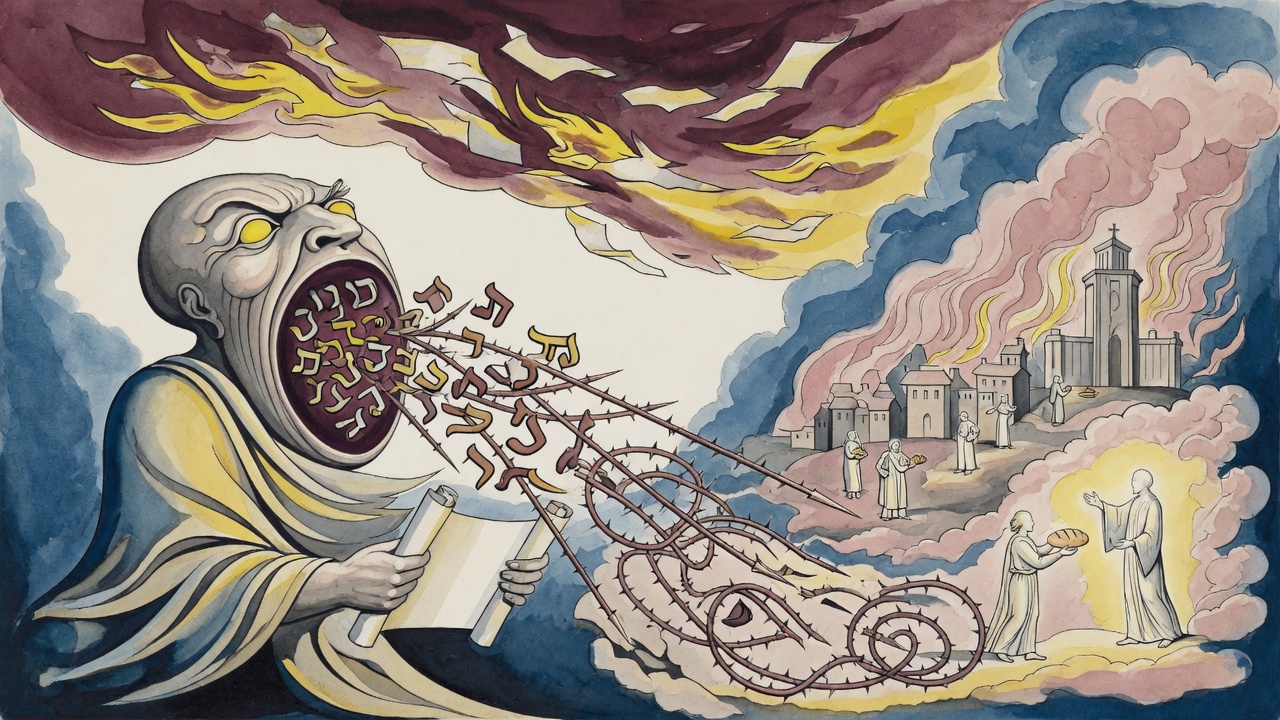
Doeg and Ahithophel own whole libraries in their mouths, yet Gehinnom (afterlife of judgment) claims them while poor householders still open a page.

Curated by Arthur · Told by Maggid ·
Table of Contents
  1. Two Rich Men on the Same Road
  2. Why the Learned Fall
  3. Eliyahu Names a Different Poverty
  4. Two Tables, One Measure
Rich in Torah, Doeg Still Falls to Gehenna Click for full size

Two Rich Men on the Same Road

Doeg the Edomite walked into the house of study with a mind that could open any verse. Ahithophel sat at the head of counsel with the same gift. They were called rich in Torah. Heads of courts. Men whose mouths could rebuild a law from a single letter and whose students copied their cadence as if cadence alone were righteousness.

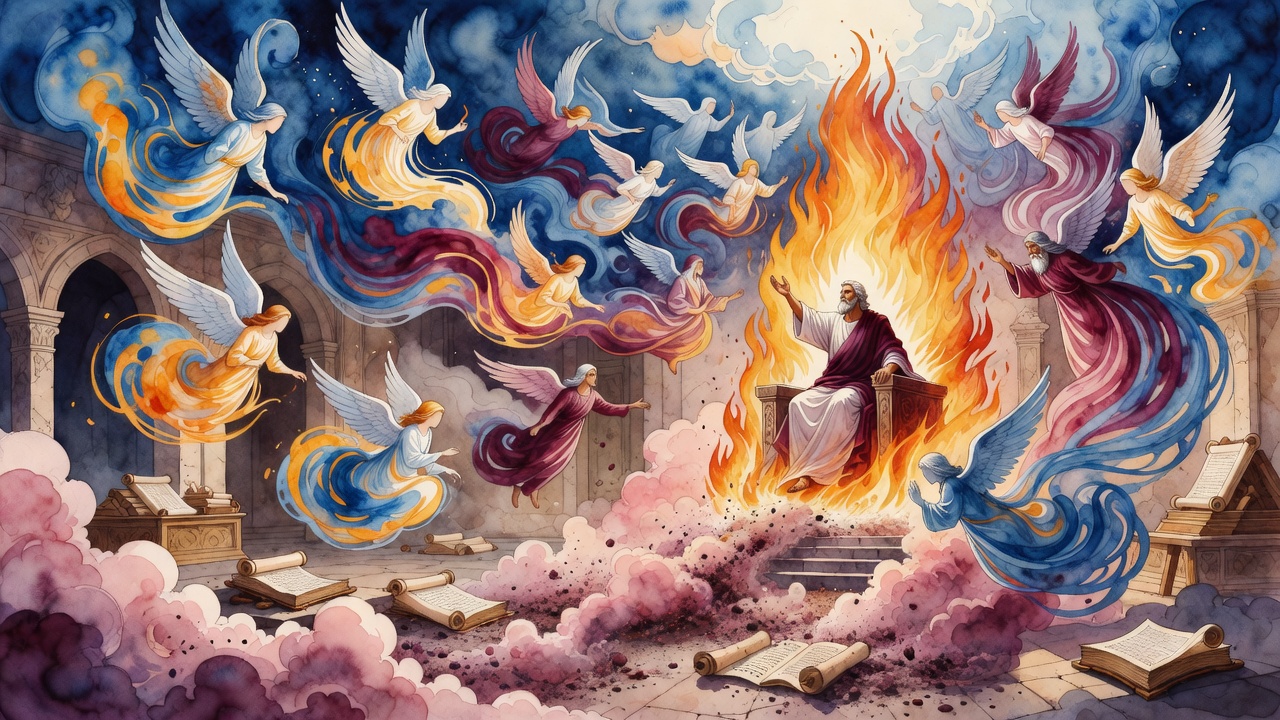
The midrash sets them on a road that ends in Gehinnom, the place of burning purification after death. "Together, rich and poor, they all descend," the teaching says, and then it clarifies the terms before anyone mistakes the subject for coins. Rich means rich in Torah. Poor means poor in Torah. Knowledge alone does not buy a different gate. The ledger is not silver. The ledger is whether the page became a life or only a weapon.

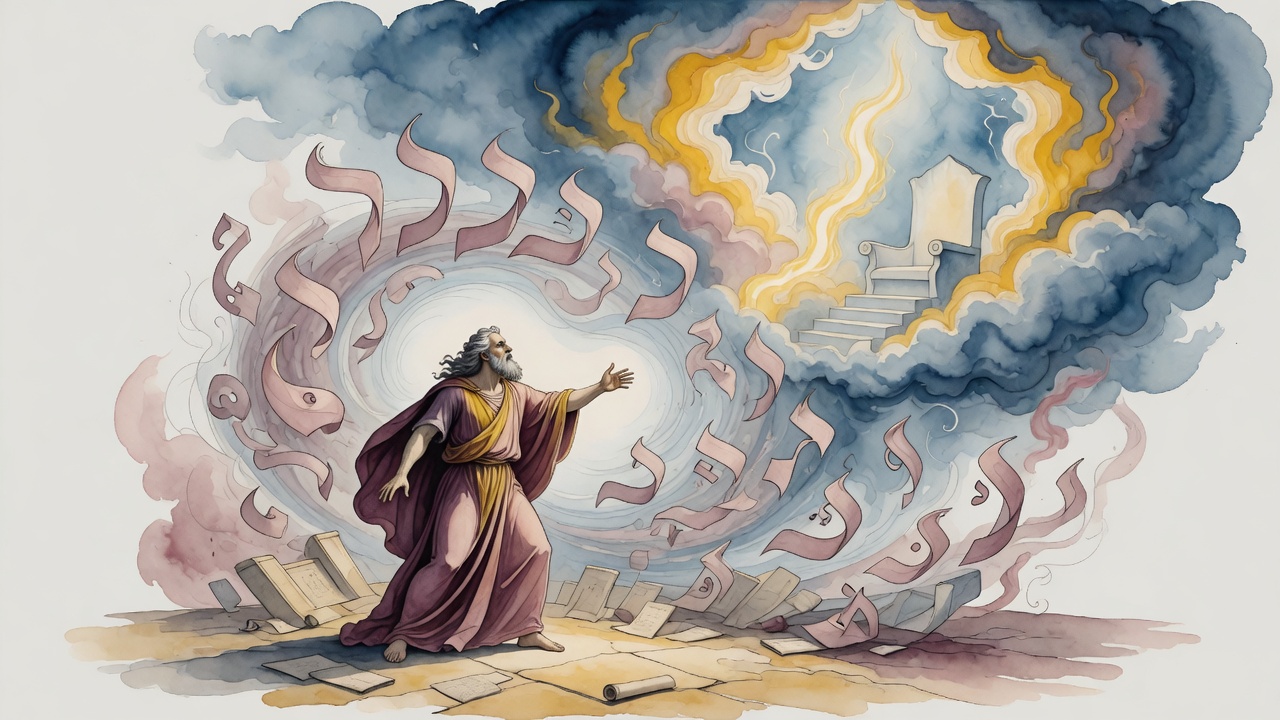
Doeg once stood near Saul's rage and knew how to aim a citation. Ahithophel once stood near Absalom's revolt and knew how to aim advice. Brilliance did not save either man from the road the midrash draws under their feet. The book was in their mouths. The book was not in their hands when the hands chose violence and betrayal.

Why the Learned Fall

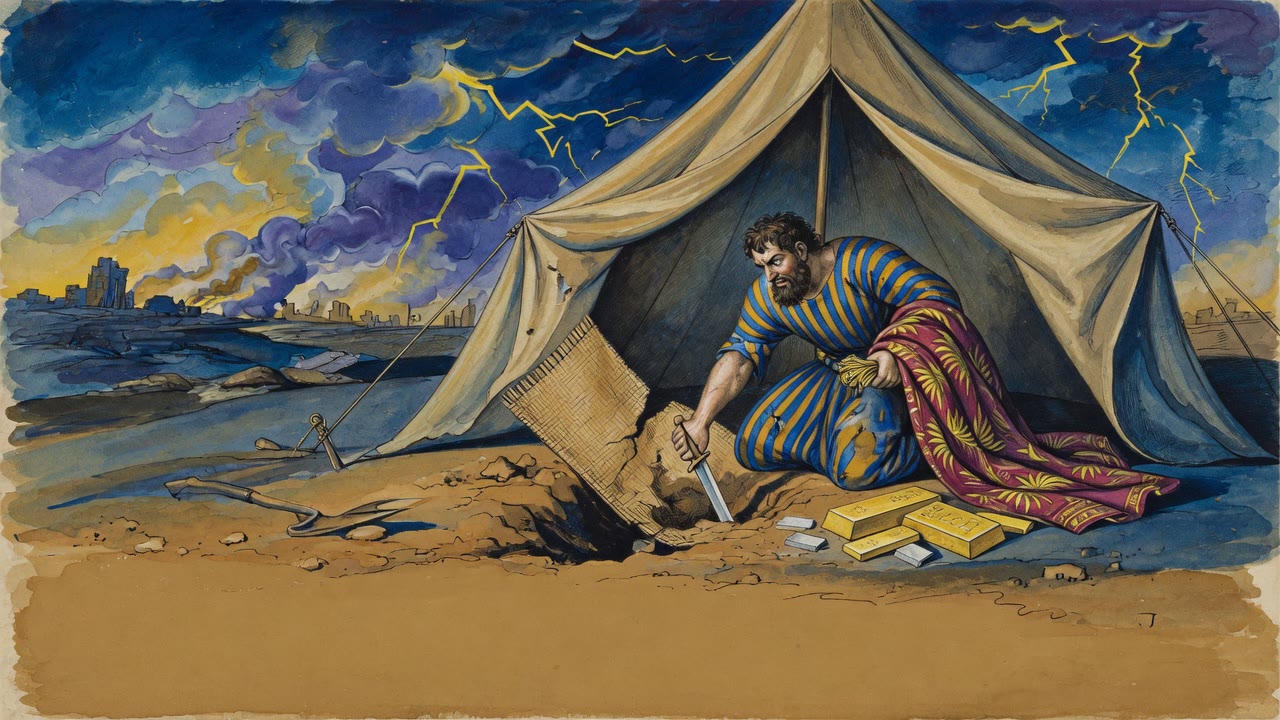
Doeg knew how to parse. He did not know how to keep. Ahithophel could advise a king and still choose the side that tore the kingdom open. The midrash's charge is blunt. They did not observe the Torah they held. The book sat in their mouths like a polished blade, and they used the blade on the living: priests at Nob, a father's throne, a people's trust.

Beside them the midrash places another failure that looks quieter and cuts as deep: anyone who had the chance to learn and refused. Poverty of Torah is not only lack of books or a childhood without teachers. It is the shrug that says tomorrow, always tomorrow, until the gate closes and the chance that once sat on the table has become ash.

The sons of Korah, who once stood near rebellion, saw the reward of Torah and the cost of neglect and spoke a different vow. Let my mouth speak wisdom in the wisdom of Torah. Let my heart ponder understanding. They inclined their ears to parable instead of ranking. The midrash holds them up not as perfect scholars but as people who chose pursuit after failure had already stained the family name. Speech, pondering, and listening become a three-part repair that no title can replace.

Eliyahu Names a Different Poverty

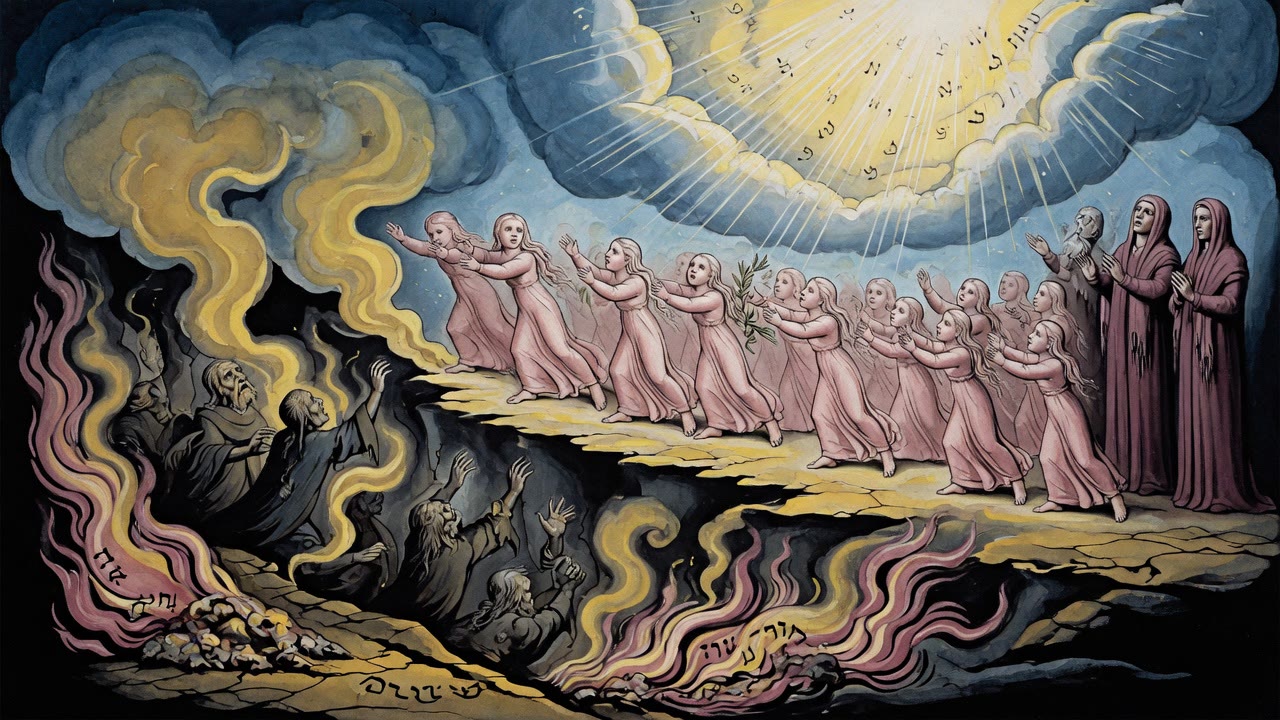
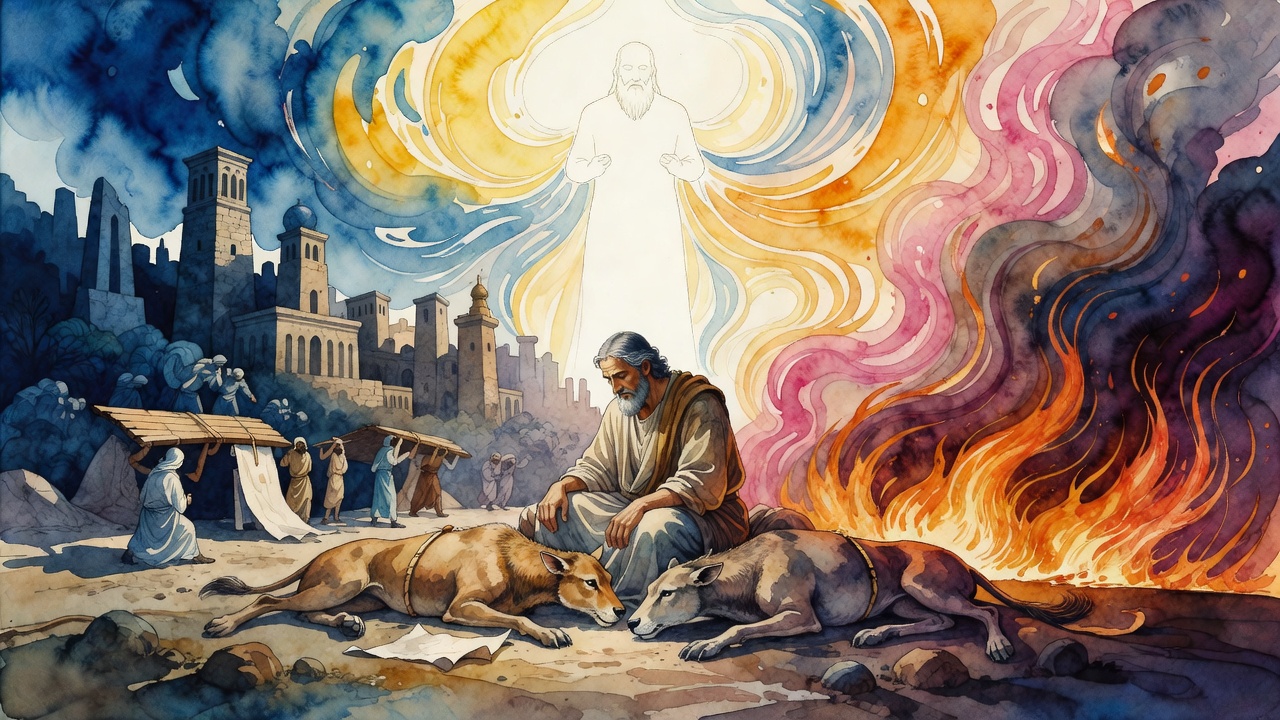
Elsewhere Eliyahu turns his face upward and refuses to let heaven ignore another kind of poor. He names householders with no income who still open a page each day before the bread runs out. He names the blind who scrape wages to teach children letters they themselves must feel more than see. He names old men and women who hurry to the study house with cracked hands and wait for redemption with their spines bent over worn tables.

"Look at our affliction," he says. Remember the flesh torn by oppressors. Remember small children who do not yet know right from left, yet are brought to hear the words. If the Holy One softens judgment for the nations, how much more for a people who bless the Name while hunger sits at the same bench as the tractate.

He also names failures without flattery. A parent who lets a child grow wild, lazy in study and lazy in work, raises a debt the next generation must carry. Manasseh becomes the dark example: made king young, given long life, even watched by the Presence in the Temple, yet repaying gift with corruption. Eliyahu's plea is not a blanket pardon. It is a demand that heaven distinguish the stubborn student under poverty from the king who wasted abundance. Remember the covenant with Abraham, Isaac, and Jacob. Remember widows and orphans who still cling. Remember the thirteen attributes of mercy. As You pitied Nineveh, pity us, for Your own name's sake.

Two Tables, One Measure

Doeg's wealth of learning without obedience and Eliyahu's poor who study without bread stand as twin judgments under one roof. Heaven measures the page by the life it makes, and measures the life by whether the page was sought when it hurt. A full belly of verses that never restrain the hand is still hunger. A thin soup beside an open book may be fullness the wicked never taste.

The road to Gehinnom, in this telling, is crowded with both kinds of travelers: the scholar who weaponized his mastery, and the neighbor who never tried. The road away from it, if the midrash allows any hope, begins where Korah's sons began and where Eliyahu points: mouth, heart, and ear bent again toward the parable, even when the table is bare and the world is loud with smarter sins. The poor student and the fallen genius do not share a fate by accident. They share a question. What did you do with the chance to learn, and what did the learning do with you?


← All myths
From the tradition

Sources

2 sources

The texts behind this telling. Some cards carry a translation of the source; others are our own retelling of it, and each card says which. Every card links out to the original.

Midrash Tehillim 49:2Midrash Tehillim

Retold in our words. Read the original at the link below.Rabbi Mike Feuer, Jerusalem Anthology · CC-BY

Midrash Tehillim, a collection of homiletic interpretations on the Book of Psalms, hits us with a pretty stark idea: "Together, rich and poor. they all descend to Gehenna." Gehenna, known in Jewish tradition as Gehinnom (the place of spiritual purification after death), is the place of spiritual purification and judgment. But what does being rich or poor have to do with it?

The Midrash (rabbinic interpretive commentary) isn’t talking about money, of course. It’s talking about Torah. "Rich in Torah and poor in Torah," the text clarifies. So, is it saying that everyone, no matter how learned, ends up in Gehenna? That doesn't sound right, does it?

The answer lies in the why. The Midrash points to figures like Doeg and Ahithophel, who were "rich in Torah." They were learned. They were even leaders – heads of the Sanhedrin, the ancient Jewish high court! Yet, they descended to Gehenna. Why? Because, despite their knowledge, "they did not observe the Torah." They didn't live by what they knew.

Ouch. That hits hard. It's not enough to just know; we have to do.

And what about the poor in Torah? The Midrash doesn't let them off the hook either. It says this refers to "anyone who had the opportunity to learn and did not learn." for a second. It's not about innate ability, or even circumstance. It’s about opportunity and choice.

The message is clear: Torah study isn’t just an intellectual exercise; it’s a moral imperative. We are each accountable for the knowledge we could have sought and the actions we could have taken.

So, what's the takeaway? Is it all doom and gloom? Absolutely not! The Midrash offers a glimmer of hope, a path forward. The sons of Korah, who famously rebelled against Moses in the desert (Numbers 16), understood this. They realized the immense value of Torah study. They saw the consequences of neglecting it. And what did they do?

They said, "Since this is the reward for Torah study, let us pursue it!" They chose to dedicate themselves to wisdom, understanding, and the parables of the Torah. They chose to learn and, presumably, to live by what they learned.

"Let my mouth speak wisdom in the wisdom of Torah, and my heart ponder understanding in the understanding of Torah," the text continues. "I will incline my ear to the parable of Torah."

It's an active process: speaking, pondering, inclining our ear. It requires engagement, a willingness to listen and learn, and a commitment to integrating Torah into our lives.

The Midrash isn't just about avoiding Gehenna. It's about embracing the opportunity we have to connect with something bigger than ourselves, to learn, to grow, and to live a life of meaning and purpose. It's a call to action, a reminder that the richness of Torah is available to all, and it's up to us to seize it.

Full source
Tanna Debei Eliyahu Rabbah 19:1Tanna DeBei Eliyahu Rabbah

Translation of the source text.Tanna debei Eliyahu Rabbah, Warsaw 1880 · Public Domain

Before the face of the Lord. Master of the universe, look now upon our affliction and plead our cause, and let our humiliation rise before You, what is done to us every single hour. And remember how many householders there are in Israel who have no livelihood yet occupy themselves with Torah every day continually. And remember how many poor there are in Israel from whom the idolaters strip the flesh, yet they occupy themselves with Torah every day continually. Remember how many blind there are in Israel who have no food, yet they pay and teach their children Torah. Remember how many lads and little ones there are in Israel who do not know their right hand from their left, yet they occupy themselves with Torah every day continually. Remember how many old men and old women there are in Israel who rise early and stay late to the synagogues and houses of study and yearn and long and wait for Your salvation every day continually.

My Father in heaven, You are righteous, O LORD, and faithful in all Your works; in faithfulness may Your mercies be revealed upon Your children. For if among the idolaters You find ten people in one city, the Sages said that You judge them with afflictions and bring poverty upon them so that they can endure them; and Your people Israel, who bless You and praise You and glorify You every day and every hour, and Your name is glorified and blessed through Israel before the eyes of all creatures, even though they do all their good deeds in silence, how much more should You have mercy on them. By the Temple service, every day continually and every single hour that I read this verse, "I will go and return to My place until they acknowledge their guilt and seek My face; in their distress they will seek Me earnestly" (Hosea 5:15), then this verse is fulfilled in me, "My heart is broken within me; all my bones tremble; I am like a drunken man" (Jeremiah 23:9).

Master of the universe, what shall I say and what shall I speak? I say to You as Judah answered concerning his brother Benjamin. I will tell you a parable; to what may the matter be compared? To a king who had a servant in his house and raised him from the day he came into the world until the day he came of age, and married him a wife, and he bore sons and daughters, and the king raised them amid pain and amid servitude and amid wandering and amid harrying and amid pressure and amid having no food; and after a while the king said to him secretly, Tell your sons to do labor with you. The servant rose and killed them all in a single hour, in a single moment. This servant, what is held against him? You must say it would be better for him had he not come into the world. Or a parable to a king who had a son in his house and raised him from the day he came into the world until the day he came of age, and married him a wife and built him a house and filled his house with wheat and barley and beans and lentils and all kinds of legumes; and after a while, when they were sitting at the table, the king and the son, the son rose against him from behind and threw him to the ground. This son, what is held against him? That son the king does not leave in his house even a single hour. And if a person has a son in his house who is quick and runs to set a fire in his fellow's field and is eager to rob people and says it is nothing, and is lazy from the house of study and lazy from occupying himself with Torah and lazy from occupying himself with labor to feed his wife and his children and his household, this son, what is held against him? This son is liable to the four court-imposed deaths stated in the Torah.

And likewise the wicked of Israel know that their children die for their iniquities, as it is said, "Also on your skirts is found the blood of the souls of the innocent poor" (Jeremiah 2:34), yet they do not repent, and it says, "A righteous man knows the soul of his beast, but the mercies of the wicked are cruel" (Proverbs 12:10). "A righteous man knows the soul of his beast", how so? A person who has words of Torah and commandments in him guards himself from coming to transgression and to an ugly matter, because he has set a thought in his mind and says, Woe to me if I sin, for my children would die for my iniquities; therefore it is said, "A righteous man knows the soul of his beast." "But the mercies of the wicked are cruel", how so? They know that their children die for their iniquities and they act as cruel ones toward them; therefore it is said, "But the mercies of the wicked are cruel." By the measure they measured, You measured to them, as it is said, "Behold, the day of the LORD comes, cruel, with wrath... to destroy its sinners from it" (Isaiah 13:9). And when they kindle and are eager and quick to commit transgression and say it is nothing, as it is said, "For wickedness burns like fire" (Isaiah 9:17), by the measure they measured You measured to them, as it is said, "For behold, the day comes, burning like an oven, and all the arrogant and all who do wickedness shall be stubble" (Malachi 3:19).

And so we find with Manasseh son of Hezekiah. About twelve years old was Manasseh son of Hezekiah king of Judah when he became king, and the Holy One, blessed be He, made him king and raised him to good and gave him many years and gave him more life than all the kings before him; and not only that, but the Holy One, blessed be He, came down from the highest heaven of heavens, from the place of His glory and His greatness and the holiness of His name, and dwelt in the Temple. Yet Manasseh rose and did exceedingly ugly things, and the Holy One, blessed be He, said: It is well that I did not dwell with My Presence with him, since he did not occupy himself with all his strength in My service and My Torah and My commandments.

And You, my Father in heaven, out of the love with which You loved us and the joy with which You rejoiced in us, set apart Your people Israel from among the seventy nations, and from among them set apart the tribe of Levi, and from the tribe of Levi set apart the high priest to stand and pray for all Israel every single hour and to atone for them. My Father in heaven, remember Your covenant that You made with the first ones, with the three righteous men, Abraham, Isaac, and Jacob; remember how many poor and needy there are in Israel who occupy themselves with Torah every day continually. My Father in heaven, remember what You wrote for us in Your Torah, "You shall not oppress your neighbor and shall not rob" (Leviticus 19:13), and You also wrote for us, "If your brother becomes poor and his hand falters with you, you shall hold him up" (Leviticus 25:35). My Father in heaven, remember how many lame and how many blind there are in Israel who have no food, yet even so they pay wages to teachers to teach their children Torah. My Father in heaven, remember Israel, who are Your possession from of old, as it is said, "Is He not your Father who acquired you?" (Deuteronomy 32:6), and it says, "The LORD acquired me at the beginning of His way" (Proverbs 8:22). My Father in heaven, remember how many widows and orphans there are in Israel who occupy themselves with Torah and commandments every day continually. My Father in heaven, remember Your mercies, O LORD, and Your kindnesses, for they are from of old (Psalms 25:6), and it says, "The LORD is good to all, and His mercies are over all His works" (Psalms 145:9), and it says, "To the Lord our God belong the mercies and the forgivenesses, for we have rebelled against Him" (Daniel 9:9), and it says, "The LORD, the LORD, a God merciful and gracious, slow to anger and abounding in kindness and truth, keeping kindness for thousands, forgiving iniquity and transgression and sin, and cleansing" (Exodus 34:6-7). My Father in heaven, remember what You wrote for us in Your Torah, "A son shall not bear the iniquity of the father, and a father shall not bear the iniquity of the son" (Ezekiel 18:20). And further, if, God forbid, Israel should perish from the world, Your Torah would perish from the world, and the Sages taught in the Mishnah: If there is no Torah there is no worldly conduct, and if there is no worldly conduct there is no Torah. Our Father in heaven, deal with us in kindness for the sake of Your great name that is called upon us and upon the seventh day and upon the rest of the commandments. My Father in heaven, You wrote for us through Jonah Your servant the prophet, "And should I not have pity on Nineveh the great city, in which are more than a hundred and twenty thousand persons who do not know their right hand from their left, and much cattle?" (Jonah 4:11). As You had pity on Nineveh, so let Your mercies roll out upon us, and fulfill for us what Your lips have spoken, "For My own sake, for My own sake I will act, for how should it be profaned, and My glory I will not give to another" (Isaiah 48:11).

Full source