Dead Children Argued Their Fathers Out of Gehenna
Children who died for their fathers' sins stand among the righteous and plead. Elijah teaches them the plea that pulls the wicked up.
Table of Contents
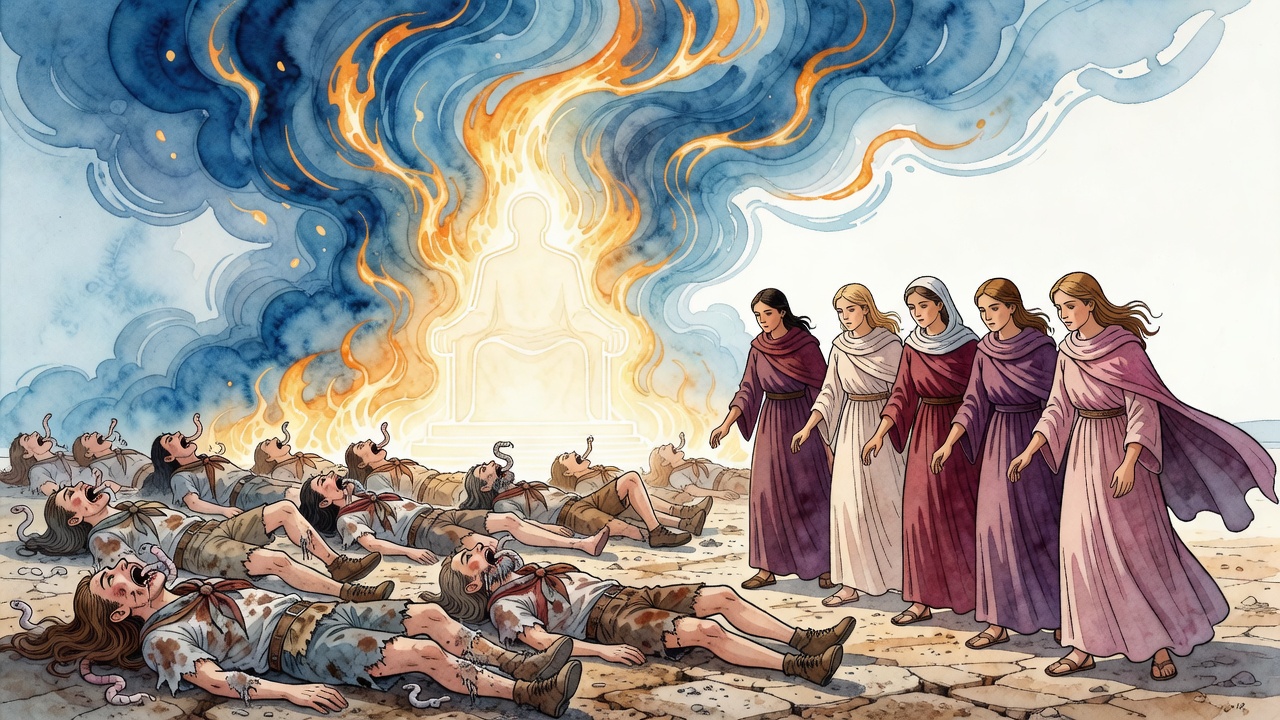
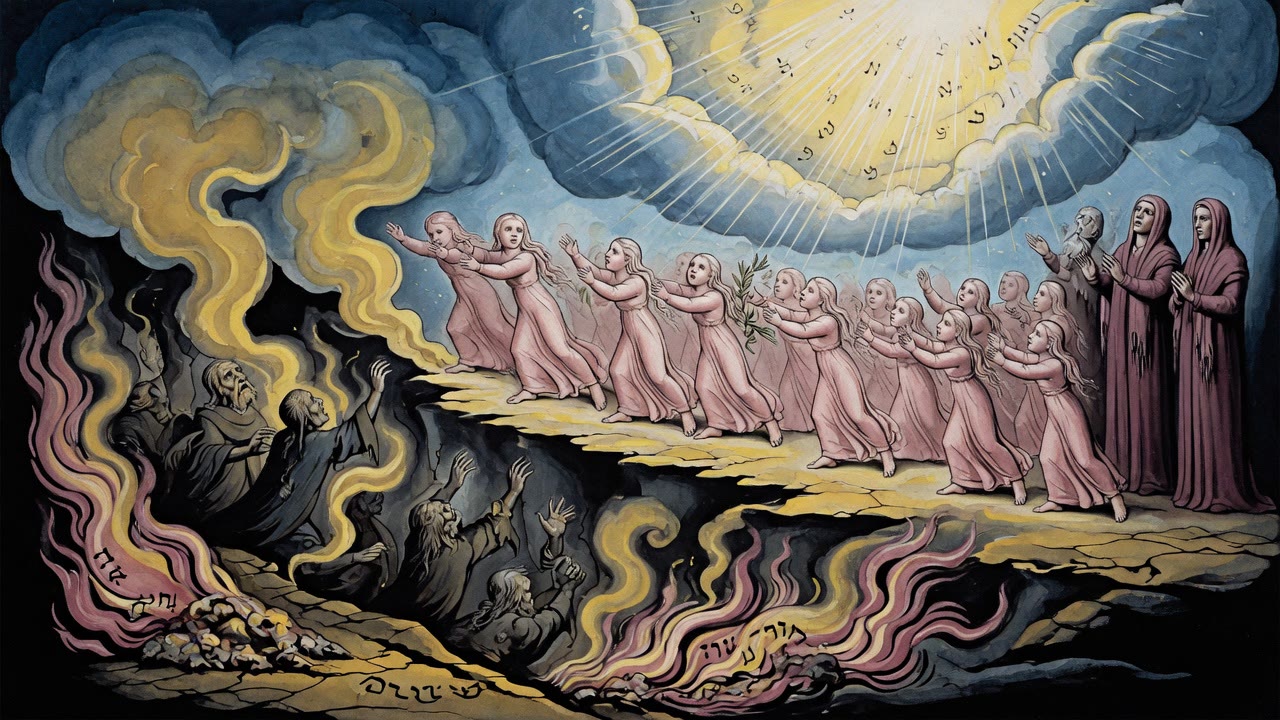
The children stood on the side of the righteous and would not look away from the far bank. Their fathers stood with the wicked. Between the two groups the air felt like a courtroom that had run out of comfort. No one came to dry a face. No one offered a hand across the gap. Feet stayed planted. Eyes stayed open.
 Click for full size
These were not children who had grown old in sin. They had been cut short while their fathers still had years left to spend. Now the sorting was done, and the short lives stood clean among the righteous while the long lives wore the stain of later choices. Power still seemed to sit with the men who had caused the shortening. Comfort did not arrive on schedule.
The tears of the oppressed, with no one to comfort them, hung between the banks like a verse that refuses to soften (Ecclesiastes 4:1).
The First Plea Fails
The children faced God and spoke as plaintiffs with dust still on their shortened years. "Master of the universe, did we not die only due to the iniquities of our fathers? Let our fathers enter on the basis of our merits."
The answer came back hard. The fathers had kept sinning after the graves were closed. Merit could not paper over a life that refused to stop. The children had paid early. The men had not changed. A clean death does not automatically buy a dirty life a seat among the righteous.
That should have ended it. Some of the children lowered their heads. Others kept staring at the far bank where familiar shoulders hunched among the wicked. The gap did not close. Severity had spoken, and severity had reasons.
Elijah Arms Their Mouths
Then Elijah arrived. He did not soothe them with soft words. He did not wipe faces. He taught them how to argue. He put a sharper claim in their mouths: God's attribute of kindness is greater than His attribute of punishment. If severity could kill children for fathers' sins, then kindness, being greater, must be able to lift fathers for children's merit.
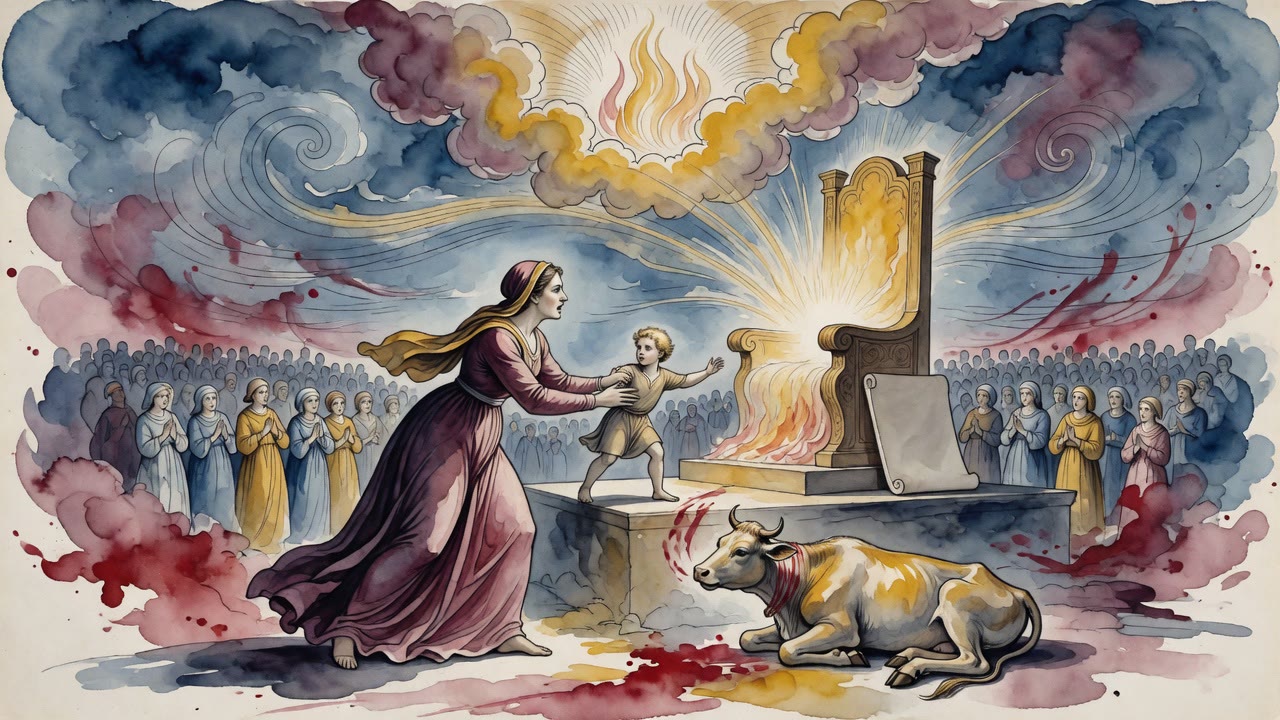
The children took the lesson into their chests. They faced the Throne again. This time they did not only mourn. They reasoned. They pressed the imbalance the Holy One Himself had built into the world. Kindness outweighs severity. Therefore the fathers must be able to move. The plea was no longer a request for a favor. It was a demand that the larger measure be allowed to work.
God heard the rebuilt case and did not swat it aside. He brought the fathers over. They returned from the descent toward Gehinnom, living with their children again in the sense the prophet later names: they shall live with their children and return (Zechariah 10:9). The gap closed because the dead had learned to speak the attribute that favors return.
Tools for the Living Under a Dark Dream
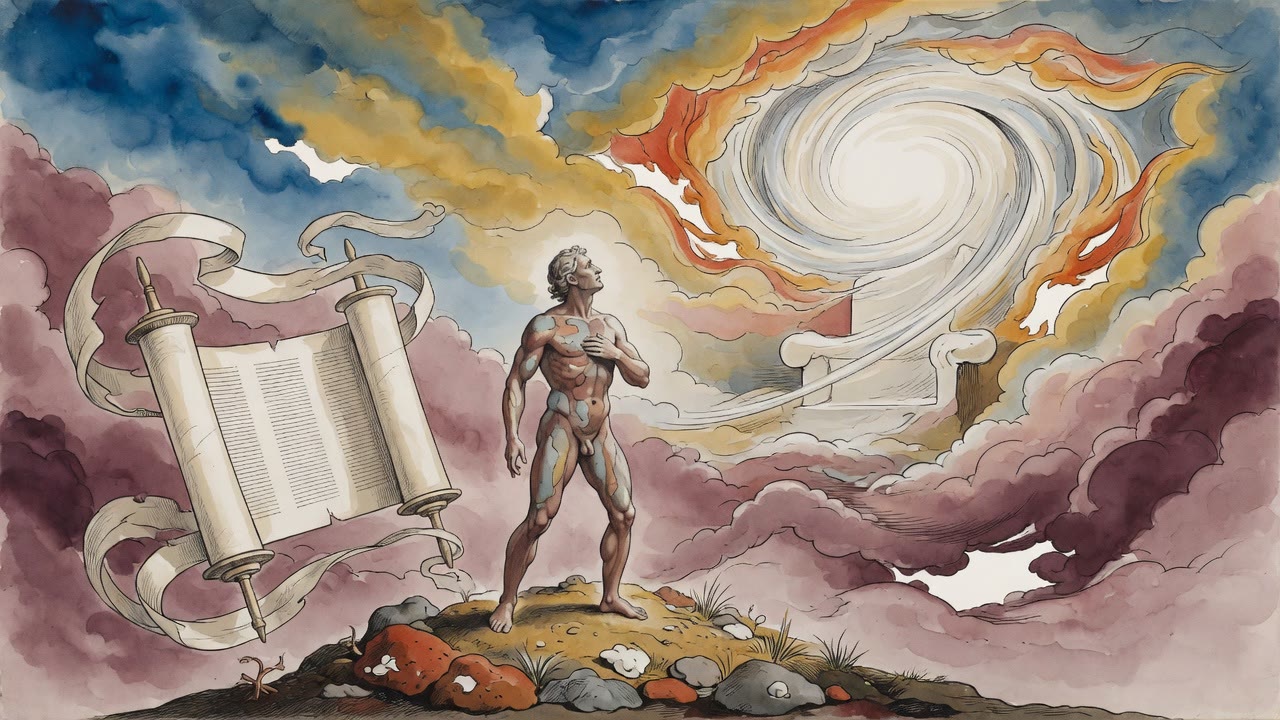
The living face a smaller version of the same helplessness when bad dreams pile up and speech turns to noise. Ecclesiastes warns that a multitude of dreams and vanities and many words is empty; fear God instead (Ecclesiastes 5:6). Fear here is not panic shaking a bed. It is the decision to act before fate hardens into a decree no one can bend.
Prayer, charity, and repentance are named as ways to abrogate an evil decree. Fasting joins them on a day of trouble, a body emptied so a cry can rise lighter. Some add a change of name, a change of deed, even a change of place, the way Abram became Abraham and left his land when God said go (Genesis 12:1). The tools look ordinary in a human hand. The claim is not ordinary: a person under a dark dream can still move the ledger.
The dead children moved a larger ledger with a larger argument. The living are told not to wait for Elijah if their own hands can still give, pray, and turn. A coin given, a name changed, a road left behind: each is a small courtroom move while breath remains.
The Hook That Works Everywhere
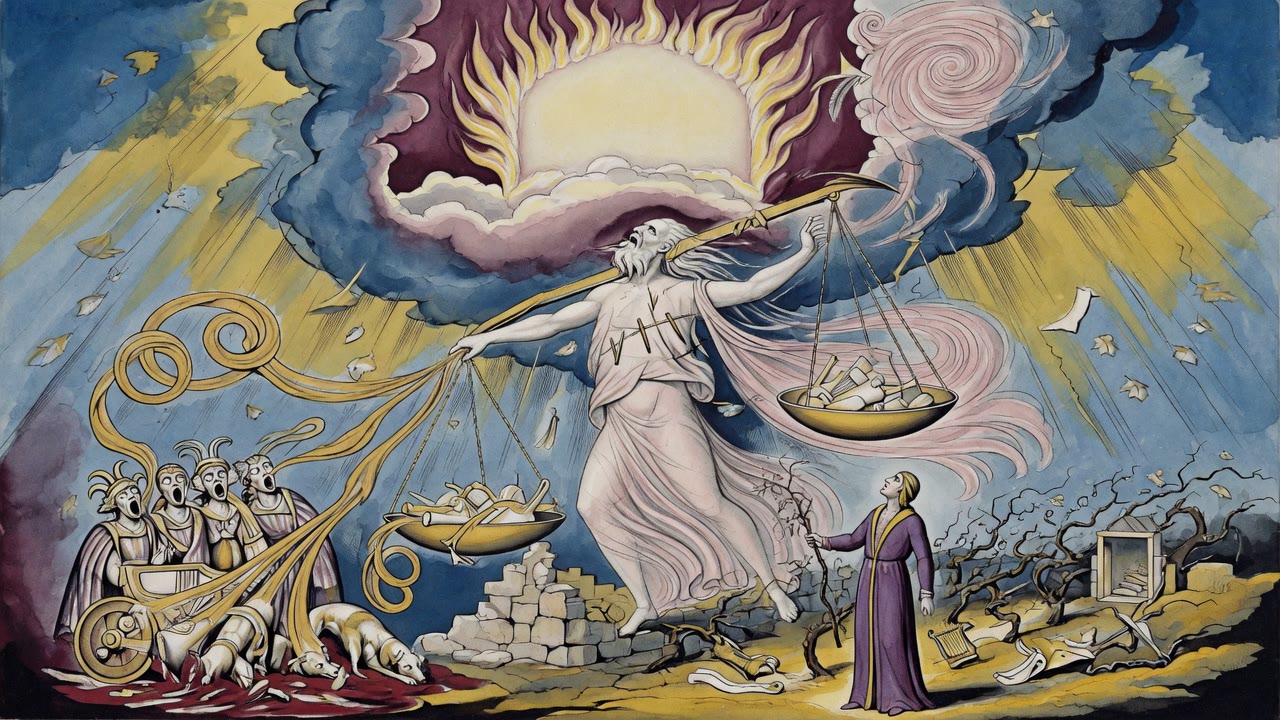
Elsewhere the same book compares people to fish caught in an evil trap, birds in a snare, lives taken when the hour falls suddenly (Ecclesiastes 9:12). Reish Lakish calls the trap a fish hook. It works in water and stands for a catch not limited to one domain. A line can tighten in a river or on a road. A mouth can close around iron before the fish knows the bait was never food.
The spies who slandered the Land died in a plague (Numbers 14:37). Some say diphtheria choked them the way a hook chokes a fish. Others say limbs fell away, a bodily unmaking for a spoken evil. Sudden judgment and the children's early deaths share a shape: a life can be snared before it expects the line to tighten. Slander kills. A father's ongoing sin can kill sideways into the next generation. The hook does not always announce itself.
In the heavenly court the snare is not the last word. The children who were caught early become the ones who pull. Merit runs backward up the family line once kindness is allowed to outweigh severity in open argument. The hook still exists. So does the counter-force of a well-taught plea.
Fathers Crossing Over
When the fathers finally stepped toward their children, the wicked bank lost a row of men who had kept sinning past the funerals. Dust of that other path still clung to their heels. The righteous side gained not trophies but repaired households. A child reached. A father took the hand. No trumpet was required.
The children did not gloat. They had not come to win a debate for sport. They had come to refuse orphanhood on both sides of death. Elijah's lesson stayed in the air after the crossing: a mouth that must plead should plead with the measure that is larger. Kindness is not a soft mood. It is a claim that can reorder a court when severity has already spent its force on the young.
Under the sun, tears still fall with no comforter in sight. Above the sun the comforter arrives as a teacher, the plaintiffs learn the stronger attribute, and Gehenna (the realm of judgment after death) loses a set of fathers to the children who would not stop asking.
← All myths