Sages Argued Over Elijah's Tribe Until Elijah Claimed Rachel's Line
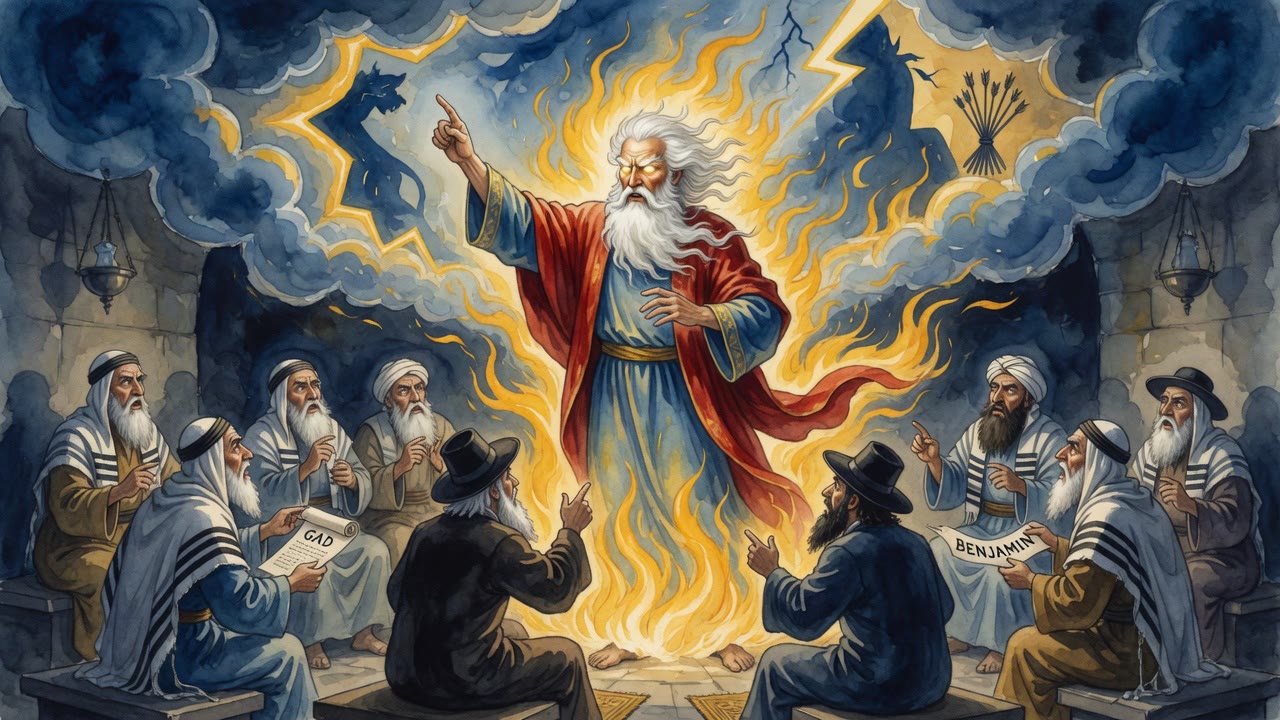
Two books lay open on the table. One named Benjamin. One named Gad. Then Elijah stood in the doorway and asked why they were dividing him.
Table of Contents
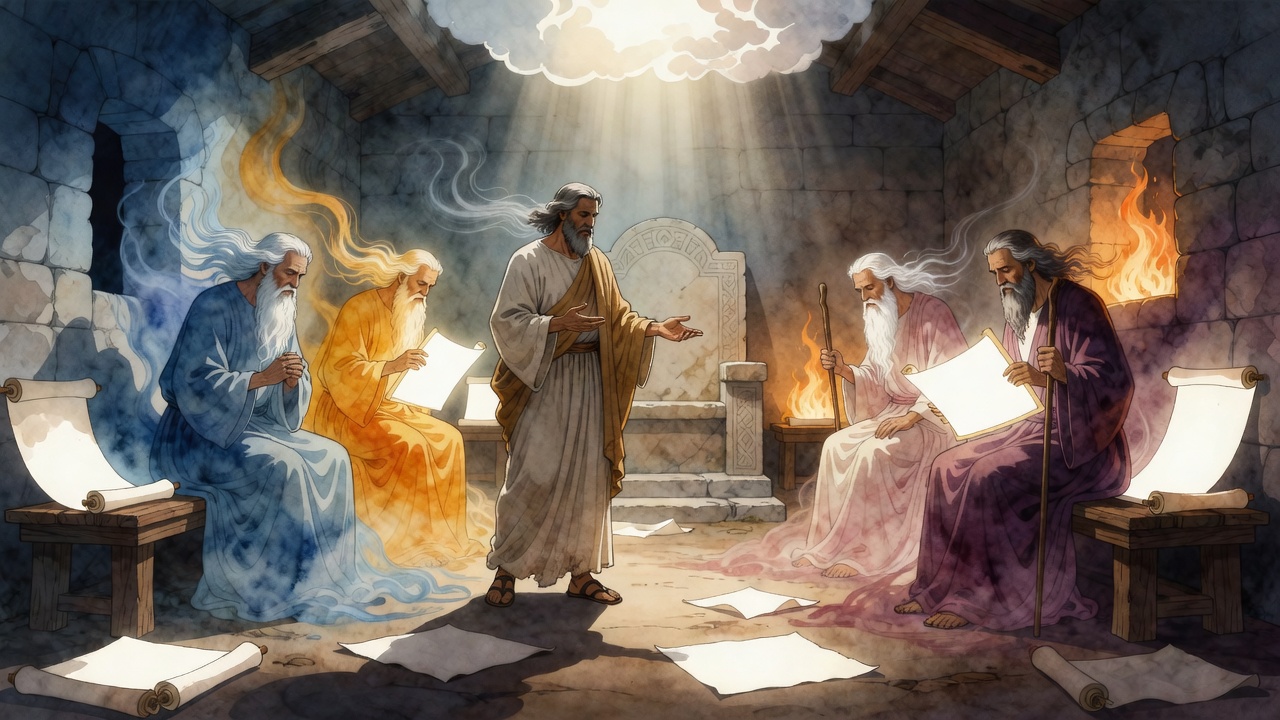
Rabbi Eliezer shut the genealogy and put his palm on the page.
 Click for full size
"Benjamin," he said.
Rav Nehorai did not look at that book. He had the prophet's first line in Scripture, the one where a man walks in on King Ahab from nowhere and names himself.
"Elijah the Tishbite, of the settlers of Gilead." Gilead is Gad's country. "Gad."
Verse Against Verse
The hall had already taken sides. Men leaned in from both ends of the table. The prophet himself had gone up in fire centuries ago. Nobody in the room could ask him.
Each sage reached for the other's verse and bent it.
Nehorai said the list of Benjamin's sons was not a family record. Read the three names in a row and they say what the prophet does. When God shakes His world, Elijah stands up and speaks the merit of the fathers, and God is filled with mercy.
Eliezer would not have it. "Settlers of Gilead" does not mean the man farmed there. It means he sat where the court sat, in the Chamber of Hewn Stone, the Lishkat ha-Gazit (לשכת הגזית).
Verse against verse. The books stayed open. Neither man moved his hand off his proof.
Abraham Stopped His Hand
Long before that quarrel, Abraham stood over his grown son with his hand raised, and did not bring it down.
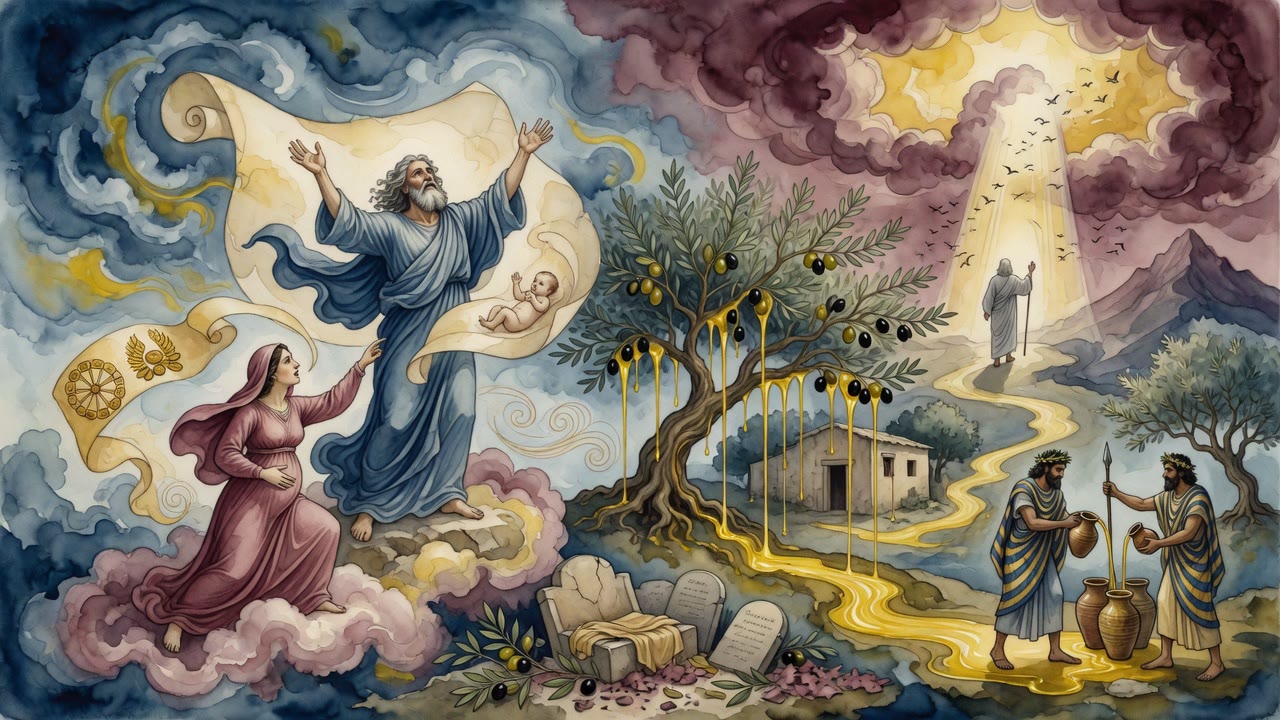
Isaac waited. The blessing was ready. It had been ready for years. Then Abraham saw what was folded up inside the boy, two grandsons, one of them Esau, and his fingers stayed in the air above Isaac's hair.
A king once handed an orchard to a tenant to work and to guard. Two trees grew in it. One gave a drug that kept a man alive. The other gave a poison that killed him. Over the years their roots ran together under the ground and their branches locked overhead.
The tenant stood with the water jar in his hands.
"How do I water the good one without watering the other?" he said. "There is no way to give one a drink and keep it from the second. I will leave them both until the owner of the orchard comes, and let him do what he wants with them."
Abraham set the jar down. "Let the Master of the world come and bless whoever He wants," he said, and he blessed nobody. He died with the blessing still in his mouth. Isaac died after him. Only then did God come to Jacob on the road back from Padan Aram and bless him directly, with no human hand between them.
The Blessers Needed a Blessing
God had told Abraham at the start that his own blessing would run ahead of God's own. Not only would God bless him. Abraham himself would become the one who hands blessing out.
"I will bring a tribe out of your sons who will bless Israel," God told him. "They will be called Levi."
Abraham heard the hole in it at once. "Master of the Universe, and who blesses that tribe?"
"When they bless Israel, I will bless them."
Abraham left the rest. He had already learned what it cost to put a human hand on a blessing that belonged to someone else.
Leah Named the Boy Gad
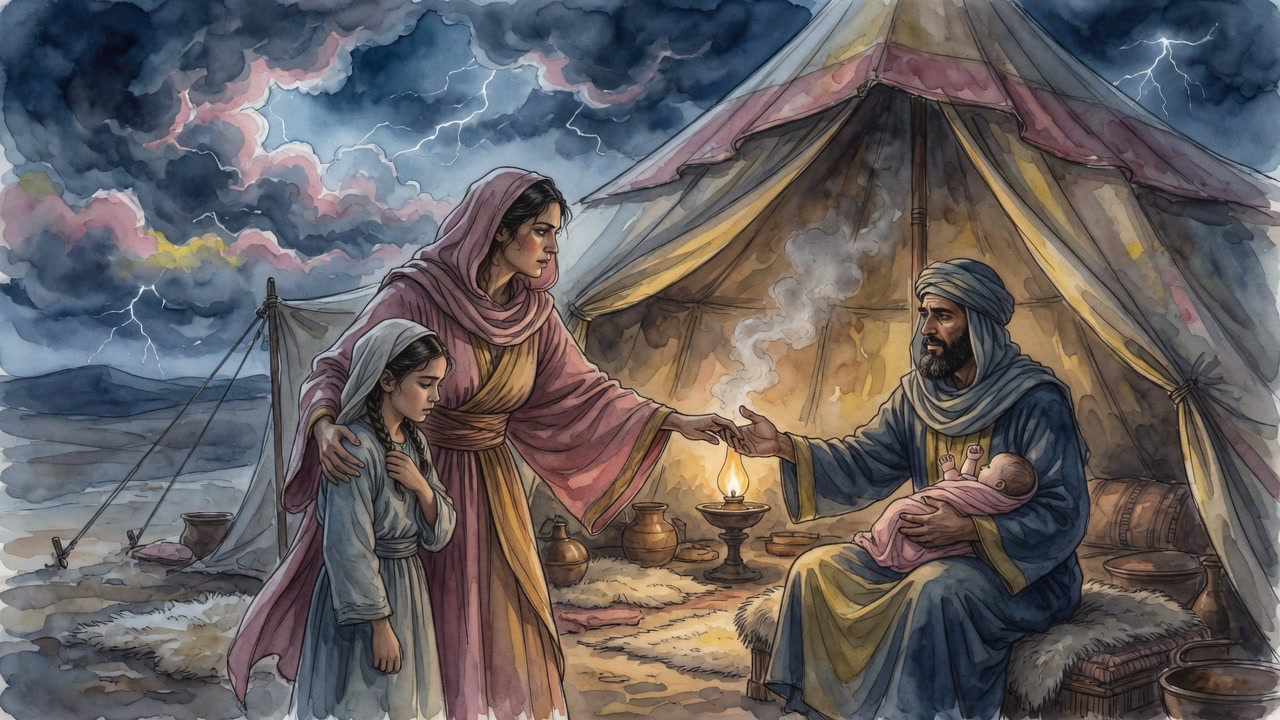
Generations later a woman in a crowded tent heard a child cry and reached for a word. Leah had rivals in that tent and sons already sleeping in it. "Fortune has come," she said, and called the boy Gad.
She meant her own relief. The same root that makes fortune also makes cutting down. Fortune has come. The one has come who will cut down the foundation under the nations of the world.
That one was Elijah. Leah went on nursing the baby and knew none of it. She did not see the study hall. She did not see two books open on a table. She had a hungry child and a name that fit the hour.
Elijah Claimed Rachel
Back in the hall the argument had not moved. Then the door opened.
The man they were dividing walked in and stood in front of them. Dust on his hem. No book in his hand. The room stopped the way a room stops when the dead come back without asking leave.
Elijah waited until they had all turned around. Then he asked a question instead of answering one.
"My masters, why are you dividing me up?"
Nobody spoke. Eliezer's palm was still on Benjamin. Nehorai's finger was still on Gilead. The prophet looked from one page to the other as if both of them were wrong in the same way.
"I am from the sons of the sons of Rachel," he said, and left them with it.
Rachel, who died on a road with her second son barely out of her body. Rachel, who is not Leah, and not Zilpah, and not the mother of Gad at all.
Two men had spent the afternoon assigning a prophet to a tribe, the way Abraham had once been asked to assign a blessing to a son. Both times the assignment came back out of human hands. The books stayed open on the table. The argument was over and neither side had won it.
← All myths