5 min read

Elijah Stood Before the Rabbis and Named His Tribe

Rabbis fought over whether Elijah came from Gad or Benjamin. The prophet appeared, ended the argument, and claimed the children of Rachel.

Curated by Arthur · Told by Maggid ·
Table of Contents
  1. Fortune of the House
  2. Benjamin or Gad
  3. He Walked Into the Room
  4. Stars That Refuse Counting
  5. Fortune That Cuts Idols
Elijah Stood Before the Rabbis and Named His Tribe Click for full size

Fortune of the House

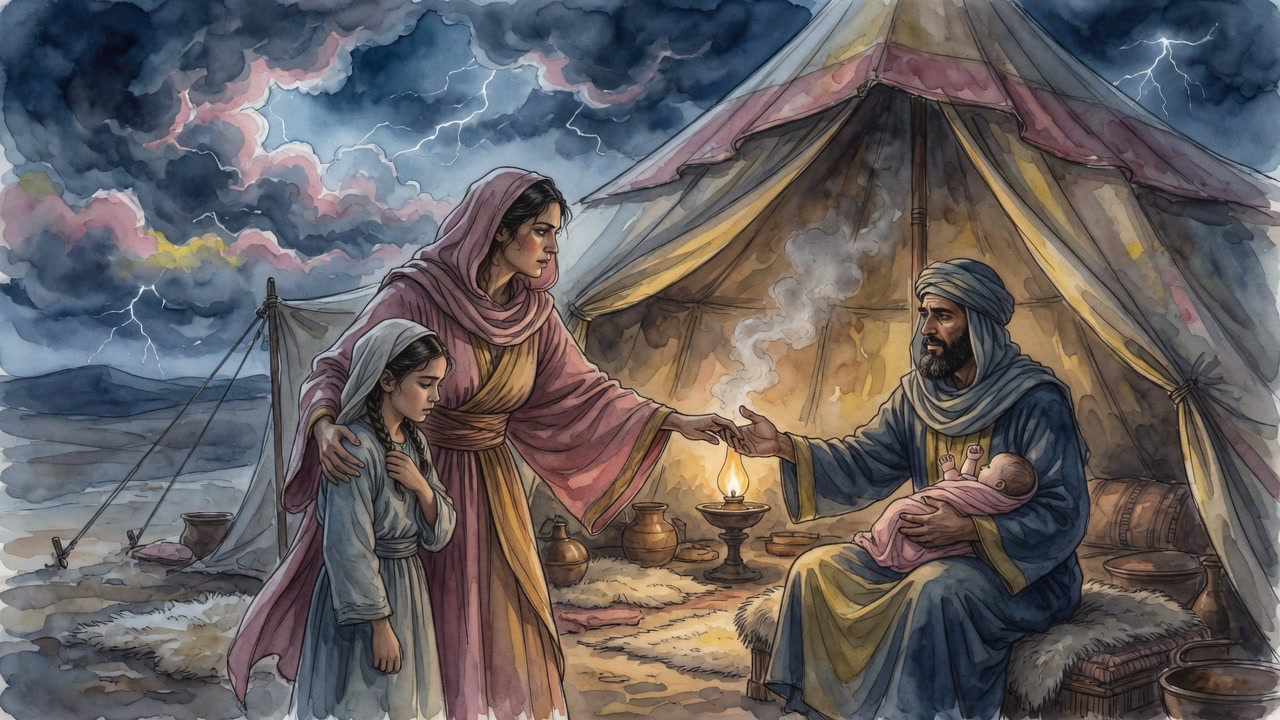
Zilpah, Leah's maidservant, bore Jacob a son. For the other births the Torah says "she conceived." Here it says only "bore" (Genesis 30:10). She was young. The pregnancy did not announce itself under clothing and camp dust. Leah named the boy for fortune. "Fortune has come" (Genesis 30:11).

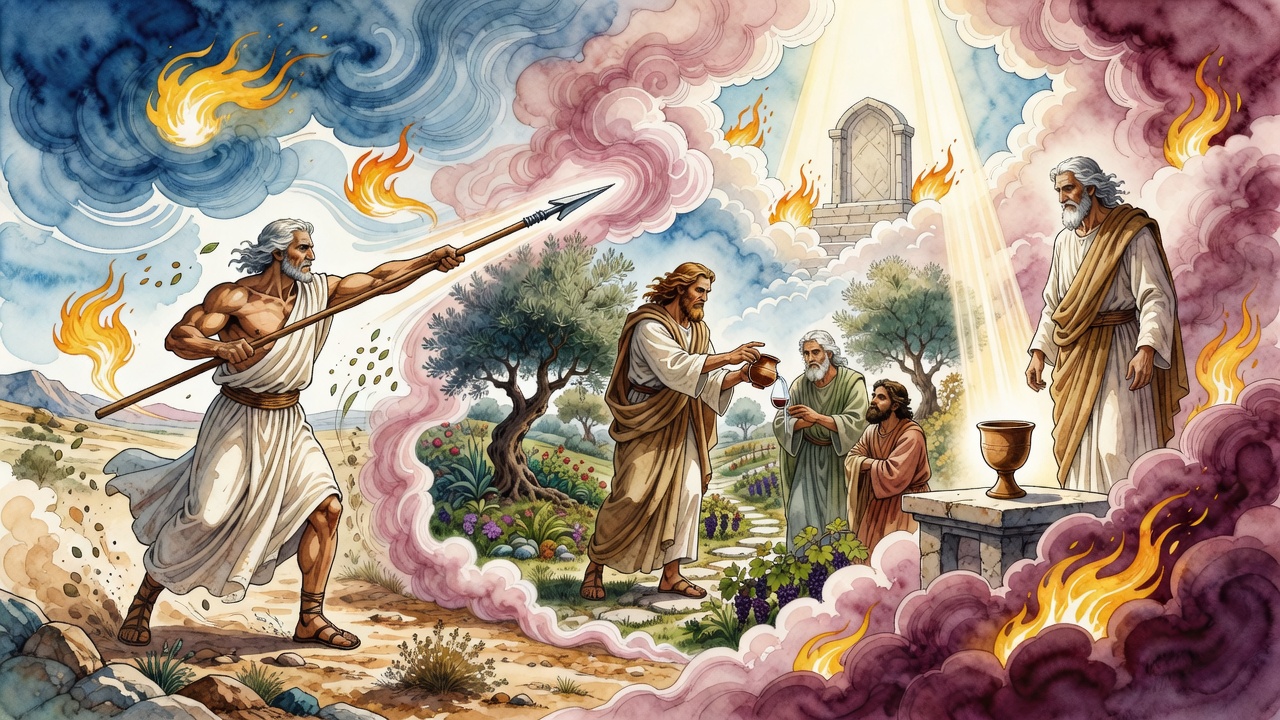
The midrash will not leave fortune small. Fortune of the house. Fortune of the world. The one destined to come and cut down the foundation of the idol worshippers. Who? Elijah.

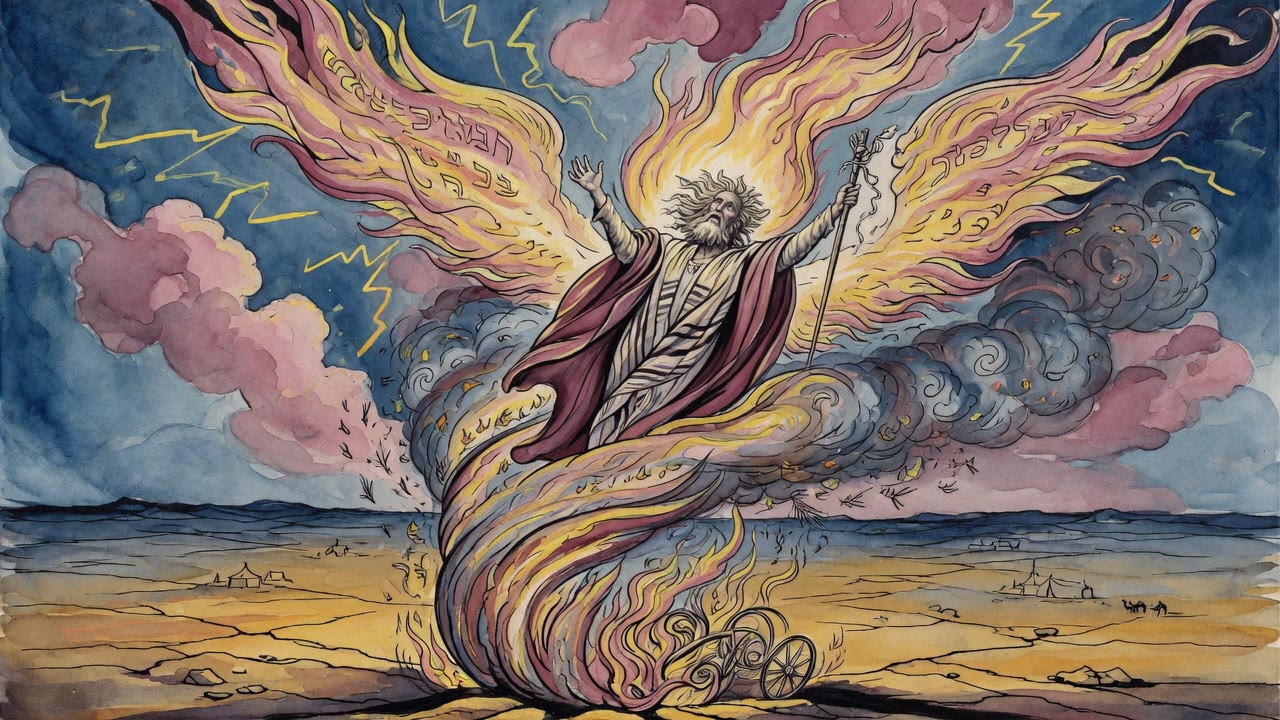
A quiet birth in a maidservant's tent becomes, in one leap of reading, the arrival of a force that will stand on Carmel and later at every circumcision chair. Gad means troop and luck. The midrash hears a future fire.

Benjamin or Gad

Rabbi Eliezer said Elijah descended from Benjamin. Chronicles lists Yaareshya, Eliya, and Zikhri among Benjamin's children (I Chronicles 8:27, 40). The name Eliya sits in the list like a breadcrumb. Rabbi Nehorai said from Gad. "Elijah the Tishbite, of the residents of Gilad" (I Kings 17:1), and Gad's border held Yazer and the cities of Gilad (Joshua 13:25).

Each side swallowed the other's verse. Gilad for Eliezer became those who sat in the Chamber of Hewn Stone, a memorial among the nations. Eliya for Nehorai became midrashic names: when God would make the world quake, Elijah would mention the patriarchs; the sons of Yerocham would open mercy on the world.

The argument was not about footnotes. It was about which mother's line the fire-prophet belonged to, which camp could claim the one who would shut the sky and open it again.

He Walked Into the Room

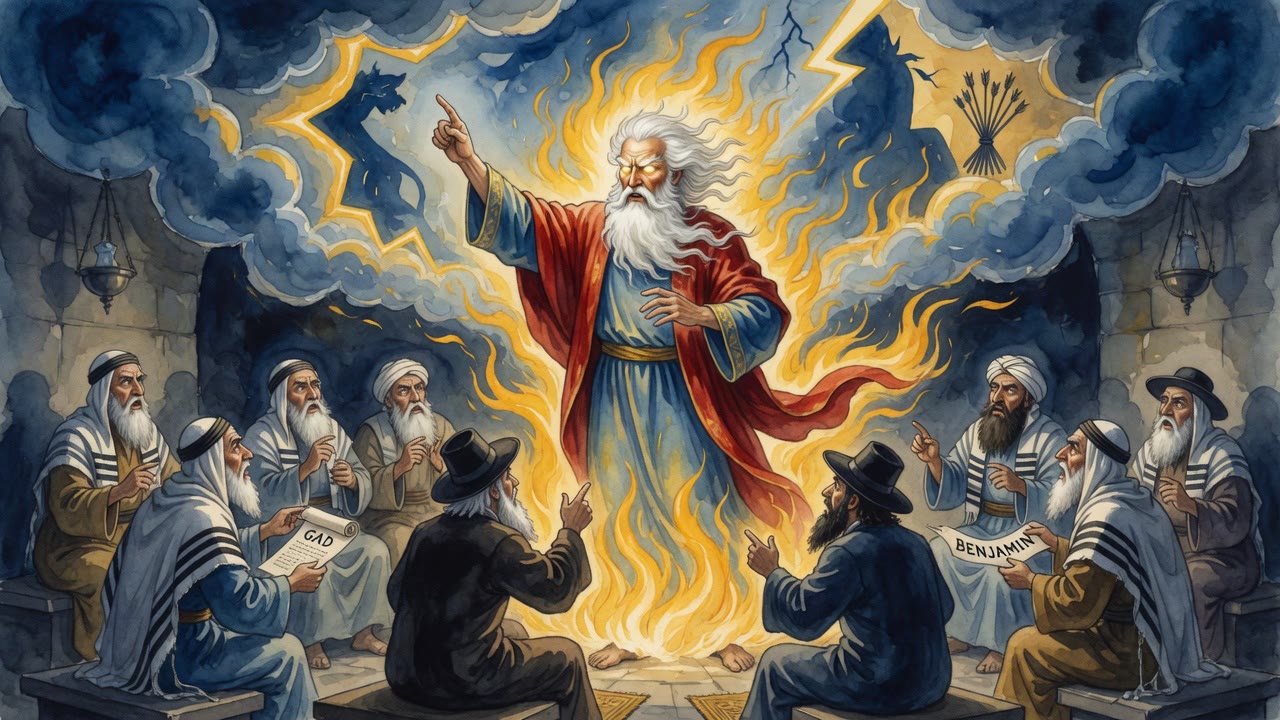
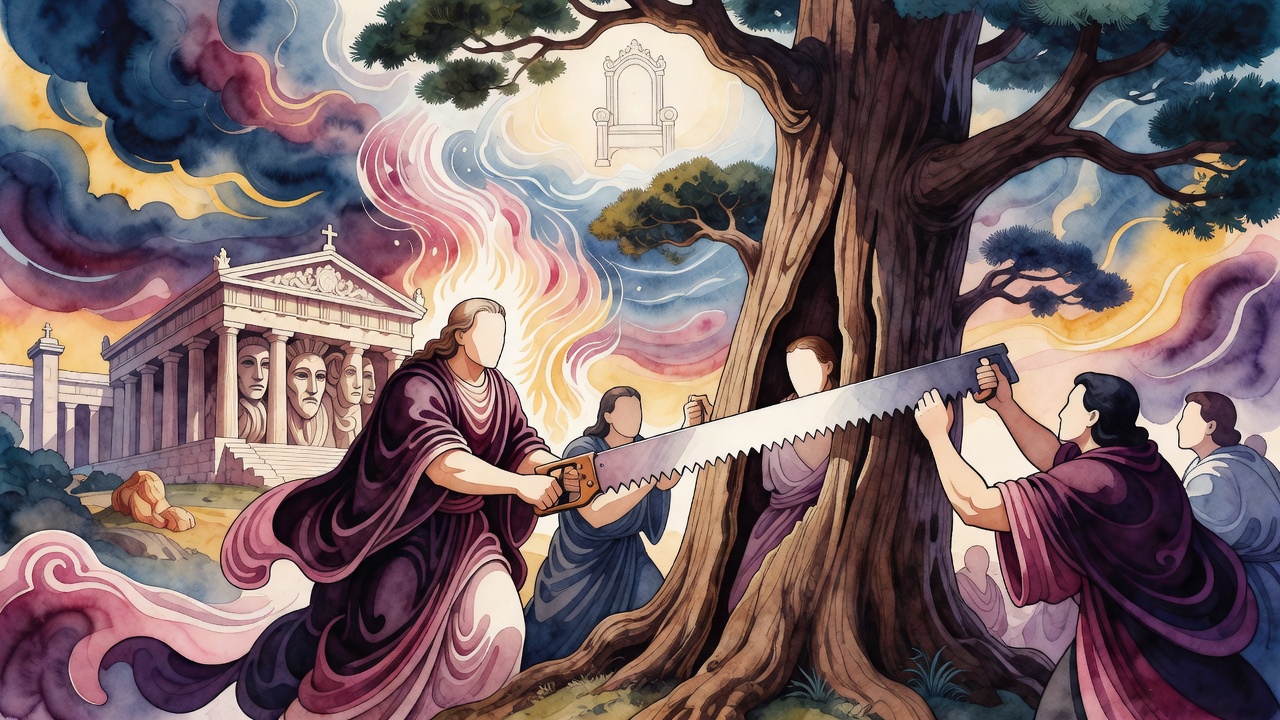
One time the rabbis disputed the matter to the bone. These said Gad. These said Benjamin. Proof stacked on proof until the air in the study hall felt like a ledger war. Elijah came and stood before them.

"Our rabbis, why are you disputing in my regard? I am from the children of the children of Rachel."

The room had been full of verses. The man the verses named closed the book with a sentence. Children of Rachel. Not a thin compromise between Gad and Benjamin as map lines. A claim of the beloved wife's house, the line that carries Joseph and Benjamin, the grief of the empty chair and the hope of the northern road.

He did not mock their learning. He ended their need to decide him in his absence.

Stars That Refuse Counting

Elsewhere Moses is made to set Israel beside the stars, not as flattery but as a refusal of final census. Stars are named and numberless at once. A prophet who restores hearts of parents and children moves in that same register. He belongs to a genealogy and exceeds it.

The rabbis need a tribe. Heaven needs a voice that can enter a study hall uninvited and end a fight without humiliating the fighters. Moses pointed at the sky to say this people cannot be finished by a count. Elijah points at Rachel to say this prophet cannot be finished by a border stone in Gilad alone.

Fortune That Cuts Idols

Leah's cry over a quiet birth becomes the arrival of a man who will cut the base of idolatry. Between the maidservant's son and the Tishbite stands a chain the rabbis try to pin to a verse in Joshua or a name in Chronicles. The prophet pins himself to Rachel and leaves their dilemma wearing both the desert wind and the Temple's memory in his stride.

He will come to tables and thresholds for centuries after that day in the study hall. Every time he does, the old argument about Gad and Benjamin sits behind him like a closed book. He already answered. The children of the children of Rachel. Fortune of the house. Fortune of the world.

Imagine the heat in the room before he arrives. Two schools, two stacks of scrolls, voices rising over Gilad and Benjamin. Then the door, or no door, only a man already known from stories standing where a prooftext was about to land.

"Children of the children of Rachel." The argument does not lose because it was stupid. It loses because the subject of the argument preferred a mother to a map. Fortune of the house had a face.

After he leaves, the study hall will still have its books. Gilad will still sit on the map. Benjamin will still have its names in Chronicles. What will not return is the clean confidence that a dead prophet can be owned by a border. He named a mother. The border lost.

Leah's fortune-name and Elijah's self-naming bookend the midrash. Between them stretches every study hall that tried to own a prophet with a map and discovered the prophet preferred a mother.


← All myths

From the tradition

Sources

2 sources

The texts behind this telling. Some cards carry a translation of the source; others are our own retelling of it, and each card says which. Every card links out to the original.

Bereshit Rabbah 71:9Bereshit Rabbah

Retold in our words. Read the original at the link below.The Sefaria Midrash Rabbah, 2022 · CC-BY

Bereshit Rabbah turns to Birth of Elijah.

"Zilpa, Leah’s maidservant, bore Jacob a son" (Genesis 30:10). And there's a subtle difference here. With all the other births, the text says "she conceived." But with Gad, it simply says "bore." Why? The Midrash (rabbinic interpretive commentary) suggests that Zilpa was young, and her pregnancy wasn't as obvious. Makes sense. Then Leah declares, "Fortune has come; she called his name Gad" (Genesis 30:11). But it’s not just any fortune. According to the Midrash, this is "the fortune of the house… the fortune of the world!" And Who is that? Elijah!

So, the million-dollar question: From which tribe did Elijah descend? Rabbi Eliezer says he's from Benjamin. He finds support in I Chronicles (8:27, 40), which lists names including "Yaareshya, Eliya… all these are the children of Benjamin." See how the name "Eliya" is right there?

Wait, Rabbi Nehorai disagrees. He insists Elijah is from Gad! His proof? The famous verse, "Elijah the Tishbite, of the residents of Gilad" (I Kings 17:1). Okay, Gilad sounds a lot like Gad, but is it enough to make the case? Rabbi Pilipi bar Nehorai (or rather, as the text clarifies, Rabbi Pilipi speaking to Rabbi Nehorai) backs this up further, citing (Joshua 13:25): "Their border was Yazer, and all the cities of the Gilad." The previous verse (Joshua 13:24) specifies that this land was given to the tribe of Gad.

So how do we reconcile these differing views? How does Rabbi Eliezer explain the verse about Gilad? The Midrash suggests he interprets "of the residents of Gilad" to mean those who sat in the Chamber of Hewn Stone in the Temple – a memorial for all nations (Shir HaShirim Rabba 4:4). It's a more symbolic, less literal reading.

And how does Rabbi Nehorai deal with the "Yaareshya, Eliya" verse? He sees it as a midrash, an interpretive teaching. When God was about to "shake" (leharish) the world, the merit of the Patriarchs was invoked to soften the decree. Thus, "the sons of Yeroḥam" signify that God would be filled with mercy. It's about divine intervention, not necessarily direct lineage.

The Midrash then recounts a fascinating story. The Rabbis are locked in their debate: Gad? Benjamin? Suddenly, Elijah himself appears! And what does he say? "Our Rabbis, why are you disputing in my regard? I am from the children of the children of Rachel."

Wait, what? Rachel had only two children: Joseph and Benjamin. If he's from the "children of the children of Rachel," he must be from Benjamin. But the story doesn't say definitively! It leaves us hanging, forcing us to consider a bigger picture.

Perhaps the lineage isn’t strictly tribal. Maybe Elijah is telling them something deeper: that his essence, his spirit, is connected to Rachel, the matriarch known for her compassion and her unwavering faith. Maybe it's about the qualities he embodies, rather than a simple bloodline.

What does it all mean? This passage from Bereshit Rabbah isn’t just about tracing Elijah’s family tree. It's about the nature of destiny, the power of interpretation, and the enduring questions that animate Jewish thought. Maybe Elijah’s story is meant to transcend easy categorization, belonging to all who strive for justice and redemption.

Full source
Devarim Rabbah 1:14Devarim Rabbah

Retold in our words. Read the original at the link below.The Sefaria Midrash Rabbah, 2022 · CC-BY

Our ancestors certainly did. And in Devarim Rabbah, a collection of rabbinic teachings on the Book of Deuteronomy, we find a beautiful explanation of why Moses chose the stars as a metaphor for the Jewish people.

"The Lord your God has multiplied you," Moses says in (Deuteronomy 1:10), "and, behold, you are today as the stars of the heavens in abundance." But why stars? Why not something else?

The answer, according to Devarim Rabbah, is multi-layered. Just as among the stars, there are levels upon levels – faint pinpricks of light alongside blazing giants – so too are there different levels among Israel. We have our Kohanim (priests), our Levi’im (Levites), and the Israelites themselves, each with their unique roles and responsibilities.

It doesn't stop there. Just as the stars are uncountable, beyond our ability to truly grasp their number, so too is the potential of the Jewish people. We are a people whose impact cannot be easily measured or quantified.

Devarim Rabbah says that just as the stars shine their light from one end of the world to the other, so too does Israel exert influence across the globe.

But here's where it gets really interesting. Moses himself questions God! He asks, "Master of the universe, why didn’t you liken them to the sun and the moon, which are so much bigger and brighter than the stars?"

God’s answer is profound. "The sun and the moon will have shame in the future." What does that mean? We find the answer in (Isaiah 24:23): "The moon will be disgraced and the sun will be ashamed, for the Lord of hosts will reign on Mount Zion and in Jerusalem." The sun and moon, symbols of earthly power and constancy, will eventually fade in comparison to God's glory.

But the stars? They will never have shame. As it says in (oel 2:27), "You will know that I am in the midst of Israel, and I am the Lord your God, and there is no other, and My people will nevermore be ashamed."

So, what's the takeaway? The stars, unlike the sun and moon, represent an enduring light, a constant presence. They are a symbol of hope and resilience that will never fade. They are a reminder that even the smallest light can shine brightly in the darkness, a promise that the Jewish people, like the stars, will endure. We are all connected, just like the stars, each of us playing a part in the interplay of the universe. And our light, no matter how small it may seem, is essential.

Full source