5 min read

Manasseh Had the Cedar Sawn Until the Blade Reached Isaiah's Mouth

Manasseh filled the Temple with a four-faced idol and chased Isaiah into a tree. They sawed the cedar until the blade reached the prophet's mouth.

Curated by Arthur · Told by Maggid ·
Table of Contents
  1. Lectures Against the Torah
  2. The Indictment of a Prophet
  3. The Saw That Found the Mouth
  4. Repentance Still Had a Road

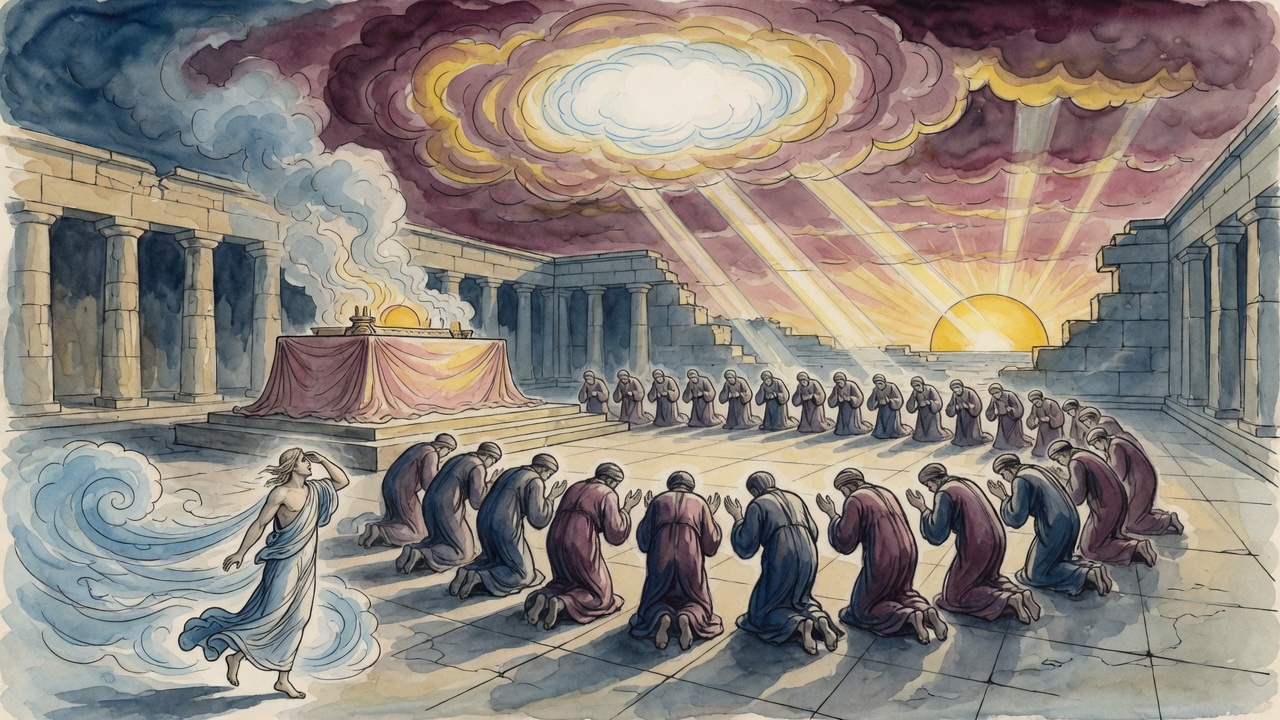
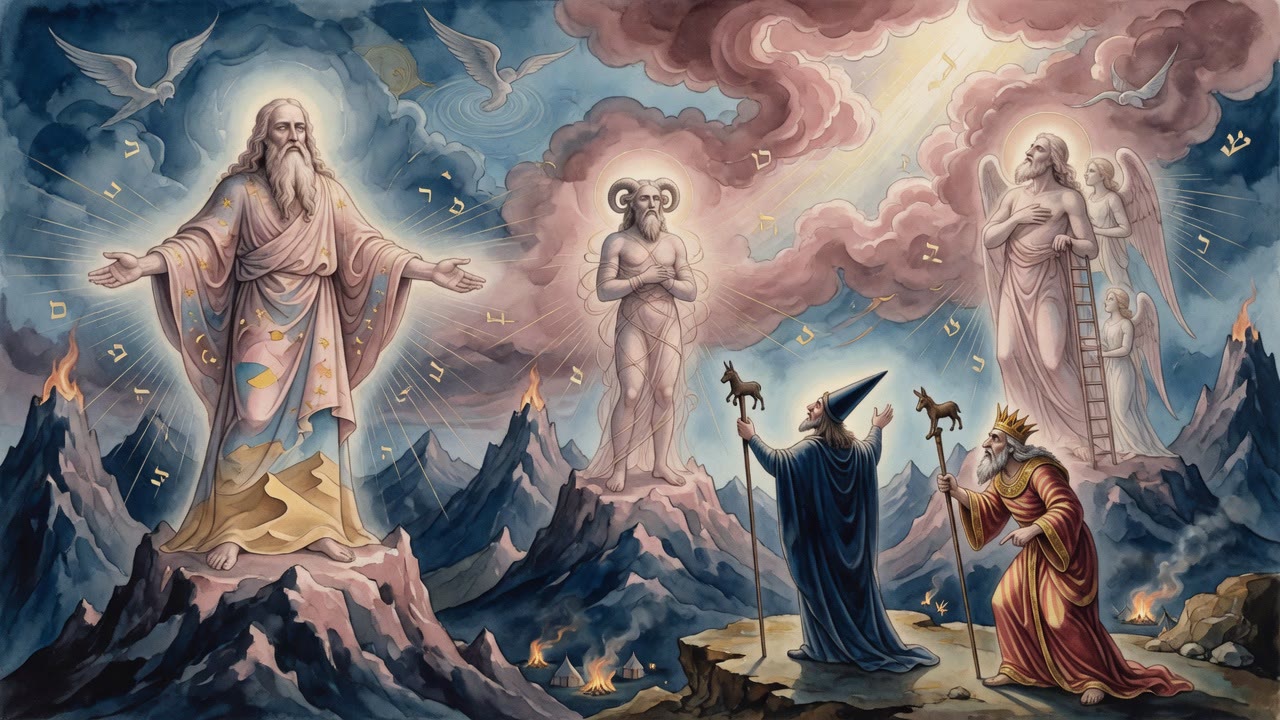
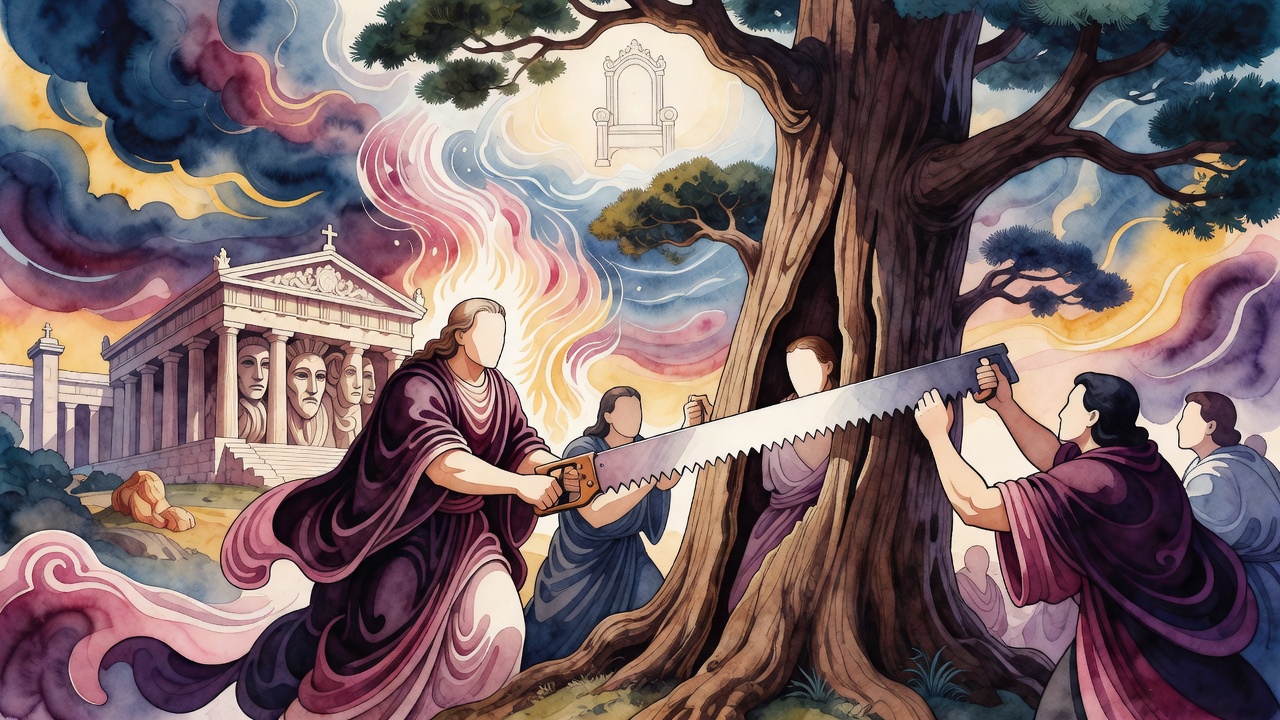
After Hezekiah died, Manasseh stopped serving the God of his father and began serving the theater of his own will. He wrecked the altar. In the inner space of the Temple he raised an idol with four faces, copied from the four figures of the divine throne, set so that every doorway met a face. Enter from any side and the image was waiting, a parody of omnipresence built by a king who wanted no corner free of his blasphemy.
Manasseh Had the Cedar Sawn Until the Blade Reached Isaiah's Mouth Click for full size

He cast a statue so large it needed a thousand men to move it. Each day a new crew hauled. Each sundown that crew was killed. No back that had bent under the idol was allowed to sleep free. The king wanted contempt for Judaism to be policy, spectacle, and blood schedule at once, a daily proof that human life was cheaper than his icon's travel across a courtyard.

Lectures Against the Torah

Erasing the Name from the Holy Scriptures did not satisfy him. He delivered public lectures whose burden was to ridicule the Torah. The city heard its own king teach scorn as wisdom from a platform that should have held other words. Prophets could not bear the sight. Isaiah, Micah, Joel, and Habakkuk left Jerusalem for a mountain in the desert, choosing sand over a capital that had made mockery into a curriculum.

Their hiding place was sold by a Samaritan, a descendant of a false prophet, who had drifted from Bethlehem with hangers-on and found a use for himself in the new court. Informing became a career. Manasseh put Isaiah on trial as if the bench could reverse a vision.

The Indictment of a Prophet

The charge was contradiction dressed as law. God told Moses, "Thou canst not see My face; for man shall not see Me and live." Isaiah said, "I saw the Lord sitting upon a throne, high and lifted up." He had compared princes and people to Sodom and Gomorrah. He had prophesied the fall of Jerusalem and the Temple. The court of a king who hated the books used the books as a snare, quoting holiness to kill a holy man.

Isaiah offered no explanation. He was convinced defense was useless in a hall already bought by idolatry. He preferred Manasseh act from ignorance rather than from open, tasting wickedness, a thin mercy toward a grandson who did not deserve it. Preference is not safety. Bailiffs came with the certainty of state power. Isaiah pronounced the Name. A cedar-tree swallowed him whole, wood closing over prophecy like a second skin.

The Saw That Found the Mouth

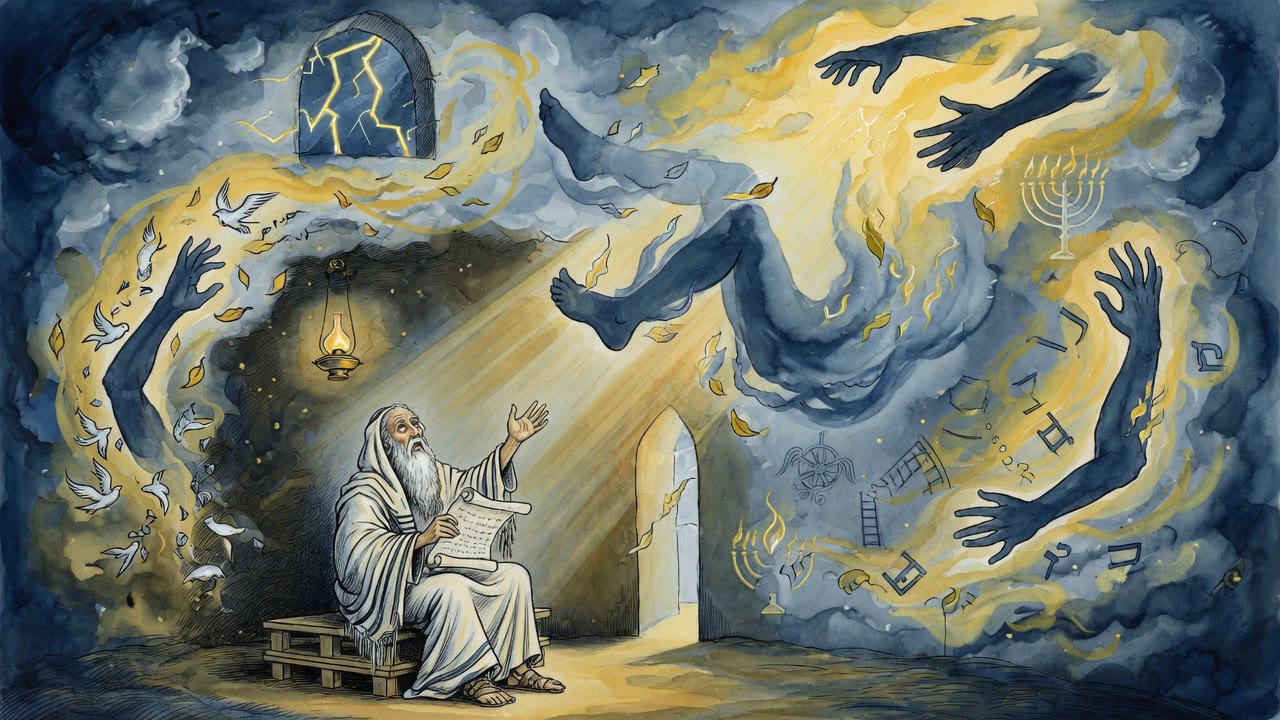
Manasseh ordered the tree sawn in pieces. The blade worked through living timber toward a man who had become grain in a trunk. When it reached the portion of bark under which Isaiah's mouth lay, he died. Tradition says only the mouth was vulnerable, because at his call to prophecy that mouth had said "a people of unclean lips" against Israel. The instrument of his mission became the seam of his death. He died at one hundred twenty years, by the hands of his own grandchild.

The four-faced idol still faced every door. The thousand-man statue still needed new shoulders tomorrow. The cedar lay in sections in the dust of a hunt that had found its quarry in timber. The mouth that had seen the throne was quiet. The throne Manasseh sat on was low enough to order a saw and call it justice.

Repentance Still Had a Road

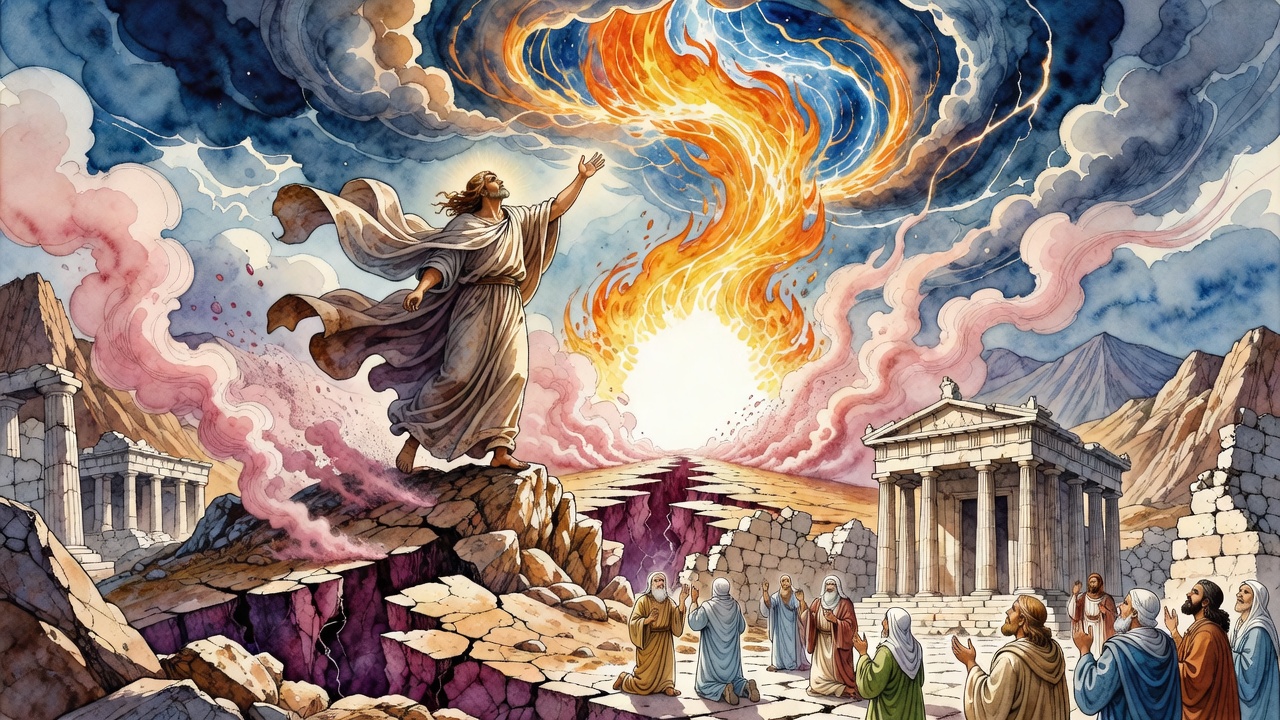
In another register the sages taught that repentance reaches the throne of glory farther than an arrow flies a field or two. A man may curse in the marketplace, and the Holy One still says, Repent between you and Me, and I will accept you. Hosea's call, "Return, O Israel, to the Lord your God" (Hosea 14:2), sits in the tradition as a door that stays open even when kings nail other doors shut and fill the sanctuary with faces of wood and metal.

Manasseh's Jerusalem was a clinic in how to refuse that door. He mocked, he murdered, he made the Temple a hall of faces that were not God. Isaiah's choice to hide in a Name-opened tree was a last physical argument. If the city would not hear, the wood would hold him until the saw taught the cost of a curriculum of scorn.

Grandchild killed grandfather-prophet. The genealogy of David produced both the killer and the corpse. That is the kind of history the books refuse to prettify. The throne Isaiah saw was high and lifted up. The throne Manasseh sat on ordered timber cut until a mouth stopped. Between them hangs Hosea's open road, unused that day, still named for anyone who will walk it before another king learns the same saw.


← All myths
From the tradition

Sources

2 sources

The texts behind this telling. Some cards carry a translation of the source; others are our own retelling of it, and each card says which. Every card links out to the original.

Legends of the Jews 9:45Legends of the Jews

Retold in our words. Read the original at the link below.The Legends of the Jews by Louis Ginzberg (1909) · Public Domain

The story of King Manasseh, successor to the righteous Hezekiah, offers a chilling example. According to Legends of the Jews, after Hezekiah's death, Manasseh completely abandoned the God of his fathers, indulging in the most wicked imaginings.

He didn't just neglect the altar; he destroyed it. And in the very heart of the Temple in Jerusalem, the kodesh hakodashim, the Holy of Holies, he erected a monstrous idol. This wasn't just any idol. It had four faces, a grotesque imitation of the figures on God's own throne, as Ginzberg retells based on earlier sources. And it was positioned so that no matter which way you entered the Temple, one of its faces would confront you. It was a deliberate act of defiance.

Manasseh's sacrilege wasn't confined to the Temple. He was malevolent towards his own people too. He commissioned an enormous image, so heavy it took a thousand men to carry. And here’s the truly horrifying part: each day, after the crew had done their work, Manasseh had them killed. Every. Single. Day.

His mission was to utterly eradicate Judaism and its core beliefs. He didn’t just want to erase God's name from the Holy Scriptures; he actively mocked the Torah in public lectures.

The prophets, including Isaiah, Micah, Joel, and Habakkuk, could no longer bear to witness these abominations. They fled Jerusalem, seeking refuge in the desert, as described in Legends. But their hiding place was revealed to the king by a treacherous Samaritan.

This Samaritan, a descendant of the false prophet Zedekiah, had his own grievances. He had been forced to flee Jerusalem himself after accusations were brought against him before King Hezekiah. He saw his chance for revenge, and accused the prophets before Manasseh.

Manasseh, eager to silence any dissenting voices, put Isaiah on trial. The charge? That his prophecies contradicted the laws of Moses. They pointed to passages where Isaiah claimed to have seen God, a direct contradiction of God's words to Moses: "Thou canst not see My face; for man shall not see Me and live" (Exodus 33:20). They also cited his harsh comparisons of Israel to Sodom and Gomorrah, and his prophecies of Jerusalem's downfall, as we find in Isaiah 1.

Isaiah, realizing the futility of defending himself, chose silence. He preferred that Manasseh act out of ignorance rather than pure wickedness, according to the legend. But when he heard the king's men pursuing him, he invoked the Name of God, and a cedar tree miraculously opened, swallowing him whole.

But Manasseh wasn't deterred. He ordered the tree to be sawn into pieces. And when the saw reached the part of the bark concealing Isaiah's mouth, the prophet perished. The legend states that his mouth was the vulnerable part of his body because, at the time of his prophetic calling, he had used the contemptuous words "a people of unclean lips" (Isaiah 6:5) to describe Israel. According to Seder Hadorot, Isaiah was 120 years old when he died, murdered by his own grandchild.

The story of Manasseh and Isaiah is a stark reminder of the power of leadership, and the devastating consequences that can arise when that power is used to suppress faith and persecute the righteous. It’s a chilling tale, yet it also serves as a potent reminder of the enduring strength of the prophetic voice, even in the face of unimaginable cruelty. What does it say about the enduring legacy of those who speak truth to power, even when it costs them everything?

Full source
Yalkut Shimoni on Nach 532:1Yalkut Shimoni on Nach

Retold in our words. Read the original at the link below.Sefaria Community Translation · CC-BY

The ancient collection of rabbinic teachings known as the Yalkut Shimoni, specifically section 532 on the books of Nach (the later prophets), offers a powerful counterpoint to this feeling. It explores this very human experience through a divine lens.

It states that when we seek to honor earthly rulers, readers often go seeking abundance, only to return empty-handed. But God, blessed be He, is different. We go to Him empty, and we return full. How is this possible? It's right there in the verse from Hosea (14:2): "Forgive all iniquity, and accept that which is good." God's generosity fills us, even when we feel utterly depleted.

Rabbi Yudan the Prince, citing Rabbi Yehudah bar Simon, beautifully illustrates the power of repentance, or teshuvah. He asks, how far does an arrow travel? A beit kor or two – a limited distance. But the power of repentance, wow, it reaches all the way to God's throne of glory! Again, (Hosea 14:2) is quoted: "Return, O Israel, to the Lord, your God. Our heartfelt return, our sincere remorse, has the power to transcend all distance and touch the divine.

Rabbi Eliezer then shares another profound insight, comparing human nature to God's boundless compassion. Someone speaks ill of you in front of others. Later, they come to you privately, seeking forgiveness. Probably not so easily! You'd likely demand they apologize publicly, to those who witnessed the initial offense.

But the Holy One, blessed be He, is not like that. A person can stand in the marketplace, cursing and blaspheming, and yet, God says, "Repent between you and Me, and I will accept you." Again, the verse from Hosea (14:2) is invoked: "Return, O Israel, to the Lord, your God." God offers forgiveness even when our transgressions are public. He doesn't demand public humiliation as a prerequisite for reconciliation. This speaks volumes about the nature of divine love – a love that prioritizes our return, our teshuvah, above all else. It's a radical concept, challenging our human tendency to hold grudges and demand retribution.

This teaching from the Yalkut Shimoni is ultimately about hope. It’s about the unwavering belief that no matter how far we stray, no matter how empty we feel, and no matter how public our mistakes, the path back to God is always open. It is an invitation to turn, to return, and to be filled with a grace that surpasses all understanding. What keeps you from turning and returning?

Full source