At Tziddon the Sages Rent Garments and Turn Home
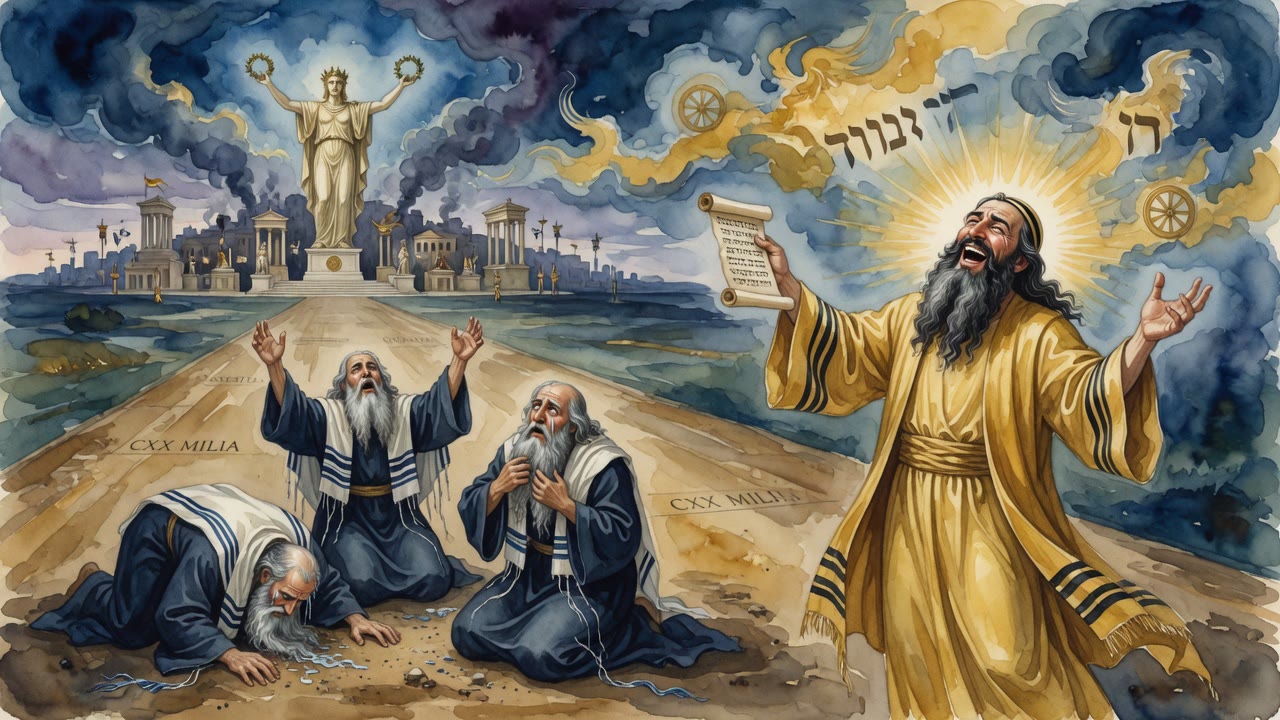
They had packed for a teacher's table in Netzivim. At a Phoenician port the Land rose behind their eyes, and they tore their collars.
Table of Contents
 Click for full size
The Road Toward Netzivim
Rabbi Elazar ben Shamua and Rabbi Yochanan Hasandler set out for Netzivim to sit before Rabbi Yehudah ben Beteira. The plan was clean. Distance for Torah. Dust for a teacher whose table was worth the miles. They walked like men who had already spent the cost in their heads.
Scrolls wait where the mouth that knows them waits. Netzivim had that mouth. They kept walking east, packs tight, arguments already forming for the first night at his bench.
Cloth Tears at Tziddon
At Tziddon, in Phoenicia, the plan broke.
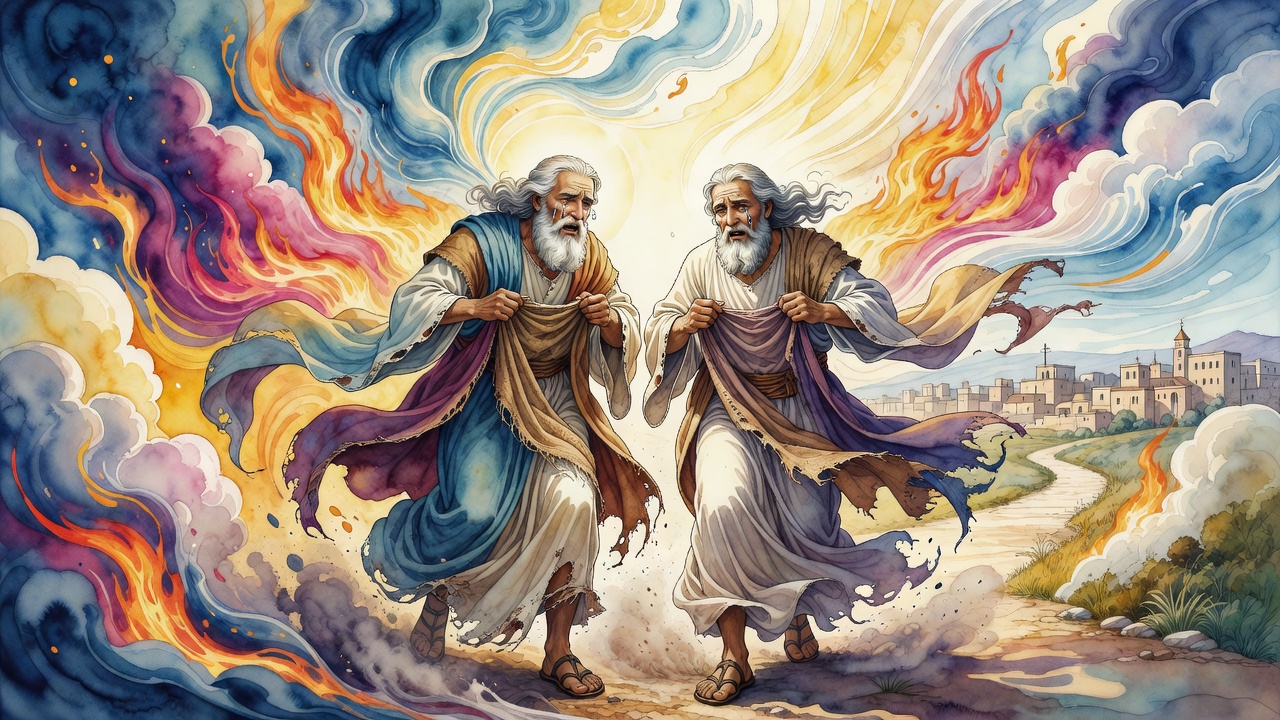
The port smelled of trade, not of Judean dust. That was enough. They remembered Eretz Yisrael the way a man remembers a house when the wrong air hits his face. They raised their eyes. They wept. They rent their garments until the sound of cloth was louder than the harbor.
Merchants argued prices. Ships took on cargo. Two scholars stood in torn collars like mourners in a city that was not sitting shiva.
The Verse That Turned Their Feet
They recited the warning and the promise in one breath. "Take heed and hearken to all these things, and dwell in their land." Then they said what the verse forced into the open.
"Dwelling in the Land of Israel stands over against all the mitzvot (commandments) in the Torah."
Study abroad is not nothing. Study abroad is not equal to soil under the covenant's own sky. They returned and came to their place. The teacher in Netzivim would wait, or not. The road home mattered more than the map they had drawn in their heads.
They did not burn the books of the diaspora. They refused to let books become an excuse never to go home. The reversed road was the ruling written in footprints.
Another Company Weeps at Paltom
Another company learned the same lesson on a different road. Rabbi Yehudah ben Beteira himself, with Rabbi Mathia ben Charash, Rabbi Chanina, Rabbi Yehoshua, and Rabbi Yonathan, was traveling abroad. They arrived at Paltom. They remembered the Land. They raised their eyes, wept, rent their garments, and spoke the same verse.
"Dwelling in the Land of Israel stands over against all the mitzvot in the Torah."
They too turned back.
The teacher Elazar and Yochanan had been walking toward had already faced the same port-smell of exile. He had already put his hands on his own collar. He had already chosen the tear in the cloth.
The Teacher Himself Turns Back
Deuteronomy ties inheritance to arrival. In reward for coming, you will inherit. "Dwell in their land" means more than occupying old houses. Wherever you wish to build, build. The Land is not a museum of Canaanite floor plans. It answers feet.
These men were not farmers scouting plots. They were scholars who had nearly spent their best years on foreign benches. They chose with their hands on their own collars. Torah without the Land is still Torah. The Land without their bodies is a claim waiting for witnesses. They chose to be witnesses again.
Ports kept offering ships. Empires kept offering safety that looked like wisdom. At Tziddon and at Paltom, men who loved learning more than most still let homesickness become a ruling. They did not argue that Netzivim lacked books. They argued that books were not the only weight on the scale.
Ships still left the harbor that week. The sages' torn collars made them look like mourners. They accepted the look. Mourning for a Land you can still walk back to is a strange mourning, half grief and half decision. They chose the half that moves feet.
Yehudah ben Beteira's teaching would not vanish because two travelers turned around. The Land, empty of their particular weight, would have stayed a claim without those witnesses if they had kept walking east only for a sharper argument. They paid the cost of a shorter table of learning for a longer belonging. Years later students would quote their tears. The port of Tziddon kept its trade. The torn cloth kept its teeth.
← All myths