Samael Lost Isaac on Moriah and Took Sarah Instead
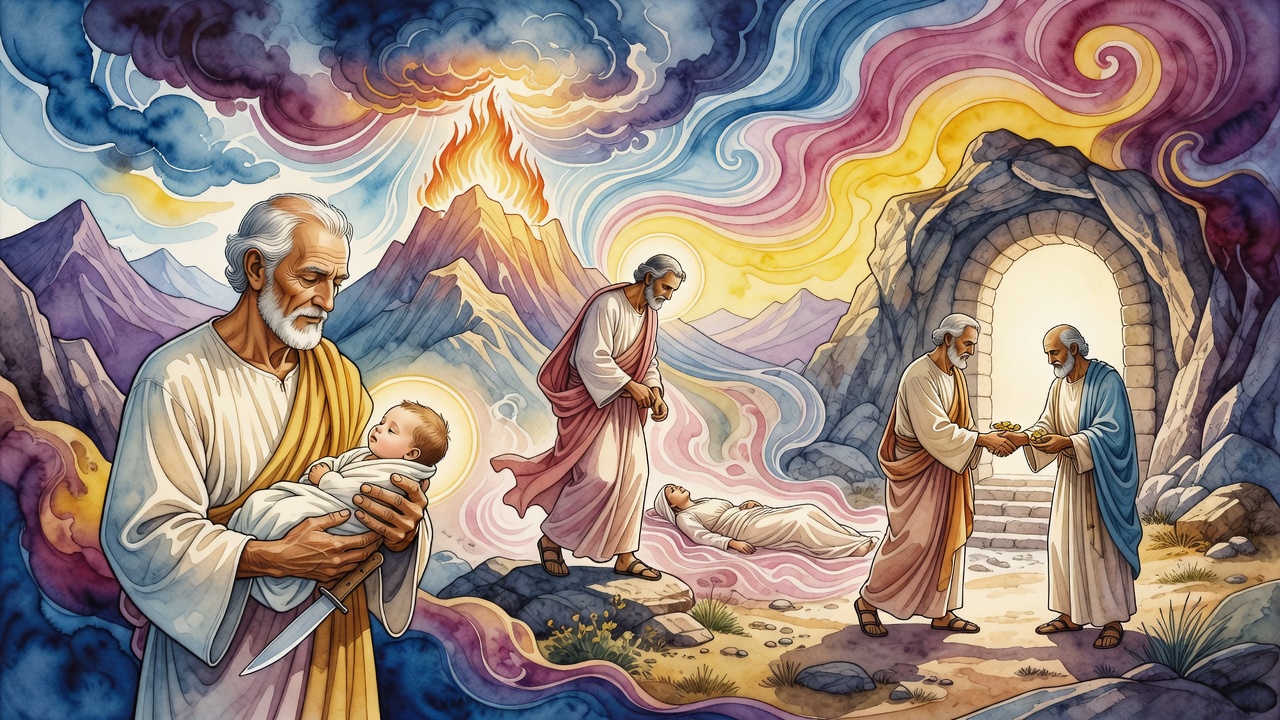
Robbed of Isaac when the knife was stayed on Moriah, the accuser Samael raced to Sarah and killed her with the truth of how close the blade had come.
Table of Contents
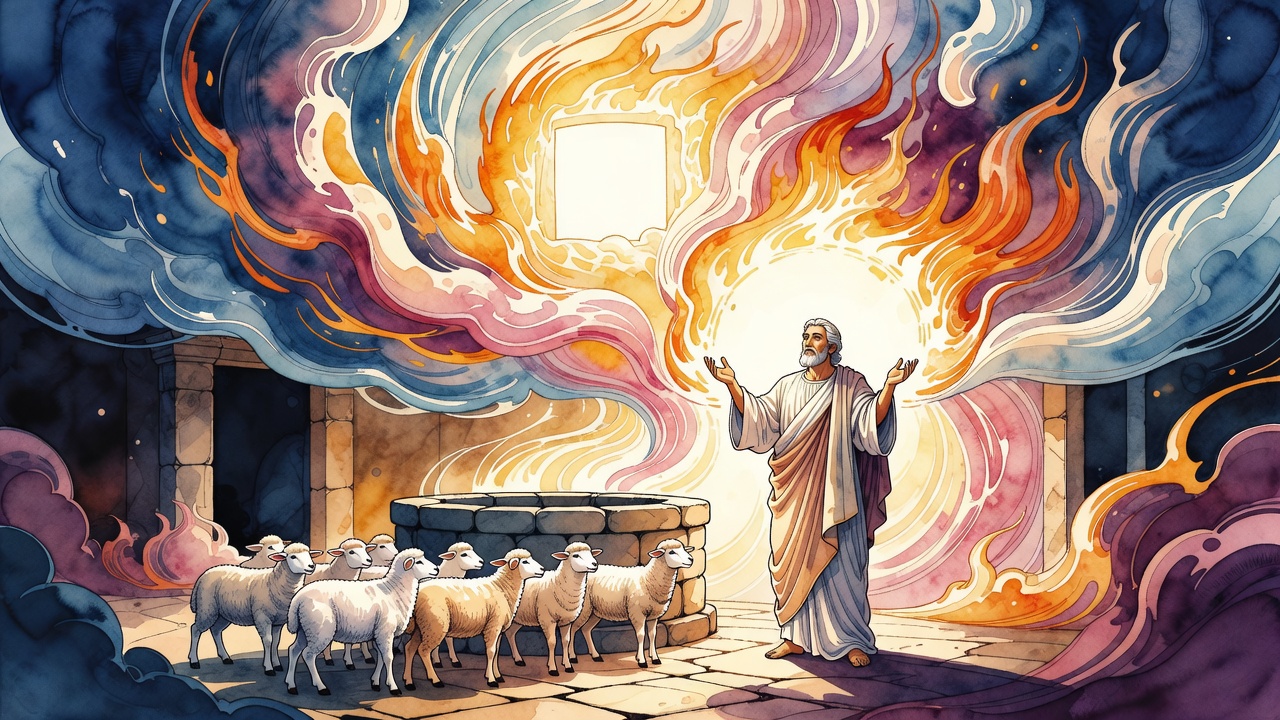
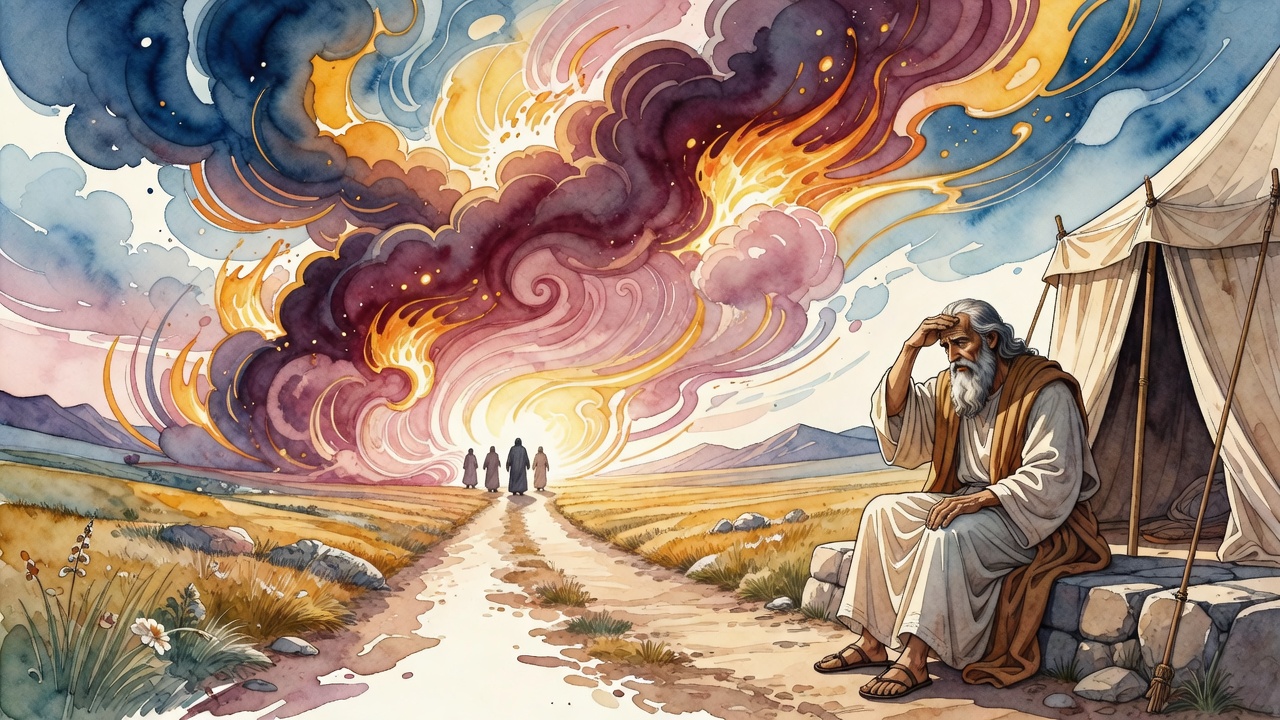
The accuser fed on slaughter. Samael stood in the high court of heaven and counted the smoke of every altar, and what he loved best was the moment a knife crossed a throat and the blood ran into the fire. So when the old man at Hebron threw a feast, a great feast for the weaning of his late-born son, Samael leaned toward the Throne and made his complaint.
 Click for full size
"Master of the universe," he said, "this old man You favored with a child of the womb at a hundred years. Look at his feasting. Look at his joy. Out of all of it, did he set aside one turtledove for You? One young pigeon on the fire? Nothing. He keeps the whole table for the boy."
The answer came back level and terrible. "Everything he does, he does for the sake of that son. If I told him to slaughter the boy before Me, he would slaughter him."
Samael went quiet. He had asked for a single bird and the Holy One had named a child. The accuser had wanted to embarrass the old man, to prove that gratitude curdles into stinginess. Instead he had handed God a reason to test the one man heaven had bet everything on. The words left his mouth and could not be drawn back. The road to Moriah opened from that sentence.
The Hunter Climbs the Mountain
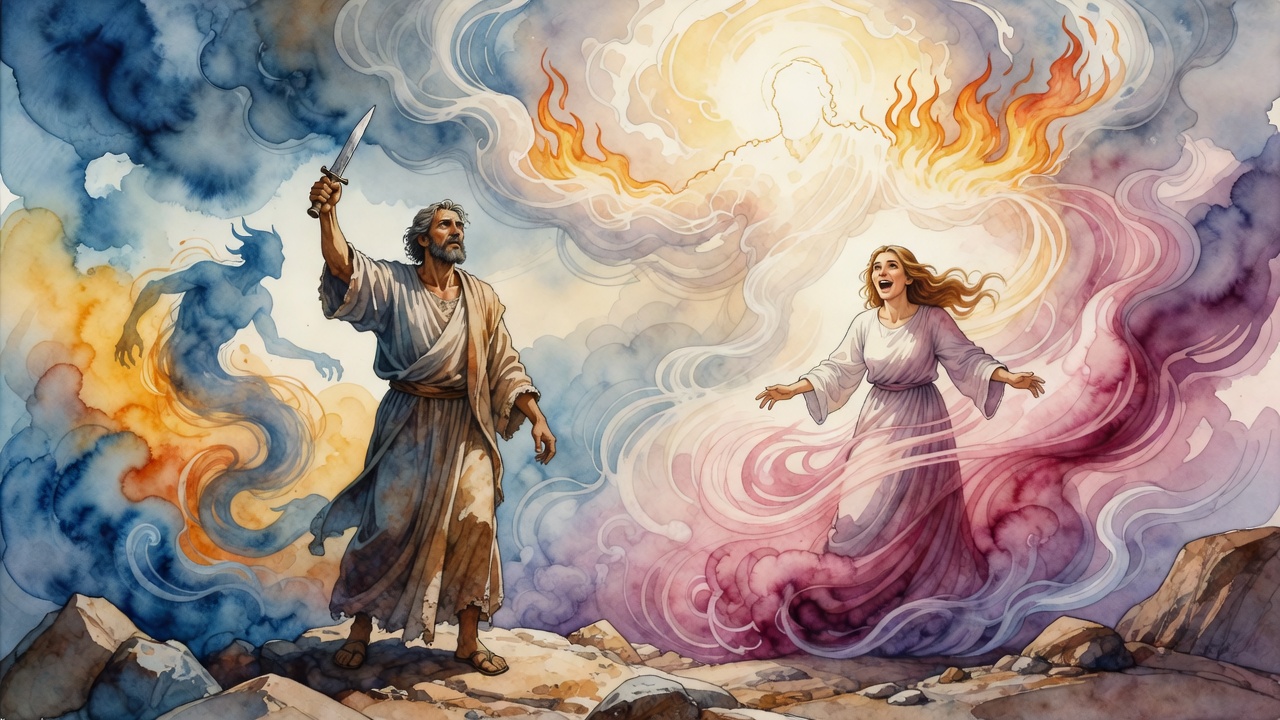
So Samael followed them up. He had heard the command go out, "Take your son, your only one, whom you love," and he had walked the three days of the journey beside the donkey, beside the silence, beside the boy who carried the wood that would burn him. The accuser did not try to stop it now. Why would he? This was the slaughter he lived for, and he had set it in motion with his own complaint. He waited at the altar for the blood.
He watched the old man build the stones. He watched Isaac lie down on the wood and stretch his throat to the sky and ask to be bound tightly so that a flinch would not spoil the offering. He watched the knife rise. The accuser pressed close, hungry, certain. One stroke and the bet heaven had placed on this household would spill out red onto the wood, and he would have been right all along, and the smoke would be his.
Then the voice tore out of heaven. "Do not stretch out your hand against the boy. Do not do anything to him." A ram bawled in the thicket, caught by its horns, and the old man took it and the ram burned instead of the son. The knife came down on an animal. Isaac stood up off the wood alive.
Robbed at the Last Breath
Samael's anger caught fire. The slaughter he had counted on, the slaughter his own mouth had set in motion in the court of heaven, had been snatched away at the final breath. The son walked down the mountain. The offering was accepted. Abraham came down from Moriah in peace, and peace was the one thing the accuser could not stand to see on that face.
He would not lose. If the knife had been turned from Isaac's throat, then he would carry it somewhere it could still cut. He knew there was a tent at Hebron and a woman in it who did not know what had happened on the mountain, a woman who had spent three days not knowing whether her only son was alive. The accuser turned away from Moriah and went looking for her.
The Accuser Comes to the Tent
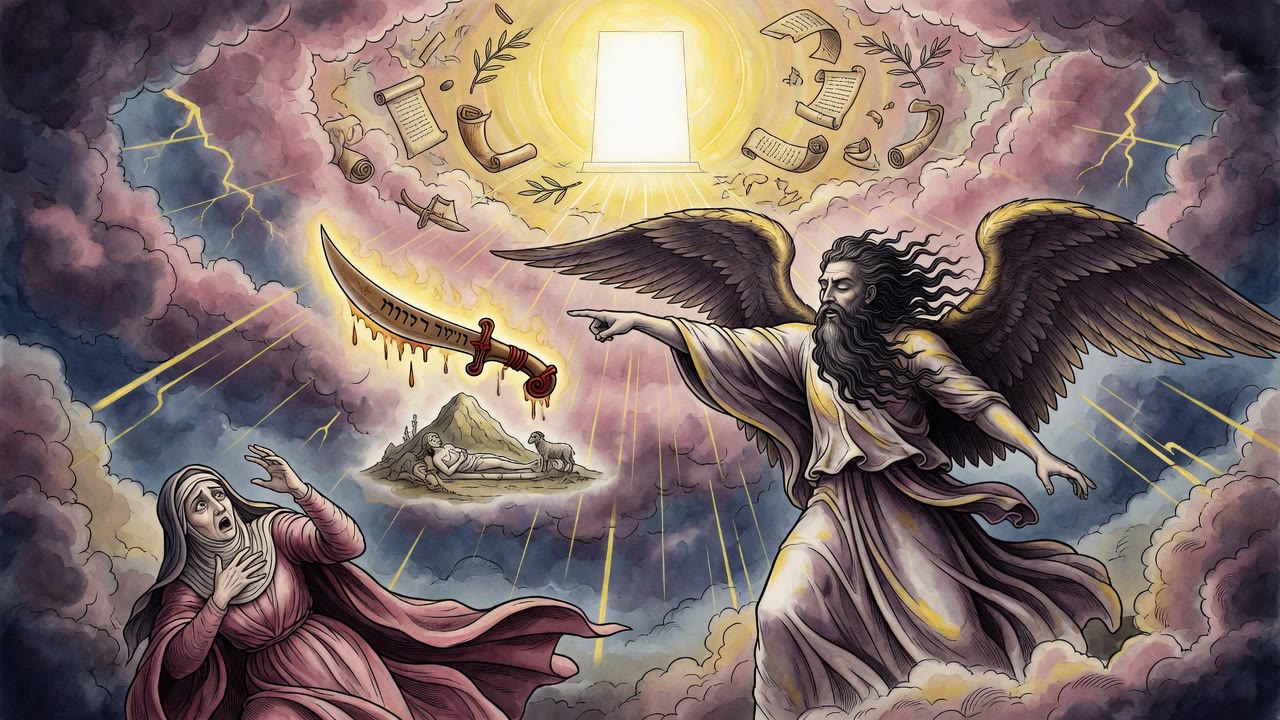
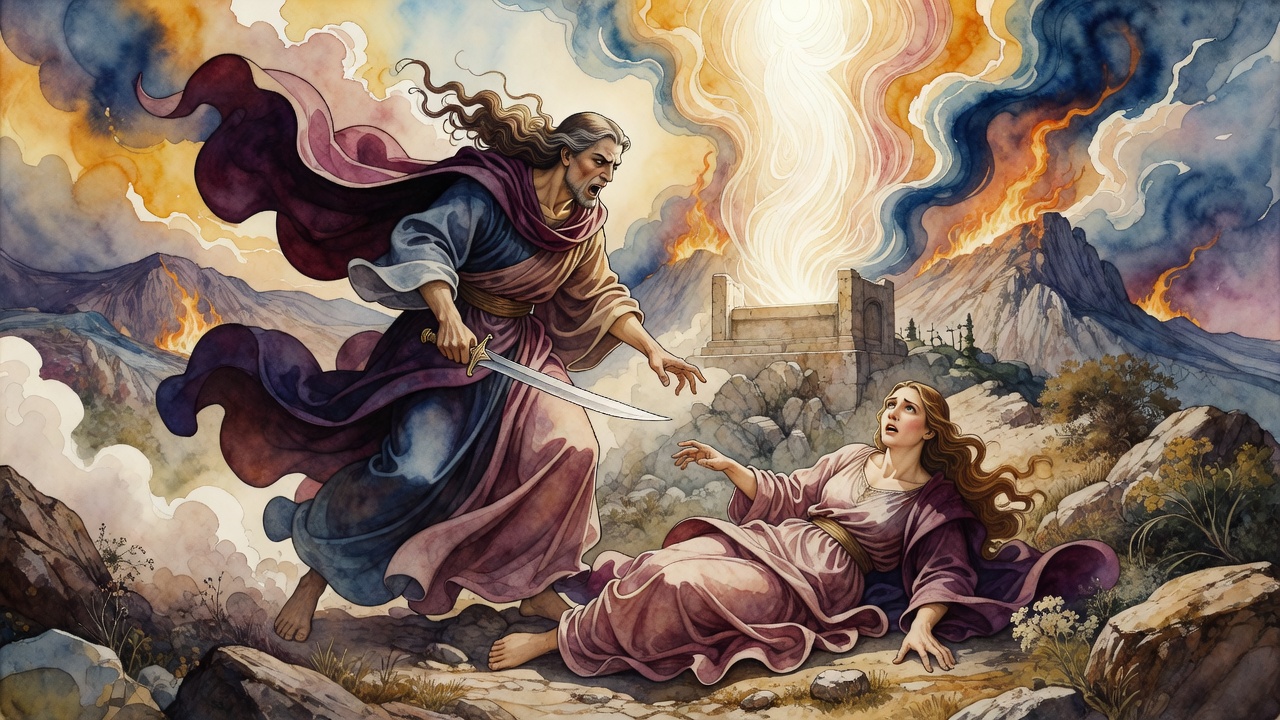
He came to Sarah wearing the face of someone with news. "Have you not heard," he said, "what has happened in the world?"
"No," she said.
And then he gave it to her slowly, the way a blade goes in. "Abraham took Isaac your son. He bound him on the wood and he slaughtered him and he offered him up as a burnt offering on the fire."
He did not lie outright. He simply stopped the story one moment before the rescue. He let the knife stay raised in her mind. He let the wood catch. He let her see the throat and the blade and the smoke and gave her nothing of the ram, nothing of the voice from heaven, nothing of the boy standing up off the altar alive. He handed the mother the whole horror of the thing and withheld the one word that would have undone it.
Three Cries and a Soul That Flew
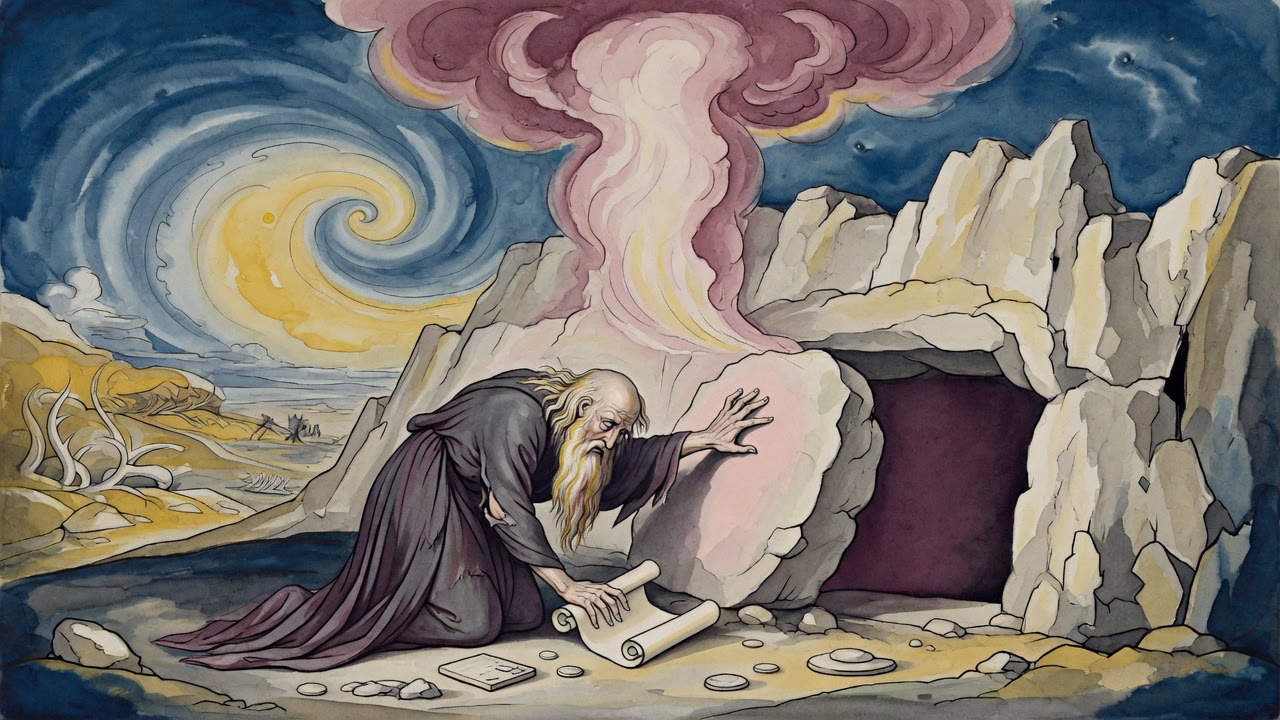
She began to weep. She wailed and could not stop. Three sobs broke out of her, three long broken cries after them, the sound a shofar (a ram's horn blown like a trumpet) makes when it stammers, the wavering notes that one day would call a whole people to tremble. And on the last cry her soul flew out of her and she was gone. The grief the accuser had planted reached her heart and stopped it. The knife stayed on Moriah had found its throat after all. It had simply found a different one.
Down the mountain the old man was still coming home in peace, not yet knowing the tent at Hebron had gone silent. The verse says he came to mourn for Sarah and to weep for her, and when it says he came, it means he came from one place in particular. He came from Mount Moriah. He had gone up with a son and a wife and an offering. He came back with a living son, an accepted offering, and a tent he would have to bury his wife from. The accuser had taken his second victim quietly, while everyone was still looking at the mountain.
← All myths