Samriel the Gatekeeper and the Nation That Worshipped Fire
A nation that kindles a great stake at dawn and dusk meets the demon their fire was feeding, and Samriel opens the gate.
Table of Contents
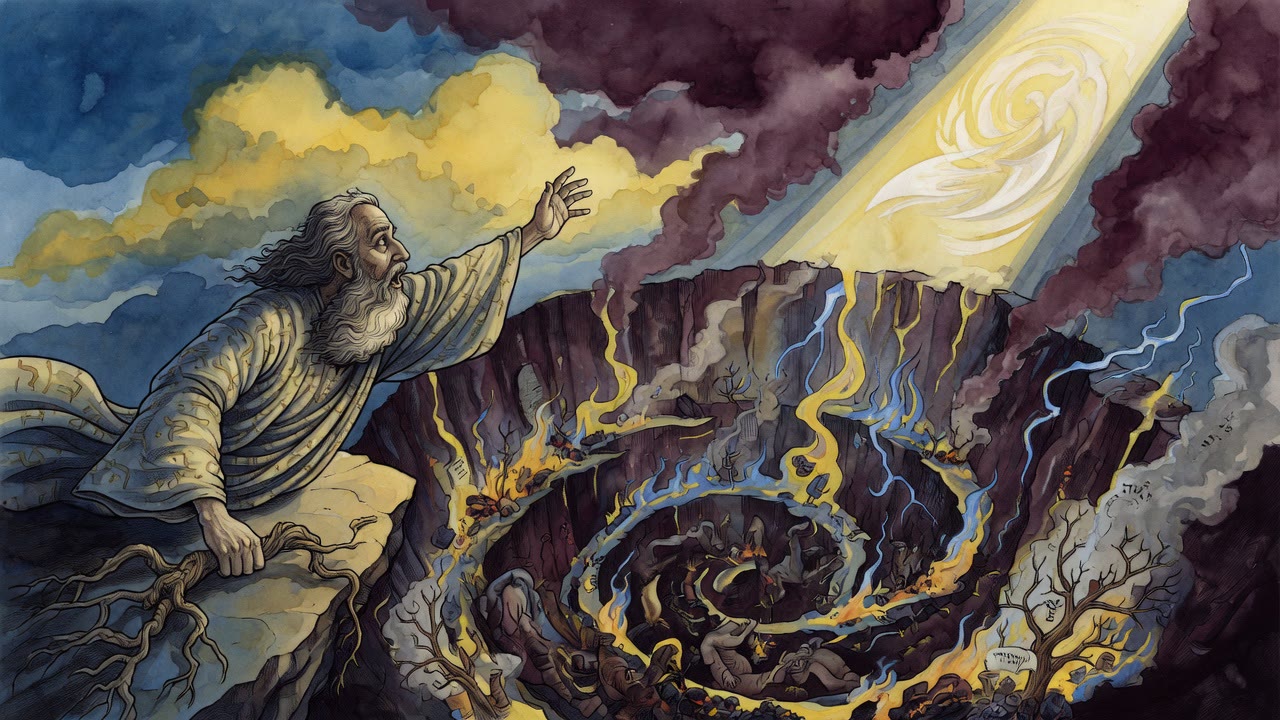
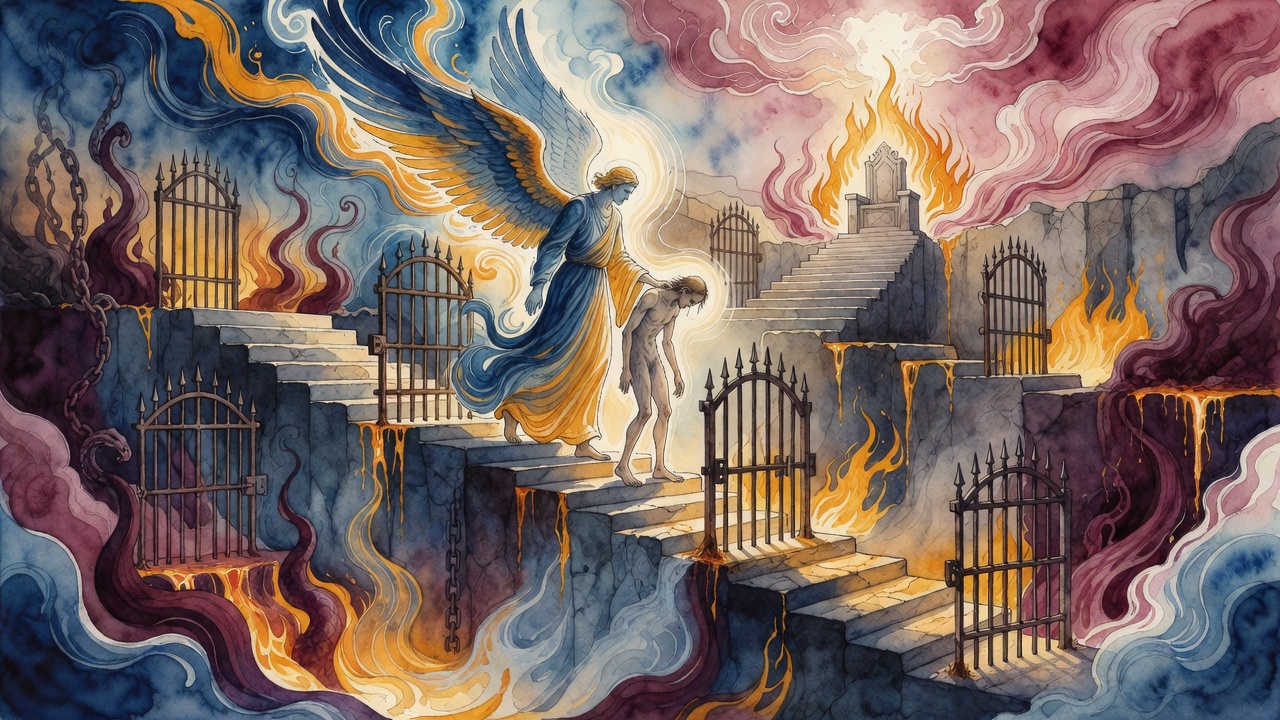
There is one post in all of creation that no angel has ever asked for. Samriel holds it. He stands at the mouth of Gehenna (the realm of judgment after death) with a ring of keys and a book so heavy it takes both arms to lift, and when the avenging angels drag a soul to the rim, he does not let it pass until he has read the name aloud. No name in the book, no entry. He is the bouncer at the door of the fire, and the fire has been burning a long time.
 Click for full size
Three of his gates open on the side of the wilderness. When Samriel turns a key, a thread of the world's daylight slips down into the dark, and three lesser angels go ahead of it with shovels, clearing the ash so the ones already inside can lift their faces and see that thread for the length of a breath. Then the gate shuts and the light is gone and the shovels go still.
The Nation That Fed the Dawn
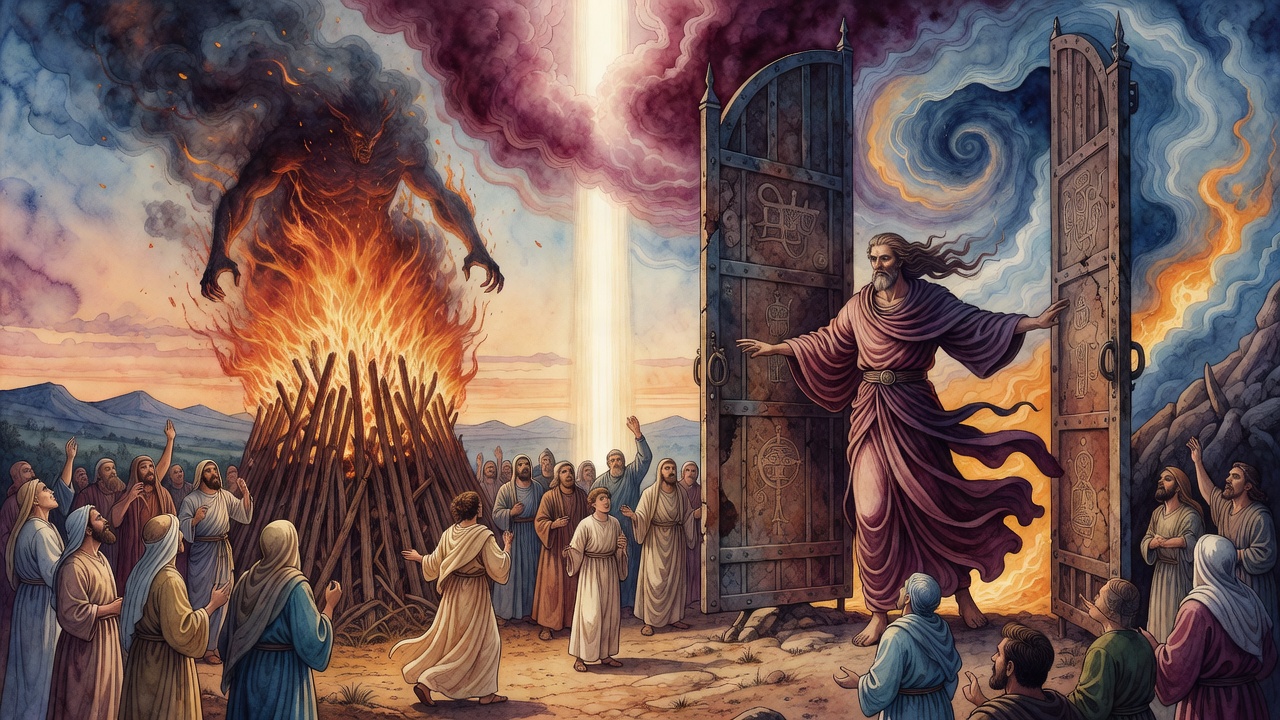
Far off, in a country most travelers never reach, lived a people who had built their whole religion around fire. Every morning at first light they raised one great stake before their temple and set it burning. Every evening at sundown they raised another. The flame never died. Children learned to tend it before they learned to read. Old men measured their lives by it.
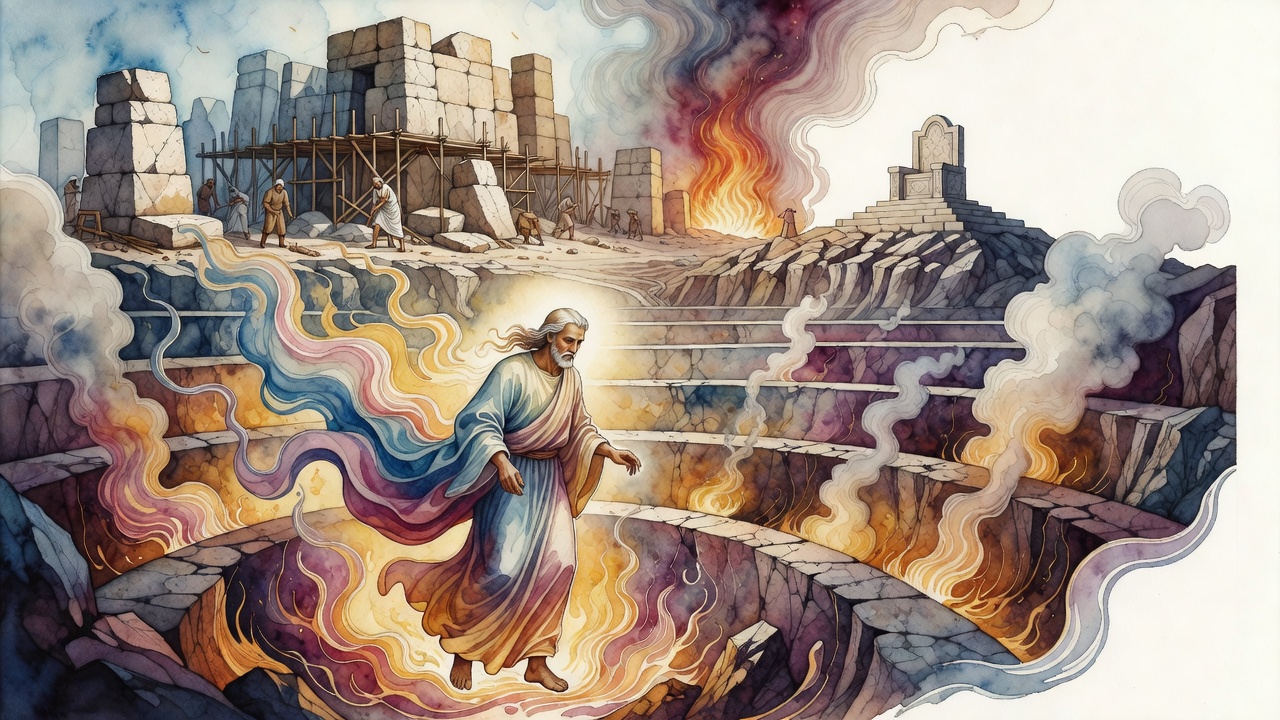
And when a man grew old enough to feel his strength leaking out of him, he walked to a pit at the edge of the city. They called that pit the gate of Gehinnom. He climbed to the lip, and he threw himself in, and the flames took him. They believed the burning scrubbed away every sin he had ever carried and set him down clean inside Paradise. To die in the fire was the best thing a person could do.
The Purse Left With a Kind Old Man
A Jew came through that country on a long road. He carried his money in a purse, and the road ahead of him was not safe, so he looked for somewhere to leave it. He found a gentle old man he had come to trust in the town, pressed the purse into his hands, and went on.
Three days later he came back. The old man was gone. He had walked to the pit and thrown himself in, the neighbors said, the way the faithful always did. The Jew stood in the street with his stomach dropping. His money was ash now, gone into the same fire as the man.
"Wait," the townspeople told him. "These men come back on the third day after the burning. They return to settle whatever they left unfinished. Your purse will come back to you. It always does."
What Came Back From the Fire
On the third day the old man walked out of the crowd. He came straight to the Jew, smiled at him like an old friend, set the purse in his hands with not a coin missing, and turned to go.
The Jew could barely breathe. A man had jumped into the gate of Gehinnom and walked back out clean and smiling, carrying another man's money home. If that pit could do this, the Jew wanted what it gave. He ran after the old man and begged to be taken along, into the fire, into the Paradise on the other side of it.
The old man stopped. When he turned, his face was no longer the old man's face.
"I am not the man you trusted," he said. "I am a mazzik, a destroyer. For longer than this city has had a name, my kind has worn faces like his. We walk out of that pit on the third day so the people will believe the fire saves them. We are why they kindle the stakes at dawn and at dusk. Their worship does not rise to heaven. It comes to us. That is the harvest we are gathering, and the old man is part of it now."
He looked at the Jew almost with pity. "But you. You serve the true Master of the Universe. The road I walk leads exactly nowhere you would want to arrive. You cannot come."
And the demon was gone, and the purse was warm in the Jew's hands, and behind him the evening stake was already burning against the dark.
Where the Pit Truly Ends
The pit at the edge of that city was never a shortcut to Paradise. It was a throat. Every soul that leaped into it for the love of the fire fell past the rumor of light, past the smiling face that had lied to it, down to where the real gate stands and a real keeper waits.
There Samriel lifts the heavy book and looks for the name. The fire-worshipper arrives sure he has earned his clean entry. The keeper turns the pages. The name is there. It was always going to be there. He fits the key to one of the three gates on the wilderness side, and the lock gives, and for the length of one breath a thread of the world's light falls across the new arrival's face. Then the shovels go still, and the gate swings shut, and the flame the man fed every dawn and every dusk of his life closes over him at last from the inside.
← All myths