4 min read

Sarah Freed Hagar Before Giving Her to Abraham as a Wife

Ten childless years in Canaan, and then a plan. Hagar walked into Abraham's tent a free woman by Sarah's order, and out of it, pregnant, into open country.

Curated by Arthur · Told by Maggid ·
Table of Contents
  1. Ten Years in Canaan
  2. Set Her Free First
  3. The Chin That Lifted
  4. Under Your Authority
  5. Out Past the Flocks
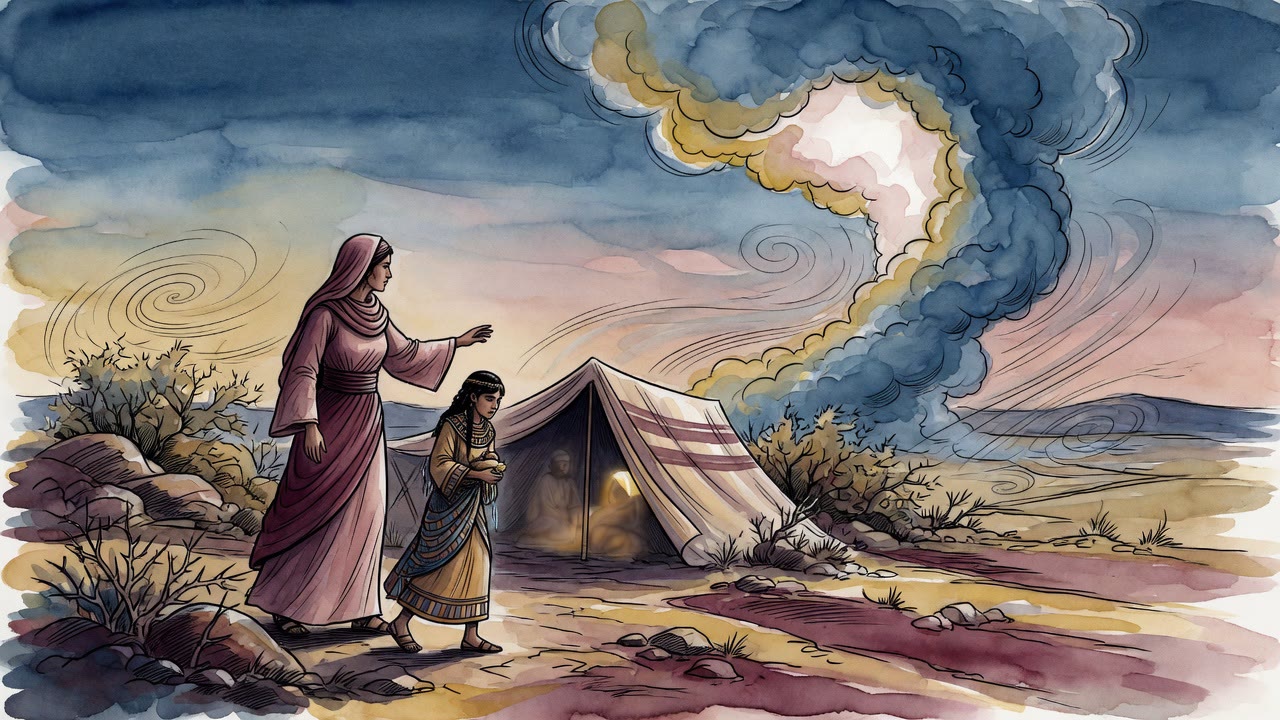
Sarah Freed Hagar Before Giving Her to Abraham as a Wife Click for full size

Ten Years in Canaan

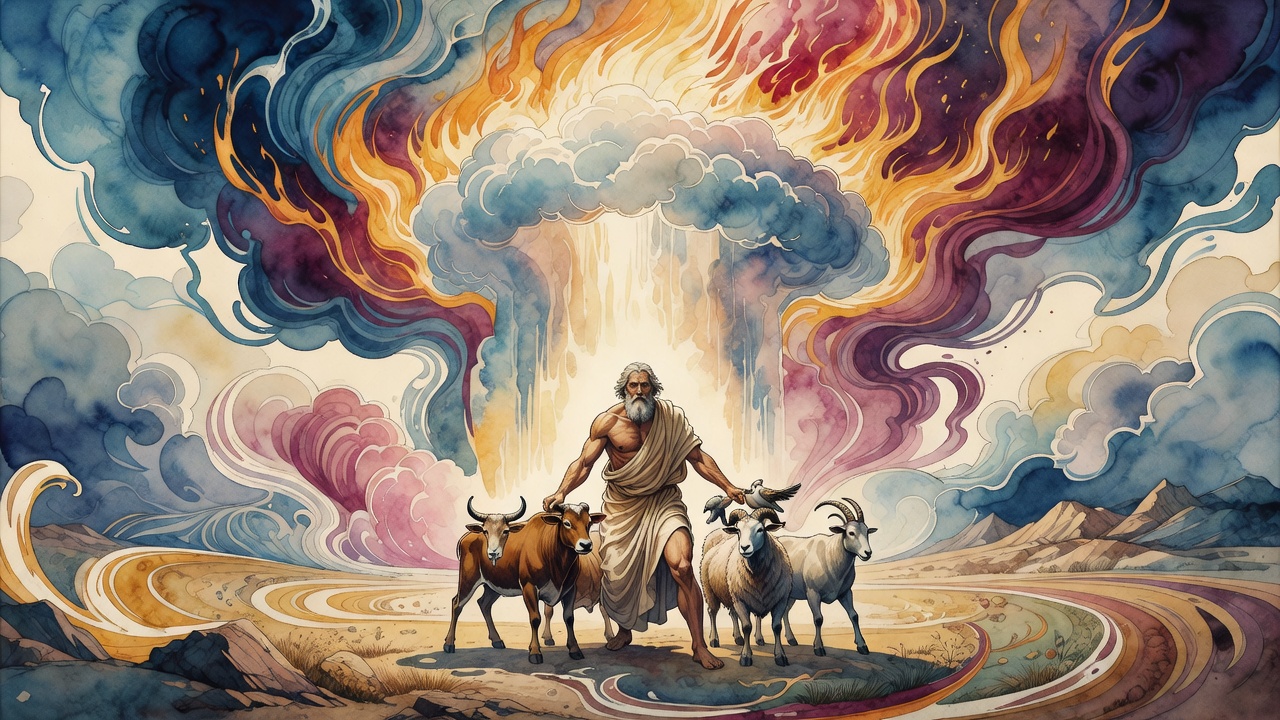
Sarah had counted them. Ten years in the land, ten years of a promise that kept its shape and would not arrive. She was the one who finally said out loud what the household had stopped saying, that the Lord had shut her.

The promise had been made to her husband. Stars, sand, a nation coming out of his own body. Nobody had put her name in it, and she had been listening to it for ten years in a tent that stayed quiet.

So she made a plan involving another woman's body. She made it carefully. It cut all three of them.

Set Her Free First

She did not simply tell her husband to go in to her maid. She put a condition in front of the act.

"Go to my handmaid and set her free," she said. "Perhaps I may be builded by her."

Free her first. Hagar the Egyptian was to stand up out of her own servitude before she lay down as a wife, because a child born to a bondwoman is born a bondman, and Sarah was not going to open the covenant line under a slave's name.

Abraham hearkened to the word of Sarah. He did not argue with the arrangement and he did not improve on it. It was hers.

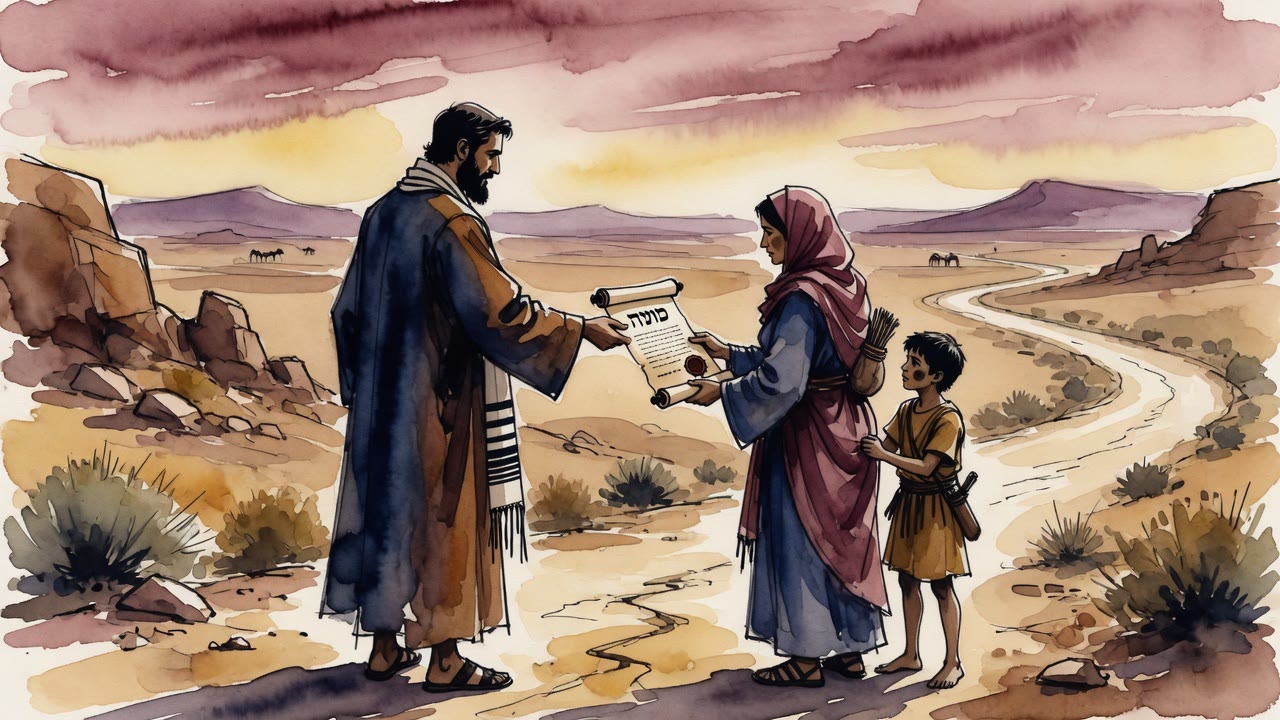
She took the Egyptian, the Mizreitha, and set her free, and gave her to her husband to wife. Not a concubine pushed to the back of Abraham's tent. A wife.

The Chin That Lifted

Hagar conceived at once.

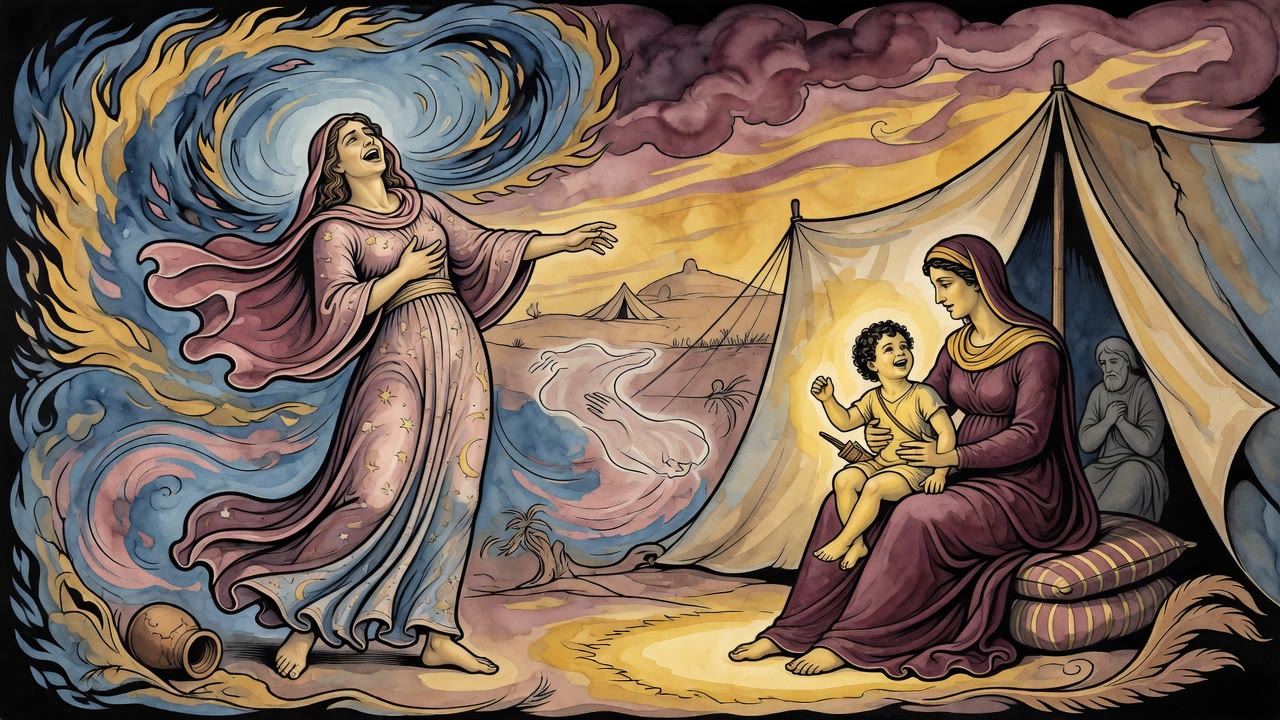
Then something changed in the way she looked at Sarah. Her mistress became light in her eyes. A freed woman carrying the household's first son does not fetch water the way she fetched it the month before, and everybody in the camp could see it, and the two women knew that everybody could see it.

Sarah went to Abraham with her own words. My wrong is upon you.

Under Your Authority

He did not judge between them. He did not take the pregnant woman's part, and he did not take his wife's part either. He named a legal fact and handed the whole thing back across the tent.

"Behold, your handmaid is under your authority. Do to her what is right in your eyes."

Authority. That was the word, and it settled the question of who Hagar still belonged to. She had been freed, and freed for a purpose, and she was standing inside Sarah's household under Sarah's jurisdiction with Sarah's grievance filling the air. Whatever came next would be lawful. Abraham had just said so and then said nothing else.

Sarah afflicted her.

Out Past the Flocks

The word for what Sarah did to Hagar is the word Sarah had used for what Hagar's eyes did to her. Affliction answering affliction, inside one tent, with a pregnancy between them and a husband who had removed himself from the room by naming a jurisdiction.

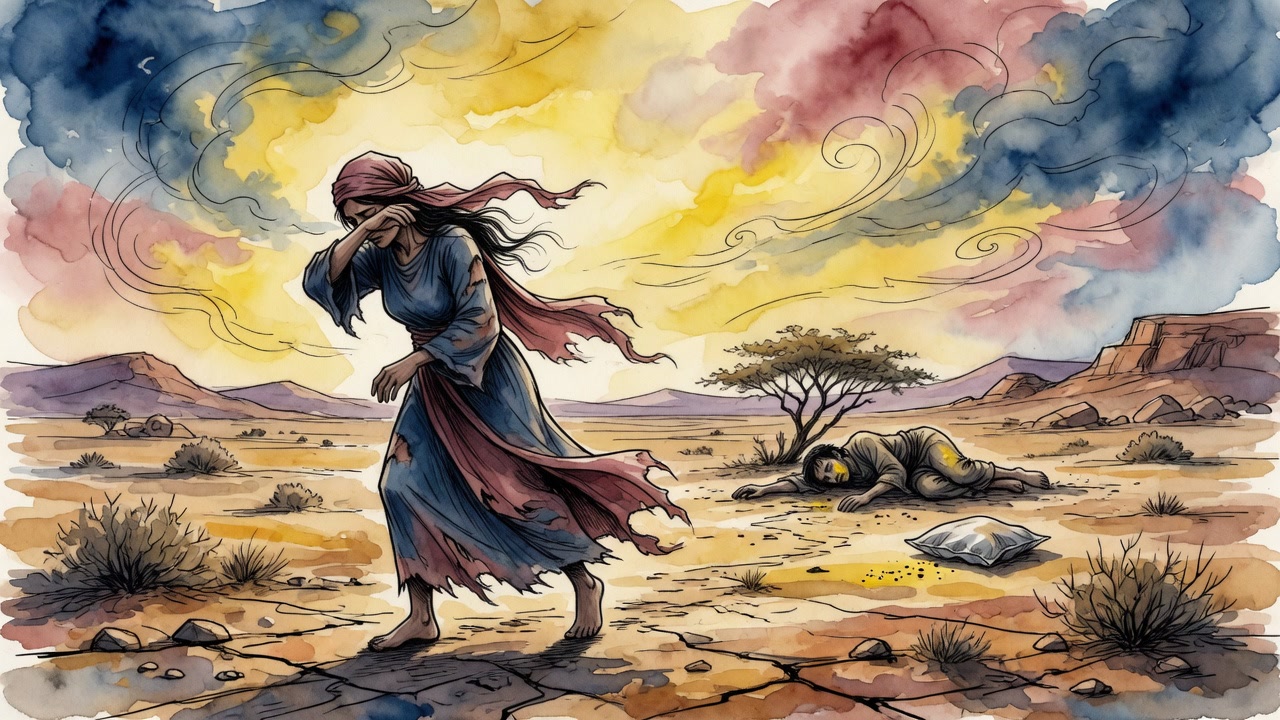
Hagar escaped from before her.

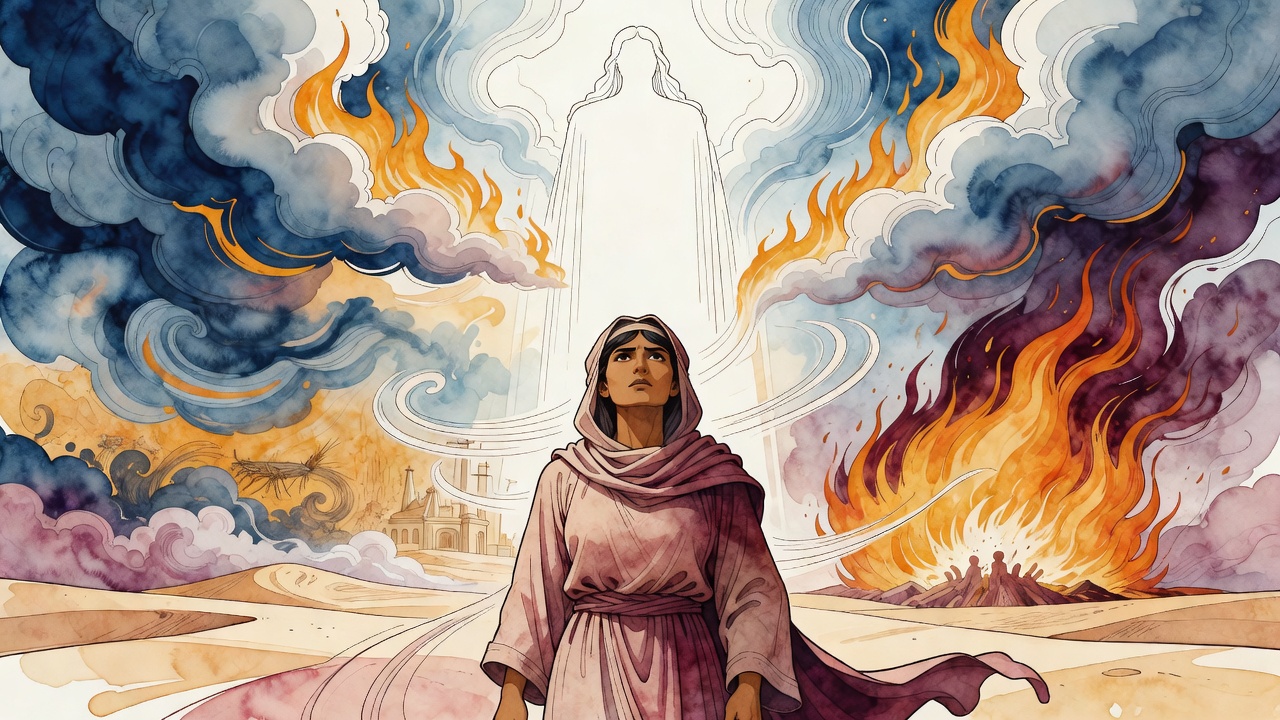
An Egyptian woman, legally freed, legally married, carrying Abraham's first son, walked out past the flocks into open country with no water arranged and nobody sent after her.

Behind her the tent stood where it had stood for ten years.


← All myths

From the tradition

Sources

3 sources

The texts behind this telling. Some cards carry a translation of the source; others are our own retelling of it, and each card says which. Every card links out to the original.

Targum Pseudo-Jonathan on Genesis 16:2Targum Pseudo-Jonathan on Genesis

Retold in our words. Read the original at the link below.The Targum of Jonathan ben Uzziel, trans. J. W. Etheridge, London, 1862 · Public Domain

There is a detail in the Hebrew of (Genesis 16:2) that the Targum will not let pass quietly. Sarah sends her husband to her handmaid Hagar. The Hebrew says simply go in unto my maid. Targum Pseudo-Jonathan inserts a step that changes the ethics of the whole scene.

Sarah says: go to my handmaid and set her free. Only then, perhaps, I may be builded by her.

For the Aramaic paraphrast, a child of promise cannot be born to a slave woman as a slave. Hagar must become a free woman before she becomes the mother of Abraham's son. Otherwise the very first generation of the covenant people begins in bondage, and Sarah will not have it.

Abraham, the verse ends with a single understated verb, hearkened to the word of Sarah.

The Maggid pauses on that. Sarah is the one who designs this arrangement. Sarah is the one who sets the ethical floor. Sarah is the one Abraham listens to. Pseudo-Jonathan treats her not as a silent matriarch but as the architect of the household, insisting that liberation precedes childbearing (Genesis 16:2). The plan will still go sideways. Hagar will conceive and look at Sarah with new eyes, and grief will follow. But the Targum wants you to know that Sarah began the whole business by trying, at least, to do the right thing first.

Full source
Targum Pseudo-Jonathan on Genesis 16:3Targum Pseudo-Jonathan on Genesis

Retold in our words. Read the original at the link below.The Targum of Jonathan ben Uzziel, trans. J. W. Etheridge, London, 1862 · Public Domain

The Hebrew of (Genesis 16:3) marks the moment with a small, precise number: after Abram had dwelt ten years in the land of Canaan. Targum Pseudo-Jonathan holds onto that ten and adds the other detail the earlier verse had already promised, Sarah set her free, and only then gave her to Abraham as a wife.

Ten years is not a round literary number here. It is a halakhic marker. Later rabbinic law would read this verse as the source for the rule that a couple who remain childless for ten years in the Land of Israel must reconsider how to build their household. Ten years of waiting is the patience Sarah has paid before she acts.

The Targum also emphasizes what kind of marriage this is. It is not a concubinage. Sarah formally manumits Hagar, the Mizreitha, the Egyptian woman. And gives her to Abraham to wife. The vocabulary is elevated. Whatever sorrow follows, Hagar does not enter Abraham's tent as chattel.

The Maggid hears two things in this verse. First, that holy households still operate by law and by calendar; ten years in Canaan is not a shrug but a decision (Genesis 16:3). Second, that the way people are brought into a covenant family matters, freedom first, marriage second, motherhood third. Sarah gets the order right, even when the outcome will not be what she hoped.

Full source
Targum Pseudo-Jonathan on Genesis 16:6Targum Pseudo-Jonathan on Genesis

Retold in our words. Read the original at the link below.The Targum of Jonathan ben Uzziel, trans. J. W. Etheridge, London, 1862 · Public Domain

The Hebrew of (Genesis 16:6) is terse, almost stenographic. Targum Pseudo-Jonathan keeps the brevity but sharpens one word: authority.

Behold, thy handmaid is under thy authority, Abraham tells Sarah. Do to her what is right in thine eyes.

Abraham does not mediate. He does not take Hagar's side against his wife, and he does not take Sarah's side against his pregnant concubine. He names the legal fact: Hagar is still inside Sarah's household, still under Sarah's jurisdiction. And he hands the decision back to the woman whose authority he had momentarily interrupted by fathering this child.

What follows is painful. Sarah afflicted Hagar, the verb echoes Sarah's complaint in the previous verse that her honor had been afflicted. And Hagar fled into the wilderness.

The Maggid refuses to pretend this episode is clean. Two women are suffering; a man has stepped back; a pregnant Egyptian is running into the desert; and no one in the tent is going to feel righteous tonight. But the Targum also preserves a principle: Abraham will not protect himself by disrespecting Sarah's standing (Genesis 16:6). The household has an architecture. He may not have managed the situation wisely earlier, but he is not going to compound the error now by pretending Sarah has no say. The Lord, in the next scene, will meet Hagar personally by a spring in the wilderness, because when a human household breaks down, heaven itself will go out looking for the runaway.

Full source