Sarah Takes Hagar Back Into Her Own Hand
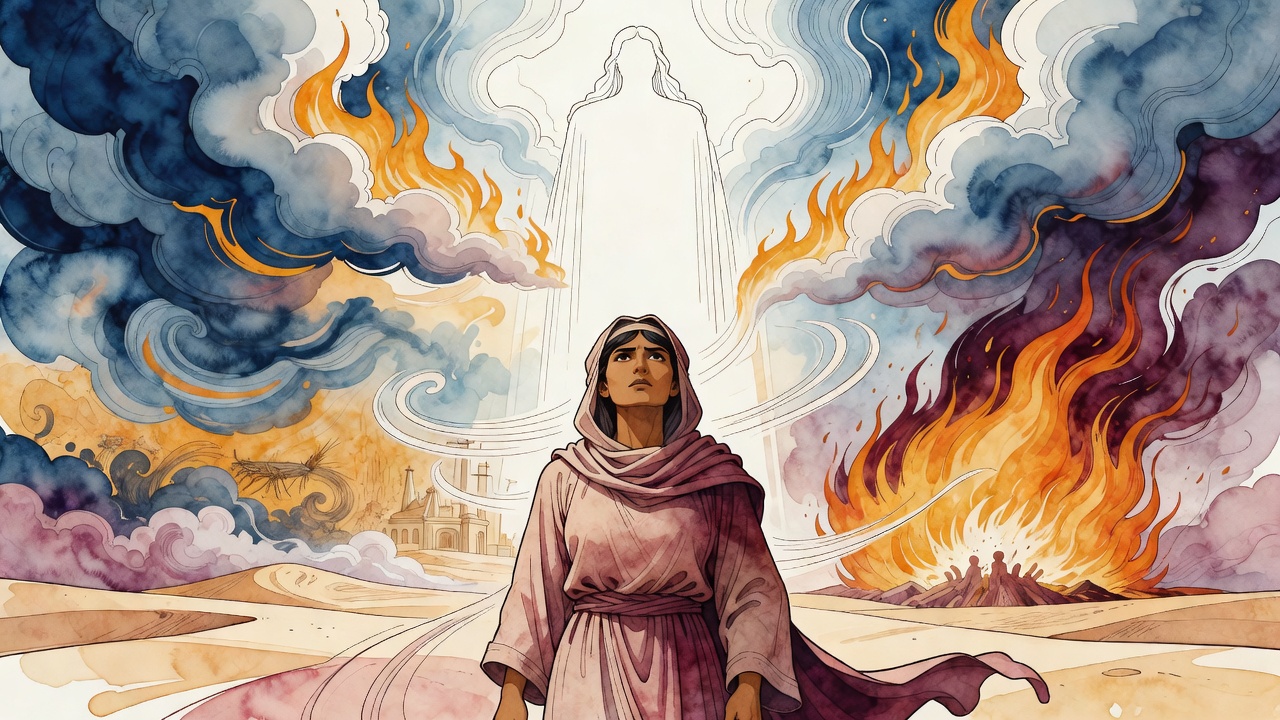
Sarah came into the tent hot. Abraham had the mother of his child under his roof and would not call her anything but his wife's handmaid.
Table of Contents
Sarah came through the tent flap already speaking.
 Click for full size
"My wrong be upon you. I gave my maid into your bosom, and when she saw that she had conceived I was despised in her eyes. The Lord judge between me and you" (Genesis 16:5).
Abraham was sitting, and he did not get up. Outside, goats moved along the line of the tents and a woman was grinding grain. Inside, a man who had gone eighty-five years without a son had the mother of that son under his roof and his wife in front of him holding him responsible for the whole arrangement.
He Did Not Say My Wife
What he called her is the first thing worth noticing, because three words were available to him and he took the coldest one.
He could have said my wife. Sarah herself had given Hagar over to be exactly that. He could have said my concubine, which was accurate and would have settled his claim in a syllable. He said neither. "Behold, thy handmaid," he said (Genesis 16:6). Yours. Still yours.
A man who wanted the Egyptian would have reached for a better word. Abraham put her back where his wife had kept her before any of it started and held on to nothing of her for himself.
He Did Not Answer Anger With Anger
And Sarah had come in swinging. The Lord judge between me and you is not a sentence anyone uses in a quiet marriage.
He had every opening. He could have reminded her whose plan it had been. He could have pointed out that he had done precisely what she asked and was being blamed for the doing of it. He could have named the child already growing and dared her to say it should not exist.
He did none of that. There was a woman in front of him who was about to be a mother, and he could see it, and a man does not take a mother's mind and sour it. So he brought the temperature down. Every word he chose was picked to leave her steadier than she had walked in, and by the end of it she was.
In Thy Hand
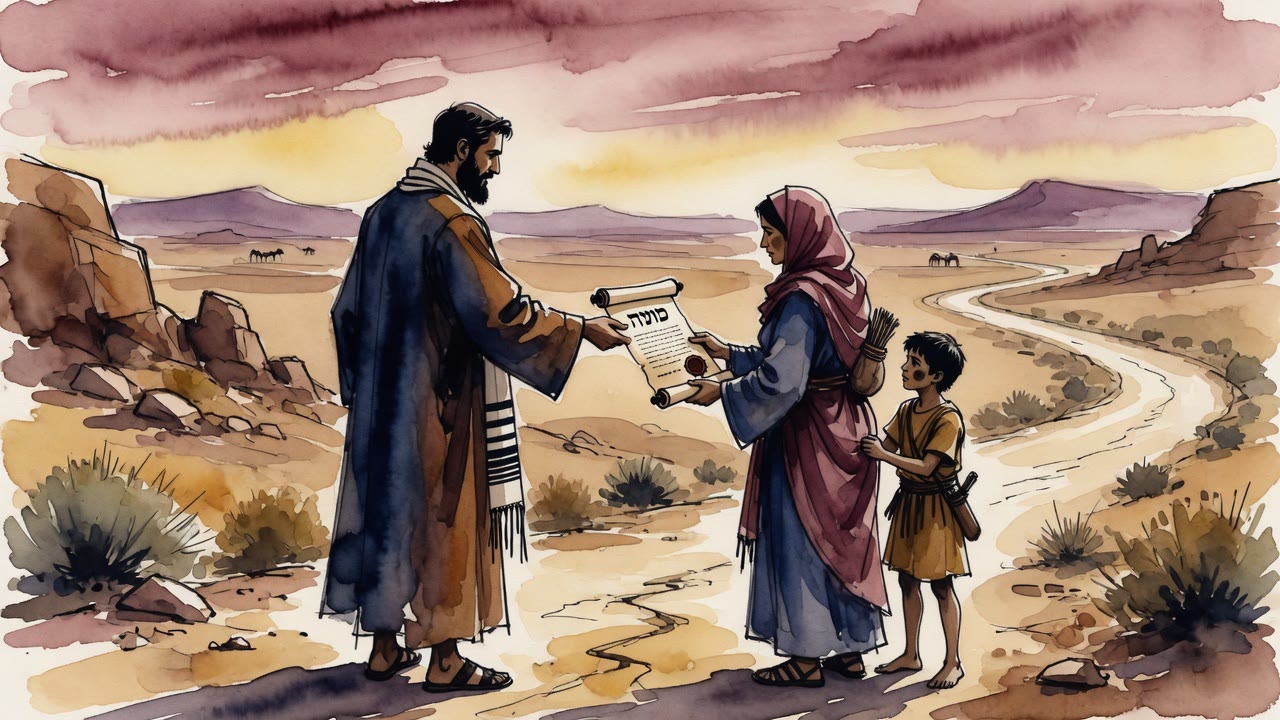
"Behold, thy handmaid is in thy hand. Do to her as it pleases thee."
That line has been read for a long time as a man getting out of the way. It runs closer to the opposite. He was handing her the authority with a judgment attached, and the judgment was about her.
He knew what Sarah was. She had a hard streak of exactness in her. She measured things out and gave nobody a grain more or a grain less than was owed, in honour or in contempt, and being fair was the thing she genuinely enjoyed. So he put the whole matter into her hand and said, in effect, I am not afraid of what you will do with it. You will not be harder than justice. Justice is what you like.
It was the largest thing he said about her that day, and it arrived dressed as a shrug.
What She Did With It
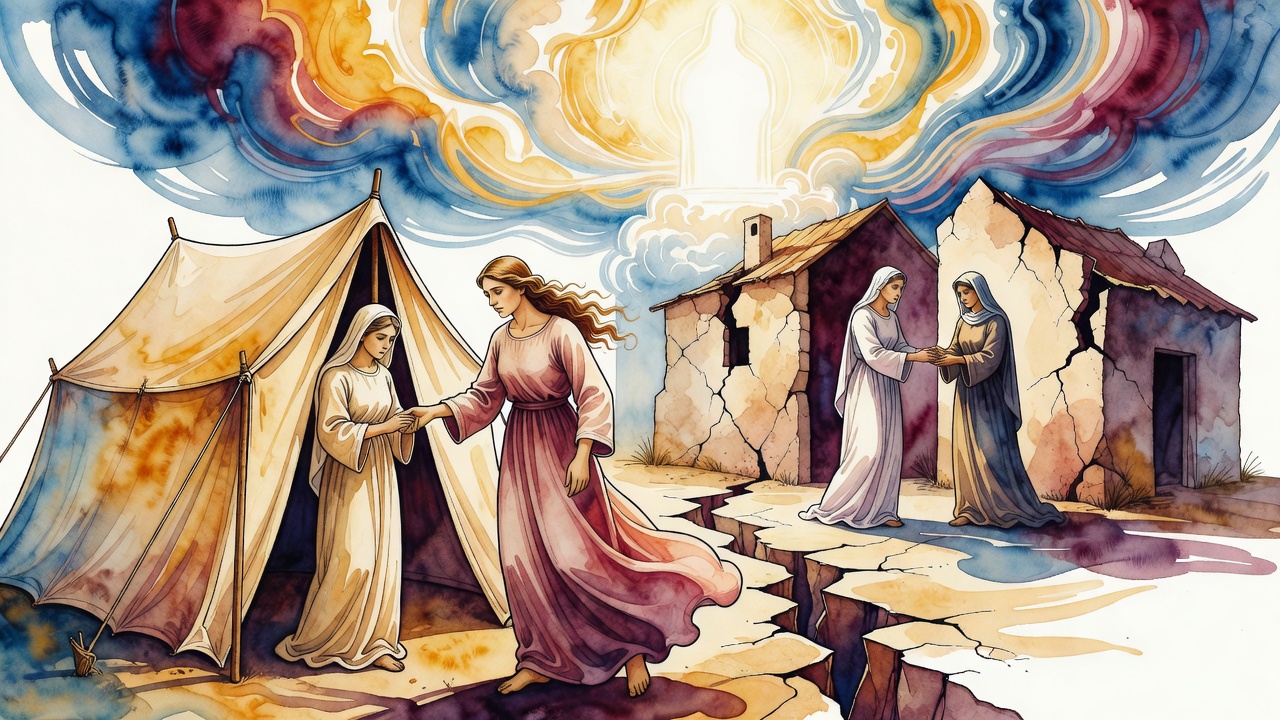
Sarah dealt hardly with her, and Hagar fled from her face (Genesis 16:6).
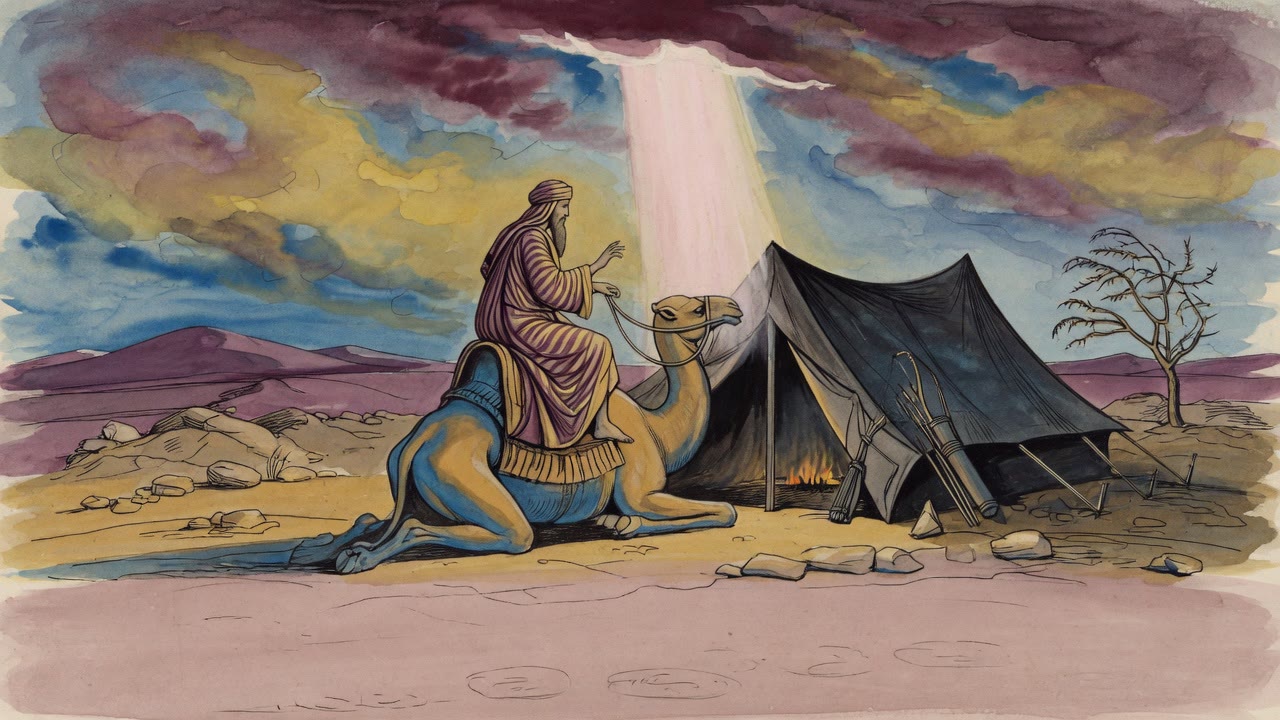
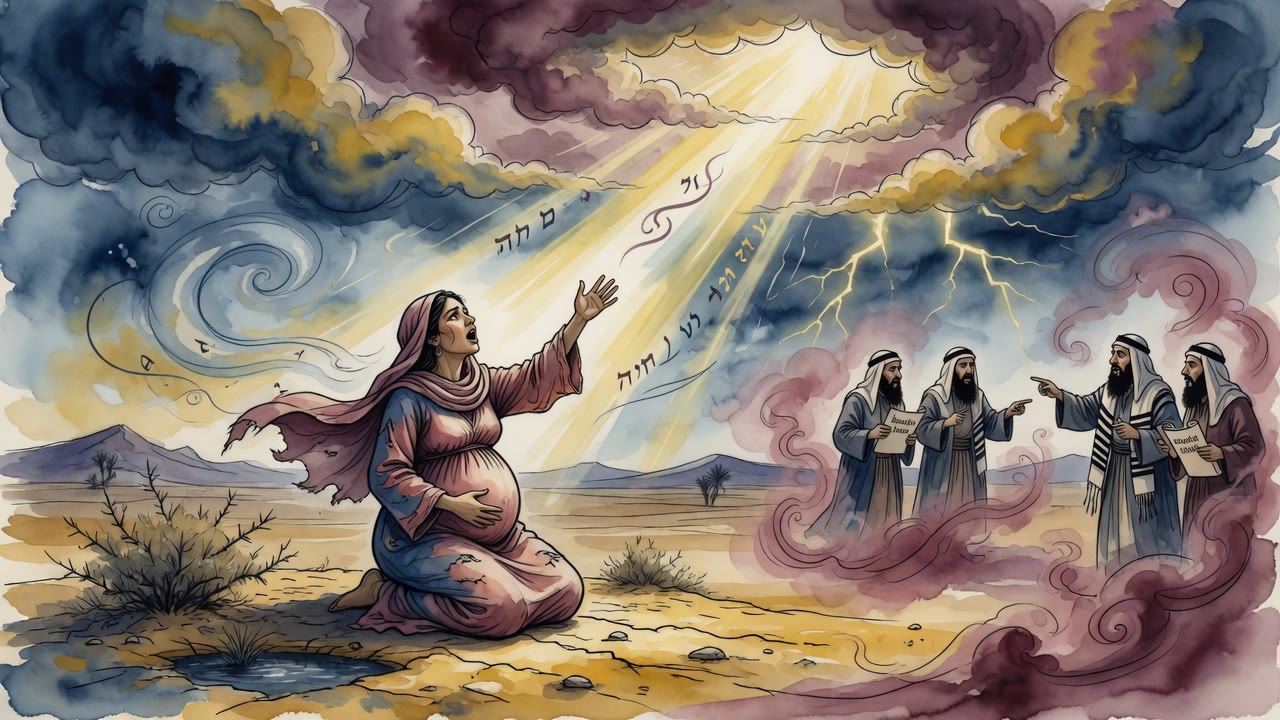
The trust and the outcome do not match, and nobody smoothed that over afterward. The Egyptian walked out of the camp on foot, pregnant, onto the road toward Shur, and there was a spring in the wilderness and an angel standing at it, and she came back only because she was told to come back.
Abraham did not go after her. Sarah did not call her home. Between the two tents there was a silence with a hole in it the size of one woman.
The Son
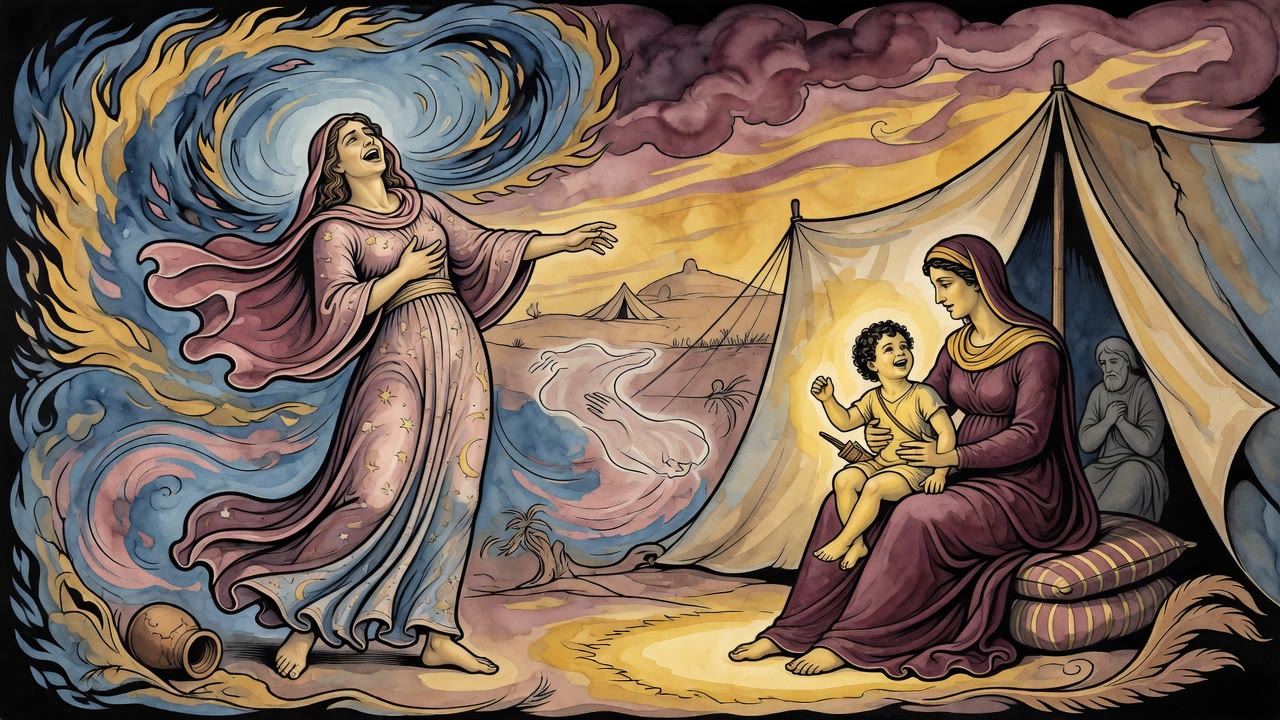
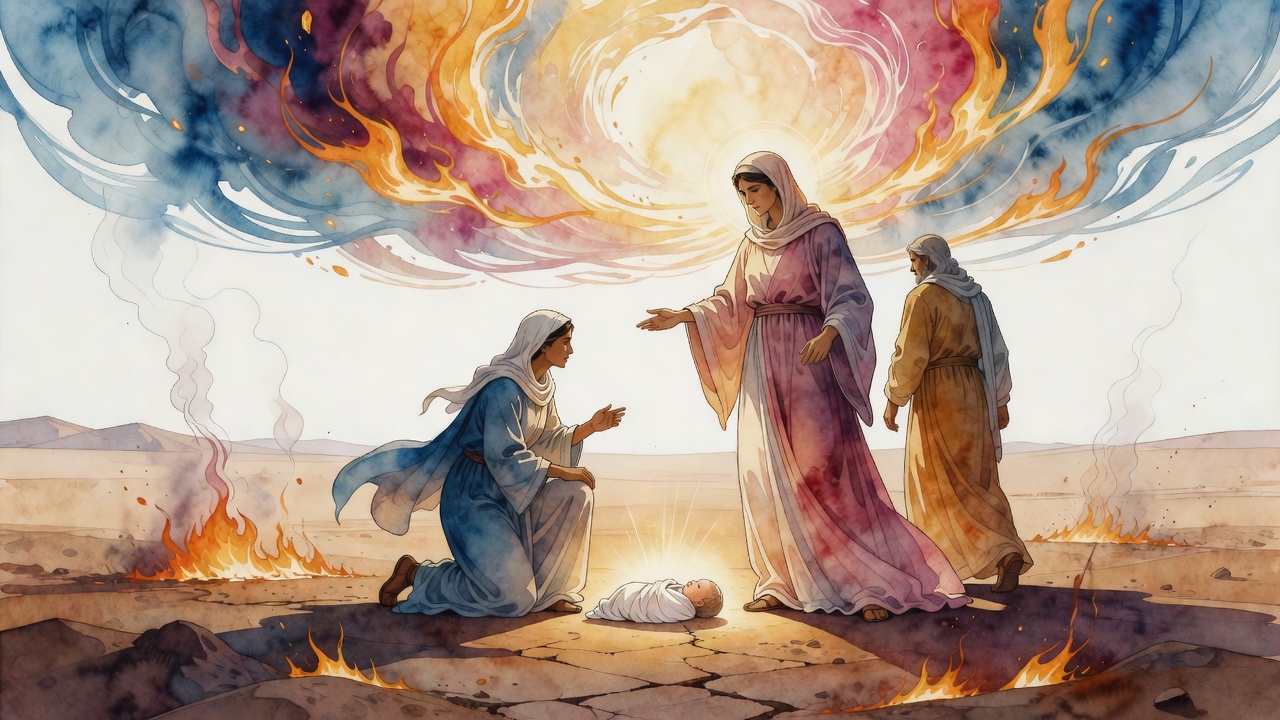
Then the months finished their count, and Hagar bore Abram a son, and Abram called his son's name Ishmael (Genesis 16:15). He was eighty-six years old that year.
The boy was carried to his father in front of the whole camp. Sarah stood at her own tent flap with her arms folded and watched a child arrive who was not hers, and who was not, as it turned out, the one that had been promised.
← All myths