Saul Walked Past Rachel's Tomb Into Kingship
Three days out hunting his father's lost donkeys, Saul wanted to turn for home. The seer up the hill had been told the day before to expect him.
Table of Contents
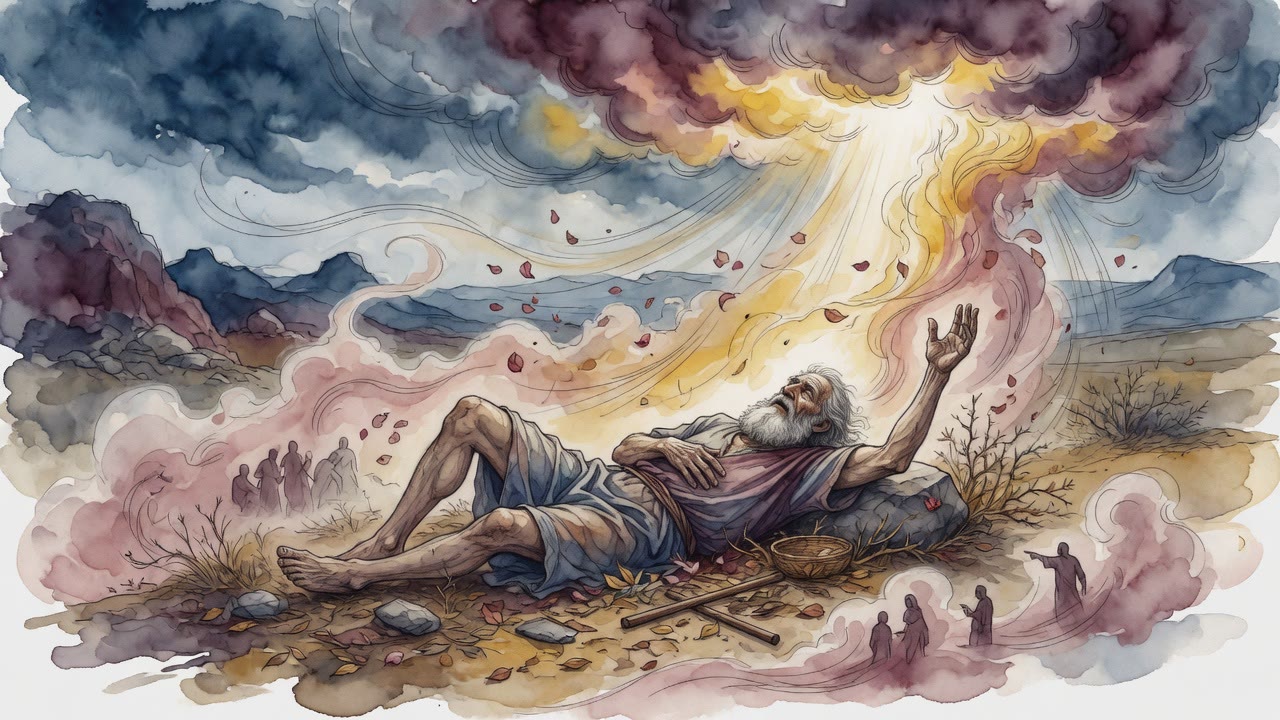
The donkeys had been gone three days. Saul and the servant had walked the hill country of Ephraim, and the land of Shalisha, and the land of Shaalim, and Benjamin, and turned up nothing but other men's fields.
 Click for full size
"Come back with me," Saul said. "My father will stop worrying about the donkeys and start worrying about us."
The Quarter Shekel and the Man at the Gate
The servant did not turn around. There was a man of God in the town on the hill, he said, a man honored enough that nothing he said ever fell to the ground.
"The bread in our bags is finished," Saul said. "We have nothing to bring him."
The servant opened his hand. A quarter of a shekel of silver sat in it.
They climbed. Girls coming down to draw water told them to hurry, the seer had just come into town, there was a sacrifice on the high place that day. At the gate a man walked straight up to them, and God had already told him the day before what hour a Benjaminite would arrive.
"The donkeys you lost three days ago are found," Samuel said. "Stop thinking about them. Everything Israel wants is looking at you and at your father's house."
Saul heard it and shrank. "I am a Benjaminite. Smallest tribe there is. And my family is the smallest in it. Why are you saying this to me?"
Samuel did not answer that. He walked him into the hall where thirty men were already eating, sat him at the head of them, and had the cook bring out the shoulder that had been set aside and kept back all day for a guest who did not know he was coming.
Oil at the Edge of Town
They talked on the roof until it was dark, and again at first light. Then Samuel walked him out to the edge of the town and told the servant to go on ahead.
The two of them stood in the road alone. Samuel took a small flask out of his robe, poured the oil over Saul's head so that it ran into his hair and down his neck, and kissed him.
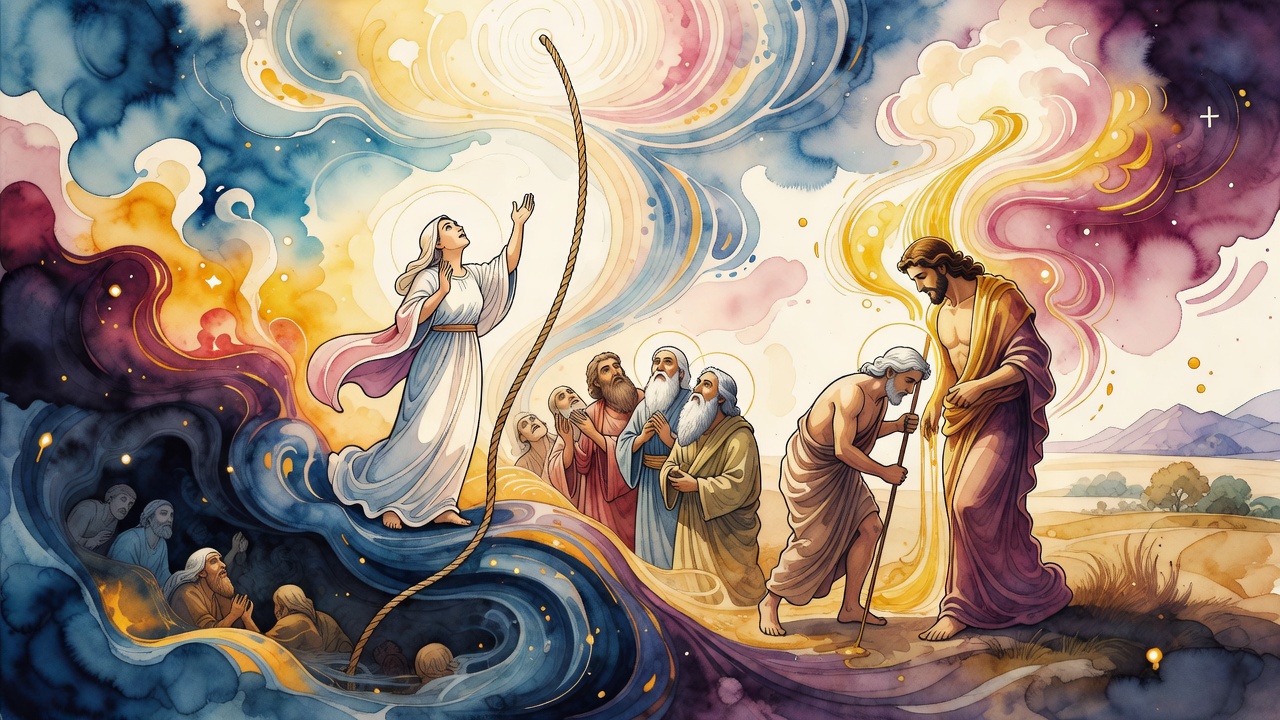
Then he handed him a list. Two men by Rachel's tomb. Three men at the oak of Tabor carrying three kids, three loaves and a skin of wine, who would hand him two of the loaves. A band of prophets coming down from the high place with harp and drum and pipe. The signs were a rope thrown out ahead of him along the road, knot after knot, so the morning could not be argued away as a dream.
The Prayer Eli Mistook for Drink
The hand that tipped that flask had been begged for at Shiloh before it existed.
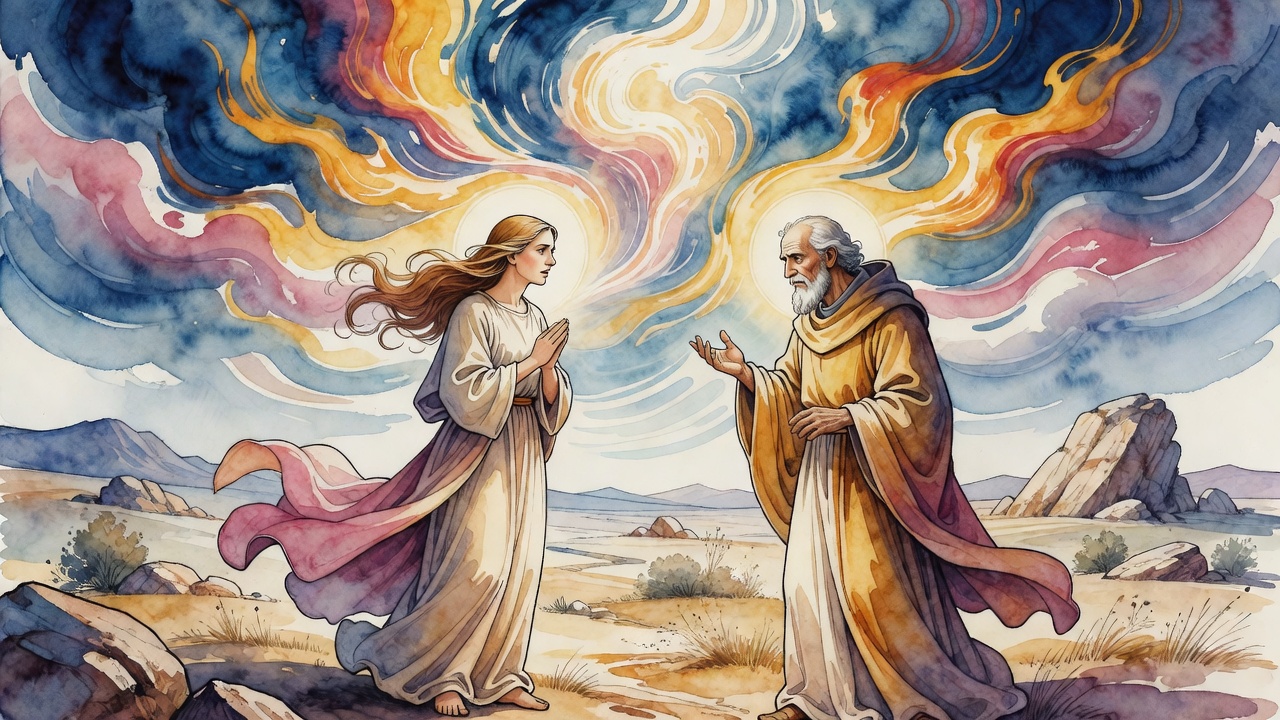
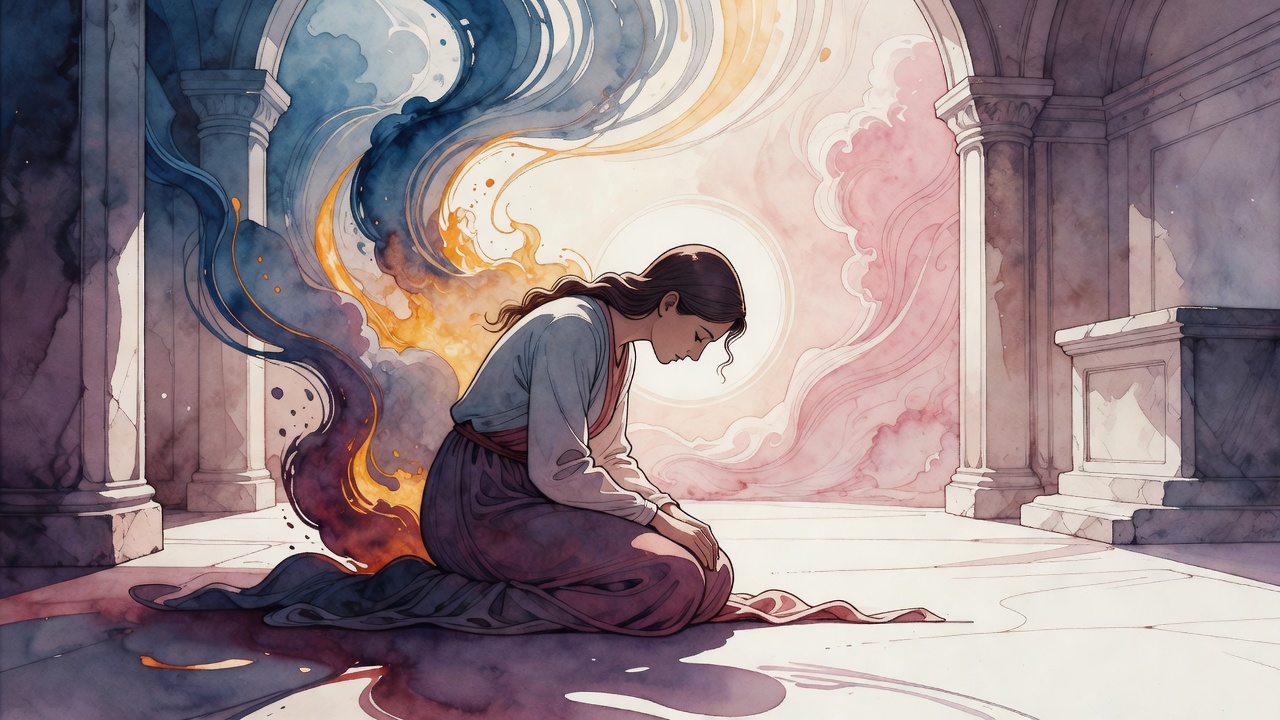
Hannah had stood at the doorpost of the sanctuary with her lips moving and no sound coming out, and Eli the priest, watching from his seat, decided she was drunk and said so.
"Do not take your servant for a worthless woman."
Eli heard what was in her voice and gave her back two blessings instead of the accusation, peace from himself and peace from her Maker, gathering heaven and the priesthood behind one childless woman at once. Then he heard his own blessing go further than he meant it to, and told her what the son would be: a plunderer, a man who would carry off Torah the way soldiers carry off a city.
She went home. Her body came back to her, and so did her face. Grief had pulled it out of shape for years, until it looked, the old teachers said without softening it, like an ape's. It healed. She got the child she asked for and she got her own face back with him.
Two Men at Rachel's Tomb
Down the road from Samuel, at the grave every traveler walked past, two men were standing exactly where he had been told they would stand, with word that the donkeys were home and his father had started grieving for him instead.
The place itself does not sit still. Rachel's tomb stands in Judah's portion. Tzeltzach, the name Samuel used for it, stands in Benjamin's.
A stranger walked up to Rabbi Yannai and Rabbi Yonatan long afterward and put that in front of them. How does one meeting place sit in two territories at once?
Yannai turned to the man beside him. "Yonatan, my brother, pick up my disgrace." He had no answer on his own.
The answer, when they found it, was not surveying. The men of Judah and the men of Benjamin were not two peoples with a line between them but bone and flesh of each other, which is what David would say out loud generations later when Judah and Israel were snarling at each other over who owned him. "You are my brothers. My bone and my flesh."
And Tzeltzach itself? Rabbi Yose HaGelili heard clear noon shade in it. Rabbi Akiva heard the promise made to Jacob at Bethel, the clear shade that kings would stand under, kings who would come out of his own body. Saul walked into a word that had a throne folded up in it.
The Lamps His Grandfather Lit
One book calls Saul's grandfather Ner. Another calls him Aviel. Aviel was the name he was given. Ner, lamp, was what the neighbors ended up calling him, because the alleys between his house and the study hall were black after dark and he went out and lit them, every night, for anyone walking.
Rabbi Shimon ben Lakish said the kingship came from that and from nothing else.
Later, when Samuel gathered the tribes to present the king, they could not find him. They had to ask God where he was, and God told them to look in the baggage. They pulled him out from behind the packs, a head taller than every man there, oil long dry in his hair, and stood him up in front of the nation.
← All myths