5 min read

A Scribe Asks Heaven for Leave Before Torah

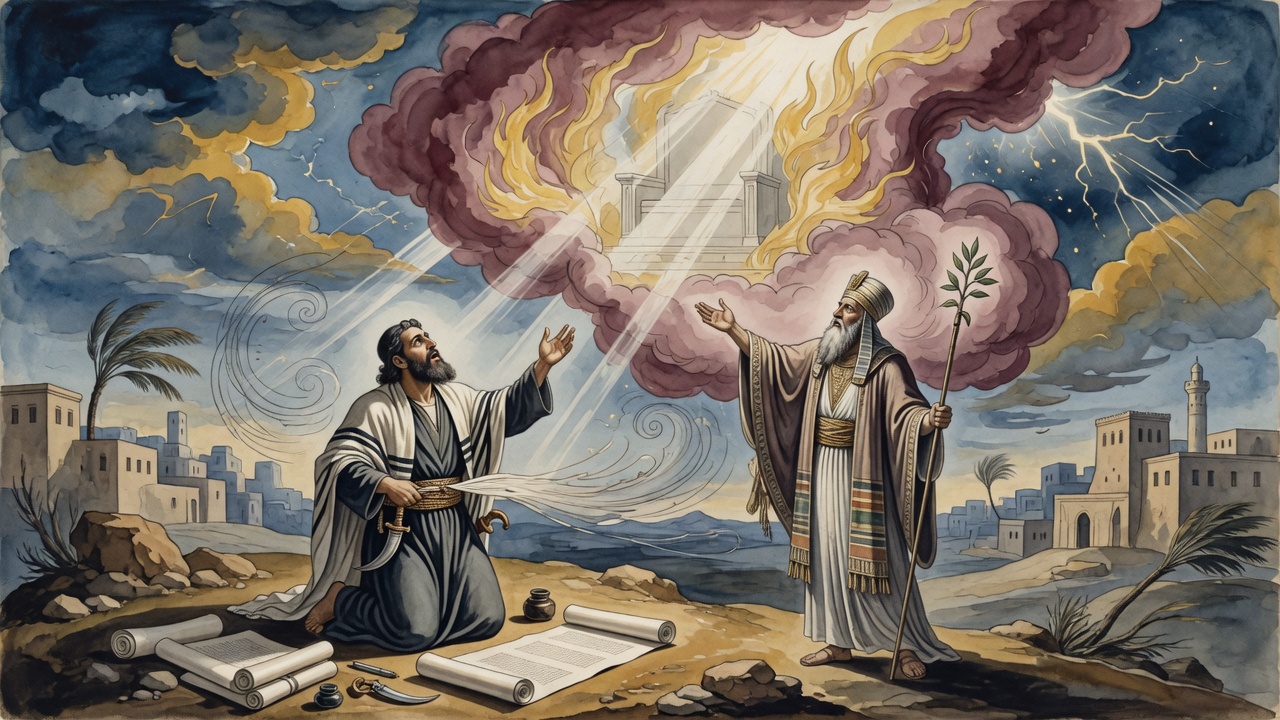
In Yemen an unnamed man gathered midrash into a book. He tightened his belt, wrote a short poem asking leave, and only then let his pen move.

Curated by Arthur · Told by Maggid ·
Table of Contents
  1. At the Doorway of the Page
  2. Permission Before Every Sedra
  3. What God Calls His Own
  4. Planted, Not Potted
  5. Hands That Ask Before They Write
A Scribe Asks Heaven for Leave Before Torah Click for full size

At the Doorway of the Page

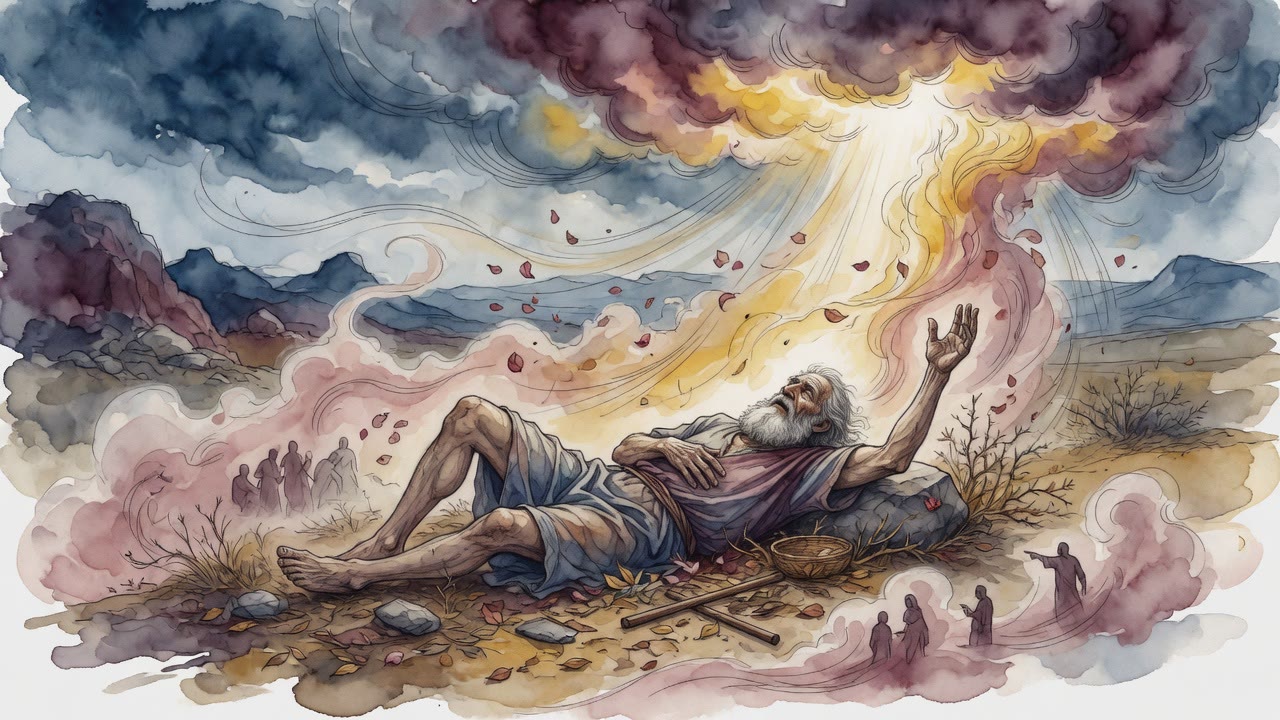
The scribe did not open the notebook like a man sure of his right to write. He stood at the doorway of Torah and asked permission to enter. In Yemen, long after the twelfth century, an unnamed anthologist gathered midrash into what later ages would call Midrash HaGadol. Manuscripts would travel to great libraries. One would belong to Dr. Alexander Kohut for the later volumes of Aruch HaShalem. None of that future fame stood with him at the first threshold.

He began in the name of the Merciful One, the great, mighty, and awesome God, and asked leave to write a midrash on the five books of the Torah. He tightened his belt. He strengthened himself in the word of divine speech. Before each portion he framed a poetic permission, as if rushing toward interpretation without leave would be a kind of theft.

Before Bereshit he praised the One who created the world in six days by will and command, without toil and without strain. Only then did the pen move.

Permission Before Every Sedra

The first opening turns to Isaiah: "Thus said the Lord God, He that created the heavens, and stretched them out" (Isaiah 42:5). Rabbi Eliezer hears the words press backward before the world itself: before creation, there was only the Holy One, blessed be He, and His Name. When the anthology turns to Noah, it opens with "Blessed is the man that walketh not in the counsel of the wicked" (Psalms 1:1), and makes Noah the man who refused the path of the flood generation.

This is not decoration. It is posture. The writer absorbs older sources, Maimonides, Rabbeinu Chananel, the Aruch, Rashi, Ibn Ezra, and still refuses to treat Torah as raw material for an unblessed career. Solomon Schechter would print Genesis from a fourteenth-century Yemenite manuscript in Cambridge in 1902 CE. Rabbi David Zvi Hoffmann would use these manuscripts to reconstruct Mekhilta de-Rabbi Shimon bar Yochai. The scribe could not know their names. He knew the fear of beginning badly.

What God Calls His Own

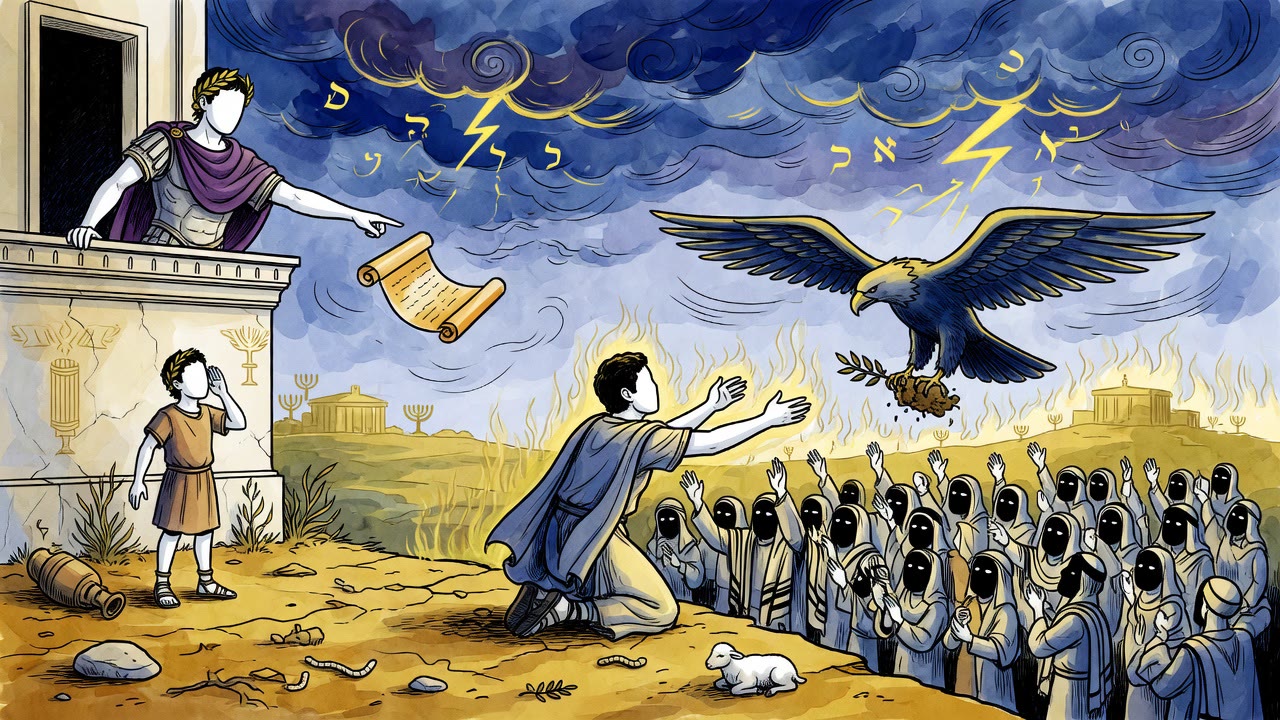
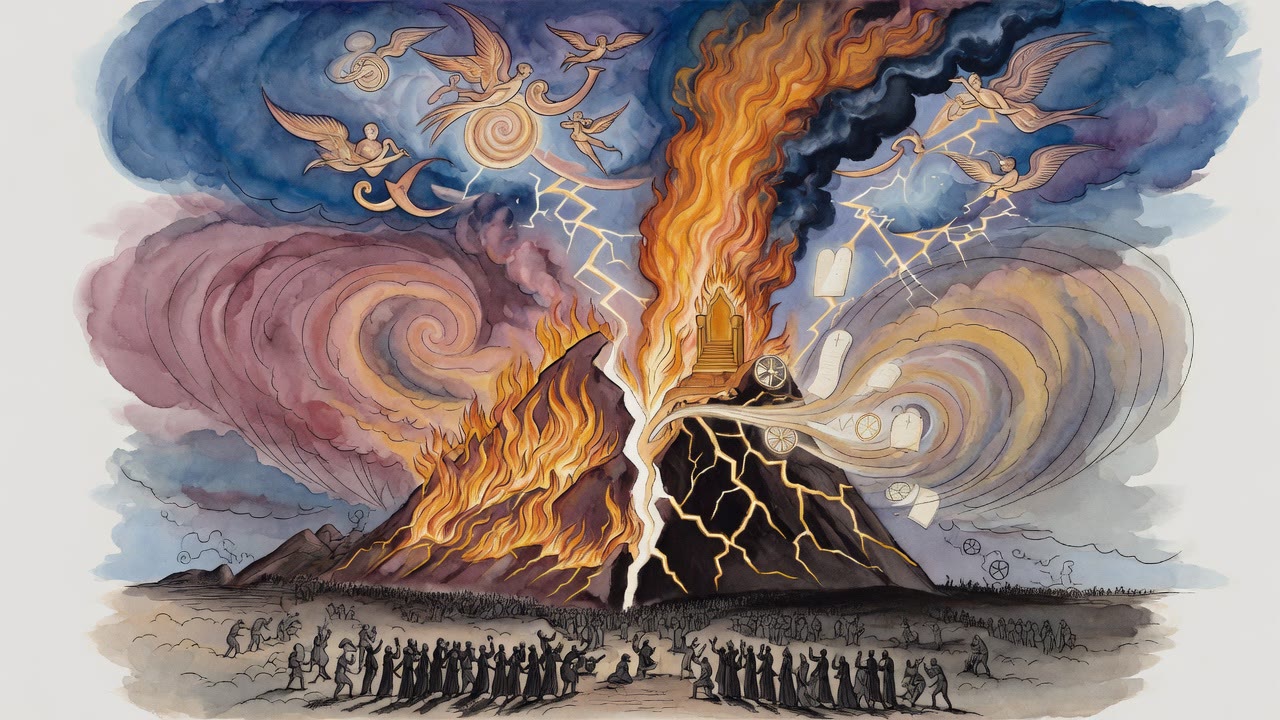
Far earlier, when Melchizedek blessed Abraham, he called God "possessor of heaven and earth," and the sages seized on that word, possessor or acquirer, to build a short list of what the Holy One treasures as His own. Three things carry that special language of acquisition in Scripture. First is the Torah, which Proverbs describes as acquired by God at the beginning of His way, before the world was made. Second is heaven and earth together, the whole created order named in the blessing Abraham received. Third is the people of Israel, called in the Song at the Sea the people whom God acquired and led across the waters.

Torah, cosmos, and Israel form a chain. The teaching that came before creation, the creation it shaped, and the nation chosen to live by it are bound as the possessions God claims in His own voice. A blessing over a man returning from battle becomes a window onto what the Creator holds most precious. The Yemenite scribe, asking leave to write midrash on the five books, was asking leave to handle the first of those three treasures with clean hands.

Planted, Not Potted

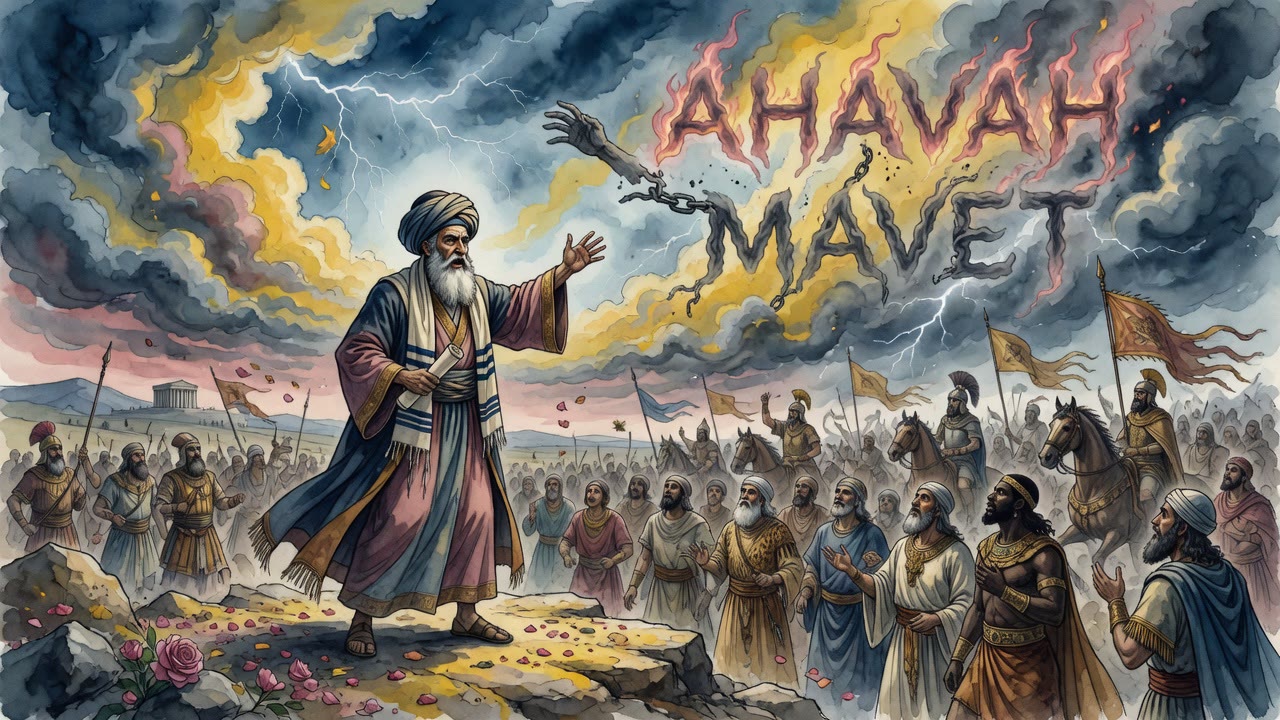
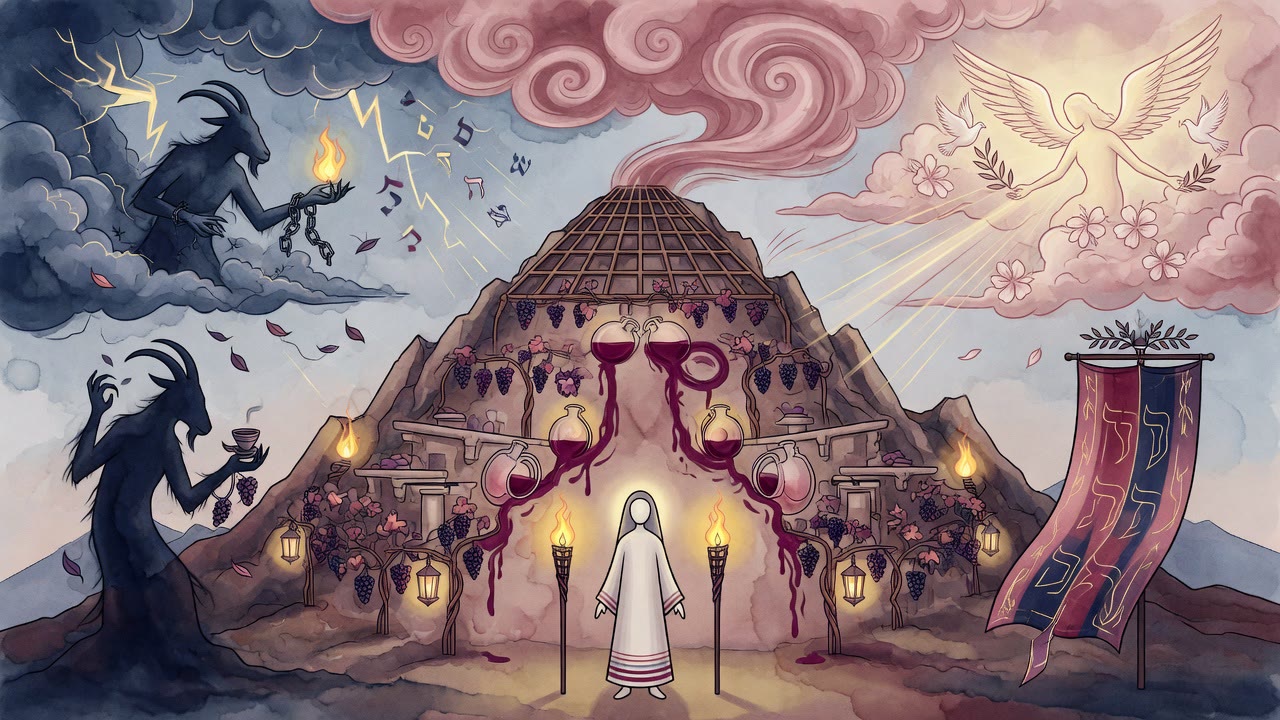
"And I will appoint a place for My people Israel, and will plant them" (2 Samuel 7:10). What kind of planting is this? Rabbi Huna bar Aha taught that those who crossed the seas read the meaning from the Song: "You led in Your lovingkindness... You guided in Your strength" (Exodus 15:13). Leading came by the merit of lovingkindness; guiding came by the merit of the Torah. Kindness and Torah were the road. The destination was more.

When was the world finally made fragrant, settled and sweet like a garden in bloom? Only from the time that they came to Your holy abode. Rabbi Shmuel bar Nachman seals it: when Israel arrived at God's holy place, the whole world grew fragrant. And the proof hides in a letter. Scripture does not say "I will plant them," a planting that could be uprooted. It says "I will plant him," Israel rooted as one, planted not for a season but forever.

Hands That Ask Before They Write

The scribe's permission prayer and Melchizedek's three possessions and the forever planting are one ethic under different skies. Do not grab what God calls His own. Ask. Receive. Root. The anthology that begins with leave to enter ends, in the life of Israel, with a people planted in a holy abode that perfumes the world. Between those poles sits every honest student who opens a humash without swagger.

Ink dries on a Yemenite page. Abraham walks away from Melchizedek with bread, wine, and a new way to name God's holdings. A nation stands in a place that smells like a garden after rain. None of them rushed the threshold. That is the myth inside the method: Torah is not a notebook you own. It is a house you may be allowed to enter, a possession you may be allowed to serve, a planting you did not start and cannot pull up.


← All myths

From the tradition

Sources

3 sources

The texts behind this telling. Some cards carry a translation of the source; others are our own retelling of it, and each card says which. Every card links out to the original.

Otzar Midrashim, Midrash HagadolOtzar Midrashim, Midrash Hagadol

Translation of the source text.Otzar Midrashim, New York, 1915 + Sefaria Community Translation · Public Domain

Midrash HaGadol: Several manuscripts of this midrash are found in well-known libraries, and one belonged to Dr. Alexander Kohut, who used it in the later volumes of Aruch HaShalem, which he published. The place of origin of the midrash is Yemen, but the name of its author is unknown. Its composition date is after the 12th century, as it includes, besides statements from other midrashim, several verses from Maimonides and statements from Rabbeinu Chananel, the author of the Aruch, Rashi, Ibn Ezra, and other prominent rabbis of their times. However, the author cleverly adapted these statements into the language of "Tannaim" or "Tanu Rabbanan," as if they were said by the Tannaim of the Mishnah and Tosefta....

The author wrote an introduction to the midrash as a form of taking permission: "In the name of the Merciful, in the name of the great, mighty, and awesome God, I will begin to write the midrash on the five books of the Torah, which illuminates the eyes of its seekers, with permission from God, blessed be He and blessed be His name. I will gird my loins and strengthen myself with the word of His utterance, etc." There is also a "permission" in verse form for each section, such as for the section of Bereishit: "With the permission of the One who created His world in six days, by His will and His command, not by toil nor by effort, etc." It begins with "Zeh She'amar HaKatuv" (This is what the text says), "Thus said God, the Lord, Creator of the heavens and their expanse" (Isaiah 42:5). What does it mean by "the Lord, the God"? Rabbi Eliezer says: Before the world was created, there was only the Holy One, blessed be He, and His name alone, etc. In the section "These are the generations of Noah," it begins: "With the permission of our God, who dwells in the heavens and earth, holy and sanctified in heaven and on earth, etc." It starts with "Zeh She'amar HaKatuv" (This is what the text says): "Blessed is the man who does not walk in the counsel of the wicked," this verse was said regarding Noah [the righteous], who did not follow the ways of the generation of the Flood, who are called wicked, sinners, and scorners, etc. Similarly, in every section and it concludes the book of Genesis: "May the Merciful One enlighten our eyes with the light of His Torah and lift our spirits, and gladden us with His salvation, and grant us to behold His pleasantness and visit His sanctuary, Amen, thus says the Merciful One." Before the portion of Bereishit, the well-known Baraita of Rabbi Eliezer, the son of Rabbi Yossi HaGalili, on the principles of Torah in the ways of Aggadah is brought, but the author of this midrash brings the Baraita under the term "Tanu Rabbanan" and counts the principles as 33 instead of 32. He omitted the 27th principle "a word that falls upon a word" and added the principles "hint" and "interchange of letters."

Dr. Schechter published the book of Genesis based on a 14th-century Yemenite manuscript, with an introduction and notes, in Cambridge, 1902. The entire book contains 772 pages (two pages on one side), and it includes a correction table based on another manuscript version and printing errors. This table is very extensive, spanning up to 106 pages.

Rabbi David Zvi Hoffmann published the Mekhilta of Rabbi Shimon bar Yochai on the Book of Exodus, compiled from Midrash HaGadol manuscripts in the Berlin Library, with notes and an introduction, in Pforzheim, 1905. He also published selections of Mekhilta for Exodus, Sifrei Zuta for Numbers, and Mekhilta for Deuteronomy in 1890 (in the book "Shi le-Moreh"), and further selections for Deuteronomy in 1897.

Full source
Yalkut Shimoni on Torah 74:3Yalkut Shimoni on Torah

Translation of the source text.Torat Emet (Yalkut Shimoni) · CC-BY-NC

"Blessed be Abram of God Most High, possessor of heaven and earth" (Genesis 14:19). There are three acquisitions [that God calls His own]. Torah is one acquisition, as it is written, "The LORD acquired me as the beginning of His way" (Proverbs 8:22). Heaven and earth are one acquisition, as it is written, "possessor of heaven and earth" (Genesis 14:19). Israel is one acquisition, as it is written, "until the people You acquired pass over" (Exodus 15:16).

Full source
Midrash Shmuel 26:4Midrash Shmuel

Translation of the source text.Midrash Shmuel, Krakow 1893, Public Domain, on Sefaria · CC-BY-SA

"And I will appoint a place for My people Israel, and will plant them, etc." (2 Samuel 7:10). There we have learned: Shimon the Righteous [etc.]. Rabbi Huna bar Aha said: those who pass over the seas expounded it from a full verse. "You led in Your lovingkindness" (Exodus 15:13), this is by the merit of lovingkindness. "You guided in Your strength" (ibid.), this is by the merit of the Torah. When was the world made fragrant? From the time that they came to Your holy abode. Rabbi Shmuel bar Nachman said: and when they came to Your holy abode, the world was made fragrant. This is what is written: "And I will appoint a place for My people Israel and will plant them." It is not written here "and I will plant them" [as a one-time act], but rather "and I will plant him" forever.

Full source