5 min read

Lose the King's Bird and You Have Lost Your Own Soul

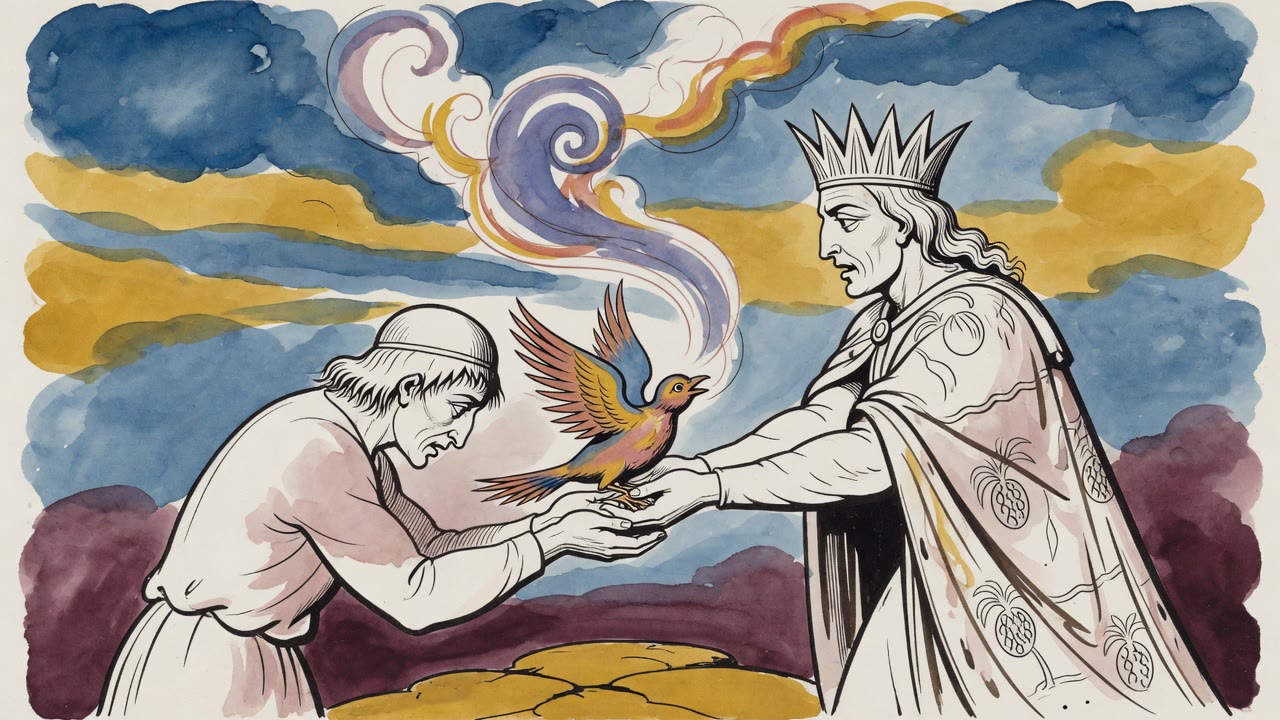
A king presses a living bird into a servant's hands and warns that losing it means losing a soul. The bird flips once, and the man feels the weight settle.

Curated by Arthur · Told by Maggid ·
Table of Contents
  1. The Bird Lands in His Hands
  2. Money Counted After a Father Dies
  3. Honey for the Hungry, Bitter for the Full
  4. The Near Fall
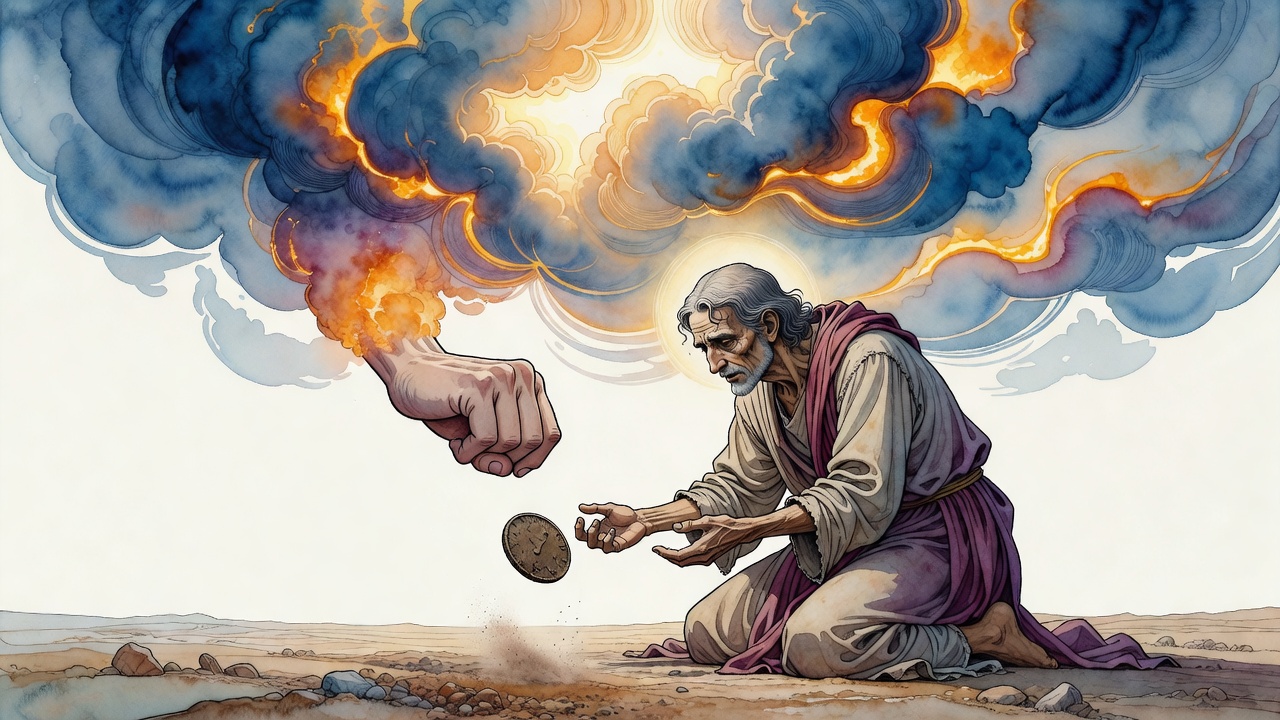
Lose the King's Bird and You Have Lost Your Own Soul Click for full size

The Bird Lands in His Hands

The king hunted until his gloves were wet with cold. He caught a bird with feathers the color of late wheat and pressed it into a servant's cupped palms. The bird twisted once, then settled. "Guard this for my son," the king said. "If you lose it, do not tell yourself you lost a bird worth a coin. Tell yourself you lost your soul."

The servant nodded the way men nod when the courtyard is listening. He carried the bird into the shaded walk. He felt the tiny heart hammer against his thumb. A groom called from the stable door. He almost turned. The bird dug a claw into his skin and woke him back to the charge.

Rabbi Shimon would later put this king and this bird beside a harder sentence: take heed to yourself, and heed your soul exceedingly. The bird is not an ornament. The bird is a life placed in temporary custody, and custody is never light.

Money Counted After a Father Dies

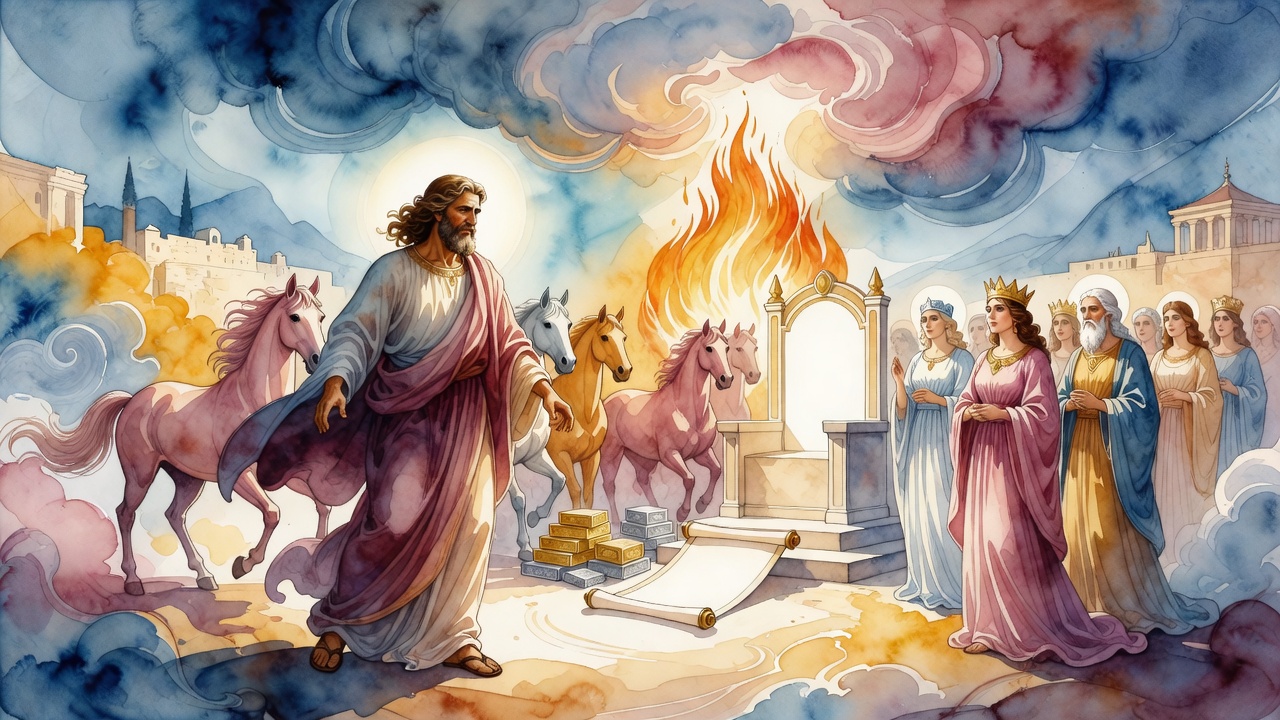
In another courtyard, two brothers sat over their father's coins. One brother changed a dinar for bread and ate it on the spot. He laughed with his mouth full. The other changed a dinar and set the exchange aside, grain by grain, day by day. He rose early and worked the quiet ledger. The first ended with empty hands and a full belly that forgot him by nightfall. The second, after seasons passed, found himself wealthy without having shouted about it.

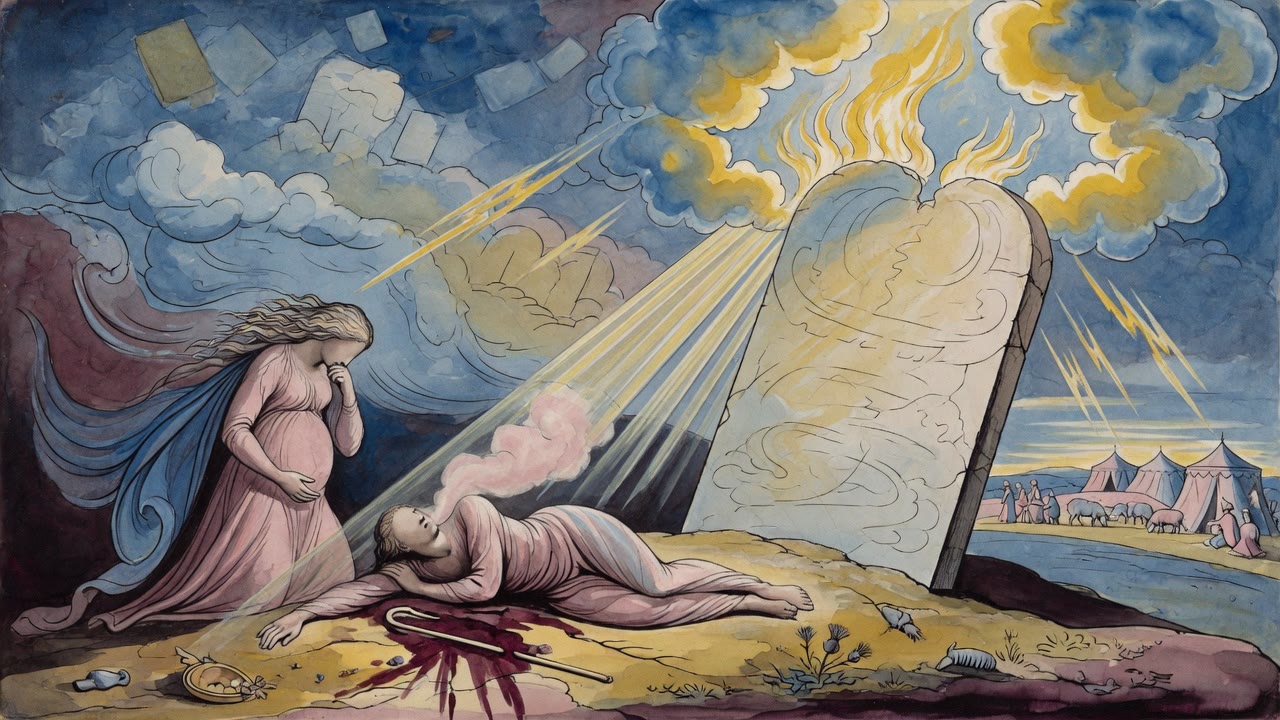
The servant with the bird did not know those brothers, but he knew the same hunger. "Today I will study," a man said in the study house down the road. "Tomorrow I will learn." He said it with a clean mouth and a lazy spine. Harvest came, and the field he once bought grew thistles. A vineyard he once claimed stood without pruning. He walked past his own land and men called him lazy, not because he never owned anything, but because he refused to work what he owned.

The bird shifted. A wingtip brushed the servant's wrist. He flinched and nearly opened his fingers. That is how a soul is lost: not in a duel, but in a small opening of the hand while the mind shops for later.

Honey for the Hungry, Bitter for the Full

A sated soul treads down honeycomb. A man who never learned when he was young tasted sweetness and felt nothing. He had no room left for wonder. A hungry soul found even bitter things sweet, because hunger is a teacher that keeps the tongue honest. The servant, still holding the bird, understood which man he was becoming. If he treated the king's charge as a trifle, he would grow sated and dull. If he treated it as life itself, even hard days would feed him.

A scholar sat with words the way a sieve sits with flour. Bran fell one way, fine flour another. He weighed a ruling: clean or unclean, permitted or forbidden. He asked, he answered, he turned the page and struck a note in the margin. That labor is also a bird. It is also a soul. Neglect it for three days of excuses, and the wealth of chapters never gathers.

The Near Fall

A cart rattled past. The bird startled and tried to climb the air. The servant clamped his palms, too hard, then softened them. Sweat ran into his eyes. He wanted to set the bird down "just for a moment" on a wall and fetch water. He heard the king again: not a coin, a soul.

He did not set it down. He walked the long way to the son's chambers, past the kitchen smells, past the men who called him to dice, past the cool shade that promised rest. His arms ached. That ache was the price of heed. When he finally opened his hands before the boy, the bird was still breathing. The boy laughed and raised a finger. The bird stepped onto it as if the whole journey had been a single careful breath. The servant's own breath came back as if it had been held for a mile.

Only then did he understand the king's mathematics. An empty thing is never empty when it is your life. Torah that is guarded daily becomes wealth. Torah postponed becomes a field of thistles with a title deed still folded in the pocket. He left the chamber and washed his hands, not because the bird was unclean, but because fear had made them shake, and he wanted steady fingers for the next charge the king would give.


← All myths

From the tradition

Sources

2 sources

The texts behind this telling. Some cards carry a translation of the source; others are our own retelling of it, and each card says which. Every card links out to the original.

Sifrei Devarim 48:3Sifrei Devarim

Retold in our words. Read the original at the link below.Sifrei by Rabbi Shraga Silverstein · CC-BY

A collection of early rabbinic legal commentaries on the book of Deuteronomy, it's something we should be constantly mindful of.

R. Shimon, often identified as Rabbi Shimon bar Yochai, a prominent figure in Jewish mysticism and a key voice in the Zohar, used to say, drawing from (Deuteronomy 4:9), "Only take heed to yourself, and heed your soul exceedingly." He illustrates this with a powerful analogy: Imagine a king who hunts a rare and precious bird. He entrusts it to a servant, instructing him to care for it on behalf of his son. The king emphasizes, "If you lose it, don't think you've simply lost a bird worth a mere issar," – a small coin – "but as if you have lost your very soul!"

The message is clear: our souls are infinitely valuable. (Deuteronomy 21:47) echoes this sentiment: "For it is not an empty thing for you, for it is your life." Our spiritual well-being, our connection to the Divine, is paramount.

R. Shimon b. Yochai offers another analogy, this time about the accumulation of wisdom, comparing it to accumulating wealth. Imagine two brothers inheriting money after their father's passing. One brother immediately spends his share, exchanging a dinar (a gold coin) for food and consuming it. The other brother, however, invests wisely, setting aside each dinar carefully. In the end, the first brother is left with nothing, while the second brother prospers.

Similarly, a Torah scholar who consistently learns, even just two or three things a day, two or three chapters a week, two or three sections a month, will, over time, become incredibly "wealthy" in knowledge and understanding. (Proverbs 13:11) beautifully captures this idea: "That (treasure) gathered with the hand will increase."

But what happens if we procrastinate? What if we keep putting off learning, saying, "Today I will study Torah," or "Tomorrow I will learn Mishnah (the earliest code of rabbinic law)?" According to R. Shimon b. Yochai, we’ll end up with nothing. (Proverbs 10:5) warns, "One who sleeps in harvest time is a shameful son," and (Proverbs 20:4) adds, "Because of the (cold of) winter, the sluggard will not plow."

(Proverbs 24:30) paints a vivid picture: "By the field of a lazy man I passed, and by the vineyard of a man lacking a heart." This describes someone who once acquired a field and a vineyard but neglected to work them. Why is this person called "lazy"? Because even though they had the potential, they didn't put in the effort.

And what are the consequences for a Torah scholar who doesn't consistently engage with their studies? According to this passage in Sifrei Devarim, they risk leaving unlearned portions of the Torah. This is alluded to in (Proverbs 24:31): "and, behold, it was all grown over with thorns." They’ll seek the opening of a section but won't be able to find it, because "nettles had covered (i.e., concealed) its face ('opening')."

Furthermore, "its stone wall was broken down." Because the knowledge isn't readily available, such a person might even distort the law, ruling unclean what is clean and clean what is unclean, and breaking down the fences of the sages – the established interpretations and safeguards that protect the integrity of Torah law.

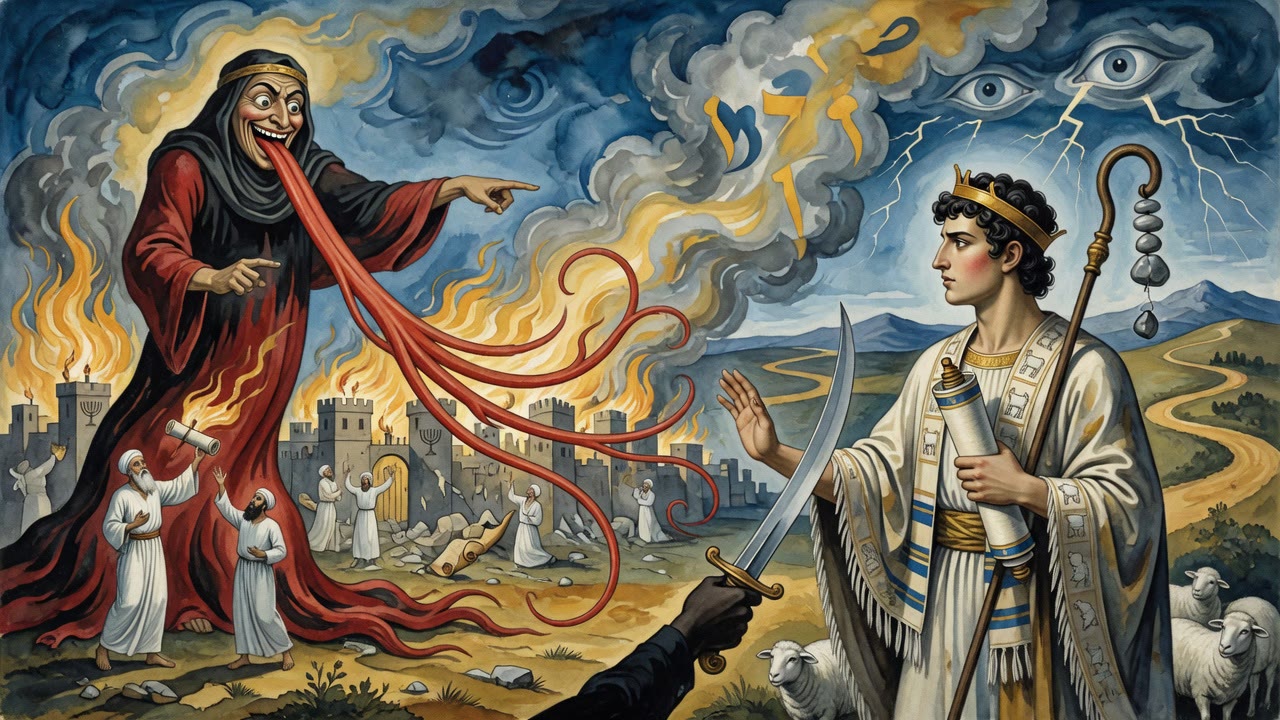
What's the punishment for this negligence? Solomon, through Kabbalah – the Jewish mystical tradition – tells us in Kohelet (Ecclesiastes) 10:8, "and the breaker of a fence will be bitten by a snake." This is a powerful metaphor: those who disregard the boundaries set by the sages are destined to face negative consequences. All who break the fences of the sages are destined to be punished.

So, the next time you consider putting off your studies, remember the king's bird, the brothers' inheritance, and the overgrown field. Remember the value of your soul, and the importance of diligently cultivating your understanding of Torah. What fences are you diligently guarding in your own life?

Full source
Sifrei Devarim 48:4Sifrei Devarim

Retold in our words. Read the original at the link below.Sifrei by Rabbi Shraga Silverstein · CC-BY

He uses a striking verse from Proverbs (27:7) to illustrate a powerful point: "The sated soul will tread down a honeycomb, but to the hungry soul all bitter is sweet. But what does it mean?

Rabbi Shimon offers two fascinating interpretations in Sifrei Devarim.

First, he connects it to the experience of learning Torah. He suggests that "the sated soul" represents a Torah scholar who didn't learn from the very beginning. Maybe they jumped in mid-way, or perhaps their foundation wasn't solid. For them, even the sweetest parts of Torah – the "honeycomb" – can feel… well, trampled. They don't fully appreciate it.

"the hungry soul," on the other hand, that's the person who learned diligently from the start. Even the seemingly difficult or "bitter" parts of Torah are sweet to them. They crave the knowledge, and they appreciate every morsel.

But Rabbi Shimon doesn't stop there. He offers another, equally compelling interpretation of that same verse. This time, the "sated soul" isn't about someone who didn't learn properly; it's about the meticulousness of a true Torah scholar. He focuses on the word "nofeth," which means honeycomb.

He says that just as a sieve separates flour, bran, and wheat, so too does a Torah scholar meticulously examine the words of Torah. They weigh different opinions, scrutinize every detail. "This sage forbids, this sage permits; this sage rules unclean; this sage rules clean." It's about discerning the nuances, understanding the different perspectives, and arriving at well-reasoned conclusions. The Torah isn't just a set of rules to blindly follow. It’s a complex, multi-layered text that demands careful analysis and thoughtful consideration. It requires us to engage with different interpretations and confront challenging questions. This rigorous process, this sifting and sorting, is what allows us to truly understand and appreciate the wisdom within.

So, what's the takeaway here? Perhaps it's a reminder that learning, especially Torah learning, is a journey. It requires patience, diligence, and a willingness to embrace both the "sweet" and the "bitter." And maybe, just maybe, the key to truly appreciating the "honeycomb" is to approach it with a "hungry soul," eager to learn and to explore its depths.

Full source