5 min read

She Begged Two Rabbis to Draw Her Near Again

A woman begs Rabbi Eliezer to bring her close. He refuses. She finds Rabbi Yehoshua, who accepts her, while a disciple freezes mid-ruling near his master.

Curated by Arthur · Told by Maggid ·
Table of Contents
  1. Draw Me Near
  2. The Second Door
  3. Spells on the Road to Kefar Nahum
  4. Twelve Mil and a Closed Mouth
  5. Two Kinds of Distance
She Begged Two Rabbis to Draw Her Near Again Click for full size

Draw Me Near

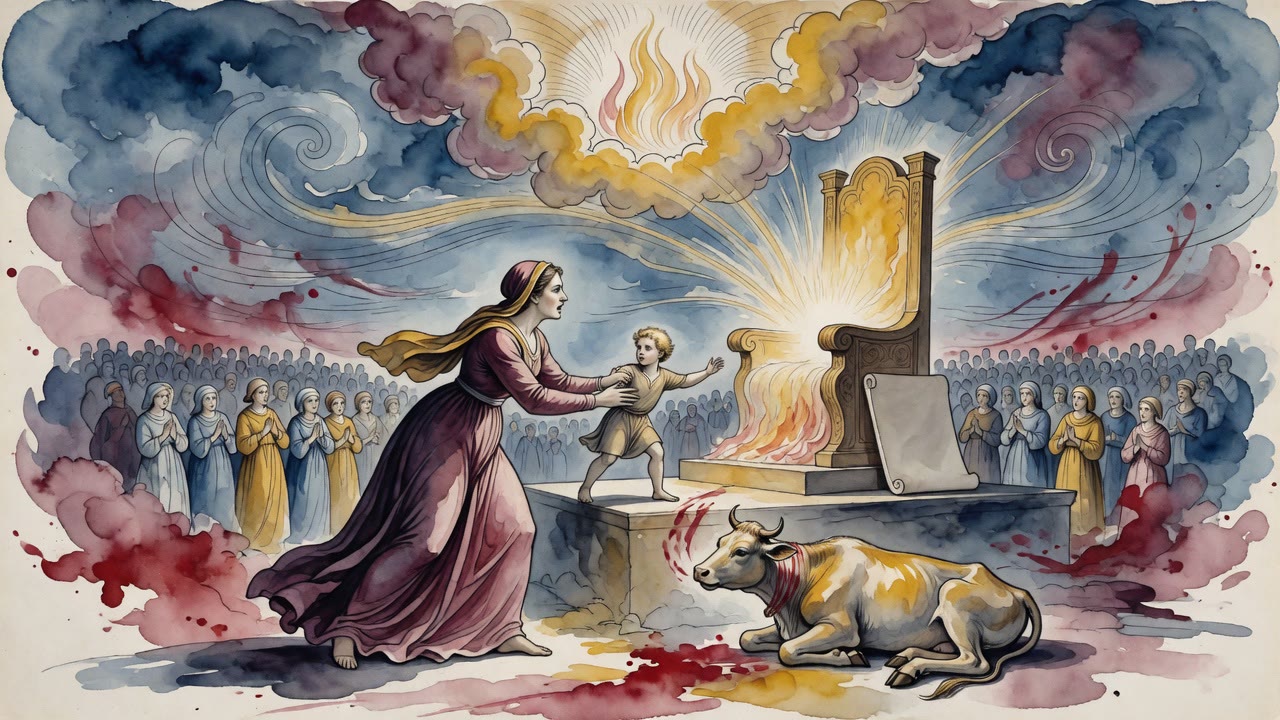
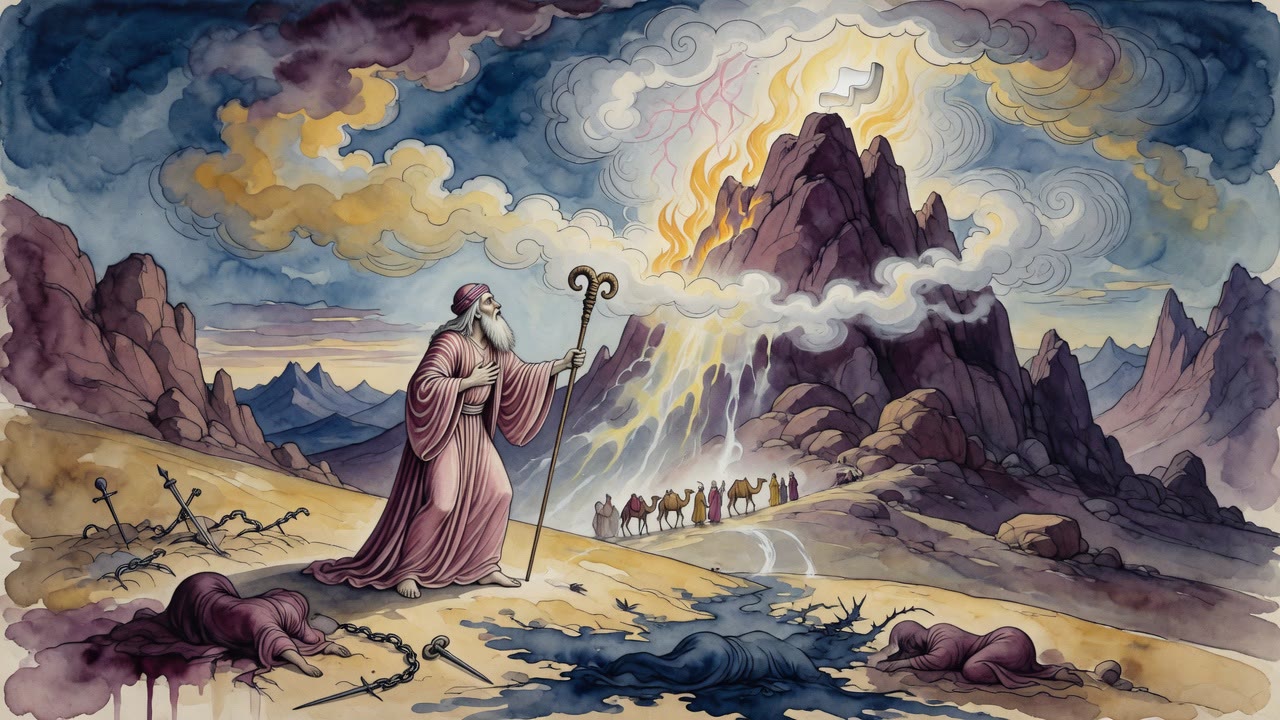
She did not knock like a student. She stood in the doorway of Rabbi Eliezer and said the sentence that can open a life or close one. "Rabbi, draw me near." The request was conversion and repentance braided into one plea. He did not answer with a welcome speech. He asked for her past.
What she told him stopped his hand. The Matnot Kehuna remembers her as a heretic seeking return, a woman trying to climb out of a life that had already broken the ordinary map of family. Rabbi Eliezer rebuffed her. The door that had heard "draw me near" shut on the words. She did not go home. She went looking for another door.

The Second Door

Rabbi Yehoshua accepted her. His students flared at once. "Rabbi Eliezer rebuffed her, and you draw her near?" The challenge was not only about one woman. It was about whether two masters can hold two temperatures of mercy without tearing the school apart.

Rabbi Yehoshua's answer was cold enough to quiet the room. Once she has committed to conversion, he said, she will not live long. He rested the hard word on (Proverbs 2:19): "None that go to her will return; neither shall they attain the paths of life." In the reading preserved later, her past sins would catch her even as her repentance closed the road back to them. Mercy, in his mouth, was not soft. It was a gate that opens and then seals.

Spells on the Road to Kefar Nahum

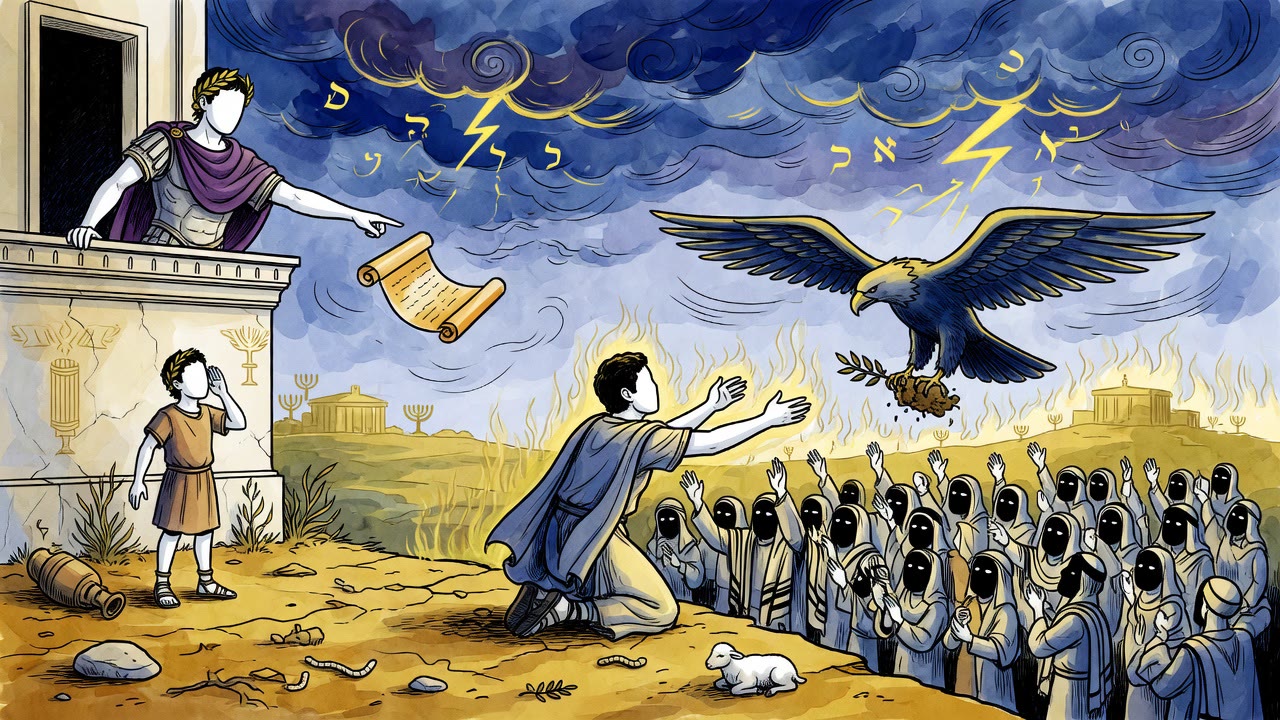
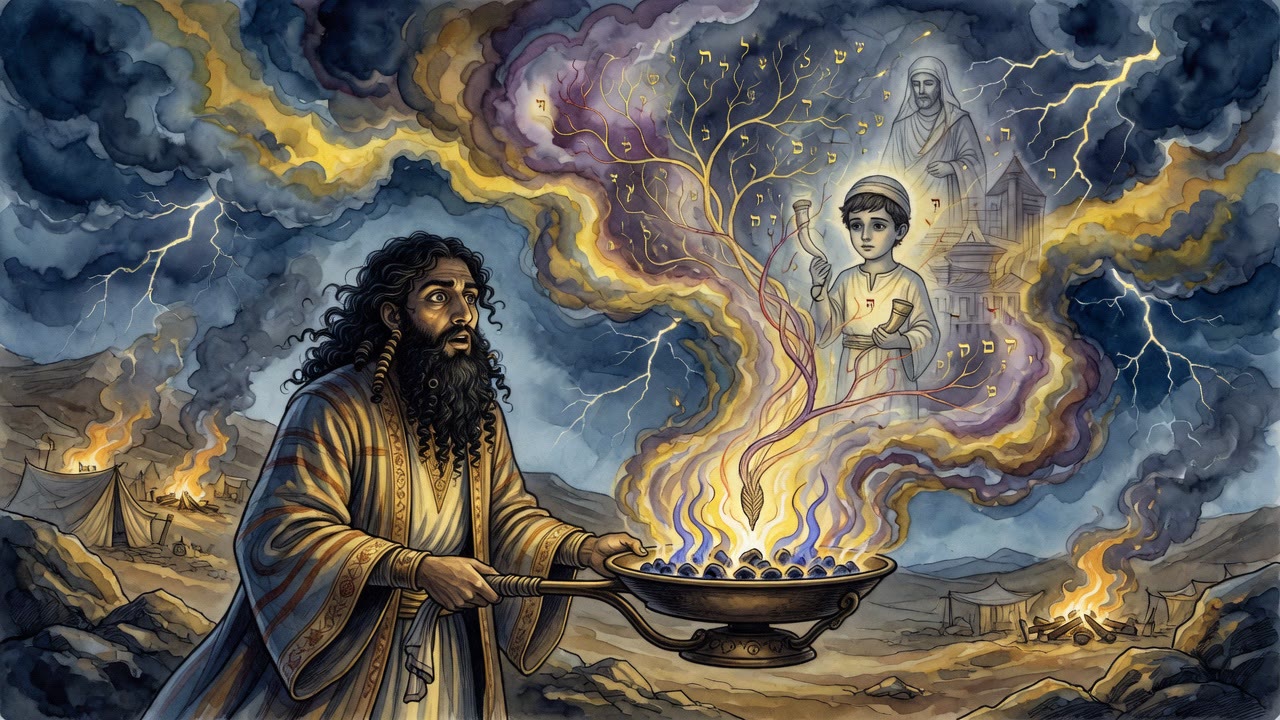
The midrash does not leave the school in peace. Hanina, son of Rabbi Yehoshua's brother, walks toward Kefar Nahum and meets heretics who cast a spell and hoist him onto a donkey on Shabbat. The violation is public and grotesque. He returns to his uncle. Rabbi Yehoshua heals him with oil, then delivers a second sentence as hard as the first. Hanina can no longer live in the Land of Israel. "The donkey of that wicked one rose against you." Exile becomes medicine. Hanina descends to Babylon and dies there in peace, far from the spell's neighborhood.

Proximity to evil, the story insists, leaves a stain even after the oil has done its work. Drawing near and staying far are not metaphors alone. They are geography.

Twelve Mil and a Closed Mouth

In another town, another kind of nearness is measured in miles. The sages taught that a disciple may not hand down a ruling within twelve mil of his master, the breadth of Israel's camp from Beth-jeshimoth to Abel-shittim. Rabbi Nahum bar Jeremiah sat in Hefer and answered the people. They asked. He ruled. They asked again. He ruled again, until someone stopped him with a fact that should have been a map.

"Have we not learned that a disciple may not rule within twelve mil of his master? And your master, Rabbi Mani, dwells in Sepphoris, closer than that!" Rabbi Nahum was stricken. "May it come upon me," he swore, "had I known he was so near, I would never have ruled." From that hour he held his tongue. Questions kept coming. The mouth that had been quick became a fence of honor.

Two Kinds of Distance

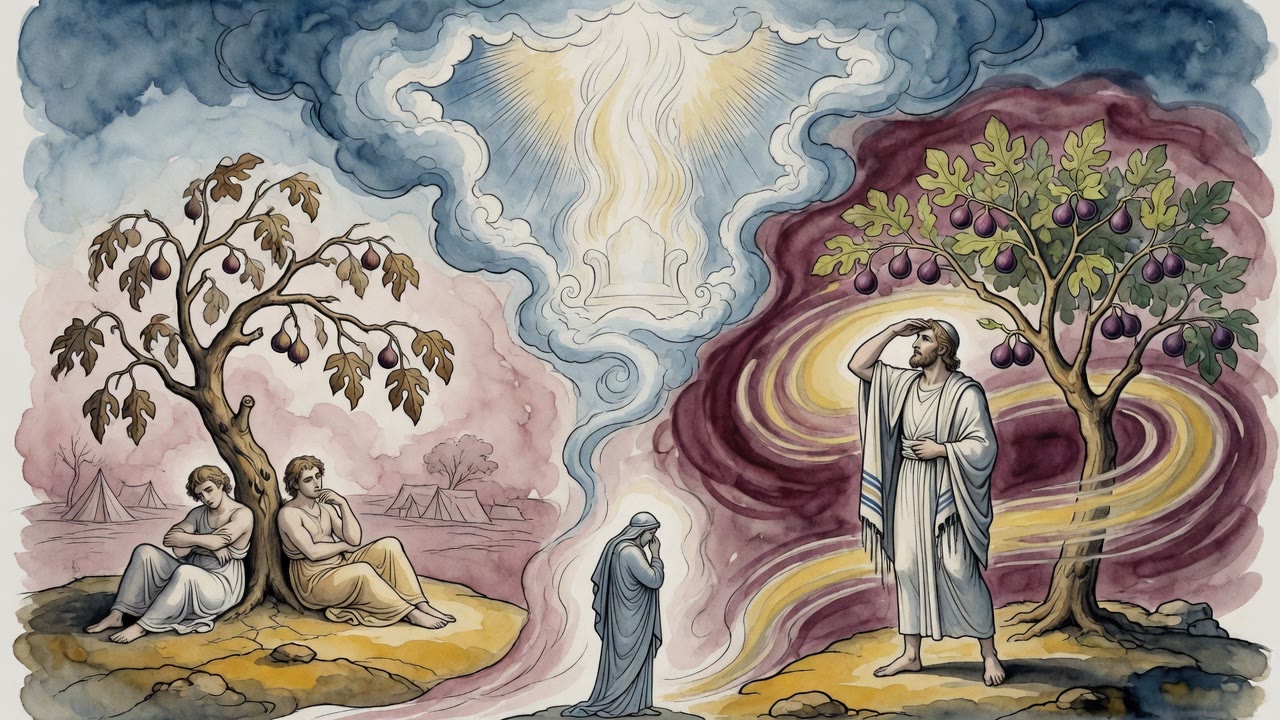
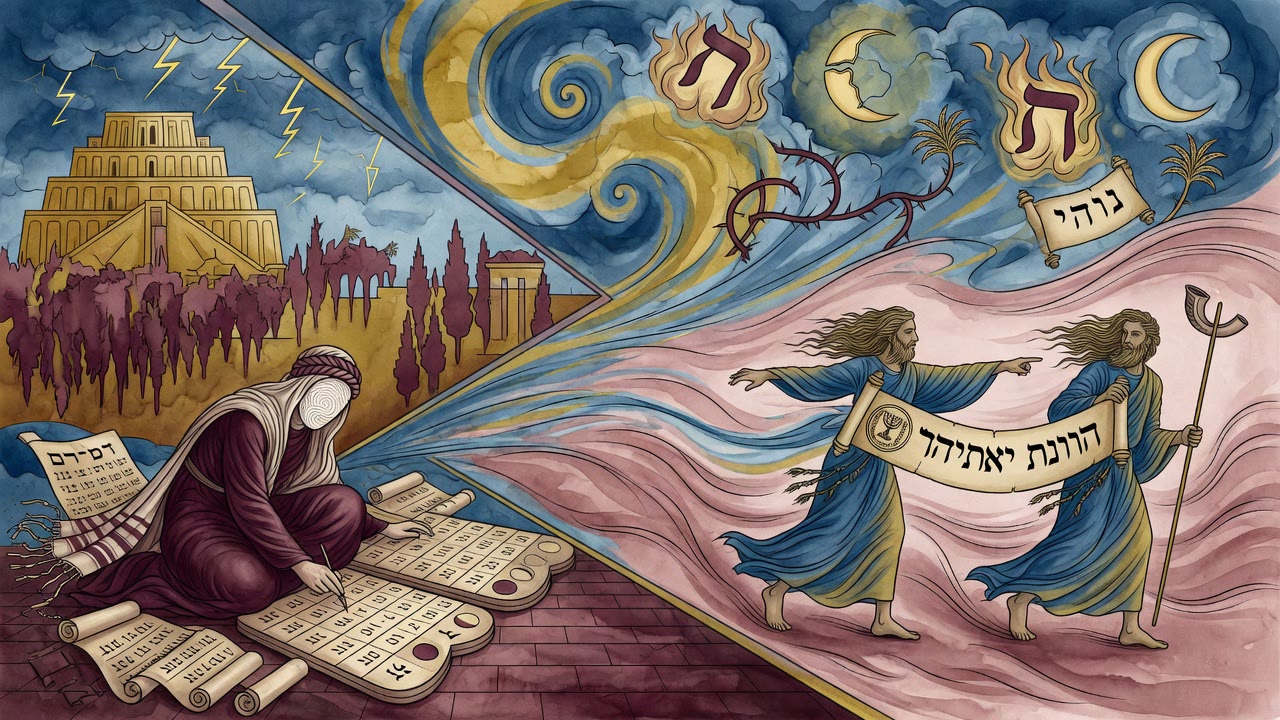
Set the stories beside each other and a single pressure appears. Who may draw near, and who must keep distance? The woman seeks nearness to Israel after a life that made nearness dangerous. Rabbi Eliezer keeps distance as judgment. Rabbi Yehoshua grants nearness as a last road. Hanina is forced into distance after contact with heresy. Rabbi Nahum chooses distance after contact with his master's honor.

The camp's twelve mil are not only a legal radius. They are a school for the body. A disciple who rules too close steals the master's air. A penitent who is drawn too close without truth steals the community's air. A man healed of a spell still may need a river between himself and the place that broke him. The sages do not romanticize proximity. They meter it.

The students who objected to Rabbi Yehoshua were not inventing cruelty for sport. They were guarding a boundary they thought Rabbi Eliezer had already drawn with authority. If one master says no and another says yes, the school risks becoming a market where a penitent shops for the softer gate. Rabbi Yehoshua's hard prophecy does not erase that risk. It answers it by refusing to pretend that nearness is cheap.

Rabbi Nahum's silence after the twelve-mil warning belongs in the same ledger. He does not argue that the people needed answers and that empty need justifies a stolen ruling. He accepts that honor can require a closed mouth even when the questions are real. The woman seeking conversion and the disciple mid-ruling are opposite movements under one law of measure. One begs to enter. One must stop speaking. Both discover that Jewish nearness is never only about desire. It is about whether the community can bear the cost of the approach.


← All myths

From the tradition

Sources

2 sources

The texts behind this telling. Some cards carry a translation of the source; others are our own retelling of it, and each card says which. Every card links out to the original.

Kohelet Rabbah 8:4Kohelet Rabbah

Retold in our words. Read the original at the link below.The Sefaria Midrash Rabbah, 2022 · CC-BY

Kohelet Rabbah, a collection of rabbinic interpretations on the book of Ecclesiastes, wrestles with this very question, offering us some pretty intense stories.

One tale recounts a woman who approaches Rabbi Eliezer seeking conversion. Now, the Matnot Kehuna tells us that this wasn't just any woman; she was a heretic seeking repentance, a real ba'alat teshuvah (repentance). She pleads, "Rabbi, draw me near." But when Rabbi Eliezer asks her to detail her past actions, she reveals a shocking truth: "My little son is from my big son."

Rabbi Eliezer, understandably, rebuffs her. But she doesn't give up. She seeks out Rabbi Yehoshua, who does accept her. This, of course, raises eyebrows. Rabbi Yehoshua’s students challenge him: "Rabbi Eliezer rebuffed her, and you draw her near?"

His response? It’s chilling. He says, essentially, that once she has committed to conversion, she won't live long anyway. He bases this on (Proverbs 2:19): “None that go to her will return; neither shall they attain the paths of life.” The Midrash (rabbinic interpretive commentary) HaMevoar explains that Rabbi Yehoshua believed her past sins would inevitably catch up with her. Her repentance, ironically, becomes a kind of death sentence, preventing her from fully returning to her sinful ways by cutting her life short. Powerful stuff. It is a stark view of repentance and the consequences of past actions.

The narrative then shifts, introducing us to Ḥanina, the son of Rabbi Yehoshua’s brother. He's on his way to Kefar Naḥum when heretics cast a spell on him, hoisting him onto a donkey on Shabbat – a grave violation of Jewish law. He turns to his uncle, Rabbi Yehoshua, who heals him with oil. Yet, even after being healed, Rabbi Yehoshua declares that Ḥanina can no longer live in the Land of Israel, because “the donkey of that wicked one rose against you." So Ḥanina descends to Babylon and dies there in peace. It seems even proximity to evil leaves a permanent stain.

And the stories keep coming. We hear of Rabbi Yonatan, one of Rabbi Yehoshua's students, who goes astray and joins the heretics. He's found completely debauched. When fellow heretics try to entice him further, they quote (Proverbs 1:14): "Cast your lot among us; let us all have one purse." Here, "purse" is used as a euphemism for a prostitute. Rabbi Yonatan miraculously escapes, fleeing from them. They even admit, before he escapes, that had he turned around and looked at their immoral behavior, he would have been lost forever.

Finally, there's the tale of Rabbi Yehuda ben Nekosa, who is constantly harassed by heretics. He engages them in debate, eventually proposing a brutal agreement: whoever loses the argument will have their brain wounded with a hammer. Rabbi Yehuda prevails, inflicting grievous wounds on his opponents. But instead of celebrating, he is filled with remorse. His students praise him, saying he had heavenly assistance, but he dismisses their praise, saying he’s no longer filled with Torah, but with the heretical ideas he was exposed to during the debate. He asks them to pray for him because he once held precious gems and pearls (Torah wisdom), but now he is full of coals.

What are we to make of these unsettling stories? They paint a complex picture of sin, repentance, and the ever-present struggle against heresy. They suggest that the path to redemption isn't always straightforward, and that even those who seek it may face insurmountable obstacles. Engaging with those who reject Torah can come at a great spiritual cost. They highlight the dangers of straying from the path, and the lasting impact of our choices. As the Zohar tells us, even a single transgression can create a dark mark on the soul.

These stories from Kohelet Rabbah are not comfortable reads. They challenge us to confront the darker aspects of human nature and the complexities of faith. They remind us that the battle between good and evil is not just an external one, but a constant struggle within ourselves. Are we truly capable of escaping the consequences of our past? Can we ever fully cleanse ourselves from the taint of sin? These are questions that continue to resonate, demanding our reflection long after the story ends.

Full source
Midrash Tanchuma Buber, Achrei Mot 6:2Midrash Tanchuma Buber, Achrei Mot

Translation of the source text.Midrash Tanchuma (Buber), Public Domain, on Sefaria · CC-BY-SA

It was taught (in a baraita): A disciple is forbidden to render a halakhic ruling in the presence of his master until he is twelve mil distant from him, corresponding to the camp of Israel. This is what is written (in Numbers 33:49): "And they encamped by the Jordan, from Beth-jeshimoth as far as Abel-shittim."

Rabbi Nahum bar Jeremiah was in Hefer. They would ask him, and he would rule; they would ask him, and he would rule. They said to him: But have we not learned thus, Rabbi: "A disciple is forbidden to render a halakhic ruling in the presence of his master until he is twelve mil distant from him, corresponding to the camp of Israel," and behold, Rabbi Mani, [our master], dwells in Sepphoris! He said to them: May it come upon me, had I known, I would not have ruled. From that hour onward he did not rule.

Full source