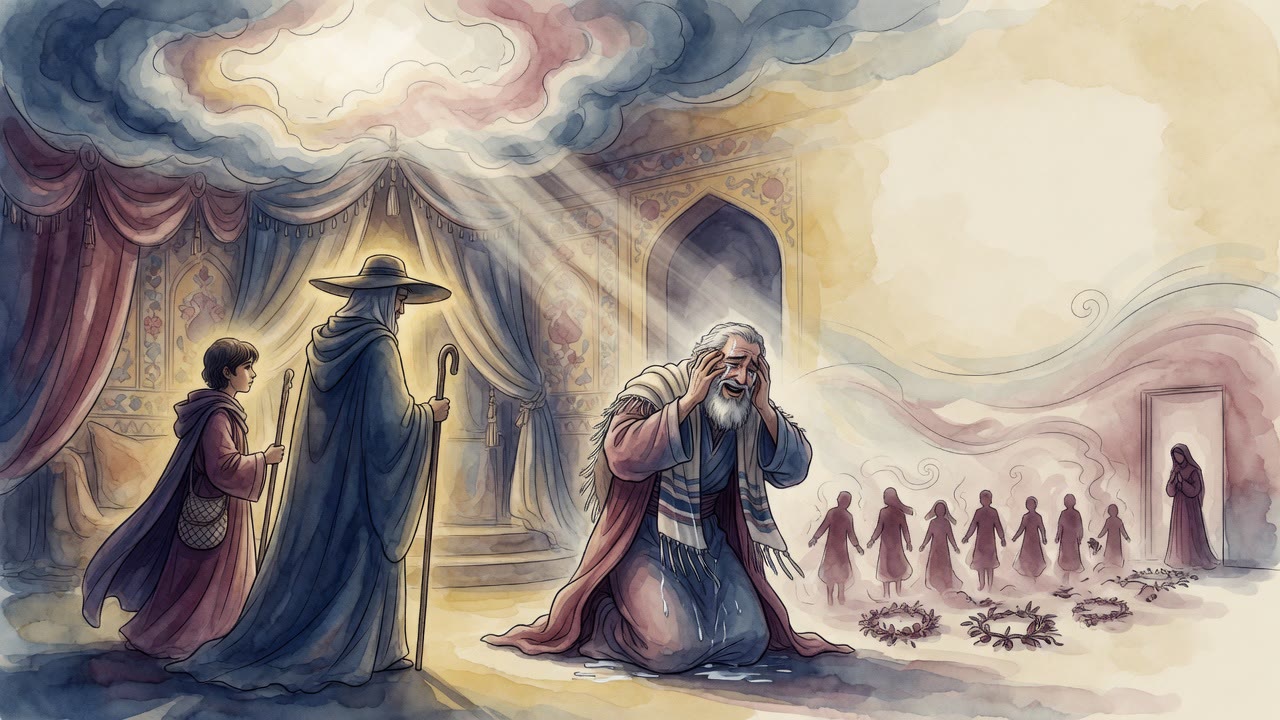
She Rose from the Stones and Healed Her Accusers
Two lepers came to the healer's door, and neither knew her. She asked each man to name the sin behind his disease before she would touch him.
Table of Contents
The crowd went home before dark, so there was nobody in the square when the heap moved.
 Click for full size
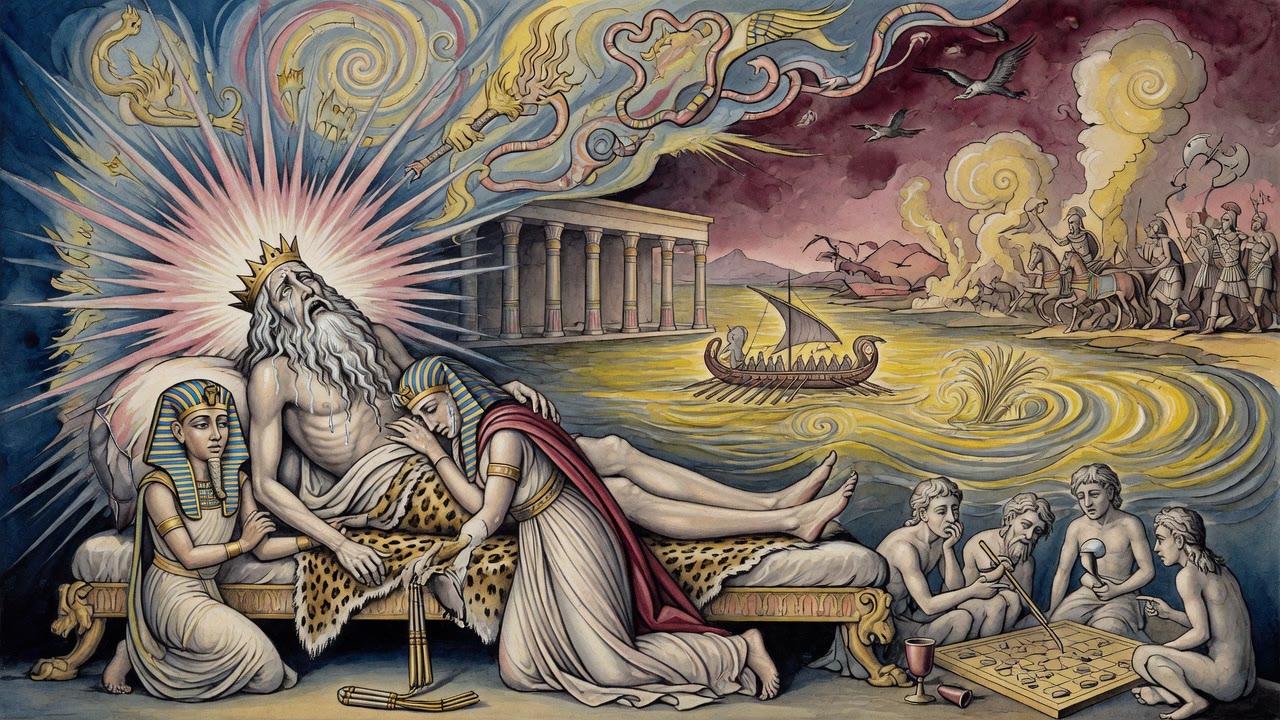
A stone rolled off the top and knocked against another one. Then an arm came out, and she rose out of the pile of them slowly, because a person buried under stones has to find out one limb at a time what still works. Her ribs worked, and so did her legs. She sat in the dust of a town that had already crossed her name off, and when she could stand she walked out of it, and nobody had stayed behind to check whether she was dead.
Her husband had gone away on a long journey and had left her in his brother's care, which is what a man does. The brother came to her within the month. She said no, and when he came again she said no again, and the third time he understood that she was not going to change, so he went out into the street instead and told the town what she had done with him. The court believed him, because he was loud and he was family and she was a woman whose husband was somewhere on the far side of the sea.
The Boy in the Other Country
She crossed a border and took work as a tutor in a household with a young son, and for a while it was quiet. She taught the boy his letters. She ate at the back of the house. Nobody there knew what a court in another country had decided about her.
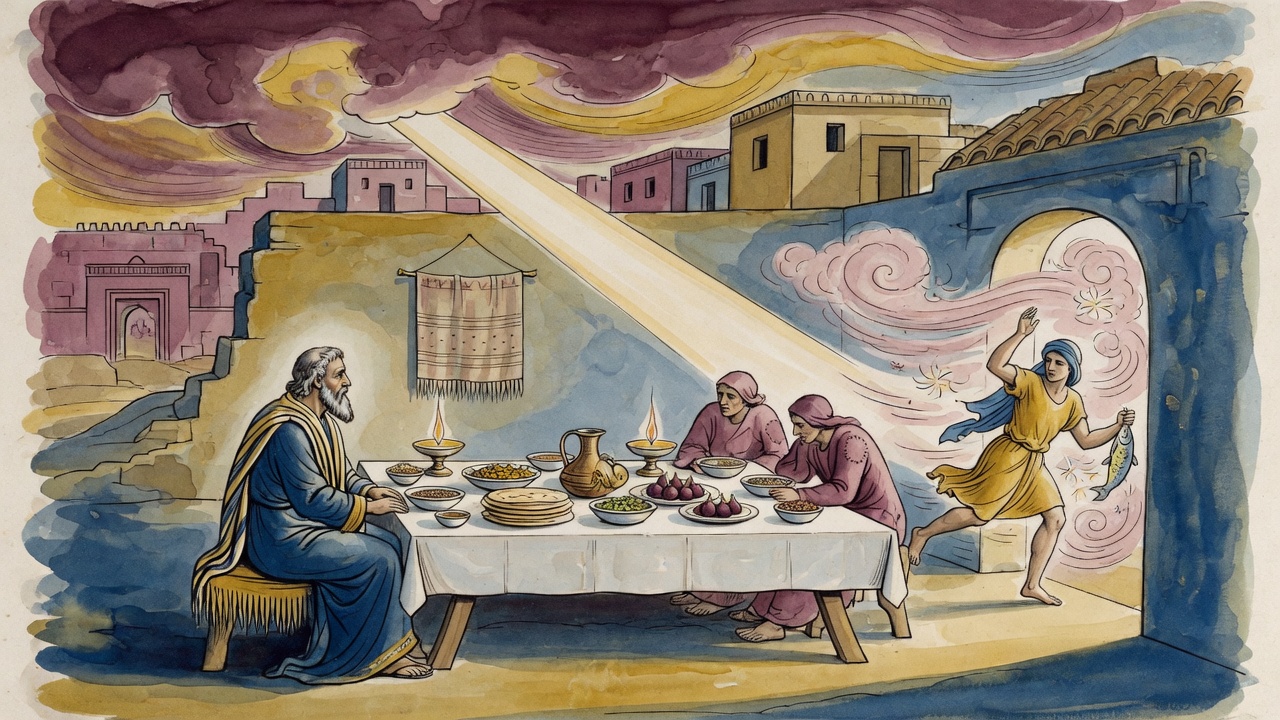
Then the household's servant started following her from room to room, and it went the way it had gone before. He asked and she refused, and he asked again with less politeness and got the same answer, and because he could not get at her any other way he went and killed the child.
The parents came home to a dead boy and two people who might have done it, and they could prove nothing about either. So they kept the servant, who had been in the house for years, and they sent away the tutor, who had been there a season. She went out through the gate with the mother screaming behind her, and she did not say anything, because there was nothing she could have said that a court had not already refused to hear once.
The Lot Fell on Her
She took a ship. Three days out the weather turned and kept turning, and when the sail split the captain did what sailors have always done in that situation and called for lots, since a storm like that means somebody aboard is carrying a sin heavy enough to sink the rest of them.
They drew, and the lot came out against her.
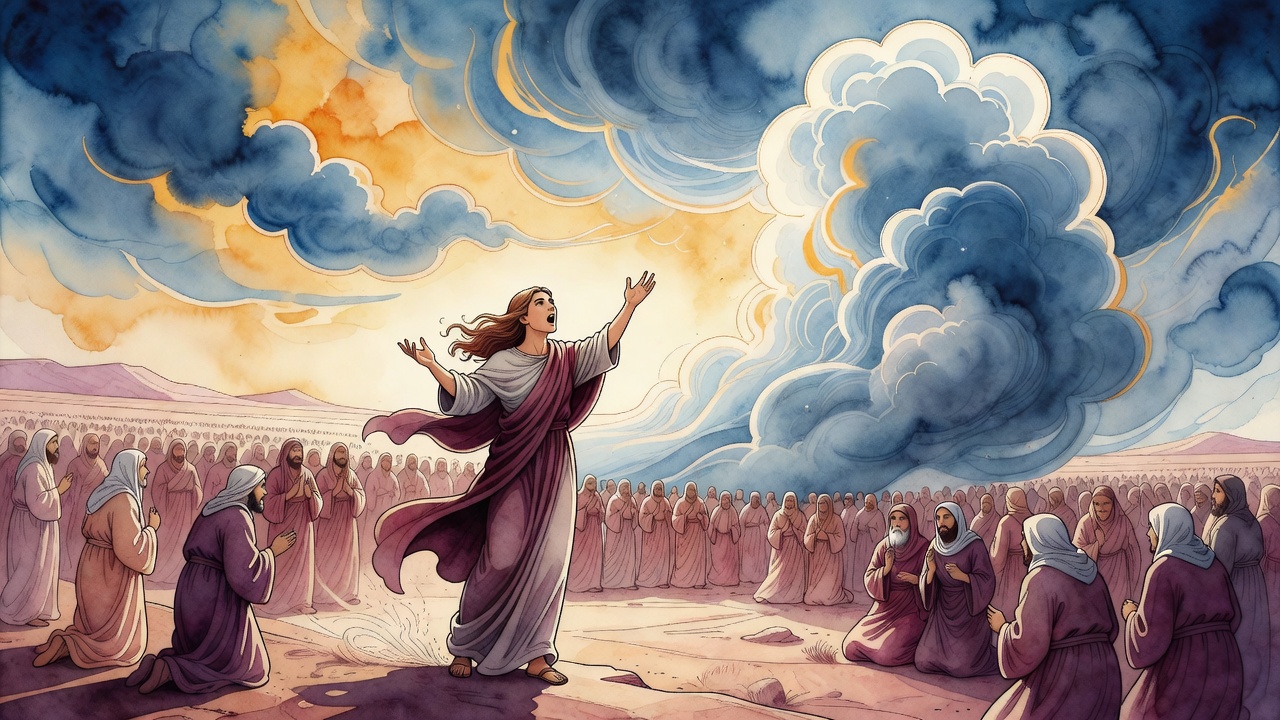
She stood on a deck with the whole crew looking at her and understood that she was about to be told, for the third time, what she had done. The sailors were kinder than the court had been. They did not put her over the side. They ran in close to an empty stretch of coast and set her down on it with the water at her knees, and then they pulled away and left her there.
What the Coast Taught Her
There were people living inland, and they took her in, and they had a trade. They treated leprosy. She learned the whole of it from them: how to read the color at the edge of a patch, when a white hair means one thing and when it means another, which oils draw and which oils only comfort, how long to wait before saying anything at all to a frightened man.
Years went by. She got old enough that her face changed and good enough that people came a long way to sit in front of her, and because the sick will travel further than the well, they came from countries she had walked out of. She wore her hair covered, and she kept a room where she saw them one at a time, and a rule about how she saw them that by then nobody remembered the origin of.
Name It Before I Touch You
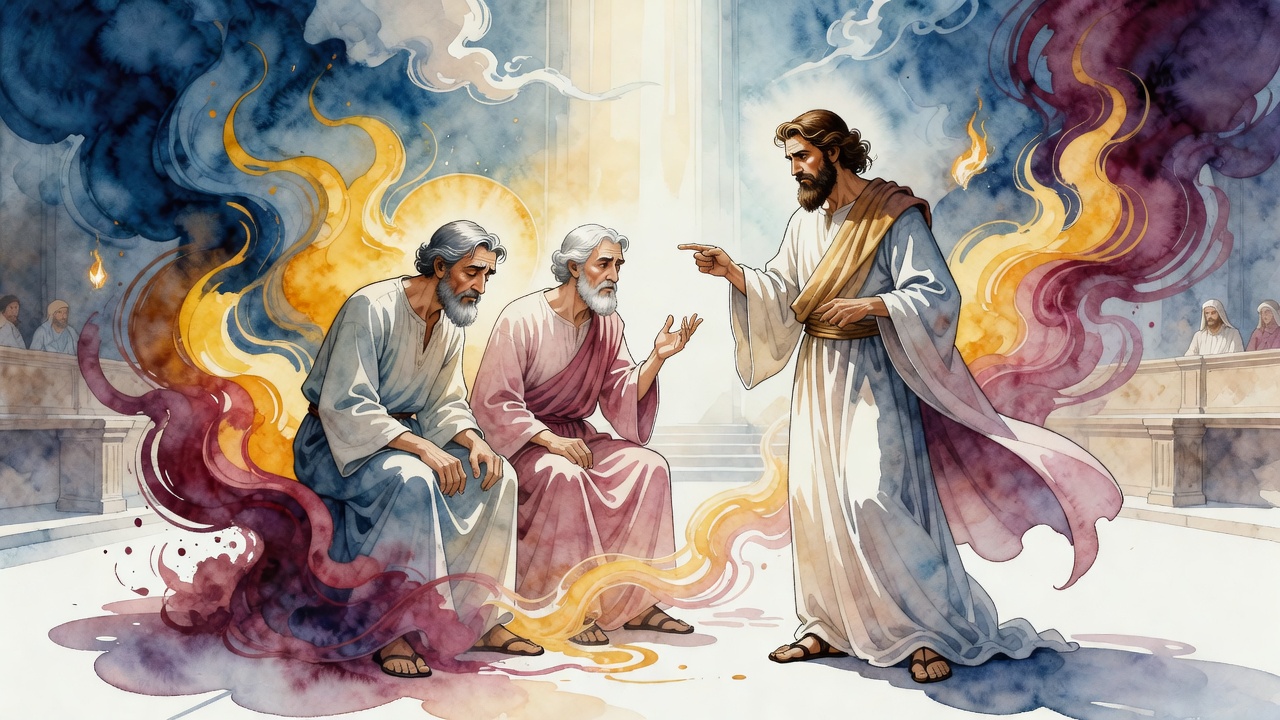
Two men came up the road together on the same morning. One had lost most of the skin on his hands. The other was further along and kept his face wrapped. They waited their turn in the yard, and when they came in she knew both of them inside a breath, before either had said a word, from the way the older one held his shoulders and the way the younger one stood half a step behind him the way he had stood behind him all his life. Her husband. His brother. Her accusers, in the sense that one of them had sworn it and the other had swallowed it whole, and neither of them looked at her twice.
She asked them the same thing she asked everyone. Before treatment, name the sins that might have opened this in you.
The brother went first. He said that his brother's wife had refused to lie with him, and that he had gone into the street and sworn a thing against her that was not true, and that the town had stoned her for it. He said he had thought about it every year since. He said it in front of the only other person in the world who had been there.
Then her husband spoke, and he wept while he did it. He had believed his brother. He had never once gone back and asked a question of anybody. He had mourned a wife he thought was guilty, which is the worst kind of mourning there is, and he had carried her that way for years.
She let both of them finish. Then she told them who she was.
The brother's face came apart. Her husband got up out of the chair and could not make words for a while, because the woman he had buried in his own mind was standing in a room in a headscarf holding a jar of oil. She sat them both back down and healed her husband first. Then she healed the brother, and her hands were steady on him the entire time.
← All myths