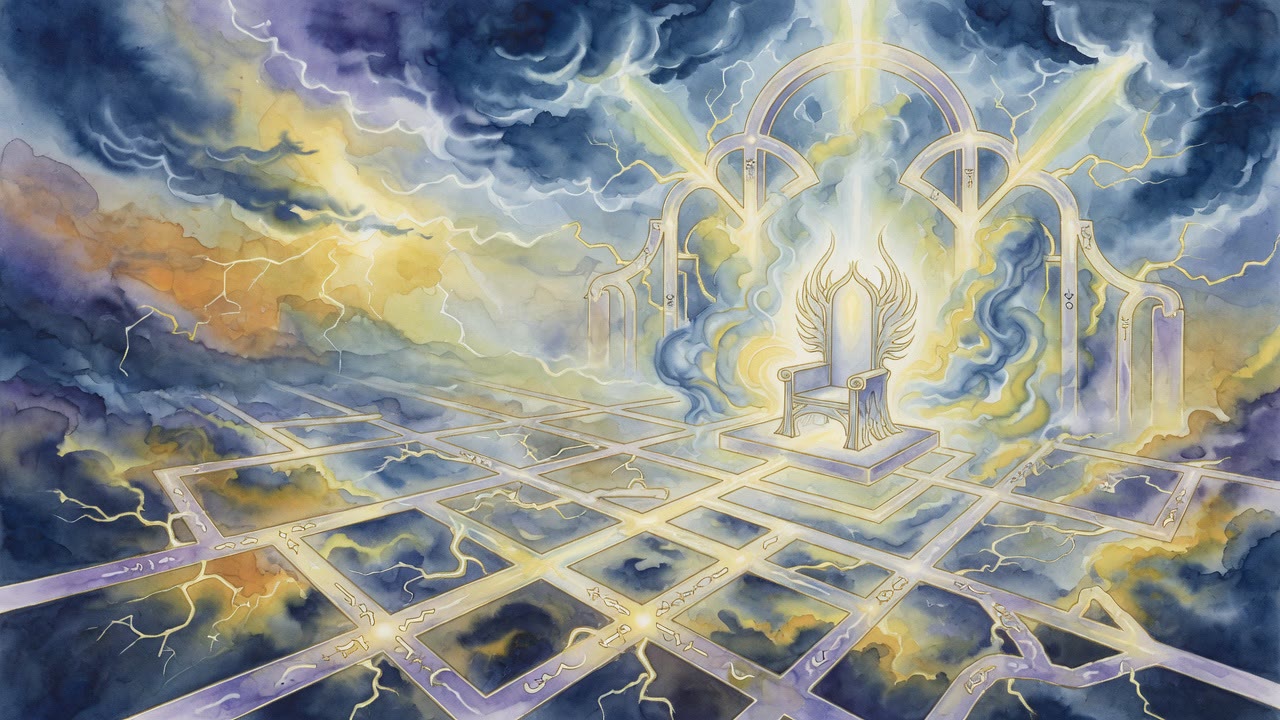
Shekhinah Grabbed the Tzitzit and Called the Chariot
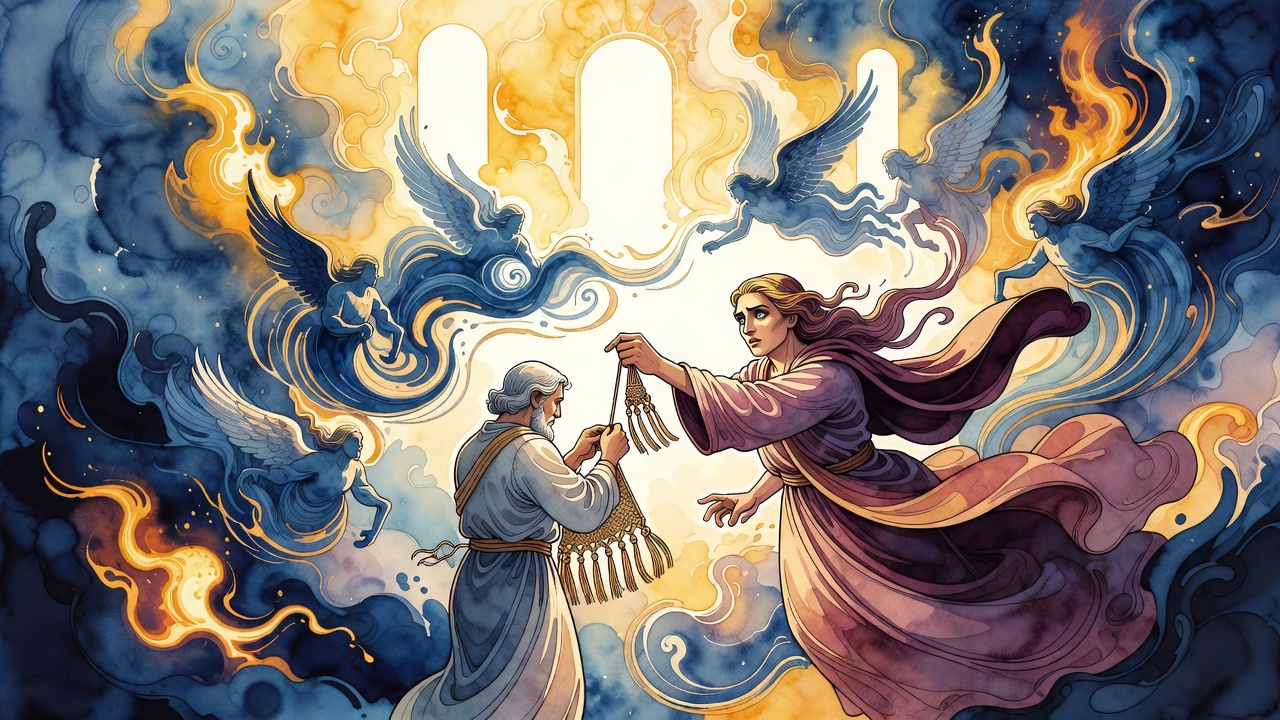
He tied the last knot with dust on his fingers. The Queen seized the fringes and called chariot angels to hide him from the Accuser.
Table of Contents
A man pulled the four corners over his shoulders and counted the knots with fingers that still held market dust. Five knots. Thirteen segments. Thirty-two branches of the precept, by the counting that treats the fringes as a living number. The cloth settled. The room did not clap. Outside, a dog barked once and went quiet.
 Click for full size
Then the Queen moved.
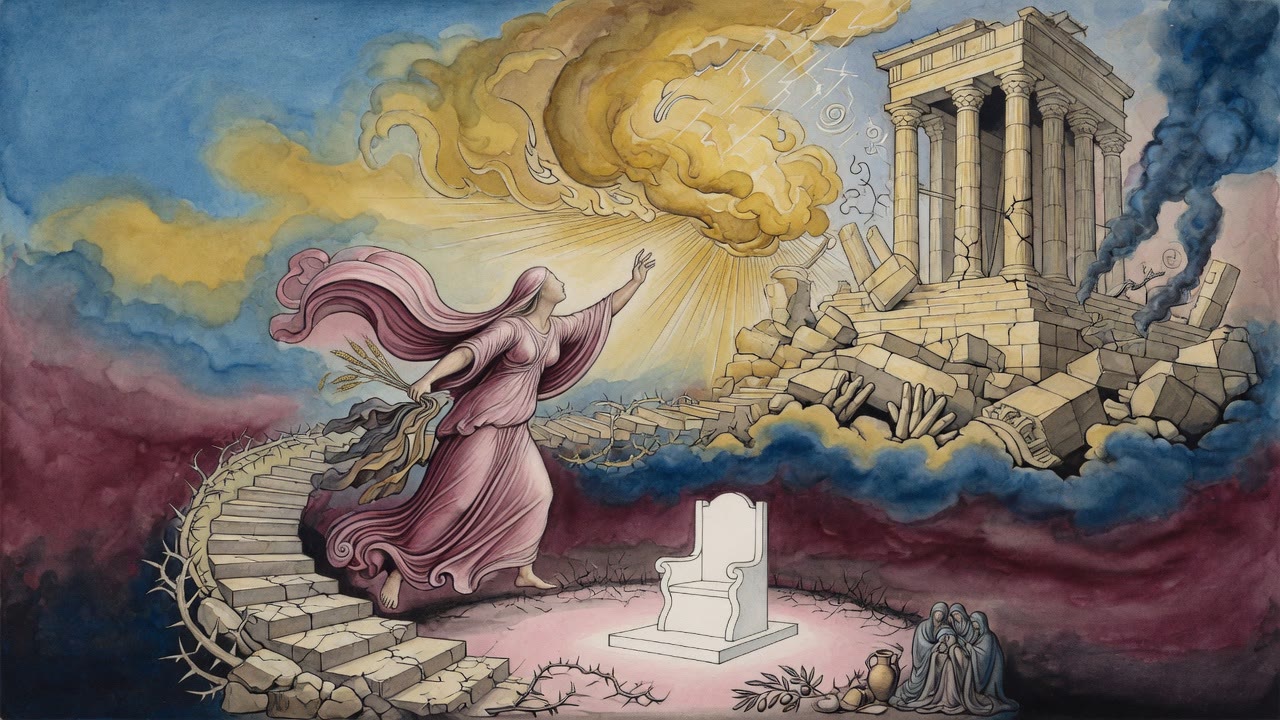
Not a woman on a throne of gold for painters. The Shekhinah (שכינה), the Presence that dwells, grabbed the tzitzit as if they were her own covering. "Master of the Universe," she said, and the court above heard the claim before the man downstairs finished adjusting the neck. "These are they who cover me with the wrapping of the precept of tzitzit."
The Queen Claims the Cloth
A person who wraps tzitzit thinks he is remembering commandments with string. In the upper room the act is clothing. The fringes do not only remind. They cover the Presence that goes into exile with Israel and returns when Israel wraps carefully. She does not wait for a festival. She intervenes the moment the knots are honest.
He felt nothing like fire. He felt the odd lightness of a man who has been argued for without being asked. Advocacy is not always warm. Sometimes it is a legal seizure of evidence: look, the covering is here, the defendant belongs to my side. The Blessed Holy One did not debate the point. He turned to the angels of the supernal chariot with an order that treated the street below as a corridor under escort.
The man checked one corner again, the way a soldier checks a strap. Dust still clung to his heel. Heaven did not wait for him to feel holy. The claim had already been filed in a court that uses mitzvot as exhibits.
Wings Under Ordinary Feet
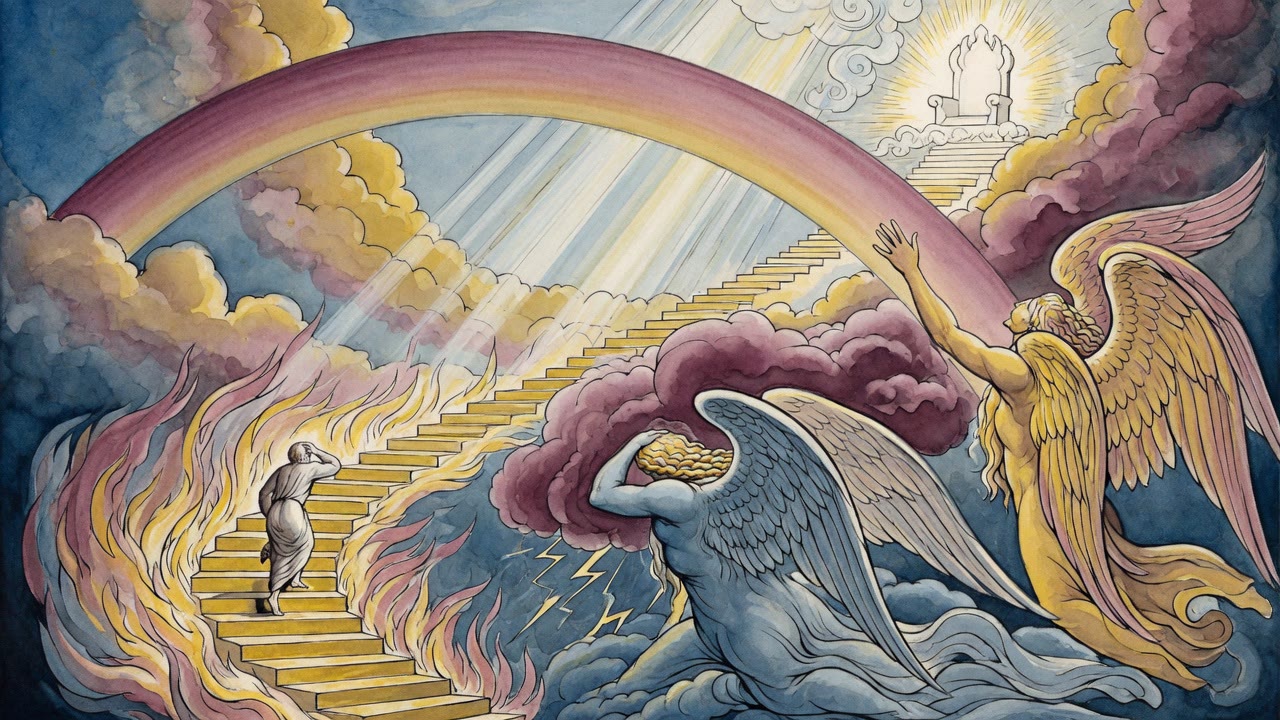
Scoop them up on their wings. Fly them from place to place. Shield them from the Accuser who walks roads looking for uncovered travelers. The order was practical. Merkavah angels are not soft pets. They are the living creatures of fire Ezekiel saw, faces and wings stacked until ordinary eyes would fail (Ezekiel 1:6).
He stepped into the street toward the study house. Dust still dust. The walk changed character anyway. A place that had felt narrow opened by half a breath. The Accuser still had a job. The fringes had become a brief. The Queen had filed it before the first corner of the market.
Above, the hayot (חיות), angelic beasts of fire, clapped wings in a rhythm that rose through them like music through instruments. Silent one moment, speaking the next. Four faces. Four wings. Their chorus was not entertainment. It was the sound of a convoy assembling over ordinary mud and broken pottery.
A cart nearly clipped him. He stepped aside without drama. Later he would call it luck. The upper ledger had already marked escort and moved to the next name whose corners were still bare.
Fire That Does Not Burn the Wrapped
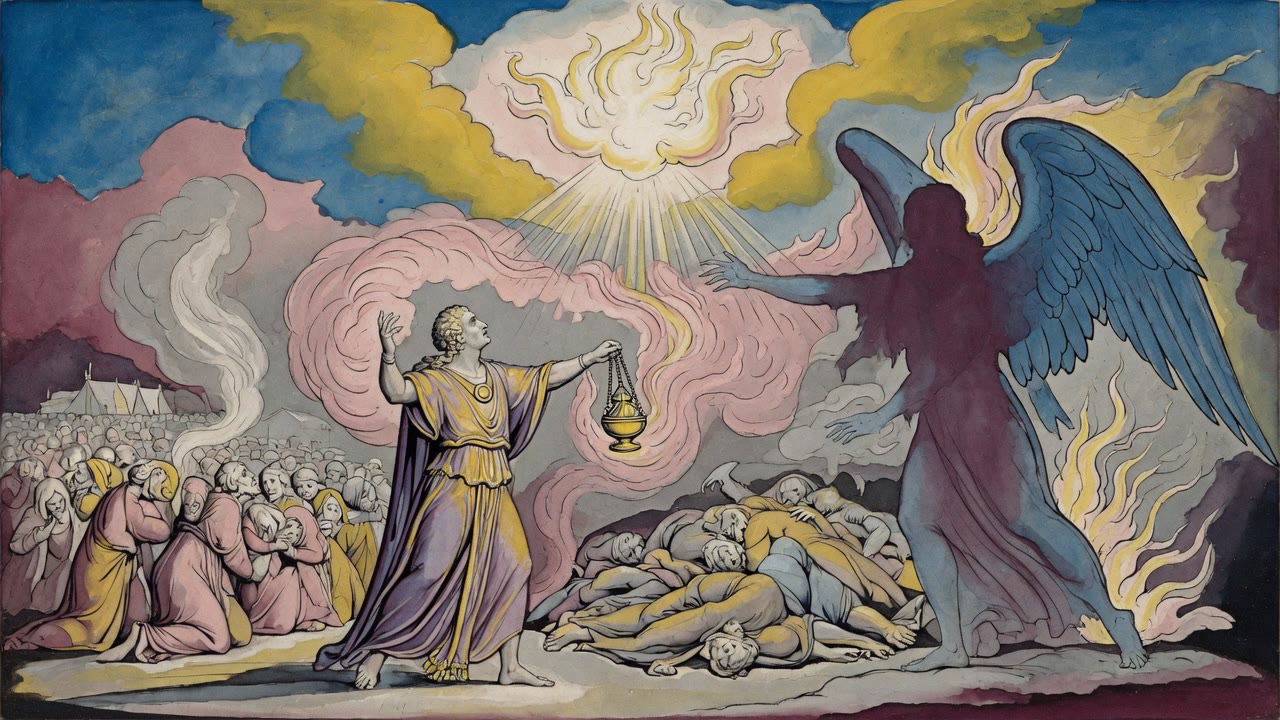
A soul is called a candle of God. Black, white, and blue bindings join body, soul, and the Name. The same colors map onto liver, gall, and spleen as fires inside the flesh. The world that offers protection from the fire of Gehinnom through the candle of mitzvot also places fire in the organs. Holiness is not the absence of heat. It is heat aimed.
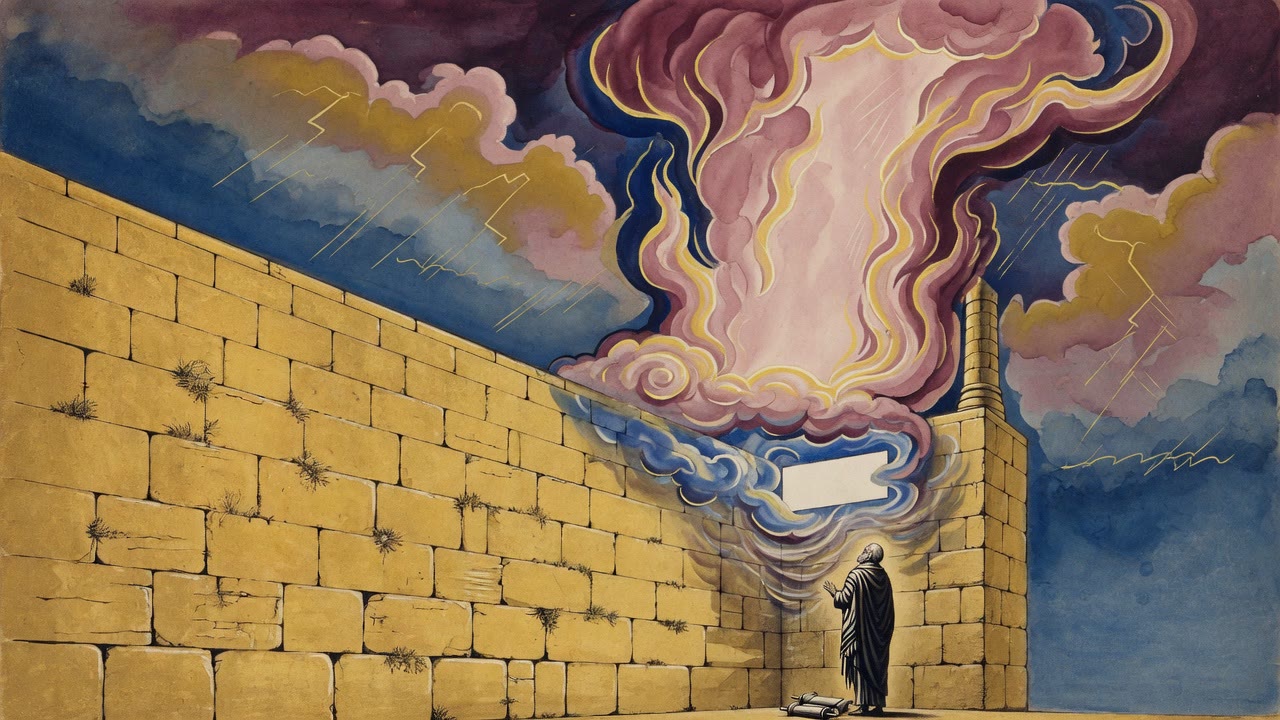
The blue of the thread, tekhelet, is the color of the throne. There is no such blue on the other side. He passed a wall where a man without fringes argued with a shadow of his own temper. No miracle theater. Only the difference between a body the Queen can claim and a body still naked to prosecution. The chariot does not always lift feet off stone. Often it lifts the case file before the Accuser finishes writing the charge in the dust of the lane.
At a doorway he almost answered a jeer with a sharper jeer. The fringes brushed his wrist. He kept the mouth closed. Small gates matter. The Queen advocates for coverers, not for every impulse that still lives under the cloth.
From Corner to Corner of the Road
Place to place. Market to doorway. Doorway to bench. The wings' work is continuous escort, not a single leap into sky. When the man later forgot and spoke sharply, the covering did not vanish, but the advocacy thinned. The Queen argues for those who cover her. She is not a charm sewn once and abandoned. Knots must be kept. Corners must stay true when weather warms and pride loosens cloth.
At the study house he touched a corner again, not for show. The knots held. Somewhere the hayot kept their rhythm. Somewhere the Accuser looked for a traveler whose corners hung empty. The road between those two facts is where most lives are walked, half covered, half tempted to shrug the cloth off for comfort.
He sat. Opened a page. The cloth still covered him, and through him, the Presence that asked to be covered. Ink waited. So did the wings he could not see, patient as law and louder than the dog that had gone quiet hours ago.
← All myths