The Shekhinah Lost Her House but Kept Arguing
The Temple falls by human hands. The Shekhinah, the Divine Presence, argues for the poor, descends into exile, and waits for a house built from above.
Table of Contents
 Click for full size
The Human Temple Could Fall
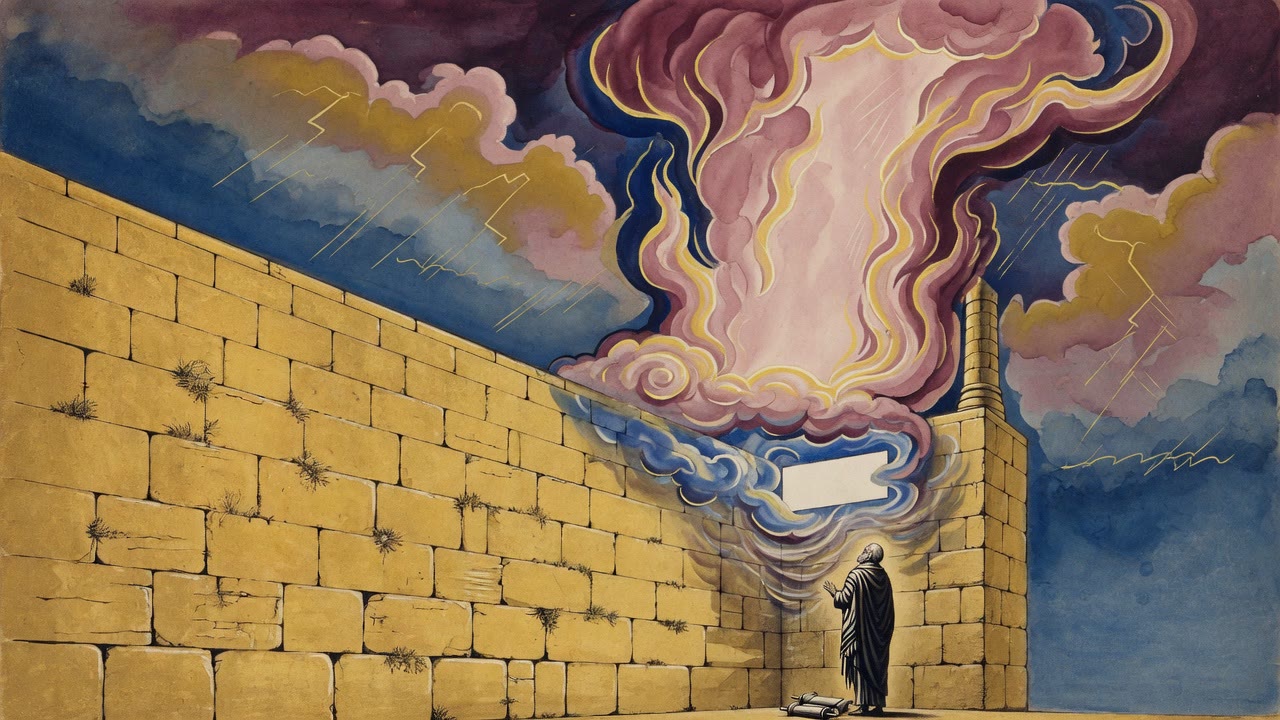
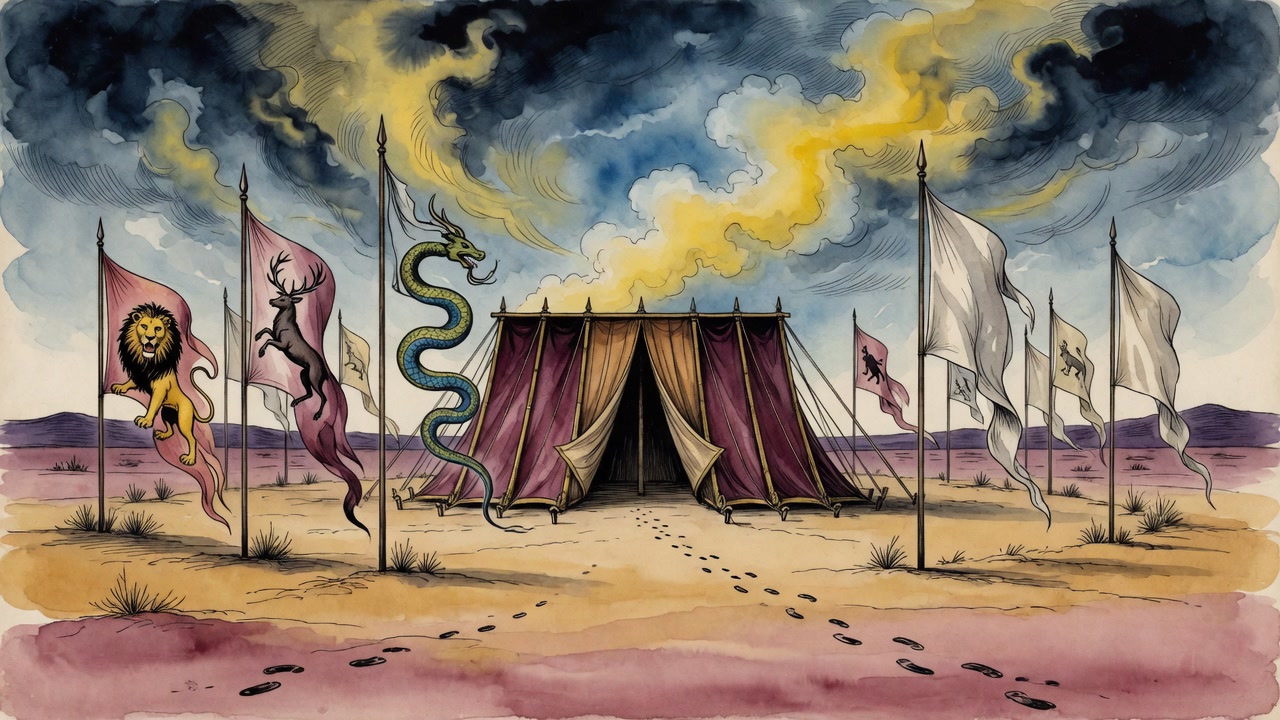
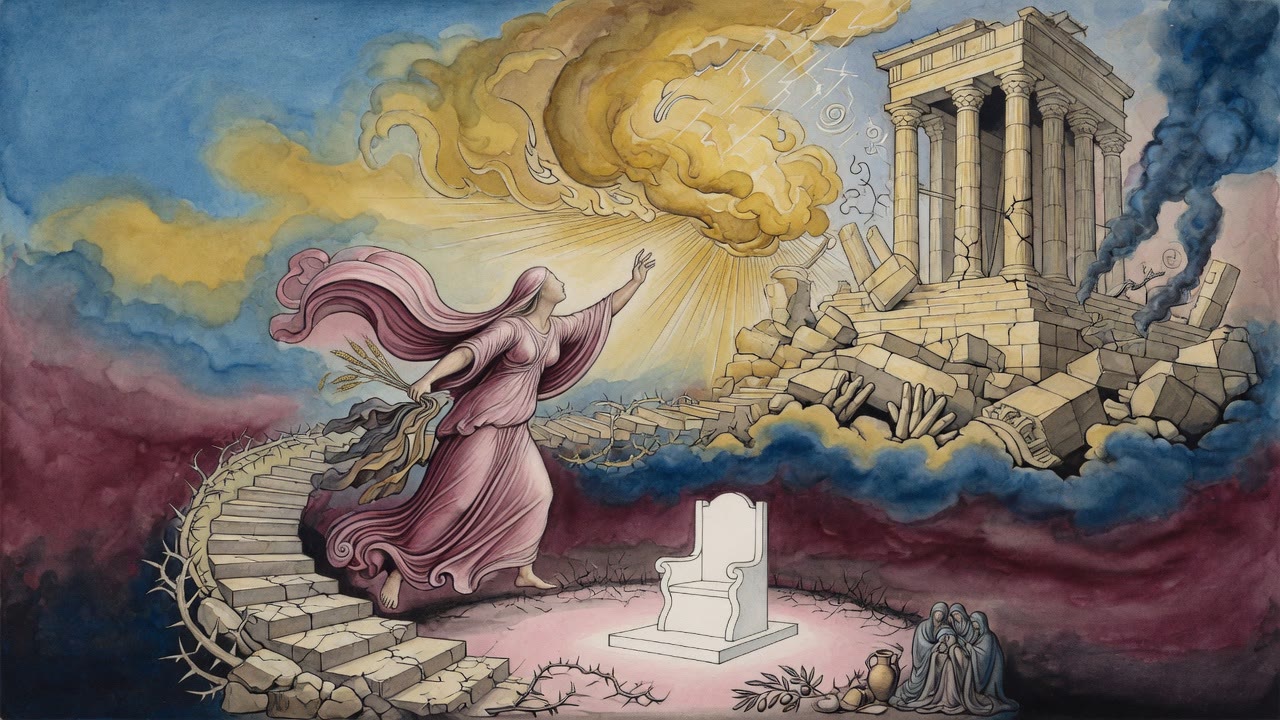
If the Lord does not build the house, the builders labor in vain. Tikkunei Zohar pressed on that verse until it yielded a principle. The first and second Temples were magnificent. Hiram's craftsmen, Solomon's architects, cedar from Lebanon, stones dressed before they arrived at the site so no iron tool would be heard on the holy mount. Human skill at its full extension. And yet both Temples fell. Not because the craftsmanship was poor or the priests were negligent. Because what human hands assemble, human hands or enemy armies can disassemble. The Mishkan (the tent-sanctuary Israel carried through the wilderness) was built by Bezalel according to the exact pattern Moses received on the mountain, and even that dwelling was taken apart and moved according to the cloud's direction. The structural vulnerability was not in the quality of the building. It was in the category of the building, anything made only below could be undone from below.
The Tree of Life Reached Five Hundred Years Upward
In the garden, the Tree of Life stood at the center, its canopy spanning a distance that would take a man five hundred years to cross. Tikkunei Zohar found in that measurement a correspondence with the heavenly worlds. The tree that connected earth to the divine was not decorative. It was structural. It was the axis along which blessing, life, and divine light descended into the garden and from the garden into the world. When Adam and Eve were expelled and the garden was sealed, the Tree of Life did not cease to exist. It moved to another register, became a figure for Torah, for the divine name, for the flow of divine light through the ten sefirot (the graded attributes by which God acts) into the world of creation. The Shekhinah, God's indwelling presence, was the bottom of that axis, the point where the five-hundred-year tree touched the ground. When the Temple stood, the tree was rooted there. When the Temple fell, the tree did not fall. It lifted.
The Shekhinah Argued Before God for the Impoverished Righteous
In the heavenly court, voices present cases. The Shekhinah (the Divine Presence) speaks on behalf of those whose merit is not obvious, who have nothing to bring as evidence of their standing. Tikkunei Zohar imagines Her as an advocate: there is one who is righteous and poor, who struggles in this world without the material signs of blessing that everyone else reads as divine favor. The world looks at poverty and assumes failure. The Shekhinah looks at the same poverty and reads faithfulness, integrity, and the particular kind of holiness that has no protective covering except the covenant itself. She argues in the court of heaven that this person's impoverishment is not evidence against them but evidence for them, the sign of someone who has held on to what cannot be taxed or confiscated or burned. The argument continues. The advocate does not tire. The court hears the case because the Shekhinah has not stopped presenting it.
The Shekhinah Descended Into Exile With Israel
When the Temple was destroyed and Israel went into exile, the Shekhinah went with them. Tikkunei Zohar made this a principle of divine faithfulness: the divine presence did not remain in the ruins of the Temple while the people marched to Babylon. It followed. It descended into the condition of the exiled. The exile was therefore not divine abandonment but divine accompaniment in the worst form of abandonment. Israel was enslaved in Egypt and God was in the thorns. Israel was taken into Babylon and God was in the exile. The Shekhinah's presence in exile did not make exile good. It made exile survivable and temporary. A people accompanied by the divine presence had not been fully severed from the source. The connection was drawn thin and stretched over enormous distance. But it was not cut. And a thin connection to the source of life can sustain what a thick connection to the ordinary world cannot replace.
The Shekhinah Rises Through the Halls of the Angels
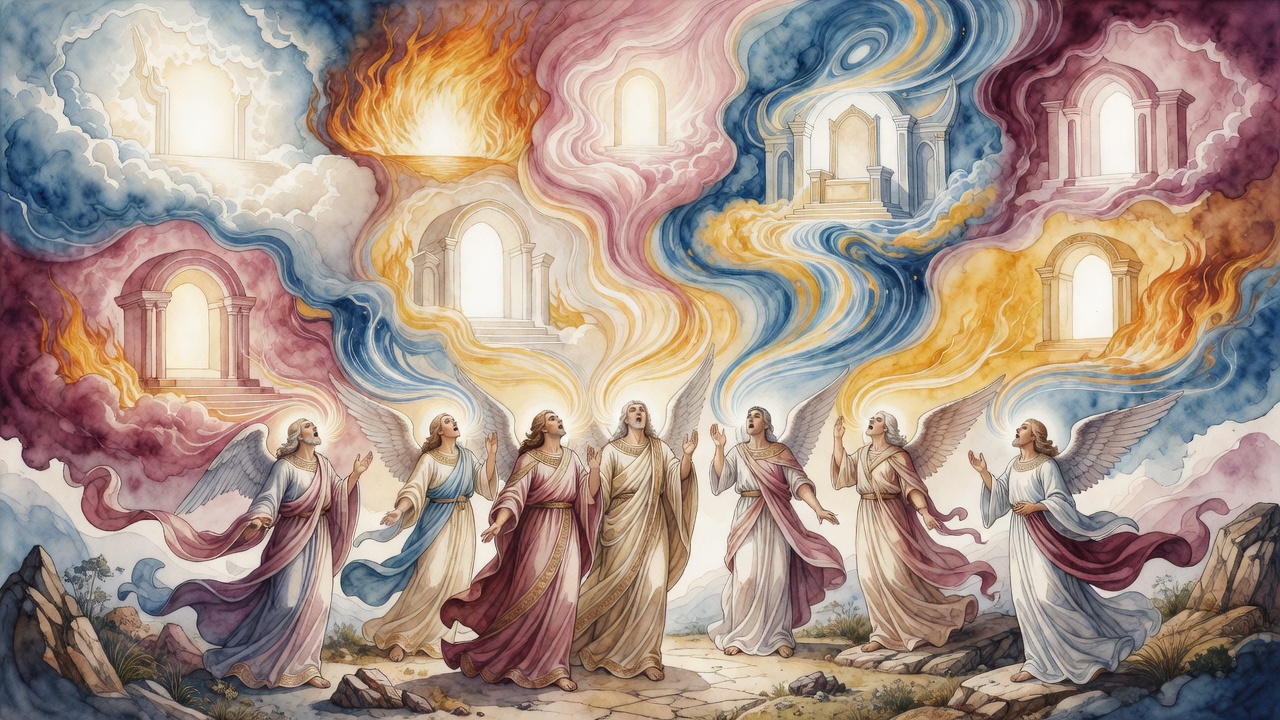
In the upper worlds, the Shekhinah moves through halls that Tikkunei Zohar maps in layers. The angels of each hall differ in function, in proximity to the divine name, in the kind of light they carry. The Shekhinah's ascent through these halls is not a retreat from the world below. It is a movement that draws blessing down from above while simultaneously sustaining the connection with what is below. The final Temple, the one whose glory will exceed the former house in the prophecy of Haggai, will not be built by architects. It will descend from above. The dwelling that is built entirely by the divine hand cannot be dismantled by any army, any fire, or any exile, because its foundation is not stone on the ground but the divine will that does not change. The Shekhinah who has been arguing in the heavenly court, descending into exile, and moving through the angelic halls has been doing all of this in preparation for the moment when the house above and the house below are finally built simultaneously and become one structure with no seam between them.
← All myths