Shimon Saw Sparks Fly From the Hammered Points
A student asked whether the sparks were mistakes. Rabbi Shimon refused to call them that. Another student reached for a spark and found it still hot.
Table of Contents
 Click for full size
Hammer, Metal, Flying Light
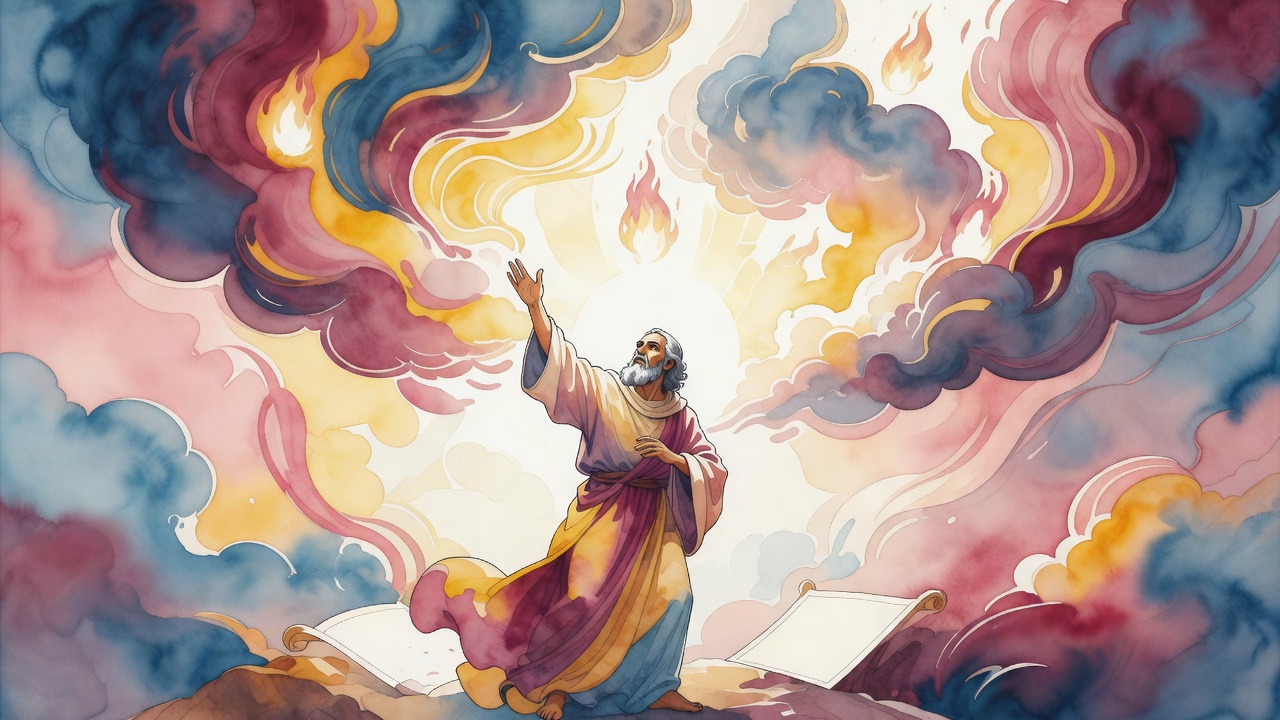
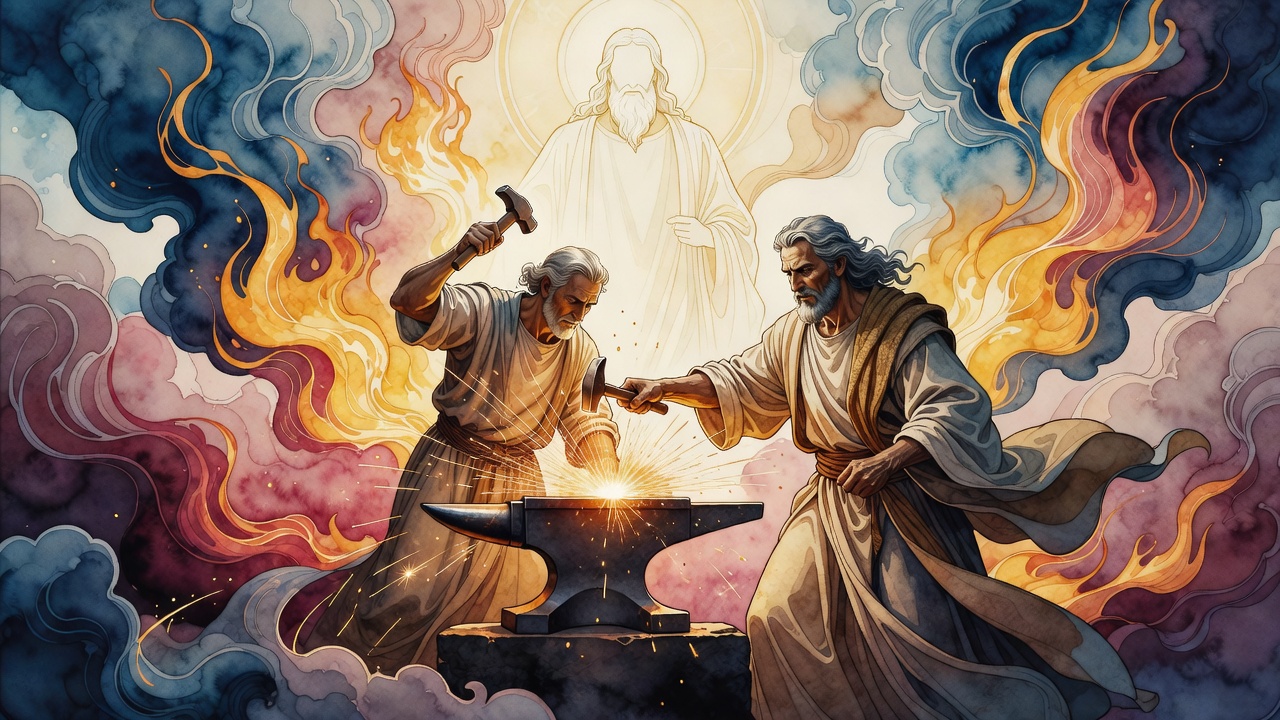
Rabbi Shimon bar Yochai stood where a craftsman worked iron. Each strike threw sparks into the dark air, brief, sharp, gone or stuck where they landed. He did not treat the sparks as decoration. He treated them as a secret already told in the upper worlds: flashes that are not the finished vessel, yet not nothing.
In the Zohar those flashes and sparks open a door. Later the Ramchal would name the stage more tightly: the Nekudim, points of light that appear when Atzilut is still incomplete, when the blueprint of pure emanation has not yet settled into patient beauty.
The hammer fell again. Another spark fled into dust. Shimon's students shifted their feet, sensing that the teaching would not stay in the forge, that it would follow them into caves and markets and the long fear of empires.
Not a Rung, a Turning
Many students wanted the Nekudim to be a neat step on a ladder toward Atzilut, a polite intermediate. Shimon's secret, carried forward, refuses the neatness. The points are something else: a world of discrete intensities, each full of itself, each ready to crack rather than share. Call it Tohu when the sharpness becomes chaos. Call it a turning point when a map is required.
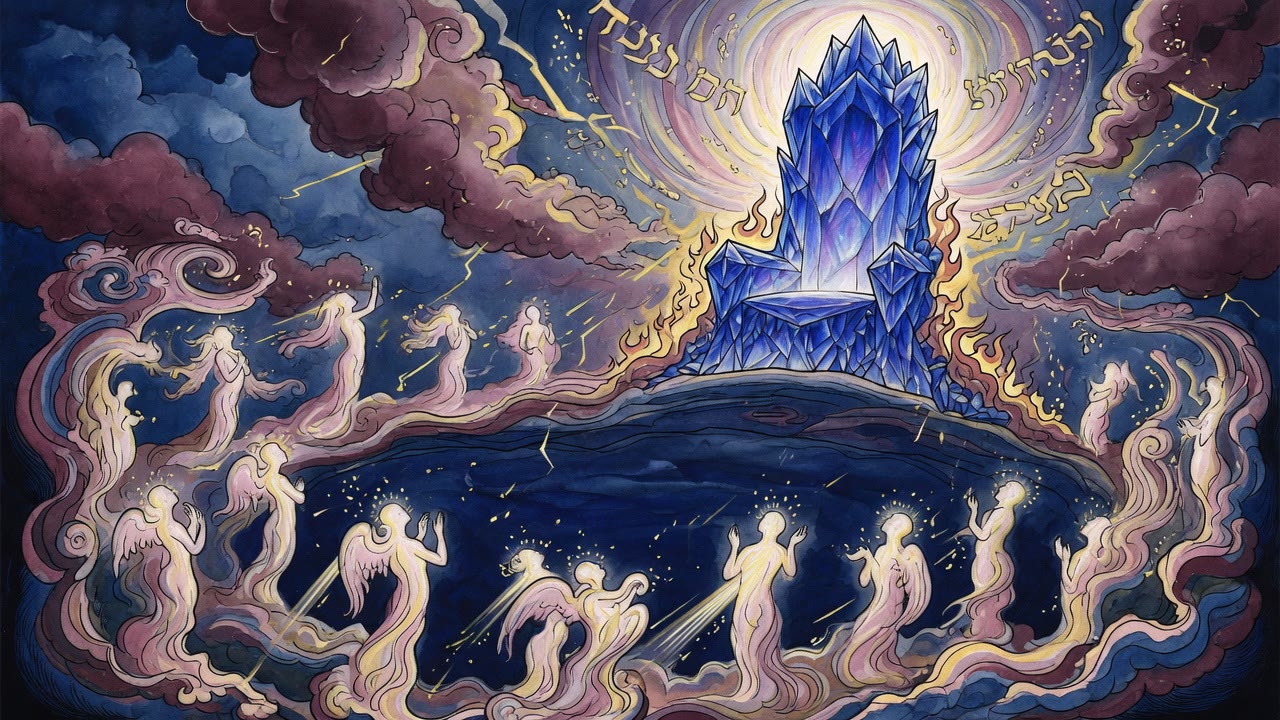
While Atzilut (the world of emanation) still formed in the Supreme Mind like an architect's unfinished drawing, lights of the Nekudim burst through the incomplete lines. After those bursts, the design of Atzilut could complete in full beauty. The flashes were not waste. They were the cost of moving from pure potential to a structure that can host history.
A student asked if the sparks were mistakes. Shimon looked at the iron, still hot, still unfinished, and did not comfort the question with a soft lie. Some necessary stages look like mistakes from below. From above they look like the only way a world of free creatures can begin.
Where Imperfection Took Root
The root of damage and the root of repair both hide in that stage. If the points had never stood too sharply, the vessels might never have known how to break. If they had never broken, repair would have no vocation. Imperfection is not a stain wiped on later by accident. It took root when light insisted on being point-like before it learned to be relational.
A student asked what perfection would have looked like. The answer hung unfinished, because the life they stood inside was already the life after the hammer had struck. They inherited sparks and shards, not a museum of uncracked glass.
In the dust of the forge floor, one spark still glowed. Shimon pointed with his chin. "That," the gesture said without needing many words, "is also Torah, if the hand that serves knows how to pick it up without burning."
Sparks in the Mouth of Teaching
Shimon taught so that sparks would keep flying in human speech: each word a small hammer, each insight a flash that might land in a life and refuse to die. The Nekudim are not only a past cosmology. They are the pattern of any holiness that arrives too intense for its container and must be gathered later with care.
In a cave, years later or years earlier depending on how a sage's time is counted, the same image returned: metal, strike, light, scatter. Outside, Rome made its own sparks of a different kind. Inside, the secret of the points outlasted the empire's noise.
One spark stuck to a page that would be read in another century by a man in Italy who wrote openings of wisdom for students who had never seen a blacksmith's shop. The man would call the stage Nekudim and map it against Atzilut's unfinished blueprint. The forge would still be present under his careful Hebrew, if a reader knew how to smell iron in a sentence.
Shimon left the craftsman to his work. The hammer kept falling. Sparks kept choosing dust or air or a sleeve. The world of points, once seen, could not be unseen. Every later shatter would rhyme with that forge. Every later gathering of light would rhyme with a hand willing to lift what is still hot.
One student reached toward a cooling spark and hissed when heat remained. Shimon nodded as if the pain were part of the syllabus. Hot light is still light. The hand that serves must learn heat without dropping the work, or the forge has taught nothing but fear.
The craftsman never knew he had hosted a secret of Tohu (formless void). He only knew iron, heat, and the need to finish before dark. That ignorance did not make the sparks less true. Holiness often borrows ordinary tools without asking the tool to understand cosmology.
The craftsman never knew he had hosted a secret of Tohu. He only knew iron, heat, and the need to finish before dark. That ignorance did not make the sparks less true. Holiness often borrows ordinary tools without asking the tool to understand cosmology.
← All myths