5 min read

Rabbi Shimon Cleared the Hair From Heaven's Ear

As Rabbi Shimon bar Yochai prepared to leave the world, he taught how hair covers the divine ear. Pull it back, he said, and the King will hear prayer again.

Curated by Arthur · Told by Maggid ·
Table of Contents
  1. Locks Over the King's Ear
  2. Wisdom From a Concealed Brain
  3. Two Fires and the Extra Soul
  4. The Students' Hands
  5. When the Assembly Closed

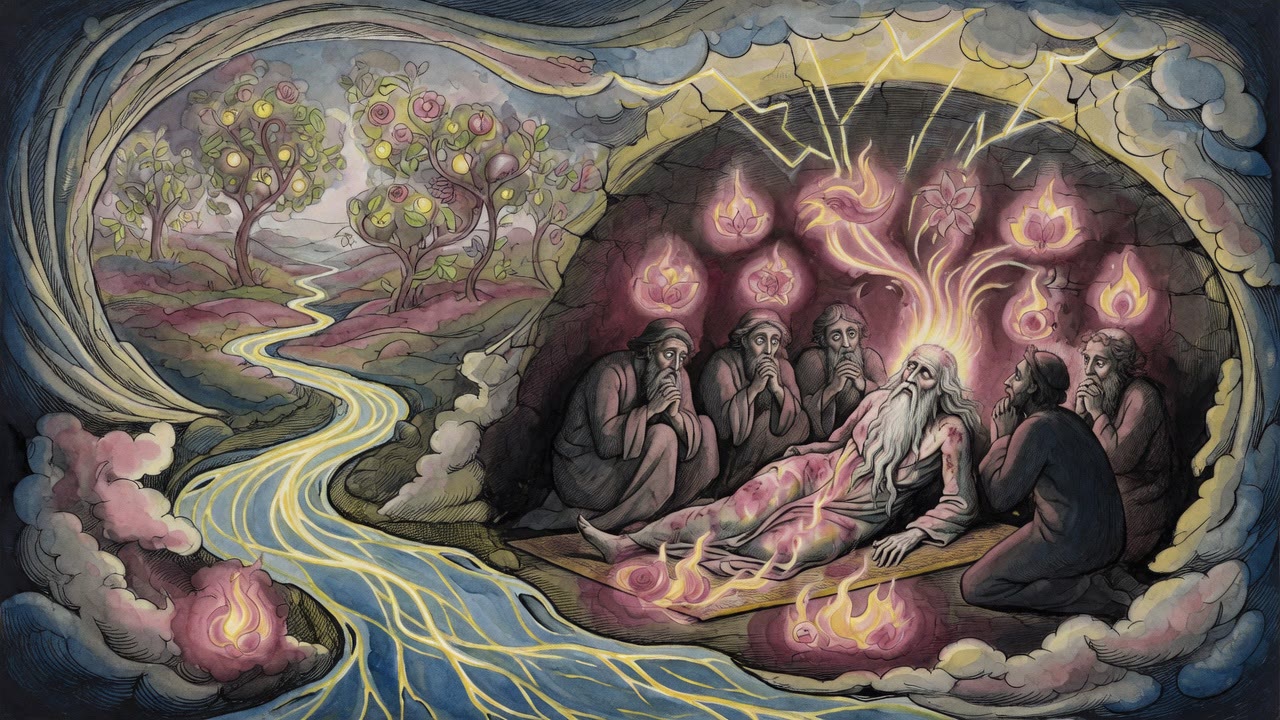
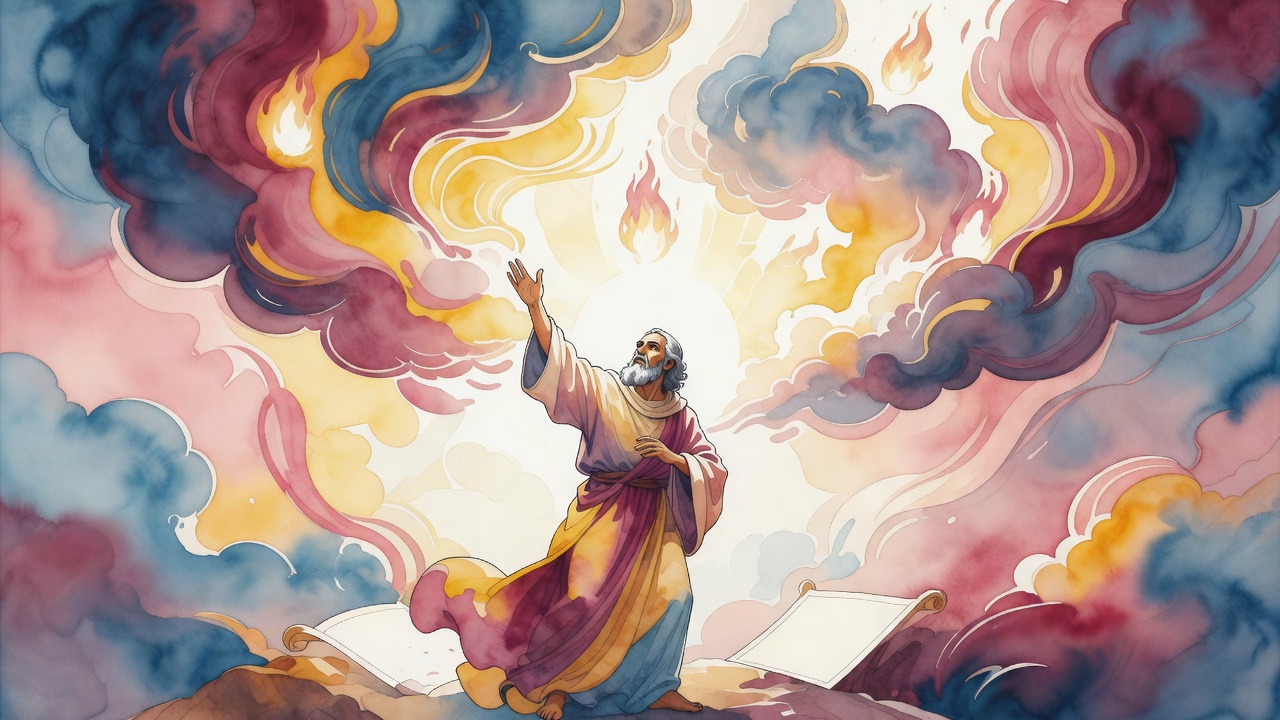
The room smelled of lamp oil and fever. Students pressed near the bed of Rabbi Shimon bar Yochai because the Lesser Assembly was ending, and the man who had held its center was about to step out of the world.
Rabbi Shimon Cleared the Hair From Heaven's Ear Click for full size

He did not spend his last strength on farewell flattery. He spoke about hair.

Locks Over the King's Ear

"The black locks of hair hang down the sides, covering the ears." The image sounds like a portrait. In his mouth it was a map of judgment. He tied it to the plea, "Hashem, bend Your ear and hear" (II Kings 19:16). When hair falls wrong over the ear of Zeir Anpin, the Lesser Countenance of the divine structure, prayer finds a muffling. Judgments tangle. Hearing thickens like cloth left in rain.

Whoever wants the King to bend an ear, he taught, must curl the hair back, adjust the judgments that hang from those locks, pull the covering away so hearing can pass. Then the King listens to what is required.

The students watched his own thinning hair against the pillow and heard a double teaching: a cosmology of prayer, and a man still working the levers of mercy while his body failed. One student mouthed the verse from Kings without sound, as if testing whether the ear above was already clearer.

Wisdom From a Concealed Brain

Earlier in the same assembly he had spoken of beginnings. From Atika Kadisha, the Ancient Holy One, light shines from a source called Mazala. Wisdom, Chochmah, spreads in thirty-two directions, the paths by which understanding enters the world. It springs from a concealed brain, hidden from direct view, and first gleams upon the beard, the flow of influence downward.

That single source divides into three heads: Wisdom, Understanding, and the uniting Knowledge, Da'at. From there the structure spreads into Zeir Anpin, the active face through which the world is governed. Beginnings are not empty. They are dense with paths already numbered, thirty-two roads leaving a seed of light before any traveler takes a step.

On the deathbed the thirty-two paths felt close and far at once. The teacher was about to leave the map in their hands. A younger student tried to count them on his fingers and lost the count when Rabbi Shimon coughed.

Two Fires and the Extra Soul

Another strand of the same mystical house speaks of ebb and flow. Rabbi Eliezer asks his father whether above there is no body and no substance. The father answers that the coming world is pure, an upper mother, while below the body of this world is the lower Shekhinah (God's indwelling presence) in exile, needing support the way a fallen person needs an arm.

Bereshit hints at two fires. "Sustain me with cakes," ashishot, becomes two flames. On the eve of Shabbat an additional soul descends to support the lower presence. When Shabbat ends, that soul leaves, and the cry rises: woe to the soul left without support. The Shekhinah (the Divine Presence) calls to Israel to sustain her with those twin fires when the boost departs.

Rabbi Shimon's last hours sat inside that rhythm. A life of Sabbaths had come and gone. The extra light that visits and leaves was about to leave him in a final way. He still taught how to keep the ear of heaven open. The room felt like the hour after Havdalah, when the extra soul is gone and ordinary air returns heavy.

The Students' Hands

Someone adjusted the blanket. Someone wrote. Someone could not write because his hands shook. Outside, ordinary evening continued: a dog, a cart, a woman calling a child. Inside, hair and ears and thirty-two paths and twin fires stacked into one urgent request: do not let prayer be muffled when the teacher is gone.

They asked small questions to keep him speaking. He answered with large machinery. The bed was a throne room for a few more breaths. Ink dried too fast in the heat of too many bodies leaning in.

When the Assembly Closed

When he died, the room did what rooms do. Lamps smoked. Voices broke. The Lesser Assembly became a memory of words about hair and hearing. Someone opened a window. The night air did not feel like mercy yet. It felt like the world continuing without permission.

They would spend years trying to pull judgment's locks away from the divine ear the way he had described. Some days the King would seem to hear. Some days the covering would feel thick again. The map remained. The mapper had gone to the place where beginnings are no longer concealed, and the students were left with curling motions of the mind that still hoped to clear a path for every prayer that rose after him.


← All myths
From the tradition

Sources

3 sources

The texts behind this telling. Some cards carry a translation of the source; others are our own retelling of it, and each card says which. Every card links out to the original.

Idra Zuta 1:104Idra Zuta

Retold in our words. Read the original at the link below.Idra Zuta, The Small Gathering, trans. Michal Ricardo · CC-BY

Idra Zuta turns to Rabbi Shimon's Final Prayers and Divine Names.

The Idra Zuta, meaning "The Lesser Assembly," describes the final moments and teachings of Rabbi Shimon bar Yochai, a central figure in Kabbalah, just before his death. It's intense, deeply symbolic stuff. And this particular passage deals with something seemingly mundane: hair.

Specifically, "The black locks of hair hang down the sides, covering the ears." Okay, so what? It sounds like a description of, well, someone with long hair. But in the mystical world of the Zohar, nothing is ever just what it seems.

The text goes on: "This is, we learned, the meaning of the verse, ‘Hashem bend your ears and hear’ (II Melachim 19:16)." This verse, from the Book of Kings, is a prayer – a plea for God to listen. But the Idra Zuta connects it directly to the image of hair covering the ears.

So, what's the connection?

According to this passage, the way hair falls – or is arranged – can actually influence divine hearing! It continues, "We have deduced from this that whoever wishes for the king to bend his ear towards him should curl the king’s hair, that is, aim to adjust the judgments deriving from the hairs on the head of Zeir Anpin and pull back the hair from over the ears so it will not hinder the hearing of prayer. Then the king will listen to all that he requires."

Now, here's where things get really interesting. The text isn't just talking about any king. It's referring to the divine King, and Zeir Anpin – a Kabbalistic term that refers to the lower six Sefirot (divine attributes) that constitute the "Lesser Countenance" or "Small Face" of God.

The Zohar frequently uses anthropomorphic language to describe God, but it's vital to remember that these are metaphors. God doesn't literally have hair or ears. Instead, these images represent aspects of divine emanation and our connection to it.

The "hair" of Zeir Anpin, therefore, symbolizes the channels through which divine judgment and influence flow. The idea is that if these channels are obstructed – if the "hair" is covering the "ears" – our prayers might not be heard as clearly. By "curling the hair," or metaphorically adjusting these channels, we can improve our connection to the divine and ensure our prayers are heard.

This passage from the Idra Zuta invites us to consider the hidden dimensions of our actions and intentions. It suggests that even seemingly insignificant details can have profound spiritual consequences. It's not about literally giving God a haircut, of course. It's about refining our inner selves, clearing the channels of communication, and approaching the divine with humility and sincerity. Are there "hairs" covering your "ears," metaphorical obstacles blocking your connection to something greater than yourself? What can you "curl" or adjust to create a clearer channel for communication and understanding?

Full source
Idra Zuta 1:44Idra Zuta

Retold in our words. Read the original at the link below.Idra Zuta, The Small Gathering, trans. Michal Ricardo · CC-BY

That’s kind of how I feel every time I explore the Idra Zuta.

The Idra Zuta, meaning "The Lesser Assembly," is a profound and intensely mystical section of the Zohar, a foundational text of Jewish mysticism. And it starts… well, it starts at the very beginning, or at least, a beginning.

It speaks of a place where beginnings originate: a place illuminated by Atika Kadisha, the "Ancient Holy One," shining forth from Mazala – a cosmic source of divine influence. This light, But not just any wisdom. This is a Chochmah that spreads in thirty-two directions.

What are these thirty-two directions? They’re the thirty-two paths of wisdom, the ways that divine understanding manifests in the world. It all springs, the Idra Zuta tells us, from a concealed brain – a source of wisdom hidden from our direct view. From that hidden source, the light shines upon the beard, a metaphor for the flow of divine influence.

Why does this "brain of thirty-two directions" shine first? Because it's the beginning for every manifestation, the very first spark. This single source then divides, becoming three heads. Now, this is where things get interesting.

These three heads aren't literal heads, of course. They represent three of the Sefirot – the ten emanations or attributes through which God manifests in the world. Specifically, we're talking about the two heads of Chochmah (Wisdom) and Binah (Understanding). But there's also a third "head" that includes and unites them: the brain lobe of Da’at, or Knowledge.

So, we have Chochmah, Binah, and Da’at – Wisdom, Understanding, and Knowledge. These three, according to the Idra Zuta, spread to Zeir Anpin, often translated as "Small Face" or "Short Countenance," which represents the active, manifesting aspect of God in the world. And from these three, all levels of existence shine. All levels!

A hidden source, bursting with potential, dividing into distinct yet united aspects, and then flowing outward to illuminate everything. The Zohar is full of this kind of incredibly evocative imagery.

What does it all mean? Well, that’s a question that scholars and mystics have debated for centuries. But perhaps, at its heart, the Idra Zuta is reminding us that everything – everything we see and experience – ultimately originates from a single, unified source. That even the most complex and diverse aspects of creation are interconnected, flowing from the same divine wellspring. And maybe, just maybe, by contemplating these mysteries, we can catch a glimpse of that original light ourselves.

Full source
Tikkunei Zohar 286:5Tikkunei Zohar

Retold in our words. Read the original at the link below.Sefaria-hosted English translation · CC-BY

The mystics understood that feeling deeply. They saw it as a reflection of something profound happening in the spiritual realms, a cosmic ebb and flow of souls and divine presence. to a passage from the Tikkunei (spiritual repair) Zohar, specifically Tikkunei Zohar 286, where Rabbi Eliezer poses a question to his father: "Father, is it so above that they learned that there is no guf (body) and no g’viyah (substance)?" His father replies that this applies to the coming world, a purely immaterial realm – an upper mother. But down here, in this world, we have the "body of this world," which the Zohar identifies as the Shekhinah (the Divine Presence) below.

The Shekhinah – that's a big word in Jewish mysticism. It refers to the feminine aspect of God, the divine presence that dwells among us, especially in times of exile and suffering. The Tikkunei Zohar uses the verse "Bereshit, in the beginning" (Genesis 1:1) to unlock a deeper meaning. It says this word hints at "trei esh," two fires, the two flames we refer to in the blessing "Blessed is the Creator of the lights of fire." Interesting. How everything connects?

Then the passage gets even more evocative. It quotes the Song of Songs (2:5): "Sustain me with cakes (ashishot)." The Zohar interprets "ashishot" as "two fires (eishot)". But why "sustain me" in this context? Ah,

This, the Zohar tells us, refers to the eves of Shabbat (the Sabbath). according to tradition, an additional soul descends on Friday to support the lower Shekhinah in exile. It's like a boost, a divine pick-me-up. But the Shekhinah is also described in the book of Amos (5:2) as "Fallen, not to rise again [is the maiden of Israel]." This paints a picture of vulnerability and need.

But as Shabbat ends, this additional soul leaves. And that's when things get a bit…intense. The text references (Exodus 31:17), "[God was] refreshed (vayinafash)". The Zohar then asks, "[This is the meaning of ] vayinafash?" The answer? As soon as it leaves, woe to the soul! (vay nefesh (the vital soul)!), for nobody is left to support her. The urgency?

In those moments, the Shekhinah cries out to Israel: "Support me with ashishot," with lights of fires! So, what are these fires? According to the Tikkunei Zohar, they are two Torahs, carved of fire, representing ELOHIM, the aspect of might. These are "Teachings of the Lord," as Isaiah (54:13) tells us. They are two lips of burning flames, or even two apples out of which the spirit of the Messiah comes, the same spirit that Isaiah (11:2) says "shall alight on him."

We find echoes of this in Midrash Rabbah, and in Ginzberg’s Legends of the Jews, where the Torah itself is often associated with fire and divine wisdom.

So, what does it all mean? This passage isn't just a history lesson, it's about our connection to the divine. It suggests that our actions, especially our study of Torah and performance of mitzvot (commandments), can literally sustain the divine presence in the world. We are active participants in this cosmic drama. The longing we feel, that sense of something missing, is a call to action, a reminder that we have a role to play in bringing light and support to the Shekhinah.

Next time you feel that post-Shabbat ache, remember the Tikkunei Zohar, remember the two fires, and ask yourself: what light can I bring into the world?

Full source