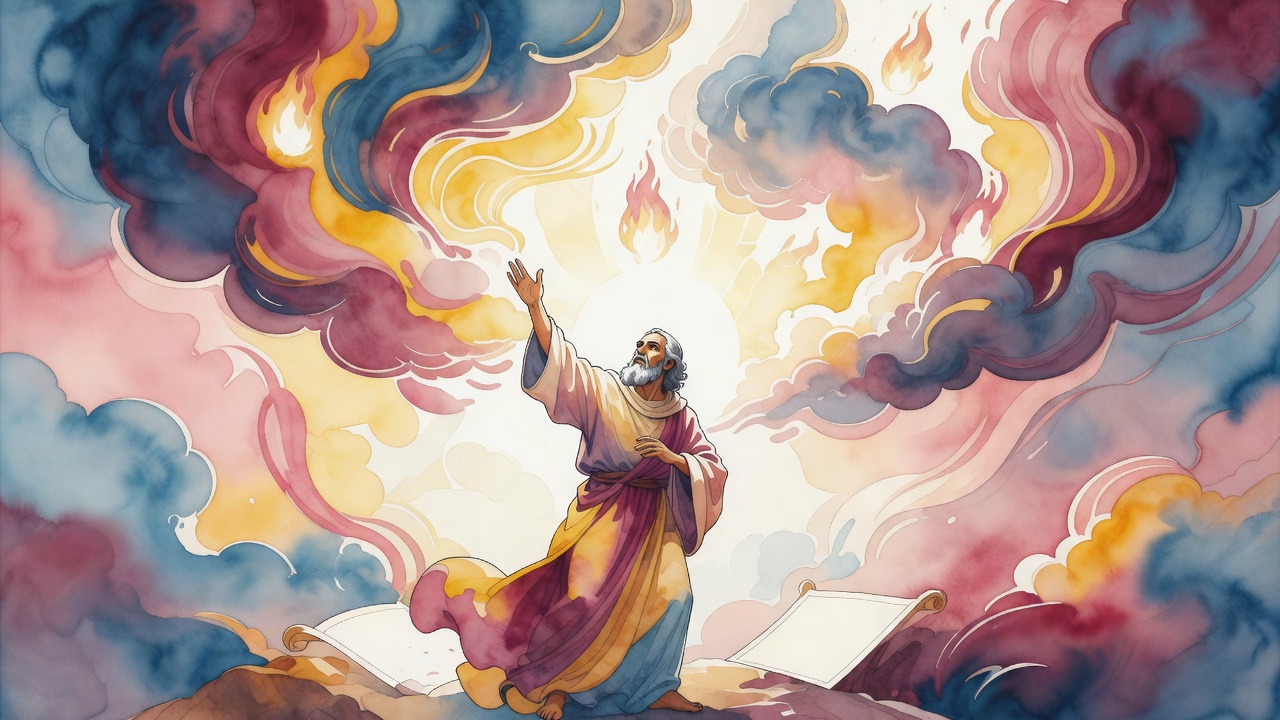
Rabbi Shimon's Soul Blazed Out Before His Students
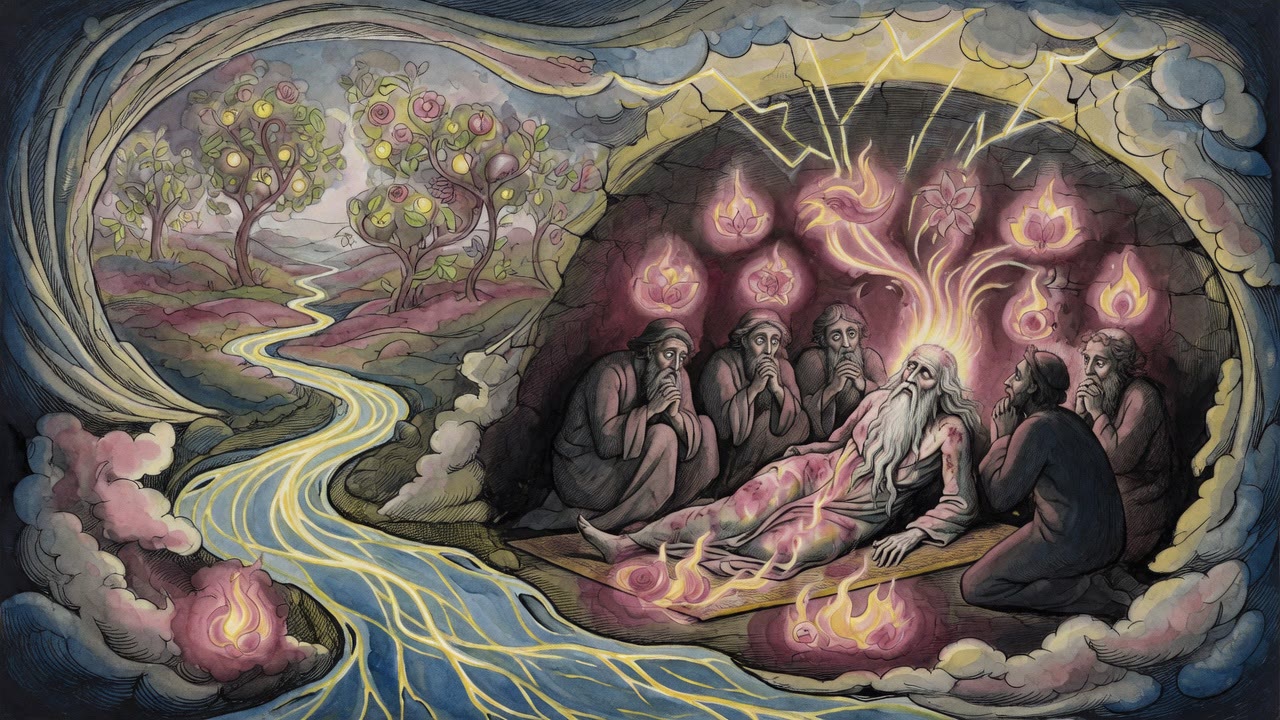
He held one psalm like a rope. The room smelled of metal left too long in a fire. His students could not cool his brow.
Table of Contents
 Click for full size
The Verse That Would Not Wait
Rabbi Shimon bar Yochai sat upright on the mat while his students pressed the walls of the room. His hands shook, but not from fear. He held a single line from the psalms as if it were a rope over a cliff. "My soul shall glory in Hashem; the humble shall hear of it and be glad" (Psalm 34:3).
Air thickened. Lamps smoked without wind. The old man smiled with cracked lips and said the sentence out loud one last time, not as study, but as a door opening under his ribs.
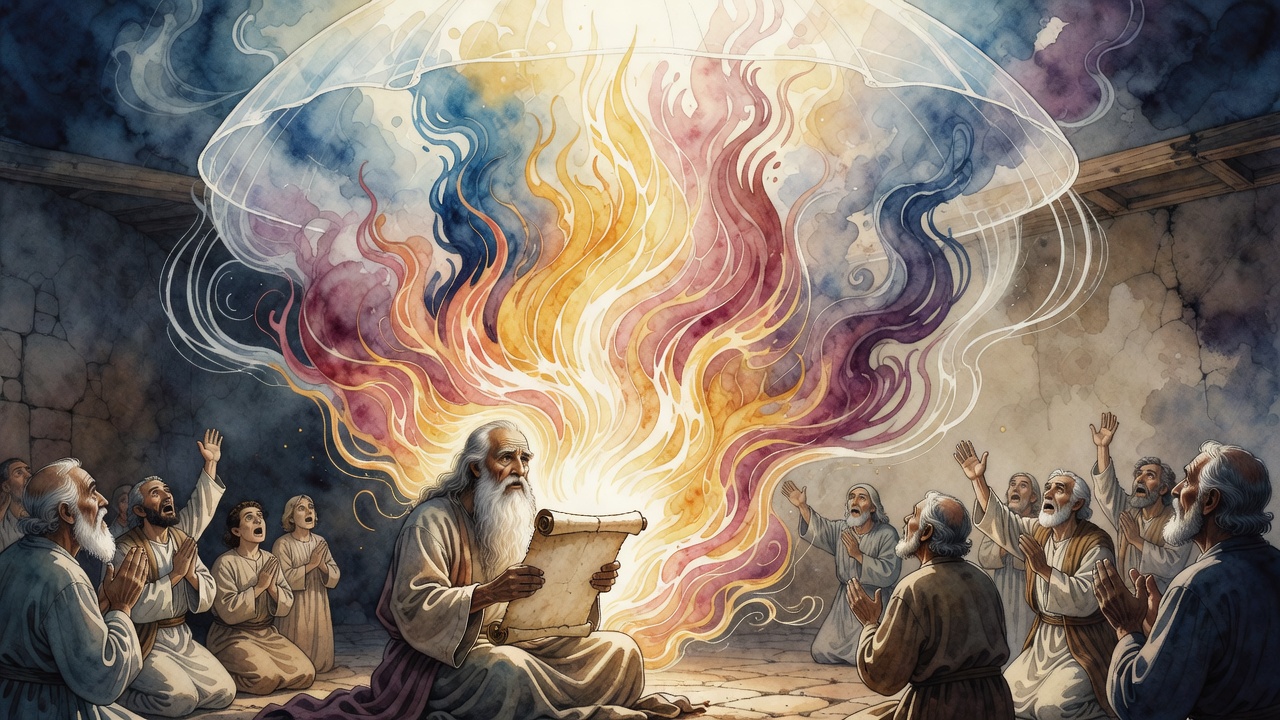
"I have examined this verse my whole life," he told them. "Now the entire verse has come to pass." His voice did not thin. It sharpened. The disciples leaned in because the room had begun to smell of something hotter than oil, something like metal left too long in a forge.
One student tried to cool his teacher's forehead with a damp cloth. Rabbi Shimon pushed the cloth away without anger. The heat was not fever. It was departure practicing its craft in public.
Outside, ordinary Galilee kept its ordinary dust and goats. Inside, time had narrowed to a single sentence that refused to remain ink on a page.
A Soul Ablaze for Its Place
"My soul shall glory in Hashem," he repeated, and the glory was not polite praise. It was attachment. "My soul is attached to Him, ablaze with Him, devoted to Him, and strives for Him." Each clause climbed. Each word pushed the next higher. The students saw his face change color the way a coal changes when someone breathes on it.
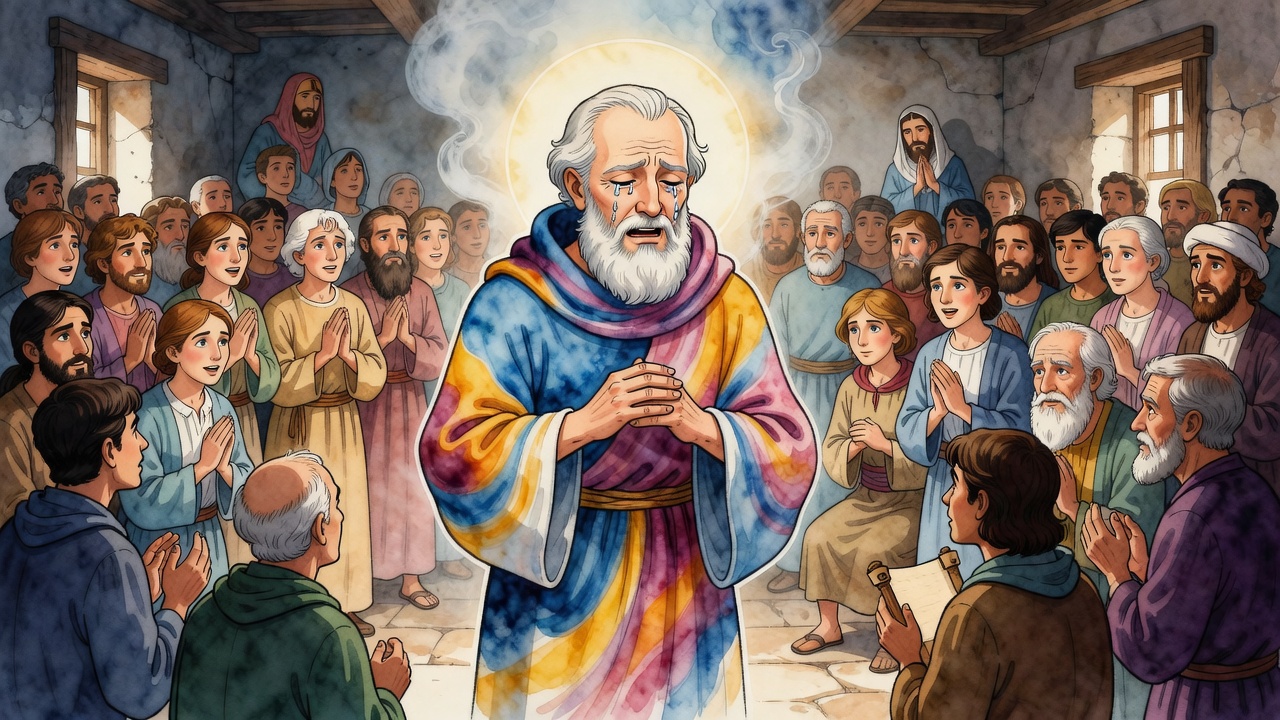
He named the second half of the verse for the people who would need it after he was gone: the humble, the students of the holy academy, the souls just arriving before the Shekhinah (שכינה), the divine presence. "They hearken to my words and rejoice," he said. Joy in a death room. The paradox made two of the younger men cover their mouths.
Rabbi Shimon did not comfort them. He invited them. "O magnify Hashem with me." The invitation was also a command. Magnify, or the room would swallow the silence whole.
He spoke of striving as if striving were a ladder he had been building for years, and now the top rung was under his sole. No one asked him to slow down. Slowing down would have been cruelty disguised as care.
Nine Lights From One Candle
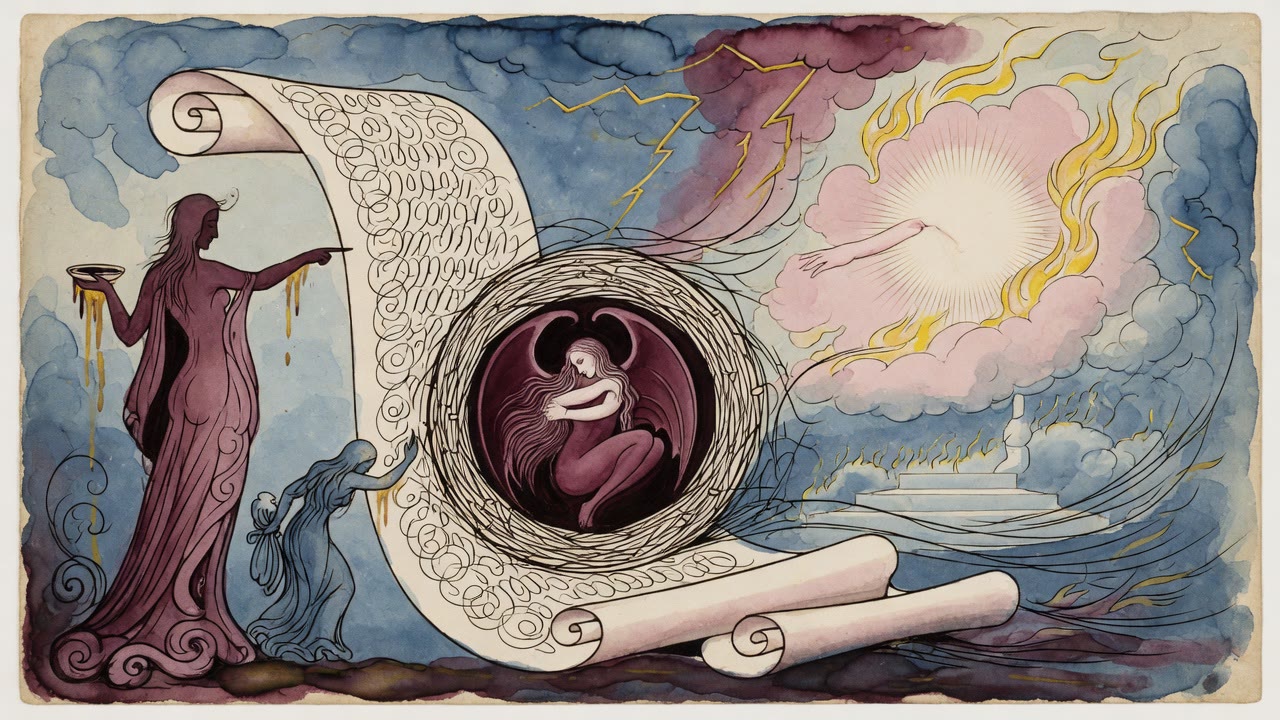
Earlier that day he had spoken of the Ancient Holy One, the head that is established and not established, the source that upholds everything while remaining ungraspable. Nine lights burn from that candle. Approach the lights and only the candle remains. Carry the candle elsewhere and the lights move with it.
The disciples had written that teaching down with shaking hands. Now they understood why he taught it on a dying day. A soul that clings to the Ancient One does not scatter. It follows the fire that made it.
Rabbi Shimon's teaching of ascent was never a visit. It was a last map. The hidden face, the long patience, the breath that flows toward the smaller face of the worlds: these were not ornaments for clever men. They were the path his own nefesh (נפש), the life-soul, was already walking while his mouth still moved. One older student later said the morning lesson and the afternoon death were a single paragraph broken by lunch.
Hands Under Wings
When the last word left him, the body slumped and the light did not. Above the roof, where no student could climb, hayot (חיות), living creatures of pure light, opened ranks. A soul rising into that brightness does not enter alone. Creatures of the merkavah, God's chariot-throne, receive it the way a court receives a witness who has finished his testimony. Human hands showed beneath their wings (Ezekiel 1:8). The hands were not empty. They held gifts, many good presents, many levels of prophecy.
Above them all the Shekhinah gave presents of her own. No paperwork. No delay. The pure light takes what has already burned itself clean in devotion.
The students heard only the crash of their own grief. One tore his garment. One pressed his forehead to the mat where the heat still lived. One whispered the psalm again because he could not bear a room without Rabbi Shimon's voice shaping it. The ascent itself made no sound a living ear could keep.
What the Room Kept
They buried what could be buried and could not bury the teaching. The mat still held the imprint of a man who refused to die as a summary. Soul ablaze. Soul striving. Soul ascending to its place. The disciples left the house carrying two weights: the weight of loss, and the weight of a psalm that had just proven it could lift a human being out of flesh without leaving the Torah behind.
Night settled on the Galilee hills. In the house of study the ink was still wet on pages that spoke of an unknowable head and nine lights. Those pages and the empty mat said the same thing in two dialects. The place above had a door, and the door had known his name.
Years later, when younger students asked what death looked like for a master, the survivors answered with a room, a rope of a verse, and a heat that would not cool when the cloth was pressed to the brow.
← All myths