5 min read

Moses Climbed the Mountain and David Refused Sleep for Malkhut

Joseph saw a sheaf stand upright in a field. The Tikkunim read it as the letter Aleph wearing a crown, the same letter at the top of Jacob's ladder.

Curated by Arthur · Told by Maggid ·
Table of Contents
  1. Because of Her
  2. A King Who Would Not Sleep
  3. Joseph's Sheaf and the Dream Crown
  4. Middle Pillar, Prayer, Splendor
  5. One Presence, Many Refusals to Stop
Moses Climbed the Mountain and David Refused Sleep for Malkhut Click for full size

Because of Her

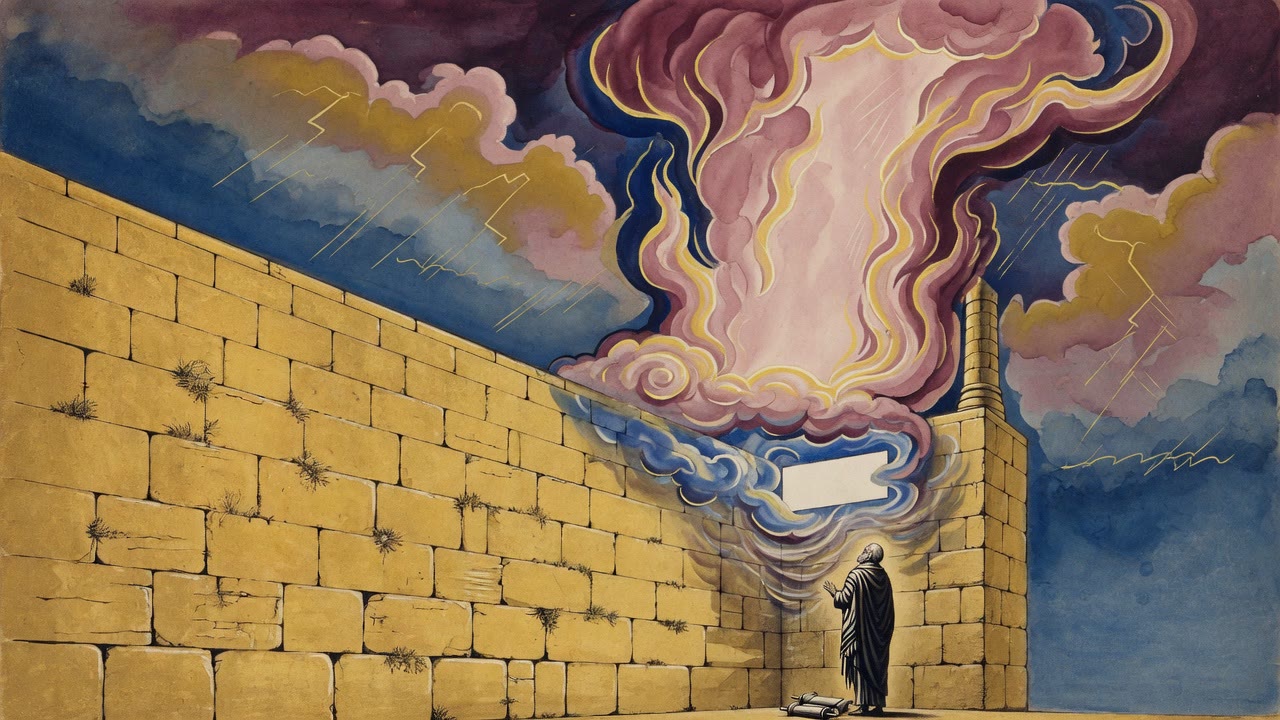
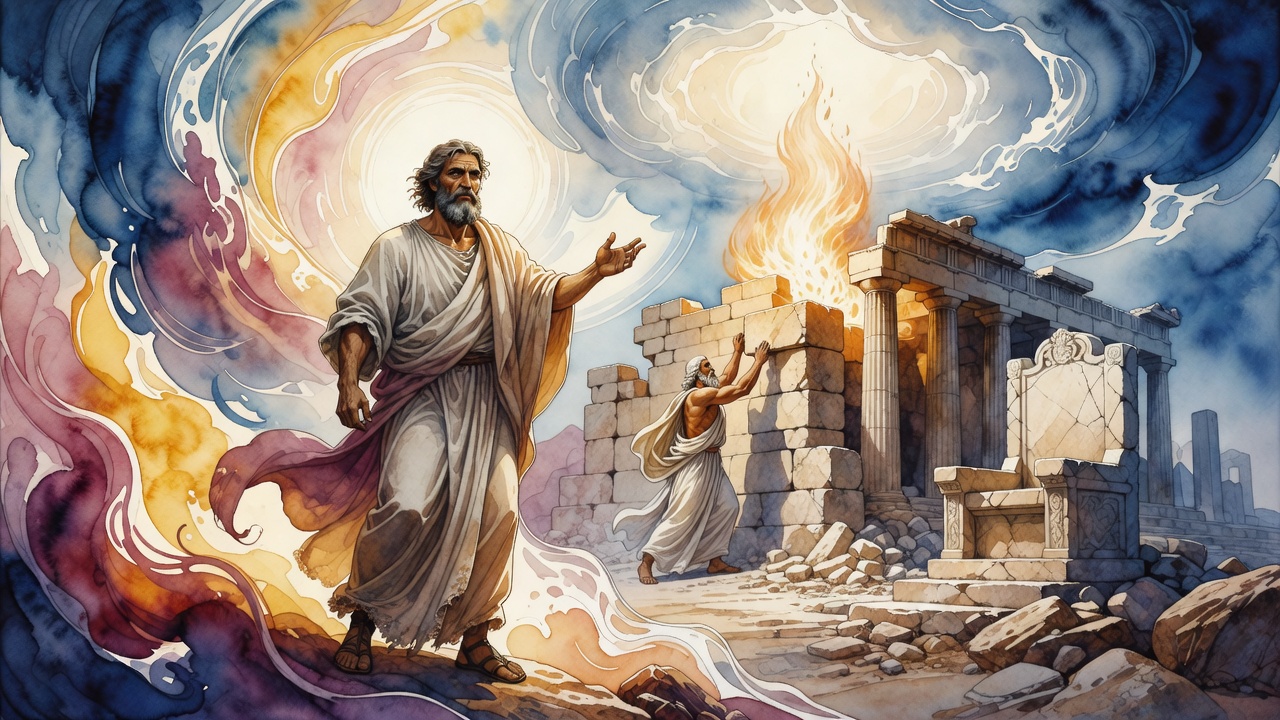
Moses climbed toward Elohim because of Her (Exodus 19:3). The urgency does not soften. Her is Malkhut, the final sefirah (a divine emanation), divine presence as kingdom in the world, the completion without which human stature, unity, and the Holy Name stay unfinished.

He did not ascend for a private trophy or a story to tell at the tent door. He ascended because the feminine completion of the structure required a man who would walk into fire for a dwelling that was not yet secure. Smoke, stone, the thin air of height: all of it was for a Presence that still needed a place.

The mountain did not care about his reputation. She did. The climb answered her lack.

Because of Her, the lawgiver became a climber first.

A King Who Would Not Sleep

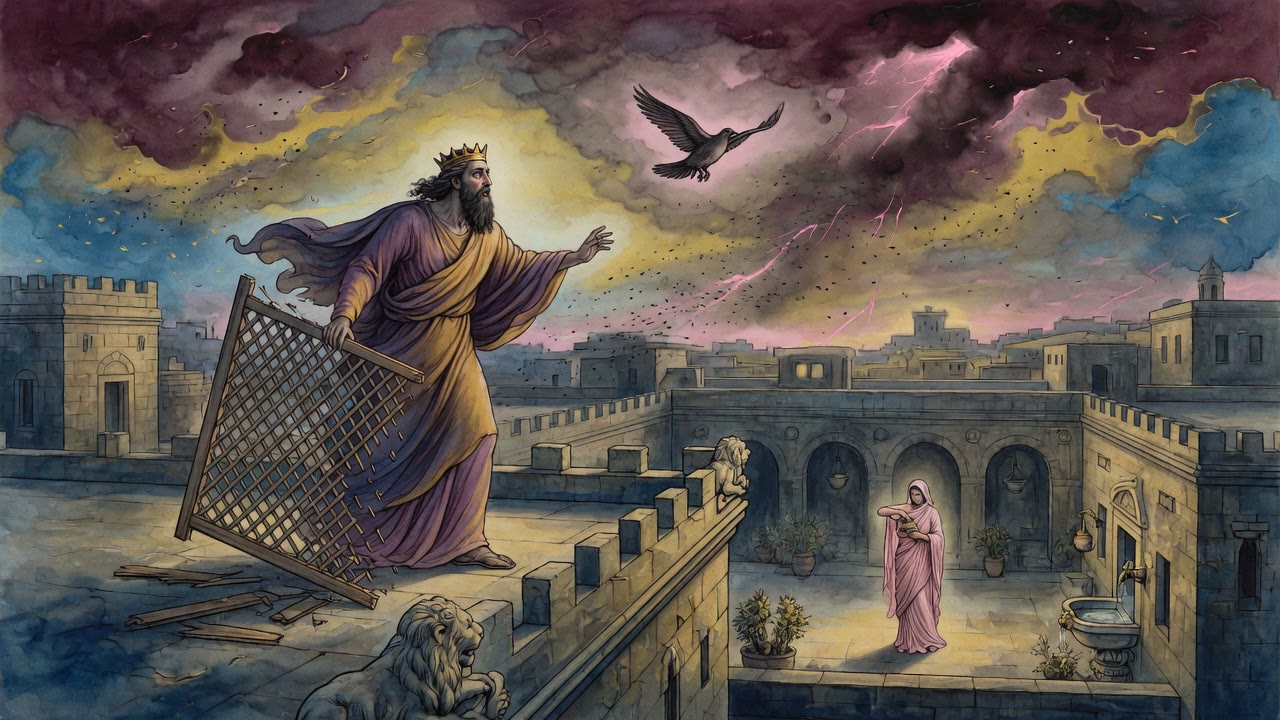
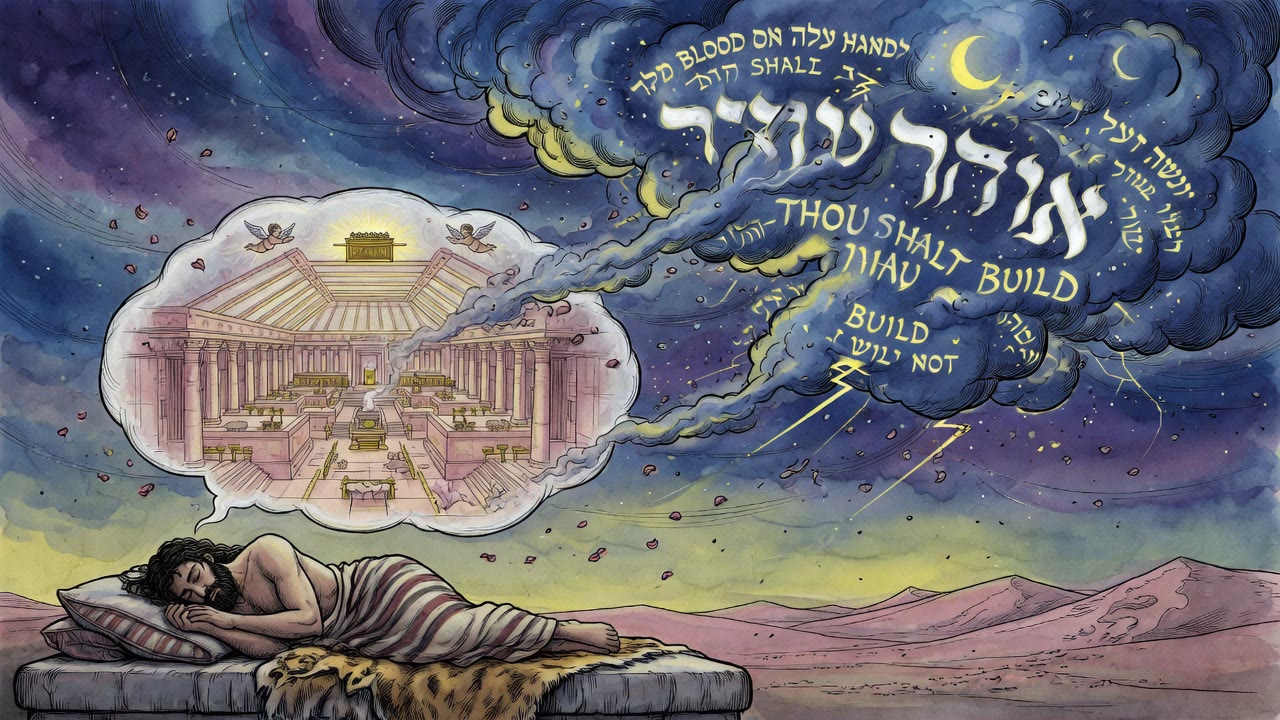
David vowed not to give sleep to his eyes or slumber to his eyelids until he found a place for the Name (Psalm 132:4-5). The place is a house for Presence, not a pillow for a tired monarch who has already won enough wars to justify rest.

Night after night the body wanted darkness and quiet. The vow held the eyelids open toward a future stone, a future room, a future stillness where She could sit without being hunted from border to border. Moses climbs. David refuses sleep. Same Her, two labors, one refusal to treat Malkhut as optional furniture in a male story of power.

A palace without her is only expensive walls. David knew the difference in his bones and kept the difference awake.

Sleep waited. The vow did not.

Joseph's Sheaf and the Dream Crown

Before either man, Joseph saw a sheaf stand upright in the field (Genesis 37:7). The Tikkunim read the upright sheaf as Aleph crowned with holem, the dream-vowel, stature that rises like a letter wearing a crown. Through that crown he ascended in a dream. Jacob's ladder, head in heaven, carries the same Aleph as head, angels ascending and descending on the letter that holds oneness (Genesis 28:12).

Dream becomes ladder. Ladder becomes path for those who later climb awake. Moses and David inherit a cosmos in which ascent is already wired into letters and sleep-visions. They simply refuse to leave the wiring unused while She remains without a settled house.

The holem sits above the letter the way a vow sits above a tired body. Upright stature is not a pose for portraits. It is the shape of a sheaf, a ladder-head, a man who will not lie down until the dwelling is found.

Brothers hated the dream. The ladder did not care. The climb had been lettered in before hatred learned its lines.

Middle Pillar, Prayer, Splendor

To stand as adam in the image of the Middle Pillar is to stand in Tiferet's balance, where prayer can be heard because a sacred interior has been aligned. The tree of life is not a chart on a wall for collectors of diagrams. It is the posture that lets speech rise without snagging on a crooked middle. A man of the middle pillar can climb and can stay awake because his center is not warped toward only severity or only sweetness.

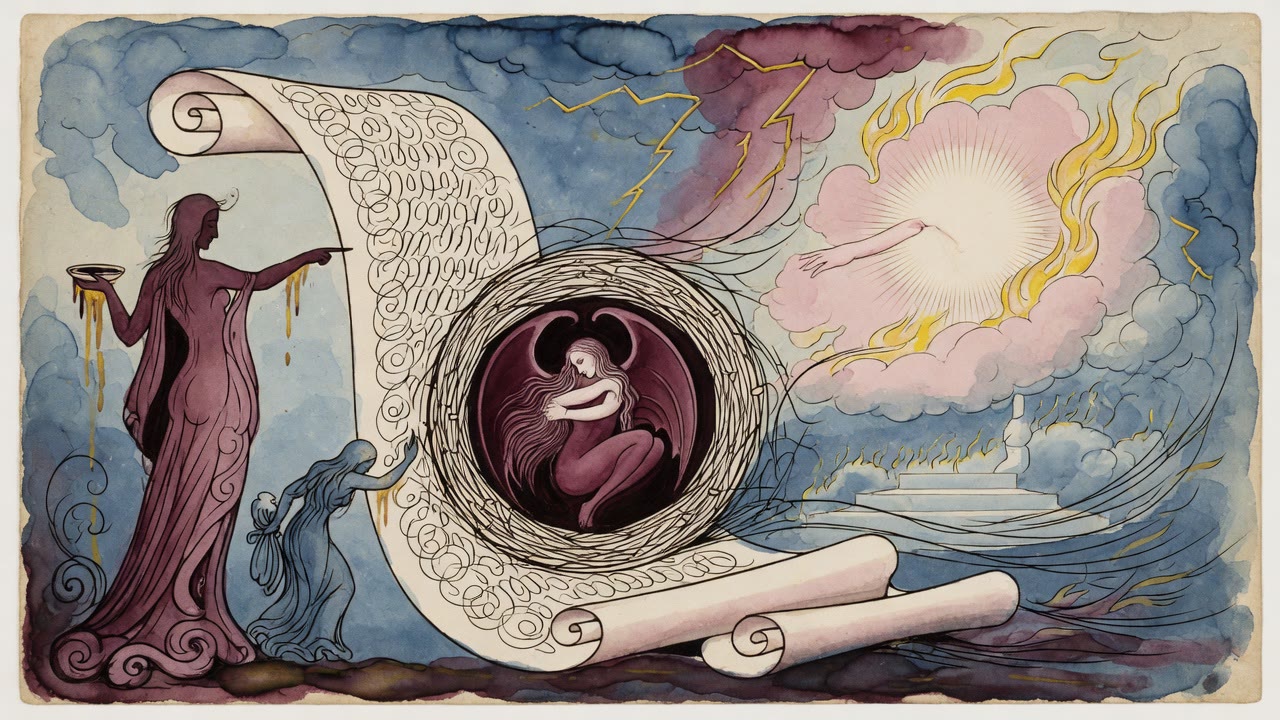
Rabbi Shimon, at the edge of death, raised his hands, wept and laughed together, anxious all his life to reveal a matter and still unsure of permission. Adam's original splendor haunted that room: a first brightness the world had lost and a master trying to return a fraction of it in speech before the body failed. Permission finally opened. Light that had been Adam's became teaching for a circle that would outlive the bed.

Moses on the mountain, David with open eyes, Joseph under a dream-crown, Shimon laughing through tears: each presses toward the same completion Malkhut demands. She is not a side chapel. She is the reason the climb, the vow, the dream, and the final teaching refuse to stop.

Because of Her the eyes stay open. Because of Her the feet keep finding the next stone.

One Presence, Many Refusals to Stop

Malkhut does not need admirers. She needs a dwelling, a climb, a vow, a dream that stands upright, a master willing to weep and laugh while permission hangs in the balance. Moses gives height. David gives sleepless search. Joseph gives the crowned letter of ascent. Shimon gives the last teaching aimed at lost splendor.

None of them completes her alone. Together they show the same refusal: she will not be treated as optional. The Name without a place is a Name still in transit. The human without her completion is a middle pillar that has not yet learned how to stand.

Because of Her the mountain is climbed. Because of Her the eyelids stay open. Because of Her the dream keeps its crown and the deathbed keeps its light.

She waits for a house. They refuse to stop until the house is more than a wish.


← All myths
From the tradition

Sources

4 sources

The texts behind this telling. Some cards carry a translation of the source; others are our own retelling of it, and each card says which. Every card links out to the original.

Tikkunei Zohar 37:13Tikkunei Zohar

Retold in our words. Read the original at the link below.Sefaria-hosted English translation · CC-BY

Maybe the mystics of the Zohar felt that way too. to a fascinating passage from Tikkunei (spiritual repair) Zohar 37, a text that dances around ideas of divine presence, searching, and the very nature of beginnings.

The passage starts with a sense of urgency, linking the actions of Moses and David to something called “Her.” Who is this "Her"? The text hints at Malkhut, the final sephirah, often understood as the divine feminine or the aspect of God's presence that is manifest in the world. It's said that because of Her, Moses ascended to ELQYM (God) (Exodus 19:3), and David vowed, "I shall not give sleep to my eyes, nor slumber to my eyelids, until I find a place for Y”Y" (Psalm 132:4–5). This "place for Y”Y" is interpreted as a dwelling place for the divine presence, a yearning for connection. It's a potent image: these iconic figures driven by an inner quest to connect with the divine.

What does it mean to "complete" something divine? The text continues, stating that Malkhut is the completion of the "human" (adam), the completion of the Unity, the completion of the Holy Name, the completion of each and every sephirah (divine attribute). That's a bold claim! It suggests that this feminine aspect, this divine presence in the world, is integral to the wholeness of everything. It implies that without Her, things are…incomplete.

Then, the text shifts to the very first word of the Torah: Be-REiShYT (In the beginning). It deconstructs it, noting that it's composed of the letter Beiyt (בּ) and reishyt (beginning), describing the letter Beiyt as "a point within its chamber." The Beiyt, shaped like an open box on one side, is rich with symbolism. It is the first letter of the Torah and of the word Berakha (blessing), and it represents the creation of the world as a container for divine light.

Now, things get really interesting. Elijah, the prophet, makes a cameo! He “happens” upon Rabbi Shim’on, a central figure in the Zohar. Elijah exclaims, "Rabbi! Rabbi! But the Beiyt is open! In what way, therefore, is the Thought within it hidden?" question for a moment. The Beiyt, the first letter, the beginning, is open – accessible. So why does it still feel like something is hidden? What is this “Thought”? What's concealed even in plain sight?

Perhaps Elijah is pointing to the paradox at the heart of creation. God, in a sense, had to conceal Himself to make room for the world. The openness of the Beiyt invites us in, but the divine thought, the ultimate understanding, remains elusive. It's a call to delve deeper, to look beyond the surface, to engage in the ongoing process of uncovering the hidden dimensions of reality.

This short passage leaves us with more questions than answers. It’s a reminder that the spiritual journey is not about finding easy solutions, but about embracing the mystery and continuing the search – just like Moses, just like David, and maybe, just like you and me. It asks us: what "place for Y”Y" are we What hidden thoughts are we seeking to uncover?

Full source
Idra Zuta 1:74Idra Zuta

Retold in our words. Read the original at the link below.Idra Zuta, The Small Gathering, trans. Michal Ricardo · CC-BY

Idra Zuta turns to Rabbi Shimon and Adam's Original Splendor.

The scene opens with Rabbi Aba, one of Rabbi Shimon's closest disciples, recounting the master’s final moments. The language is thick with symbolism and emotion. As the "holy luminary" concludes some "matter", likely a deep mystical teaching, the "highest luminary," Rabbi Shimon himself, is overcome. He raises his hands, a gesture of both supplication and triumph, and then, in a powerful display of human emotion, he weeps and laughs simultaneously.

Why this paradox of joy and sorrow? The Zohar suggests that Rabbi Shimon is on the cusp of revealing secrets of the universe, secrets he’s longed to share his entire life. "My whole life I was anxious for this matter to reveal it," he says. But even now, at the very end, he feels a hesitation, a sense that perhaps the full truth is too powerful, too overwhelming for his disciples, or perhaps even for the world itself. "But now they do not give me permission." Who are "they"? Perhaps the heavenly court, perhaps the divine will itself.

He gathers his strength, sits up, and his lips move in silent prayer. He bows three times, a gesture of reverence. The intensity is so great that no one can even look at him directly.

Then, in a voice filled with awe, he addresses his own mouth: "Mouth, mouth, who is worthy of all this; may your fount flow and never stop." This isn’t just about physical speech; it’s about the very source of divine wisdom that flows through him. He recognizes the immense privilege and responsibility of being a vessel for such profound teachings.

He then quotes scripture, drawing parallels between his own mouth and the life-giving river that flowed out of Eden, "And a river went out of Eden," (Genesis 2:10) and the ever-flowing spring described in Isaiah, "like a spring of water, whose waters fail not” (Yeshayahu 58:11). These are powerful images of abundance, of unending wisdom and spiritual nourishment. The idea is that the words that are about to come out of his mouth will be like that river, like that spring: a source of unending sustenance for those who are ready to receive it.

The Idra Zuta is more than just a story; it’s an invitation. It challenges us to consider the nature of revelation, the limits of human understanding, and the profound responsibility that comes with receiving divine wisdom.

What secrets are waiting to be unlocked within you? What river is waiting to flow?

Full source
Tikkunei Zohar 39:4Tikkunei Zohar

Retold in our words. Read the original at the link below.Sefaria-hosted English translation · CC-BY

Jewish tradition understands dreams not just as random firings of neurons, but as potential pathways to profound insight. The Tikkunei (spiritual repair) Zohar, a central text of Kabbalah, delves deep into the mystical significance of dreams, and one particular passage in Tikkunei Zohar 39 unlocks some fascinating connections between dreams, letters, and spiritual ascent.

The passage begins with a verse from Genesis (37:7), part of Joseph's prophetic dream: "And behold, we were binding sheaves in the field, and behold, my sheaf arose and stood upright." The Tikkunei Zohar interprets this "sheaf" (alumah) as an allusion to the letter Aleph (א) bearing the vowel-point ḥolem (ֹ), which sits atop the letter like a crown. This ḥolem, meaning "dreaming," is considered elevated above all other vowel-points, possessing an "upright stature." the verse says that it is "through it, Joseph ascended [or gazed] in a dream (ḥelma)." See how the dream, the letter, and spiritual ascent are all intertwined?

It doesn't stop there. The text then draws a parallel to Jacob's famous dream of the ladder in Genesis (28:12): "And he dreamt, and behold, a ladder was set on the earth, and its head reached to heaven." The Tikkunei Zohar identifies the "head" of this ladder as – you guessed it – the letter Aleph (א).

What's so special about Aleph? Well, in Kabbalah, letters aren't just symbols; they're vessels of divine energy. Aleph, the first letter of the Hebrew alphabet, represents the Oneness of God, the source of all creation. It is the foundation upon which all other letters, and therefore all of reality, are built.

The verse continues, "and behold, angels of ELQYM [God] ascending and descending upon it." Referencing BT Ḥullin 91b, the Masters of the Mishnah (the earliest code of rabbinic law) point out the plural forms of "ascending" (olim) and "descending" (yordim) indicate two of each. These are then linked to different vowelizations of Aleph: אָ אְ אִ אֻ. It’s a bit technical, but the core message is that divine communication, the movement between heaven and earth, is mediated through this foundational letter and its various expressions.

And the passage culminates by saying this Aleph with the ḥolem, the dream-vowel in the middle, this is the letter Vav (ו). And this Vav is Higher Keter, which encompasses the head of the Middle Pillar of the Sefirot (the divine emanations). Keter, the highest of the Sefirot (divine emanations), represents the ultimate, unknowable source. The Middle Pillar is the balanced path of spiritual ascent. So, the dream, symbolized by the ḥolem on the Aleph, connects us to the highest levels of divine consciousness.

What does all this mean for us? It suggests that our dreams, like the dreams of Joseph and Jacob, can be ladders to the divine. They can be glimpses into a higher reality, opportunities for spiritual growth and connection. The letter Aleph, with its ḥolem of dreaming, reminds us that even in our most subconscious moments, we are never truly separate from the Source. We are always connected, always capable of ascending.

So, next time you wake up from a vivid dream, don't dismiss it as mere fantasy. Consider it a potential message, a whisper from the divine. Perhaps it's an invitation to climb the ladder, to ascend toward a deeper understanding of ourselves and the universe. Maybe it's the Aleph, adorned with its crown of ḥolem, beckoning you home.

Full source
Tikkunei Zohar 36:9Tikkunei Zohar

Retold in our words. Read the original at the link below.Sefaria-hosted English translation · CC-BY

Like they're not quite... landing?

The Zohar, that mystical, shimmering text that unlocks so many secrets of Kabbalah, has something to say about that. Specifically, Tikkunei (spiritual repair) Zohar 36. It offers a powerful insight into what it truly means to be a man – an adam – and how that relates to prayer and our connection to the divine.

The passage starts with this idea of being a "man" in the image of the "Middle Pillar." Now, the "Middle Pillar" refers to Tipheret, a Sephirot on the Tree of Life. Tipheret represents balance, harmony, beauty – the very core of our being. It's the place where divine energy flows most purely. So, to be a "man" in the image of Tipheret is to embody that balance, to strive for that inner harmony.

What happens to this kind of person? The Tikkunei Zohar, referencing Berakhot 6a, states, "the prayer of man is not heard except in the synagogue." Now, this isn’t just about physical location. Of course, going to synagogue is important. But it's about creating a sacred space within yourself, a space of focused intention and connection. It’s about aligning yourself with that Middle Pillar, so your prayers can rise unimpeded. As the Masters of the Mishnah (the earliest code of rabbinic law) established, it's about the quality of your being, not just the words you say.

But the Zohar doesn't stop there. It goes on to talk about someone who "guards the covenant." In Hebrew, it's called BRYT EiSh, a "covenant of fire." This refers to the sacred covenant, often understood as brit milah, circumcision, but also more generally, to the commitment to living a life of holiness and integrity. This person, who guards the covenant, is called "the man of perfection." They protect themselves from the "fire of hell" – not necessarily a literal fire and brimstone, but the destructive forces of negativity, temptation, and disconnection.

The crucial part? The Zohar links this "man of perfection" to being occupied with Torah and guarding it. It's not just about studying the text, but embodying its teachings, living them out in the world. Then, and only then, are you truly a "man" in the image of He that is above.

As the verse from Isaiah (44:13) says, "...like the glory (tipheret) of a man, to dwell in the house." The tipheret, that radiant beauty and balance, becomes a dwelling place, a sanctuary. And that is the kind of person whose prayers truly resonate.

So, what does this all mean for us? It's about cultivating a state of being, a connection to our inner tipheret, and living a life that honors the covenant. Maybe, just maybe, when we do that, our prayers won't just bounce off the ceiling. They'll soar.

Full source