Rashbi Climbed the Ladder-Bed to Leave the Room
The house smelled of spices, not of a corpse. Two men lifted him onto a bed shaped like a ladder. Outside, two towns reached for the body.
Table of Contents
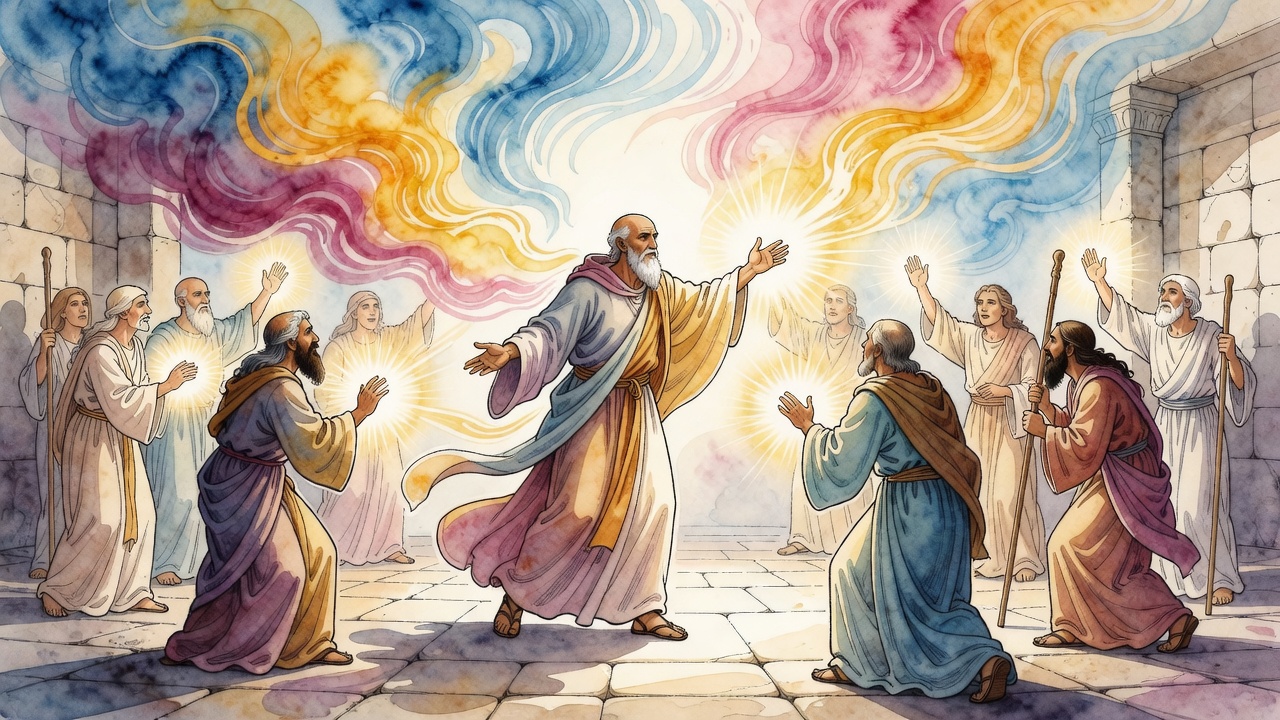
The house of study had never been so quiet while so full. Men stood shoulder to shoulder and still felt alone.
 Click for full size
Rabbi Chinay looked at the companions and said what no one wanted to say. Until this hour, Rabbi Shimon bar Yochai had cared for them. He had carried their questions, their fears, their long nights of study. Now it was their turn to care for him.
They Lifted Him Onto a Ladder
The room tightened. Men who had lived on his words suddenly had to lift his body. Someone sobbed once and bit it back. The air filled with good scents, as if holiness itself had begun to leave and left perfume in its wake. The smell was not of death alone. It was of departure with honor.
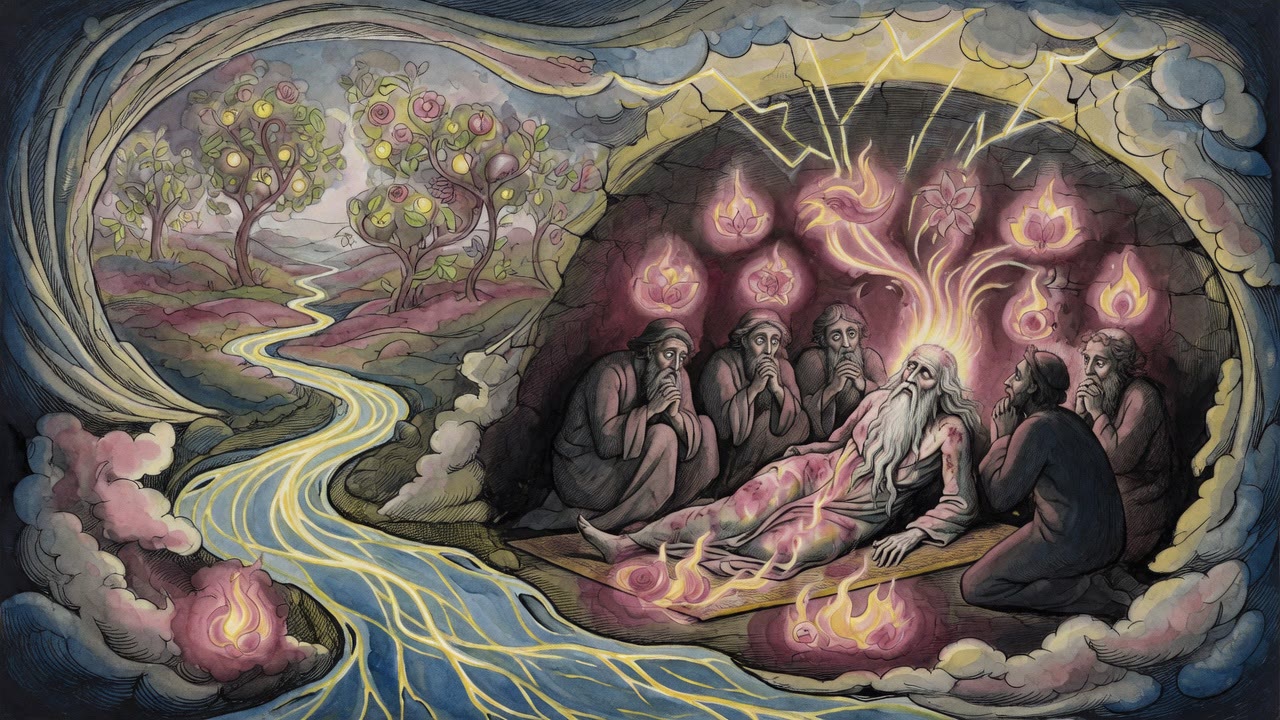
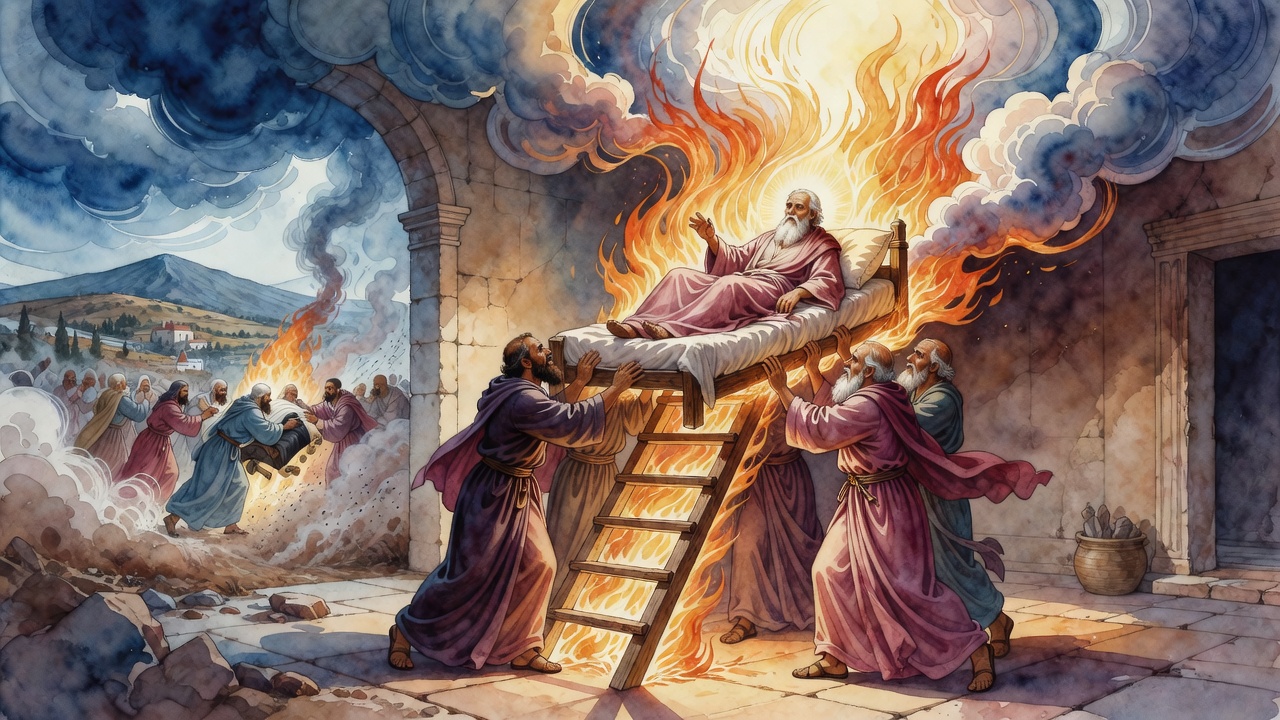
Rabbi Elazar, his son, and Rabbi Aba took him from his place. They set him on a bed fashioned like a ladder. Not a soft couch for comfort. A climb laid horizontal, an ascent already framed in wood. Whoever touched the frame felt the grain and the intention. This was furniture that meant to rise.
Elazar had heard secrets from this mouth. Now he had to steady the mouth when speech was gone. His hands closed on the wood. The companions crowded, then pulled back, then crowded again.
Only Two Stayed
Whoever saw the confusion of the companions saw a generation without its center. Voices rose and fell. Hands hovered over the blanket and pulled back. One man tried a verse of comfort and could not finish it. Then the crowd thinned by necessity. Only Elazar and Aba stayed to minister in the last moments.
A teacher can fill a hall for years and still die in a room that holds two. That is not abandonment. It is the shape of transfer. The ladder-bed asked for hands that knew how to carry more than doctrine.
Outside, the village already felt the change. Dogs barked at nothing. A woman covering dough stopped with flour on her wrists and looked toward the house of study as if the air itself had shifted weight.
Meron Drove Tzipori Off
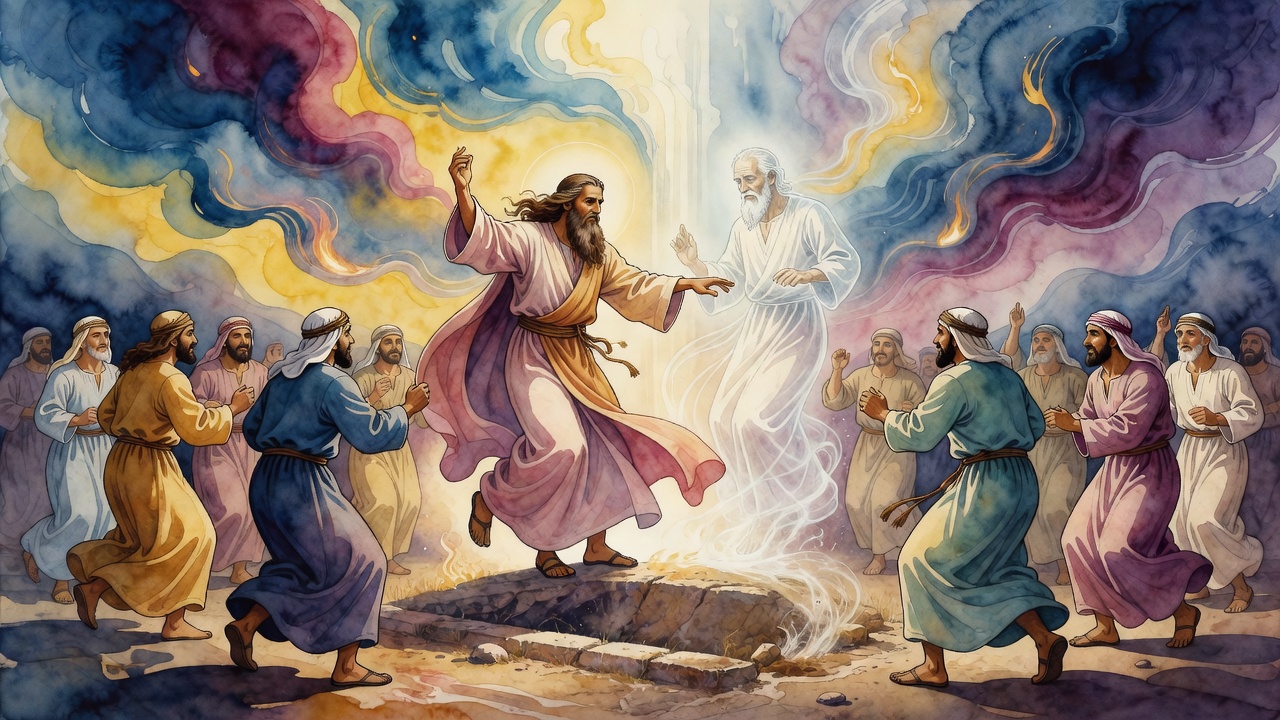
After he died, the living fought over the dead. People from Tzipori came to seize the body, hungry to bury the sage in their ground and wear his honor like a town seal. They brought men and ropes and the kind of urgency that confuses love with possession. The people of Meron drove them off. He had lived and taught among them. They would not give him up to a neighboring pride.
Villages argue over bones the way kings argue over borders. The companions had barely finished their tears when the road filled with men who wanted a grave as a trophy. Elazar stood between factions that both claimed to honor his father and both were ready to tear the shroud.
He held the wood. The towns pulled at the cloth. Love and possession wore the same face in the dust of the road.
The Bed Rose in Fire
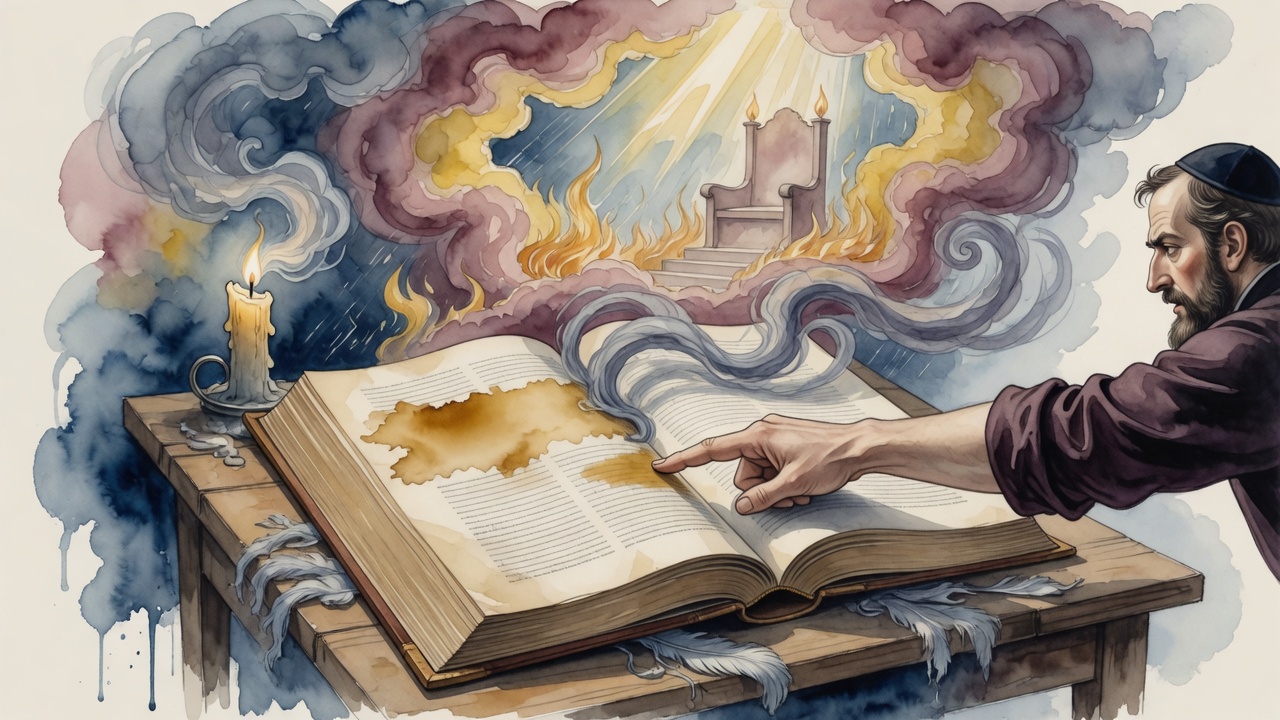
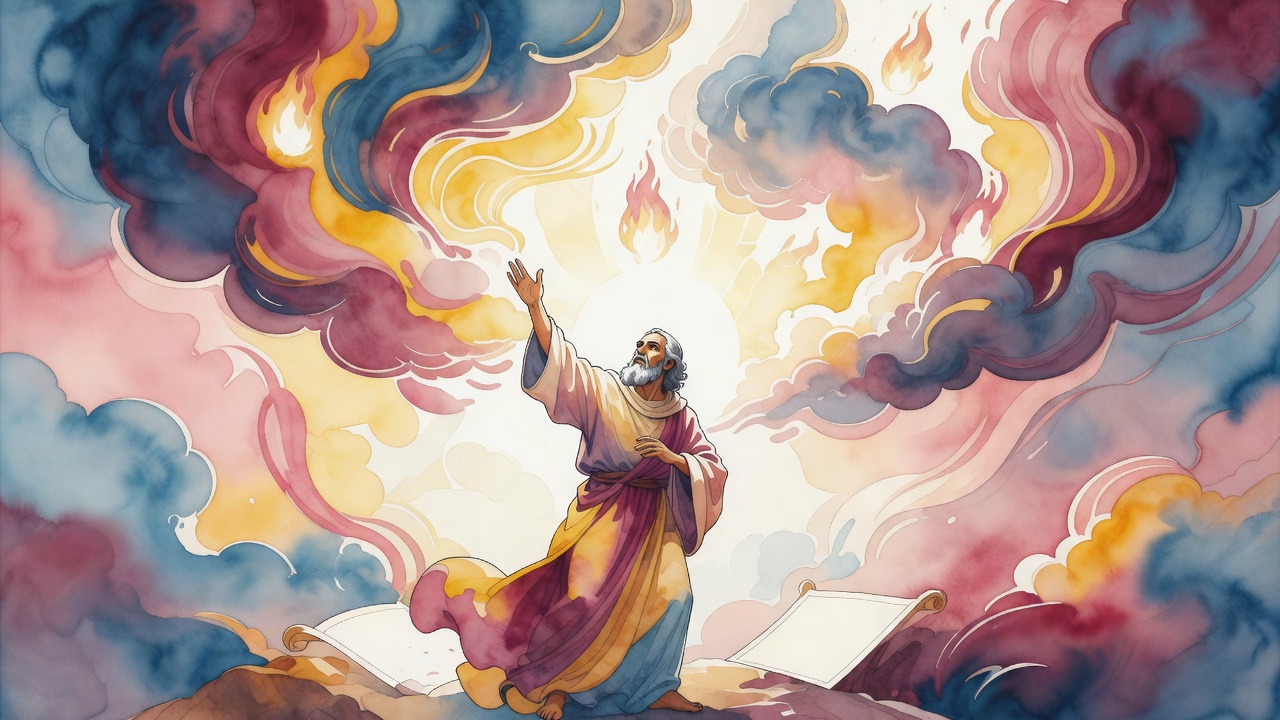
When the bed left the house, it rose into the air. Flames blazed before it, not as a threat but as a herald. A bat kol, a heavenly voice, cut through the smoke and the shouting. "Enter, come, and gather to the feast of Rabbi Shimon. He that walks in his uprightness shall enter in peace to them that rest in their graves" (Isaiah 57:2).
The quarrel on the ground did not cancel the feast above. Earth fought over where to plant him. Heaven announced where he already walked. The companions who could still see fell on their faces. The men of Tzipori stopped mid-grab. Fire does not negotiate town limits.
The verse from Isaiah became more than comfort. It became a gate. Uprightness had been Rabbi Shimon's path in the cave and in the Idra. Peace in the grave was the wage the voice named out loud.
The Lower Vessels Cracked
Elazar's hands were still shaped around wood that was no longer in the room. The companions had held his teaching for years. When the light went up with the bed, they could not hold what poured through them. Some cracked. Some grabbed. Meron and Tzipori both wanted to be the new container of his name.
Later teachers would say that ten vessels came out first and their lights after, and that the upper ones held what entered them while the lower ones shattered and fell, the lights returning to their place. Elazar did not need the diagram. He had watched a room full of students fail to contain a death. He had watched two towns fail to contain a grave. He had watched a bed do what a vessel is for: carry the charge up and out.
The lights went looking for a container that could hold what Meron and Tzipori could only claim. Elazar stood in the road with empty hands. The fire moved ahead of the ladder. The voice over the feast did not wait for the towns to finish arguing about dirt.
← All myths