5 min read

Solomon Laughed Until an Angel Took the Throne

The real king wandered from study house to study house saying he had once ruled Israel. People beat him with a reed and set porridge in front of him.

Curated by Arthur · Told by Maggid ·
Table of Contents
  1. Joy With a Trapdoor
  2. Weddings That Turn to Eulogies
  3. The Freeloader at the Door
  4. What the Study House Heard

Solomon called laughter madness, then discovered the word could turn and bite its speaker.
Solomon Laughed Until an Angel Took the Throne Click for full size

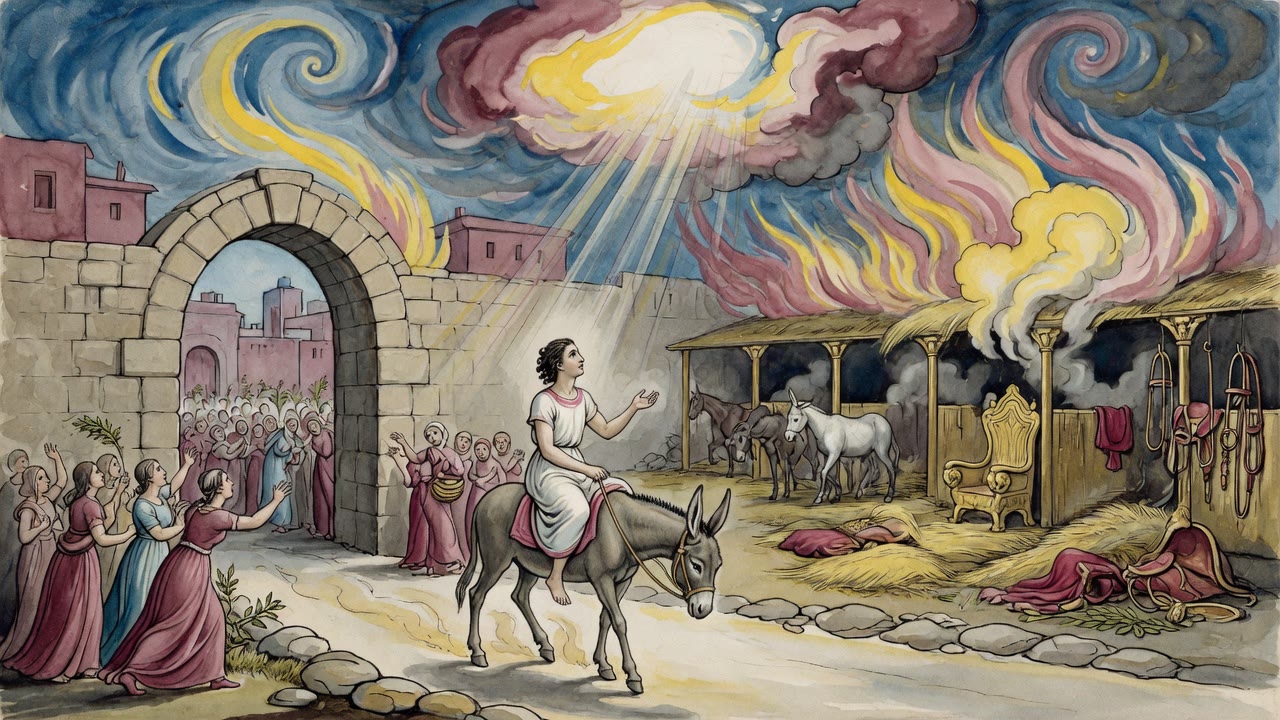
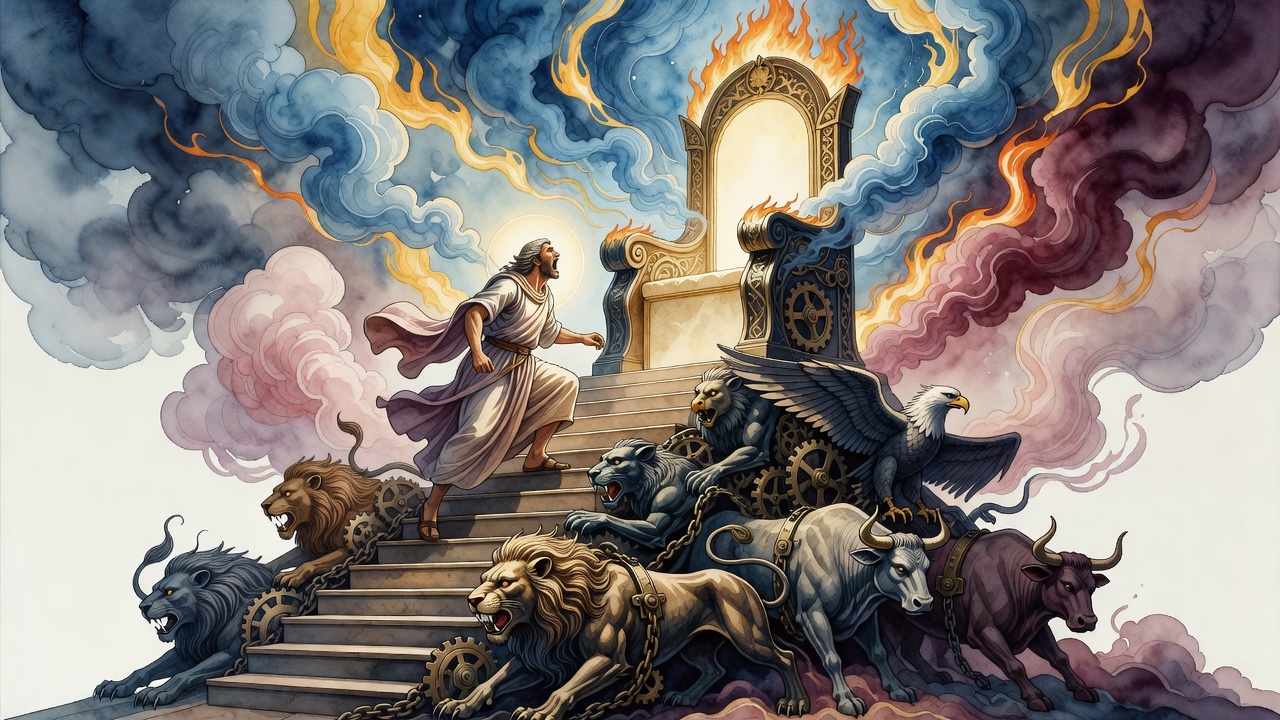
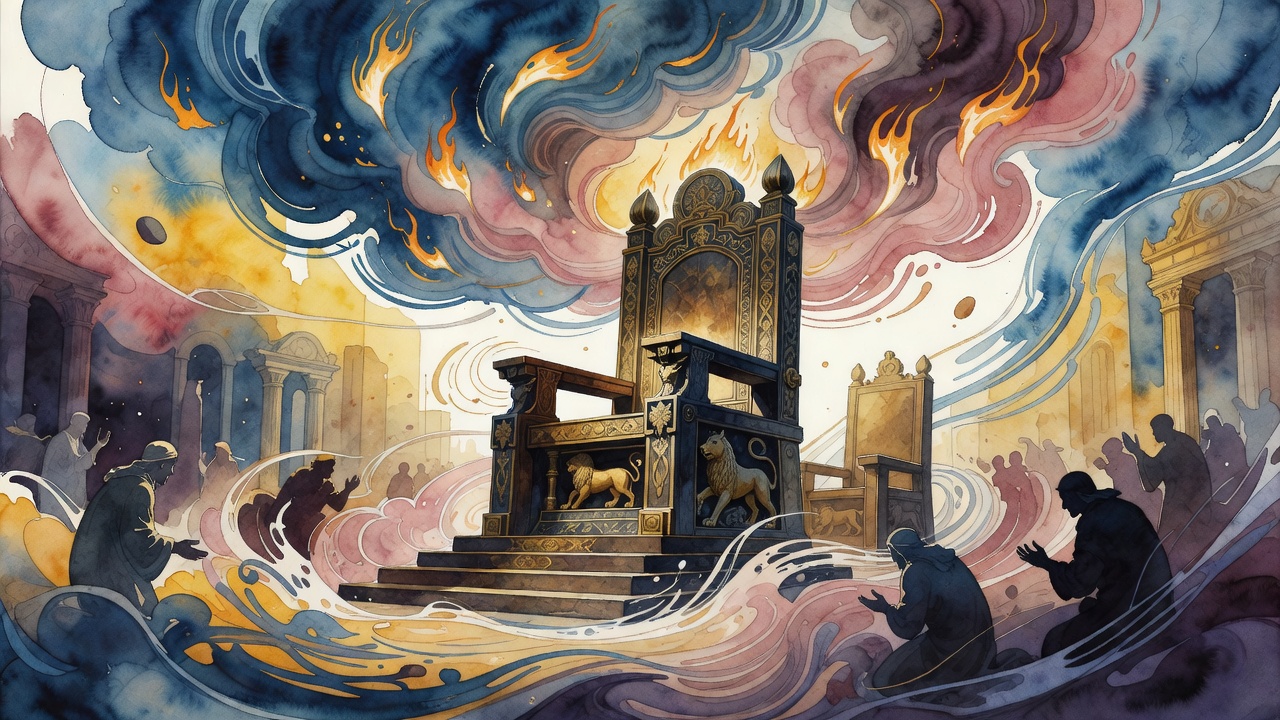
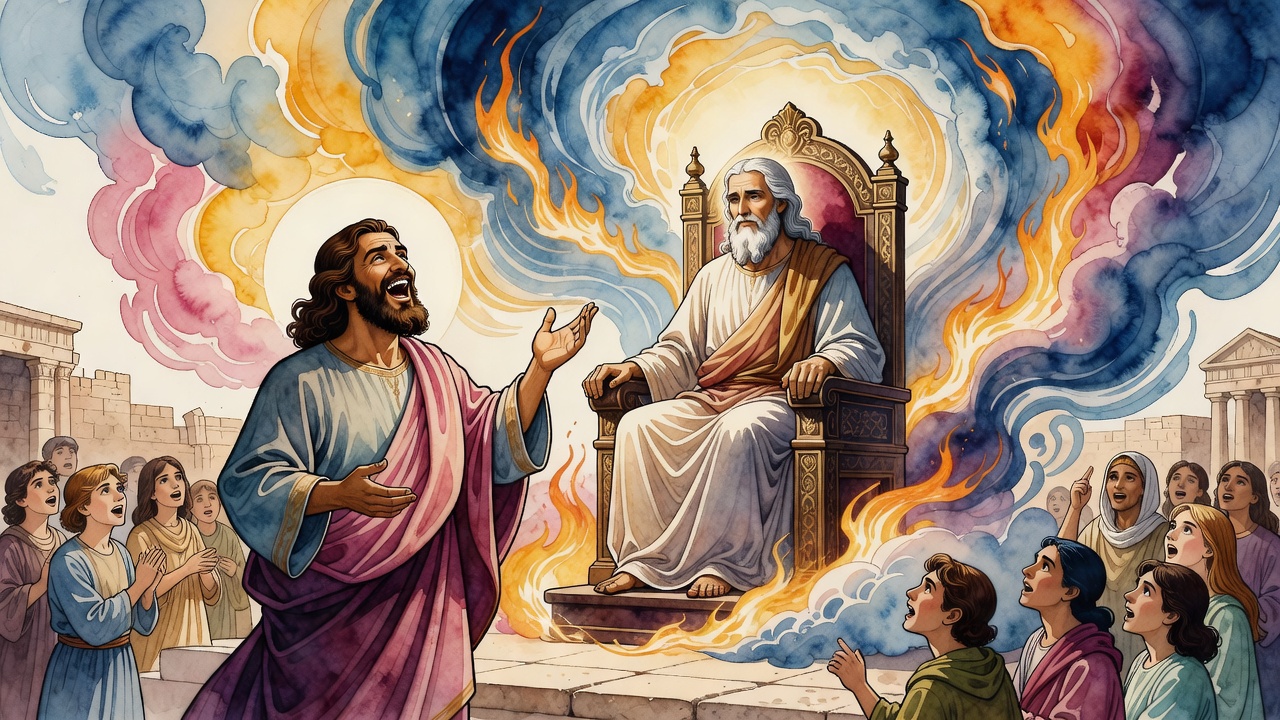
He piled up what a king is warned not to pile: wives, horses, silver and gold until silver in Jerusalem lay common as stones. He laughed at the limit. The attribute of justice did not laugh with him. Heaven asked what that crown was still doing on his head. An angel in Solomon's own likeness took the throne. The real king wandered study houses and synagogues crying, "I am Kohelet, I was king over Israel," while people beat him with a reed and set porridge before him like a beggar.

From that ruin the cry rose: vanity of vanities.

Joy With a Trapdoor

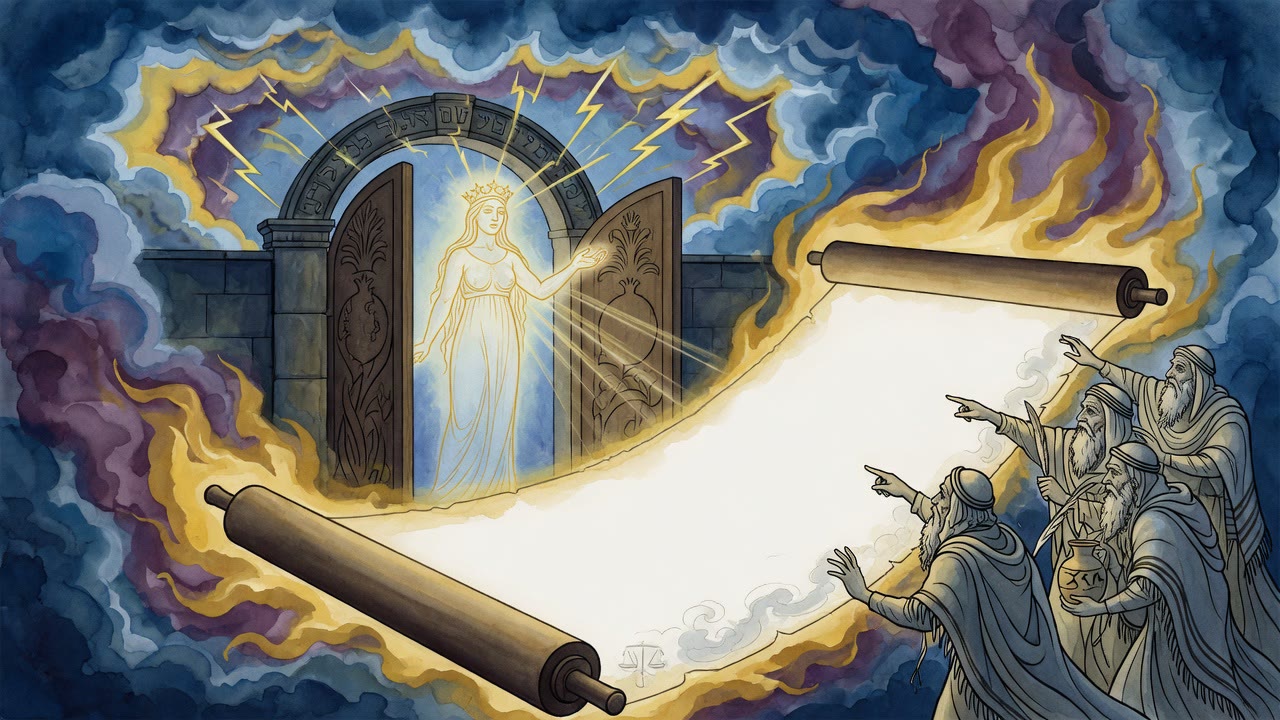
The sages nearly buried Ecclesiastes when they heard, "Rejoice, young man, in your youth, walk in the ways of your heart and the sight of your eyes." Moses had warned against following heart and eyes. Was Solomon dissolving the fence? Then they read the other half and the book stayed. "Know that for all these things God will bring you into judgment." Enjoy, yes. The account still comes due.

Run from the magistrate if you like, one parable says, but run gently. You only tire yourself for the long drag back. Swim far, but not so far you cannot make the shore. A smuggler caught at the customs house thinks he owes one fine and learns he must pay for every crossing. A caged bird is told how lucky it is to be fed and answers that the feeder sees the food and not the trap.

The young man who hears only the first half of the verse is already halfway to the customs house. The second half is the clerk with the full ledger.

Weddings That Turn to Eulogies

A wealthy man of Kavul sent his son for wine on the boy's own wedding day. Among the barrels a snake killed him. Blessings became a funeral in a single afternoon. The generation of the Flood mocked God's value and was blotted out. Sodom plotted to erase the traveler's foot and burned. Misplaced laughter stacks its invoices until the attribute of justice presents them all at once.

Elisheva saw four joys in one day, husband high priest, brother a prince, brother-in-law a king, sons set near the altar, then watched sons carried out burned. Joy turned to mourning so fast the Torah opens its chapter on their death before the ear can finish celebrating.

Solomon on the road with porridge knew that speed. Crowns leave faster than they arrive when laughter has already signed the wrong contracts.

The Freeloader at the Door

Rabbi Tanchuma's tale cuts clean. A man feasts on wine, bread, and meat, then dares the shopkeeper to open his belly for payment. The shopkeeper wraps him in a mat, lays him at the door, and begs passersby to fund the "dead man's" burial until the debt is covered. Pleasure first. Reckoning after. The young man who reads only the first half of Solomon's line is that freeloader. The second half is the mat at the door.

Solomon on the road with porridge in his hands is the same lesson wearing a crown's absence. He had laughed off the warnings justice took seriously. Justice wore his face on the throne until the real mouth learned to say vanity without smirking.

Students who wanted a license from "rejoice" received a chain instead: Flood, Sodom, the snake at the wedding, Elisheva's four joys inverted, the angel on the throne, the young man still free to taste life and still due in court.

What the Study House Heard

Laughter that builds nothing is madness. Laughter that mocks the fence becomes the fence's next case. Solomon walked. The angel sat. The porridge cooled. Somewhere a young man still heard the first half of the verse and smiled too early. The second half waited, patient as a customs house, counting every crossing.

In one study house a boy asked whether the angel still sits. The teacher did not answer with calendars. He pointed at every throne that looks secure while its owner jokes at limits, and at every feast that has not yet met its mat. The story does not need the angel to remain visible. It needs the warning to remain audible.

Solomon's reed welts and cold porridge are not melodrama for its own sake. They are the body learning what the mouth mocked. Rejoice, young man. Know the judgment. Hold both sentences in one breath, or the second will arrive alone and find you with a crown you no longer own.

In the market a seller who had cheated with a smile met a buyer who remembered every false weight. The attribute of justice keeps that kind of memory. Solomon's angel on the throne is the same memory wearing a face. The young man who wants only the rejoicing half of the verse is buying with a smile and hoping the scales stay blind. They do not stay blind.

Night in the study house ends with lamps low and one last line. Rejoice. Know. The angel sits. The porridge cools. Anyone who leaves with only the first word has already started running from a magistrate he will meet again on the long road home.


← All myths
From the tradition

Sources

2 sources

The texts behind this telling. Some cards carry a translation of the source; others are our own retelling of it, and each card says which. Every card links out to the original.

Pesikta DeRav Kahana 26:2Pesikta de-Rav Kahana

Translation of the source text.Pesikta de Rav Kahana according to an Oxford manuscript, Dov Mandelbaum ed., N.Y. 1987 · CC-BY

"Of laughter I said, It is mad" (Ecclesiastes 2:2). Rabbi Abba bar Kahana said: How confused is the laughter with which the nations of the world laugh in their theaters and circuses. "And of joy, what does it accomplish?" (Ecclesiastes 2:2) -- what is the nature of Torah scholars being there?

Another interpretation: "Of laughter I said, It is mad." Rabbi Acha said: Solomon said, Matters at which the attribute of justice laughed, I made mad. It is written, "He shall not multiply wives to himself" (Deuteronomy 17:17), and it is written, "And he had seven hundred wives, princesses, and three hundred concubines" (1 Kings 11:3). It is written, "He shall not multiply horses to himself" (Deuteronomy 17:16), and it is written, "And Solomon had forty thousand stalls of horses for his chariots, and twelve thousand horsemen" (1 Kings 5:6). It is written, "Silver and gold he shall not greatly multiply to himself" (Deuteronomy 17:17), and it is written, "And the king made silver in Jerusalem as stones" (1 Kings 10:27). And they were not stolen. Rabbi Yose son of Rabbi Chanina said: They were whole stones of ten cubits and of eight cubits. Rabbi Shimon ben Yochai taught: Even the weights in the days of Solomon were of gold, "silver was not counted as anything in the days of Solomon" (2 Chronicles 9:20).

"And of joy, what does it accomplish?" (Ecclesiastes 2:2) -- the Holy One, blessed be He, said to him: What is this crown doing on your head? Come down from My throne. At that hour an angel descended in the likeness of Solomon and sat upon his throne, and Solomon went about to all the synagogues and houses of study in Jerusalem, saying to them, "I, Kohelet, was king over Israel in Jerusalem" (Ecclesiastes 1:12), and they would say to him, King Solomon sits upon his throne, and you say, I am King Solomon. And what would they do to him? They would beat him with a reed and set before him a bowl of groats. At that hour he said, "Vanity of vanities, says Kohelet" (Ecclesiastes 1:2).

Another interpretation: "Of laughter I said, It is mad." Rabbi Pinchas said: This laughter is confused; what joy does it produce? There was an incident concerning one of the prominent men of Kavul who was marrying off his son on the fourth day of the week, and he made a feast for the groomsmen. He said to his son, Go up and bring us a barrel of wine from the upper chamber. He went up, and a snake bit him, and he died. He waited for him to come down, but he did not come down. The father said, I will go up and find out what has become of my son. He went up and found that a snake had bitten him and he had died and lay among the barrels. What did he do? He waited until the guests had eaten and drunk; once the guests had eaten and drunk, he said to them: Did you come to recite the wedding blessings for this man? Recite over him the mourners' blessings. Did you come to bring this man's son into his bridal canopy? Come and bring him into his grave. Concerning Rabbi Zakkai of Kavul, who delivered the eulogy over him, "Of laughter I said, It is mad."

Another interpretation: "Of laughter I said, It is mad" -- how confused is the laughter with which the attribute of justice laughed at the generation of the Flood, as it is written, "Their bull breeds and does not fail, they send forth their little ones like a flock, they take up the timbrel and harp, they spend their days in prosperity, and in a moment they go down to Sheol" (Job 21:10-13). And once they said, "What is the Almighty that we should serve Him, and what profit if we entreat Him?" (Job 21:15), the Holy One, blessed be He, said to them, "And of joy, what does it accomplish?" (Ecclesiastes 2:2) -- By your lives, I will blot you out from the earth, as it is written, "And He blotted out every living thing" (Genesis 7:23).

Another interpretation: "Of laughter I said, It is mad" -- how confused is the laughter with which the attribute of justice laughed at Sodom and Gomorrah, as it is written, "The earth, out of it comes bread, and underneath it is turned up as it were by fire; its stones are the place of sapphires, and it has dust of gold; that path no bird of prey knows, nor has the falcon's eye seen it; the proud beasts have not trodden it, nor has the lion passed over it" (Job 28:5-8). And once they said, Let us cause the foot to be forgotten from our midst, as it is written, "He breaks open a shaft away from where men sojourn; they are forgotten of the foot, they hang afar from men, they swing to and fro" (Job 28:4), the Holy One, blessed be He, said to them, "And of joy, what does it accomplish?" (Ecclesiastes 2:2) -- By your lives, I will remove you from the world, as it is written, "And the LORD rained upon Sodom and upon Gomorrah brimstone and fire, and He overthrew those cities" (Genesis 19:24-25).

Another interpretation: "Of laughter I said, It is mad" -- how confused is the laughter with which the attribute of justice laughed at Elisheva daughter of Amminadab. Elisheva daughter of Amminadab saw four joys in one day: she saw her husband a High Priest, her brother-in-law a king, her brother a prince, and her two sons deputy priests. And once they [her sons] entered to offer and came out burned, her joy was turned to mourning, as it is written, "after the death of the two sons of Aaron" (Leviticus 16:1).

Full source
Pesikta DeRav Kahana 24:14Pesikta de-Rav Kahana

Translation of the source text.Pesikta de Rav Kahana according to an Oxford manuscript, Dov Mandelbaum ed., N.Y. 1987 · CC-BY

Samuel Patigrisa in the name of Rabbi Meir: "Rejoice, young man, in your youth" (Ecclesiastes 11:9). Rabbi Samuel bar Isaac said: The sages sought to hide away the book of Ecclesiastes, because they found in it matters that incline toward heresy. They said: Was it fitting for Solomon to say, "Rejoice, young man, in your youth"? Moses said, "You shall not follow after your heart and after your eyes" (Numbers 15:39), and Solomon said, "Walk in the ways of your heart and in the sight of your eyes" (Ecclesiastes 11:9) - the restraint is loosed, there is no judgment and no Judge! But when he said, "Yet know that for all these things God will bring you into judgment" (Ecclesiastes 11:9), they said, "Solomon spoke well."

Rabbi Hiyya the Great and Rabbi Simeon ben Halafta. Rabbi Hiyya the Great said: This is like a bandit who fled from the magistrate; they said to him, "Run a little less, lest you tire yourself out being dragged back. And know that for all these things God will bring you into judgment" (Ecclesiastes 11:9). And Rabbi Simeon ben Halafta said: This is like one swimming upon the water; they said to him, "Swim out a little less, lest you tire yourself on the return. And know that for all these things God will bring you into judgment."

Rabbi Josiah said: This is like one who stole goods past the customs; when he was caught, they said to him, "Pay the duty." He said, "Take it." They said to him, "Do you think we want only this one time? We want it for all the times you were in the habit of stealing past the customs. And know that for all these things God will bring you into judgment." Rabbi Levi said: This is like a bird placed in a cage, and another came and stood over it and said, "How fortunate you are, that your food is provided for you!" It said, "You look at the food but you do not look at the trap. And know that for all these things God will bring you into judgment."

Rabbi Tanchuma said: This is like a worthless fellow who entered a shop and said to the shopkeeper, "Give me good wine and fine bread and rich meat." When he had eaten and drunk, he said, "Settle your account." The man said, "Here is this fellow's belly before you; slit it open." Said the shopkeeper, "And by this do you think to escape me?" Now that shopkeeper was shrewd. What did he do? He took him and wrapped him in a mat and threw him at the entrance of the shop, and all who passed by, he would say to them, "Acquire merit by this dead man, for I wish to buy him burial." A certain official passed by and said, "How long will this go on?" He said, "Until his debt is settled." And once his debt was settled, the shopkeeper said to him, "Get up, go to the grave of this fellow's father, and tell him that his end was bad. And know that for all these things God will bring you into judgment."

Full source