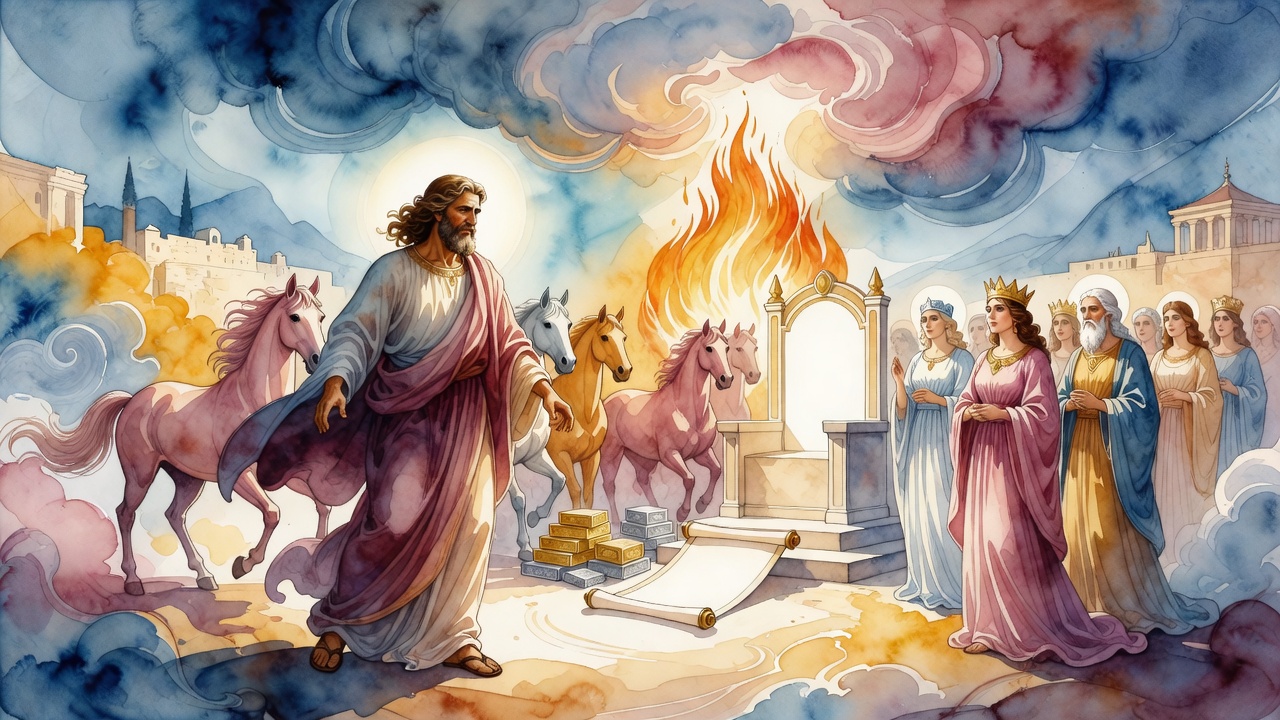
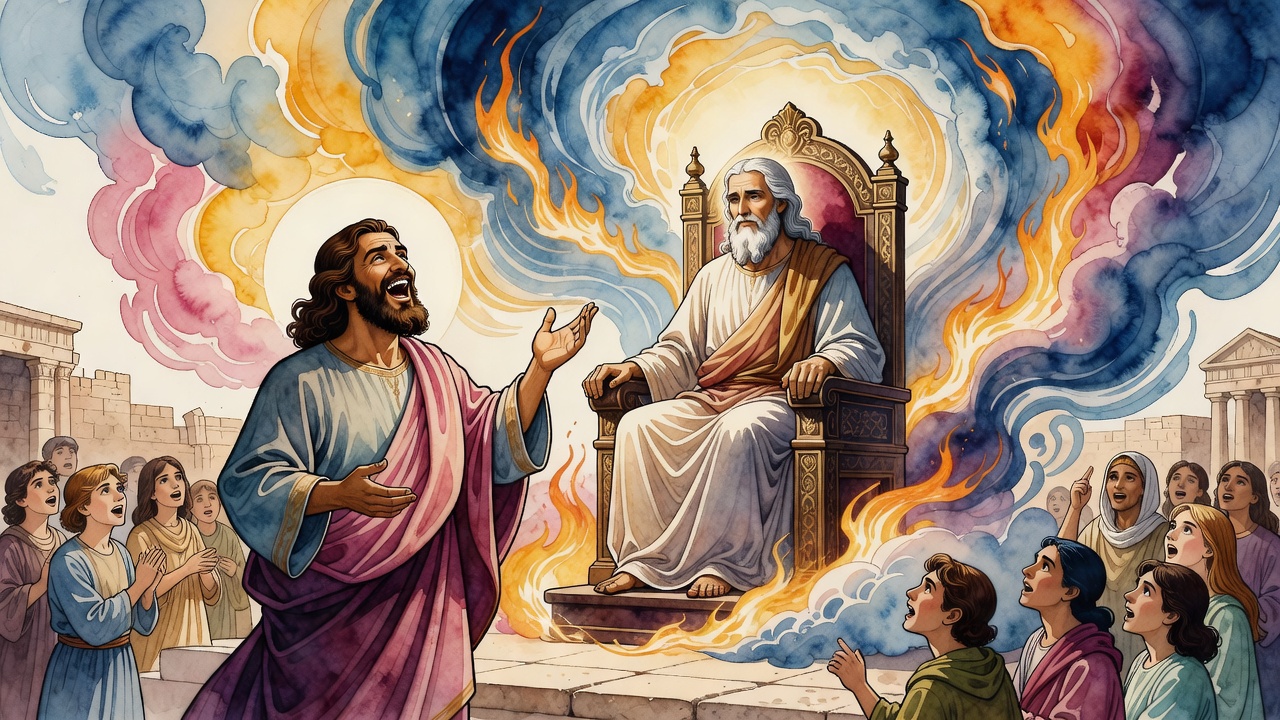
Solomon Sat at the Fork and Named Both Roads
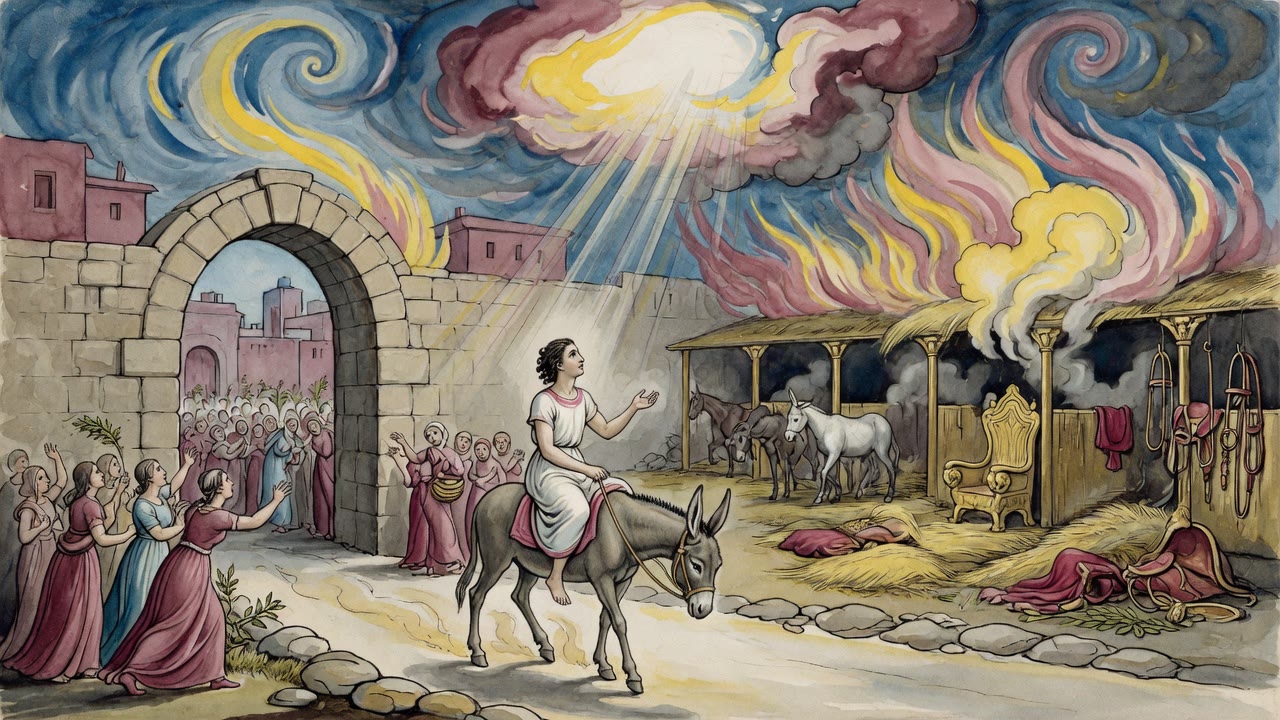
A runner passed the old man at the fork and waved without stopping. By dusk he was back in the dust with a thorn in his heel and no water left.
Table of Contents
The old man sat where two roads split the dust. One mouth of the path looked smooth, open, almost kind. The other opened in thorns, reeds, and low scrub that tore at a traveler's shins before the first mile ended. Caravans kept choosing the soft start. The old man kept lifting his hand.
 Click for full size
"That one finishes in cedars that block you and thorns that hold you," he said. "This one hurts first and levels later." Some men listened and turned. Some men laughed and took the easy lip of the road, then came back hours later with torn robes and empty waterskins, cursing the fork they had refused to study.
Rabbi Abba bar Kahana told that scene so Israel would understand what Solomon was doing when he wrote that everything under the sun is vanity and a herding of wind (Ecclesiastes 1:14). Solomon was not inventing despair for sport. He was the old man at the fork, only the roads were years, thrones, races, and markets.
The Gate of Wisdom
Solomon sat at the gates of wisdom the way a harbor astrologer sits where ships take on cargo. Merchants need to know which goods will sell in which ports. Israel needed to know which lives end level and which lives end tangled. The king who spoke of cedars and hyssop, beasts and birds, creeping things and fish, was not only cataloging creation (1 Kings 5:13). He was posting warnings on the wood and the wing.
Why does a leper need cedar and hyssop in the same rite? Solomon's reading puts pride and humility into the plants. The cedar stands tall until arrogance becomes a sickness. The hyssop stays low until a man can be cleaned. Elevate yourself like Lebanon's height and the skin of the soul cracks. Bend like the wall plant and the path levels.
Travelers still prefer the smooth mouth. Kings still prefer the cedar. Solomon kept naming the finish while the start still looked inviting.
Time and Chance on Every Road
"The race is not to the swift, nor the battle to the strong," he wrote, "nor bread to the wise, nor riches to men of understanding, nor favor to men of skill; but time and chance happen to them all" (Ecclesiastes 9:11). A fast man can fall. A strong man can lose. A clever merchant can watch a storm eat a ship he loaded with perfect goods.
That is the thorn road wearing a soft face. Effort under the sun does not guarantee the end the effort bought. The old man at the fork did not promise that the hard start always felt fair. He promised that the hard start finished on level ground while the soft start finished in a thicket.
Herding wind is the work of chasing outcomes that will not stay herded. Silver moves. Crowns move. Bodies tire. Solomon watched his own house and still put the warning at the gate so later travelers would not pretend surprise when chance cut across skill.
A runner once passed the old man at a sprint and waved without stopping. By dusk the same runner limped back with a thorn buried in his heel and no water left. He sat in the dust and listened the second time.
What Escapes the Vanity
The warning does not end as pure bleak weather. Under the sun, almost everything thins into wind. Two things do not. Teshuvah, return, and good deeds stand outside the herding. A man who turns back is not only rearranging furniture on a sinking deck. He is stepping onto a road the sun does not own.
The old man at the fork could save a caravan a day of bleeding. Solomon at the gate of wisdom could save a generation from mistaking speed for arrival. Neither man could force the traveler's foot. Both men could name the finish before the first choice hardened.
When a proud man finally took the hyssop road, the thorns at the start still cut. The cuts were tuition. Level ground waited after the scrub, not instead of it. Repentance hurts in the first mile because the body has to leave the smooth lie.
Good deeds weigh the same way. They do not always win the race under the sun. They do not always fill the barn. They do finish on a different ledger, where wind cannot herd them into nothing.
Birds, Beasts, and the In-Between
Solomon's catalog of creatures was never only zoology. Animals from dry land need a fuller cut in slaughter. Birds, said bar Kappara, come from mud, land mixed with water, so their law sits between beasts and fish. Fish need no slaughter at all. Rabbi Avin added that a chicken's legs can look like scales, another blur at the border.
Creation itself carries intermediate roads. Not every path is pure thorn or pure plain. Some lives begin mixed, half water and half dust, and still require a precise cut. Solomon spoke of creeping things and fish because the world is full of edges where a careless traveler assumes the rule is simple and walks into a thicket of exceptions.
At the fork the old man did not offer three roads. At the gate Solomon multiplied the map until pride, chance, mud-born birds, and the escape of return all had names. A man who only hears vanity without hearing teshuvah has only half the warning. A man who only hears moral plants without hearing time and chance has only half the map.
Night came on the fork. The old man banked a small fire and waited for the next set of sandals. Somewhere in a later age Solomon's book still sat open like a hand raised at a split in the road, naming the soft start that ends in thorns and the hard start that finally runs level, while under the sun the wind kept trying to herd every other labor into emptiness.
← All myths